BLOG ARTICLES

The RCM Guide for Healthcare
Providers in the USA

May 9, 2026

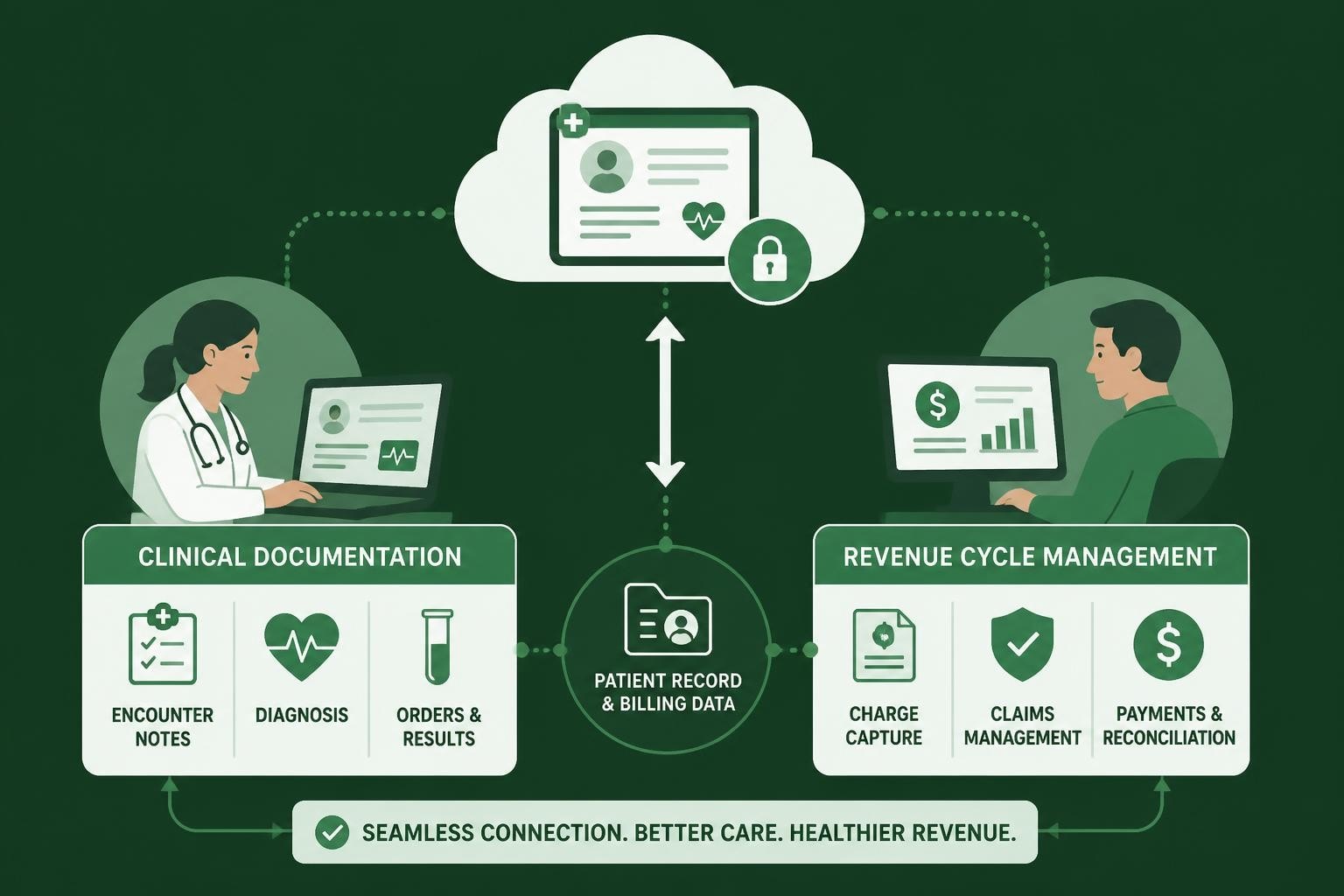
Medical billing offices serve as the financial backbone of healthcare organizations, transforming clinical documentation into revenue while navigating the complexities of insurance claims, regulatory compliance, and reimbursement cycles. These specialized departments or outsourced service providers manage every aspect of the revenue cycle, from patient registration and insurance verification to final payment posting and accounts receivable follow-up. As healthcare reimbursement models grow increasingly complex, the role of medical billing offices has expanded beyond simple claim submission to encompass sophisticated denial management, compliance monitoring, and financial analytics that directly impact provider profitability and operational sustainability.

The Core Functions of Medical Billing Offices

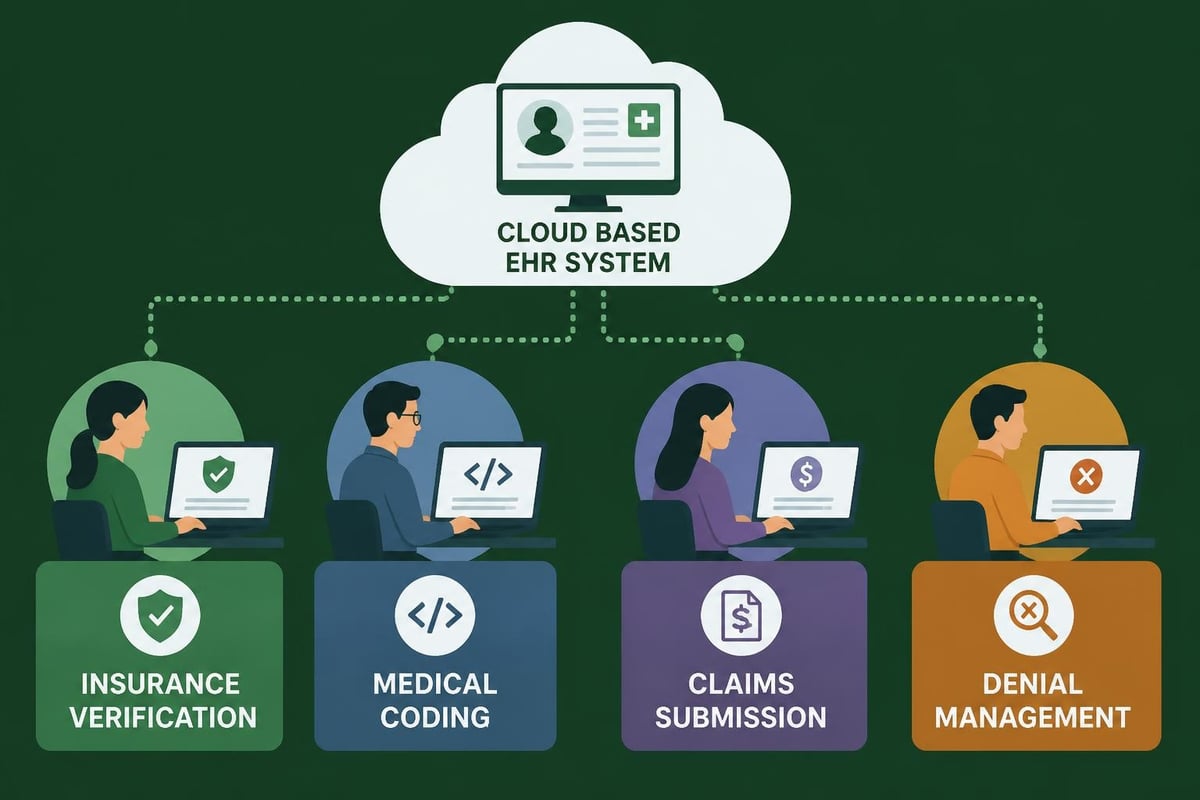
Medical billing offices operate as comprehensive revenue cycle hubs, coordinating multiple interconnected processes that ensure healthcare providers receive appropriate compensation for services rendered. These offices handle patient demographic verification, insurance eligibility checks, charge capture, coding review, claim submission, payment posting, and denial resolution.

The foundation of effective billing begins with accurate patient information collection and insurance eligibility verification, which prevents costly claim rejections before submission. Medical billing offices verify coverage details, copayment requirements, deductible status, and authorization needs to establish clear financial responsibility from the outset.

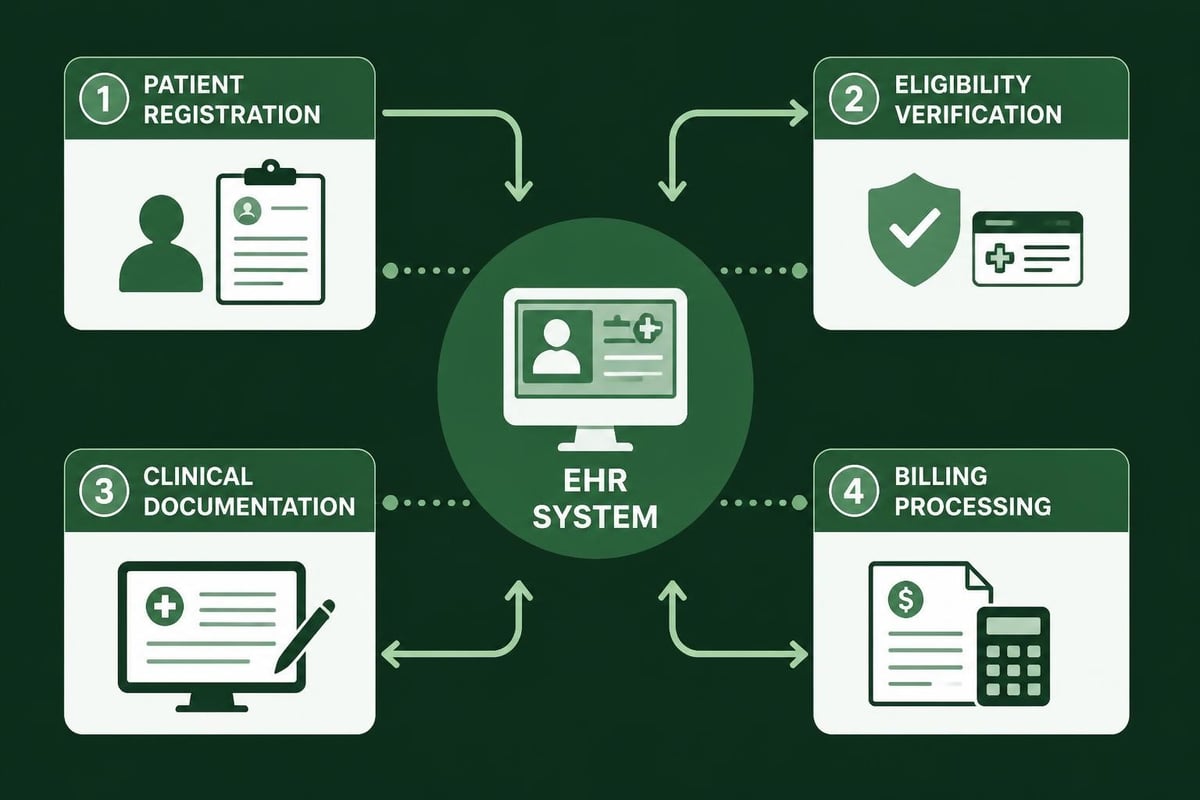
Medical billing office workflow stages

Documentation and Charge Capture

Comprehensive documentation forms the cornerstone of successful revenue cycle management. Medical billing offices work closely with clinical staff to ensure that all billable services are accurately captured and appropriately coded according to current CPT, ICD-10, and HCPCS standards.

Charge capture processes vary depending on practice size and specialty, but all medical billing offices must establish systematic protocols for:

  • Reviewing clinical notes for billable procedures and diagnoses
  • Verifying modifier usage for accurate service representation
  • Confirming medical necessity documentation
  • Ensuring timely charge entry to prevent aging issues
  • Cross-referencing services with payer-specific requirements

Following medical billing best practices significantly reduces claim denials and accelerates reimbursement timelines.

Compliance Standards Governing Medical Billing Offices

Medical billing offices operate within a complex regulatory framework that includes HIPAA privacy requirements, fraud and abuse prevention laws, and payer-specific guidelines. Maintaining compliance protects healthcare organizations from financial penalties, legal liability, and reputation damage while ensuring ethical billing practices.

Understanding medical billing compliance requirements helps organizations implement effective policies and training programs. Compliance encompasses proper documentation standards, accurate coding practices, appropriate use of modifiers, and transparent communication with patients regarding financial responsibilities.

Compliance Area Key Requirements Consequences of Non-Compliance
HIPAA Privacy Protected health information security Fines up to $50,000 per violation
Coding Accuracy Correct CPT/ICD-10 assignment Claim denials, audit penalties
Fraud Prevention Truthful claim submission Criminal prosecution, exclusion
Documentation Medical necessity substantiation Recoupment, legal liability

Audit Preparedness and Internal Controls

Medical billing offices must maintain robust internal controls and audit-ready documentation systems. Regular internal audits identify coding inconsistencies, billing pattern anomalies, and compliance gaps before external reviewers discover them.

Effective audit preparation includes maintaining complete medical records, ensuring coder certification and continuing education, implementing quality assurance reviews, and documenting all billing decisions and policy interpretations. Many healthcare organizations partner with specialized providers offering medical coding audit services to identify vulnerabilities proactively.

Technology Infrastructure Supporting Medical Billing Offices

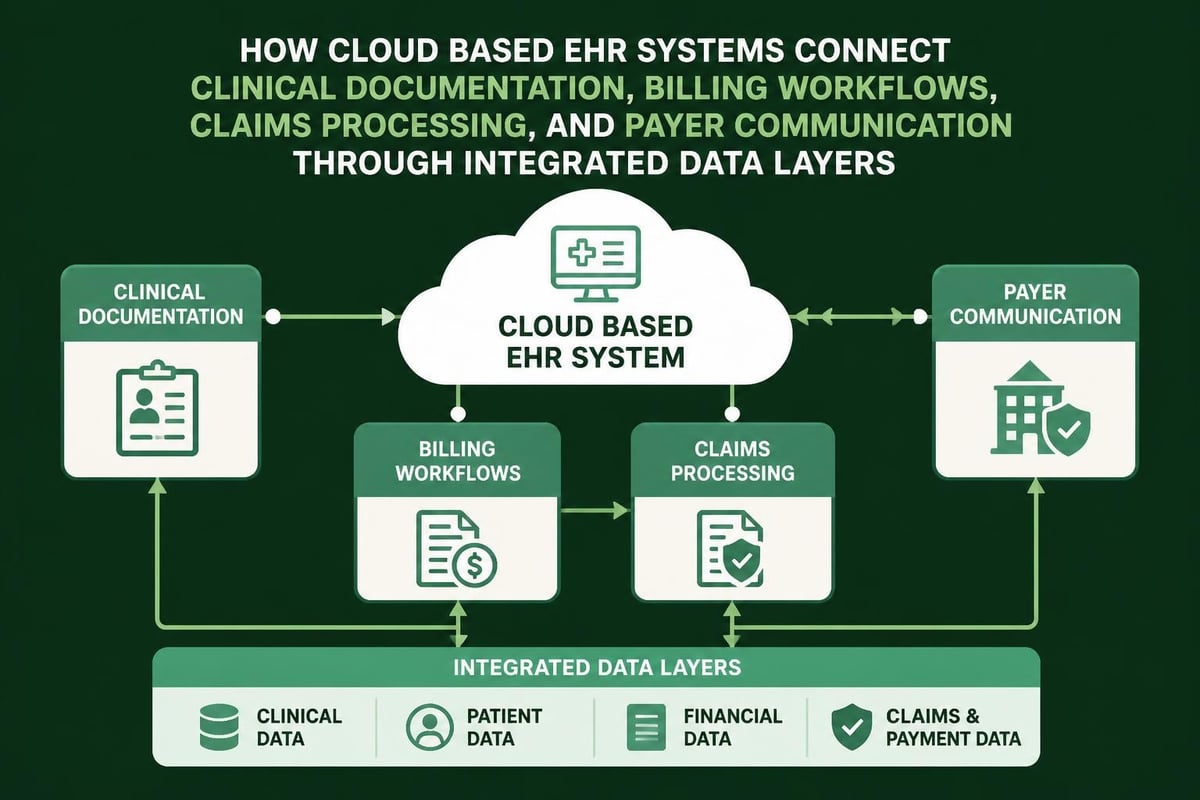
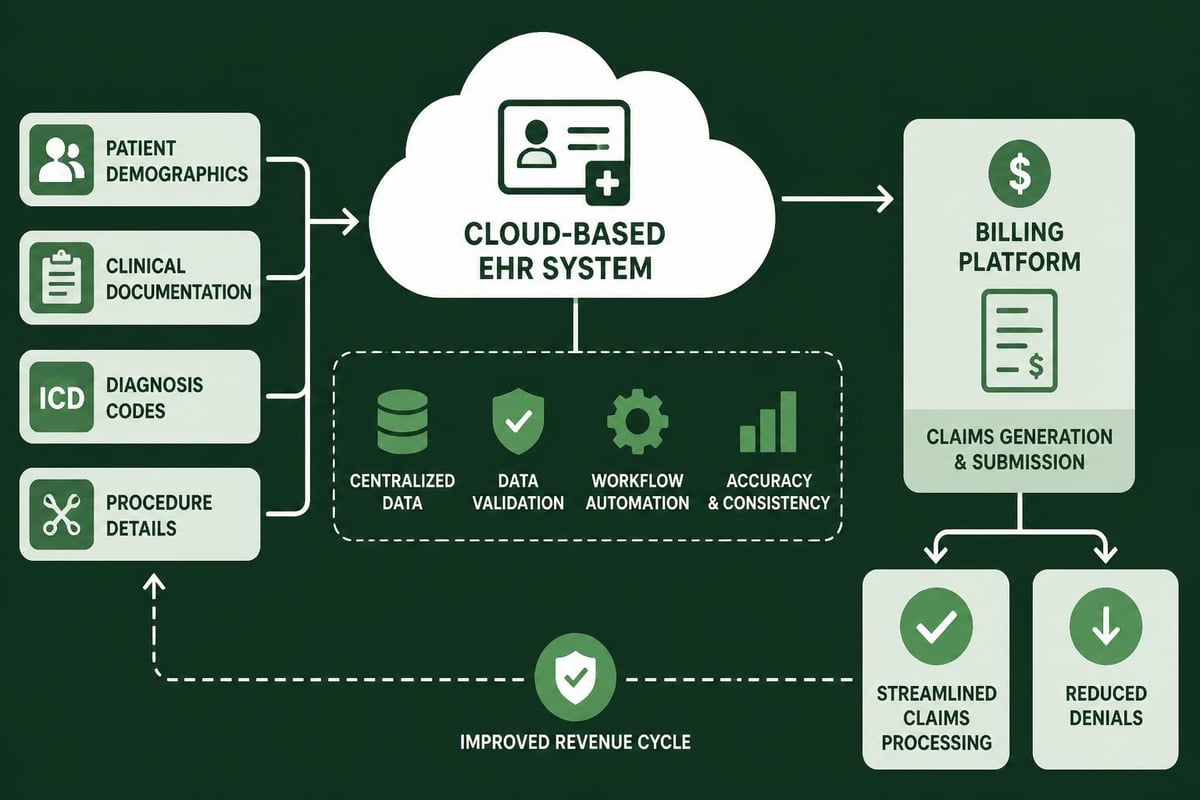
Modern medical billing offices leverage sophisticated software platforms that integrate practice management, electronic health records, clearinghouse connectivity, and financial analytics. These systems automate routine tasks, reduce manual errors, and provide real-time visibility into revenue cycle performance.

Electronic claim submission through secure clearinghouses enables rapid payer communication and automated eligibility verification. Most medical billing offices utilize integrated platforms that scrub claims for errors before submission, dramatically reducing rejection rates and accelerating payment cycles.

Advanced billing systems offer features including:

  • Automated appointment reminders and patient communication
  • Real-time eligibility verification at scheduling
  • Integrated coding assistance and compliance checking
  • Electronic remittance advice (ERA) processing
  • Comprehensive reporting and analytics dashboards
  • Denial tracking and workflow management

Understanding what is ERA in medical billing helps billing staff maximize automation benefits and reduce manual payment posting time.

Denial Management Strategies for Medical Billing Offices

Claim denials represent one of the most significant challenges facing medical billing offices, with industry averages indicating that 5-10% of claims experience initial denial. Effective denial management requires systematic identification, categorization, analysis, and resolution of rejected claims.

Denial management process flow

Medical billing offices must distinguish between preventable denials caused by submission errors and non-preventable denials resulting from coverage limitations or medical necessity determinations. This categorization enables targeted process improvements that address root causes rather than symptoms.

Building an Effective Denial Prevention Program

Prevention proves more cost-effective than correction when addressing claim denials. Medical billing offices should implement front-end processes that verify coverage, confirm authorization requirements, and validate coding accuracy before claim submission.

The denial management process encompasses both reactive appeals and proactive prevention strategies. Successful programs track denial reasons, measure resolution timeframes, calculate financial impact, and implement corrective actions based on data-driven insights.

Implementing best practices from the revenue cycle checklist helps medical billing offices establish comprehensive denial management workflows.

Accounts Receivable Management in Medical Billing Offices

Effective accounts receivable management directly impacts healthcare organization cash flow and financial stability. Medical billing offices monitor aging reports, follow up on outstanding claims, and implement collection strategies that balance revenue optimization with patient relationships.

Best practices for managing accounts receivable in medical billing include establishing clear follow-up protocols, prioritizing high-value claims, maintaining consistent payer communication, and implementing patient-friendly payment plans.

Key Performance Indicators for Medical Billing Offices

Successful medical billing offices track specific metrics that reveal revenue cycle health and identify improvement opportunities. These KPIs provide actionable insights into operational efficiency and financial performance.
Metric Target Range What It Measures
Days in A/R 30-40 days Collection efficiency
Clean Claim Rate >95% Submission accuracy
Denial Rate <5% Quality and compliance
Collection Ratio >95% Revenue realization
Cost to Collect <3% Operational efficiency

Medical billing offices should review these metrics monthly, comparing performance against industry benchmarks and historical trends. Significant deviations warrant immediate investigation and corrective action.

Specialized Billing Requirements by Healthcare Specialty

Different medical specialties present unique billing challenges that require specialized knowledge and process adaptations. Medical billing offices serving multiple specialties must maintain expertise across varying documentation requirements, coding conventions, and payer policies.

Cardiology practices face complex bundling rules, modifier requirements for multiple procedures, and specialized authorization protocols. Organizations seeking cardiology medical billing expertise benefit from billing professionals who understand specialty-specific nuances.

Primary care offices emphasize preventive service billing, annual wellness visit documentation, and chronic care management reimbursement. Understanding requirements like the annual wellness visit CPT code ensures appropriate revenue capture for preventive services.

Adapting Processes for Practice Size and Type

Small practices often struggle with the overhead costs of maintaining full-service in-house medical billing offices. Many discover that medical billing services for small practices provide cost-effective access to specialized expertise without the expense of dedicated staff.

Larger healthcare systems benefit from economies of scale but face challenges coordinating billing across multiple locations, specialties, and electronic systems. Centralized medical billing offices must establish standardized processes while accommodating location-specific payer contracts and operational requirements.

Medical billing office organization models

Staff Training and Development in Medical Billing Offices

The expertise of billing staff directly correlates with revenue cycle performance. Medical billing offices must invest in comprehensive training programs that address coding updates, regulatory changes, payer policy modifications, and technology platform enhancements.

Understanding the medical billing process from end to end enables billing staff to identify process improvement opportunities and troubleshoot issues effectively. Comprehensive training should cover patient registration, charge entry, claims submission, payment posting, denial management, and patient communication.

Professional development opportunities include:

  1. Certification Programs: AAPC and AHIMA credentials demonstrate coding expertise
  2. Payer Education: Regular updates on coverage policies and claim requirements
  3. Compliance Training: Annual HIPAA and fraud prevention education
  4. Technology Skills: Platform-specific training and workflow optimization
  5. Communication Techniques: Patient interaction and conflict resolution

Medical billing offices benefit from creating specialized roles focused on specific revenue cycle components, allowing staff to develop deep expertise in areas like eligibility verification, denial appeals, or payment posting.

The Future of Medical Billing Offices

Medical billing offices continue evolving in response to technological advancement, regulatory changes, and shifting reimbursement models. Artificial intelligence and machine learning applications promise to automate routine tasks, predict denial patterns, and optimize coding accuracy.

Value-based reimbursement models require medical billing offices to track quality metrics, coordinate care documentation, and demonstrate patient outcomes alongside traditional fee-for-service billing. This dual responsibility demands expanded skillsets and more sophisticated reporting capabilities.

Telehealth expansion introduces new billing scenarios, modifier requirements, and documentation standards that medical billing offices must master. The distinction between place of service codes, synchronous versus asynchronous communication, and state-specific telehealth coverage policies creates additional complexity.

Selecting Between In-House and Outsourced Medical Billing Offices

Healthcare organizations face strategic decisions regarding whether to maintain in-house medical billing offices or partner with specialized service providers. Each approach offers distinct advantages depending on practice size, specialty focus, and operational priorities.

In-house medical billing offices provide direct oversight, immediate communication with clinical staff, and complete control over processes and priorities. Organizations with adequate volume to support dedicated billing staff often prefer maintaining internal departments.

Outsourced billing services deliver specialized expertise, scalable resources, and reduced overhead costs without capital investment in technology infrastructure. Evaluating top medical billing companies helps organizations identify partners aligned with their specific needs and values.

Critical Selection Criteria

Organizations evaluating outsourced billing partners should assess multiple factors beyond simple pricing considerations. Comprehensive evaluation includes:

  • Industry experience and specialty expertise
  • Technology platform capabilities and integration
  • Compliance protocols and security measures
  • Reporting transparency and data access
  • Performance guarantees and contractual terms
  • Client references and satisfaction metrics

The most successful partnerships develop when organizations clearly define expectations, establish measurable performance standards, and maintain regular communication regarding revenue cycle goals and challenges.

Geographic Considerations for Medical Billing Offices

Location impacts medical billing offices through state-specific regulations, regional payer prevalence, and local market dynamics. Practices operating in multiple states must navigate varying Medicaid programs, commercial payer networks, and regulatory requirements.

California practices contend with unique workers' compensation billing rules, while Arizona providers navigate AHCCCS requirements and tribal health program coordination. Organizations seeking medical billing services in California or medical billing coding in Arizona benefit from partners familiar with state-specific nuances.

Understanding regional payer mix helps medical billing offices prioritize credentialing efforts, optimize contracting strategies, and allocate resources effectively across different insurance programs and geographic markets.

Payment Posting Accuracy and Reconciliation

Payment posting represents a critical yet often underestimated function within medical billing offices. Accurate posting ensures proper credit application, identifies underpayments, reveals contractual adjustment patterns, and maintains clean accounts receivable aging.

Effective payment posting services reconcile remittance details against expected reimbursement, identify posting errors promptly, and maintain audit trails for financial review. Medical billing offices should implement dual verification for high-value payments and regular reconciliation between practice management systems and bank deposits.

Common payment posting challenges include managing multiple payment methods, correctly applying patient payments versus insurance payments, identifying and resolving duplicate payments, and handling coordination of benefits scenarios involving multiple payers.


Medical billing offices play an indispensable role in healthcare financial sustainability, requiring specialized expertise across coding, compliance, technology, and payer relations. Organizations seeking to optimize revenue cycle performance while maintaining compliance and operational efficiency benefit from partnering with experienced billing professionals who understand the nuances of modern healthcare reimbursement. Greenhive Billing Solutions delivers comprehensive revenue cycle management services designed to maximize reimbursements, reduce administrative burden, and provide transparent financial insights that empower healthcare providers to focus on exceptional patient care while achieving sustainable financial performance.
May 8, 2026

Healthcare providers face mounting pressure to maintain financial stability while delivering exceptional patient care. The complexity of medical billing, insurance verification, claims processing, and reimbursement management requires sophisticated healthcare rcm solutions that can handle multiple touchpoints across the revenue cycle. As reimbursement models evolve and regulatory requirements become more stringent, practices of all sizes must adopt comprehensive strategies to optimize their financial operations and ensure sustainable growth.

Understanding the Core Components of Revenue Cycle Management

Revenue cycle management encompasses every administrative and clinical function that contributes to capturing, managing, and collecting patient service revenue. The process begins the moment a patient schedules an appointment and continues through final payment reconciliation. Healthcare revenue cycle management involves coordination between multiple departments, technology systems, and external partners.

Patient Access and Registration

The foundation of effective healthcare rcm solutions starts with accurate patient information collection. This critical first step determines the success of all downstream processes.

Key elements of patient access include:

  • Demographic information verification
  • Insurance coverage confirmation
  • Co-payment and deductible collection
  • Patient consent documentation
  • Authorization requirements identification

Front-end revenue cycle management sets the tone for the entire billing process. When registration staff collect complete and accurate information, the likelihood of claim denials decreases significantly. Many practices now leverage eligibility verification services to automate insurance coverage checks and reduce manual errors.

Patient registration workflow

Medical Coding and Charge Capture

Accurate medical coding translates clinical services into standardized codes that payers recognize and reimburse. This process requires extensive knowledge of CPT, ICD-10, and HCPCS coding systems.

Proper charge capture ensures that every billable service receives appropriate documentation and coding. Missing charges represent lost revenue that practices can never recover. Healthcare rcm solutions must include robust charge capture mechanisms that integrate with electronic health record systems and provide real-time feedback to clinical staff.

Coding Type Purpose Common Challenges
CPT Codes Procedure and service descriptions Selecting appropriate specificity level
ICD-10 Codes Diagnosis documentation Medical necessity justification
HCPCS Codes Supplies and equipment Limited payer coverage policies
Modifiers Service detail clarification Incorrect modifier application

Skilled coders serve as the bridge between clinical documentation and financial reimbursement. They must stay current with coding updates, payer policies, and regulatory changes that impact proper code assignment.

Claims Submission and Processing Strategies

Submitting clean claims on the first attempt dramatically improves cash flow and reduces administrative burden. Healthcare rcm solutions must incorporate thorough claim scrubbing processes that identify errors before submission to payers.

Electronic Claims Management

Electronic claim submission has become the industry standard, offering faster processing times and reduced error rates compared to paper submissions. Medical claim submission services leverage sophisticated software platforms that validate claim data against payer-specific requirements.

Modern claims management systems check for:

  1. Missing or invalid information fields
  2. Coding inconsistencies and contradictions
  3. Medical necessity documentation gaps
  4. Duplicate claim submissions
  5. Prior authorization compliance

The American Hospital Association emphasizes that successful revenue cycle management requires seamless integration between clinical and financial systems. This integration allows for real-time data exchange that supports accurate claim creation and submission.

Payer Communication and Follow-Up

Maintaining open communication channels with insurance companies helps resolve claim issues quickly and prevents unnecessary denials. Effective healthcare rcm solutions include structured processes for tracking claim status and following up on delayed payments.

Practices should establish specific timelines for claim follow-up activities. Generally, claims should be checked 7-10 days after submission to confirm receipt and processing status. Any claims remaining unpaid after 30 days require intensive investigation and outreach.

Denial Management and Appeals Processes

Even with the best prevention strategies, claim denials remain an inevitable part of healthcare billing. The difference between financially successful practices and struggling ones often lies in how effectively they manage and overturn denials.

Common Denial Categories

Understanding denial patterns helps practices address root causes and prevent future occurrences. Healthcare rcm solutions should include comprehensive denial tracking and reporting capabilities.

Frequent denial reasons include:

  • Registration and eligibility errors
  • Authorization and referral deficiencies
  • Coding inaccuracies or lack of specificity
  • Medical necessity documentation gaps
  • Timely filing violations
  • Duplicate claim submissions

The denial management process requires systematic analysis of each rejection to determine whether the denial warrants an appeal or represents a write-off opportunity. Not all denials deserve equal attention, and practices must prioritize high-value claims that offer the best return on investment for appeal efforts.

Denial management workflow

Building an Effective Appeals Strategy

Successful appeals require compelling documentation that addresses the specific denial reason cited by the payer. Generic appeal letters rarely succeed in overturning denials.

Appeals should include:

  1. Clear identification of the claim in question
  2. Specific denial reason and code
  3. Detailed explanation addressing the denial
  4. Supporting clinical documentation
  5. Relevant policy or contract language
  6. Requested action and timeline

Organizations that implement dedicated denial management services often see significant improvements in their appeal success rates and overall revenue recovery.

Payment Posting and Reconciliation

Accurate payment posting ensures that patient accounts reflect all payments, adjustments, and outstanding balances. This seemingly simple task requires attention to detail and understanding of complex payer remittance rules.

Electronic Remittance Advice Processing

Electronic remittance advice (ERA) documents provide detailed payment information from insurance companies. Healthcare rcm solutions that automate ERA processing reduce manual data entry and accelerate the payment posting timeline.

Payment posting staff must understand contractual adjustments, coordination of benefits, and patient responsibility calculations. Errors in these areas can lead to incorrect patient statements and collection challenges.

Payment Component Description Action Required
Paid Amount Insurance payment received Post to patient account
Contractual Adjustment Write-off per contract Apply adjustment code
Deductible Patient responsibility Bill patient
Co-insurance Patient percentage share Bill patient
Denied Amount Claim rejection Route to denial management

The RCM process relies on accurate payment posting to maintain clean accounts receivable and generate appropriate patient statements. Any discrepancies between expected and received payments require investigation and resolution.

Patient Collections and Statements

With increasing patient financial responsibility through high-deductible health plans, collecting patient portions has become a critical revenue cycle function. Healthcare rcm solutions must support flexible payment options and clear communication with patients about their financial obligations.

Effective patient collection strategies include upfront payment estimation, point-of-service collections, and convenient payment plans. Practices that prioritize transparency and offer multiple payment channels typically achieve higher collection rates than those relying solely on traditional billing statements.

Technology Integration and Automation

Modern healthcare rcm solutions leverage advanced technology to streamline workflows, reduce manual tasks, and improve accuracy across the revenue cycle. Revenue cycle management software continues to evolve with artificial intelligence and machine learning capabilities that predict denial risks and optimize billing processes.

Practice Management System Integration

Seamless integration between practice management systems, electronic health records, and billing platforms eliminates duplicate data entry and reduces errors. Healthcare organizations benefit from unified systems that share information across clinical and financial functions.

Integration capabilities to prioritize include:

  • Real-time eligibility verification
  • Automated charge capture from clinical documentation
  • Electronic claim submission and tracking
  • ERA auto-posting functionality
  • Patient portal payment processing

Organizations using integrated systems report fewer billing errors, faster reimbursement cycles, and improved staff productivity compared to those managing disconnected platforms.

Technology integration in RCM

Analytics and Performance Monitoring

Data-driven decision-making separates high-performing practices from average ones. Healthcare rcm solutions should provide comprehensive reporting and analytics that track key performance indicators and identify improvement opportunities.

Essential metrics to monitor include:

  • Days in accounts receivable
  • Clean claim rate
  • Denial rate by payer and reason
  • Collection rate
  • Net collection percentage
  • Cost to collect

Regular performance review allows practices to identify trends, benchmark against industry standards, and implement targeted improvements. Organizations that establish monthly or quarterly review cycles maintain better financial health than those conducting sporadic assessments.

Compliance and Regulatory Considerations

Healthcare providers operate in one of the most heavily regulated industries, with strict requirements governing patient privacy, billing practices, and documentation standards. Effective healthcare rcm solutions incorporate compliance safeguards throughout all processes.

HIPAA Compliance Requirements

The Health Insurance Portability and Accountability Act establishes strict standards for protecting patient health information. Revenue cycle operations handle sensitive data daily, requiring robust security measures and staff training.

HIPAA compliance in RCM includes:

  1. Access controls limiting data exposure
  2. Encryption of electronic transmissions
  3. Audit trails tracking system access
  4. Business associate agreements with vendors
  5. Regular security risk assessments
  6. Staff training and awareness programs

Violations can result in significant penalties and reputational damage. Organizations must maintain comprehensive compliance programs that address both technical safeguards and operational policies.

Coding and Billing Regulations

Federal and state regulations govern proper coding and billing practices. Understanding these requirements prevents inadvertent violations that could trigger audits or fraud investigations.

Key regulatory considerations include:

  • Anti-kickback statute compliance
  • Stark Law self-referral prohibitions
  • False Claims Act requirements
  • National Correct Coding Initiative edits
  • Local coverage determination policies

Staying current with regulatory changes requires ongoing education and system updates. Healthcare rcm solutions should include compliance alerts and documentation requirements that help providers maintain adherence to current standards.

Outsourcing Versus In-House Management

Healthcare organizations face critical decisions about whether to manage revenue cycle functions internally or partner with external service providers. Both approaches offer distinct advantages depending on practice size, specialty, and strategic priorities.

Benefits of Professional RCM Services

Many practices find that partnering with experienced revenue cycle management providers delivers superior financial results compared to internal operations. Specialized firms bring expertise, technology, and economies of scale that smaller practices struggle to replicate.

Consideration In-House Outsourced Services
Initial Investment High (staff, systems, training) Low (service fees only)
Scalability Limited by staff capacity Flexible to volume changes
Expertise Dependent on staff knowledge Access to specialists
Technology Must purchase and maintain Included in services
Focus Divided between clinical and billing Practice focuses on patient care

Organizations utilizing medical billing services often report improved collection rates, reduced denial rates, and decreased administrative burden on clinical staff. These improvements allow providers to focus on patient care while financial experts handle billing complexities.

Evaluating Service Providers

Selecting the right revenue cycle management partner requires careful evaluation of capabilities, experience, and cultural fit. Practices should conduct thorough due diligence before making this important decision.

Questions to ask potential providers:

  • What is your experience in our specialty?
  • How do you handle HIPAA compliance and data security?
  • What technology platforms do you use?
  • How do you measure and report performance?
  • What is your fee structure and pricing model?
  • Can you provide references from similar practices?

The best partnerships involve transparent communication, regular performance reviews, and alignment on goals and expectations. Organizations should view their RCM provider as a strategic partner rather than simply a vendor relationship.

Specialty-Specific Considerations

Different medical specialties face unique revenue cycle challenges that require tailored approaches. Healthcare rcm solutions must account for specialty-specific coding requirements, payer policies, and reimbursement models.

High-Complexity Specialties

Certain specialties involve particularly complex billing scenarios that demand specialized expertise. Cardiology, oncology, and surgical practices often deal with high-dollar claims, extensive documentation requirements, and intricate coding rules.

These specialties benefit from RCM providers with specific experience and knowledge in their field. Generic billing approaches often miss important nuances that impact reimbursement and compliance.

Primary Care and Multi-Specialty Practices

Primary care practices face different challenges, including high patient volumes, diverse payer mixes, and value-based payment model participation. Healthcare rcm solutions for these organizations must handle large transaction volumes efficiently while supporting quality reporting requirements.

Multi-specialty practices add another layer of complexity with different coding systems, payer contracts, and workflow requirements across departments. Unified RCM platforms that accommodate specialty variations while maintaining consistent processes deliver the best results.

Future Trends in Revenue Cycle Management

The healthcare industry continues to evolve rapidly, with emerging trends reshaping how organizations approach revenue cycle management. Staying ahead of these changes positions practices for long-term success.

Value-Based Care Integration

The shift from fee-for-service to value-based reimbursement models fundamentally changes revenue cycle requirements. Healthcare rcm solutions must now track quality metrics, coordinate care across settings, and document outcomes in addition to traditional billing functions.

Value-based contracts require:

  • Quality measure reporting capabilities
  • Population health management tools
  • Risk stratification and analytics
  • Care coordination documentation
  • Alternative payment model reconciliation

Organizations participating in accountable care organizations, bundled payments, or other alternative payment models need RCM systems that support both traditional and value-based reimbursement tracking.

Artificial Intelligence and Automation

Artificial intelligence applications in revenue cycle management continue to expand, offering opportunities for significant efficiency gains. Predictive analytics can identify claims at high risk for denial before submission, allowing for proactive intervention.

Machine learning algorithms improve over time, learning from historical data to optimize coding accuracy, predict payment patterns, and prioritize work queues. As these technologies mature, they will increasingly handle routine tasks while human experts focus on complex exceptions and strategic decisions.

Patient Financial Experience

Consumerism in healthcare continues to grow, with patients expecting the same convenient, transparent financial experiences they receive in other industries. Healthcare rcm solutions must evolve to meet these expectations through user-friendly patient portals, mobile payment options, and clear cost estimates.

Organizations that prioritize patient financial experience see benefits beyond improved collections. Patient satisfaction scores increase when billing processes are transparent and convenient, contributing to better online reviews and referral patterns.

Key Performance Indicators for Success

Measuring revenue cycle performance provides objective data for identifying strengths and improvement opportunities. Healthcare rcm solutions should support comprehensive tracking of metrics that drive financial success.

Financial Metrics

Core financial KPIs reveal the overall health of revenue cycle operations and highlight areas requiring attention.

Critical financial indicators include:

  • Days in A/R: Measures how quickly practice collects payments
  • Net collection rate: Percentage of collectible revenue actually received
  • Charge lag: Time between service delivery and charge entry
  • Payment lag: Time between claim submission and payment receipt
  • Bad debt percentage: Uncollectible patient balances written off

Organizations should establish baseline measurements and set improvement targets for each metric. Regular monitoring allows for early identification of negative trends before they significantly impact cash flow.

Operational Metrics

Operational KPIs track process efficiency and quality, providing insights into workflow effectiveness and staff productivity.

Important operational measures include:

  1. Clean claim rate (target: >95%)
  2. Denial rate (target: <5%)
  3. Appeal success rate (target: >50%)
  4. Point-of-service collection rate
  5. Patient statement effectiveness

Benchmarking these metrics against industry standards helps organizations assess their performance relative to peers and identify best practices worth adopting.

Building a Culture of Revenue Excellence

Technology and processes matter, but organizational culture ultimately determines revenue cycle success. Healthcare rcm solutions work best when supported by teams committed to continuous improvement and financial responsibility.

Staff Training and Development

Investing in ongoing education ensures staff maintain current knowledge of coding updates, payer policies, and regulatory requirements. Regular training sessions, certification support, and professional development opportunities demonstrate organizational commitment to employee growth.

Cross-training team members across multiple revenue cycle functions builds flexibility and deeper understanding of how individual actions impact overall performance. When front desk staff understand how registration errors affect downstream billing, they become more diligent about data accuracy.

Collaboration Between Clinical and Financial Teams

Breaking down silos between clinical and administrative functions improves revenue cycle outcomes. Physicians and clinical staff who understand coding and documentation requirements provide better support for accurate billing.

Regular meetings between clinical leaders and revenue cycle management teams facilitate communication about documentation improvements, coding updates, and payer policy changes. This collaboration ensures clinical decisions consider both quality of care and financial implications.


Optimizing healthcare revenue cycle management requires comprehensive strategies that address every touchpoint from patient registration through final payment reconciliation. By implementing robust processes, leveraging advanced technology, and maintaining focus on key performance metrics, healthcare organizations can achieve sustainable financial success while continuing to deliver exceptional patient care. Greenhive Billing Solutions provides comprehensive revenue cycle management services specifically designed to help healthcare providers maximize reimbursements, reduce denials, and streamline operations, allowing your practice to focus on what matters most: delivering quality patient care.

May 7, 2026

Healthcare organizations across the United States face mounting pressure to optimize their financial operations while maintaining quality patient care. Optum revenue cycle management has emerged as a leading solution that addresses these challenges through comprehensive, technology-driven approaches. Understanding how major players like Optum structure their RCM services provides valuable insights for healthcare providers seeking to enhance their own revenue cycle performance, whether through outsourcing partnerships or by adopting proven industry methodologies.

Understanding Optum Revenue Cycle Management Solutions

Optum revenue cycle management represents a comprehensive approach to healthcare financial operations, encompassing everything from patient registration through final payment collection. The Optum RCM platform integrates multiple touchpoints across the revenue cycle to create seamless workflows that reduce administrative burden while maximizing reimbursement.

Healthcare providers partnering with full-service RCM organizations gain access to similar capabilities that mirror the sophisticated systems employed by industry leaders. These services typically include:

  • Patient access and registration management
  • Insurance eligibility verification and benefits discovery
  • Medical coding and charge capture
  • Claims submission and management
  • Payment posting and reconciliation
  • Denial management and appeals processing
  • Patient billing and collections
  • Analytics and reporting

The Technology Foundation

Modern optum revenue cycle management relies heavily on advanced technology platforms that automate routine tasks and provide real-time visibility into financial performance. The introduction of AI-powered platforms like Optum Integrity One demonstrates the industry's shift toward intelligent automation that improves clinical documentation and coding accuracy while reducing administrative workload.

Healthcare providers working with specialized RCM service providers benefit from teams that utilize industry-standard platforms and adapt to existing client systems. This flexibility ensures continuity while introducing best-practice workflows that drive measurable improvements in key performance indicators.

Optum revenue cycle workflow stages

Key Components of Effective Revenue Cycle Management

Breaking down optum revenue cycle management into its core components reveals the intricate processes that determine financial success for healthcare organizations. Each stage requires precise execution and coordination to prevent revenue leakage and ensure optimal reimbursement.

Front-End Revenue Cycle Operations

The front-end of the revenue cycle establishes the foundation for successful claims processing. Patient registration accuracy directly impacts downstream processes, making this initial touchpoint critical for financial performance.

Patient Registration Best Practices:

  1. Verify patient demographic information at every encounter
  2. Confirm insurance coverage through real-time eligibility verification services
  3. Collect accurate insurance card copies and identification
  4. Estimate patient financial responsibility upfront
  5. Secure payment arrangements before service delivery

Organizations that implement robust front-end processes experience significantly fewer claim denials and accelerated payment cycles. Insurance verification best practices emphasize the importance of confirming coverage before services are rendered, preventing costly rework and payment delays.

Mid-Cycle Charge Capture and Coding

The mid-cycle phase transforms clinical documentation into billable charges through accurate medical coding. Optum revenue cycle management systems emphasize the critical link between clinical documentation quality and proper code assignment.

Documentation Element Impact on Revenue Optimization Strategy
Clinical specificity Supports appropriate code levels Provider education and feedback
Procedure detail Enables complete charge capture Automated charge reconciliation
Medical necessity Prevents claim denials Real-time coding guidance
Modifier usage Ensures proper reimbursement Regular coding audits

Healthcare providers must ensure their medical coding services maintain current knowledge of coding guidelines and payer-specific requirements. This expertise prevents undercoding that leaves money on the table and overcoding that triggers audits and compliance issues.

Back-End Claims and Collections

The back-end revenue cycle encompasses claims submission through final payment collection. Back-end RCM best practices focus on clean claims submission, proactive denial management, and strategic accounts receivable follow-up.

Critical back-end metrics include:

  • Clean claims rate (target: 95% or higher)
  • First-pass resolution rate
  • Days in accounts receivable
  • Collection rates by payer category
  • Denial rates by denial reason

Professional RCM service providers continuously monitor these metrics and implement corrective actions when performance deviates from established benchmarks. This data-driven approach ensures sustained financial health and identifies opportunities for process improvement.

Revenue cycle performance metrics

Advanced Strategies in Optum Revenue Cycle Management

Beyond foundational processes, optum revenue cycle management incorporates sophisticated strategies that address complex billing scenarios and optimize reimbursement across diverse payer contracts. Healthcare organizations implementing these advanced approaches gain competitive advantages in an increasingly challenging financial environment.

Denial Management and Prevention

Effective denial management represents one of the highest-value opportunities in revenue cycle optimization. Rather than simply working denials reactively, leading RCM approaches emphasize prevention through root cause analysis and systematic process improvements.

The comprehensive approach to denial management in medical billing includes both preventive and corrective strategies. Organizations should track denial patterns by:

  • Payer
  • Denial reason code
  • Provider or location
  • Service type
  • Time period

This analytical foundation enables targeted interventions that address systemic issues rather than individual claim problems. For instance, recurring eligibility denials might indicate the need for enhanced front-end verification processes, while medical necessity denials could signal documentation improvement opportunities.

Prior Authorization Management

Prior authorization requirements continue to expand across commercial and government payers, creating administrative challenges that impact both revenue cycle efficiency and patient satisfaction. Optum revenue cycle management systems integrate prior authorization services into front-end workflows, ensuring requirements are identified and fulfilled before service delivery.

Effective prior authorization workflows include:

  1. Automated identification of services requiring authorization
  2. Real-time status tracking and follow-up
  3. Appeals processes for denied authorizations
  4. Provider communication and coordination
  5. Documentation of authorization details in billing systems

Organizations that streamline prior authorization processes reduce claim denials, accelerate time-to-payment, and improve patient access to necessary services.

Contract Management and Optimization

Understanding payer contracts and ensuring accurate reimbursement according to contracted rates requires sophisticated contract management capabilities. Many healthcare providers discover significant underpayment issues when they implement comprehensive contract modeling and payment variance analysis.

Contract Analysis Component Purpose Revenue Impact
Fee schedule modeling Establish expected reimbursement Identifies underpayments
Payment variance reporting Compare actual to expected payments Quantifies discrepancies
Contract term tracking Monitor contract compliance Prevents revenue leakage
Renegotiation analytics Support rate negotiations Improves future contracts

Professional RCM services include contract management capabilities that protect provider revenue and ensure payers honor their contractual obligations. This oversight function becomes particularly valuable as contract complexity increases and payer payment methodologies evolve.

Technology and Automation in Modern RCM

The integration of advanced technology distinguishes modern optum revenue cycle management from traditional billing services. Automation, artificial intelligence, and predictive analytics transform RCM from a transactional function into a strategic capability that drives organizational performance.

Artificial Intelligence Applications

AI applications in revenue cycle management extend beyond simple rule-based automation to encompass machine learning algorithms that improve over time. These intelligent systems analyze patterns across millions of transactions to identify opportunities and risks that human reviewers might miss.

Current AI applications include:

  • Predictive denial modeling
  • Automated coding assistance
  • Payment variance detection
  • Patient payment propensity scoring
  • Resource allocation optimization

Organizations leveraging AI-enhanced RCM services benefit from these capabilities without requiring internal technology investments. Experienced RCM service providers integrate these tools into their operational workflows, delivering improved results through technology-enabled processes.

Robotic Process Automation

Robotic process automation (RPA) handles high-volume, repetitive tasks with greater speed and accuracy than manual processing. Common RCM applications include eligibility verification, claim status checks, payment posting, and routine correspondence.

The benefits of RPA in revenue cycle management include:

  • Increased productivity: Bots work 24/7 without breaks
  • Improved accuracy: Eliminates manual data entry errors
  • Cost efficiency: Reduces labor costs for routine tasks
  • Scalability: Easily handles volume fluctuations
  • Staff satisfaction: Frees staff for higher-value work

Healthcare providers partnering with full-service RCM organizations access these automation benefits through the service provider's technology infrastructure. This approach delivers automation advantages without internal IT overhead or capital investment.

AI and automation in revenue cycle

Performance Metrics and Continuous Improvement

Optum revenue cycle management emphasizes data-driven performance management through comprehensive metrics and analytics. Healthcare organizations must establish clear benchmarks and monitoring processes to evaluate RCM effectiveness and identify improvement opportunities.

Essential RCM Key Performance Indicators

Tracking the right metrics provides visibility into revenue cycle health and highlights areas requiring attention. Revenue cycle management best practices recommend monitoring both operational efficiency metrics and financial performance indicators.

Operational Efficiency Metrics:

  • Point-of-service cash collection rate
  • Registration error rate
  • Coding productivity (charts per day)
  • Clean claims rate
  • Claim submission lag time
  • Denial rate (by reason and payer)
  • Denial overturn rate
  • A/R days outstanding
  • Collection rate (net and gross)

Financial Performance Indicators:

  • Net collection rate
  • Cost to collect
  • Revenue per encounter
  • Bad debt percentage
  • Contractual adjustment accuracy
  • Payment variance rate

Organizations should establish metric baselines, set improvement targets, and implement regular performance review cycles. This disciplined approach to performance management ensures sustained focus on revenue cycle optimization.

Benchmarking and Comparative Analysis

Understanding how your revenue cycle performance compares to industry standards provides context for improvement initiatives. While specific benchmarks vary by specialty and practice setting, general industry standards offer useful reference points.

Metric Industry Standard High-Performing Organizations
Clean Claims Rate 90-95% 98%+
Days in A/R 35-45 days <30 days
Denial Rate 5-10% <3%
Net Collection Rate 95-98% 99%+
Cost to Collect 3-5% <2.5%

Healthcare providers working with specialized revenue cycle management services benefit from the provider's cross-client visibility and industry benchmarking capabilities. This comparative perspective helps identify performance gaps and prioritize improvement initiatives.

Regulatory Compliance and Risk Management

Maintaining compliance with evolving healthcare regulations represents a critical dimension of optum revenue cycle management. Organizations must balance aggressive revenue optimization with strict adherence to billing rules, coding guidelines, and documentation requirements.

HIPAA Compliance in Revenue Cycle Operations

Revenue cycle processes involve extensive handling of protected health information (PHI), making HIPAA compliance essential. RCM service providers must implement comprehensive safeguards including:

  • Access controls and user authentication
  • Encryption of data in transit and at rest
  • Business associate agreements with all vendors
  • Staff training on privacy and security requirements
  • Incident response and breach notification procedures
  • Regular risk assessments and security audits

Healthcare providers should verify that any RCM partner maintains robust compliance programs and undergoes regular third-party security assessments. This due diligence protects patient privacy and minimizes organizational risk.

Coding Compliance and Audit Preparedness

Proper medical coding serves as the foundation for compliant billing, yet coding errors remain a common source of compliance risk. Organizations must implement multiple layers of quality assurance to ensure coding accuracy.

Coding compliance strategies include:

  1. Regular coding audits by certified professionals
  2. Ongoing coder education and certification maintenance
  3. Documentation improvement programs for providers
  4. Pre-bill coding review for high-risk services
  5. Post-payment audits to identify patterns
  6. Corrective action plans for identified issues

Professional medical coding audit services provide objective assessments of coding accuracy and compliance risk. These audits identify both undercoding that reduces revenue and overcoding that creates compliance exposure.

Implementation Considerations for Healthcare Providers

Healthcare organizations evaluating optum revenue cycle management approaches or considering RCM service partnerships must carefully assess their current state, identify gaps, and select solutions that align with their specific needs and circumstances.

Build vs. Buy Analysis

The fundamental decision facing many healthcare providers involves whether to build internal RCM capabilities or partner with specialized service providers. This analysis should consider multiple dimensions beyond simple cost comparison.

Factors favoring internal RCM operations:

  • Very large practice size with scale advantages
  • Unique billing requirements or workflows
  • Strong existing RCM infrastructure and expertise
  • Desire for direct staff oversight and control
  • Integration with other internal systems

Factors favoring outsourced RCM services:

  • Small to medium practice size
  • Difficulty recruiting and retaining billing staff
  • Inconsistent RCM performance
  • Limited technology budget
  • Need for rapid performance improvement
  • Desire to focus on clinical operations

Many healthcare providers find that partnering with experienced RCM service providers offers the optimal balance of performance, cost efficiency, and operational focus. Organizations like Greenhive Billing Solutions deliver comprehensive RCM services that combine expert staff with industry-leading technology platforms.

Transition Planning and Change Management

Successfully implementing new optum revenue cycle management approaches or transitioning to an RCM service provider requires careful planning and change management. Poor transitions create payment disruptions, staff confusion, and patient dissatisfaction.

Critical transition elements include:

  1. Detailed process documentation and gap analysis
  2. Data migration planning and validation
  3. Staff communication and training programs
  4. Parallel operations during transition period
  5. Performance monitoring and issue resolution
  6. Ongoing optimization after go-live

Healthcare providers should establish clear success criteria, define roles and responsibilities, and maintain open communication throughout the transition process. This structured approach minimizes disruption and accelerates time to value.

Ongoing Partnership Management

Whether implementing internal improvements based on industry best practices or working with an external RCM service provider, ongoing performance management ensures sustained results. Regular communication, metric review, and continuous improvement efforts maintain momentum and prevent performance degradation.

Effective partnership management includes quarterly business reviews, monthly operational meetings, regular reporting cadences, and collaborative problem-solving when issues arise. This collaborative approach maximizes the value of RCM investments and supports long-term financial health.


Optum revenue cycle management demonstrates how comprehensive, technology-enabled approaches can transform healthcare financial operations and deliver measurable performance improvements. Healthcare providers seeking similar results should evaluate their current RCM performance, identify improvement opportunities, and consider how specialized expertise and proven methodologies can accelerate their progress. Greenhive Billing Solutions provides comprehensive revenue cycle management services designed to enhance financial performance, reduce administrative burden, and ensure maximum reimbursements for healthcare practices throughout the United States. Our experienced team works seamlessly with your existing systems to deliver the expertise and results your organization deserves.

May 6, 2026

Understanding reimbursement medical processes is fundamental to maintaining a healthy revenue cycle for healthcare providers across the United States. The complexity of medical reimbursement continues to evolve as payers refine their policies, introduce new payment models, and adjust their requirements for claim submission and documentation. Healthcare practices that master these intricacies position themselves for sustainable financial success, while those that struggle often face mounting denials, delayed payments, and revenue leakage that threatens their operational viability.

Understanding Reimbursement Medical Frameworks

Reimbursement medical systems operate on the principle that healthcare providers deliver services to patients and subsequently receive payment from insurance companies, government programs, or patients themselves. This payment structure involves multiple stakeholders, each with specific requirements and expectations that must be met for successful reimbursement.

The foundation of effective reimbursement medical management begins with understanding the various payment methodologies employed by different payers. Fee-for-service models compensate providers based on individual services rendered, while value-based care arrangements tie reimbursement to quality metrics and patient outcomes. Bundled payment models combine multiple services into a single reimbursement amount, requiring careful allocation and documentation.

Major payers like Anthem outline reimbursement policies that serve as the basis for payment determinations under members' benefit plans. These policies establish the framework within which claims are evaluated, processed, and paid.

Key Components of Medical Reimbursement

Proper documentation forms the cornerstone of successful reimbursement medical outcomes. Without comprehensive clinical documentation that supports the medical necessity of services provided, even correctly coded claims face denial or downcoding. Providers must ensure that every service billed is supported by clear, detailed documentation in the patient's medical record.

The reimbursement process involves several critical elements:

  • Accurate coding: Proper assignment of CPT, ICD-10, and HCPCS codes that reflect services provided
  • Medical necessity: Documentation that demonstrates why services were clinically appropriate
  • Payer-specific requirements: Adherence to individual payer policies and coverage guidelines
  • Timely filing: Submission within payer-specified timeframes to avoid automatic denials
  • Clean claim submission: Error-free claims that contain all required information

Healthcare organizations leveraging comprehensive medical billing services benefit from expertise in navigating these multifaceted requirements, ensuring that claims are positioned for successful reimbursement from the outset.

Medical reimbursement claim lifecycle

Navigating Payer-Specific Reimbursement Policies

Each insurance carrier maintains distinct reimbursement medical policies that govern how claims are processed and paid. Understanding these variations is essential for maximizing reimbursement and minimizing denials. National payers may have state-specific policy variations, while regional carriers often implement unique requirements.

Select Health’s medical coding and reimbursement policies demonstrate how payers base their guidelines on standards from CMS, CPT editorial panels, and specialty societies. These policies cover everything from basic office visits to complex surgical procedures, each with specific documentation and coding requirements.

State-Specific Variations

Reimbursement medical requirements often vary significantly by state, particularly for workers' compensation and state-funded programs. Texas medical reimbursement policies provide detailed guidelines for maximum allowable reimbursement within their workers' compensation system, establishing specific fee schedules and documentation requirements.

Providers operating in multiple states must maintain awareness of these jurisdictional differences to ensure compliant billing practices. State-specific variations may include:

  1. Different fee schedules: Maximum reimbursement amounts that vary by geographic location
  2. Unique documentation requirements: State-mandated forms or attestations
  3. Specific coding guidelines: State-level modifications to national coding standards
  4. Prior authorization thresholds: Varying dollar amounts or service types requiring pre-approval
  5. Appeals processes: State-specific procedures for contesting claim denials

Optimizing Claims for Maximum Reimbursement

Strategic approaches to claim submission significantly impact reimbursement medical outcomes. Providers who implement systematic quality assurance processes before claim submission experience substantially lower denial rates and faster payment cycles.

Eligibility verification services play a crucial role in preventing claim denials by confirming patient coverage, benefits, and authorization requirements before services are rendered. This proactive approach eliminates a major source of claim rejections and reduces administrative burden.

Pre-Submission Quality Checks

Quality Check Area Key Verification Points Impact on Reimbursement
Patient Demographics Name, DOB, policy number accuracy Prevents identification mismatches
Coverage Verification Active policy, benefit eligibility Avoids non-covered service denials
Coding Accuracy Proper CPT/ICD-10 linkage Ensures medical necessity support
Modifier Application Appropriate use of billing modifiers Prevents bundling or duplicate denials
Documentation Review Complete clinical notes Supports medical necessity on audit

Implementing comprehensive medical claim submission services that incorporate these quality checks ensures claims are clean before they reach the payer, dramatically improving first-pass acceptance rates.

Leveraging Technology for Reimbursement Success

Modern revenue cycle management relies heavily on technology solutions that streamline reimbursement medical processes. Electronic claim submission, automated eligibility verification, and real-time claim status tracking have transformed how providers manage their revenue cycles.

Advanced clearinghouses provide claim scrubbing capabilities that identify errors before submission, reducing rejections and accelerating payment timelines. These systems check claims against thousands of payer-specific edits, ensuring compliance with individual carrier requirements.

Practice management and electronic health record systems must be properly configured with current fee schedules, payer contracts, and coding guidelines. Regular updates to these systems prevent reimbursement errors caused by outdated information.

Technology workflow for reimbursement

Managing Denials to Protect Revenue

Even with optimal claim submission practices, reimbursement medical denials occur. How providers respond to these denials determines whether revenue is recovered or lost. Denial management requires systematic tracking, root cause analysis, and strategic appeals.

Denial management services provide specialized expertise in identifying denial patterns, developing corrective action plans, and executing effective appeals. These services recover revenue that would otherwise be written off while implementing preventive measures to reduce future denials.

Common Reimbursement Denial Categories

Understanding why denials occur enables targeted prevention strategies:

  • Technical denials: Missing information, incorrect patient data, or invalid codes
  • Authorization denials: Services requiring pre-authorization that was not obtained
  • Medical necessity denials: Insufficient documentation to support service appropriateness
  • Timely filing denials: Claims submitted after payer deadline
  • Duplicate billing denials: Services appearing to be billed multiple times
  • Coordination of benefits issues: Primary/secondary payer sequence errors

Each denial category requires specific corrective actions and prevention strategies. Technical denials often stem from front-end registration issues, while medical necessity denials indicate documentation improvement opportunities.

Documentation Excellence for Sustainable Reimbursement

The relationship between clinical documentation and reimbursement medical outcomes cannot be overstated. Payers increasingly scrutinize claims through prepayment audits, retrospective reviews, and medical necessity evaluations. Documentation that clearly establishes the clinical rationale for services protects reimbursement during these reviews.

Physicians and clinical staff must understand that documentation serves dual purposes: clinical communication and reimbursement support. Every service billed should have corresponding documentation that answers three fundamental questions:

  1. What service was provided? Detailed description of procedures, examinations, or interventions
  2. Why was the service necessary? Clinical indications and medical decision-making
  3. What was the outcome? Results, patient response, and follow-up plan

Provider Education and Compliance

Ongoing education ensures clinical staff understand reimbursement medical requirements and documentation standards. Regular training sessions should address:

Training Topic Frequency Participants
Coding updates Quarterly Physicians, coders, billers
Payer policy changes As released Billing staff, clinical leadership
Documentation standards Biannually All providers
Compliance requirements Annually Entire revenue cycle team
Audit findings review As needed Affected departments

Organizations that invest in comprehensive medical coding services benefit from certified professionals who stay current with evolving requirements and ensure coding accuracy that supports optimal reimbursement.

Documentation quality improvement cycle

Contract Negotiation and Fee Schedule Management

Reimbursement medical rates are ultimately determined by contractual agreements between providers and payers. Effective contract negotiation directly impacts the revenue potential of every claim submitted under that agreement. Providers must approach contract negotiations strategically, armed with data on current reimbursement rates, service volume, and market benchmarks.

Understanding reimbursement methodologies within contracts is essential. Some payers reimburse based on a percentage of Medicare rates, while others use proprietary fee schedules or negotiated rate tables. The methodology significantly affects overall reimbursement levels and should be carefully evaluated during contract review.

Key Contract Elements Affecting Reimbursement

  • Base rate structure: The fundamental payment amounts for services
  • Annual rate increases: Provisions for inflation adjustments or performance-based increases
  • Carve-outs: Services excluded from standard rate structures
  • Outlier provisions: Additional payment mechanisms for unusually complex cases
  • Stop-loss protections: Limits on provider financial exposure in bundled arrangements
  • Clean claim definitions: Criteria determining when claims must be paid
  • Dispute resolution: Processes for addressing reimbursement disagreements

Providers should maintain detailed records of reimbursement rates across all payers, enabling data-driven contract negotiations and identification of unfavorable agreements requiring renegotiation.

Compliance Considerations in Medical Reimbursement

Reimbursement medical activities must adhere to numerous federal and state regulations governing billing practices, documentation, and claim submission. Violations of these requirements can result in penalties, payment recoupment, or exclusion from government programs.

The False Claims Act imposes severe penalties for knowingly submitting fraudulent claims or causing improper payments from federal healthcare programs. Even unintentional errors, if systematic and significant, can trigger investigations and financial liability. Providers must implement compliance programs that prevent, detect, and correct billing errors.

Medical coding audit services provide objective assessment of coding accuracy and compliance with regulatory requirements. Regular internal audits identify risk areas before external reviewers discover them, enabling corrective action that protects reimbursement and reduces liability.

Essential Compliance Program Elements

  1. Written policies and procedures: Documented standards for all billing and coding activities
  2. Designated compliance officer: Individual responsible for oversight and coordination
  3. Regular training and education: Ongoing instruction on compliance requirements
  4. Internal monitoring and auditing: Systematic evaluation of billing practices
  5. Response and correction protocols: Procedures for addressing identified issues
  6. Open communication channels: Mechanisms for reporting potential compliance concerns
  7. Disciplinary guidelines: Consequences for compliance violations

Advanced Reimbursement Strategies for Specialty Practices

Different medical specialties face unique reimbursement medical challenges based on their service mix, payer relationships, and documentation requirements. Specialty-specific strategies optimize reimbursement while ensuring compliance with applicable guidelines.

Surgical specialties must navigate global period rules, modifier application for multiple procedures, and appropriate unbundling of distinct services. Medical specialties often deal with complex evaluation and management coding, chronic care management billing, and coordination of care documentation.

Understanding payer policies specific to your specialty is critical. Highmark’s reimbursement policies address claims reimbursement logic with guidelines applicable across markets but note important state-specific variations that specialty practices must understand.

Specialty-Specific Billing Considerations

Specialty Primary Challenges Optimization Strategies
Cardiology Complex device coding, multiple procedures Detailed operative reports, modifier expertise
Orthopedics Global periods, hardware billing Surgery-specific documentation, implant tracking
Primary Care E/M coding complexity, preventive services Time documentation, comprehensive history
Radiology Technical/professional component splits Clear ordering documentation, medical necessity
Anesthesia Time-based billing, modifiers Accurate time tracking, concurrent case documentation

Practices serving specialized patient populations benefit from partnering with revenue cycle management providers who understand their unique requirements and maintain expertise in specialty-specific reimbursement medical policies.

Revenue Cycle Analytics and Performance Monitoring

Data-driven decision making has become essential for optimizing reimbursement medical outcomes. Providers must track key performance indicators that reveal revenue cycle health and identify improvement opportunities.

Essential metrics for monitoring reimbursement performance include:

  • Days in accounts receivable: Average time from service to payment
  • First-pass claim acceptance rate: Percentage of claims paid without rework
  • Denial rate: Percentage of claims initially denied
  • Net collection rate: Actual collections compared to expected reimbursement
  • Adjustment rate: Write-offs as percentage of gross charges
  • Appeal success rate: Percentage of denied claims successfully overturned

Reporting and analytics capabilities transform raw billing data into actionable insights that drive revenue improvement. Regular review of these metrics enables proactive identification of issues before they significantly impact cash flow.

Benchmarking Against Industry Standards

Comparing your practice's reimbursement medical performance against industry benchmarks provides context for evaluation and goal-setting. While benchmarks vary by specialty, practice size, and geographic location, general targets include:

  • First-pass acceptance rate above 95%
  • Denial rate below 5-8%
  • Days in AR under 40 days
  • Net collection rate above 95%
  • Bad debt write-offs under 2%

Practices falling short of these benchmarks should conduct root cause analysis to identify specific areas requiring improvement, whether in front-end processes, coding accuracy, or denial management.

The Role of Prior Authorization in Reimbursement

Prior authorization requirements have proliferated across payers, creating administrative burden while serving as a gatekeeper for reimbursement medical approvals. Services performed without required authorization typically face automatic denial, making authorization management critical to revenue protection.

Prior authorization services streamline this complex process by tracking requirements across multiple payers, submitting authorization requests with supporting documentation, and monitoring approval status. These specialized services prevent authorization-related denials while reducing administrative burden on clinical staff.

The authorization process requires meticulous attention to detail. Requests must include all payer-required information, supporting clinical documentation, and accurate coding of proposed services. Incomplete authorization requests delay approvals and may result in service postponement or denial.

Providers should maintain comprehensive tracking systems that identify which services require authorization for each payer, monitor pending authorization requests, and ensure authorizations are obtained before services are scheduled. This proactive approach eliminates a major source of preventable denials.


Navigating the complexities of reimbursement medical processes requires expertise, attention to detail, and systematic management of every revenue cycle component. Healthcare providers who master these elements position themselves for financial sustainability and growth in an increasingly challenging reimbursement environment. Greenhive Billing Solutions delivers comprehensive revenue cycle management services that optimize reimbursement outcomes through expert claim submission, denial management, and compliance oversight, enabling healthcare providers to focus on patient care while maximizing their financial performance.

May 5, 2026

Healthcare providers face increasing pressure to maintain financial stability while delivering quality patient care. Billing RCM represents the comprehensive process that transforms clinical services into revenue, encompassing everything from patient registration through final payment collection. Understanding how billing RCM functions and implementing best practices can significantly impact a practice's bottom line, reduce administrative burden, and ensure compliance with evolving healthcare regulations.

Understanding the Core Components of Billing RCM

Billing RCM operates as an integrated system rather than isolated tasks. The revenue cycle begins the moment a patient schedules an appointment and continues until all payments are collected and reconciled.

Patient registration and eligibility verification form the foundation of effective billing RCM. Accurate demographic information and insurance verification prevent downstream errors that lead to claim denials. Many practices lose substantial revenue simply because eligibility wasn't confirmed before services were rendered.

The charge capture phase ensures every billable service is documented and coded correctly. Missing charges represent lost revenue that can never be recovered. According to research on effective physician revenue cycle management, systematic charge capture processes can identify revenue leakage points and improve financial outcomes.

Billing RCM workflow stages

The Critical Role of Medical Coding

Medical coding translates clinical documentation into standardized codes that payers recognize and reimburse. Coders must select appropriate diagnosis codes, procedure codes, and modifiers that accurately reflect services provided.

Coding errors create significant financial consequences:

  • Undercoding leaves money on the table by not capturing the full complexity of services
  • Overcoding triggers audits, recoupment demands, and potential compliance violations
  • Incorrect code pairing results in automatic claim rejections
  • Missing modifiers causes payment delays or inappropriate denials

Staying current with different types of medical coding requirements ensures claims are submitted correctly the first time. Clean claims accelerate payment cycles and reduce administrative overhead associated with rework.

Claims Submission and Management in Billing RCM

Submitting claims represents a pivotal moment in billing RCM. Electronic claims submission has become the standard, offering faster processing and immediate acknowledgment of receipt from payers.

Claim Type Average Processing Time Rejection Rate
Electronic Clean Claims 14-21 days 5-10%
Paper Claims 30-45 days 15-25%
Claims with Errors 45-90+ days 60-80%

The Healthcare Financial Management Association emphasizes that clean claim submission rates directly correlate with revenue cycle performance. Practices achieving 95% or higher clean claim rates experience faster reimbursement and lower administrative costs.

Scrubbing Claims Before Submission

Pre-submission claim scrubbing identifies errors before claims reach payers. Automated scrubbing software checks for:

  • Missing or invalid patient information
  • Incorrect insurance details
  • Coding errors and incompatible code combinations
  • Missing authorizations or referrals
  • Compliance with payer-specific requirements

Claims that pass scrubbing protocols have dramatically higher first-pass acceptance rates, reducing the time between service delivery and payment receipt.

Payment Posting and Reconciliation

Once payers process claims, they issue payments along with remittance advice explaining adjustments and denials. Payment posting involves recording these transactions accurately in the practice management system.

Electronic Remittance Advice (ERA) streamlines this process by delivering payment information in standardized electronic format. Understanding what ERA in medical billing means for operational efficiency helps practices reduce manual data entry and improve posting accuracy.

Payment variance analysis identifies patterns that indicate potential issues:

  1. Consistent underpayments from specific payers may signal contract problems
  2. Frequent denials for particular services suggest coding or documentation gaps
  3. High patient responsibility amounts might require better upfront collection processes
  4. Contractual adjustments exceeding expected amounts warrant contract review

Payment reconciliation in billing RCM

Managing Contractual Adjustments

Contractual adjustments represent the difference between billed charges and contracted rates. These adjustments are expected write-offs based on negotiated fee schedules with insurance companies.

However, excessive contractual adjustments may indicate:

  • Outdated fee schedules that don't reflect current contracted rates
  • Errors in contract loading within the billing system
  • Underpayments being incorrectly classified as contractual
  • Need for contract renegotiation with underperforming payers

Regular analysis of contractual adjustment in medical billing ensures practices maintain financial health and identify opportunities for revenue improvement.

Denial Management Within Billing RCM

Denials interrupt cash flow and create additional administrative work. Effective billing RCM includes robust denial management processes that address both prevention and resolution.

Prevention strategies focus on eliminating common denial causes:

  • Verifying insurance eligibility before every appointment
  • Obtaining necessary authorizations in advance
  • Ensuring accurate coding and documentation
  • Meeting timely filing deadlines
  • Following payer-specific billing requirements

When denials occur, swift action maximizes recovery potential. The denial management in medical billing process requires systematic tracking, root cause analysis, and prompt appeals.

Building an Effective Appeals Process

Successful appeals require understanding why claims were denied and providing compelling documentation that addresses payer concerns.

Step-by-step appeal workflow:

  1. Categorize denials by reason code to identify patterns
  2. Research payer policies to understand specific requirements
  3. Gather supporting documentation including medical records, authorization forms, and coding references
  4. Write clear appeal letters that cite specific policy language
  5. Track appeal status and follow up within designated timeframes
  6. Document outcomes to inform future prevention strategies

Research on how denial management improves cash flow demonstrates that practices with dedicated denial management programs recover 60-70% of denied claims compared to less than 30% for practices without formal processes.

Patient Collections and Billing RCM

Patient responsibility has increased substantially due to high-deductible health plans and greater cost-sharing requirements. Collecting from patients requires different strategies than working with insurance companies.

Upfront collections prove more effective than pursuing balances after service delivery. When patients understand their financial obligations before receiving care, collection rates improve significantly.

Collection Timing Average Collection Rate
Point of Service 70-80%
Within 30 Days 50-60%
30-60 Days 30-40%
60-90 Days 20-25%
90+ Days Less than 10%

Patient-Friendly Billing Practices

Transparent communication about costs and payment options improves patient satisfaction while maintaining collection rates. Offering payment plans for larger balances provides flexibility while ensuring revenue collection.

Technology solutions enable:

  • Online payment portals accessible 24/7
  • Automated payment reminders via text or email
  • Multiple payment options including credit cards and electronic transfers
  • Clear, itemized statements that patients can understand
  • Secure patient portals for billing inquiries

The American Medical Association emphasizes that integrating patient collections into overall billing RCM strategy rather than treating it as a separate function yields better financial results.

Patient collections in billing RCM

Technology and Automation in Billing RCM

Modern billing RCM relies heavily on technology to manage complexity, reduce errors, and accelerate processes. Practice management systems, electronic health records, and specialized revenue cycle software work together to create integrated workflows.

Automation capabilities that enhance billing RCM performance include:

  • Automated eligibility verification checks
  • Real-time claim scrubbing before submission
  • Electronic claims submission and status tracking
  • Automated payment posting from ERA files
  • Denial tracking and workflow assignment
  • Reporting dashboards with key performance indicators

However, technology alone doesn't guarantee success. The expertise of billing and coding specialists who understand both clinical documentation and payer requirements remains essential.

Key Performance Indicators for Billing RCM

Measuring performance enables continuous improvement. Critical metrics include:

  • Clean claim rate: Percentage of claims accepted without errors
  • Days in accounts receivable: Average time from service date to payment
  • Collection rate: Percentage of expected reimbursement actually collected
  • Denial rate: Percentage of claims initially denied
  • Cost to collect: Administrative expenses per dollar collected

Benchmarking these metrics against industry standards identifies improvement opportunities and validates the effectiveness of billing RCM processes.

Compliance and Regulatory Considerations

Billing RCM must operate within complex regulatory frameworks including HIPAA privacy and security requirements, fraud and abuse laws, and payer-specific policies.

Compliance areas requiring constant attention:

  • Protected health information security during billing processes
  • Proper use of modifiers and code combinations
  • Accurate reporting of services actually rendered
  • Appropriate unbundling or bundling of services
  • Timely filing requirements for each payer
  • State-specific billing regulations

Resources like the National Uniform Billing Committee provide authoritative guidance on standardized billing practices that promote compliance across healthcare settings.

Documentation Requirements

Solid documentation supports every billing decision. Medical necessity must be clearly established in the clinical record to justify the services billed. When documentation doesn't support the codes submitted, claims face denial or potential audit findings.

Physician documentation should include:

  1. Chief complaint and history appropriate to the service level
  2. Examination findings relevant to the presenting problem
  3. Medical decision-making that demonstrates complexity
  4. Treatment plan and patient instructions
  5. Signature and date confirming provider involvement

Understanding revenue coding requirements ensures that documentation, coding, and billing align to support compliant claims submission.

Outsourcing Versus In-House Billing RCM

Healthcare providers face decisions about whether to manage billing RCM internally or partner with specialized service providers. Each approach offers distinct advantages depending on practice size, specialty, and resources.

In-house billing RCM advantages:

  • Direct control over processes and staff
  • Immediate access to billing information
  • No third-party fees or percentage-based costs
  • Integration with clinical workflows

Outsourced billing RCM benefits:

  • Access to specialized expertise and technology
  • Scalability without hiring additional staff
  • Reduced overhead for office space and equipment
  • Performance-based accountability
  • Staying current with regulatory changes

Many practices discover that comprehensive revenue cycle management services deliver better financial results than internal operations, particularly when considering the total cost of technology, training, and staffing required for effective billing RCM.

Factor In-House Outsourced
Startup Costs High Low
Technology Updates Practice Responsibility Included in Service
Staff Training Ongoing Expense Provider Responsibility
Scalability Requires Hiring Immediate
Industry Expertise Varies Specialized

Evaluating Service Providers

When considering outsourced billing RCM, providers should evaluate:

  • Years of experience in their specific specialty
  • Technology platforms and integration capabilities
  • Reporting transparency and frequency
  • Communication protocols and responsiveness
  • References from similar-sized practices
  • Fee structure and contract terms

Quality service providers function as true partners, offering strategic guidance beyond transaction processing.

Specialty-Specific Billing RCM Considerations

Different medical specialties face unique billing RCM challenges. Primary care practices handle high patient volumes with relatively straightforward coding, while surgical specialties navigate complex procedure coding and modifier application.

Behavioral health billing requires understanding of mental health parity laws, session-based billing, and specialized diagnosis coding. Providers offering medical billing for behavioral health services need expertise in these specialty requirements.

Hospital-based billing RCM operates with additional complexity including:

  • Facility versus professional fee separation
  • DRG-based inpatient reimbursement
  • Outpatient prospective payment systems
  • Separate billing for technical and professional components

Understanding hospital revenue cycle management specifics ensures accurate billing across all service settings.

Urgent Care Revenue Cycle Management

Urgent care centers face unique billing RCM challenges due to high patient turnover, after-hours operations, and mixed payer populations including high self-pay percentages.

Effective urgent care revenue cycle management requires:

  • Rapid eligibility verification processes
  • Point-of-service collection capabilities
  • Accurate place of service coding
  • Workers' compensation and auto accident billing expertise
  • Extended business hours for billing support

The fast-paced environment demands streamlined processes that don't compromise accuracy or compliance.

Future Trends Affecting Billing RCM

Healthcare reimbursement continues evolving toward value-based models that tie payment to patient outcomes rather than service volume. This shift requires billing RCM systems capable of tracking quality metrics, managing risk-based contracts, and reporting on value measures.

Emerging billing RCM capabilities include:

  • Predictive analytics identifying patients likely to become collection challenges
  • Artificial intelligence detecting coding optimization opportunities
  • Blockchain technology for secure, transparent claims processing
  • Interoperability standards enabling seamless data exchange
  • Patient engagement tools integrating billing with overall care experience

Staying ahead of these trends positions practices for success regardless of how payment models evolve. Research on revenue cycle management complexities highlights the need for both strategic and operational approaches to optimize financial performance.

Preparing for Regulatory Changes

Healthcare regulations change frequently, impacting coding requirements, billing practices, and compliance obligations. Effective billing RCM includes monitoring regulatory developments and implementing necessary adjustments promptly.

Recent areas of regulatory focus include:

  • Surprise billing protections affecting out-of-network claims
  • Price transparency requirements for services and charges
  • Prior authorization reform to reduce administrative burden
  • Telehealth billing flexibility and permanent policy decisions
  • Medicare payment updates and coverage determinations

Practices must balance compliance requirements with operational efficiency, ensuring billing RCM processes adapt to new regulations without disrupting revenue flow.

Optimizing Revenue Cycle Analytics

Data-driven decision making separates high-performing billing RCM operations from average performers. Healthcare revenue cycle analytics transform raw transaction data into actionable insights.

Analytical approaches that drive improvement:

  • Payer performance comparison identifying favorable and problematic relationships
  • Service line profitability analysis guiding strategic decisions
  • Staff productivity metrics optimizing workforce allocation
  • Denial trend analysis targeting prevention efforts
  • Patient payment behavior modeling improving collection strategies

Advanced analytics enable proactive management rather than reactive problem-solving, allowing practices to identify and address issues before they significantly impact revenue.


Effective billing RCM transforms the complex process of healthcare reimbursement into a streamlined operation that maximizes revenue while maintaining compliance. By focusing on accuracy, efficiency, and continuous improvement across all revenue cycle stages, healthcare providers can achieve financial stability and operational excellence. Whether managing billing RCM internally or partnering with specialized service providers, the key lies in combining technology, expertise, and proven processes that adapt to the evolving healthcare landscape. Greenhive Billing Solutions offers comprehensive revenue cycle management services designed to optimize your practice's financial performance through expert medical billing, claims processing, denial management, and transparent reporting that keeps you informed and in control.

May 4, 2026

Healthcare providers face mounting pressure to maintain financial stability while delivering exceptional patient care. Revenue cycle solutions healthcare organizations implement today directly impact their ability to survive and thrive in an increasingly complex reimbursement environment. From initial patient registration through final payment collection, every step in the revenue cycle presents opportunities for optimization and potential pitfalls that can drain resources. Understanding how comprehensive revenue cycle management transforms operational efficiency and financial performance has become essential for practices of all sizes.

Understanding Revenue Cycle Solutions for Healthcare Organizations

Revenue cycle solutions healthcare providers depend on encompass far more than simple billing services. These comprehensive systems address every touchpoint where financial transactions occur within a healthcare organization. According to research on revenue cycle components, the cycle begins before patients even receive care and continues until all balances are fully resolved.

Core Components of Effective Revenue Cycle Management

The foundation of successful revenue cycle solutions healthcare practices implement starts with patient access services. This critical first phase includes:

  • Insurance eligibility verification and benefits confirmation
  • Prior authorization management and approval tracking
  • Patient demographic data collection and validation
  • Financial counseling and payment arrangement setup
  • Registration accuracy checks and error prevention

Eligibility verification alone can prevent thousands of dollars in denied claims when performed correctly. Eligibility verification services establish the groundwork for clean claims submission by confirming coverage details before services are rendered.

The Middle Revenue Cycle: Charge Capture and Coding

Once patient care is delivered, the middle revenue cycle phase transforms clinical documentation into billable claims. This segment requires precise medical coding and comprehensive charge capture processes.

Medical coding specialists translate provider documentation into standardized procedure codes (CPT) and diagnosis codes (ICD-10). The accuracy of this translation determines whether claims are paid, denied, or require additional information. Medical coding services ensure that documentation supports the codes submitted, reducing audit risk and maximizing appropriate reimbursement.

Healthcare revenue cycle workflow stages

Revenue Cycle Phase Key Activities Common Challenges
Front-End Registration, eligibility verification, authorization Incomplete patient data, coverage changes
Middle Charge capture, coding, claim creation Documentation gaps, coding errors
Back-End Claim submission, payment posting, collections Denials, underpayments, patient balances

Technology-Driven Revenue Cycle Solutions Healthcare Providers Need

Modern revenue cycle solutions healthcare organizations utilize increasingly rely on sophisticated technology platforms. The American Hospital Association emphasizes that automation alone cannot solve revenue cycle challenges without proper integration of people, processes, and technology working in harmony.

Practice Management and Billing Systems

Practice management systems serve as the operational backbone for revenue cycle solutions healthcare practices implement. These platforms handle:

  1. Appointment scheduling coordinated with provider availability
  2. Patient registration workflows that capture complete demographic information
  3. Charge entry interfaces connecting to electronic health records
  4. Claim scrubbing tools that identify errors before submission
  5. Payment posting modules tracking all revenue sources

Integration between these systems eliminates data silos that create inefficiencies. When patient information flows seamlessly from registration through billing, the likelihood of errors decreases substantially.

Advanced Analytics and Reporting Tools

Data-driven decision-making separates high-performing revenue cycle operations from struggling ones. Reporting and analytics capabilities provide visibility into key performance indicators that reveal both strengths and weaknesses in revenue cycle performance.

Revenue cycle dashboards should track metrics including:

  • Days in accounts receivable (A/R)
  • First-pass claim acceptance rates
  • Denial rates by payer and denial reason
  • Collection rates for patient responsibility amounts
  • Net collection percentages across all payer categories

These metrics illuminate exactly where revenue cycle solutions healthcare providers implement are succeeding or require adjustment.

Managing Claim Denials Through Comprehensive Solutions

Claim denials represent one of the most significant obstacles to healthy cash flow for healthcare organizations. Revenue cycle solutions healthcare practices adopt must include robust denial management strategies that both prevent denials and resolve them efficiently when they occur.

Prevention-Focused Denial Management

The most effective approach to denials addresses root causes before claims are ever submitted. Denial management services should incorporate preventive measures such as:

  • Real-time eligibility verification at every patient encounter
  • Pre-submission claim scrubbing with automated error detection
  • Coding quality audits identifying patterns of incorrect code usage
  • Authorization tracking systems preventing services without proper approval
  • Documentation improvement programs ensuring medical necessity support

Proactive prevention costs significantly less than reactive denial resolution. Each denied claim requires staff time to research, correct, and resubmit, creating inefficiencies that drain resources.

Denial management workflow

Resolution and Appeals Process

When denials do occur, rapid response determines recovery success rates. Effective revenue cycle solutions healthcare organizations employ include structured appeals processes with defined timeframes and responsibility assignments.

The denial resolution workflow should follow these steps:

  1. Immediate identification of denied claims through automated alerts
  2. Categorization by denial reason and payer requirements
  3. Priority assignment based on dollar value and appeal deadline
  4. Research and documentation gathering supporting evidence
  5. Appeal submission with complete justification and required attachments
  6. Follow-up tracking ensuring timely payer response

Understanding how denial management improves cash flow helps practices prioritize this crucial revenue cycle component.

Optimizing Patient Financial Responsibility Collections

The shift toward high-deductible health plans has dramatically increased the portion of revenue that healthcare providers must collect directly from patients. Revenue cycle solutions healthcare practices implement must now address patient collections with the same sophistication traditionally reserved for insurance claims.

Upfront Payment Estimation and Collection

Transparency in patient financial responsibility builds trust while improving collection rates. Before services are rendered, patients should receive accurate estimates of their out-of-pocket costs based on:

  • Verified insurance benefits and remaining deductible amounts
  • Specific procedures or services planned
  • Historical payment patterns from the same payer
  • Negotiated contract rates with the patient's insurance plan

Collecting patient responsibility amounts at the time of service yields significantly higher recovery rates than billing after the fact. Many practices now require payment of estimated amounts before scheduling elective procedures.

Payment Plan Options and Financial Counseling

Not all patients can pay their full balance immediately. Revenue cycle solutions healthcare providers implement should include flexible payment arrangements that make healthcare accessible while ensuring eventual payment.

Financial counseling services help patients understand:

  • Total charges and insurance coverage details
  • Available payment plan options with manageable installment amounts
  • Charity care or financial assistance programs for qualifying patients
  • Third-party financing options for larger balances

By addressing financial concerns proactively, practices reduce bad debt write-offs and maintain positive patient relationships.

Compliance and Regulatory Considerations

Revenue cycle solutions healthcare organizations depend on must maintain strict adherence to evolving regulatory requirements. Compliance failures result in denied claims, audits, and potential penalties that devastate practice finances.

HIPAA Security and Privacy Requirements

All revenue cycle operations involve protected health information (PHI) that falls under HIPAA regulations. Billing and collections activities require:

  • Secure transmission of electronic claims and remittances
  • Encrypted storage of patient financial and medical data
  • Access controls limiting information visibility to authorized personnel
  • Business associate agreements with all third-party service providers
  • Regular security risk assessments and mitigation strategies

Outsourced revenue cycle solutions healthcare practices utilize must demonstrate comprehensive HIPAA compliance through documented policies, technical safeguards, and staff training programs.

Payer-Specific Requirements and Contract Terms

Each insurance payer establishes unique billing requirements, timely filing deadlines, and contract terms that govern reimbursement. Revenue cycle solutions healthcare providers implement must accommodate these variations through:

Payer Type Key Compliance Areas Common Requirements
Medicare Medical necessity, modifier usage LCD/NCD adherence, MIPS reporting
Medicaid State-specific billing rules Prior authorization, spend-down tracking
Commercial Contract terms, negotiated rates Credentialing, timely filing (90-180 days)

The American Hospital Association’s resources on revenue cycle management provide valuable guidance on navigating these complex regulatory requirements.

Regulatory compliance framework

Selecting the Right Revenue Cycle Solutions Healthcare Partner

For many healthcare providers, managing the complete revenue cycle in-house stretches resources beyond capacity. Partnering with specialized revenue cycle management services allows practices to focus on patient care while experts handle complex billing operations.

Evaluating Service Provider Capabilities

When assessing potential revenue cycle solutions healthcare partners, providers should examine:

  • Experience in your specialty, understanding unique coding and billing requirements
  • Technology platforms the service provider utilizes and system integration capabilities
  • Transparency in reporting, providing regular access to performance metrics and financial data
  • Compliance certifications demonstrating adherence to HIPAA and industry standards
  • Communication protocols ensuring your team stays informed of important issues

Medical billing services should function as an extension of your practice, not simply a vendor relationship.

Key Performance Indicators for Outsourced RCM

Accountability drives success in outsourced revenue cycle relationships. Establish clear performance expectations with measurable benchmarks:

  • Clean claim rate above 95% on first submission
  • Days in A/R maintained below 40 days
  • Net collection rate exceeding 95% of expected reimbursement
  • Denial rate below 5% of total claims submitted
  • Response time for claim follow-up within 7 days of denial

Regular performance reviews ensure revenue cycle solutions healthcare practices have implemented continue delivering expected results.

Specialty-Specific Revenue Cycle Considerations

Different medical specialties face unique revenue cycle challenges requiring tailored solutions. Revenue cycle solutions healthcare providers need must address specialty-specific requirements including procedure complexity, payer mix, and documentation standards.

High-Volume Primary Care Practices

Primary care practices handle diverse patient populations with varying insurance coverage. Their revenue cycle challenges include:

  • Managing large numbers of low-reimbursement encounters efficiently
  • Coordinating care management programs with value-based payment models
  • Processing numerous medication refills and minor procedure charges
  • Handling wellness visits with complex preventive care coding rules

Efficiency and automation become critical for primary care revenue cycle success. Medical billing services for small practices must scale operations appropriately.

Specialty Practices With Complex Procedures

Specialties like cardiology, orthopedics, and gastroenterology face different challenges:

  1. Higher reimbursement per encounter requiring more detailed coding
  2. Complex modifier usage determining appropriate payment levels
  3. Frequent prior authorization requirements for expensive procedures
  4. Detailed documentation standards supporting medical necessity
  5. Higher audit risk due to procedure costs and complexity

These practices benefit from revenue cycle specialists with deep knowledge of specialty-specific requirements and payer policies.

Integration of Revenue Cycle With Clinical Operations

The most effective revenue cycle solutions healthcare organizations implement bridge the gap between clinical and financial operations. TechTarget’s exploration of revenue cycle technologies highlights how integrated systems optimize overall organizational performance.

Clinical Documentation Improvement Programs

Physician documentation drives coding accuracy and reimbursement appropriateness. Clinical documentation improvement (CDI) initiatives connect clinical care with revenue cycle outcomes by:

  • Training providers on documentation requirements for common diagnoses
  • Implementing templates that prompt complete information capture
  • Conducting concurrent reviews identifying documentation gaps before billing
  • Providing feedback to physicians on documentation quality and specificity
  • Aligning documentation with quality reporting and value-based care metrics

Strong CDI programs protect practices from audits while ensuring maximum appropriate reimbursement for services provided.

Care Coordination and Authorization Management

Prior authorization services exemplify the intersection of clinical and revenue cycle operations. Obtaining authorizations requires:

  • Clinical staff providing detailed procedure plans and medical justification
  • Revenue cycle teams navigating payer-specific authorization portals
  • Communication loops ensuring all parties know authorization status
  • Tracking systems preventing services from proceeding without approval
  • Appeals processes when initial authorization requests are denied

Coordinated authorization management prevents denied claims and schedule disruptions that frustrate both patients and providers.

Measuring Revenue Cycle Performance Success

Continuous improvement requires consistent measurement of revenue cycle outcomes. Revenue cycle solutions healthcare practices implement should include comprehensive performance tracking across all cycle phases.

Financial Performance Metrics

Core financial indicators reveal overall revenue cycle health:

  • Gross collection rate: Total payments divided by total charges
  • Net collection rate: Total payments divided by allowed amounts
  • Cost to collect: Operating expenses as percentage of collections
  • Cash collection per encounter: Average payment received per patient visit
  • Point-of-service collections: Percentage of patient responsibility collected at visit

These metrics provide different perspectives on financial performance, each revealing specific strengths or improvement opportunities.

Operational Efficiency Indicators

Beyond financial outcomes, operational metrics identify process bottlenecks:

Metric Target Benchmark What It Reveals
Claim submission lag Under 3 days from service date Charge capture and coding efficiency
First-pass resolution rate Above 90% Claim accuracy and clean claim percentage
Denial resolution time Under 15 days Denial management effectiveness
A/R over 90 days Below 15% of total A/R Collection follow-up processes

Monitoring these indicators helps prioritize improvement initiatives that deliver meaningful impact.

Future Trends in Revenue Cycle Solutions Healthcare

The healthcare reimbursement landscape continues evolving rapidly. Revenue cycle solutions healthcare providers adopt must anticipate emerging trends including:

Value-Based Care and Alternative Payment Models

The shift from fee-for-service to value-based reimbursement fundamentally changes revenue cycle requirements. Practices must now track:

  • Quality measure performance tied to bonus payments
  • Patient outcome data demonstrating care effectiveness
  • Care coordination activities often unreimbursed under traditional models
  • Risk adjustment coding accurately reflecting patient complexity
  • Shared savings calculations from accountable care arrangements

Revenue cycle systems must evolve beyond simple fee-for-service billing to capture and report these additional data elements.

Artificial Intelligence and Machine Learning Applications

AI-powered revenue cycle solutions healthcare organizations increasingly adopt include:

  • Predictive analytics identifying claims likely to deny before submission
  • Intelligent coding assistance suggesting appropriate procedure codes
  • Automated payment posting recognizing and applying complex remittances
  • Chatbots handling routine patient billing inquiries
  • Pattern recognition detecting potential fraud or compliance issues

These technologies enhance human expertise rather than replacing skilled revenue cycle professionals.

Patient Experience and Consumer-Friendly Billing

Modern patients expect consumer-grade experiences from healthcare billing. Revenue cycle solutions healthcare practices implement must include:

  • Mobile-responsive payment portals accessible from any device
  • Clear, understandable billing statements avoiding medical jargon
  • Multiple payment options including digital wallets and payment plans
  • Proactive communication about upcoming bills and payment due dates
  • Self-service account management reducing phone call volume

Patient satisfaction with billing processes impacts overall practice reputation and collection success rates.

Training and Staff Development for Revenue Cycle Excellence

Technology and processes alone cannot ensure revenue cycle success. The people executing these processes require ongoing training and development. Revenue cycle solutions healthcare practices depend on must include comprehensive staff education covering:

Regulatory Updates and Industry Changes

Healthcare regulations change constantly, requiring continuous education:

  • Annual coding updates for CPT and ICD-10 code sets
  • New payer policies and coverage determination changes
  • HIPAA modifications and emerging privacy requirements
  • State-specific billing regulations and Medicaid policy updates
  • Fraud and abuse prevention including OIG guidance

Regular training sessions keep staff current on requirements affecting their daily responsibilities.

Technology Proficiency and System Optimization

Staff must fully utilize available technology features. Training should address:

  1. Advanced system features beyond basic functionality
  2. Reporting tools for monitoring individual and team performance
  3. Workflow customization adapting systems to practice preferences
  4. Integration capabilities connecting multiple platforms seamlessly
  5. Troubleshooting techniques resolving common technical issues

Investing in staff development maximizes the return on technology investments.

Building a Sustainable Revenue Cycle Strategy

Long-term revenue cycle success requires strategic planning beyond addressing immediate challenges. Revenue cycle solutions healthcare organizations implement should align with broader practice goals including growth plans, specialty focus changes, and financial objectives.

Strategic Planning Elements

Comprehensive revenue cycle strategy addresses:

  • Capacity planning ensuring adequate resources for projected volume
  • Payer mix optimization negotiating favorable contract terms
  • Service line expansion preparing billing operations for new procedures
  • Compliance monitoring proactively addressing regulatory risks
  • Disaster recovery planning protecting revenue cycle operations from disruptions

Regular strategic reviews ensure revenue cycle operations support overall practice objectives rather than functioning in isolation.

Continuous Process Improvement

Net revenue management requires ongoing refinement of processes and procedures. Establish improvement cycles that:

  • Identify underperforming areas through data analysis
  • Research best practices and alternative approaches
  • Implement changes on a pilot basis before full rollout
  • Measure results and adjust as needed
  • Standardize successful improvements across all processes

This iterative approach drives incremental gains that compound over time into substantial performance improvements.


Healthcare providers implementing comprehensive revenue cycle solutions position themselves for financial stability and sustainable growth in an increasingly complex reimbursement environment. From front-end eligibility verification through final payment collection, every touchpoint presents opportunities for optimization that directly impact practice profitability. Whether managing revenue cycle operations internally or partnering with specialized services, the key lies in combining technology, skilled professionals, and proven processes into an integrated system. Greenhive Billing Solutions delivers comprehensive revenue cycle management services designed to maximize reimbursements, reduce denials, and streamline operations for healthcare providers nationwide. Our experienced team handles everything from eligibility verification through denial management, allowing your practice to focus on delivering exceptional patient care while we optimize your financial performance.

Let’s identify where you’re losing revenue and show you how Greenhive can help.

Scroll to Top