
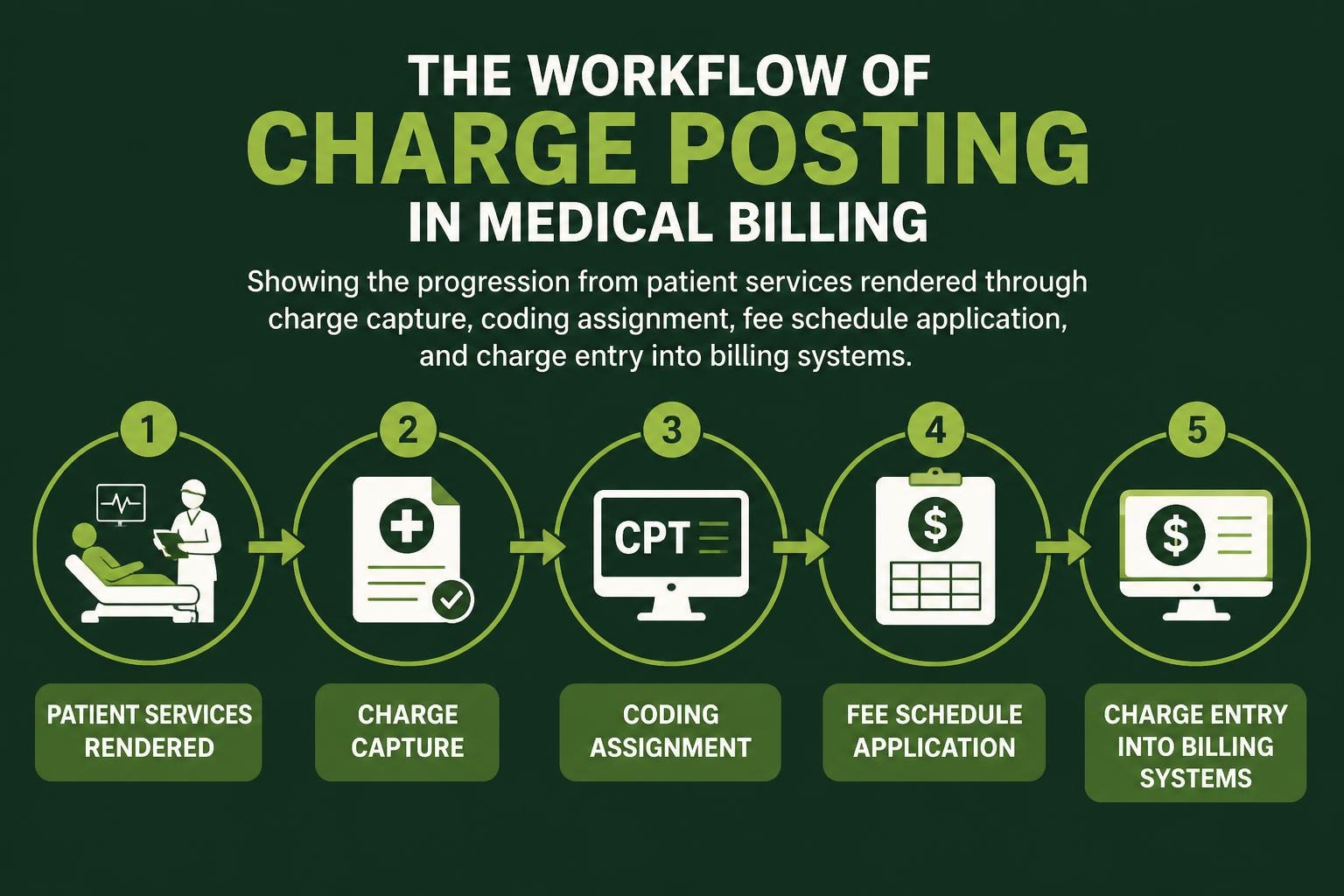
Charge posting in medical billing represents one of the most critical yet often underestimated steps in the revenue cycle management process. This essential function involves accurately recording all patient services, procedures, and supplies into the billing system to ensure healthcare providers receive appropriate reimbursement. When executed correctly, charge posting creates a foundation for clean claims submission, timely payment, and sustained financial health. However, errors during this phase can cascade through the entire revenue cycle, resulting in claim denials, delayed payments, and revenue leakage that impacts a practice’s bottom line.
Understanding the Fundamentals of Charge Posting
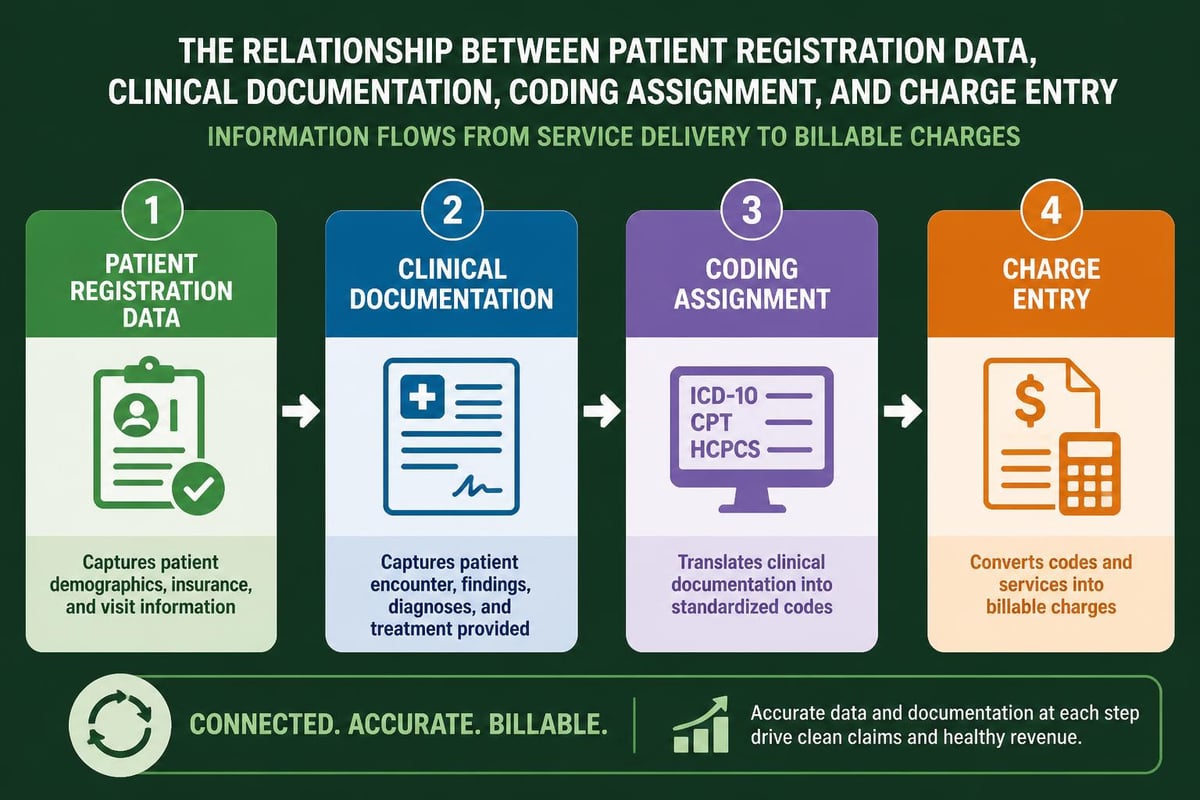
Charge posting in medical billing serves as the bridge between clinical documentation and financial reimbursement. This process transforms the services provided during a patient encounter into billable charges that insurance companies and patients can process for payment.
The Core Components of Effective Charge Posting
Every charge posting transaction requires several essential elements to be complete and accurate. The patient’s demographic information must be current and verified, including insurance coverage details that were confirmed during insurance eligibility verification. Service dates must be precisely documented, as even a single-day discrepancy can trigger claim rejections.
Key data points required for accurate charge posting include:
- CPT and HCPCS codes representing procedures and services
- ICD-10 diagnosis codes supporting medical necessity
- Modifiers indicating special circumstances or additional information
- Units of service reflecting the quantity of procedures performed
- Place of service codes identifying where care was delivered
- Rendering provider information and credentials
Fee schedules determine the charges applied to each code, and these must align with payer contracts and compliance regulations. The Integrating the Healthcare Enterprise provides comprehensive documentation on standardized charge posting workflows that facilitate information exchange between department systems and billing platforms.
How Charge Posting Differs from Charge Entry
While frequently used interchangeably, charge posting and charge entry in medical billing have subtle distinctions that matter in revenue cycle operations. Charge entry encompasses the initial recording of services into a practice management system, often completed by front-office staff immediately after an encounter.
Charge posting involves a more comprehensive process that includes verification, validation, and reconciliation of those charges. This step typically occurs in the billing department where trained specialists review charges for accuracy, completeness, and compliance before submission to payers. Understanding this distinction helps healthcare organizations allocate resources appropriately and implement quality controls at the right points in their workflow.
The Impact of Accurate Charge Posting on Revenue Cycle Performance
Revenue cycle efficiency depends heavily on the precision and timeliness of charge posting activities. Each delay or error compounds throughout subsequent billing stages, affecting days in accounts receivable, collection rates, and overall financial performance.
Financial Consequences of Charge Posting Errors
Inaccurate charge posting creates a domino effect that resonates through every aspect of revenue cycle management. Undercoding leads to lost revenue as providers fail to capture payment for services rendered. Overcoding exposes practices to compliance risks, potential audits, and allegations of fraudulent billing practices.
| Error Type | Revenue Impact | Compliance Risk | Correction Difficulty |
|---|---|---|---|
| Missing charges | High revenue loss | Low | Moderate |
| Incorrect codes | Variable loss/gain | High | High |
| Wrong modifiers | Denial/reduction | Moderate | Moderate |
| Duplicate entries | Delayed payment | Moderate | Low |
| Fee schedule errors | Revenue variance | Low | Low |
The Consumer Financial Protection Bureau has highlighted concerns about double billing and inflated charges in medical debt collection, emphasizing how critical accurate charge posting has become for maintaining patient trust and regulatory compliance.
Charge Posting’s Role in Clean Claims Submission
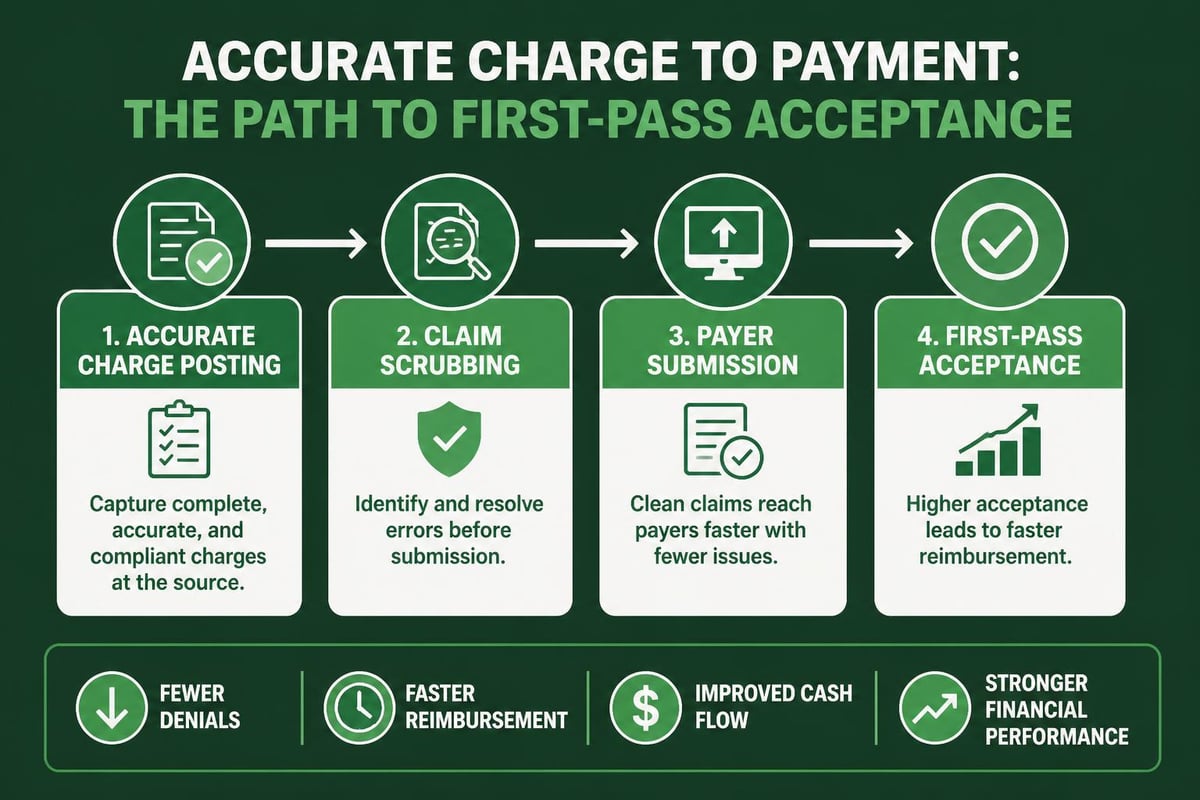
A clean claim in medical billing requires accurate charge posting as its foundation. When charges are posted correctly from the outset, claims pass through payer edits without rejection, accelerating payment cycles and reducing administrative burden on billing teams.
Clean claim rates directly correlate with charge posting accuracy. Practices that implement robust charge posting protocols consistently achieve clean claim rates above 95%, while those with loose controls often struggle to reach 85%. This 10-point difference translates to substantial financial impact when multiplied across thousands of claims annually.
Best Practices for Implementing Robust Charge Posting Procedures
Healthcare organizations that excel at charge posting share common characteristics in their approach to this critical function. These practices establish standardized workflows, invest in staff training, and leverage technology to minimize errors while maximizing efficiency.
Developing Standardized Charge Posting Workflows
Consistency forms the backbone of reliable charge posting operations. Standardized procedures ensure every team member follows identical protocols regardless of service type, specialty, or payer requirements.
Step-by-step charge posting workflow:
- Verify patient registration and insurance information against current eligibility data
- Review clinical documentation for completeness and clarity of services rendered
- Validate coding assignments ensuring alignment between diagnosis and procedure codes
- Apply appropriate fee schedules based on payer contracts and service locations
- Enter charges into the billing system with all required fields completed
- Perform quality control review checking for common errors and missing information
- Reconcile charges against encounter forms to confirm nothing was missed
- Submit batches according to payer timelines to avoid untimely filing denials
This structured approach, when combined with regular audits, creates accountability and provides opportunities to identify improvement areas. Understanding what billing and coding specialists contribute helps practices allocate appropriate expertise to charge posting functions.
Leveraging Technology for Charge Posting Accuracy
Modern practice management and billing systems offer sophisticated tools that enhance charge posting precision. Automated charge capture systems pull service information directly from electronic health records, reducing manual entry errors and ensuring charges are captured at the point of care.
Edit checks built into billing software flag potential issues before charges are posted, such as missing modifiers, unbundling errors, or medical necessity concerns. These real-time validations allow billing staff to address problems immediately rather than discovering them after claim submission.
Integration between clinical and financial systems streamlines revenue cycle medical billing operations by eliminating duplicate data entry and ensuring consistency across platforms. When an order is placed in the EHR, corresponding charges can automatically populate in the billing system, subject to professional review and confirmation.
Common Charge Posting Challenges and Solutions
Despite best efforts, healthcare organizations encounter recurring obstacles in their charge posting operations. Recognizing these challenges and implementing targeted solutions prevents them from becoming chronic revenue cycle weaknesses.
Addressing Charge Lag and Timing Issues
Charge lag-the delay between service delivery and charge posting-represents one of the most prevalent challenges in medical billing. Services provided on one day might not be posted for several days or even weeks, creating cash flow disruptions and increasing the risk of untimely filing denials.
Multiple factors contribute to charge lag, including incomplete documentation, missing encounter forms, coding backlogs, and staffing constraints. The Centers for Medicare & Medicaid Services provides guidance on understanding medical bills, which helps identify when timing issues may affect patient statements and payment expectations.
Solutions to minimize charge lag include implementing daily charge posting schedules rather than batch processing, establishing documentation completion deadlines for providers, and utilizing automated charge capture for routine services. Setting key performance indicators around charge lag metrics helps maintain accountability and identifies when intervention is needed.
Managing Complex Coding Scenarios
Certain specialties and service types present unique charge posting complexities that require specialized knowledge. Surgical procedures involving multiple physicians, time-based services requiring minute tracking, and bundled payment arrangements all demand careful attention during charge posting.
Understanding different types of medical coding helps billing teams navigate these complex scenarios. Professional coders should review complicated cases before charges are posted to ensure appropriate code selection and modifier application.
| Service Type | Common Challenge | Solution Approach |
|---|---|---|
| Multi-provider surgeries | Determining split/co-surgery modifiers | Establish clear protocols with surgeons |
| Time-based codes | Accurate minute documentation | Implement time-tracking templates |
| Bundled services | Identifying separately billable components | Create specialty-specific charge capture tools |
| Global periods | Managing related services within global days | Build system alerts for global period tracking |
| Telehealth visits | Correct place of service and modifier usage | Regular updates on evolving telehealth policies |
Quality Control and Charge Posting Audits
Ongoing monitoring and periodic auditing of charge posting activities ensure accuracy is maintained over time and identify opportunities for process improvement. Quality control should be embedded into daily operations rather than conducted only during retrospective reviews.
Implementing Daily Charge Reconciliation
Daily reconciliation compares charges posted in the billing system against appointment schedules, procedure logs, and other service records. This process identifies missing charges before they exceed payer filing limits and catches duplicate entries that could delay payment.
Essential elements of effective charge reconciliation:
- Comparison of posted charges against daily appointment schedules
- Review of high-volume procedure codes for pattern consistency
- Identification of incomplete charges requiring additional information
- Verification of charge quantities against supply usage records
- Confirmation that all rendering providers have charges posted
Reconciliation becomes particularly critical in high-volume settings where missed charges can quickly accumulate into significant revenue loss. Establishing clear ownership for reconciliation tasks ensures this important control doesn’t fall through the cracks during busy periods.
Conducting Comprehensive Charge Posting Audits
Beyond daily reconciliation, periodic comprehensive audits examine charge posting accuracy across multiple dimensions. These audits assess coding accuracy, fee schedule application, modifier usage, and compliance with payer-specific requirements.
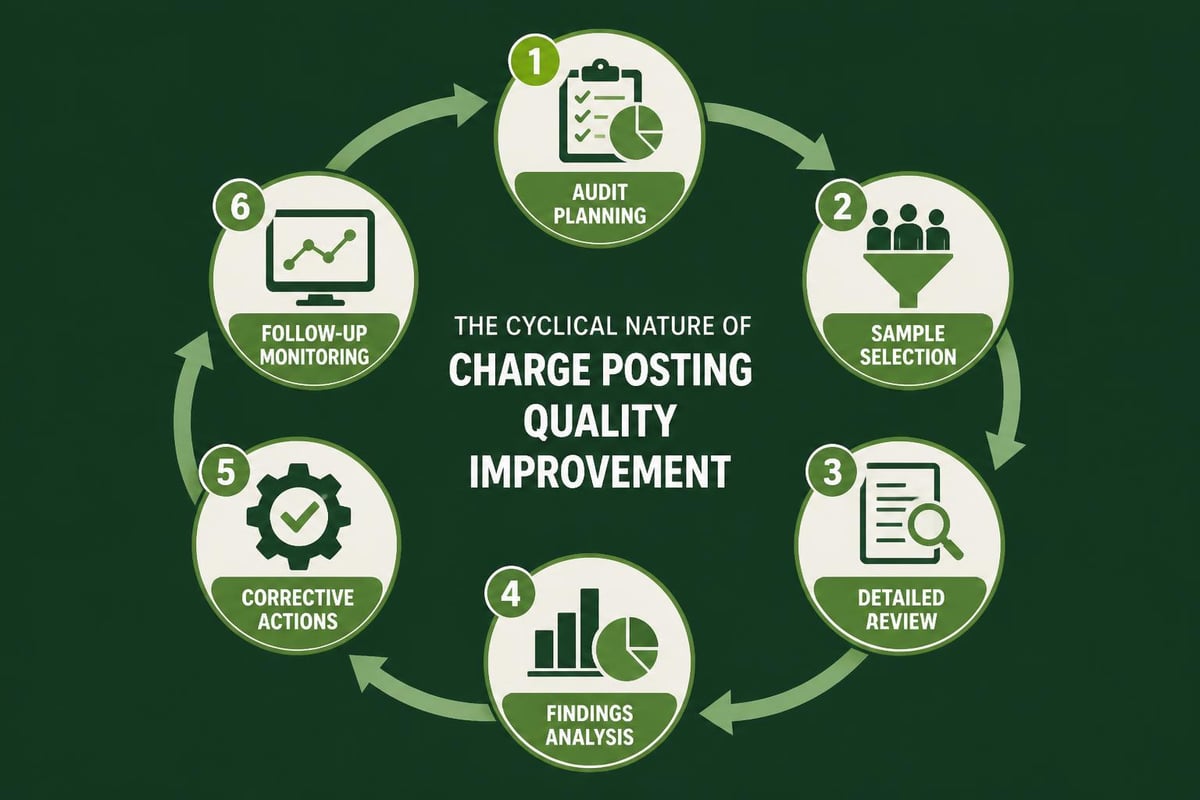
Internal audits should sample charges across different providers, specialties, payers, and service types to ensure broad coverage. Findings from these audits drive targeted training, procedure updates, and system enhancements that prevent recurring errors.
External audits by compliance consultants or payer representatives provide additional validation and often identify blind spots internal teams may overlook. While sometimes uncomfortable, these reviews protect practices from more serious consequences of systematic billing errors. CMS offers guidance on checking bills for errors, which provides a framework for audit approaches.
Training and Staff Development for Charge Posting Excellence
Human expertise remains central to effective charge posting despite technological advances. Well-trained staff who understand both the technical and strategic aspects of charge posting become invaluable assets to healthcare organizations.
Building Competency in Medical Coding and Billing
Charge posting accuracy depends on solid foundational knowledge in medical terminology, anatomy, coding systems, and payer policies. Staff members responsible for charge posting should receive comprehensive training in CPT codes, ICD-10 diagnosis coding, and various types of modifiers in medical billing.
Continuing education keeps billing teams current with annual code updates, emerging payer requirements, and regulatory changes affecting charge posting. Professional certifications through organizations like AAPC or AHIMA demonstrate competency and commitment to maintaining current knowledge.
Cross-training staff across multiple specialties or service lines creates flexibility and provides backup coverage during absences. This approach also helps team members understand the broader revenue cycle context for their charge posting work.
Creating Performance Metrics and Accountability
Clear performance expectations and measurable goals drive continuous improvement in charge posting operations. Metrics should balance accuracy, productivity, and timeliness to encourage comprehensive excellence rather than optimizing one dimension at the expense of others.
Key performance indicators for charge posting include:
- Charge lag (days between service and posting)
- Charge posting accuracy rate (percentage error-free)
- Charges per hour posted (productivity measure)
- Missing charge identification rate (reconciliation effectiveness)
- Charge correction rate (rework frequency)
Regular performance discussions that review these metrics help staff understand their impact on overall revenue cycle performance. Recognition programs celebrating accuracy milestones and improvement achievements foster engagement and pride in quality work.
Integrating Charge Posting with Broader Revenue Cycle Management
Charge posting doesn’t exist in isolation but rather as one interconnected component within comprehensive revenue cycle management. Understanding these connections helps optimize workflows and maximize financial outcomes.
The Relationship Between Charge Posting and Denial Management
While charge posting occurs early in the revenue cycle, its quality directly influences denial management in medical billing downstream. Many claim denials trace back to charge posting errors that could have been prevented with stronger upfront controls.
Common denial reasons linked to charge posting include incorrect patient information, invalid code combinations, missing or incorrect modifiers, services not covered for the diagnosis, and duplicate charges. Each denial requires staff time to research, correct, and resubmit, creating administrative costs that eliminate profit margins on those encounters.
Analyzing denial patterns to identify root causes in charge posting processes creates a feedback loop that drives continuous improvement. When denial management teams share insights with charge posting staff, both functions benefit from enhanced understanding and collaboration.
Supporting Revenue Integrity Through Accurate Charge Capture
Revenue integrity encompasses ensuring healthcare organizations capture all revenue they’ve earned while maintaining compliance with regulatory and payer requirements. Charge posting serves as a critical control point for revenue integrity by validating that charges accurately reflect documented services.
Revenue coding and charge posting work together to ensure services are appropriately classified and billed. When these functions operate in alignment, healthcare organizations achieve optimal reimbursement without exposing themselves to compliance risks.
Regular charge description master (CDM) reviews ensure fee schedules remain current and competitive while complying with applicable regulations. Outdated or incorrect fee schedules undermine even the most accurate charge posting processes by applying wrong amounts to correct codes.
Compliance Considerations in Charge Posting Operations
Regulatory compliance represents a non-negotiable aspect of charge posting in medical billing. Healthcare organizations face significant penalties for billing violations, making compliance integration essential rather than optional.
Federal and State Billing Regulations
Charge posting must comply with federal regulations including the False Claims Act, Stark Law, Anti-Kickback Statute, and HIPAA privacy requirements. These laws govern everything from accurate service representation to appropriate use of patient information during billing processes.
State regulations add another compliance layer with requirements varying by jurisdiction. Pennsylvania’s regulations on billing transactions provide one example of state-level requirements that may affect charge posting procedures.
Documentation supporting charges must be maintained according to retention requirements, typically seven to ten years depending on payer type and state law. This documentation proves charges were appropriately posted if audited years after service delivery.
Avoiding Common Compliance Pitfalls
Several compliance risks arise frequently in charge posting operations. Upcoding-billing for more complex or expensive services than were actually provided-represents one of the most serious violations. Unbundling, or billing separately for services that should be reported together, similarly triggers compliance concerns.
Balance billing practices, where providers bill patients for amounts beyond insurance coverage, require careful navigation. Understanding balance billing helps ensure charge posting supports compliant patient billing practices.
Medical necessity documentation must support every charge posted. When diagnosis codes fail to justify procedure codes, claims may be denied or flagged for review. Charge posting staff should verify that documentation supports medical necessity before finalizing charges.
Technology Trends Shaping the Future of Charge Posting
Innovation continues transforming how healthcare organizations approach charge posting, with emerging technologies offering new opportunities for accuracy, efficiency, and integration.
Artificial Intelligence and Automated Charge Capture
Artificial intelligence applications in medical billing increasingly support charge posting activities. Natural language processing can extract billable services from clinical notes, suggesting appropriate codes for review and confirmation by human coders.
Machine learning algorithms identify patterns in historical charge data to flag anomalies that may represent errors or compliance risks. These tools continuously improve as they process more data, becoming increasingly accurate over time.
While research on AI in healthcare demonstrates both promise and limitations, practical applications in charge posting show measurable benefits when properly implemented and monitored. Technology should augment rather than replace human expertise in this critical function.
Cloud-Based Systems and Real-Time Integration
Cloud-based billing platforms enable real-time charge posting from any location, supporting distributed teams and flexible work arrangements. These systems facilitate immediate integration between clinical and financial data, reducing lag and improving accuracy.
Mobile charge capture applications allow providers to enter or verify charges at the point of care using tablets or smartphones. This approach minimizes documentation delays and ensures charges are captured while encounters are fresh in providers’ minds.
Integration with hospital revenue cycle management systems creates seamless information flow across inpatient, outpatient, and professional services. Unified platforms eliminate manual data transfers that introduce errors and delays.
Outsourcing Versus In-House Charge Posting Operations
Healthcare organizations face strategic decisions about whether to maintain charge posting functions internally or partner with specialized revenue cycle management service providers. Each approach offers distinct advantages depending on organizational circumstances.
Evaluating the In-House Approach
In-house charge posting provides direct control over processes, staff, and quality standards. Organizations can implement customized workflows aligned with their specific needs and culture. Communication between clinical and billing staff may be more immediate when everyone works within the same organization.
However, in-house operations require continuous investment in staff recruitment, training, technology, and supervision. Maintaining current expertise across constantly evolving coding and billing requirements challenges even large healthcare organizations with dedicated resources.
Benefits of Partnering with Specialized Service Providers
Professional revenue cycle management services bring specialized expertise, established processes, and economies of scale to charge posting operations. These providers maintain current knowledge across multiple specialties and payer types, reducing compliance risks and maximizing reimbursement.
Scalability represents another advantage, as service providers can quickly adjust capacity during volume fluctuations without requiring client organizations to hire or reduce staff. Technology investments are spread across multiple clients, giving access to sophisticated platforms that might be cost-prohibitive for individual practices.
Top medical billing companies demonstrate how specialized providers deliver comprehensive revenue cycle support including expert charge posting services. These partnerships allow healthcare organizations to focus resources on clinical care while ensuring billing functions receive dedicated professional attention.
Mastering charge posting in medical billing establishes the foundation for financial success in healthcare organizations. From accurate code assignment through timely entry and quality verification, each element contributes to optimized revenue cycle performance. When you’re ready to enhance your charge posting accuracy and accelerate your reimbursement timeline, Greenhive Billing Solutions offers comprehensive revenue cycle management services tailored to your practice’s unique needs. Our team of experienced billing professionals leverages industry-leading platforms and proven processes to maximize your collections while ensuring full compliance, allowing you to focus on delivering exceptional patient care.

