
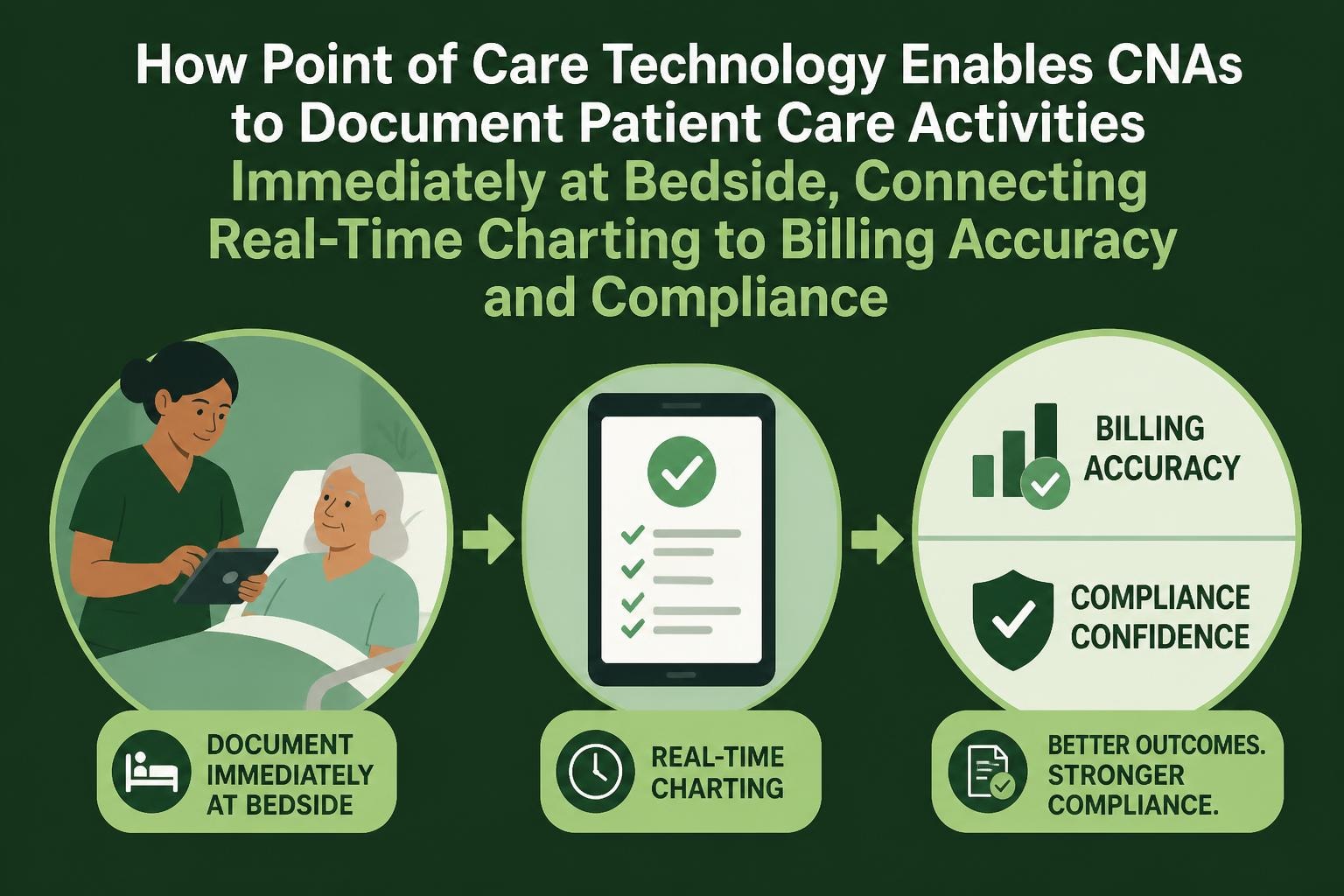
The healthcare industry continues to evolve with technological advances that improve both patient care and administrative efficiency. Certified Nursing Assistants (CNAs) play a critical role in patient care delivery, and the integration of point of care technology has fundamentally changed how these professionals document activities, communicate with care teams, and contribute to accurate billing processes. Understanding what point of care systems mean for CNAs has become essential for healthcare facilities aiming to optimize both clinical outcomes and revenue cycle performance.
Understanding Point of Care CNA Technology
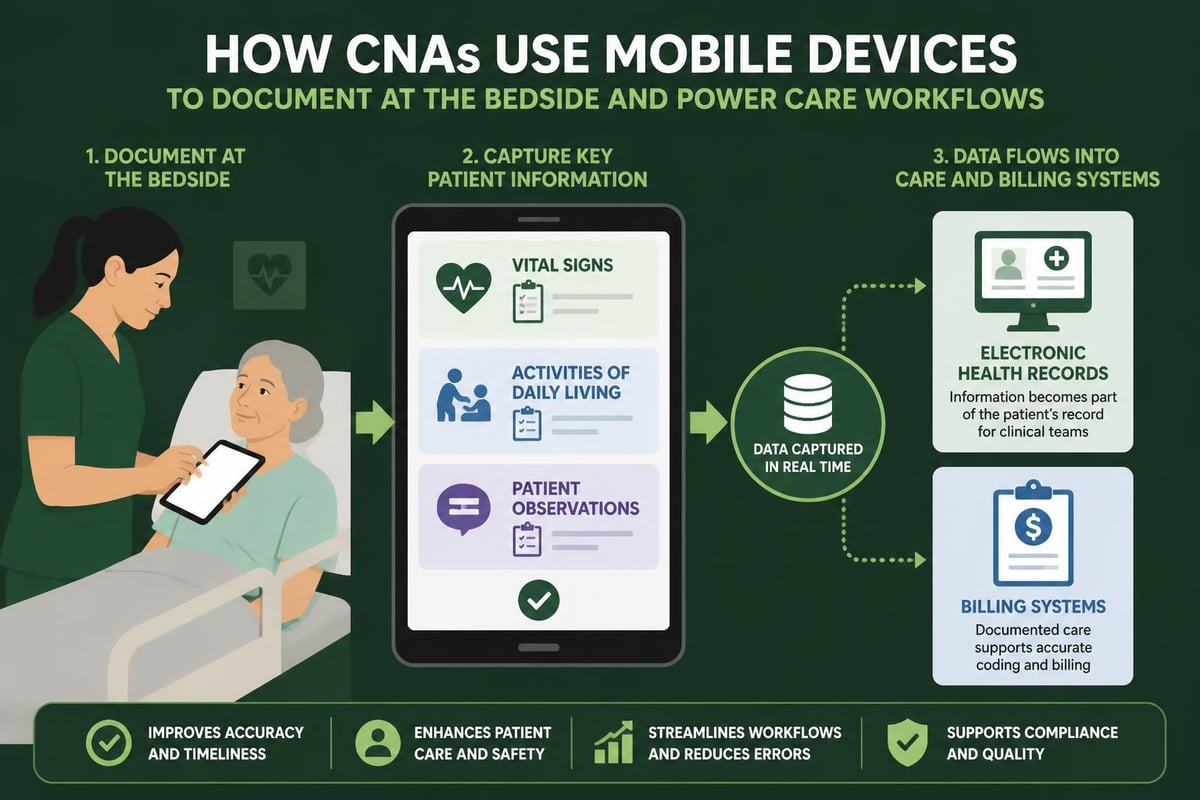
Point of care CNA refers to the use of digital systems and mobile devices that enable nursing assistants to document patient care activities directly at the bedside or location where care is delivered. Rather than relying on paper charts or delayed documentation at a nursing station, CNAs can record vital signs, activities of daily living, patient observations, and other essential information immediately using tablets, smartphones, or dedicated medical devices.
This approach offers significant advantages for healthcare facilities. Real-time documentation reduces errors associated with memory lapses or transcription mistakes. When CNAs document care as it happens, the information remains fresh and accurate, which translates to better quality data for clinical decision-making and billing purposes.
Core Components of Point of Care Systems
Modern point of care CNA systems typically include several integrated features that support both clinical and administrative workflows:
- Mobile charting applications that allow instant documentation of patient encounters
- Barcode scanning capabilities for patient identification and medication verification
- Vital signs monitoring integration that automatically transfers readings to electronic health records
- Task management tools that track completed care activities and schedule upcoming tasks
- Alert systems that notify appropriate staff members of urgent patient needs
The integration of point of care technology in CNA practices demonstrates how these components work together to create a seamless workflow. CNAs can complete their documentation duties more efficiently while spending more direct time with patients.
Impact on Documentation Accuracy and Compliance
Documentation accuracy directly affects revenue cycle management outcomes. When CNAs use point of care systems, they create a detailed electronic trail of services provided, which forms the foundation for accurate billing and compliance with regulatory requirements.
Healthcare facilities must justify every charge submitted to payers with appropriate documentation. Point of care CNA technology ensures that activities of daily living, skilled nursing tasks, and other billable services are properly recorded. This documentation supports claims submitted through medical claim submission services and reduces the likelihood of denials based on insufficient documentation.
Documentation Standards and Requirements
Different care settings have specific documentation requirements that point of care systems help CNAs meet consistently:
| Care Setting | Key Documentation Requirements | Point of Care Benefits |
|---|---|---|
| Nursing Homes | ADLs, behavior patterns, care plan progress | Real-time tracking prevents missed documentation |
| Hospitals | Patient mobility, vital signs, intake/output | Immediate recording reduces transcription errors |
| Assisted Living | Medication administration, resident activities | Mobile access enables documentation anywhere in facility |
| Home Health | Visit times, services rendered, patient status | GPS verification and timestamp validation |
The relationship between documentation quality and denial management services cannot be overstated. Incomplete or inaccurate CNA documentation frequently contributes to claim denials, requiring time-consuming appeals and resubmissions that delay revenue collection.
Revenue Cycle Implications of Point of Care CNA Systems
Point of care CNA technology creates direct connections between clinical care delivery and revenue cycle performance. When CNAs document care activities in real time, this information flows immediately into billing systems, enabling faster claim generation and submission.
Healthcare facilities using comprehensive point of care solutions experience measurable improvements in their revenue cycle metrics. Claims can be submitted more quickly because documentation is complete at the point of service rather than waiting hours or days for manual charting to be transcribed and verified.
Billing Accuracy and Justification
Every service documented by CNAs using point of care systems potentially represents a billable activity or supports the medical necessity of other billed services. Consider these examples:
- Activities of Daily Living (ADLs): Documentation of assistance with bathing, dressing, toileting, and mobility supports skilled nursing facility billing levels
- Vital signs monitoring: Regular vital sign documentation justifies monitoring charges and demonstrates medical necessity for higher acuity levels
- Nutritional support: Recording intake and feeding assistance validates dietary services and nutritional intervention billing
- Behavioral observations: Detailed behavioral documentation supports specialized care charges and justifies staffing ratios
Eligibility verification services work more effectively when point of care documentation provides clear evidence of services rendered. Payers increasingly scrutinize claims for medical necessity, and detailed CNA documentation creates the paper trail needed to support coverage determinations.
Implementation Strategies for Healthcare Facilities
Successfully implementing point of care CNA technology requires thoughtful planning and execution. Healthcare organizations must consider workflow changes, staff training requirements, technology infrastructure, and integration with existing systems.
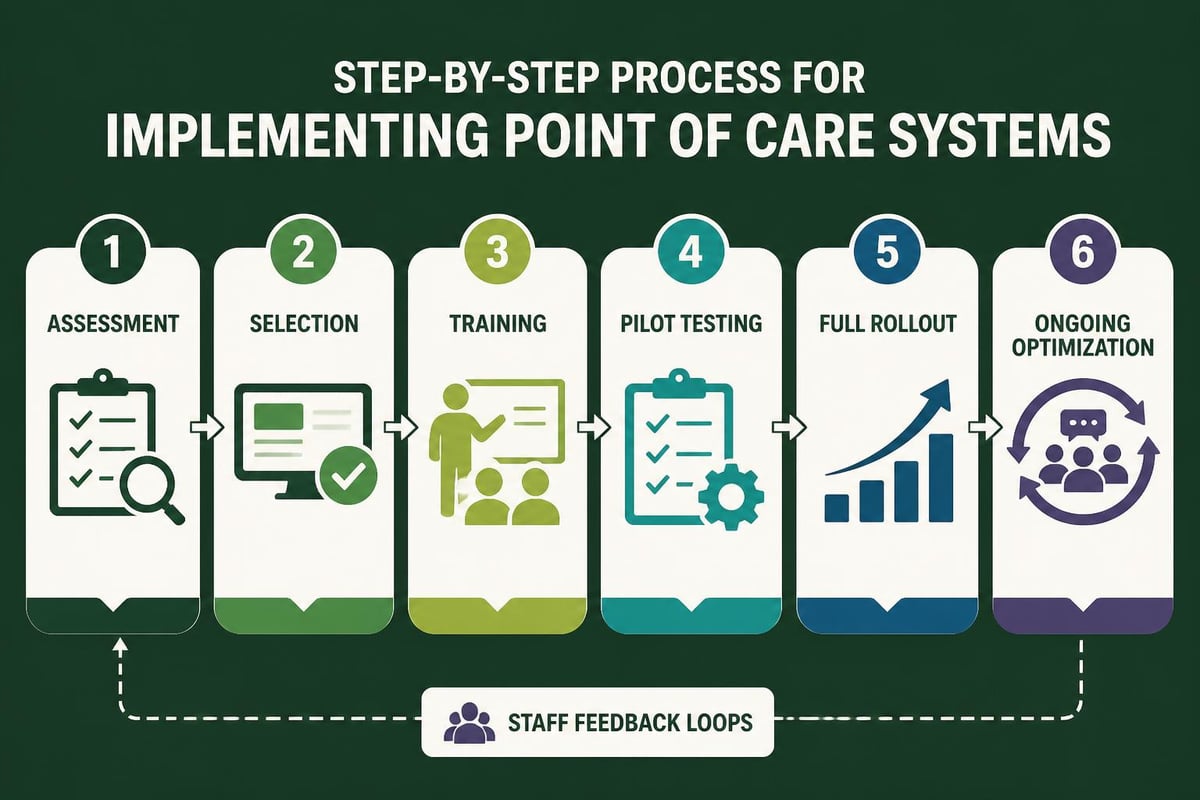
The implementation process typically follows these steps:
- Assessment Phase: Evaluate current documentation workflows, identify pain points, and establish goals for improvement
- System Selection: Choose point of care technology that integrates with existing electronic health records and billing systems
- Infrastructure Preparation: Ensure adequate Wi-Fi coverage, mobile device availability, and technical support resources
- Staff Training: Provide comprehensive education for CNAs and supervisory staff on new documentation procedures
- Pilot Testing: Launch the system with a small group to identify issues before full deployment
- Full Rollout: Expand implementation across all units with ongoing support and troubleshooting
- Continuous Optimization: Monitor usage patterns, gather feedback, and refine workflows based on real-world experience
Training and Adoption Challenges
CNAs represent a diverse workforce with varying levels of technological comfort. Successful adoption requires training programs that accommodate different learning styles and experience levels. Hands-on practice sessions, peer mentoring, and readily available technical support help CNAs transition confidently to digital documentation.
Resistance to change often stems from concerns about increased workload or technology complexity. Healthcare facilities that emphasize the time-saving benefits and involve CNAs in the selection process typically achieve higher adoption rates and better long-term outcomes.
Integration with Revenue Cycle Management Processes
Point of care CNA documentation creates valuable data that supports multiple revenue cycle functions beyond basic claim submission. This information enables more accurate coding, supports medical necessity determinations, and provides evidence for appeal processes when claims are denied.
The connection between clinical documentation and coding accuracy is particularly important. Medical coders rely on complete documentation to assign appropriate diagnosis and procedure codes. When CNAs provide detailed descriptions of patient conditions and care activities using point of care systems, coders can work more efficiently and accurately.
Healthcare organizations partnering with experienced medical billing services gain additional advantages when their point of care CNA systems generate high-quality documentation. Revenue cycle management specialists can process claims faster and more accurately when supporting documentation is thorough and readily accessible.
Audit Preparedness and Compliance
Point of care CNA systems create comprehensive audit trails that protect healthcare facilities during payer audits and regulatory reviews. Every documentation entry includes timestamps, user identification, and location data, making it easy to verify when and where care was delivered.
This detailed tracking supports compliance with various regulations:
- HIPAA requirements for access controls and audit logs
- Medicare Conditions of Participation for timely, accurate documentation
- State licensure standards for specific care setting documentation requirements
- Accreditation standards from organizations like Joint Commission or CARF
When auditors request documentation to verify billed services, facilities with point of care systems can quickly retrieve complete records showing exactly what care was provided, by whom, and when it occurred.
Technology Solutions and Platform Considerations
Healthcare facilities have numerous options when selecting point of care CNA technology. Point of care software solutions vary in features, integration capabilities, and user interface design. Organizations should evaluate platforms based on their specific needs and existing technology infrastructure.
Key evaluation criteria include:
- EHR integration: Seamless data flow between point of care systems and electronic health records
- Mobile device compatibility: Support for various tablets, smartphones, and dedicated medical devices
- Offline functionality: Ability to document when Wi-Fi connectivity is temporarily unavailable
- Customization options: Configurable forms and workflows matching facility-specific requirements
- Reporting capabilities: Built-in analytics for monitoring documentation compliance and quality metrics
- Vendor support: Training resources, technical assistance, and ongoing system updates
The right platform selection influences both clinical outcomes and revenue cycle performance. Systems that are intuitive and efficient encourage consistent use by CNAs, while those with poor user experience may lead to incomplete documentation or workarounds that undermine the intended benefits.
Emerging Technologies in Point of Care Documentation
Innovation continues to advance point of care capabilities beyond basic charting functions. AI clinical assistants at the point of care represent emerging technologies that may transform how CNAs interact with documentation systems. Voice-activated documentation, predictive analytics for patient risk assessment, and automated data entry from connected medical devices are becoming increasingly sophisticated.
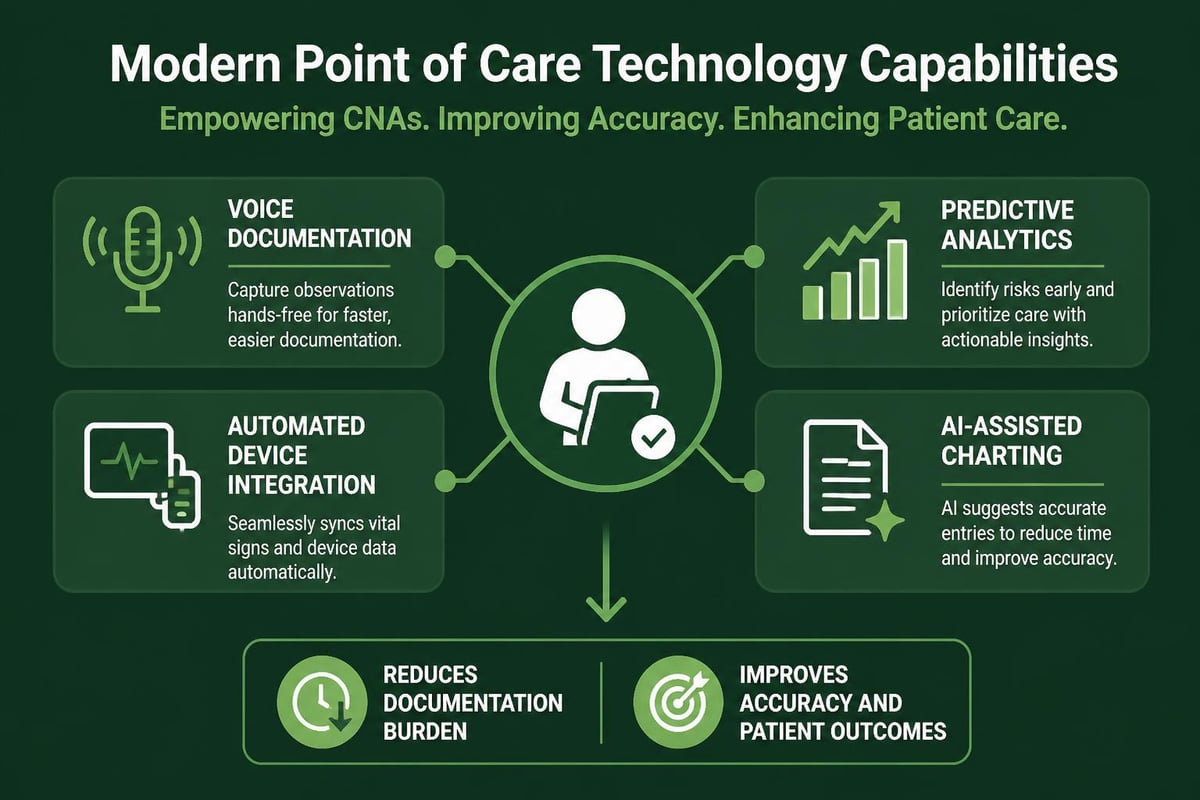
These advances promise to reduce the documentation burden on CNAs while simultaneously improving data quality. As artificial intelligence and machine learning technologies mature, they will likely play larger roles in assisting CNAs with pattern recognition, early warning systems for patient deterioration, and automated documentation suggestions based on observed trends.
Measuring Success and Return on Investment
Healthcare facilities implementing point of care CNA technology should establish clear metrics for evaluating success and calculating return on investment. Both clinical and financial indicators provide important insights into system effectiveness.
Clinical quality metrics influenced by point of care documentation include:
- Documentation completion rates: Percentage of required documentation elements completed within specified timeframes
- Error rates: Frequency of documentation corrections or amendments needed after initial entry
- Care plan compliance: Adherence to individualized care plans as evidenced by documentation
- Patient safety indicators: Reduction in falls, pressure injuries, or other preventable complications through better monitoring
Financial performance metrics demonstrate revenue cycle impact:
| Metric | Pre-Implementation Baseline | Post-Implementation Target | Typical Improvement |
|---|---|---|---|
| Days in A/R | 45-50 days | 35-40 days | 20-25% reduction |
| Clean Claim Rate | 85-90% | 95-98% | 8-12% improvement |
| Denial Rate | 8-12% | 3-5% | 50-60% reduction |
| Documentation Compliance | 75-85% | 95-99% | 15-20% improvement |
These improvements translate directly to enhanced cash flow and reduced administrative costs. Organizations working with specialized revenue cycle management services can leverage point of care documentation to accelerate payment collection and minimize revenue leakage.
Staff Satisfaction and Workflow Efficiency
Beyond clinical and financial outcomes, point of care CNA technology significantly impacts staff satisfaction and retention. CNAs appreciate tools that make their work easier and allow more time for direct patient care rather than paperwork.
Studies consistently show that healthcare workers value technology that:
- Reduces redundant documentation by eliminating duplicate data entry
- Provides clear task lists so CNAs know exactly what needs to be accomplished
- Offers mobile flexibility allowing documentation anywhere in the facility
- Integrates communication tools enabling quick consultation with nurses and other team members
- Minimizes end-of-shift charting by capturing information throughout the day
When CNAs feel supported by efficient technology, facilities experience lower turnover rates and improved recruitment outcomes. The cost savings from reduced staff turnover often justify technology investments even before considering direct revenue cycle improvements.
Balancing Technology and Human Touch
While point of care systems offer numerous benefits, successful implementation maintains focus on the human aspects of caregiving. Technology should enhance rather than replace the therapeutic relationships CNAs build with patients. The most effective implementations position technology as a tool that frees CNAs to spend more quality time with patients by eliminating administrative bottlenecks.
Healthcare facilities must communicate this vision clearly during implementation and reinforce it through ongoing leadership support. When CNAs understand that point of care technology serves to support their patient care mission rather than burden them with additional requirements, adoption proceeds more smoothly and sustainably.
Future Trends and Strategic Planning
The healthcare industry continues evolving toward greater integration of technology across all care delivery settings. Point of care CNA systems will increasingly connect with broader health information exchanges, wearable patient monitoring devices, and predictive analytics platforms.
Forward-thinking healthcare organizations should consider these emerging trends when planning technology investments:
- Interoperability standards enabling data sharing across different systems and organizations
- Consumer-facing portals where patients and families can view CNA documentation about care activities
- Value-based care metrics that tie CNA documentation to quality outcomes and payment models
- Telehealth integration allowing remote supervision and consultation during point of care documentation
- Blockchain security for enhanced data protection and audit trail integrity
Organizations that understand how point of care CNA technology fits into broader strategic initiatives position themselves for long-term success. The role of point-of-care CNAs in nursing homes continues expanding as regulatory requirements and payment models demand more sophisticated documentation and care coordination.
Healthcare facilities should regularly reassess their point of care systems to ensure they remain aligned with industry best practices and organizational goals. Technology that served well five years ago may no longer meet current needs as standards evolve and new capabilities become available.
Operational Considerations for Multi-Facility Organizations
Healthcare organizations operating multiple facilities face unique challenges implementing consistent point of care CNA practices across different locations. Standardization offers significant advantages for training, quality monitoring, and aggregate reporting, but facilities may have legitimate operational differences requiring flexibility.
Successful multi-site implementations typically establish:
- Core documentation standards applicable across all locations with allowances for site-specific variations
- Centralized training programs ensuring consistent education quality while accommodating local scheduling needs
- Shared best practices through regular communication among facility leaders and super-users
- Consolidated reporting enabling executive leadership to monitor performance across the enterprise
- Economies of scale through negotiated vendor contracts and shared technical infrastructure
Organizations managing medical billing across multiple locations benefit substantially from standardized point of care documentation. Consistent documentation practices streamline medical coding services and reduce the complexity of managing different workflows at each facility.
Point of care CNA technology represents a critical intersection of clinical care delivery and revenue cycle management, enabling real-time documentation that improves both patient outcomes and financial performance. Healthcare facilities that successfully implement these systems create competitive advantages through enhanced compliance, reduced claim denials, and improved staff satisfaction. Greenhive Billing Solutions helps healthcare providers optimize their revenue cycle processes by working seamlessly with point of care documentation systems to ensure accurate claim submission, minimize denials, and maximize reimbursements. Our experienced team understands how quality CNA documentation supports successful billing outcomes and can help your organization leverage these technologies for improved financial performance.

