
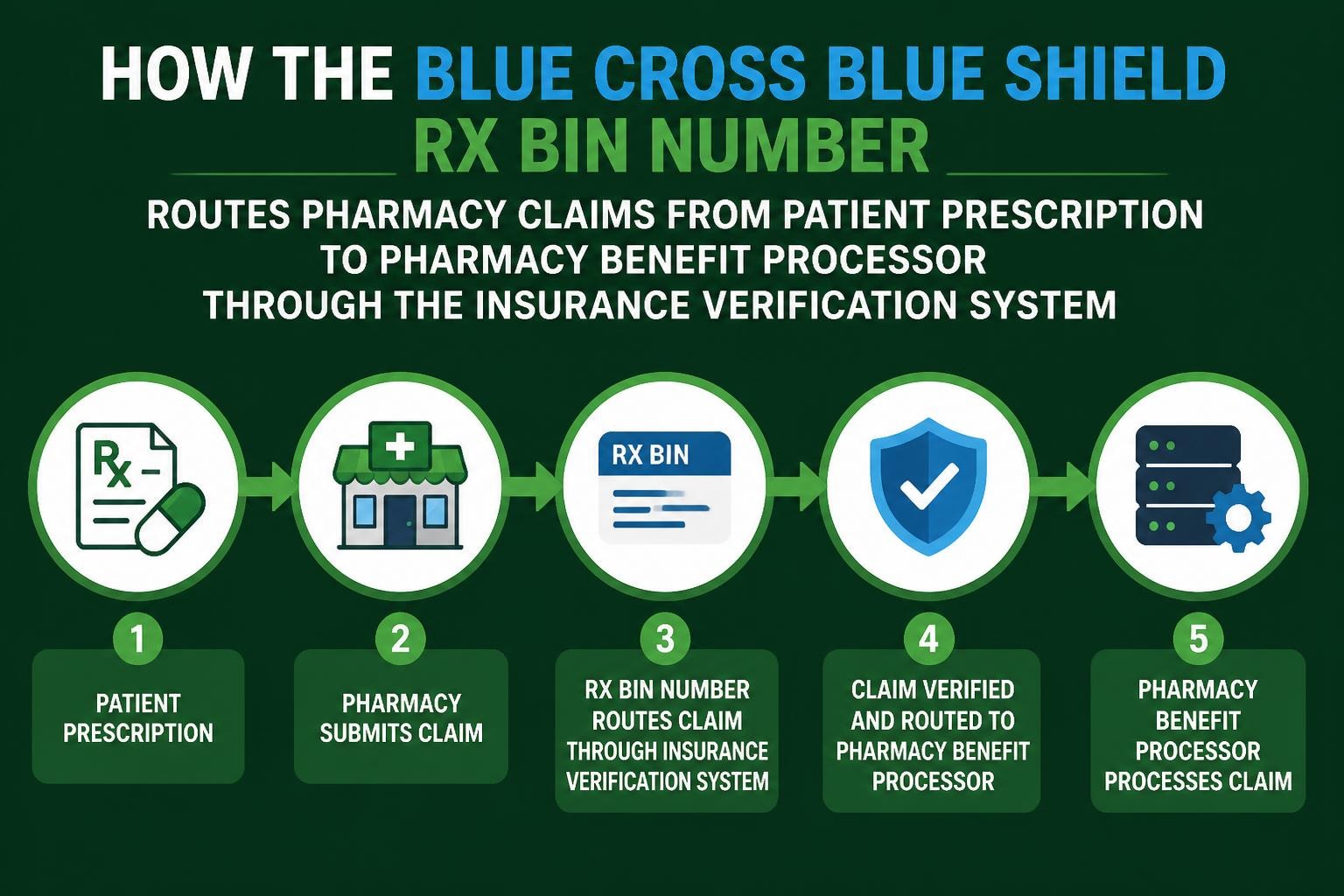
Understanding the blue cross blue shield rx bin number is essential for healthcare providers who process pharmacy claims and verify patient benefits. This unique identifier serves as a critical routing mechanism within the prescription claims processing system, directing pharmacy transactions to the appropriate pharmacy benefit manager or insurance processor. For revenue cycle management teams working with Blue Cross Blue Shield patients, knowing how to locate, interpret, and properly use the RX BIN number can significantly reduce claim denials and accelerate reimbursement cycles. This guide explores the practical applications of the blue cross blue shield rx bin number and its role in streamlining pharmacy benefits verification for healthcare organizations.
What Is the Blue Cross Blue Shield RX BIN Number
The blue cross blue shield rx bin number is a six-digit identification code that appears on insurance cards and facilitates the routing of prescription drug claims to the correct pharmacy benefit processor. This number functions as an electronic address within the pharmacy claims network, ensuring that when a patient fills a prescription, the transaction reaches the appropriate payer system for adjudication.
The BIN number works alongside other prescription identifiers:
- PCN (Processor Control Number): Provides additional routing information within the processor’s system
- Group ID: Identifies the specific benefit plan or employer group
- Member ID: Uniquely identifies the individual patient within the plan
The term “BIN” stands for Bank Identification Number, a terminology borrowed from the banking industry where similar routing numbers direct financial transactions to specific institutions. In healthcare, the RX BIN number serves as the primary routing mechanism for pharmacy claims, distinguishing between different pharmacy benefit managers and processing networks.
Why Revenue Cycle Management Teams Need to Understand RX BIN Numbers
Healthcare providers who dispense medications directly or coordinate with pharmacies for patient care must understand how the blue cross blue shield rx bin number functions within their billing workflows. When staff members verify patient eligibility or process pharmacy-related services, having accurate BIN information prevents claim rejections and reduces administrative burden.
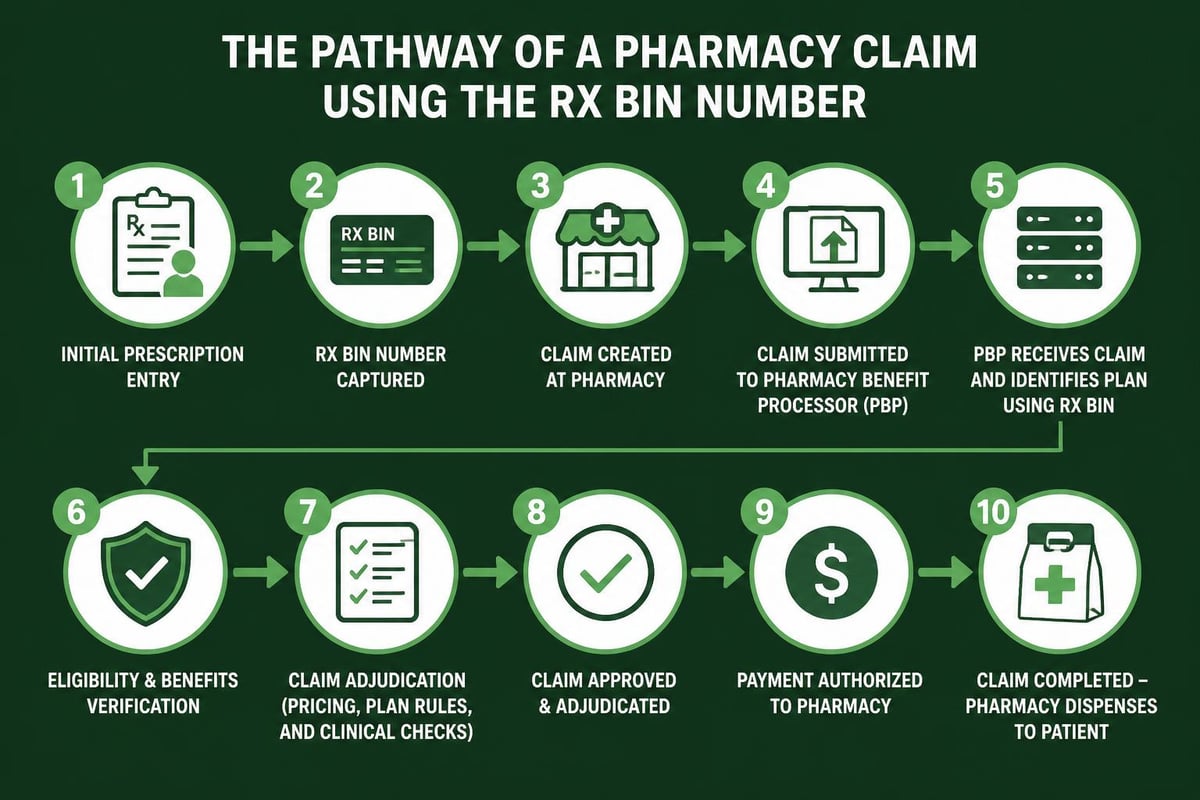
Revenue cycle professionals encounter RX BIN numbers in several scenarios. Clinics with in-house pharmacies must enter the correct BIN during claim submission. Medical practices that administer medications during office visits need to verify pharmacy benefits before providing treatment. Billing specialists who follow up on denied pharmacy claims frequently need to confirm that the correct blue cross blue shield rx bin number was used during the original transaction.
Where to Find the Blue Cross Blue Shield RX BIN Number
The blue cross blue shield rx bin number typically appears on the back of the insurance card within a designated prescription benefits section. Different Blue Cross Blue Shield plans position this information in varying locations, but most cards follow a standardized format that separates medical benefits information from pharmacy benefits details.
| Card Section | Typical Location | Information Included |
|---|---|---|
| Front of Card | Primary area | Member ID, Group Number, Plan Type |
| Back of Card – Medical | Upper section | Medical claims addresses, phone numbers |
| Back of Card – Pharmacy | Lower section | RX BIN, RX PCN, RX Group, pharmacy phone |
According to Blue Cross Blue Shield’s official guidance on ID cards, the pharmacy section clearly labels the BIN number alongside other prescription identifiers. Some plans use headings like “Pharmacy Benefits” or “RX Information” to delineate this section from medical coverage details.
Variations Across Blue Cross Blue Shield Plans
Blue Cross Blue Shield operates as a federation of independent companies, meaning that each state or regional plan may use different pharmacy benefit managers and therefore different RX BIN numbers. A patient with Blue Cross Blue Shield of Massachusetts may have a completely different blue cross blue shield rx bin number than a patient with Blue Cross Blue Shield of Texas, even if both have similar coverage levels.
Common RX BIN variations include:
- Plans using CVS Caremark as the pharmacy benefit manager
- Plans contracting with Express Scripts for pharmacy services
- Plans utilizing Prime Therapeutics for prescription processing
- Self-administered pharmacy networks managed by the Blue Cross entity
BlueCross BlueShield of Vermont provides specific guidance on reading member ID cards, emphasizing that the RX BIN number must match exactly when submitting pharmacy claims. Even a single digit error can result in immediate claim rejection at the point of sale or during batch processing.
How the RX BIN Number Functions in Claims Processing
When a healthcare provider or pharmacy submits a prescription claim, the blue cross blue shield rx bin number acts as the first gateway in the adjudication process. The claims processing system reads the BIN number and routes the transaction to the designated pharmacy benefit processor, which then evaluates the claim against the patient’s specific benefit plan parameters.
The electronic routing process occurs in milliseconds during real-time adjudication. The pharmacy management system or practice management software transmits the claim with the RX BIN number, PCN, Group ID, and Member ID. The processor’s system validates these credentials, confirms the patient’s eligibility, checks the drug against the plan’s formulary, applies any applicable copayments or deductibles, and returns an approval or denial message.
Integration with Revenue Cycle Management Workflows
For practices that handle revenue cycle management comprehensively, the blue cross blue shield rx bin number becomes part of the initial eligibility verification process. Before administering expensive medications or beginning therapy requiring ongoing prescriptions, billing staff should confirm not just medical coverage but also pharmacy benefits using the correct BIN information.
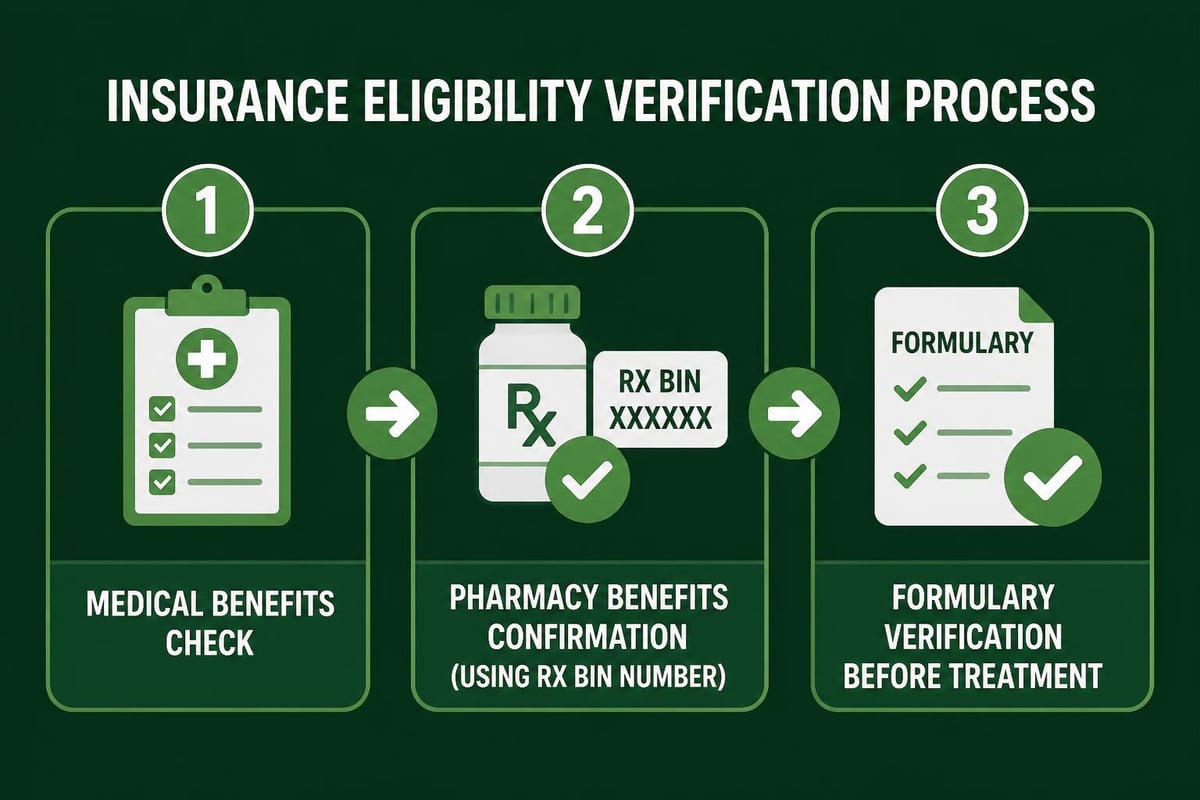
Staff members trained in billing and coding should understand that pharmacy claims require different data elements than professional or facility claims. While medical claims use the subscriber ID and group number primarily, pharmacy claims absolutely require the RX BIN number for proper routing. This distinction matters particularly for practices that bill both professional services and medications under the same patient encounter.
Common Challenges with RX BIN Numbers and Solutions
Healthcare providers frequently encounter issues related to incorrect or outdated RX BIN information, leading to claim denials and payment delays. Understanding these common problems helps revenue cycle teams implement preventive measures that protect cash flow and reduce administrative rework.
Challenge 1: Outdated Insurance Cards
Patients may present insurance cards from previous plan years when the pharmacy benefit manager changed. Blue Cross Blue Shield plans occasionally switch pharmacy processors, resulting in completely different blue cross blue shield rx bin numbers even though the patient’s medical coverage remains with the same carrier.
Solution: Implement systematic insurance verification for every patient encounter, not just new patients. Use real-time eligibility verification systems that query current pharmacy benefits information. Train front desk staff to photocopy both sides of insurance cards to capture pharmacy information.
Challenge 2: Multiple BIN Numbers on Single Cards
Some Blue Cross Blue Shield plans include multiple RX BIN numbers on their cards to accommodate different pharmacy networks or mail-order versus retail pharmacy options. Staff may select the wrong BIN number for the specific type of service being provided.
Solution: Develop clear protocols that specify which BIN to use for different scenarios. Retail pharmacy claims typically use one BIN, while mail-order prescriptions use another. Specialty pharmacy services may require a third BIN number. Document these distinctions in your practice management system alongside payer setup information.
Challenge 3: Claim Rejections Due to Coordination of Benefits
When patients have dual coverage or Medicare alongside Blue Cross Blue Shield, determining which RX BIN number to use for pharmacy claims becomes complex. The primary insurance may not be the primary payer for pharmacy benefits, creating confusion during claim submission.
| Scenario | Primary for Medical | Primary for Pharmacy | Action Required |
|---|---|---|---|
| Medicare + BCBS | Medicare | Varies by plan | Verify pharmacy COB rules |
| Dual BCBS Plans | Based on birthday rule | Based on birthday rule | Apply consistent COB logic |
| BCBS + Spouse Coverage | Determined by patient | Determined by patient | Document patient election |
Solution: Establish denial management protocols that specifically address coordination of benefits for pharmacy claims. When claims reject due to coordination issues, systematically verify which plan holds pharmacy responsibility and obtain the correct blue cross blue shield rx bin number for the primary pharmacy payer.
Best Practices for Managing RX BIN Information
Healthcare practices can minimize pharmacy claim issues by implementing structured processes for capturing, verifying, and utilizing RX BIN information throughout the revenue cycle. These practices apply whether your organization manages billing internally or partners with specialized revenue cycle management services.
Five essential practices for RX BIN management:
- Capture complete pharmacy information at registration: Train registration staff to record RX BIN, PCN, and Group numbers separately from medical insurance data
- Verify pharmacy benefits before dispensing medications: Use real-time eligibility systems to confirm current pharmacy coverage and formulary status
- Update practice management systems with separate pharmacy fields: Configure your system to store pharmacy-specific identifiers distinct from medical insurance fields
- Document pharmacy benefit changes during annual renewals: Blue Cross Blue Shield plans often change pharmacy processors during open enrollment periods
- Audit pharmacy claim denials monthly: Track rejection patterns related to incorrect BIN numbers and address systematic issues
Creating Standard Operating Procedures for Pharmacy Claims
Comprehensive revenue cycle processes should include specific workflows for pharmacy-related transactions. Document each step from patient check-in through claim submission and payment posting, with clear decision points for verifying the blue cross blue shield rx bin number at appropriate stages.
For practices dispensing medications directly, develop a pre-dispensing checklist that requires staff to confirm pharmacy eligibility using the correct RX BIN before releasing expensive drugs to patients. This simple verification step prevents situations where patients receive medications that insurance will not cover, leading to collection challenges and patient satisfaction issues.
The Role of Technology in RX BIN Verification
Modern practice management systems and revenue cycle software platforms increasingly incorporate automated insurance verification features that validate pharmacy benefits alongside medical coverage. These systems query payer databases using the blue cross blue shield rx bin number and other identifiers, returning real-time information about the patient’s current pharmacy benefits.
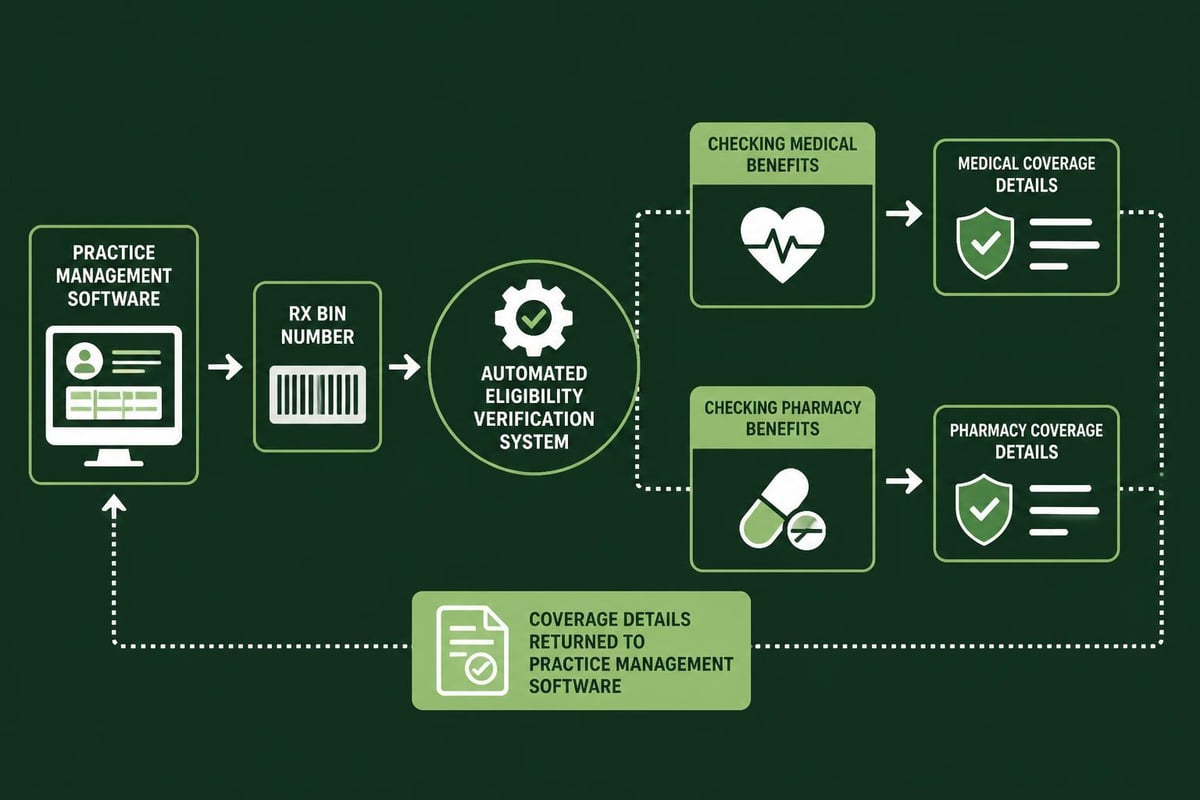
Advanced platforms compare the RX BIN number stored in the patient record against the number returned from the eligibility verification, flagging discrepancies for staff review. This automated monitoring helps catch situations where Blue Cross Blue Shield changed pharmacy processors but the patient presented an old card with outdated information.
Integration with Clearinghouses and Claims Processing
Healthcare clearinghouses that facilitate electronic claim submission often provide BIN validation services as part of their offerings. When submitting pharmacy claims through these intermediaries, the clearinghouse system can pre-validate that the blue cross blue shield rx bin number matches the payer’s current requirements before transmitting to the insurance company.
Understanding what tools and systems are needed for medical billing success includes recognizing the importance of technology that handles pharmacy-specific data elements. Organizations evaluating medical billing software options should specifically assess whether the platforms properly accommodate pharmacy benefits information separate from medical insurance data.
Training Staff on RX BIN Number Importance
Even with sophisticated technology, human expertise remains critical for managing pharmacy benefits verification effectively. Staff members across multiple departments need education about what the blue cross blue shield rx bin number represents and why accuracy matters for the organization’s financial performance.
Front office personnel who collect insurance information must understand that pharmacy details deserve the same careful attention as medical coverage data. Clinical staff who administer medications should recognize that treatment decisions may depend on pharmacy benefit verification. Billing specialists who work denials need to know how to identify RX BIN-related rejection codes and resolve these issues efficiently.
Developing Competency-Based Training Programs
Create training modules that address pharmacy benefits verification as a distinct competency within the broader insurance verification skill set. Include real examples of Blue Cross Blue Shield cards showing RX BIN placement, practice exercises identifying the correct number from sample cards, and case studies demonstrating how incorrect BIN information leads to claim denials.
For organizations partnering with external revenue cycle management companies, ensure that service level agreements specifically address pharmacy benefits verification accuracy. The external billing team should demonstrate understanding of RX BIN requirements and maintain processes that prevent pharmacy-related denials.
Regulatory Considerations and Compliance
While the blue cross blue shield rx bin number itself is not protected health information under HIPAA regulations, it typically appears alongside patient identifiers on insurance cards and within protected documentation. Organizations must handle insurance cards and verification records according to HIPAA privacy and security requirements, ensuring that pharmacy benefits information receives appropriate protection.
When transmitting pharmacy claims electronically, the RX BIN number travels within HIPAA-compliant transaction sets using standardized formats. Healthcare providers must work with business associates who maintain appropriate safeguards for all claim data, including pharmacy-specific identifiers. This consideration matters when selecting clearinghouses, practice management vendors, or revenue cycle management partners who will handle pharmacy claims on your behalf.
Documentation Requirements for Audit Purposes
Maintain documentation showing that your organization verified pharmacy benefits using the correct blue cross blue shield rx bin number before dispensing medications or submitting pharmacy claims. During audits, payers or regulatory bodies may request evidence that appropriate verification occurred prior to treatment. Systematic documentation of the RX BIN number used, the verification date, and the staff member who performed the check creates an audit trail demonstrating compliance with standard care protocols.
Special Situations Requiring Extra Attention
Certain clinical and administrative scenarios demand heightened awareness of RX BIN accuracy. Specialty medications, prior authorization requirements, and step therapy protocols all depend on correct identification of the patient’s pharmacy benefit manager through the RX BIN number.
When patients require specialty drugs managed through specialty pharmacy networks, the blue cross blue shield rx bin number may differ from the standard retail pharmacy BIN shown on the card. Blue Cross Blue Shield plans often carve out specialty medication management to dedicated processors requiring separate BIN numbers. Clinical staff coordinating specialty therapy initiation should specifically verify the specialty pharmacy BIN rather than assuming the retail BIN applies.
Prior Authorization and RX BIN Numbers
Prior authorization requests for expensive medications must route to the correct pharmacy benefit manager identified by the RX BIN number. Submitting authorization requests to the wrong processor causes delays that may interrupt patient treatment. Verify the blue cross blue shield rx bin number matches the processor handling prior authorizations before initiating the request process.
The broader understanding of how insurance functions in pharmacy claims helps revenue cycle professionals navigate these complex scenarios more effectively, recognizing that pharmacy benefits operate through distinct administrative channels even when the medical and pharmacy coverage both come from Blue Cross Blue Shield.
Impact on Practice Financial Performance
Accurate management of the blue cross blue shield rx bin number directly affects practice revenue and cash flow. Pharmacy claims rejected due to incorrect BIN information require rework, delaying payment and consuming staff time that could address other revenue cycle priorities. When rejections remain unresolved, the practice may never receive payment for dispensed medications, creating direct revenue loss.
For practices with significant pharmacy revenue streams, systematic BIN-related denials can materially impact financial performance. Even a 2-3% error rate in pharmacy claims submission can translate to thousands of dollars in delayed or lost revenue monthly for mid-sized practices. Implementing the preventive measures and best practices discussed throughout this guide reduces these avoidable losses while improving overall revenue cycle efficiency.
Organizations focused on maximizing clean claim rates must address pharmacy-specific requirements with the same rigor applied to professional and facility claims. The blue cross blue shield rx bin number represents one critical data element that separates clean pharmacy claims from problematic submissions requiring manual intervention.
Future Trends in Pharmacy Benefits Processing
The pharmacy benefits landscape continues evolving with increasing integration between medical and pharmacy data systems. Future developments may bring more seamless coordination between RX BIN-based pharmacy networks and medical claims processing, potentially simplifying verification workflows for healthcare providers.
Real-time benefit check systems are becoming more sophisticated, providing instant information about formulary status, copayment amounts, and alternative medication options at the point of prescribing. These systems rely on accurate RX BIN information to query the correct pharmacy benefit database, making proper BIN management even more critical as technology advances.
Healthcare organizations should monitor announcements from Blue Cross Blue Shield plans regarding pharmacy benefit manager changes, new RX BIN numbers, or modifications to pharmacy network structures. Staying informed about these changes positions revenue cycle teams to update systems proactively rather than discovering issues through claim rejections.
Understanding and properly managing the blue cross blue shield rx bin number represents a fundamental component of effective pharmacy claims processing that directly impacts revenue cycle performance. Healthcare providers who implement systematic verification processes, leverage appropriate technology, and train staff thoroughly on pharmacy benefits requirements will experience fewer denials, faster reimbursement, and improved financial outcomes. Greenhive Billing Solutions helps healthcare providers navigate these complexities through comprehensive revenue cycle management services that encompass eligibility verification, claims processing, and denial management, ensuring accurate handling of both medical and pharmacy benefits information for maximum reimbursement.

