
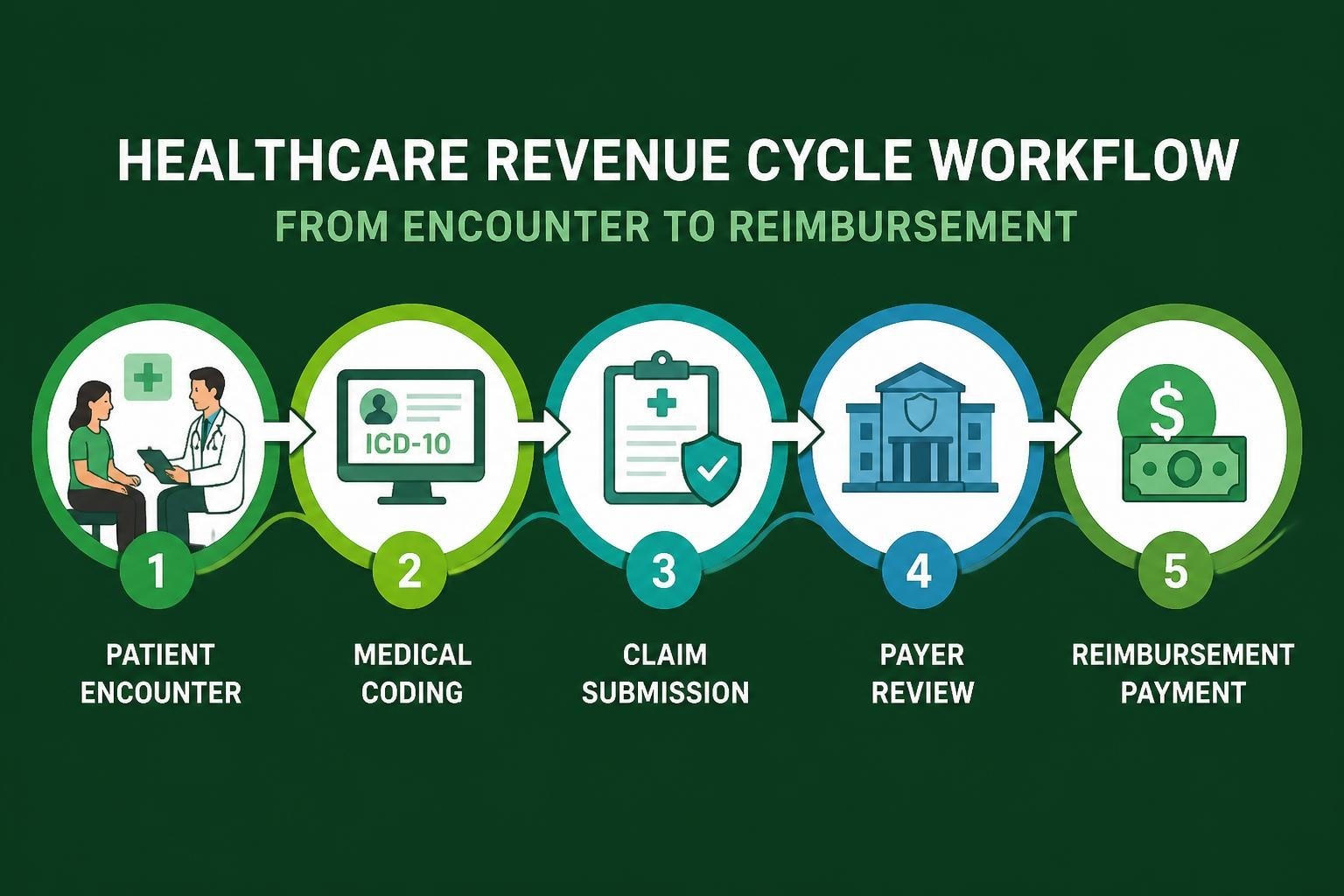
Reimbursement healthcare represents the financial backbone of every medical practice, determining how providers receive payment for services rendered. Understanding the complexities of reimbursement models, claim processing, and payment optimization directly impacts your practice’s financial sustainability. From fee-for-service arrangements to value-based care initiatives, healthcare providers must navigate an increasingly complex landscape of payers, regulations, and reimbursement methodologies to maintain profitability while delivering quality patient care.
Understanding Reimbursement Healthcare Models
The healthcare reimbursement landscape encompasses multiple payment structures that fundamentally shape how medical practices operate financially. Each model presents distinct advantages and challenges that require strategic adaptation.
Fee-for-Service Reimbursement
Fee-for-service remains the most traditional reimbursement healthcare approach, where providers receive payment for each service, procedure, or visit performed. This model offers predictable revenue streams based on patient volume and service complexity. However, it can incentivize quantity over quality if not properly managed.
Key characteristics include:
- Payment tied directly to individual services rendered
- Clear pricing structures for specific procedures
- Revenue directly proportional to patient encounters
- Potential for upcoding or unbundling concerns
- Straightforward billing and tracking mechanisms
The fee-for-service model requires meticulous documentation and accurate coding to ensure proper reimbursement. Providers must maintain comprehensive records that justify each billed service while adhering to payer-specific requirements.
Value-Based Reimbursement Structures
Value-based care represents a fundamental shift in reimbursement healthcare, focusing on patient outcomes rather than service volume. This approach ties payments to quality metrics, patient satisfaction scores, and overall health improvements.
Various reimbursement strategies under value-based care include bundled payments, shared savings programs, and accountable care organization (ACO) arrangements. These models reward efficiency and effectiveness while penalizing poor outcomes or excessive utilization.
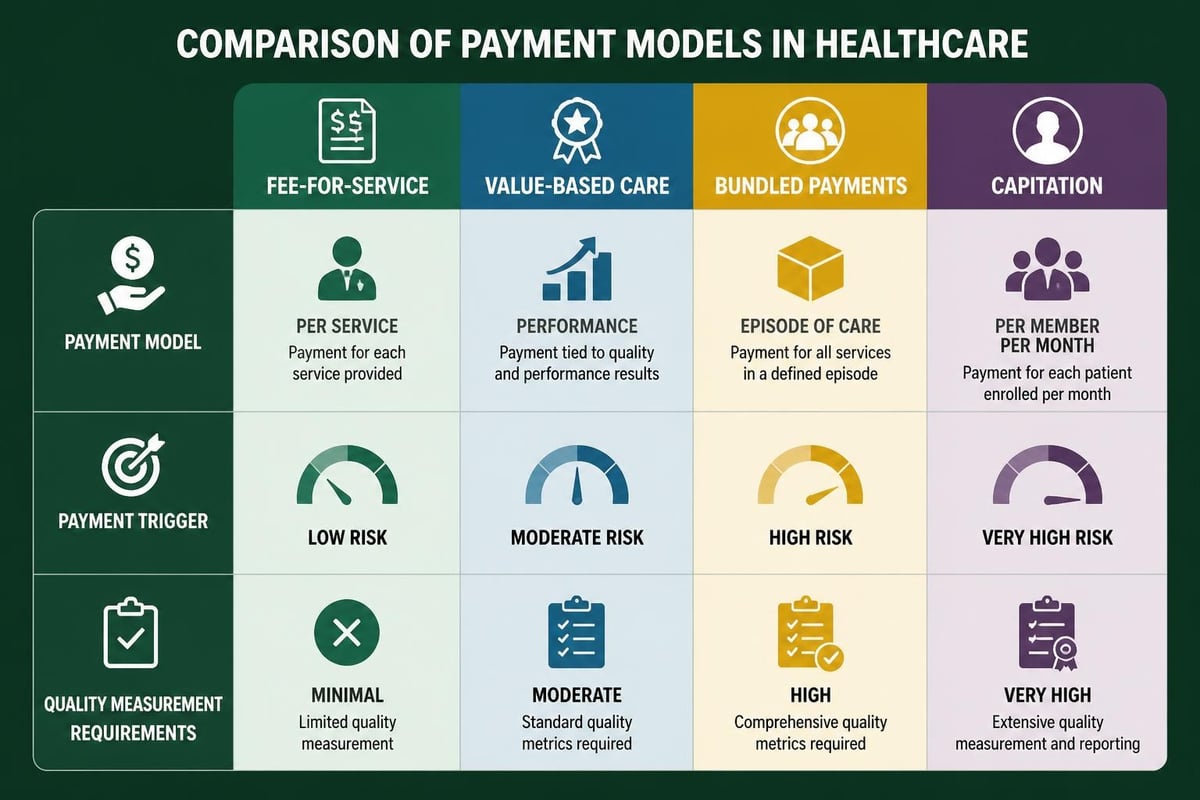
| Model Type | Payment Basis | Risk Level | Documentation Requirements |
|---|---|---|---|
| Fee-for-Service | Per service/procedure | Low | Moderate |
| Bundled Payment | Episode of care | Medium | High |
| Capitation | Per member monthly | High | Very High |
| Pay-for-Performance | Quality metrics | Medium | Extensive |
Capitation and Per-Member-Per-Month Payments
Capitation represents a fixed payment per enrolled patient regardless of services utilized. This reimbursement healthcare model transfers financial risk to providers, incentivizing preventive care and cost management. Practices receive consistent monthly revenue but must carefully manage patient populations to avoid losses from high-utilizing individuals.
The Medical Billing and Reimbursement Process
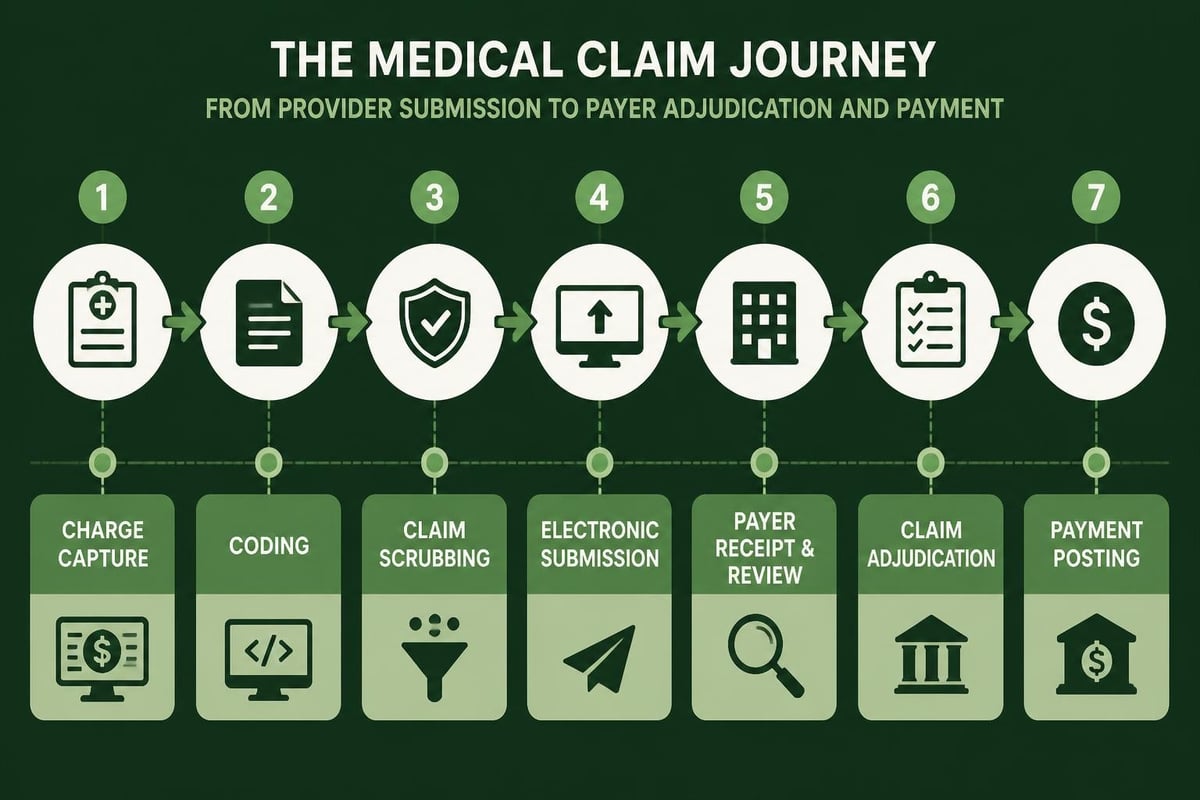
Effective revenue cycle management processes transform clinical services into revenue through multiple interconnected stages. Each phase requires precision and attention to detail.
Patient Registration and Eligibility Verification
The reimbursement healthcare journey begins before services are rendered. Comprehensive eligibility verification services confirm patient coverage, benefit levels, and potential out-of-pocket responsibilities.
Critical verification steps:
- Confirm active insurance coverage status
- Identify primary and secondary payers
- Verify covered services and benefit limits
- Determine prior authorization requirements
- Calculate patient financial responsibility
Accurate upfront verification prevents claim denials and improves patient satisfaction by providing transparent cost expectations. This foundational step directly impacts downstream reimbursement success rates.
Medical Coding and Charge Capture
Translating clinical documentation into standardized codes forms the core of reimbursement healthcare processes. Medical coding specialists apply ICD-10 diagnosis codes, CPT procedure codes, and appropriate modifiers to accurately represent services rendered.
Proper charge entry in medical billing ensures all billable services are captured and assigned correct codes. Missing charges or coding errors directly reduce reimbursement and create compliance risks.
Claims Submission and Processing
Once coded, claims are submitted electronically to appropriate payers following HIPAA transaction standards. Understanding how health insurance reimbursement works helps practices anticipate processing timelines and potential issues.
Clean claims contain complete, accurate information that allows payers to process payments without additional information requests. Achieving high clean claim rates-typically above 95%-accelerates reimbursement and reduces administrative costs.
Optimizing Reimbursement Healthcare Revenue
Maximizing reimbursement requires strategic approaches beyond basic billing compliance. Forward-thinking practices implement comprehensive strategies that address multiple revenue cycle components.
Contract Negotiation and Rate Management
Understanding reimbursement rates and how they’re determined empowers practices during payer contract negotiations. Rates vary significantly between payers, geographic regions, and provider specialties.
Effective negotiation strategies include:
- Benchmarking current rates against regional averages
- Documenting unique service capabilities or specialties
- Analyzing payer mix and volume leverage
- Requesting annual rate escalators tied to inflation
- Negotiating favorable billing and payment terms
Practices should review all payer contracts periodically to ensure rates reflect current market conditions and practice capabilities. Even modest rate improvements significantly impact annual revenue.
Denial Management and Appeals
Despite best efforts, claim denials remain inevitable in reimbursement healthcare. Denial management in medical billing transforms rejections into revenue through systematic analysis and correction.
| Denial Category | Common Causes | Prevention Strategy | Appeal Success Rate |
|---|---|---|---|
| Technical | Missing information, incorrect codes | Enhanced claim scrubbing | 80-90% |
| Clinical | Medical necessity, authorization | Improved documentation | 60-75% |
| Eligibility | Coverage termination, benefit limits | Front-end verification | 50-65% |
| Timely Filing | Late claim submission | Process automation | 10-20% |
Successful practices track denial patterns, identify root causes, and implement corrective actions. This continuous improvement approach steadily increases reimbursement capture rates.
Revenue Cycle Analytics and Performance Monitoring
Data-driven decision-making separates high-performing practices from those struggling financially. Healthcare revenue cycle analytics provide visibility into key performance indicators that drive reimbursement optimization.
Essential metrics to monitor:
- Days in accounts receivable (target: under 40 days)
- Clean claim rate (target: above 95%)
- Net collection rate (target: above 95%)
- Denial rate (target: below 5%)
- Cost to collect (target: below 3% of collections)
Regular performance monitoring identifies trends before they become critical issues, enabling proactive interventions that protect revenue streams.
Reimbursement Healthcare Compliance and Documentation
Regulatory compliance forms an inseparable component of sustainable reimbursement healthcare practices. Documentation quality directly impacts both payment levels and audit risk.
Medical Necessity and Supporting Documentation
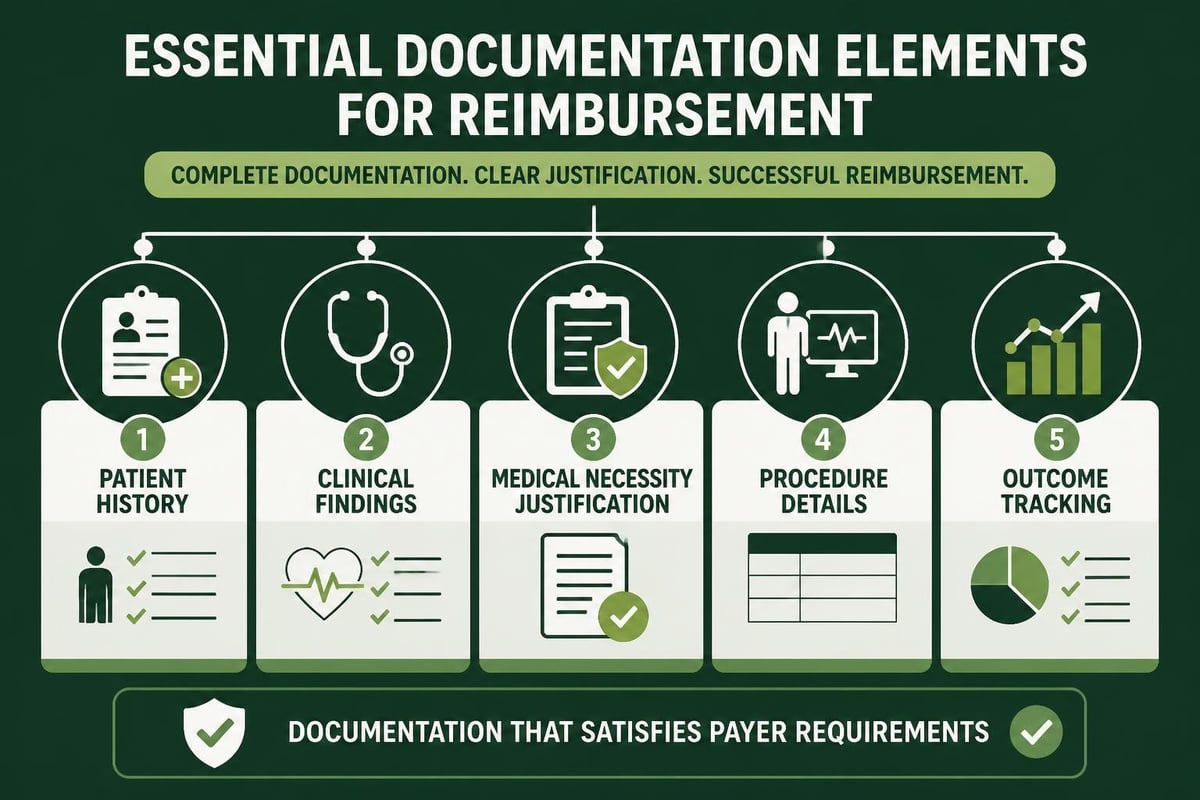
Every service billed must demonstrate medical necessity through comprehensive clinical documentation. Payers increasingly scrutinize claims for appropriate utilization, particularly for high-cost services and procedures.
Documentation must clearly establish:
- Patient symptoms, complaints, or conditions
- Clinical findings from examinations or tests
- Medical decision-making rationale
- Treatment plans and expected outcomes
- Patient response to interventions
Providers should document contemporaneously during or immediately after patient encounters. Retrospective documentation raises compliance concerns and may not satisfy audit requirements.
Modifier Usage and Correct Coding Practices
Appropriate modifier application ensures accurate reimbursement while preventing compliance issues. Common errors with modifier 59 and other indicators highlight the complexity of proper coding.
Understanding different types of medical coding helps practices assign the most specific, accurate codes available. Specificity directly correlates with appropriate reimbursement levels under most payment models.
Compliance with Payer-Specific Requirements
Each insurance payer maintains unique requirements for reimbursement healthcare claims. Medicare, Medicaid, and commercial insurers impose different documentation standards, coding guidelines, and billing rules.
Practices must maintain current knowledge of:
- Local coverage determinations (LCDs) for Medicare
- National coverage decisions (NCDs) for specific services
- Commercial payer medical policies
- Prior authorization requirements by service type
- Timely filing deadlines for each payer
Effective health insurance management systems track these varying requirements and ensure compliance across all payer relationships.
Technology and Automation in Reimbursement Healthcare
Modern revenue cycle management leverages technology to improve accuracy, efficiency, and reimbursement outcomes. Automation reduces manual errors while accelerating payment cycles.
Electronic Claims Processing and Clearinghouses
Electronic claim submission has become standard practice, offering faster processing and reduced errors compared to paper claims. Clearinghouses scrub claims for common errors before forwarding to payers, improving clean claim rates.
Technology benefits include:
- Real-time eligibility verification at point of service
- Automated coding suggestions based on documentation
- Pre-submission claim scrubbing and error detection
- Electronic remittance advice (ERA) for automatic payment posting
- Denial tracking and workflow management
Practices should evaluate technology investments based on measurable improvements in key revenue cycle metrics rather than feature lists alone.
Artificial Intelligence and Predictive Analytics
Advanced analytics identify reimbursement healthcare patterns invisible to manual review. Machine learning algorithms predict denial likelihood, recommend coding improvements, and flag potential compliance issues before submission.
Predictive models help practices prioritize collection efforts, focusing resources on accounts most likely to yield payment while automating routine follow-up for smaller balances.
Patient Payment Technologies
As patient financial responsibility increases through high-deductible health plans, practices must implement consumer-friendly payment solutions. Online payment portals, payment plans, and upfront cost estimates improve collection rates while enhancing patient satisfaction.
Understanding what adjustments on medical bills represent helps practices explain financial responsibilities to patients clearly, reducing confusion and improving timely payment.
Specialty-Specific Reimbursement Considerations
Different medical specialties face unique reimbursement healthcare challenges requiring tailored approaches. Understanding specialty-specific dynamics optimizes revenue performance.
Surgical Specialties and Bundled Payments
Surgical practices increasingly encounter bundled payment arrangements covering entire episodes of care. These models combine professional fees, facility charges, and post-operative care into single payments.
Success requires coordination across multiple providers, careful patient selection, and protocols that minimize complications and readmissions. Clean claims in medical billing become even more critical when payments cover extended care periods.
Primary Care and Value-Based Reimbursement
Primary care providers often lead value-based arrangements, accepting capitated payments or participating in shared savings programs. These models require robust population health management capabilities and comprehensive care coordination.
Practices must invest in preventive care, chronic disease management, and patient engagement while carefully tracking quality metrics that determine bonus payments or penalties.
Urgent Care and Multi-Location Challenges
Urgent care revenue cycle management presents distinct challenges including high patient volumes, diverse payer mixes, and point-of-service collections. Multi-location operations require standardized processes with centralized oversight.
Consistent training, clear protocols, and real-time performance monitoring ensure all locations maintain comparable reimbursement performance regardless of staffing variations or local market conditions.
Payer Relations and Contract Management
Strong relationships with insurance payers facilitate smoother reimbursement healthcare processes and create opportunities for favorable contract terms. Strategic payer management extends beyond basic billing interactions.
Building Effective Payer Partnerships
Regular communication with payer representatives helps resolve issues quickly and clarifies coverage policies before problems arise. Understanding payer priorities and operational challenges enables practices to position themselves as valued network partners.
Relationship-building strategies:
- Schedule periodic meetings with payer account managers
- Provide feedback on problematic policies or processes
- Share data demonstrating quality outcomes or efficiency
- Participate in payer advisory committees or forums
- Respond promptly to payer information requests
These efforts create goodwill that may prove valuable during contract negotiations or dispute resolutions.
Credentialing and Network Participation
Maintaining current credentialing across all relevant payer networks ensures uninterrupted reimbursement healthcare access. Lapses in credentialing status can result in claim denials or out-of-network payment levels.
Practices should track credentialing renewal dates, submit updates promptly when provider information changes, and maintain complete documentation of qualifications and certifications.
Alternative Reimbursement Arrangements
Beyond traditional insurance contracts, some practices explore Health Reimbursement Arrangements (HRAs) and direct payment models. These alternatives may reduce administrative burden while providing predictable revenue streams for specific services.
Direct primary care models, concierge medicine, and cash-based services represent growing segments that bypass traditional insurance reimbursement entirely. These approaches appeal to providers frustrated with insurance complexities but require careful market analysis before implementation.
Future Trends in Reimbursement Healthcare
The reimbursement healthcare landscape continues evolving, driven by regulatory changes, technological advances, and shifting market dynamics. Forward-thinking practices prepare for emerging trends rather than reacting after implementation.
Accelerating Shift Toward Value-Based Models
Federal and commercial payers increasingly emphasize value-based payment models that reward outcomes over volume. This transition requires investments in care coordination, data analytics, and quality improvement infrastructure.
Practices must develop capabilities to succeed under both fee-for-service and value-based arrangements during the prolonged transition period. Hybrid models combining elements of both approaches will likely persist for years.
Price Transparency Requirements
New regulations mandate price transparency for common services, enabling patients to compare costs across providers. This visibility increases competitive pressure while raising patient expectations for accurate upfront cost estimates.
Practices must implement systems that calculate total costs including facility fees, anesthesia, and other components patients might encounter. Transparent pricing builds trust while reducing surprise billing complaints.
Blockchain and Distributed Ledger Technologies
Emerging blockchain applications promise to streamline reimbursement healthcare processes through secure, transparent transaction records. These technologies could reduce fraud, automate claims adjudication, and accelerate payment cycles.
While widespread adoption remains years away, practices should monitor developments and evaluate pilot programs as they emerge. Early adopters may gain competitive advantages through reduced administrative costs and faster payments.
Navigating the complexities of reimbursement healthcare requires expertise across clinical documentation, coding accuracy, payer relations, and revenue cycle analytics. By implementing the strategies outlined above, healthcare providers can optimize reimbursement capture, reduce denials, and maintain financial sustainability while focusing on quality patient care. Greenhive Billing Solutions delivers comprehensive revenue cycle management services that maximize reimbursements through expert claims processing, denial management, and payer relations-allowing your practice to focus on delivering exceptional patient care while we handle the complexities of healthcare reimbursement.

