
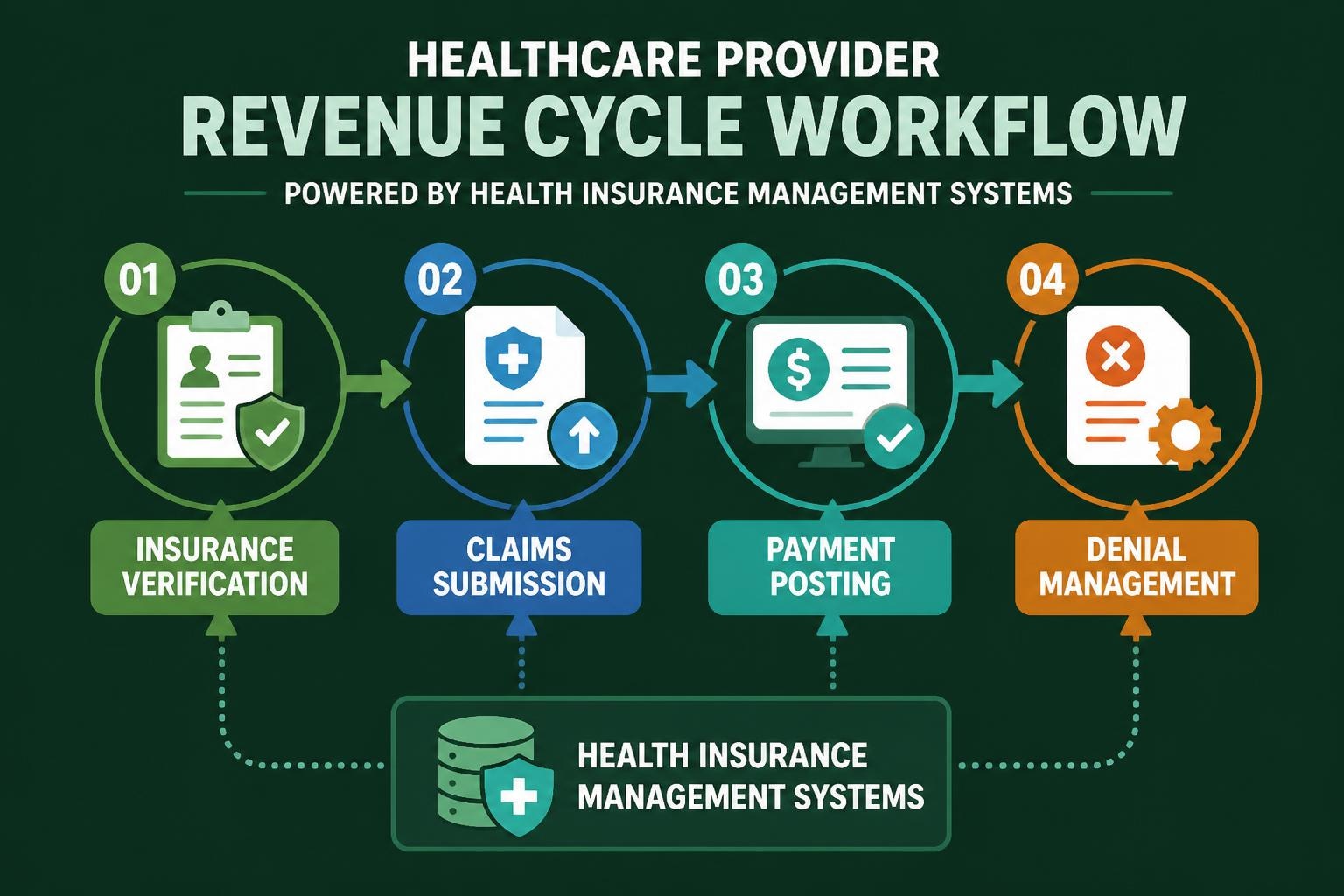
Effective health insurance management represents the backbone of financial stability for healthcare providers across the United States. As medical practices navigate increasingly complex payer requirements, regulatory changes, and patient expectations, the ability to manage insurance processes efficiently directly impacts cash flow, operational performance, and long-term sustainability. Healthcare organizations that implement comprehensive health insurance management strategies see measurable improvements in claim acceptance rates, reduced denial percentages, and accelerated payment cycles.
Understanding Health Insurance Management in Revenue Cycle Operations
Health insurance management encompasses the full spectrum of activities related to verifying patient coverage, submitting accurate claims, tracking reimbursements, and resolving payment discrepancies. This multifaceted discipline extends beyond basic billing functions to include strategic planning, data analytics, and continuous process improvement.
Medical practices face mounting pressure to optimize every aspect of their revenue cycle. Insurance-related activities consume substantial staff time and resources while directly influencing financial outcomes. When healthcare providers strengthen their health insurance management capabilities, they position themselves to capture maximum reimbursements while reducing administrative burden.
Core Components of Effective Insurance Processing
The foundation of robust health insurance management includes several interconnected elements that work together to ensure financial success:
- Insurance eligibility verification performed before service delivery to confirm active coverage
- Benefit determination to understand patient responsibility and coverage limitations
- Pre-authorization management for procedures requiring prior approval
- Accurate claims submission with complete documentation and correct coding
- Payment posting to reconcile expected reimbursements with actual payments
- Denial prevention through proactive identification of common rejection triggers
Each component requires dedicated attention and systematic processes. Healthcare organizations that treat these elements as integrated parts of a cohesive strategy rather than isolated tasks achieve superior results. The revenue cycle management challenges in healthcare continue to evolve, making it essential for providers to adapt their approaches continuously.
Strategies for Optimizing Insurance Verification Processes
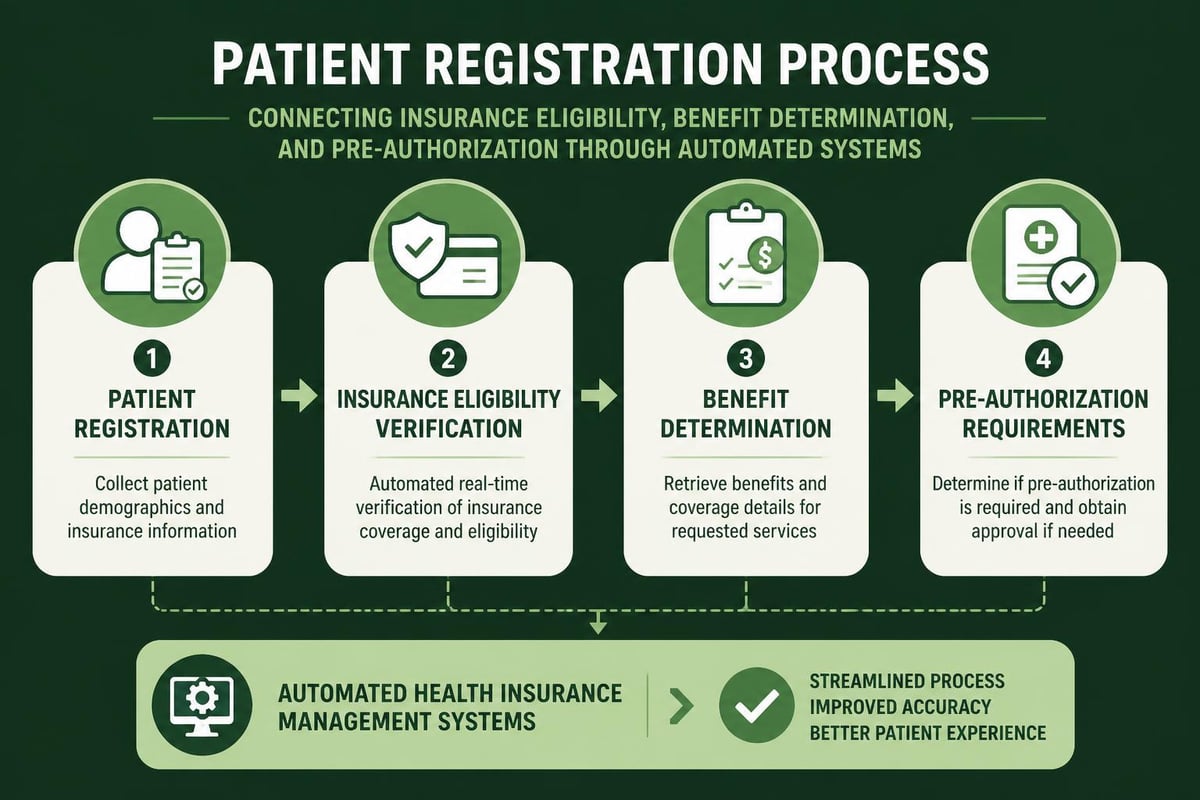
Insurance verification stands as the critical first step in effective health insurance management. Practices that verify coverage before providing services reduce claim denials by identifying coverage gaps, expired policies, and benefit limitations early in the patient encounter.
Step-by-Step Verification Framework
- Collect complete insurance information during patient scheduling or registration, including policy numbers, group identifiers, and subscriber details
- Verify active coverage through real-time eligibility checks with payer systems
- Determine benefit details including copayments, deductibles, coinsurance percentages, and out-of-pocket maximums
- Identify authorization requirements for specific procedures or services
- Document findings in the practice management system for billing team reference
- Communicate financial responsibility to patients before service delivery
This systematic approach minimizes surprises during the claims process and establishes clear expectations with patients regarding their financial obligations. Organizations seeking to verify medical insurance efficiently benefit from standardized workflows and dedicated staff training.
Many successful practices implement automated verification tools that interface directly with payer systems, reducing manual effort while improving accuracy. These technologies provide real-time responses and flag potential issues before they become costly claim denials.
Claims Submission Excellence in Health Insurance Management
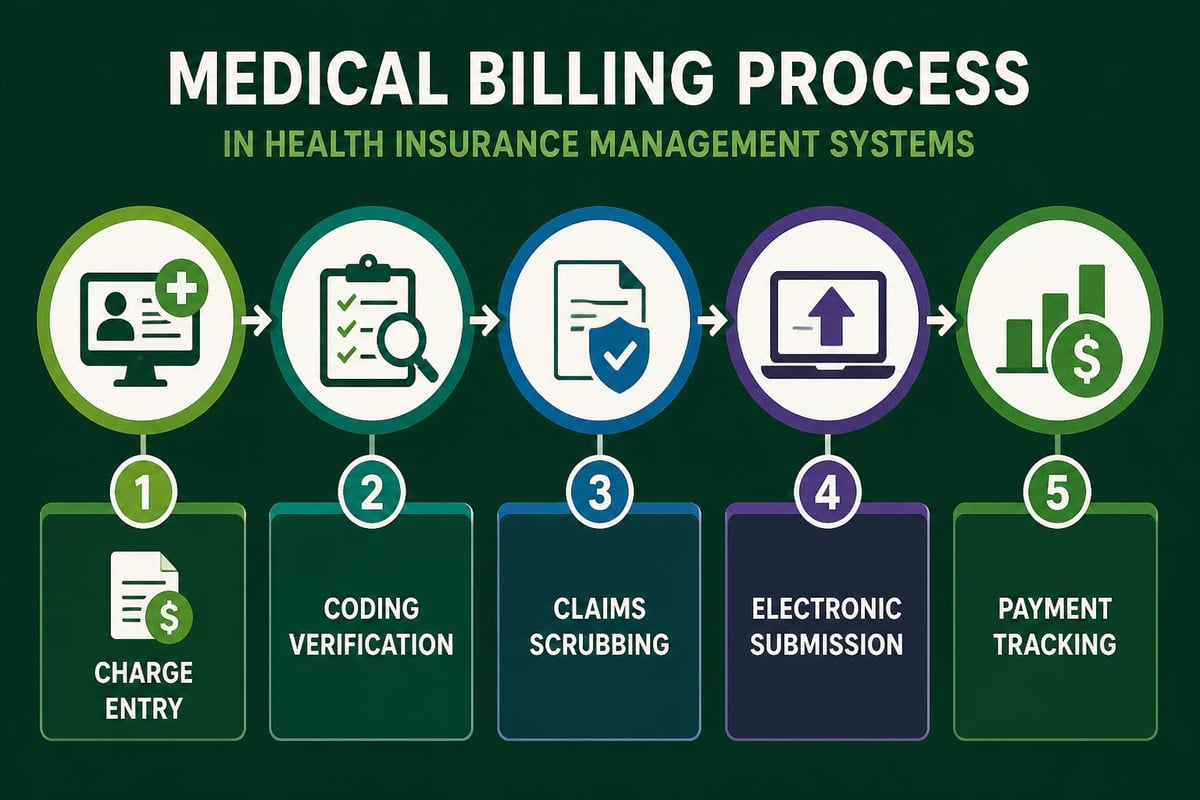
Accurate claims submission represents the cornerstone of successful health insurance management. Clean claims that contain complete, correct information move through payer systems quickly and generate timely reimbursements. Conversely, claims with errors trigger rejections, denials, and payment delays that disrupt cash flow.
Healthcare providers must understand that clean claim submission requires attention to multiple data elements. Each claim must include accurate patient demographics, appropriate diagnosis codes, correct procedure codes, and supporting documentation when required.
Essential Elements for Clean Claims
| Claim Component | Requirements | Common Errors |
|---|---|---|
| Patient Information | Name, DOB, policy number matching insurance records exactly | Misspellings, transposed numbers, outdated information |
| Provider Details | NPI, taxonomy codes, rendering provider identification | Incorrect NPI, missing taxonomy, wrong provider listed |
| Service Documentation | CPT codes, modifiers, place of service, dates matching medical records | Wrong codes, missing modifiers, incorrect dates |
| Diagnosis Coding | ICD-10 codes supporting medical necessity with appropriate specificity | Unspecified codes, unsupported diagnoses, incorrect sequencing |
The implementation of robust claims scrubbing processes before submission dramatically reduces rejection rates. Automated scrubbing software identifies common errors and inconsistencies, allowing staff to correct issues before claims reach payers.
Denial Management and Prevention Strategies
Even with excellent front-end processes, claim denials remain an inevitable aspect of health insurance management. The key differentiator between high-performing practices and struggling organizations lies in how they respond to denials and work to prevent future occurrences.
Effective denial management in medical billing requires both reactive and proactive approaches. Reactive strategies address current denials through appeals and resubmissions, while proactive measures identify patterns and implement systemic improvements.
Building a Denial Prevention Program
Healthcare practices should establish comprehensive denial tracking systems that capture detailed information about every rejected claim. This data becomes the foundation for identifying trends, prioritizing improvement efforts, and measuring progress over time.
- Track denial reasons using standardized categorization systems
- Calculate denial rates by payer, service type, and provider
- Identify high-value denials requiring immediate appeal
- Analyze root causes through pattern recognition
- Implement targeted training for staff in problem areas
- Monitor improvement metrics following process changes
The financial impact of effective denial management extends beyond recovered payments. Practices that reduce their denial rates experience improved cash flow predictability, lower administrative costs, and better staff morale. According to revenue cycle management best practices, organizations should aim for first-pass resolution rates exceeding ninety-five percent.
Technology Integration in Health Insurance Management
Modern health insurance management increasingly relies on sophisticated technology platforms that automate routine tasks, provide real-time data visibility, and support informed decision-making. Healthcare providers must carefully evaluate technology investments to ensure they align with organizational needs and deliver measurable returns.
Practice management systems serve as the central hub for insurance-related activities, integrating patient scheduling, eligibility verification, claims submission, and payment posting into unified workflows. When properly configured and utilized, these platforms streamline operations and reduce manual errors.
Technology Selection Considerations
Healthcare organizations evaluating technology solutions for health insurance management should assess several critical factors:
| Evaluation Criterion | Key Questions | Impact on Operations |
|---|---|---|
| Integration Capabilities | Does the system connect seamlessly with existing EHR and billing platforms? | Reduces duplicate data entry and synchronization errors |
| Automation Features | Which manual tasks can be automated through the platform? | Decreases staff workload and improves processing speed |
| Reporting Functionality | What insights and analytics does the system provide? | Enables data-driven decision-making and performance monitoring |
| Scalability | Can the solution grow with practice expansion? | Protects technology investment over time |
| Training Requirements | What learning curve exists for staff adoption? | Affects implementation timeline and ongoing productivity |
Organizations exploring best medical billing software for small business applications should prioritize solutions that offer robust insurance management features alongside core billing functionality.
Emerging technologies like artificial intelligence and machine learning are transforming health insurance management by predicting denial risks, suggesting optimal coding selections, and identifying patterns invisible to human analysts. Health insurance plans are preparing by modernizing their systems to accommodate these technological advances.
Revenue Cycle Analytics and Performance Monitoring
Data-driven health insurance management requires comprehensive analytics that illuminate performance across multiple dimensions. Healthcare providers must move beyond basic metrics like total collections to understand the nuanced factors driving financial outcomes.
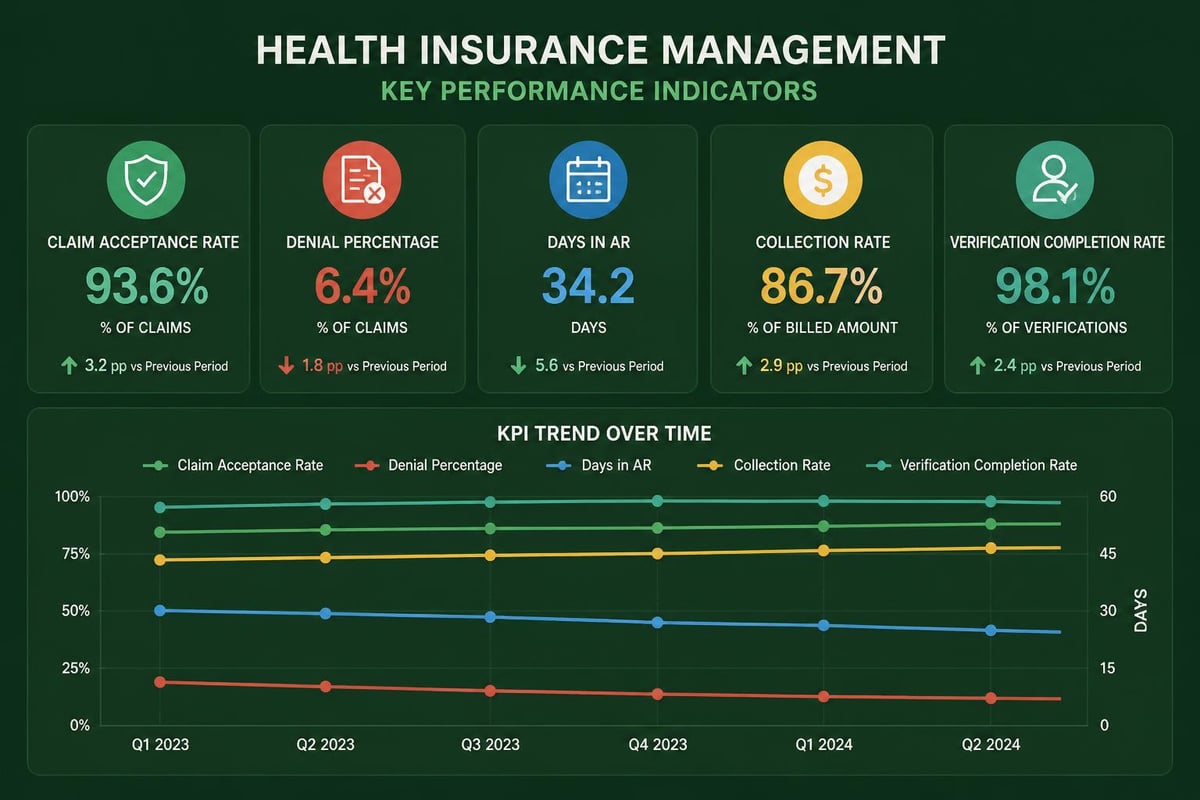
Effective analytics programs track key performance indicators throughout the revenue cycle, providing visibility into insurance verification rates, claim acceptance percentages, days in accounts receivable, and denial patterns. These metrics enable practice leaders to identify improvement opportunities and measure the impact of process changes.
Essential Metrics for Insurance Management
First-pass claim acceptance rate measures the percentage of claims accepted by payers without rejection or request for additional information. High-performing practices achieve rates above ninety-five percent through rigorous front-end processes and quality controls.
Net collection rate compares actual collections to expected reimbursements based on contracted rates and allowable charges. This metric reveals whether the practice captures the full value of services provided after accounting for contractual adjustments.
Days in accounts receivable indicates how quickly the practice converts services into payments. Lower numbers suggest efficient collection processes and effective health insurance management, while elevated figures point to bottlenecks requiring attention.
Healthcare organizations benefit from implementing healthcare revenue cycle analytics platforms that consolidate data from multiple sources and present actionable insights through intuitive dashboards. These tools support both operational monitoring and strategic planning.
Payer Contract Management and Optimization
Health insurance management extends to the strategic oversight of payer relationships and contract terms. Healthcare providers must understand their agreements with insurance companies, monitor actual reimbursements against contracted rates, and identify opportunities for contract renegotiation.
Contract management activities include maintaining current fee schedules, tracking payer performance metrics, identifying underpayments, and preparing for contract renewal discussions. Practices that actively manage payer relationships rather than passively accepting contract terms achieve higher reimbursement rates and more favorable terms.
Contract Analysis Framework
Systematic contract review should occur at regular intervals, examining key contract elements:
- Reimbursement rates for high-volume procedures and services
- Authorization requirements and administrative burden
- Claim submission timelines and payer processing standards
- Appeal processes and dispute resolution mechanisms
- Performance guarantees and service level agreements
Medical practices working with specialized partners like Eastmure & Associates Limited can benefit from financial expertise that helps optimize contract negotiations and tax strategies related to revenue cycle operations. Understanding the full financial picture enables providers to make informed decisions about payer relationships.
Organizations should calculate the profitability of each payer relationship by comparing total reimbursements against the administrative costs required to work with that insurer. Some payer contracts may generate insufficient revenue to justify the associated effort, particularly when factoring in high denial rates or burdensome authorization requirements.
Staff Training and Development in Insurance Operations
The human element remains central to effective health insurance management despite technological advances. Well-trained staff who understand insurance processes, payer requirements, and coding conventions deliver superior results compared to those lacking proper development.
Healthcare organizations should invest in comprehensive training programs that equip team members with the knowledge and skills necessary for success. Training should address both technical competencies and soft skills like communication and problem-solving.
Building Insurance Management Expertise
Effective training programs incorporate multiple learning modalities and ongoing development opportunities:
- Initial onboarding covering fundamental concepts, system navigation, and organizational policies
- Role-specific training addressing detailed requirements for verification specialists, billing staff, and collections personnel
- Regular updates on payer policy changes, coding updates, and regulatory requirements
- Cross-training initiatives building versatility and backup capabilities across the team
- Performance coaching providing individualized feedback and improvement support
- Advanced education offering opportunities to develop specialized expertise
Understanding what is a billing and coding specialist helps practices recognize the specialized knowledge required for effective health insurance management. These professionals serve as critical links between clinical documentation and appropriate reimbursement.
Best-in-class organizations establish mentorship programs pairing experienced staff with newer team members, creating knowledge transfer mechanisms that preserve institutional expertise. The ten healthcare revenue cycle management best practices emphasize the importance of continuous learning and staff development.
Compliance and Regulatory Considerations
Health insurance management occurs within a complex regulatory environment requiring strict adherence to federal and state requirements. Healthcare providers must navigate HIPAA privacy regulations, fraud and abuse statutes, and payer-specific policies while managing insurance processes.
Compliance failures can result in significant penalties, reputational damage, and operational disruptions. Practices must implement robust compliance programs that address documentation requirements, billing integrity, and information security.
Key Compliance Areas
HIPAA compliance governs the handling of protected health information throughout insurance processes. Staff must understand permissible uses and disclosures, implement appropriate safeguards, and follow breach notification requirements.
Coding compliance ensures that procedure and diagnosis codes accurately reflect documented services. Upcoding, unbundling, and other improper coding practices expose organizations to liability even when performed unintentionally.
Claim accuracy standards require that submitted claims truthfully represent services provided. False claims can trigger investigations under the False Claims Act, resulting in substantial penalties and exclusion from federal programs.
Healthcare organizations should establish compliance committees, conduct regular audits, and maintain comprehensive policies addressing billing integrity. External audits by qualified reviewers provide objective assessments and identify areas requiring improvement.
Outsourcing Considerations for Insurance Management
Many healthcare providers evaluate whether to manage insurance processes internally or partner with specialized service organizations. This decision depends on practice size, available resources, internal expertise, and strategic priorities.
Outsourcing health insurance management to experienced partners offers several potential advantages. Specialized firms bring deep expertise, established payer relationships, and sophisticated technology platforms that smaller practices cannot justify developing independently. These organizations stay current with regulatory changes and payer policy updates, reducing the burden on practice staff.
However, outsourcing also requires careful partner selection, clear communication protocols, and ongoing oversight to ensure quality and alignment with practice goals. Healthcare providers should evaluate potential partners based on industry experience, performance guarantees, technology capabilities, and cultural fit.
Evaluating Service Providers
When considering outsourcing options, practices should assess candidates across multiple dimensions:
| Evaluation Factor | Assessment Questions | Decision Impact |
|---|---|---|
| Experience | How long has the firm operated in healthcare revenue cycle management? | Influences learning curve and error rates |
| Specialization | Does the provider work with similar practice types and specialties? | Affects understanding of specific coding and billing requirements |
| Technology Platform | What systems does the partner use and how do they integrate with existing practice management software? | Determines implementation complexity and data accessibility |
| Performance Metrics | What guarantees does the provider offer regarding collection rates and processing timelines? | Establishes accountability and expected outcomes |
| Communication | How frequently will the practice receive updates and who serves as primary contact? | Impacts visibility and responsiveness to issues |
Organizations exploring partnerships should request detailed proposals, check references with current clients, and negotiate clear service level agreements. The best practices for large healthcare organizations using practice management software emphasize the importance of selecting solutions that align with organizational workflows.
Patient Communication and Financial Counseling
Effective health insurance management extends to patient-facing activities that establish clear expectations and facilitate collections. Healthcare providers must communicate coverage information, financial responsibilities, and payment options in ways patients understand and appreciate.
Financial counseling conversations should occur before service delivery whenever possible, allowing patients to make informed decisions about their care. Staff should explain estimated out-of-pocket costs, payment plan availability, and financial assistance programs.
Best Practices for Patient Financial Discussions
Transparency builds trust and improves collection rates. Practices should provide clear explanations of charges, insurance benefits, and patient responsibility using accessible language rather than technical jargon.
Timing matters significantly in financial conversations. Addressing costs proactively demonstrates respect for patients’ financial planning needs and reduces surprise bills that generate complaints and payment resistance.
Documentation of financial discussions protects both parties by creating shared understanding. Written estimates and acknowledgments ensure patients remember their commitments and reduce disputes.
Healthcare organizations should train front-desk staff in financial counseling techniques and provide tools like benefit estimators that calculate patient responsibility accurately. These capabilities support the patient-first approaches emphasized in modern revenue cycle strategies.
Quality Assurance in Insurance Processing
Systematic quality assurance programs identify errors before they reach payers, reducing denial rates and improving staff performance. Healthcare providers should implement multi-layered review processes that catch mistakes at various stages of the billing cycle.
Quality assurance activities include pre-submission claim audits, post-submission tracking of acceptance rates, and periodic focused reviews of specific service categories or providers. These audits should examine coding accuracy, documentation completeness, and compliance with payer requirements.
Feedback loops connecting audit findings to staff training ensure that identified issues drive concrete improvements. When reviewers discover recurrent errors, targeted education addresses knowledge gaps and prevents future occurrences.
Leading practices establish quality metrics and share performance data transparently with staff. This visibility creates accountability and motivates continuous improvement. Regular team meetings discussing common errors and best practices facilitate peer learning and collective problem-solving.
Adapting to Payer Policy Changes
Health insurance management requires constant vigilance regarding payer policy updates that affect claim submission requirements, authorization processes, and reimbursement rates. Insurance companies regularly modify their policies, often with minimal advance notice to providers.
Healthcare organizations must establish systems for monitoring policy changes across all contracted payers. This includes subscribing to payer newsletters, reviewing portal updates, and participating in provider education sessions.
When significant policy changes occur, practices should quickly assess the operational impact and implement necessary process adjustments. Staff training, system configuration updates, and patient communication may all require modification to accommodate new requirements.
Proactive monitoring prevents claim denials resulting from outdated processes. Practices that maintain current knowledge of payer requirements demonstrate professionalism and minimize revenue disruptions.
Mastering health insurance management requires integrated attention to verification processes, claims accuracy, denial prevention, technology utilization, and staff development. Healthcare providers that treat insurance operations as strategic priorities rather than administrative necessities achieve measurably better financial outcomes while reducing operational stress. Greenhive Billing Solutions partners with healthcare providers across the United States to optimize every aspect of revenue cycle management, from insurance eligibility verification through denial resolution, delivering improved cash flow and maximum reimbursements through expert service and transparent communication.

