
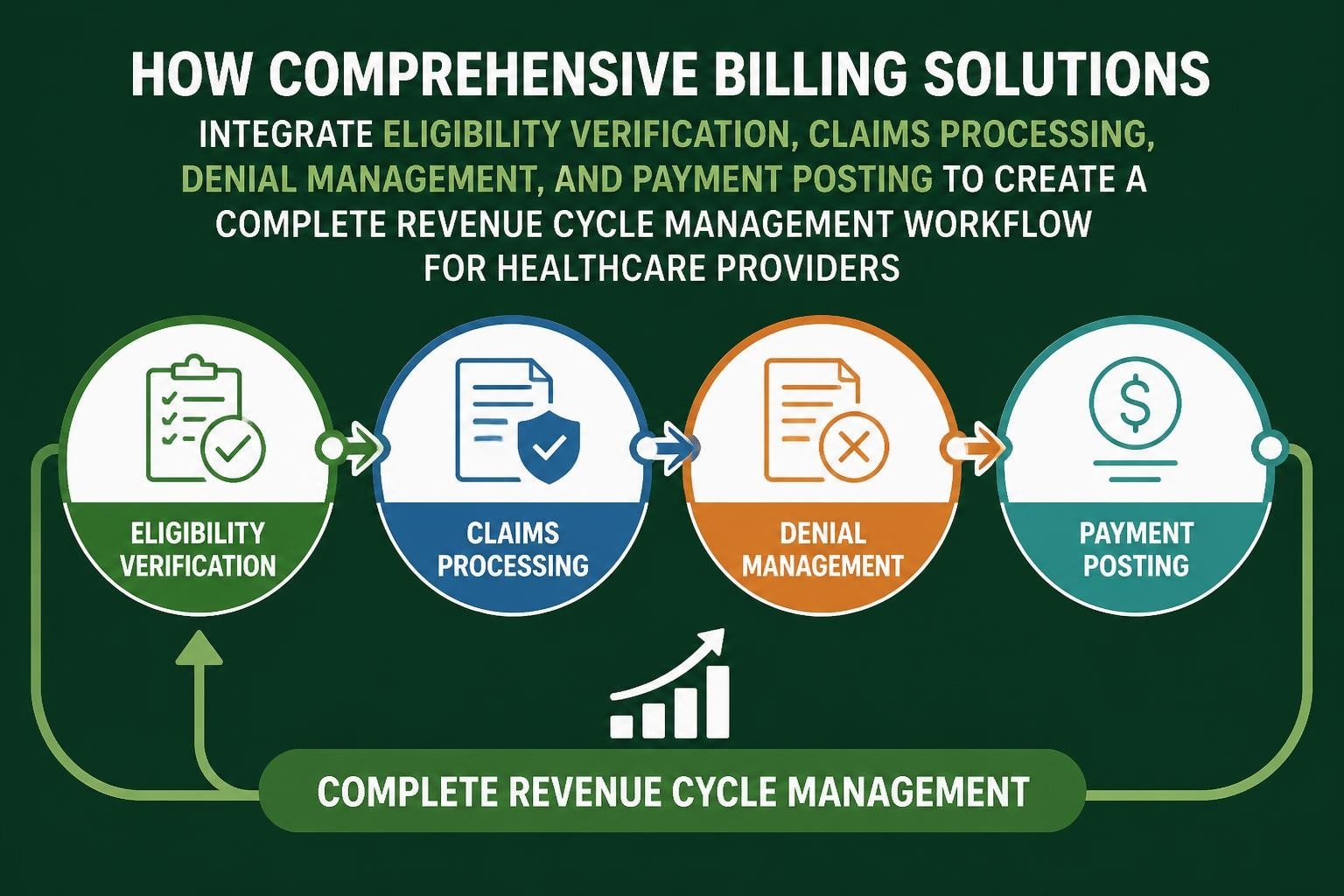
Modern healthcare practices face mounting pressure to maintain financial stability while delivering quality patient care. The complexity of insurance regulations, claim submission requirements, and reimbursement processes demands sophisticated billing solutions that go beyond basic invoicing. Healthcare providers who implement comprehensive billing solutions see measurable improvements in cash flow, reduced claim denials, and enhanced operational efficiency. These systems form the backbone of successful revenue cycle management, transforming how medical practices handle everything from patient registration to final payment collection.
Understanding the Core Components of Effective Billing Solutions
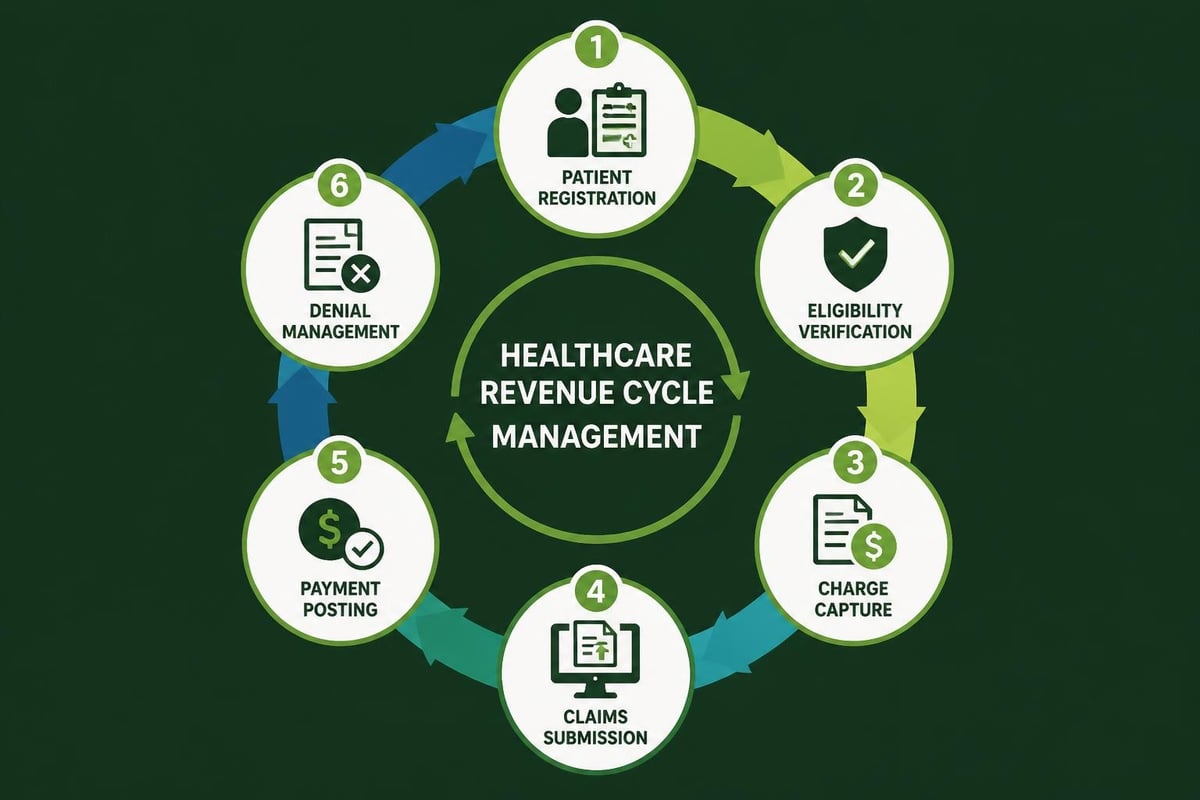
Healthcare billing solutions encompass multiple integrated processes that work together to maximize revenue capture. Each component plays a critical role in ensuring claims are submitted accurately, processed efficiently, and paid promptly.
Modern billing platforms typically include:
- Patient demographic and insurance information management
- Eligibility verification and benefits confirmation
- Medical coding and charge capture
- Claims submission and tracking
- Denial management and appeals processing
- Payment posting and reconciliation
- Patient billing and collection workflows
The foundation of any effective billing system starts with accurate data collection. Insurance eligibility verification prevents claim denials by confirming coverage before services are rendered. This proactive approach reduces the administrative burden of reworking claims and accelerates the payment timeline.
Key Features That Differentiate Quality Billing Solutions
Not all billing solutions deliver the same value. Healthcare providers should evaluate platforms based on specific capabilities that directly impact financial performance. Automation capabilities stand at the forefront of modern billing technology, reducing manual data entry errors and freeing staff to focus on complex cases requiring human judgment.
Real-time claim scrubbing identifies errors before submission, significantly improving first-pass acceptance rates. According to billing software reviews, cloud-based platforms with robust automation features consistently outperform legacy systems in processing speed and accuracy.
| Feature Category | Business Impact | Implementation Priority |
|---|---|---|
| Automated eligibility checks | Reduces claim denials by 30-40% | High |
| Real-time claim scrubbing | Improves first-pass rate by 25-35% | High |
| Integrated payment posting | Accelerates reconciliation by 50% | Medium |
| Denial tracking dashboards | Identifies patterns for prevention | Medium |
| Patient portal integration | Reduces billing inquiries by 20% | Low |
Integration with electronic health records (EHR) eliminates duplicate data entry and ensures clinical documentation supports submitted charges. This seamless flow between clinical and financial systems represents a fundamental requirement for practices seeking to optimize their revenue cycle management process.
Strategic Implementation of Billing Solutions
Successful deployment requires careful planning and stakeholder alignment. Healthcare organizations must balance the need for comprehensive functionality with user adoption and staff training requirements.
Step-by-Step Implementation Framework
1. Assessment Phase: Begin by documenting current workflows, identifying pain points, and establishing baseline metrics for claim submission times, denial rates, and days in accounts receivable. This data-driven approach ensures you can measure improvement accurately.
2. Vendor Selection: Evaluate potential billing solutions against your specific requirements. Consider factors including specialty-specific coding support, payer connectivity, reporting capabilities, and compliance features. Many practices benefit from partnering with specialized service providers who bring expertise in denial management in medical billing and other critical functions.
3. Data Migration: Plan for clean data transfer from legacy systems. Incomplete or inaccurate historical data can compromise new system performance. Allocate sufficient time for data validation and correction before go-live.
4. Staff Training: Develop role-based training programs that address both technical system operation and updated workflow processes. Training should extend beyond initial deployment to include ongoing education as features evolve.
5. Phased Rollout: Consider implementing billing solutions in stages rather than all at once. This approach allows staff to adapt gradually and provides opportunities to refine processes before full deployment.
The implementation timeline varies based on practice size and complexity, but most organizations should plan for three to six months from vendor selection to full operational status.
Optimizing Revenue Through Advanced Billing Practices
Beyond basic claim submission, sophisticated billing solutions enable practices to implement best practices that maximize reimbursement and minimize revenue leakage.
Charge capture optimization ensures every billable service is documented and coded appropriately. Many practices lose significant revenue through incomplete charge capture, particularly for ancillary services, supplies, and time-based billing. Implementing systematic charge capture reviews identifies these gaps and establishes processes to prevent future losses.
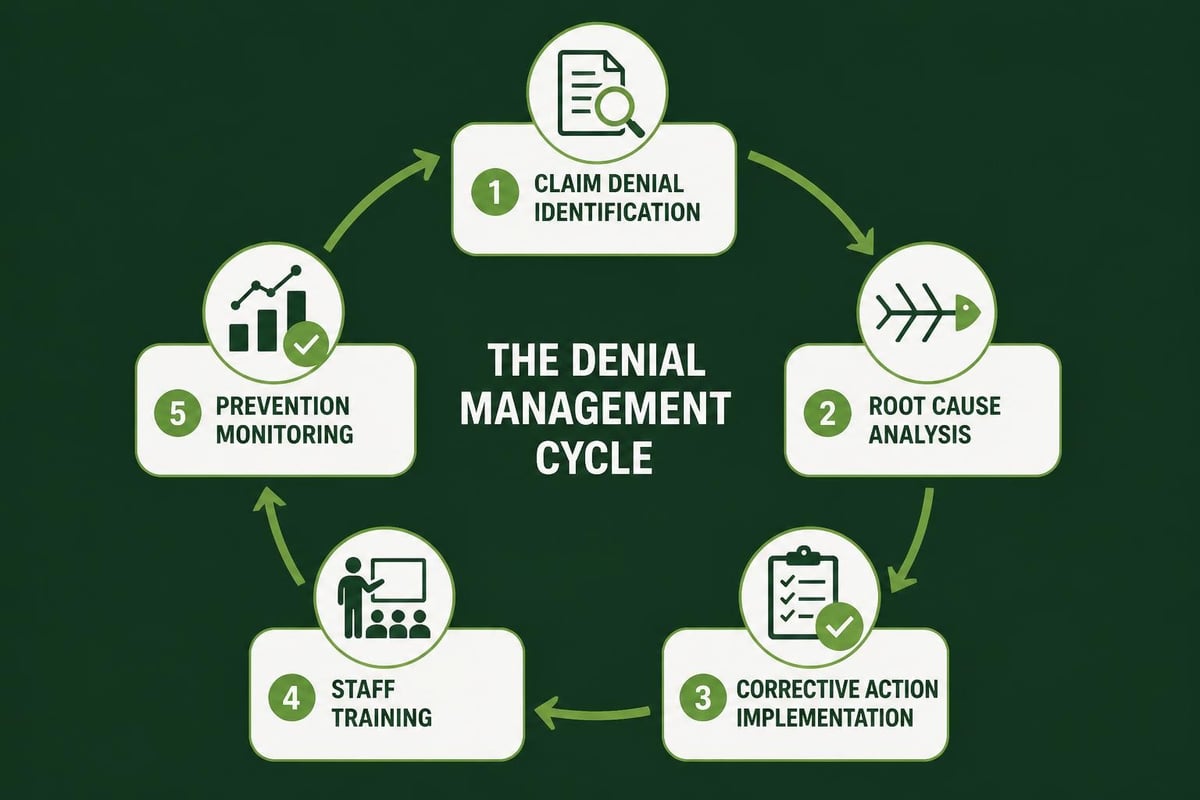
Denial management transforms from reactive problem-solving to proactive prevention. Advanced billing solutions track denial patterns by payer, service type, and denial reason. This intelligence allows practices to address root causes rather than simply appealing individual claims. Understanding how denial management improves cash flow provides strategic advantage in an increasingly complex reimbursement environment.
Compliance and Risk Management
Healthcare billing solutions must maintain rigorous compliance with regulatory requirements. HIPAA security standards govern data protection, while billing compliance extends to proper coding, documentation, and claim submission practices.
Automated compliance checks built into modern platforms help prevent common errors:
- Unbundling of services that should be reported together
- Duplicate billing for the same service
- Upcoding to higher reimbursement levels without documentation support
- Medical necessity documentation gaps
- Timely filing deadline violations
Regular audits of billing practices identify potential compliance issues before they escalate to formal investigations or payment recoupment demands. Many healthcare organizations implement quarterly internal audits supplemented by annual external reviews to maintain compliance integrity.
Technology Integration and Interoperability
Modern healthcare operates within an interconnected ecosystem of systems and stakeholders. Billing solutions must exchange data seamlessly with multiple platforms including EHR systems, practice management software, clearinghouses, and payer portals.
Interoperability standards like HL7 and FHIR enable different systems to communicate effectively. When evaluating billing solutions, verify support for these standards and confirm existing integrations with your current technology stack. Custom interface development can be costly and time-consuming, making pre-built integrations a significant advantage.
Electronic remittance advice (ERA) processing automates payment posting and reconciliation. Understanding what ERA is in medical billing helps practices appreciate how automated payment processing reduces manual effort and accelerates cash application.
| Integration Point | Data Flow | Business Benefit |
|---|---|---|
| EHR to billing system | Demographics, diagnoses, procedures | Eliminates duplicate entry, ensures coding accuracy |
| Clearinghouse connectivity | Claims submission, status tracking | Faster processing, real-time status updates |
| ERA automated posting | Payment amounts, adjustment details | Reduces posting time by 70-80% |
| Patient portal integration | Statement delivery, payment collection | Improves patient satisfaction, accelerates payment |
Cloud-based billing platforms offer particular advantages for multi-location practices and those seeking to reduce IT infrastructure costs. As noted in discussions of cloud billing solutions, unified visibility across locations and the ability to access systems from anywhere provide operational flexibility that traditional on-premise systems cannot match.
Measuring Performance and Continuous Improvement
Effective billing solutions provide robust analytics that transform raw data into actionable insights. Key performance indicators (KPIs) should be monitored regularly to identify trends and opportunities for improvement.
Essential Metrics for Billing Performance
Days in accounts receivable (AR) measures the average time between service delivery and payment receipt. Industry benchmarks typically range from 30 to 50 days, with lower numbers indicating more efficient collection processes. Tracking AR aging by payer category reveals which insurance companies create payment delays and where collection efforts should focus.
First-pass claim acceptance rate indicates how many claims are accepted for processing on initial submission. Rates below 90% suggest problems with eligibility verification, coding accuracy, or claim scrubbing processes. Top-performing practices achieve first-pass rates exceeding 95%.
Denial rate should be calculated both as a percentage of claims submitted and as a percentage of dollars billed. A comprehensive view includes both metrics since high-value claims may have different denial patterns than routine visits. Best practices suggest monitoring denial rates by denial category to identify specific issues requiring attention, as discussed in resources about implementing usage-based billing.
Clean claim rate measures the percentage of claims requiring no additional information or correction. This metric directly correlates with payment speed and staff efficiency. Understanding what constitutes a clean claim helps practices establish clear quality standards for claim submission.
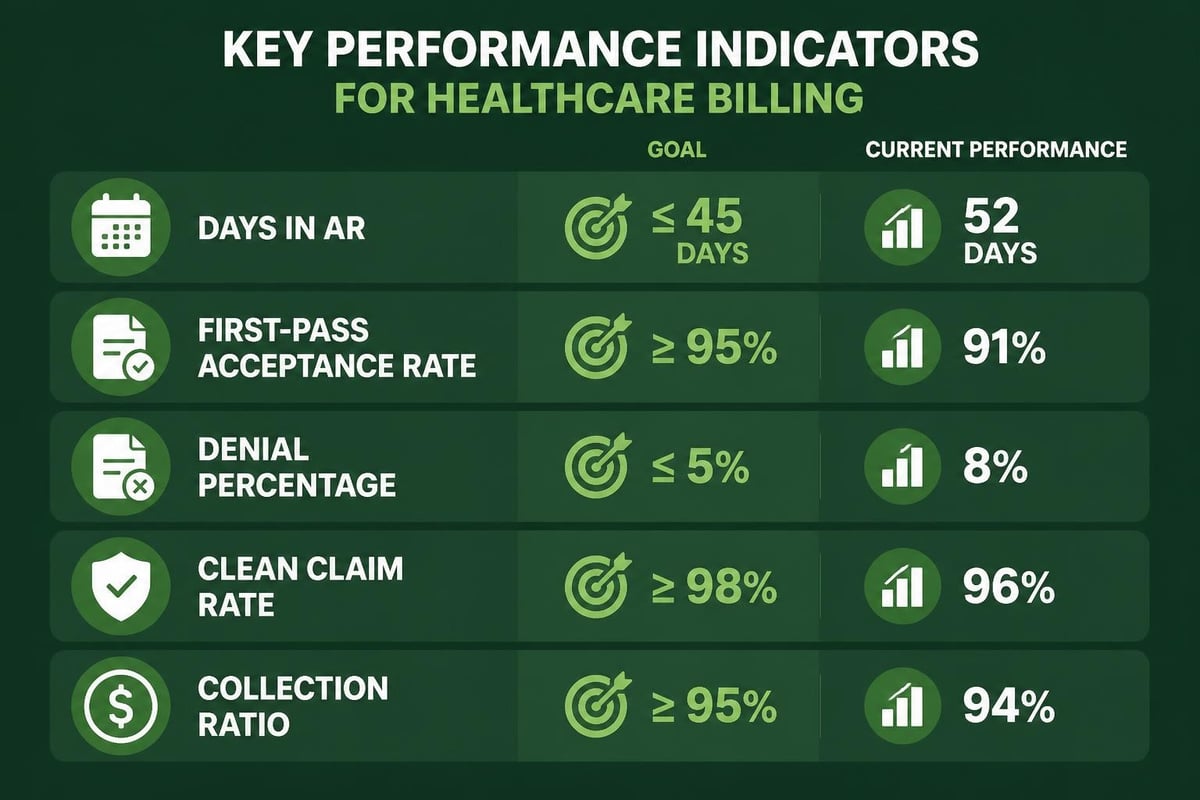
Net collection rate compares actual payments received to the amount that should have been collected based on contracted rates. This metric reveals revenue leakage from write-offs, uncollected patient balances, and underpayments. A net collection rate below 95% indicates significant opportunity for improvement.
Addressing Common Billing Challenges
Healthcare practices encounter recurring obstacles that impede optimal billing performance. Recognizing these challenges and implementing targeted solutions separates high-performing organizations from those struggling with revenue cycle inefficiencies.
Payer-specific requirements create complexity as each insurance company maintains unique rules for claim submission, documentation, and coding. Successful billing solutions include payer-specific edits that check claims against individual requirements before submission. This proactive approach prevents denials from technical errors unrelated to medical necessity or coverage.
Patient responsibility continues to grow as high-deductible health plans become more prevalent. Collecting patient portions requires different strategies than insurance collection. Effective approaches include point-of-service collection, payment plans for large balances, and automated payment reminders. Many practices find that clear communication about financial responsibility before services are rendered significantly improves collection rates.
Staffing challenges affect billing departments as experienced coders and billers become increasingly difficult to recruit and retain. This reality drives many practices toward outsourced billing solutions or hybrid models that supplement internal staff with external expertise. Service providers bring specialized knowledge across multiple specialties and maintain staff depth that individual practices cannot match.
Specialized Billing Considerations by Practice Type
Different healthcare specialties encounter unique billing requirements that generic solutions may not address adequately. Specialty-specific billing solutions incorporate the nuances of particular medical fields.
Behavioral health billing involves distinct challenges including session-based billing, complex authorization requirements, and privacy considerations beyond standard HIPAA compliance. Practices providing medical billing for behavioral health need systems that handle these requirements efficiently while maintaining therapeutic relationships.
Urgent care centers require rapid patient throughput and billing processes that support high-volume, episodic care. Understanding urgent care revenue cycle management helps these facilities balance speed with accuracy in their billing operations.
Primary care practices face their own complexity with preventive services, chronic care management, and value-based payment models. Billing solutions must accommodate diverse service types including annual wellness visits with age-specific coding requirements, as detailed in guides to annual wellness visit CPT codes.
Future Trends Shaping Billing Solutions
The healthcare billing landscape continues to evolve rapidly. Forward-thinking practices prepare for emerging trends that will reshape revenue cycle management in coming years.
Artificial intelligence and machine learning increasingly enhance billing solutions through predictive analytics, automated coding suggestions, and intelligent denial prevention. These technologies analyze historical patterns to identify claims at high risk for denial before submission, allowing preemptive correction.
Value-based care models shift focus from volume to outcomes, requiring billing solutions that track quality metrics alongside traditional fee-for-service charges. Hybrid payment models incorporating both fee-for-service and value-based components demand flexible systems capable of managing multiple reimbursement methodologies simultaneously.
Patient payment trends toward digital wallets, payment plans, and price transparency tools require billing solutions that integrate consumer-friendly payment options. As noted in discussions of automated billing best practices, optimizing payment methods and timing significantly impacts collection success.
Regulatory changes continue to affect billing requirements. Price transparency rules, surprise billing protections, and evolving documentation standards demand billing solutions that update quickly to maintain compliance. Practices benefit from solutions backed by vendors or service providers who monitor regulatory changes and implement necessary updates proactively.
Building a Sustainable Billing Operation
Long-term success requires more than implementing technology. Sustainable billing operations combine effective tools, trained personnel, documented processes, and continuous improvement culture.
Standard operating procedures document each step in the billing process from patient registration through final payment posting. These written protocols ensure consistency across staff members and provide training resources for new employees. Regular review and updating of procedures keeps them aligned with current best practices and regulatory requirements.
Quality assurance programs systematically review billing accuracy through regular audits and feedback loops. Many practices implement peer review processes where experienced staff members validate coding and billing decisions made by colleagues. This collaborative approach improves accuracy while developing staff expertise.
Staff development investments pay dividends through improved performance and reduced turnover. Providing opportunities for continuing education in coding updates, payer policy changes, and billing best practices maintains skill levels and demonstrates organizational commitment to professional growth. As explored in discussions about billing and coding specialists, these professionals form the foundation of successful revenue cycle operations.
Cross-training creates operational resilience by ensuring multiple staff members can perform critical functions. This redundancy prevents workflow disruptions when key employees are absent and provides career development opportunities for team members seeking to expand their capabilities.
Strategic Partnership Considerations
Many healthcare practices find that partnering with specialized billing service providers offers advantages over maintaining entirely in-house operations. This decision involves weighing multiple factors specific to each organization’s circumstances.
Economies of scale benefit smaller practices that cannot justify full-time specialist positions. Service providers spread expertise across multiple clients, making specialized knowledge accessible to practices of all sizes. This model particularly benefits single-provider practices and small groups where dedicating resources to billing infrastructure proves challenging.
Technology access through service partnerships eliminates large upfront software investments and ongoing maintenance costs. Providers maintain current systems, implement updates, and ensure regulatory compliance without requiring client involvement in technical details.
Performance accountability shifts when engaging service providers who typically guarantee specific metrics like collection rates and days in AR. This contractual commitment to results differs from managing internal staff where performance issues require direct organizational intervention.
However, some practices prefer maintaining direct control over billing operations despite higher costs. Organizations with unique workflows, proprietary systems, or specific security requirements may find in-house operations better suited to their needs. The decision ultimately depends on practice size, complexity, available capital, and strategic priorities.
According to research on billing and collections best practices, modernizing accounts receivable systems delivers measurable improvements regardless of whether practices manage billing internally or through external partners. The key lies in implementing proven processes supported by appropriate technology.
Successful healthcare billing requires strategic integration of technology, processes, and expertise to navigate an increasingly complex reimbursement environment. By implementing comprehensive billing solutions that address eligibility verification, claims processing, denial management, and payment posting, practices position themselves for sustained financial performance. Greenhive Billing Solutions delivers end-to-end revenue cycle management services designed specifically for healthcare providers seeking to maximize reimbursements while maintaining HIPAA compliance and operational efficiency. Our experienced team adapts to your existing systems and workflows, providing the specialized expertise needed to transform your billing operations and improve your practice’s financial health.

