
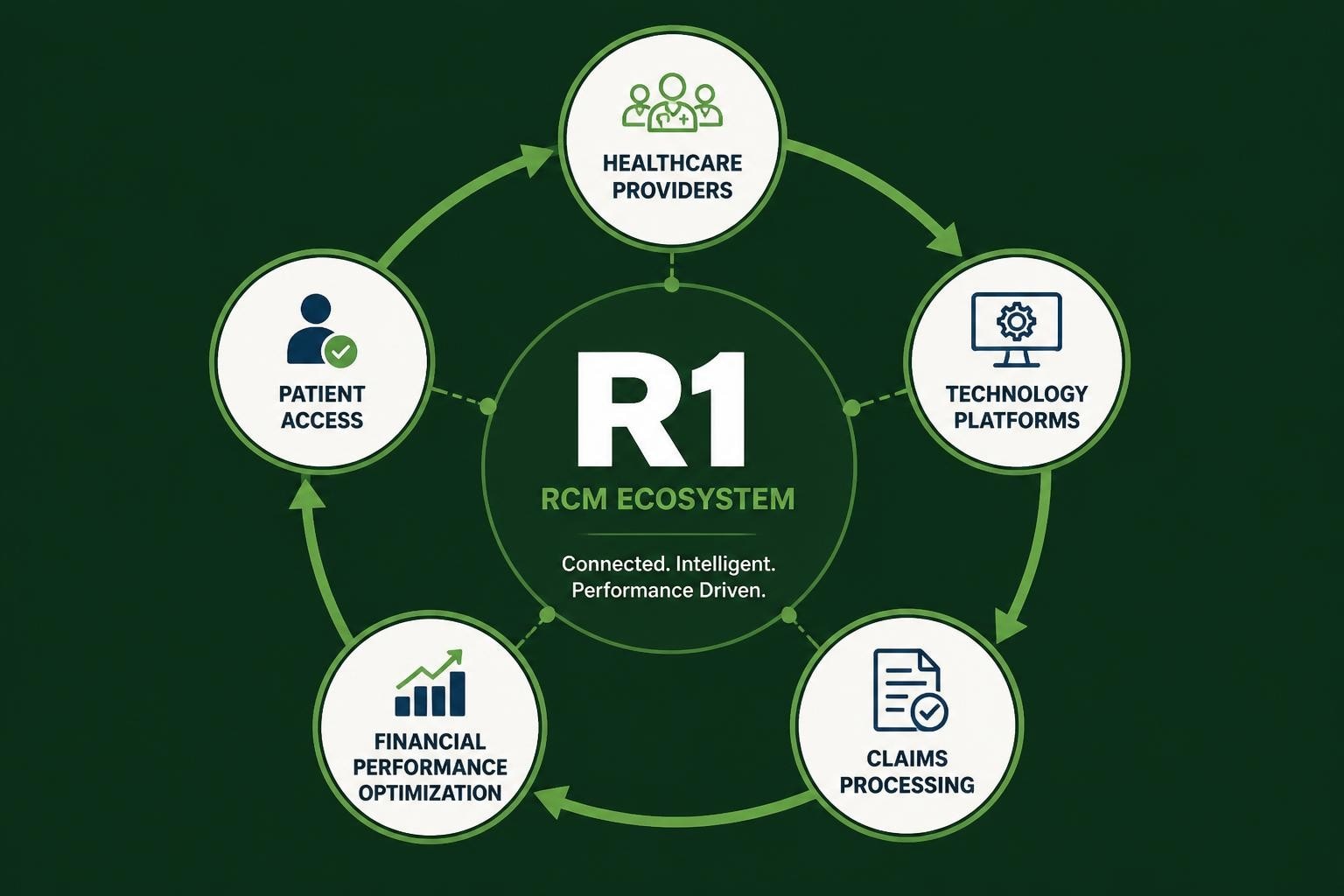
The healthcare revenue cycle landscape continues to evolve rapidly, with organizations seeking partners who can deliver comprehensive solutions that address both immediate operational needs and long-term financial sustainability. Among the major players in this space, r1 rcm revenue cycle management has emerged as a significant force, establishing partnerships with some of the nation’s largest health systems and physician groups. Understanding how leading RCM providers structure their services, leverage technology, and deliver measurable results provides valuable insights for healthcare organizations evaluating their revenue cycle strategies and determining which approaches align best with their operational goals.
Understanding the R1 RCM Business Model
R1 RCM operates on an enterprise-scale model that combines technology infrastructure with operational expertise to manage end-to-end revenue cycle functions. The company’s approach centers on multi-year partnerships with healthcare systems, typically spanning 10 years or longer. According to R1 RCM’s company profile, they serve as a comprehensive revenue cycle partner rather than a point solution provider.
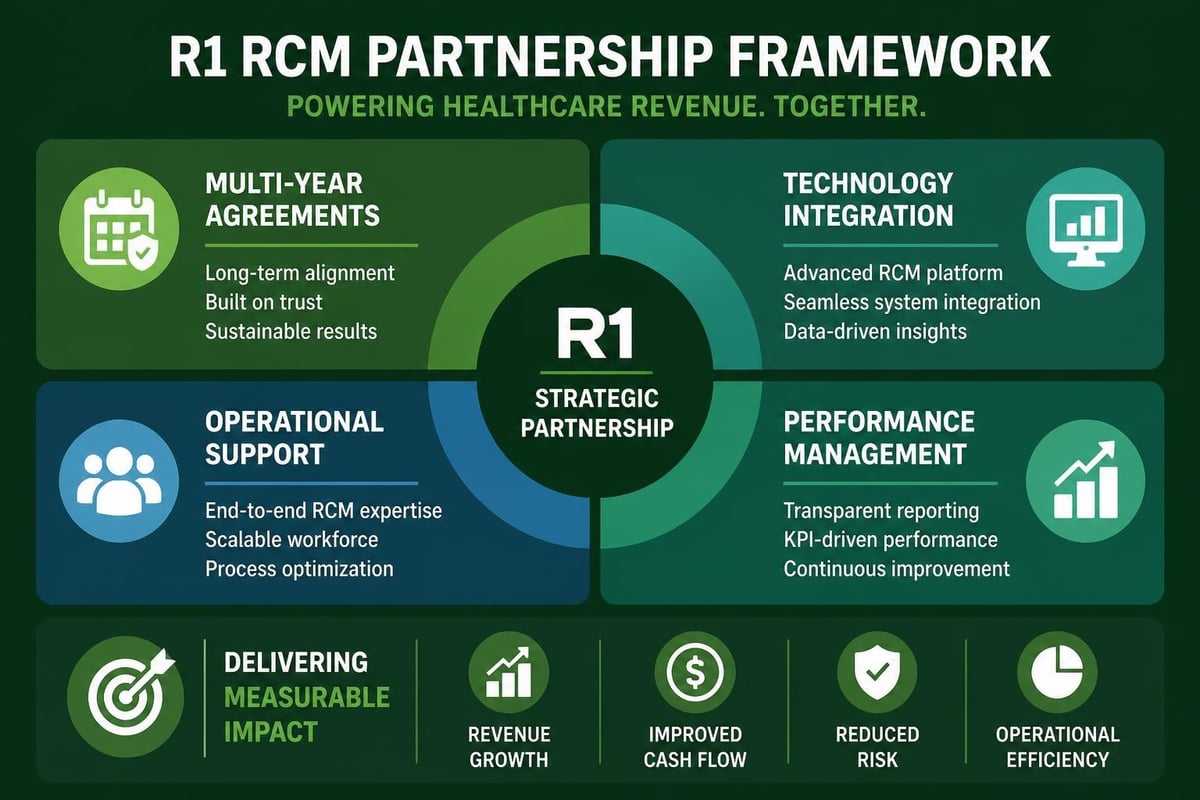
The r1 rcm revenue cycle management methodology emphasizes several core components:
- Full-cycle revenue management from patient access through final payment
- Proprietary technology platforms integrated with existing healthcare IT systems
- Dedicated operational teams embedded within client organizations
- Performance-based compensation models aligned with client financial outcomes
- Continuous process improvement driven by data analytics
This enterprise model differs significantly from traditional outsourcing arrangements. Rather than simply processing claims or handling specific revenue cycle functions, R1 RCM assumes responsibility for comprehensive financial performance across the entire patient journey.
Technology Infrastructure and Integration
The technological foundation of r1 rcm revenue cycle management relies on sophisticated platforms that connect disparate systems and create unified workflows. R1 RCM’s approach emphasizes seamless integration with electronic health records, practice management systems, and payer portals to eliminate manual handoffs and reduce processing delays.
Key technology capabilities include:
- Automated eligibility verification that checks insurance coverage in real-time before service delivery
- Intelligent claims scrubbing systems that identify potential denials before submission
- Predictive analytics to forecast collection rates and identify revenue leakage patterns
- Patient engagement platforms that facilitate transparent communication about financial responsibilities
- Denial management workflows that prioritize appeals based on financial impact and success probability
For practices considering their RCM technology strategy, exploring medical billing software options provides context for how different platforms support revenue cycle objectives. The integration between technology and operational processes determines ultimate performance outcomes.
Major Partnership Case Studies
Examining specific r1 rcm revenue cycle management partnerships reveals how enterprise-scale RCM arrangements function in practice. These relationships demonstrate both the scope of services provided and the financial magnitude of these engagements.
Sutter Health Partnership
In July 2022, R1 RCM announced a 10-year partnership with Sutter Health, one of California’s largest not-for-profit health systems. This agreement encompassed enterprise-wide revenue cycle services across Sutter’s network of hospitals, medical foundations, and affiliated physicians.
The partnership structure included:
- Transition of approximately 2,000 Sutter RCM employees to R1 RCM
- Technology platform implementation across all facilities
- Joint governance model for strategic decision-making
- Performance guarantees tied to key financial metrics
- Multi-year improvement roadmap targeting specific operational inefficiencies
St. Clair Health Agreement
Similarly, R1 RCM’s partnership with St. Clair Health in August 2022 demonstrated the company’s approach to mid-sized health systems. St. Clair Health, based in Pennsylvania, sought to improve both financial performance and patient access capabilities through comprehensive RCM transformation.
| Partnership Element | Sutter Health | St. Clair Health |
|---|---|---|
| Duration | 10 years | 10 years |
| Service Scope | Enterprise-wide | End-to-end RCM |
| Employee Transition | ~2,000 staff | Undisclosed |
| Primary Objectives | Financial performance, scale | Financial improvement, patient access |
| Implementation Model | Full technology platform | Integrated solution |
These partnerships illustrate that r1 rcm revenue cycle management agreements typically involve significant organizational change, substantial financial commitment, and long-term strategic alignment between the RCM provider and healthcare organization.
Physician Practice Revenue Cycle Solutions
While R1 RCM is known for enterprise health system partnerships, the company also provides physician revenue cycle management services tailored to the unique needs of medical practices. The physician-focused approach addresses challenges specific to ambulatory care settings.
Physician practices face distinct revenue cycle pressures compared to hospital systems:
- Smaller patient volumes requiring efficient processing to maintain cash flow
- Higher percentage of patient responsibility due to high-deductible health plans
- Limited administrative resources to manage complex billing requirements
- Payer contract complexity across multiple insurance relationships
- Regulatory compliance burdens disproportionate to practice size
The r1 rcm revenue cycle management solution for physicians emphasizes rapid claim submission, proactive denial prevention, and enhanced patient collections. Their physician group practice management offerings integrate front-office patient access functions with back-office billing operations.
Front-End Revenue Cycle Optimization
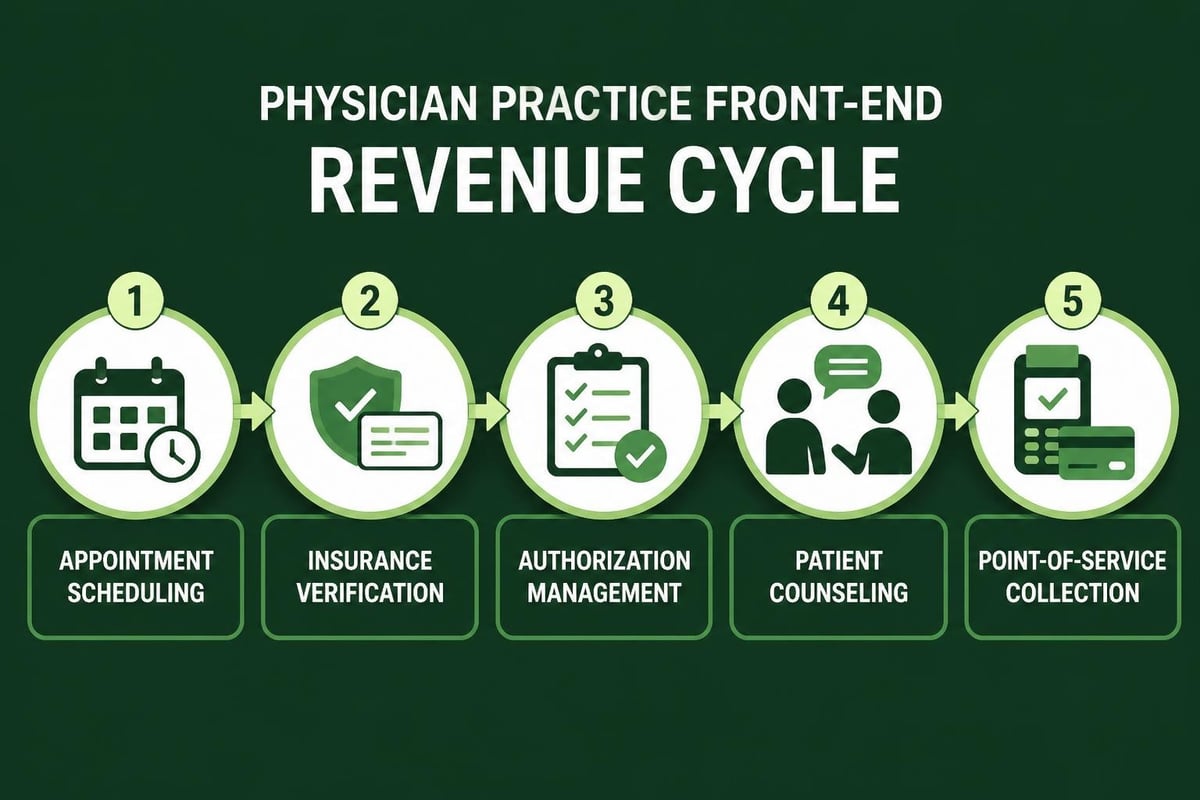
Successful physician practice RCM begins before the patient encounter. Front-end processes establish accurate demographic information, verify coverage, determine patient financial responsibility, and set expectations for payment.
Best practices for front-end optimization include:
- Real-time eligibility verification during appointment scheduling
- Insurance authorization management for procedures requiring pre-approval
- Patient financial counseling to communicate out-of-pocket costs
- Point-of-service collection strategies to secure payment at visit time
- Demographic accuracy protocols to prevent claim denials
Healthcare organizations can strengthen these capabilities through specialized services like eligibility verification services that ensure coverage confirmation before service delivery.
Mid-Cycle Efficiency and Claims Management
The middle section of the revenue cycle encompasses charge capture, coding, and claims submission. For physician practices, this phase determines both compliance with payer requirements and speed of reimbursement.
Critical mid-cycle functions include:
- Accurate charge capture ensuring all billable services are documented and coded
- Compliant medical coding applying current CPT, ICD-10, and HCPCS codes correctly
- Claims scrubbing to identify and correct errors before payer submission
- Timely claims submission meeting payer deadlines and accelerating payment cycles
- Electronic claim transmission minimizing processing delays and manual intervention
Understanding the complete revenue cycle management process helps practices identify specific areas where performance gaps exist and targeted improvements can deliver measurable financial impact.
Technology-Driven Performance Improvement
The distinction between traditional medical billing services and modern r1 rcm revenue cycle management centers largely on technology-enabled analytics and continuous improvement. Data-driven decision-making separates reactive problem-solving from proactive performance optimization.
Analytics and Key Performance Indicators
Leading RCM providers track detailed metrics across every revenue cycle phase. These KPIs provide visibility into operational efficiency, financial performance, and areas requiring intervention.
| KPI Category | Specific Metrics | Target Benchmarks |
|---|---|---|
| Front-End | Registration accuracy, insurance verification rate, point-of-service collections | >95% accuracy, >98% verification, >30% POS collection rate |
| Mid-Cycle | Clean claim rate, days in A/R, coding accuracy | >95% clean claims, <35 days A/R, >98% coding accuracy |
| Back-End | Collection rate, denial rate, appeal success rate | >95% collection, <5% denials, >60% appeal success |
| Patient Experience | Satisfaction scores, payment plan adoption, portal utilization | >85% satisfaction, >40% payment plans, >50% portal use |
Sophisticated analytics platforms identify patterns invisible to manual review. For example, analyzing denial patterns by payer, procedure code, and provider reveals systematic issues requiring targeted intervention rather than case-by-case appeals.
Denial Management Excellence
Denial management represents one area where r1 rcm revenue cycle management technology delivers significant value. Denial management in medical billing requires both preventing denials before they occur and efficiently appealing denials that do arise.
Effective denial management programs incorporate:
- Root cause analysis identifying why denials occur and implementing preventive measures
- Automated denial categorization grouping denials by reason and payer for systematic resolution
- Prioritization algorithms focusing resources on high-value, winnable appeals
- Template-based appeal letters accelerating response times while maintaining quality
- Payer-specific strategies adapting approaches to individual payer requirements and patterns
Healthcare organizations implementing comprehensive denial management programs typically see denial rates decrease 30-50% within the first year while simultaneously improving appeal success rates on remaining denials.
Strategic Considerations for Healthcare Organizations
While examining r1 rcm revenue cycle management and similar enterprise-scale approaches provides valuable insights, most healthcare organizations must carefully evaluate whether such partnerships align with their strategic priorities, organizational culture, and financial circumstances.
Evaluating RCM Partnership Models
Healthcare providers have multiple options for structuring their revenue cycle operations, each with distinct advantages and considerations:
In-House RCM Operations
- Complete control over processes and staff
- Direct integration with clinical operations
- Requires substantial technology investment
- Dependent on internal expertise and leadership
Selective Outsourcing
- Retain control of strategic functions
- Outsource specific high-volume or specialized tasks
- Allows gradual transition and testing
- Requires coordination between internal and external teams
Full-Service RCM Partnership
- Comprehensive solution across all revenue cycle functions
- Access to enterprise-grade technology and expertise
- Significant organizational change and transition period
- Long-term contractual commitment required
The optimal approach depends on organizational size, current performance levels, available capital for technology investment, and leadership’s strategic priorities. Understanding physician RCM considerations helps smaller practices evaluate their specific needs.
Financial Impact Assessment
Before pursuing any major RCM transformation, healthcare organizations should conduct rigorous financial analysis comparing current performance against projected outcomes under different scenarios. This assessment should quantify both hard costs and opportunity costs.
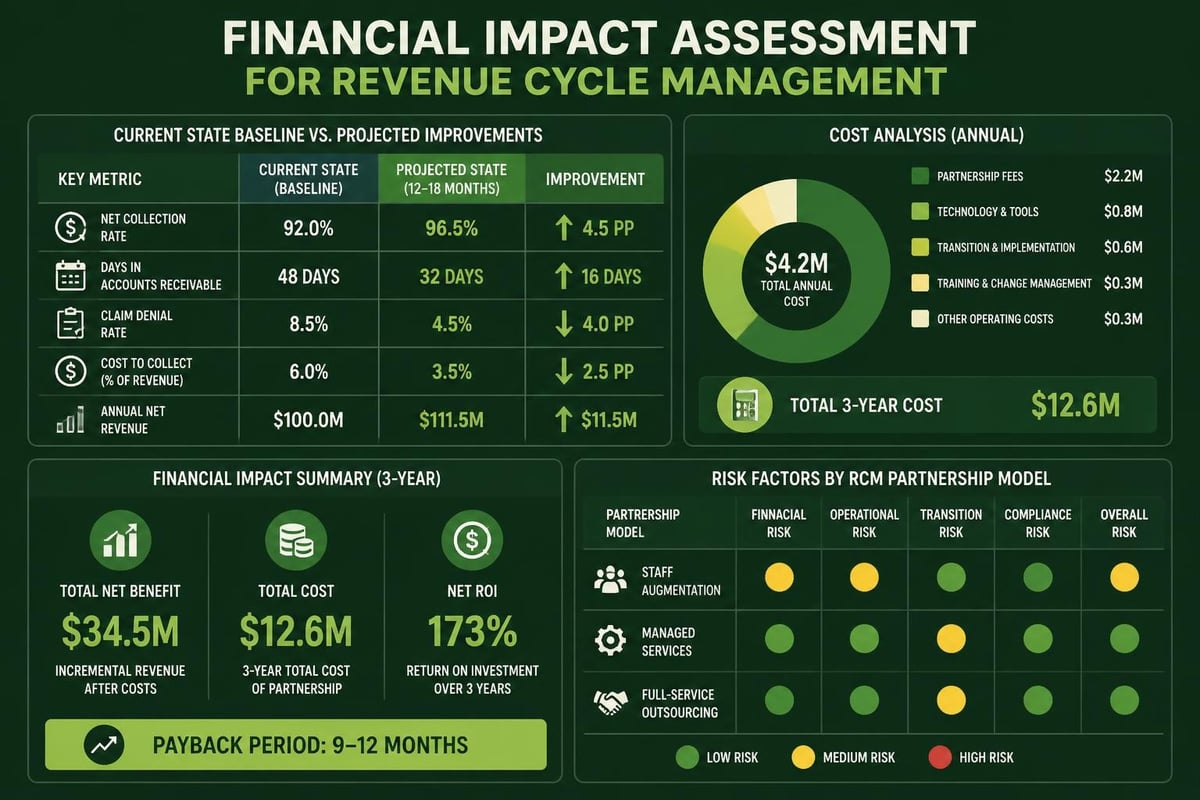
Key financial elements to analyze include:
- Current revenue cycle costs as percentage of net patient revenue
- Days in accounts receivable and working capital implications
- Collection rates compared to industry benchmarks
- Write-off percentages for denials, bad debt, and contractual adjustments
- Technology maintenance costs for existing systems and required upgrades
Most r1 rcm revenue cycle management type partnerships target 2-4% improvement in operating margins through combined revenue enhancement and cost reduction. However, achieving these results requires successful change management, technology integration, and sustained operational discipline over multiple years.
Implementation and Change Management
Transitioning to a new RCM model involves substantial organizational change. Success depends not only on selecting the right partner and technology but also on managing the human and process dimensions of transformation.
Critical Success Factors
Organizations that achieve superior results from RCM transformations consistently demonstrate several characteristics:
- Executive sponsorship with visible commitment from CEO and CFO levels
- Clear communication about reasons for change and expected benefits
- Staff engagement involving frontline employees in process design
- Realistic timelines acknowledging that meaningful change requires 12-24 months
- Continuous feedback loops enabling rapid problem identification and resolution
The RCM process must be thoroughly documented and socialized across the organization before implementation begins. Staff members need to understand not just what is changing but why the change matters and how it affects their daily responsibilities.
Training and Development
Successful r1 rcm revenue cycle management implementations invest heavily in training programs that build staff competency with new systems, processes, and expectations. Training should address both technical skills and conceptual understanding.
Effective training programs include:
- Role-specific instruction tailored to individual job functions
- Hands-on practice in test environments before live deployment
- Quick reference guides and job aids for ongoing support
- Competency assessments to validate learning and identify gaps
- Continuous education as processes evolve and regulations change
Organizations should anticipate that productivity may temporarily decline during the transition period as staff members adapt to new workflows. Building realistic expectations and providing adequate support during this learning curve prevents frustration and accelerates time to full performance.
Measuring Long-Term Performance and Value
After implementing new RCM approaches, healthcare organizations must establish ongoing measurement systems that track both financial outcomes and operational performance. These metrics validate that the partnership or transformation is delivering promised value.
Quarterly Business Reviews
Leading RCM partnerships conduct formal quarterly business reviews examining performance across agreed-upon metrics. These sessions provide structured accountability and ensure that both parties remain aligned on priorities and objectives.
Quarterly reviews typically cover:
| Review Component | Key Discussion Points |
|---|---|
| Financial Performance | Collections, denials, days in A/R, net revenue trends |
| Operational Metrics | Claim submission volume, clean claim rate, appeal results, patient satisfaction |
| Technology Updates | System enhancements, integration improvements, new capabilities |
| Process Improvements | Workflow optimizations, staff training, policy changes |
| Strategic Initiatives | Upcoming regulatory changes, payer contract negotiations, service expansions |
These structured reviews create transparency and facilitate continuous improvement rather than allowing performance issues to accumulate unaddressed.
Benchmarking Against Industry Standards
Evaluating r1 rcm revenue cycle management performance requires external benchmarks that contextualize results relative to peer organizations. Industry benchmarks vary by organization type, patient population, payer mix, and geographic location.
Healthcare organizations should regularly compare their performance against:
- Medical Group Management Association (MGMA) data for physician practices
- Healthcare Financial Management Association (HFMA) benchmarks for hospitals
- Advisory Board research for specific specialties or service lines
- Regional peer networks for local market context
Benchmark comparisons identify both strengths to maintain and weaknesses requiring attention. However, organizations should be cautious about blindly pursuing benchmarks without considering their specific circumstances and strategic priorities.
Technology Evolution and Future Trends
The revenue cycle management landscape continues to evolve rapidly, driven by regulatory changes, payer policy shifts, and technological innovation. Organizations planning long-term RCM strategies must consider how emerging trends will impact their operations and partnerships.
Artificial Intelligence and Automation
Artificial intelligence and machine learning technologies are transforming revenue cycle operations by automating routine tasks, predicting outcomes, and optimizing decision-making. These capabilities enhance human expertise rather than replacing it.
Current and emerging AI applications in r1 rcm revenue cycle management include:
- Automated coding assistance that suggests appropriate codes based on clinical documentation
- Denial prediction models that identify claims likely to be denied before submission
- Payment variance analysis detecting underpayments and contract compliance issues
- Patient propensity-to-pay scoring optimizing collection strategies based on likelihood of payment
- Natural language processing extracting structured data from unstructured clinical notes
As these technologies mature, organizations must ensure their RCM partners demonstrate commitment to continuous technological advancement rather than relying on outdated systems and manual processes.
Patient Financial Engagement
Rising patient financial responsibility through high-deductible health plans has fundamentally changed revenue cycle dynamics. Healthcare organizations must develop sophisticated patient engagement strategies that balance collection requirements with positive patient experiences.
Modern patient engagement approaches emphasize:
- Price transparency tools allowing patients to estimate out-of-pocket costs before service
- Flexible payment options including installment plans, digital payment methods, and financial assistance programs
- Clear, consolidated billing that patients can easily understand and navigate
- Multi-channel communication reaching patients through their preferred methods (text, email, portal, phone)
- Financial counseling services helping patients understand insurance benefits and available assistance
The relationship between effective patient engagement and overall revenue cycle performance continues to strengthen. Organizations that treat patient collections as an afterthought rather than a strategic priority increasingly struggle with rising bad debt and diminished patient satisfaction.
Understanding how leading providers structure r1 rcm revenue cycle management services offers valuable insights into industry best practices, technological capabilities, and partnership models that drive superior financial performance. Healthcare organizations benefit from examining these approaches while carefully evaluating which strategies align with their unique circumstances, resources, and strategic objectives.
Whether you manage a single physician practice or a multi-specialty group, optimizing your revenue cycle requires the right combination of technology, processes, and expertise. Greenhive Billing Solutions delivers comprehensive revenue cycle management services designed specifically for healthcare providers seeking to improve financial performance while maintaining focus on patient care. Our experienced team works within your existing systems to enhance efficiency, reduce denials, accelerate collections, and ensure maximum reimbursements across all payers.

