
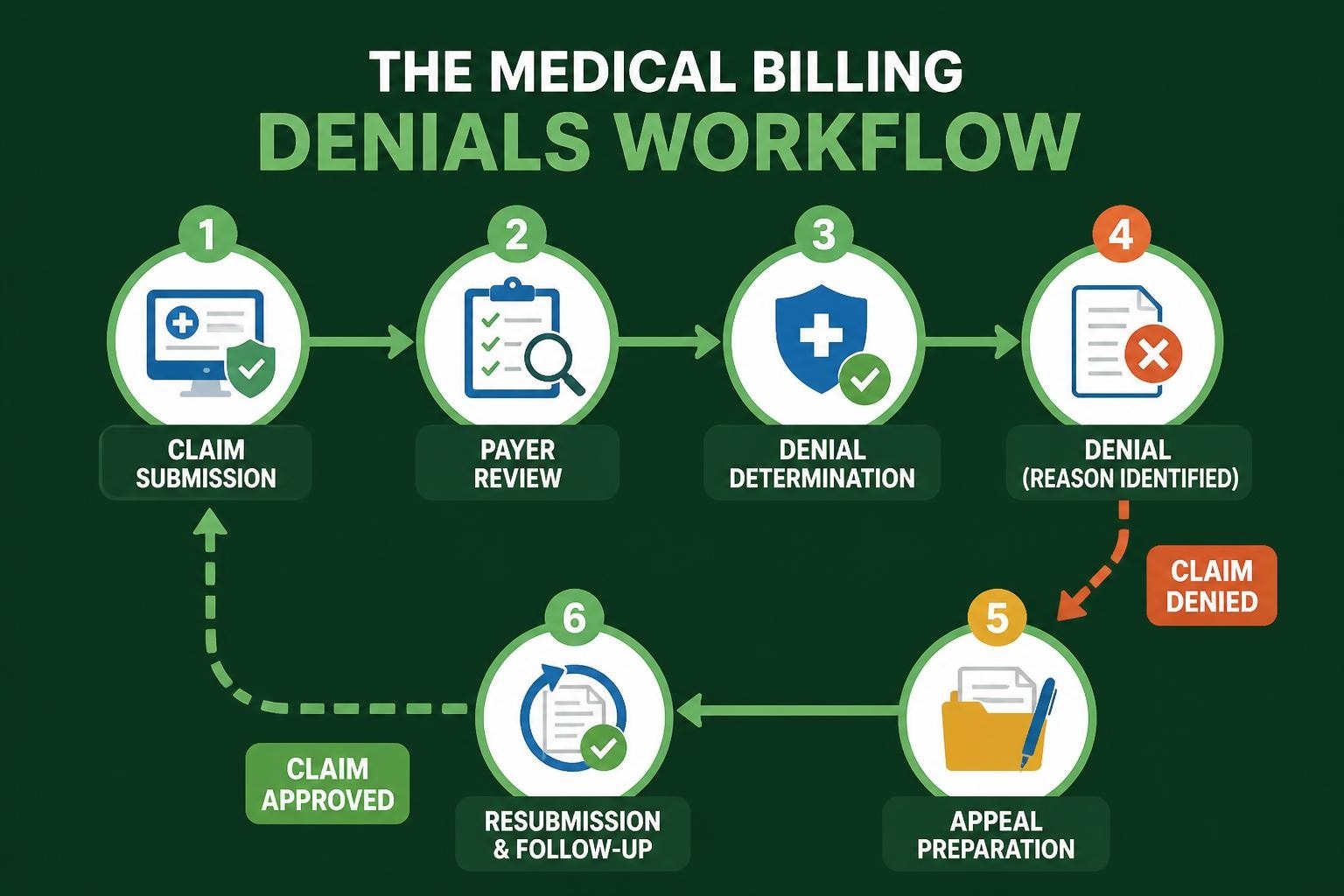
Medical billing denials represent one of the most significant financial challenges facing healthcare providers today. These rejections of payment claims by insurance companies directly impact practice revenue, increase administrative workload, and delay reimbursement for services already rendered. Understanding the root causes of denials and implementing systematic prevention strategies has become essential for maintaining healthy cash flow and operational efficiency. Research indicates that private payers initially deny nearly 15% of medical claims, highlighting the widespread nature of this issue across the healthcare industry.
Understanding Medical Billing Denials and Their Financial Impact
Medical billing denials occur when insurance payers refuse to process or reimburse submitted claims due to various errors, omissions, or policy violations. Unlike rejections that are returned before processing, denials are decisions made after the claim has been reviewed by the payer. This distinction matters because denials typically require a formal appeals process while rejections can be corrected and resubmitted more quickly.
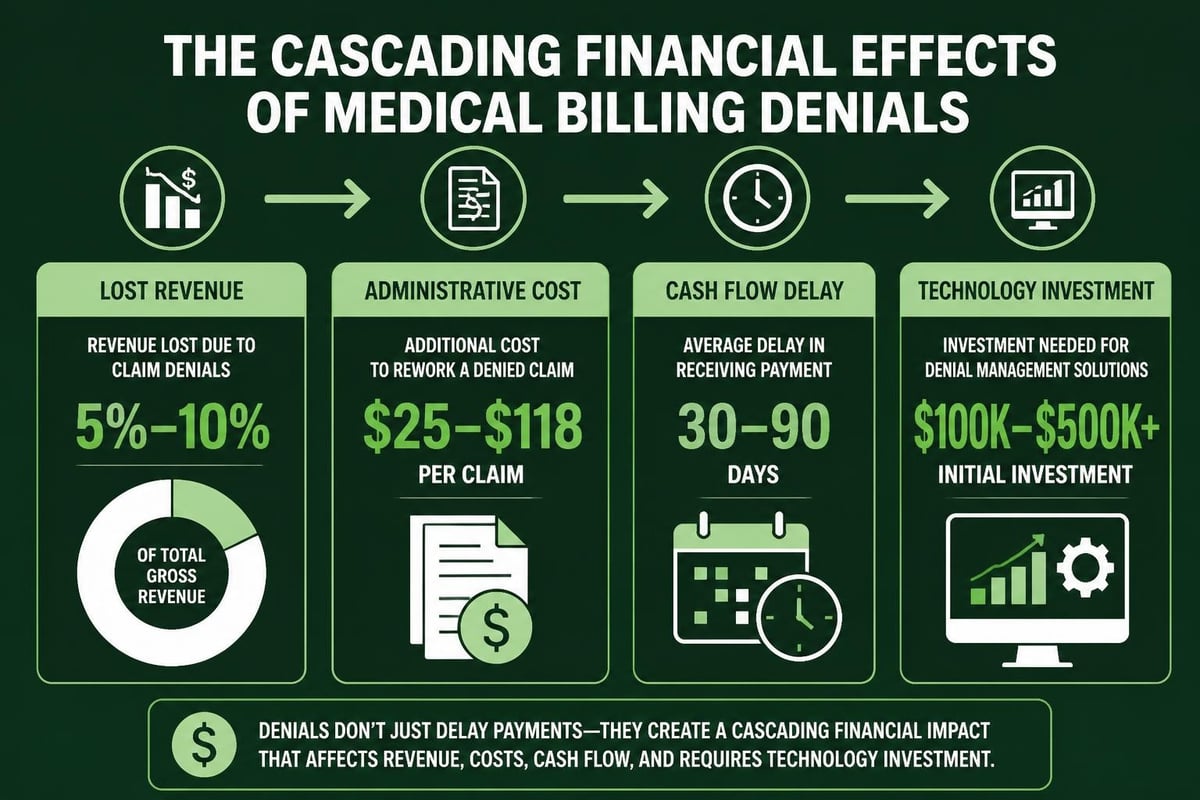
The financial implications of these denials extend far beyond the immediate loss of expected revenue. Healthcare providers face increased administrative costs as staff members dedicate hours to researching denial reasons, gathering documentation, and preparing appeals. Time-sensitive deadlines for appeals add pressure to already stretched billing departments, and delayed payments create cash flow problems that affect daily operations.
The True Cost of Denial Management
Organizations must consider both direct and indirect costs when evaluating denial impact. Direct costs include lost revenue from unrecovered claims and the expense of additional staff hours dedicated to rework. Indirect costs encompass delayed revenue affecting operating capital, opportunity costs from staff time diverted from other revenue-generating activities, and potential damage to payer relationships.
| Cost Category | Impact on Practice | Typical Financial Range |
|---|---|---|
| Lost Revenue | Unrecovered denied claims | 3-5% of total revenue |
| Administrative Labor | Staff time on appeals and rework | $25-$40 per claim |
| Delayed Payment | Cash flow disruption | 30-90 day delays |
| Software and Tools | Tracking and management systems | $500-$5,000 monthly |
Primary Causes of Medical Billing Denials
Identifying the specific reasons behind claim denials enables practices to develop targeted prevention strategies. Common causes of denials range from simple data entry errors to complex coding issues and authorization problems.
Registration and Eligibility Errors
Patient registration mistakes account for a substantial percentage of preventable denials. When demographic information is recorded incorrectly at check-in, the resulting claims contain mismatched data that payers flag immediately. Policy numbers, subscriber names, dates of birth, and relationship codes must align perfectly with payer records.
Insurance eligibility verification performed before service delivery prevents many registration-related denials. Real-time verification confirms active coverage, identifies correct policy numbers, and reveals any authorization requirements before procedures begin.
Coding Inaccuracies and Documentation Issues
Medical coding errors create denials when submitted codes fail to match documented services or don’t follow payer-specific guidelines. Outdated code sets, incorrect modifiers, and unbundling violations trigger automatic denials from payer systems. Additionally, insufficient documentation to support the level of service billed results in downcoding or complete denial.
- Diagnosis code specificity: Using non-specific codes when detailed options exist
- Procedure code mismatches: Services not supported by documented diagnoses
- Modifier misuse: Incorrect or missing modifiers that alter code meaning
- Date of service errors: Services billed outside covered date ranges
- Duplicate billing: Submitting claims for services already paid
Authorization and Referral Failures
Many procedures and specialist visits require prior authorization from insurance companies before services are rendered. When providers fail to obtain these authorizations or submit claims with incorrect authorization numbers, denials become inevitable. Referral requirements for managed care plans create additional complexity, as expired referrals or missing referral numbers lead to payment rejection.
Systematic Approaches to Denial Prevention
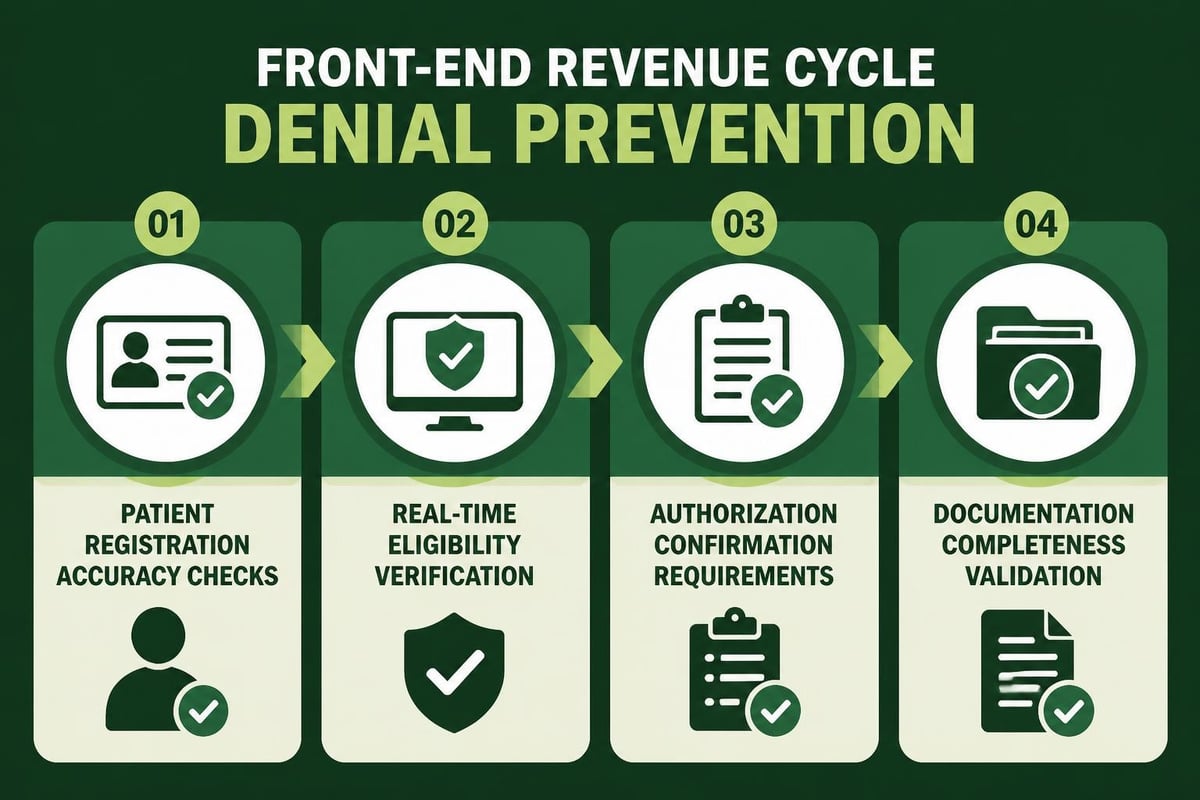
Preventing denials requires implementing proactive processes throughout the entire revenue cycle management process. Front-end prevention proves far more cost-effective than backend appeals and rework.
Front-End Revenue Cycle Optimization
The patient access phase offers the greatest opportunity for denial prevention. Training front desk staff to collect complete and accurate information, verify insurance coverage in real-time, and confirm authorization requirements establishes a solid foundation for clean claims.
Step-by-step registration protocol:
- Verify patient identity using photo identification and comparison with previous records
- Confirm insurance coverage through real-time eligibility checks with all payers
- Validate demographic data ensuring exact match with insurance card details
- Collect copayments and deductibles based on verified benefit information
- Document authorization numbers for procedures requiring prior approval
- Review referral status for managed care patients seeing specialists
Coding Excellence and Documentation Integrity
Maintaining coding accuracy demands ongoing education for coding staff and regular audits of coding patterns. Coders must stay current with annual code updates, payer-specific billing rules, and documentation requirements that support code selection.
Establishing clear communication channels between clinical staff and coders ensures that documentation reflects the complexity and medical necessity of services provided. Clinical documentation improvement programs help physicians understand how their notes translate into codes and reimbursement.
Effective Denial Management Strategies
Despite prevention efforts, some denials remain unavoidable due to payer policy changes, medical necessity determinations, or legitimate coverage limitations. Denial management in medical billing requires organized processes to maximize recovery rates.
Denial Tracking and Analysis
Creating a comprehensive denial tracking system provides visibility into denial patterns, identifies problem areas, and measures improvement over time. Categorizing denials by reason code, payer, provider, and service type reveals actionable trends.
| Denial Reason | Percentage of Total | Prevention Strategy | Recovery Rate |
|---|---|---|---|
| Registration Errors | 25-30% | Enhanced front desk training | 85-90% |
| Authorization Missing | 20-25% | Automated authorization tracking | 70-75% |
| Coding Errors | 15-20% | Regular coder education | 60-70% |
| Timely Filing | 10-15% | Accelerated claim submission | 10-20% |
| Medical Necessity | 10-12% | Improved documentation | 40-50% |
Appeals Process Optimization
Successful appeals require gathering supporting documentation, crafting persuasive arguments based on medical records and policy language, and submitting within strict timeframes. Organizing appeals by priority based on claim value and likelihood of success ensures efficient resource allocation.
Priority-based appeals workflow focuses high-value claims with strong supporting documentation into the first tier, while lower-value claims with weaker evidence receive attention based on available capacity. This approach maximizes return on investment for appeals staff time.
Technology Solutions for Denial Reduction
Advanced technology platforms streamline denial prevention and management through automation, predictive analytics, and integrated workflows. Claims scrubbing software identifies potential denial triggers before submission, while machine learning frameworks can predict payer responses based on historical data patterns.
Automated Eligibility Verification
Real-time eligibility verification systems automatically check coverage status during scheduling and registration, eliminating manual lookup processes and reducing verification errors. These systems flag inactive policies, identify authorization requirements, and confirm benefit details instantly.
Predictive Analytics and Reporting
Data analytics tools identify denial trends across multiple dimensions, predict future denial risks, and measure the effectiveness of prevention initiatives. Dashboards provide real-time visibility into key performance indicators such as denial rate, appeal success rate, days in accounts receivable, and net collection percentage.
- Denial rate trending by month, quarter, and year
- Payer-specific denial patterns highlighting problematic carriers
- Provider-level performance showing individual billing accuracy
- Revenue impact calculations quantifying financial effects
- Prevention initiative ROI measuring program effectiveness
Staff Training and Accountability
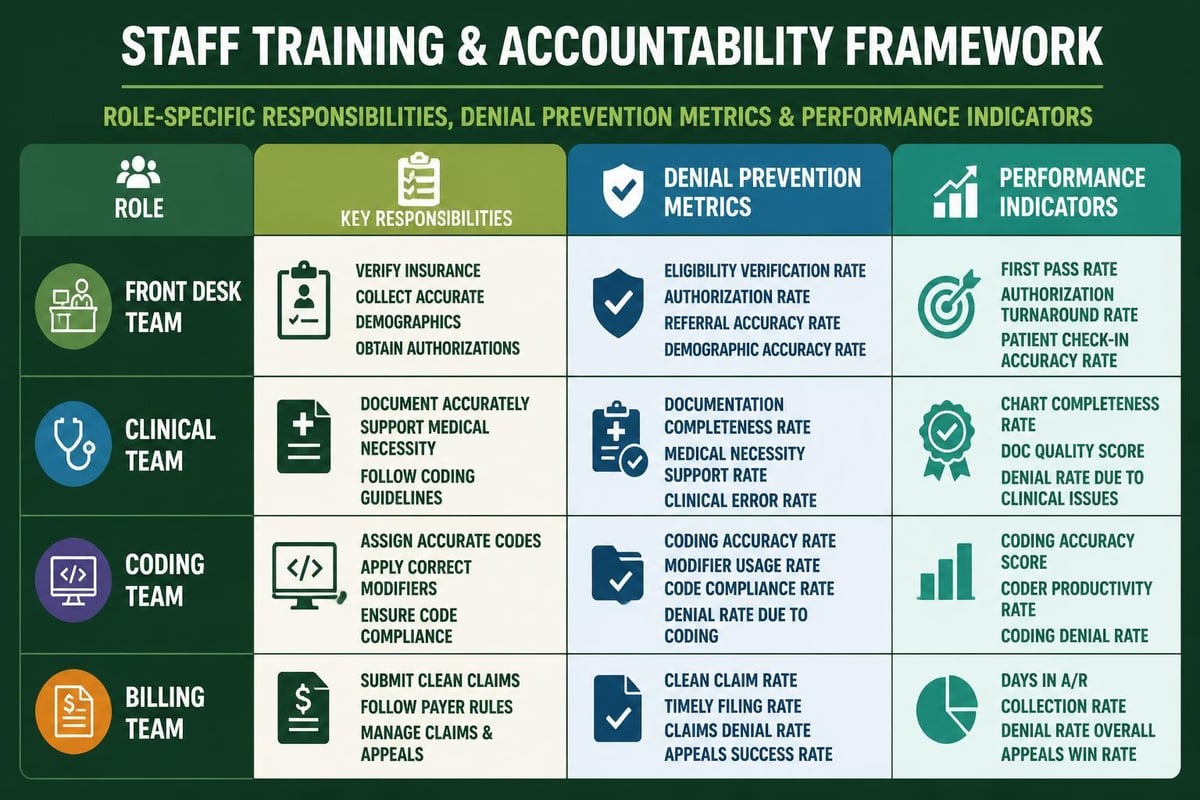
Investing in comprehensive staff education across all revenue cycle touchpoints reduces errors and improves claim quality. Training programs should address role-specific responsibilities while emphasizing how each position contributes to overall denial prevention.
Role-Specific Training Programs
Front desk personnel need training on insurance verification techniques, authorization tracking, and accurate demographic data collection. Clinical staff require education on documentation standards that support proper coding and medical necessity. Billing staff must understand payer policies, coding guidelines, and appeal preparation techniques.
Creating accountability through performance metrics tied to denial rates encourages staff engagement in prevention efforts. Recognizing teams and individuals who demonstrate improvement reinforces desired behaviors and maintains focus on quality.
Payer Relationship Management
Maintaining productive relationships with insurance companies facilitates faster denial resolution and clearer understanding of coverage policies. Regular communication with payer representatives helps clarify confusing policies, resolve systemic issues, and negotiate favorable terms.
Proactive Payer Communication
Establishing designated contacts at major payers enables quick resolution of recurring problems. Monthly or quarterly meetings with payer representatives provide forums for discussing denial trends, clarifying policy interpretations, and addressing systemic issues affecting multiple claims.
When patterns emerge indicating payer system errors or policy application inconsistencies, documenting these issues and presenting them to payer management can result in bulk claim adjustments and process improvements benefiting future submissions.
Measuring Success and Continuous Improvement
Effective denial management programs require ongoing measurement and refinement. Establishing baseline metrics before implementing new processes enables accurate assessment of improvement initiatives.
Key Performance Indicators
Organizations should track multiple metrics to gain comprehensive insight into denial management performance:
- Initial denial rate: Percentage of submitted claims denied on first submission
- Appeal success rate: Percentage of appealed denials that result in payment
- Days to appeal resolution: Average time from denial to appeal decision
- Net collection rate: Total collected divided by total allowed charges
- Cost per claim: Total billing department costs divided by claims submitted
- Clean claim rate: Percentage of claims paid on first submission
Setting improvement targets for each metric and reviewing progress monthly maintains momentum toward denial reduction goals. Celebrating wins when targets are achieved builds team morale and reinforces the importance of quality work.
Specialized Denial Categories and Strategies
Certain denial types require specialized knowledge and handling approaches beyond standard appeal processes. Understanding these unique categories helps practices develop appropriate response strategies.
Medical Necessity Denials
When payers determine that services weren’t medically necessary, appeals must demonstrate that treatment met established medical criteria. Gathering peer-reviewed literature, clinical guidelines from professional societies, and detailed physician rationale strengthens these appeals. Understanding how to resolve specific denial codes provides practical guidance for common scenarios.
Timely Filing Denials
Missing filing deadlines results in automatic denials that are extremely difficult to overturn. Implementing claim submission workflows with built-in safety margins ensures claims reach payers well before deadlines expire. Tracking submission dates and payer receipt confirmations provides documentation for disputes when payers incorrectly claim late filing.
Coordination of Benefits Issues
Patients with multiple insurance policies create complexity requiring careful coordination of benefits determination. Primary versus secondary payer designation must be accurate, and claims must be submitted in correct sequence. When coordination of benefits information changes, updating records quickly prevents denials on subsequent claims.
Outsourcing Versus In-House Management
Healthcare practices must evaluate whether to manage denials internally or partner with specialized revenue cycle management service providers. This decision depends on practice size, internal expertise, technology infrastructure, and financial resources.
Evaluating the Build Versus Buy Decision
Smaller practices often lack the volume to justify dedicated denial management staff and sophisticated technology platforms. Denial management services provided by experienced partners offer access to specialized expertise, proven processes, and established payer relationships without requiring significant capital investment.
Larger organizations with substantial claim volume may prefer maintaining internal control over denial processes while potentially outsourcing specific functions such as appeals or complex case resolution. Hybrid models combining internal oversight with external specialized support provide flexibility to address varying needs.
| Consideration | In-House Management | Outsourced Services |
|---|---|---|
| Upfront Investment | High (staff, training, technology) | Low (service fees only) |
| Scalability | Limited by staff capacity | Easily scales with volume |
| Expertise Access | Requires hiring/training | Immediate specialized knowledge |
| Technology Costs | Significant ongoing expense | Included in service fees |
| Control Level | Complete internal control | Collaborative partnership model |
Regulatory Compliance and Denial Management
Maintaining compliance with healthcare regulations adds complexity to denial management processes. HIPAA requirements govern how patient information is handled during appeals, while payer-specific regulations dictate acceptable documentation and communication methods.
Documentation Retention and Security
Appeal documentation containing protected health information must be stored securely with appropriate access controls and retention periods meeting both federal and state requirements. Electronic systems handling appeals need encryption, audit trails, and backup procedures ensuring data integrity and availability.
Transparent Communication Standards
Keeping patients informed about claim status and denial situations demonstrates commitment to transparency while managing expectations. Clear explanations of denial reasons, appeal timelines, and potential patient responsibility help maintain trust even when claims face challenges.
Reducing medical billing denials requires comprehensive strategies spanning prevention, management, and continuous improvement across the entire revenue cycle. By implementing systematic processes, leveraging technology solutions, and maintaining focus on accuracy at every touchpoint, healthcare providers can significantly decrease denial rates while improving cash flow and operational efficiency. Greenhive Billing Solutions partners with healthcare providers nationwide to optimize denial management through expert services, proven methodologies, and dedicated support that maximizes reimbursements while reducing administrative burden.

