
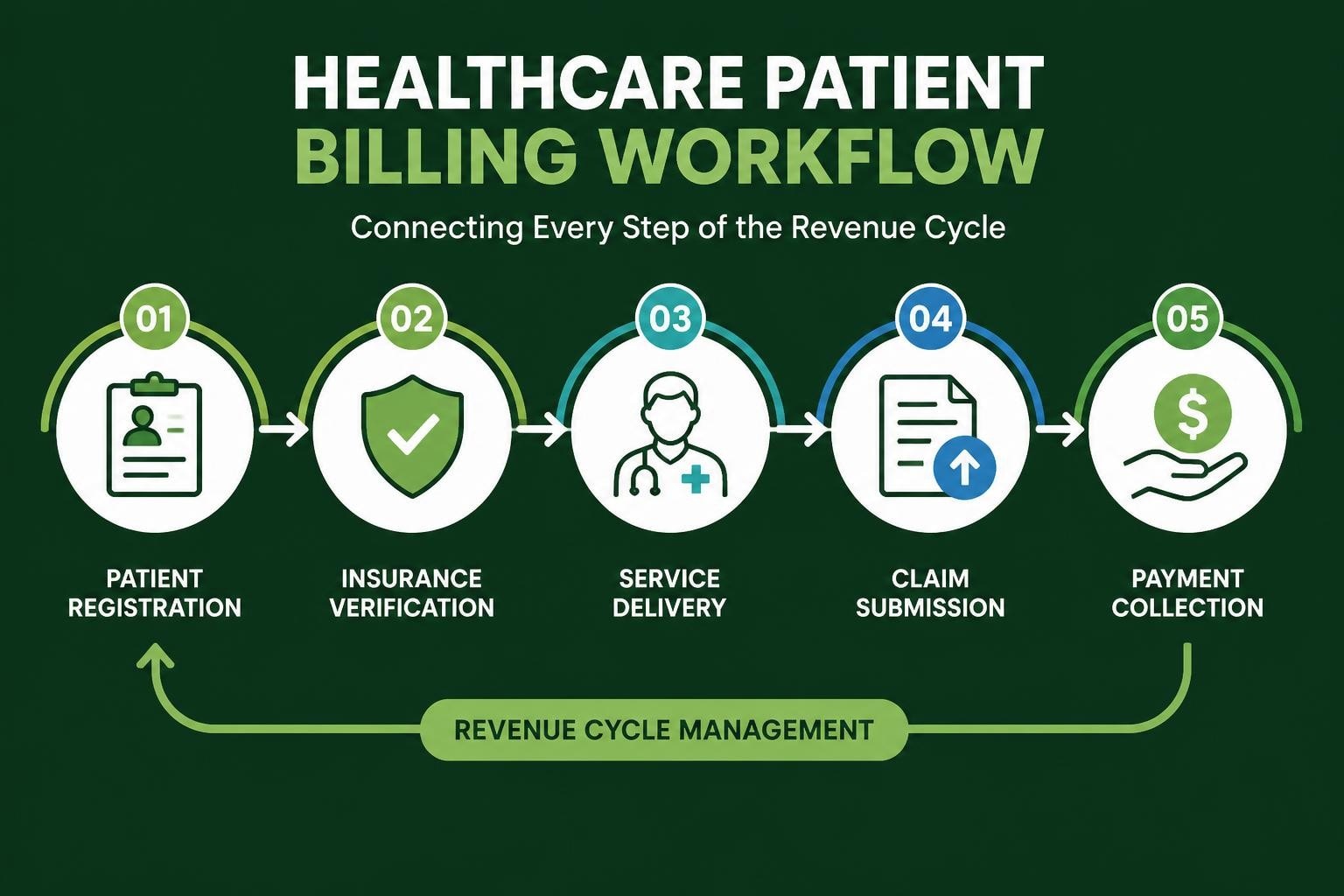
Patient billing represents one of the most critical touchpoints between healthcare providers and the individuals they serve. When handled effectively, it strengthens financial performance while maintaining positive relationships with patients. When managed poorly, it creates confusion, delays payment, and damages trust. Healthcare organizations that master the balance between efficient collections and compassionate communication position themselves for sustainable success in an increasingly complex reimbursement landscape.
Understanding the Patient Billing Landscape
The healthcare industry has experienced significant shifts in how financial responsibility is distributed. High-deductible health plans have become increasingly common, transferring more financial burden directly to patients. This shift means healthcare organizations must now collect larger portions of revenue from patients rather than relying primarily on insurance reimbursements.
Patient billing encompasses every interaction related to informing patients about their financial obligations, processing payments, and resolving account balances. This includes pre-service estimates, point-of-service collections, statement generation, payment plan management, and follow-up communications. Each touchpoint presents an opportunity to either strengthen or weaken the patient-provider relationship.
Regulatory Considerations in Patient Billing
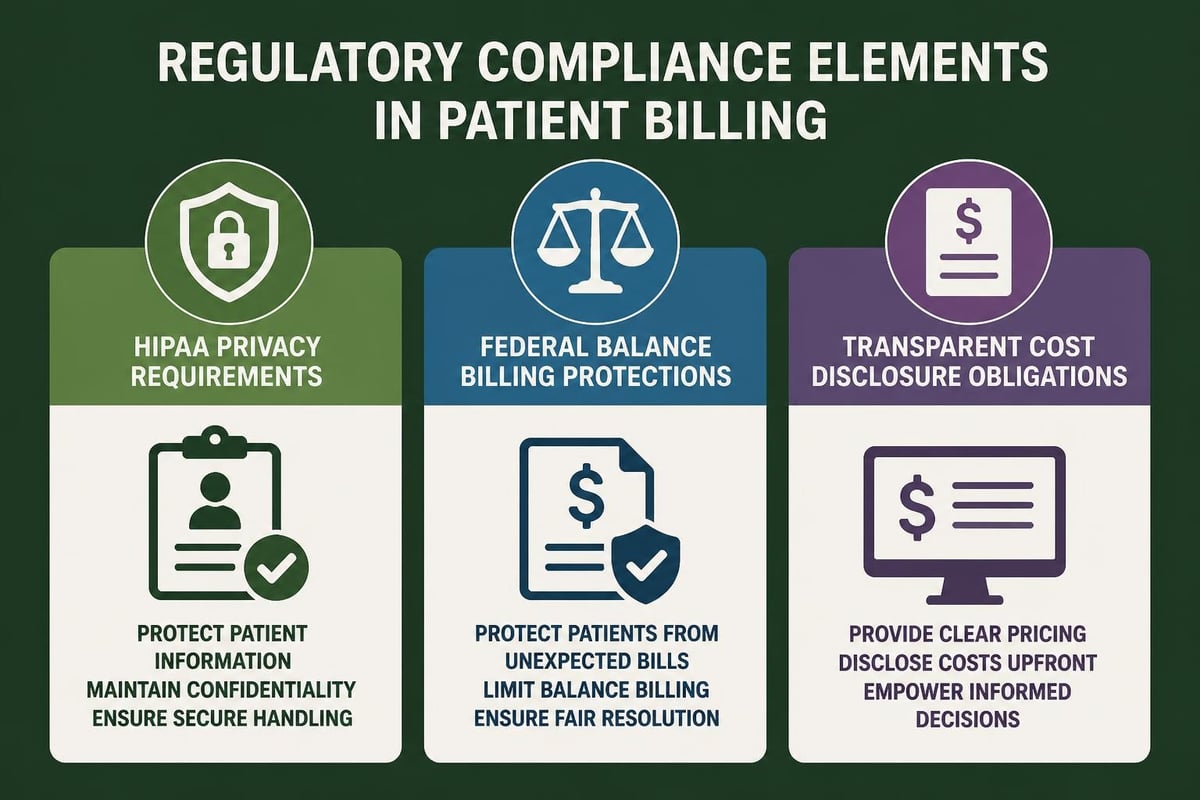
Healthcare providers must navigate numerous regulatory requirements when implementing patient billing processes. The Code of Federal Regulations regarding patient protections establishes disclosure requirements that ensure transparency around balance billing and out-of-network charges. HIPAA compliance remains essential when communicating about patient accounts, requiring secure transmission of billing information and careful handling of protected health information.
The American Hospital Association’s patient billing guidelines emphasize equitable treatment across all patient populations and require that financial discussions never impede access to necessary medical care. Understanding these regulatory frameworks helps organizations build compliant processes from the ground up.
Pre-Visit Strategies That Improve Collections
Successful patient billing begins long before services are rendered. Implementing strategic pre-visit steps for patient billing significantly improves collection rates while reducing administrative burden after services are delivered.
Insurance Verification and Eligibility Checks
Verifying insurance coverage before appointments prevents billing surprises and claim denials. This process confirms active coverage, identifies applicable copayments and deductibles, and determines whether services require prior authorization. Organizations that integrate eligibility verification services into their workflow experience fewer claim rejections and faster reimbursement cycles.
Key verification elements include:
- Coverage effective dates and termination dates
- In-network versus out-of-network benefits
- Deductible amounts and year-to-date accumulation
- Copayment and coinsurance percentages
- Prior authorization requirements for specific procedures
- Coordination of benefits when multiple policies exist
Transparent Cost Estimates
Providing accurate cost estimates before services builds trust and enables patients to make informed financial decisions. Estimates should include anticipated insurance payments and patient responsibility based on verified benefits. When patients understand their financial obligations in advance, they can prepare for payment or discuss alternative arrangements.
| Pre-Visit Activity | Impact on Collections | Patient Satisfaction |
|---|---|---|
| Insurance verification | Reduces claim denials by 40-60% | Prevents billing surprises |
| Cost estimation | Increases point-of-service collections by 30-50% | Enables financial planning |
| Payment policy communication | Improves overall collection rate by 20-35% | Sets clear expectations |
| Pre-payment collection | Reduces accounts receivable days by 15-25 | Demonstrates value perception |
Crafting Clear and Actionable Patient Statements
The patient statement serves as the primary communication tool for outstanding balances. Unfortunately, many healthcare organizations send confusing statements that frustrate patients and delay payment. Best practices for patient billing statements emphasize clarity, simplicity, and actionable next steps.
Essential Statement Components
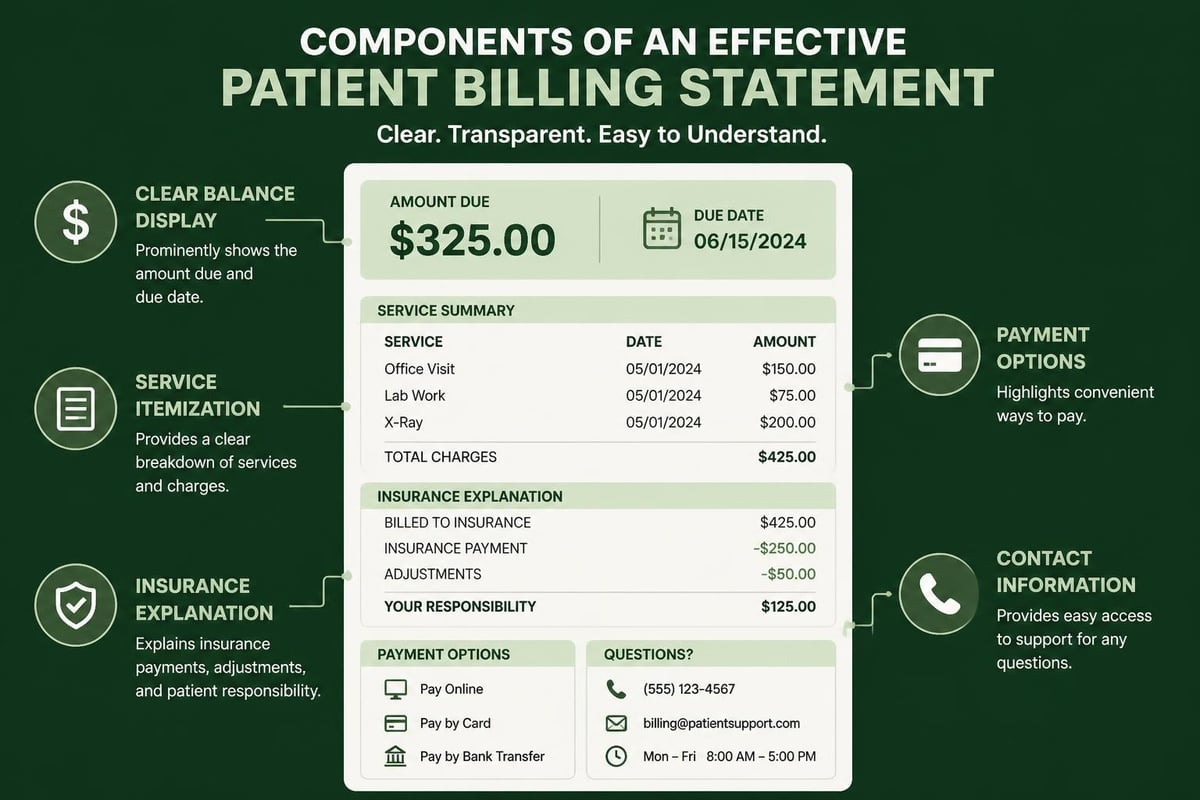
Effective patient billing statements contain specific elements that guide patients toward resolution. The statement header should clearly identify the provider, account number, and statement date. The body must itemize services by date with plain-language descriptions, not just medical codes. Insurance adjustments and payments should appear separately from patient responsibility to demonstrate transparency.
Critical statement elements:
- Clear balance due prominently displayed with due date
- Service descriptions in understandable language
- Insurance processing details showing what was billed, adjusted, and paid
- Multiple payment options with specific instructions for each method
- Contact information for billing questions with dedicated phone numbers
- Account history showing previous statements and payment activity
Timing and Frequency
Sending statements promptly after insurance adjudication maintains momentum in the collection cycle. The first statement should arrive within seven to ten days of claim processing. Subsequent statements follow at regular intervals, typically every 30 days, with progressively stronger language while maintaining professionalism.
Organizations implementing systematic statement schedules through their revenue cycle management process experience higher response rates and shorter days in accounts receivable compared to those with inconsistent billing cycles.
Point-of-Service Collection Strategies
Collecting payment when services are rendered represents the most cost-effective collection method. Point-of-service collections eliminate statement costs, reduce administrative overhead, and accelerate cash flow. However, implementing these strategies requires staff training and supportive technology.
Staff Training and Communication Scripts
Front desk personnel need specific training on financial conversations that balance professionalism with effectiveness. Scripts should acknowledge the value of services while clearly stating expected payment. Phrases like “Your copayment today is $40” work better than questions like “Would you like to pay today?”
Training should cover:
- Explaining insurance verification results
- Presenting cost estimates with confidence
- Offering payment options without judgment
- Handling resistance or financial hardship discussions
- Escalating complex situations appropriately
Technology-Enabled Payment Collection
Modern payment processing technology makes point-of-service collections more convenient for patients and staff. Integrated systems that connect scheduling, eligibility verification, and payment processing streamline workflows. Mobile payment options, contactless processing, and digital wallets accommodate patient preferences while maintaining security standards.
Payment Plans and Financial Assistance Programs
Not all patients can pay their entire balance immediately. Offering structured payment plans prevents bad debt while maintaining patient relationships. The key is creating sustainable arrangements that balance organizational cash flow needs with patient financial capacity.
Structuring Effective Payment Plans
Payment plans should include written agreements specifying the total balance, monthly payment amount, number of payments, and consequences for missed payments. Most organizations require an initial down payment of 10-20% to demonstrate commitment. Monthly payment amounts should align with the patient’s financial situation while ensuring the balance is satisfied within a reasonable timeframe, typically 12 to 24 months.
Payment plan options include:
- Short-term plans (3-6 months) with higher monthly payments
- Extended plans (12-24 months) for larger balances
- Interest-free options for compliant patients
- Third-party financing through medical credit companies
Healthcare billing best practices recommend offering multiple plan structures to accommodate different financial situations while maintaining consistent qualification criteria.
Financial Assistance and Charity Care
Healthcare organizations should establish clear financial assistance policies for patients who cannot afford their medical bills. These programs typically use federal poverty guidelines to determine eligibility levels. Transparent policies that are communicated proactively demonstrate organizational values while fulfilling regulatory requirements.
The application process should be straightforward, requiring documentation of income and assets but avoiding excessive bureaucracy that discourages eligible patients from applying.
Communication Best Practices Throughout the Billing Cycle
Effective patient billing relies on consistent, clear communication across all touchpoints. Organizations that invest in communication strategies experience better collection rates and higher patient satisfaction scores simultaneously.
Multi-Channel Communication Approaches
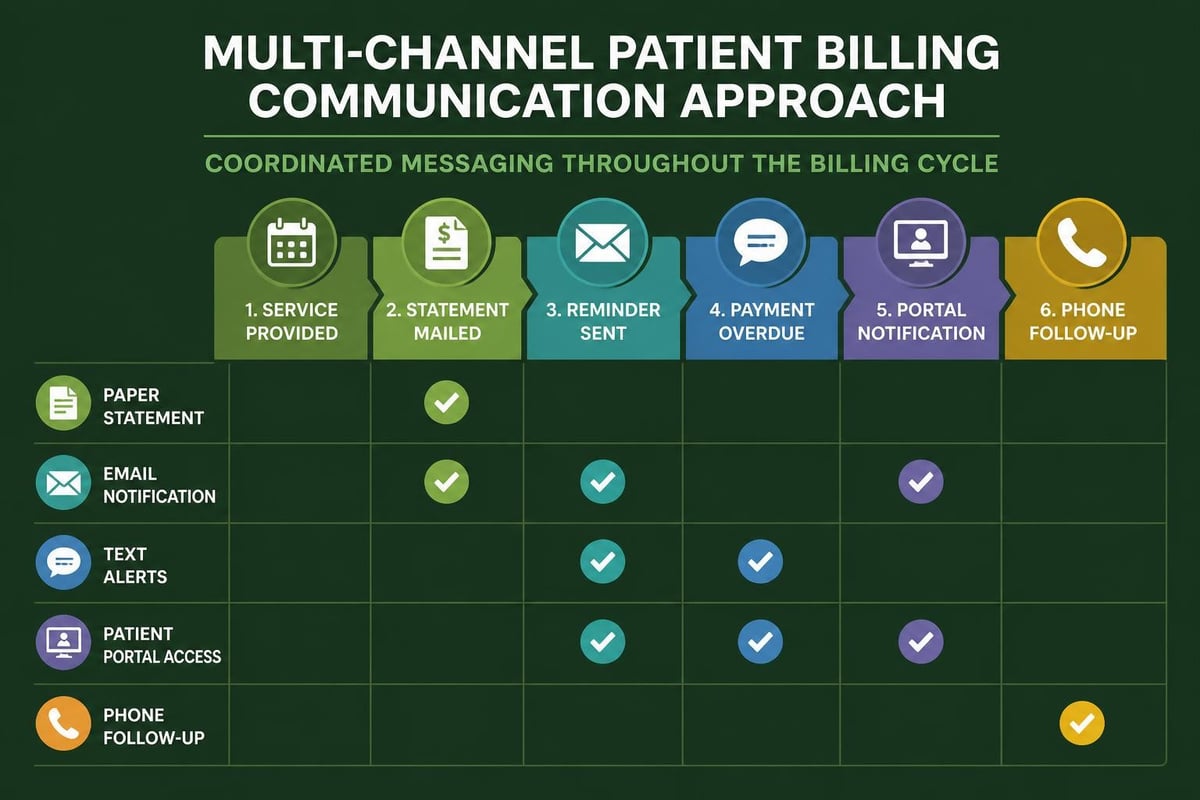
Patients have varying preferences for how they receive billing information. Some prefer traditional paper statements, while others respond better to email, text messages, or patient portal notifications. Offering multiple communication channels and allowing patients to select their preferences improves engagement.
Communication channels to consider:
- Paper statements for comprehensive account details
- Email reminders for upcoming and past-due balances
- Text message alerts for payment confirmations
- Patient portal access for 24/7 account management
- Phone calls for significant balances or complex situations
Language and Tone Considerations
The language used in patient billing communications significantly impacts response rates. Professional, respectful language acknowledges that medical debt often results from unexpected health events rather than financial irresponsibility. Communications should be empathetic while clearly stating expectations and consequences.
Avoiding medical jargon and insurance terminology makes communications accessible to all education levels. When technical terms are necessary, include brief explanations in plain language. Organizations working with medical billing services benefit from experienced teams that craft communications balancing clarity with compliance.
Managing Denials and Appeals in Patient Billing
Claim denials directly impact patient billing by delaying account resolution and creating confusion about financial responsibility. When insurance companies deny claims, patients receive unexpected bills for services they assumed would be covered. Managing this process effectively protects both organizational revenue and patient relationships.
Preventing Patient Balance Transfers from Denial Issues
Many patient balance issues originate from preventable claim denials. Common denial reasons include eligibility problems, authorization gaps, coding errors, and timely filing failures. Organizations that implement robust denial management in medical billing processes reduce the number of patient balances resulting from insurance processing errors.
When denials occur, immediate appeal action prevents patient billing complications. Successful appeals result in insurance payment, eliminating or reducing patient responsibility. Clear communication with patients about denial status and appeal progress maintains trust during what can be a frustrating process.
| Denial Category | Patient Impact | Prevention Strategy |
|---|---|---|
| Eligibility issues | Unexpected full balance responsibility | Pre-service verification and real-time checks |
| Authorization denials | Balance transfer after service delivery | Proactive authorization management |
| Coding errors | Incorrect patient responsibility calculations | Quality assurance and coder education |
| Timely filing | Retroactive patient balance creation | Systematic claim submission workflows |
Communicating Insurance Processing Delays
Patients deserve transparent communication when insurance processing extends beyond normal timeframes. Proactive outreach explaining the status prevents confusion when statements are delayed or balances change after initial communications. This transparency differentiates high-performing organizations from those that leave patients uncertain about their obligations.
Technology Integration for Patient Billing Efficiency
Modern patient billing requires integrated technology platforms that connect clinical, administrative, and financial systems. These integrations eliminate manual data entry, reduce errors, and provide real-time visibility into account status.
Practice Management and Billing System Capabilities
Comprehensive practice management systems include patient billing functionality that automates statement generation, tracks payment plans, and processes transactions securely. Advanced systems offer patient portals where individuals can view balances, make payments, and communicate about billing questions without phone calls.
Key system capabilities include:
- Automated statement generation with customizable templates and schedules
- Payment processing supporting multiple methods including cards, ACH, and digital wallets
- Payment plan management tracking agreements and sending automated reminders
- Reporting and analytics identifying collection trends and opportunities
- Patient portal integration enabling self-service account management
Analytics and Performance Monitoring
Data analytics identify patient billing performance trends and improvement opportunities. Organizations should monitor metrics including collection rates by payer and service type, days in accounts receivable, statement response rates, and patient satisfaction scores related to billing experiences.
Regular analysis of these metrics informs process improvements and staff training priorities. Organizations partnering with specialized revenue cycle management providers access sophisticated analytics capabilities without internal resource investment.
Staff Training and Development for Patient Billing Excellence
Technology and processes alone cannot deliver exceptional patient billing outcomes. Well-trained staff who understand both technical requirements and interpersonal communication create positive billing experiences that drive collections while maintaining relationships.
Role-Specific Training Programs
Different team members require specialized patient billing knowledge based on their responsibilities. Front desk staff need training on insurance verification, cost estimation, and point-of-service collections. Billing department personnel require expertise in claim processing, payment posting, and account follow-up. Patient service representatives must excel at explaining complex billing situations while demonstrating empathy.
Training components by role:
- Registration staff: Insurance verification, demographic accuracy, payment collection
- Billing specialists: Claim submission, payment posting services, denial management
- Collections staff: Account follow-up, payment arrangements, escalation procedures
- Management: Performance monitoring, policy development, compliance oversight
Ongoing Education and Quality Assurance
The healthcare reimbursement landscape constantly evolves with new regulations, payer policies, and best practices. Organizations must invest in ongoing staff education to maintain billing effectiveness. Monthly team meetings reviewing common challenges, quarterly training on regulatory updates, and annual comprehensive education programs keep skills current.
Quality assurance processes including account audits, call monitoring, and peer review identify individual development needs and systemic improvement opportunities.
Measuring Patient Billing Performance
Healthcare organizations need clear metrics to evaluate patient billing effectiveness and identify improvement opportunities. Establishing key performance indicators and monitoring them consistently drives accountability and continuous improvement.
Essential Patient Billing Metrics
Several metrics provide comprehensive insight into patient billing performance. Collection rate measures the percentage of patient responsibility amounts successfully collected. Days in accounts receivable indicates how quickly balances are resolved. Cost to collect compares billing department expenses to revenue collected, identifying efficiency opportunities.
| Metric | Target Range | What It Measures |
|---|---|---|
| Patient collection rate | 85-95% | Percentage of patient responsibility collected |
| Days in A/R (patient portion) | 30-45 days | Average time to resolve patient balances |
| Point-of-service collection rate | 50-70% | Percentage collected at time of service |
| Statement response rate | 30-40% | Patients responding to first statement |
| Bad debt write-off percentage | <5% | Uncollectible patient balances |
| Payment plan compliance rate | 70-85% | Patients maintaining payment agreements |
Benchmarking and Improvement Planning
Comparing organizational performance to industry benchmarks identifies specific improvement opportunities. Organizations consistently underperforming benchmarks should analyze root causes and implement targeted interventions. This might include enhanced pre-service processes, revised communication strategies, expanded payment options, or additional staff training.
Regular performance review meetings with stakeholders from clinical, administrative, and financial departments ensure patient billing improvement remains a shared organizational priority rather than solely a billing department responsibility.
Patient-Centered Approaches to Billing Challenges
The most effective patient billing strategies recognize that healthcare bills often represent significant financial stress for individuals and families. Organizations that balance collection objectives with genuine empathy create better outcomes for both patients and their own financial performance.
Financial Counseling Services
Dedicated financial counselors help patients understand their bills, explore insurance benefits, identify financial assistance options, and establish manageable payment arrangements. This specialized support reduces confusion and frustration while improving collection outcomes. Financial counselors serve as patient advocates within the billing process, building trust that facilitates resolution.
Effective financial counseling includes reviewing the patient’s complete financial picture, explaining all available options without bias, helping complete financial assistance applications, and maintaining ongoing communication throughout payment plan periods.
Flexible Payment Options
Modern patients expect payment convenience comparable to other consumer experiences. Organizations should offer:
- Online payment portals accessible 24/7
- Mobile-optimized payment pages
- Text-to-pay options for quick transactions
- Automated payment plans with scheduled withdrawals
- In-person payment at multiple office locations
- Payment by phone with trained representatives
Expanding payment options removes friction from the payment process, increasing the likelihood that patients follow through on their intentions to pay.
Effective patient billing requires the strategic integration of technology, process excellence, regulatory compliance, and compassionate communication. Healthcare providers that master these elements collect more revenue while strengthening patient relationships. Greenhive Billing Solutions delivers comprehensive revenue cycle management services that optimize patient billing performance through expert insurance verification, accurate claims processing, and systematic denial management. Our experienced team uses industry-standard platforms adapted to your existing systems, ensuring HIPAA-compliant operations and transparent communication throughout the billing cycle. Partner with Greenhive Billing Solutions to transform your patient billing operations and achieve sustainable financial performance.

