
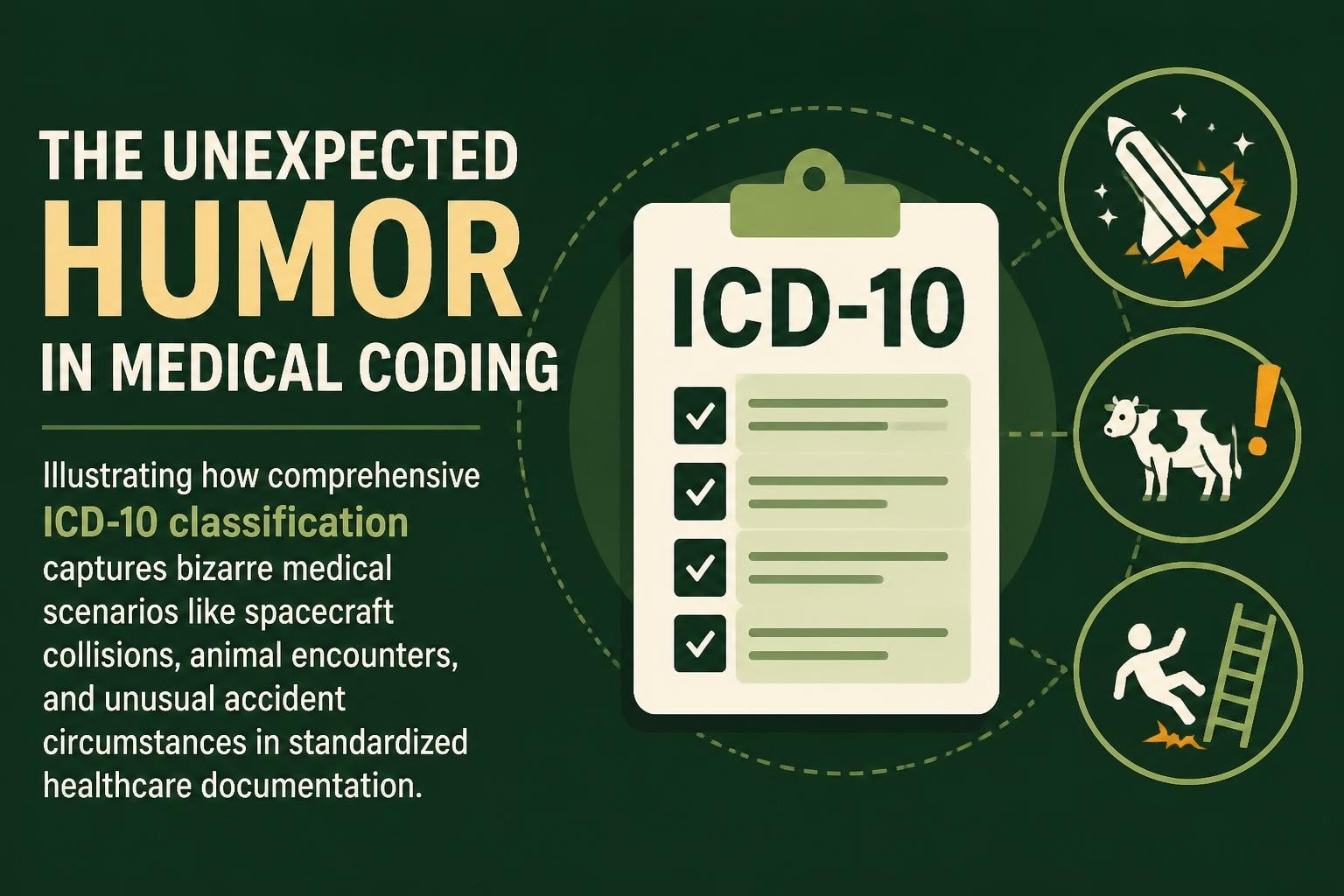
Medical coding often seems like a world of strict rules, complex classifications, and serious documentation requirements. However, within the tens of thousands of diagnostic codes in the International Classification of Diseases, 10th Revision (ICD-10), lies an unexpected treasure trove of humor. These funny ICD 10 codes reveal just how comprehensive and specific medical classification has become, capturing scenarios that most healthcare professionals never encounter but must still exist within the system. For revenue cycle management professionals and medical billing specialists, understanding these codes offers both entertainment and insight into the remarkable detail required for accurate claims processing.
The Evolution of Medical Coding Specificity
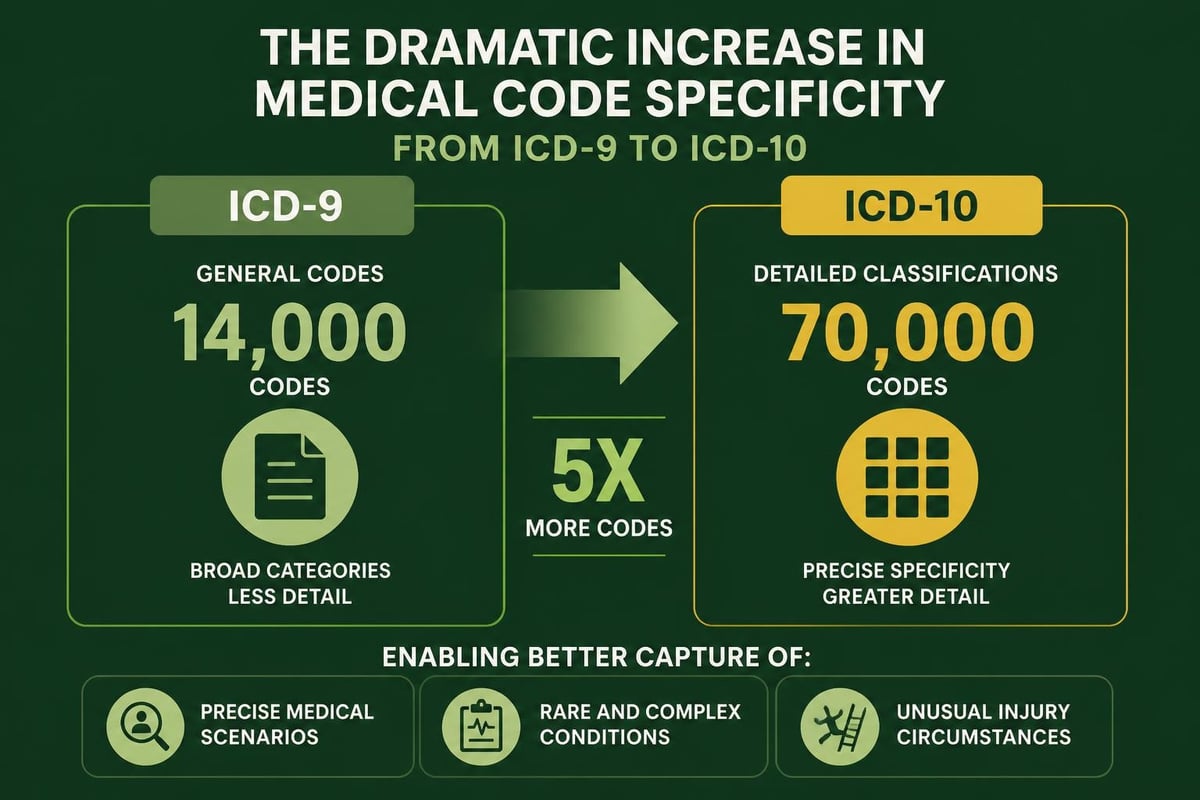
The transition from ICD-9 to ICD-10 brought a massive expansion in code specificity. While ICD-9 contained approximately 14,000 codes, ICD-10 expanded that number to over 70,000 diagnostic codes. This exponential growth was necessary to capture the nuances required for modern healthcare analytics, public health tracking, and insurance reimbursement processes.
The reasoning behind this expansion includes:
- More precise documentation for quality measurement
- Better data for population health management
- Improved specificity for insurance claim adjudication
- Enhanced tracking of rare diseases and unusual injuries
- International standardization for global health reporting
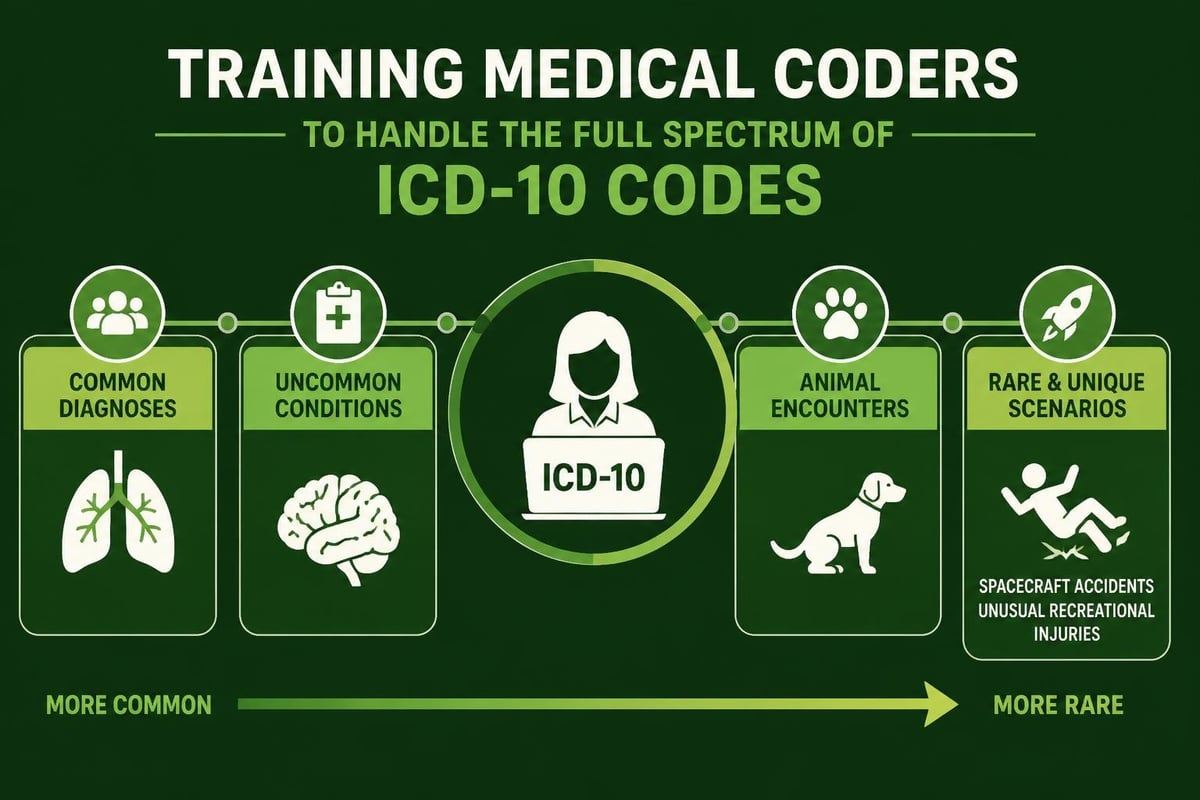
This increased granularity, while beneficial for healthcare data analysis and the revenue cycle management process, also led to the creation of codes for exceptionally rare or bizarre circumstances. Medical coders must be prepared to document everything from common conditions to extraordinarily unusual scenarios.
Why Specificity Matters in Claims Processing
For healthcare providers working with professional medical billing services, code specificity directly impacts reimbursement rates and claim acceptance. Insurance companies require detailed documentation that matches the level of specificity built into ICD-10. A code that’s too vague may result in claim denials, while overly specific codes require supporting documentation.
The need for precision has created a system where denial management in medical billing often involves verifying that the chosen code accurately reflects the documented encounter, no matter how unusual the circumstance.
The Most Bizarre Injury Codes
Among the funniest ICD 10 codes are those documenting injuries from scenarios that seem almost impossible. These codes demonstrate the system’s commitment to capturing every conceivable medical situation, regardless of how improbable.
Animal Encounter Codes
The ICD-10 system dedicates considerable attention to injuries involving animals. Code W61.62XA documents “struck by duck, initial encounter,” while W53.21XA covers “bitten by squirrel, initial encounter.” Perhaps most famously, W56.22XA addresses being “struck by orca”, a scenario that inspired viral attention and even a humorous illustrated book.
Notable animal-related codes include:
- W61.33XA: Pecked by chicken
- W55.41XA: Bitten by pig
- W61.12XA: Struck by macaw
- W59.22XA: Struck by turtle
- W53.19XA: Other contact with squirrel
These codes aren’t created arbitrarily. Each represents a documented medical encounter somewhere in healthcare history, justifying its inclusion in the global classification system.
Transportation and Activity Codes
Transportation-related injuries receive extensive coding detail, including scenarios most people would consider science fiction. Code V97.33XD covers “sucked into jet engine, subsequent encounter,” while V95.43XS addresses “spacecraft collision injuring occupant, sequela.”
| Code | Description | Likelihood |
|---|---|---|
| V97.33XA | Sucked into jet engine, initial | Extremely rare |
| V95.43XA | Spacecraft collision | Virtually non-existent |
| V91.07XA | Burn due to water-skis on fire | Highly unusual |
| V80.919A | Unspecified rider of animal-drawn vehicle injured | Uncommon |
These specific scenarios highlight how comprehensive medical billing services must account for every possible patient encounter, regardless of statistical probability.
Recreational and Occupational Hazards
Recreational activities generate some of the most entertaining funny ICD 10 codes. The system accounts for injuries from hobbies, sports, and leisure activities that most billing specialists will never encounter in their careers.
Craft and Hobby Injuries
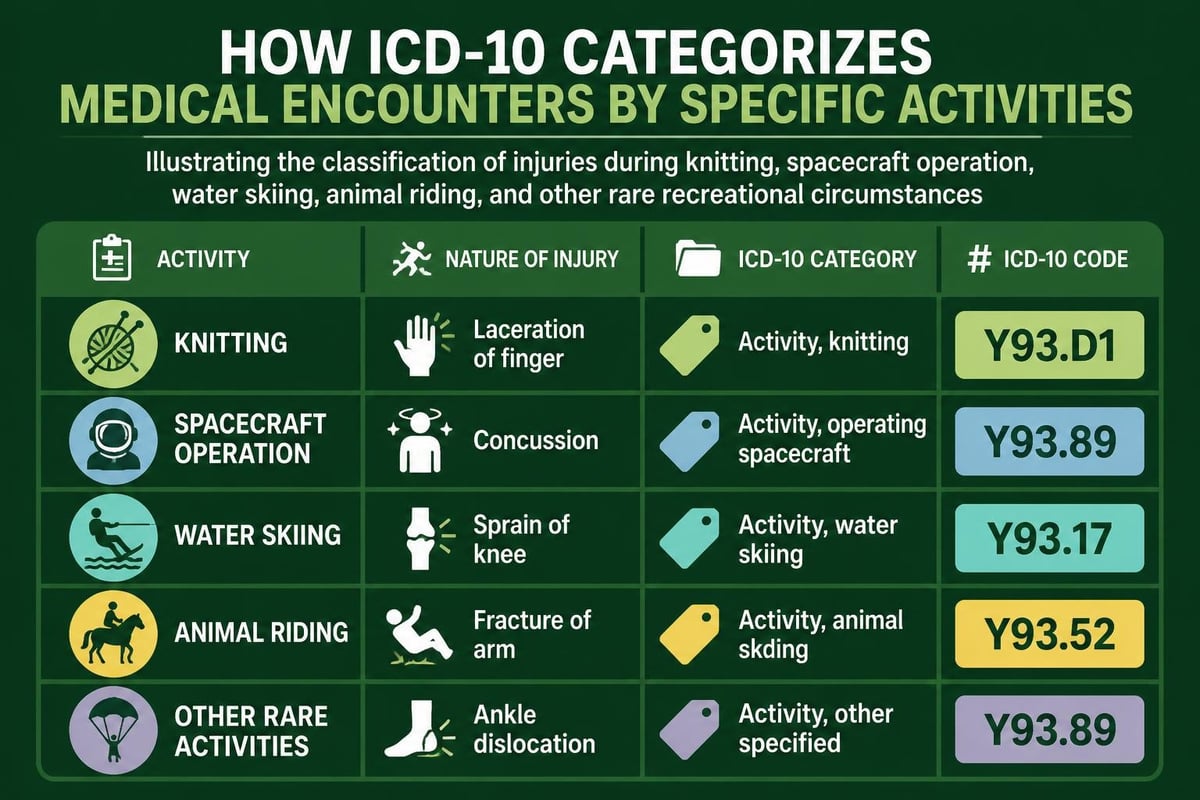
Code Y93.D1 describes injuries occurring “while knitting or crocheting.” This level of detail extends to virtually every hobby activity, from needlework to extreme sports. These unusual classifications remind medical coders that their work requires familiarity with codes spanning the entire spectrum of human activity.
Hobby-related injury specifications:
- Needlework injuries documented with activity codes
- Garden-related accidents with environmental factors
- Musical instrument injuries specifying the instrument type
- Board game injuries requiring circumstance documentation
- Video gaming injuries classified by activity type
For medical coding specialists working in medical coding services, understanding these activity codes ensures comprehensive documentation that supports medical necessity and justifies treatment.
Bizarre Circumstance Codes
Beyond the activity itself, ICD-10 captures the circumstances surrounding injuries. Code Z63.1 addresses “problems in relationship with in-laws,” while W22.02XA covers “walked into lamppost, initial encounter.”
The code R46.1 documents “bizarre personal appearance,” which technically isn’t an injury code but demonstrates how comprehensively ICD-10 attempts to classify health-related information. These codes serve important purposes in mental health documentation, social determinant tracking, and comprehensive patient care planning.
Place of Occurrence Codes
One fascinating aspect of funny ICD 10 codes involves the “place of occurrence” designations that accompany many injury codes. These specify exactly where an incident happened, adding another layer of specificity to medical documentation.
Unusual Location Specifications
Code Y92.146 designates injuries occurring at the “swimming pool of prison,” while Y92.253 covers incidents at the “opera house.” The system distinguishes between injuries at reform schools, boarding schools, and orphanages, each receiving its own designation.
Distinctive place codes include:
- Y92.146: Swimming pool of prison
- Y92.253: Opera house
- Y92.321: Art gallery
- Y92.241: Public building
- Y92.146: Reform school
These location codes work in conjunction with injury and activity codes to create a complete picture of the medical encounter. For professionals managing medical claim submission services, understanding how these codes combine prevents claim rejections and supports accurate reimbursement.
The Practical Purpose Behind Unusual Codes
While these funny ICD 10 codes provide entertainment value, they serve legitimate purposes within healthcare data collection and analysis. Public health officials use granular data to track injury patterns, identify safety risks, and develop prevention strategies.
Data Analytics and Public Health
Even rare codes contribute to epidemiological research. If multiple patients report injuries from the same unusual source, public health authorities can identify emerging safety concerns and implement protective measures. The specificity in various types of medical coding enables researchers to filter and analyze health data with unprecedented precision.
Public health applications of specific codes:
- Identifying emerging injury patterns in specific populations
- Tracking occupational hazards in unusual professions
- Monitoring recreational safety across diverse activities
- Analyzing environmental factors in injury causation
- Supporting research into rare medical conditions
This comprehensive approach to classification, while occasionally humorous, reflects the serious commitment to capturing complete health data for analysis and improvement.
Legal and Insurance Documentation
Insurance companies and legal professionals rely on specific codes to establish liability, assess risk, and determine coverage. A code specifying “struck by orca” provides clearer documentation than a generic “animal encounter” code, potentially affecting liability determination and insurance coverage decisions.
For healthcare providers utilizing eligibility verification services, understanding code specificity helps ensure that unusual cases receive appropriate coverage verification before treatment.
Coding Challenges and Humor in Healthcare
Medical billing professionals develop a unique appreciation for these unusual codes. The diverse range of classifications showcased in healthcare resources provides both professional development material and occasional comic relief in a demanding field.
Training and Professional Development
New medical coders often express surprise when discovering codes for spacecraft collisions or orca strikes during their training. These memorable codes serve an educational purpose, helping students understand the system’s comprehensive scope and attention to detail.
| Training Benefit | Application | Example |
|---|---|---|
| Memory retention | Unusual codes stick in student minds | Orca strike code |
| System comprehension | Demonstrates full scope | Spacecraft collision |
| Detail orientation | Shows importance of specificity | Duck strike vs. chicken peck |
| Professional humor | Builds camaraderie | Lamppost collision |
Experienced billing professionals working in specialized areas like medical coding audit services use knowledge of unusual codes to verify comprehensive documentation and identify potential coding errors.
Real-World Applications of Rare Codes
Despite their humorous nature, these funny ICD 10 codes occasionally find real-world application. Emergency departments, urgent care centers, and specialty practices encounter situations that require these seemingly improbable classifications.
When Unusual Codes Apply
A patient injured during occupational animal training might legitimately require the “struck by orca” code. Aerospace medical facilities treating astronauts or space industry workers may use spacecraft-related codes. Historical reenactors, zookeepers, and entertainers frequently generate claims requiring unusual activity and circumstance codes.
Professions requiring unusual codes:
- Aerospace industry workers needing spacecraft-related codes
- Marine animal trainers requiring aquatic animal codes
- Historical reenactors using period-specific activity codes
- Entertainment professionals documenting performance injuries
- Agricultural workers applying livestock-related codes
For practices serving specialized patient populations, partnering with experienced providers of comprehensive medical billing services ensures accurate code selection and claim processing for even the most unusual encounters.
International Perspectives on Code Humor
The ICD-10 system maintains international consistency, meaning these unusual codes exist in healthcare systems worldwide. Different countries report varying frequencies of specific codes based on local activities, wildlife, and cultural practices.
Global Code Usage Patterns
Countries with robust space programs may report higher usage of spacecraft codes. Coastal nations with marine wildlife encounter more frequent applications of aquatic animal codes. These patterns demonstrate how comprehensive classification supports global health data comparison while accommodating regional variations.
The standardized approach ensures that healthcare providers can communicate diagnoses across borders, supporting medical tourism, international research collaboration, and global health initiatives.
The Future of Medical Coding Specificity
As healthcare continues evolving, medical coding systems will likely expand further to accommodate emerging technologies, new treatment modalities, and novel injury mechanisms. Future updates may include codes for injuries involving autonomous vehicles, virtual reality equipment, or biotechnology accidents.
Emerging Code Categories
Healthcare informaticists already anticipate future coding needs related to:
- Telemedicine encounters requiring specific documentation
- Artificial intelligence-assisted diagnosis classifications
- Gene therapy complication codes
- Nanotechnology-related medical events
- Climate change-related health conditions
This forward-thinking approach ensures the classification system remains relevant and comprehensive, supporting both current documentation needs and future healthcare innovations. Professionals managing payment posting services must stay current with coding updates to ensure accurate reconciliation and reporting.
Common Misconceptions About Unusual Codes
Some healthcare professionals question whether funny ICD 10 codes represent wasteful complexity. However, the comprehensive nature of ICD-10 serves critical functions beyond individual patient documentation.
Addressing Code Complexity Concerns
Common misconceptions include:
- Belief that rare codes waste resources
- Assumption that unusual codes never apply
- Concern that specificity complicates coding
- Fear that detailed codes increase errors
- Worry that comprehensive systems cost more
In reality, comprehensive coding systems support better data quality, more accurate research, improved public health surveillance, and enhanced insurance claim accuracy. The initial learning curve investment yields long-term benefits in healthcare quality and financial performance.
While funny ICD 10 codes provide entertainment and demonstrate the remarkable comprehensiveness of medical classification, they also serve legitimate purposes in healthcare documentation and data analysis. Understanding the full scope of available codes, from common diagnoses to rare scenarios, supports accurate billing and optimal reimbursement. Whether your practice treats astronauts or accident-prone crafters, partnering with experienced revenue cycle management professionals ensures your coding accuracy and financial success. Greenhive Billing Solutions provides comprehensive medical billing and coding services that handle everything from routine encounters to the most unusual cases, maximizing your reimbursement while maintaining complete compliance and accuracy.

