
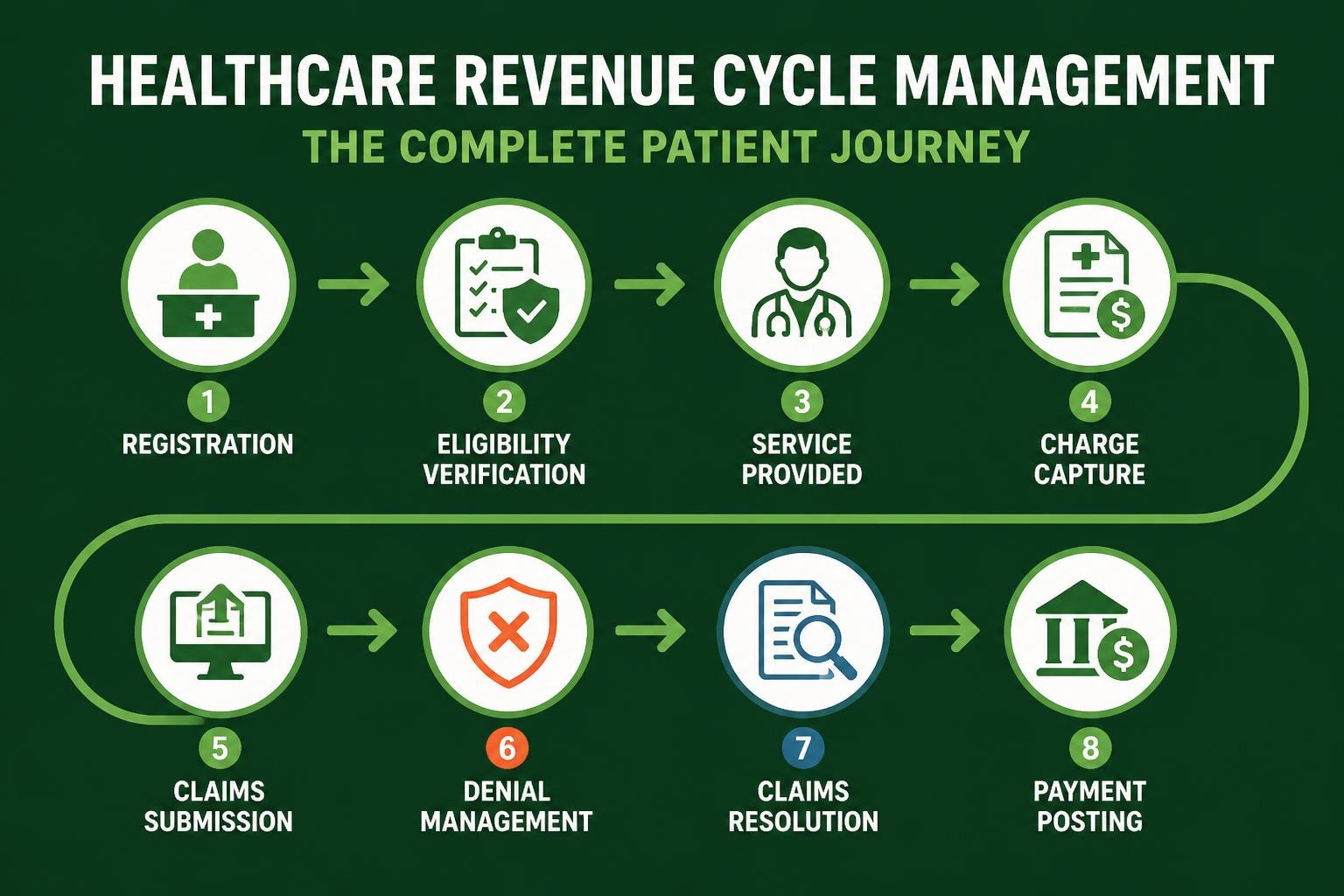
Healthcare providers face mounting pressure to maintain financial stability while delivering exceptional patient care. An effective rcm solution addresses these challenges by optimizing the entire revenue cycle, from patient registration to final payment collection. As reimbursement models grow more complex and regulatory requirements continue to evolve, healthcare organizations need comprehensive strategies that minimize claim denials, accelerate payment cycles, and maximize revenue capture. Understanding the core components and best practices of revenue cycle management enables providers to build sustainable financial operations that support both clinical excellence and business growth.
Understanding the Core Components of an RCM Solution
Revenue cycle management encompasses every administrative and clinical function that contributes to claim processing, payment collection, and revenue generation. A comprehensive rcm solution integrates multiple processes into a cohesive system that tracks patient encounters from initial contact through final payment reconciliation.
The foundation begins with patient registration and demographic data collection. Accurate information at this stage prevents downstream errors that lead to claim denials and payment delays. Insurance eligibility verification services confirm coverage details before services are rendered, reducing the risk of non-payment due to insurance issues.
The Patient Access Phase
Patient access represents the critical first touchpoint in the revenue cycle. This phase includes:
- Appointment scheduling that captures essential patient information
- Pre-registration processes that collect insurance details and demographic data
- Eligibility and benefits verification to confirm coverage and patient responsibility
- Prior authorization management to obtain payer approval for specific procedures
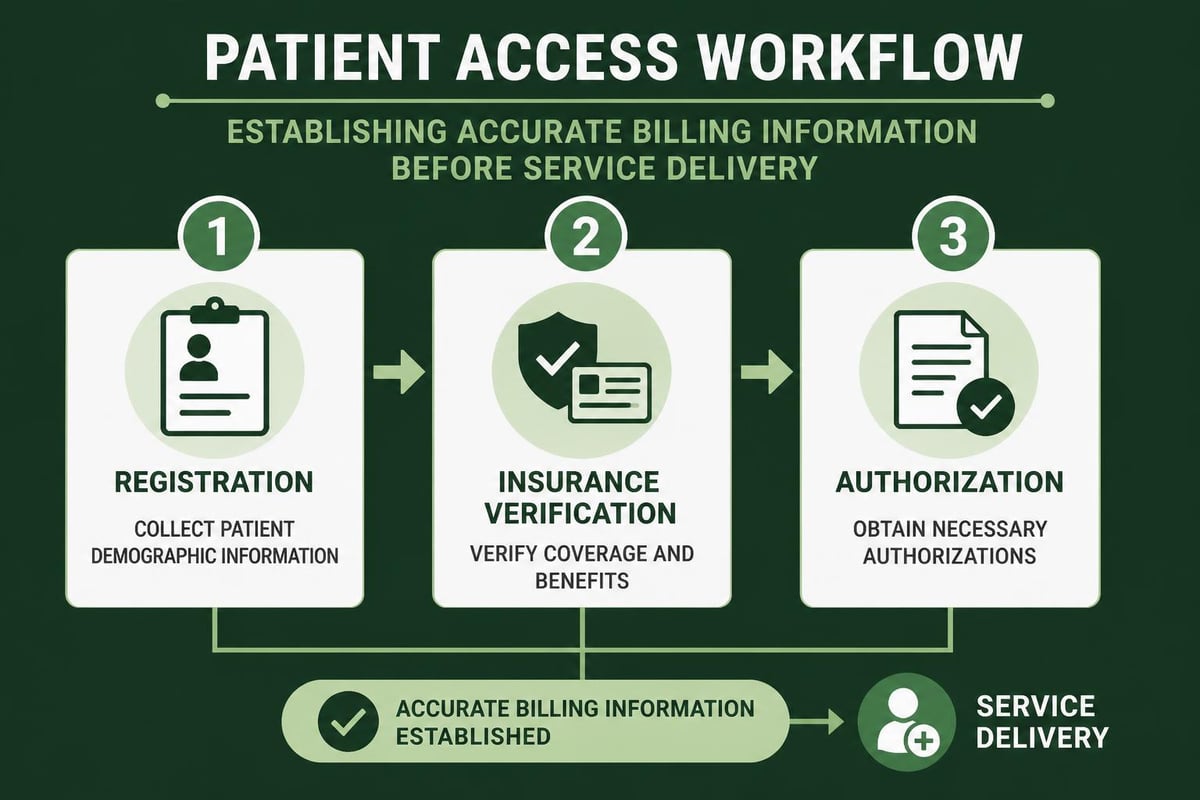
Each element within patient access directly impacts downstream revenue cycle performance. When registration staff collect complete and accurate information, billing teams process claims more efficiently, reducing rework and accelerating reimbursement.
Claims Management and Submission Strategies
Claims processing forms the operational heart of any rcm solution. This complex stage requires precise coding, thorough documentation review, and strategic submission timing to maximize clean claim rates.
Medical coding translates clinical documentation into standardized codes that payers recognize and reimburse. Medical coding services ensure that providers receive appropriate reimbursement for services rendered while maintaining compliance with regulatory standards.
| Claim Type | Average Processing Time | Clean Claim Rate Target |
|---|---|---|
| Electronic Claims | 14-21 days | 95% or higher |
| Paper Claims | 30-45 days | 85% or higher |
| Secondary Claims | 21-30 days | 90% or higher |
Optimizing Clean Claim Submissions
Clean claims pass through payer systems without requiring additional information or correction. According to revenue cycle management best practices, prioritizing clean claims significantly reduces days in accounts receivable and improves cash flow predictability.
Healthcare organizations implementing robust rcm solution frameworks achieve clean claim rates exceeding 95% through systematic approaches:
- Automated eligibility verification before service delivery
- Real-time claim scrubbing that identifies errors before submission
- Standardized coding protocols aligned with current billing guidelines
- Regular training updates for billing and coding staff
- Documentation improvement programs that support accurate code assignment
Medical claim submission services leverage technology platforms that perform multiple validation checks, reducing human error and increasing first-pass acceptance rates.
Denial Management and Appeals Processing
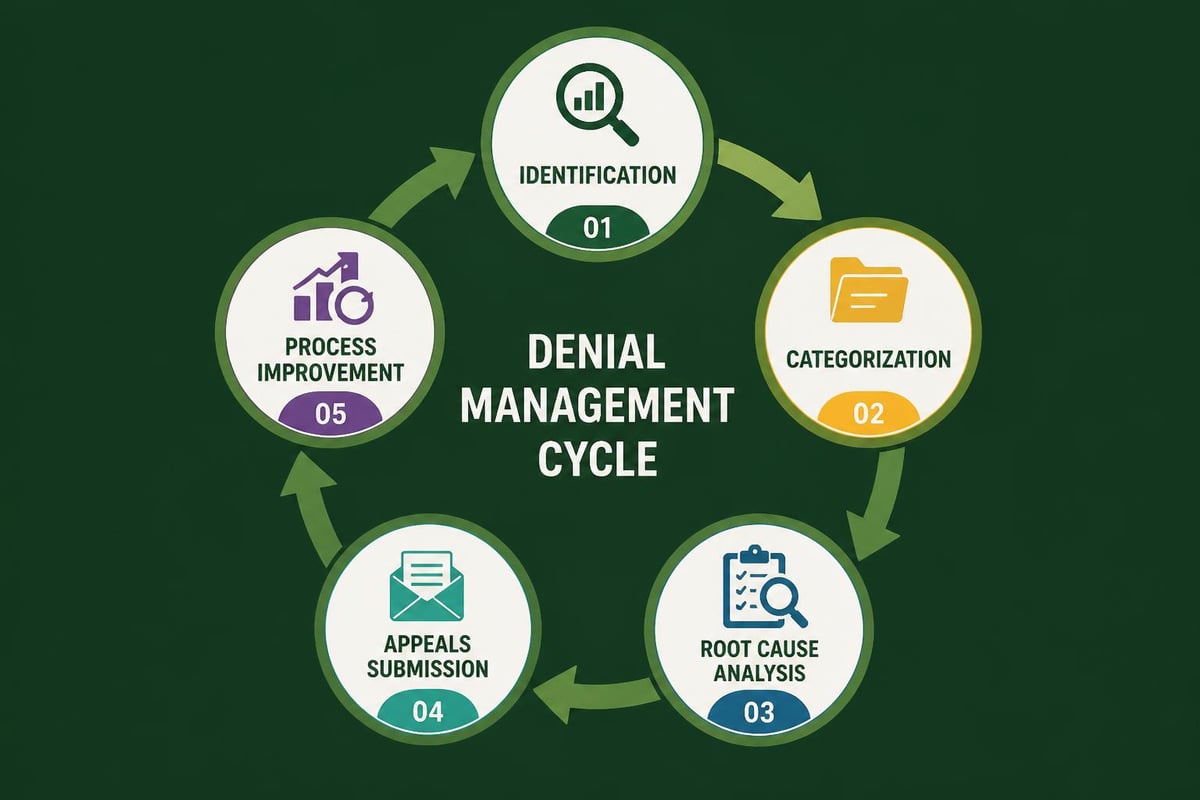
Even with optimized processes, claim denials remain an inevitable aspect of healthcare revenue cycle management. An effective rcm solution includes proactive denial prevention strategies alongside robust appeals management workflows.
Common Denial Categories and Prevention
Understanding denial patterns enables targeted intervention strategies. The most frequent denial reasons include:
- Missing or invalid patient information
- Services not covered under the patient’s plan
- Authorization requirements not met
- Coding errors or mismatches
- Timely filing limit violations
- Duplicate claim submissions
Research from healthcare revenue cycle management experts emphasizes that data accuracy at every touchpoint reduces preventable denials by up to 40%.
Denial management services employ analytics to identify root causes and implement corrective actions that prevent recurring issues. This systematic approach transforms denial management from reactive firefighting into strategic revenue protection.
Building an Effective Appeals Strategy
When denials occur, timely and well-documented appeals protect revenue that might otherwise be written off. Successful appeals require:
Clinical documentation that supports medical necessity and appropriate level of service. Providers must demonstrate that services met established criteria and followed evidence-based protocols.
Clear communication with payers regarding specific denial reasons and supporting evidence. Appeals letters should address each denial point systematically, referencing policy language and clinical guidelines.
Tracking mechanisms that monitor appeal status and ensure compliance with filing deadlines. Missing appeal windows results in permanent revenue loss that impacts overall financial performance.
Payment Posting and Reconciliation Excellence
Accurate payment posting ensures that provider accounts reflect true financial status and enables effective accounts receivable management. This critical component of any rcm solution requires attention to detail and systematic processing protocols.
Payment posting services handle multiple payment types including insurance remittances, patient payments, and contractual adjustments. Each transaction must be recorded accurately to maintain clean accounts and identify underpayments or overpayments.
Electronic Remittance Advice Processing
Electronic Remittance Advice (ERA) streamlines payment posting by delivering standardized payment information electronically. Understanding what ERA in medical billing means for operational efficiency helps providers leverage automation while maintaining accuracy.
| Payment Method | Processing Speed | Error Rate | Staff Time Required |
|---|---|---|---|
| ERA (Automated) | Same day | Less than 1% | Minimal |
| Paper EOB | 3-5 days | 5-8% | High |
| Patient Payments | 1-2 days | 2-4% | Moderate |
Automated ERA processing reduces manual data entry, accelerates cash application, and minimizes posting errors that create reconciliation challenges. The time savings enable revenue cycle staff to focus on exception handling and complex account resolution.
Patient Financial Responsibility and Collections
Patient responsibility for healthcare costs has increased substantially in recent years, making patient collections a critical component of comprehensive rcm solution strategies. High-deductible health plans and increased cost-sharing shift financial burden to patients, requiring providers to adapt their collection approaches.
Transparent Cost Estimation
Patients value price transparency and accurate cost estimates before receiving services. Healthcare revenue cycle best practices recommend implementing tools that calculate patient responsibility based on insurance benefits and scheduled services.
Effective patient financial counseling includes:
- Clear explanation of insurance coverage and patient obligations
- Payment plan options for patients facing financial hardship
- Multiple payment methods including online portals and automated systems
- Regular communication regarding account status and payment expectations
When providers establish clear financial expectations upfront, patient satisfaction improves alongside collection rates. Patients appreciate knowing their financial responsibility before services are rendered rather than receiving unexpected bills weeks later.
Technology Integration and Automation
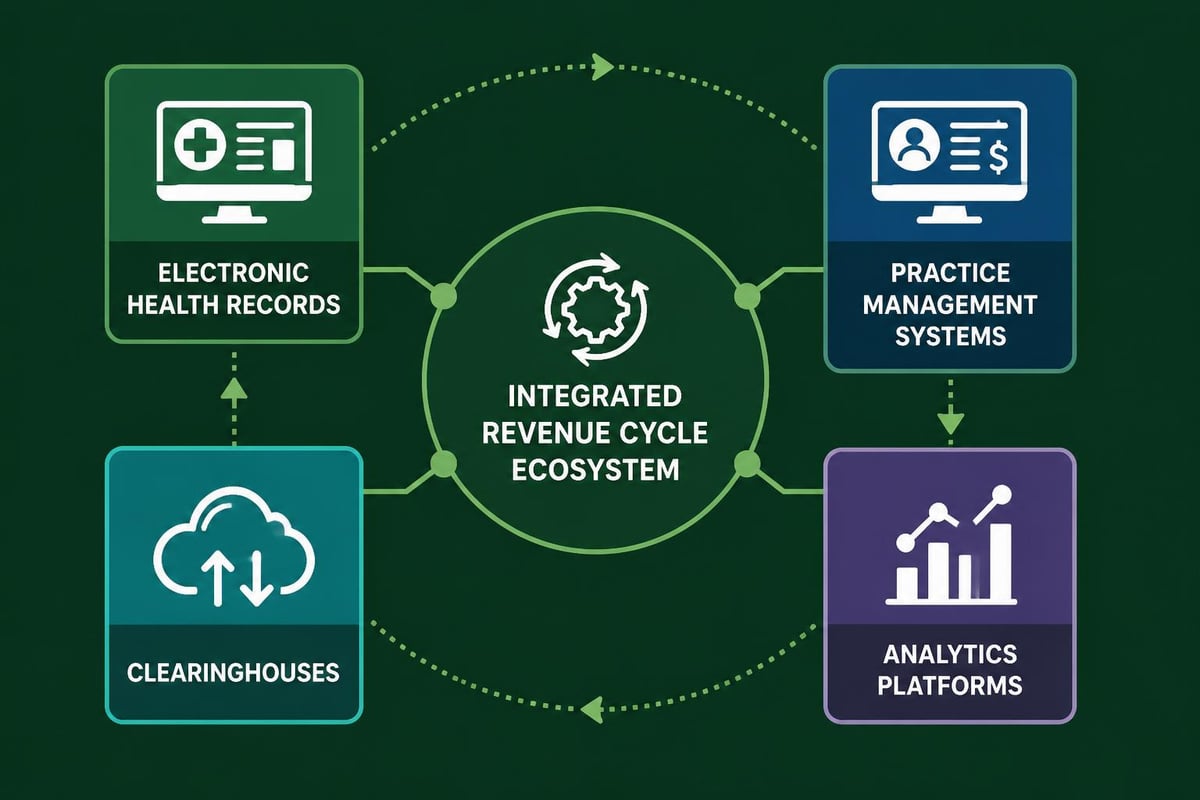
Modern rcm solution implementations rely heavily on technology platforms that automate repetitive tasks, reduce errors, and provide actionable insights through advanced analytics. Integration between clinical and administrative systems creates seamless information flow that enhances efficiency across the revenue cycle.
Key Technology Components
Practice management systems serve as the operational hub for scheduling, billing, and reporting functions. These platforms maintain patient demographics, insurance information, and financial transactions while generating claims and tracking payments.
Electronic health records (EHR) capture clinical documentation that supports billing and coding decisions. Proper EHR utilization ensures that clinical notes contain sufficient detail to justify billed services and defend against audits.
Revenue cycle analytics platforms transform raw data into actionable insights regarding key performance indicators. Dashboards highlighting days in A/R, collection rates, and denial trends enable proactive management intervention.
According to comprehensive RCM best practices, organizations leveraging automation see measurable improvements in operational efficiency and financial performance. Automated workflows reduce manual touchpoints while improving accuracy and consistency.
Compliance and Regulatory Considerations
Healthcare providers operating rcm solution frameworks must navigate complex regulatory environments including HIPAA privacy requirements, billing compliance standards, and payer-specific guidelines. Non-compliance risks financial penalties, reputational damage, and legal exposure that threaten organizational viability.
HIPAA Compliance in Revenue Cycle Operations
Protected health information (PHI) flows through every stage of the revenue cycle, requiring robust safeguards and access controls. Organizations must implement:
- Encryption protocols for electronic data transmission and storage
- Access controls limiting PHI exposure to authorized personnel only
- Audit trails documenting who accessed patient information and when
- Business associate agreements with all vendors handling PHI
- Staff training programs reinforcing privacy and security obligations
Understanding the RCM process from a compliance perspective helps organizations identify risk points and implement appropriate controls throughout their workflows.
Billing Compliance and Fraud Prevention
Accurate coding and billing practices protect providers from fraud allegations and ensure program integrity. Common compliance concerns include:
- Upcoding services to higher reimbursement levels
- Unbundling procedures that should be billed together
- Billing for services not rendered or not documented
- Improper use of modifiers that affect payment
- Duplicate billing for the same service
Regular compliance audits identify potential issues before they escalate into serious problems. Medical coding audit services provide objective assessment of coding accuracy and compliance with established guidelines.
Performance Metrics and Continuous Improvement
Measuring revenue cycle performance enables data-driven decision making and identifies improvement opportunities. An effective rcm solution includes comprehensive analytics that track both operational efficiency and financial outcomes.
Essential Key Performance Indicators
| Metric | Industry Benchmark | Impact Area |
|---|---|---|
| Days in A/R | 30-40 days | Cash flow |
| Clean Claim Rate | 95% or higher | Operational efficiency |
| Denial Rate | 5-10% | Revenue protection |
| Collection Rate | 95% or higher | Financial performance |
| Cost to Collect | 2-4% of collections | Operational cost |
| Net Collection Rate | 96-99% | Overall effectiveness |
Tracking these metrics over time reveals trends that inform strategic planning and resource allocation. For example, increasing denial rates may indicate coding training needs or authorization process gaps requiring attention.
Implementing Continuous Improvement Cycles
Organizations committed to revenue cycle excellence adopt systematic improvement methodologies:
Regular performance reviews engage stakeholders across clinical and administrative departments. These sessions analyze current performance against benchmarks and identify specific areas requiring intervention.
Root cause analysis investigates recurring problems to address underlying issues rather than symptoms. When the same denial reason appears repeatedly, teams investigate whether the problem stems from documentation, coding, authorization processes, or other factors.
Staff development programs ensure team members maintain current knowledge of coding updates, payer policies, and regulatory changes. Investment in professional development pays dividends through improved accuracy and reduced errors.
Outsourcing Considerations for Revenue Cycle Management
Many healthcare organizations partner with specialized revenue cycle management companies to access expertise, technology, and operational capacity beyond their internal capabilities. Outsourcing specific functions or comprehensive services offers strategic advantages for practices of all sizes.
Evaluating RCM Service Providers
When considering outsourced rcm solution options, providers should assess potential partners across multiple dimensions:
- Industry experience serving similar practice specialties and patient volumes
- Technology capabilities including platform integrations and reporting tools
- Compliance credentials demonstrating HIPAA certification and audit readiness
- Performance guarantees with clearly defined service level agreements
- Transparency in reporting and communication protocols
Organizations researching top medical billing companies benefit from understanding how different service models align with their operational needs and strategic objectives.
Medical billing services for small practices address unique challenges faced by smaller organizations that lack dedicated revenue cycle staff or sophisticated technology infrastructure.
Service Scope Options
Revenue cycle outsourcing arrangements range from targeted support for specific functions to complete end-to-end management:
Function-specific services address particular pain points such as coding, denial management, or patient collections while maintaining internal control over other areas.
Comprehensive RCM services transfer complete revenue cycle responsibility to the partner organization, freeing provider staff to focus exclusively on patient care and clinical operations.
Hybrid models combine internal staff oversight with outsourced operational execution, maintaining strategic control while leveraging external expertise and capacity.
Specialty-Specific Revenue Cycle Considerations
Different medical specialties face unique revenue cycle challenges requiring tailored rcm solution approaches. Payer policies, authorization requirements, and documentation standards vary significantly across specialties.
Cardiology practices, for example, manage complex procedures with high reimbursement values and strict authorization requirements. Effective cardiology medical billing requires deep understanding of cardiovascular coding and payer-specific cardiac policies.
Primary care practices handle high patient volumes with relatively straightforward coding but face challenges with preventive service billing and quality measure reporting. Their rcm solution priorities emphasize efficiency and throughput rather than complex procedure coding.
Documentation Requirements by Specialty
| Specialty | Key Documentation Focus | Common Coding Challenges |
|---|---|---|
| Surgery | Operative reports, medical necessity | Modifier usage, bundling rules |
| Primary Care | E/M documentation, preventive services | Level of service selection |
| Radiology | Technical vs. professional components | Contrast administration coding |
| Mental Health | Treatment plans, progress notes | Session time documentation |
Specialty-specific expertise ensures that coding decisions accurately reflect services provided while optimizing reimbursement within payer guidelines and compliance frameworks.
Regional and Payer-Specific Strategies
Geographic location influences revenue cycle operations through regional payer mix, state regulatory requirements, and local market dynamics. An effective rcm solution accounts for these variations through customized approaches that address specific market conditions.
Practices operating in states with strong Medicaid managed care penetration face different challenges than those serving primarily commercial insurance populations. Understanding regional payer behaviors enables strategic adjustments to authorization processes, appeal strategies, and payment posting workflows.
State-specific billing requirements affect documentation standards, claim submission protocols, and patient notification obligations. Providers must ensure their revenue cycle processes comply with applicable state regulations alongside federal requirements.
Patient Experience and Revenue Cycle Integration
The revenue cycle directly impacts patient satisfaction and loyalty. Financial interactions shape patient perceptions of their healthcare experience as significantly as clinical encounters. Forward-thinking organizations integrate patient financial experience into comprehensive rcm solution strategies.
Communication Best Practices
Patients value clear, timely communication regarding financial matters. Effective practices include:
- Sending appointment reminders that include estimated cost information
- Providing multiple communication channels for billing questions
- Explaining charges in plain language without medical jargon
- Offering flexible payment arrangements for patients facing financial challenges
- Following up promptly on unresolved account questions
When billing departments prioritize patient-centered communication, collection rates improve while patient satisfaction scores increase. This alignment demonstrates that financial performance and patient experience are complementary rather than competing objectives.
Implementing a comprehensive rcm solution requires strategic planning, operational excellence, and continuous adaptation to evolving healthcare dynamics. Healthcare providers maximizing revenue cycle performance through integrated processes, advanced technology, and skilled personnel position themselves for long-term financial sustainability.
Greenhive Billing Solutions delivers comprehensive revenue cycle management services designed specifically for healthcare providers seeking to optimize financial performance while maintaining focus on patient care. Our experienced team provides medical billing, eligibility verification, claims processing, and denial management services that improve cash flow and reduce administrative burden. Contact Greenhive Billing Solutions today to discover how our tailored approach can transform your revenue cycle operations.

