
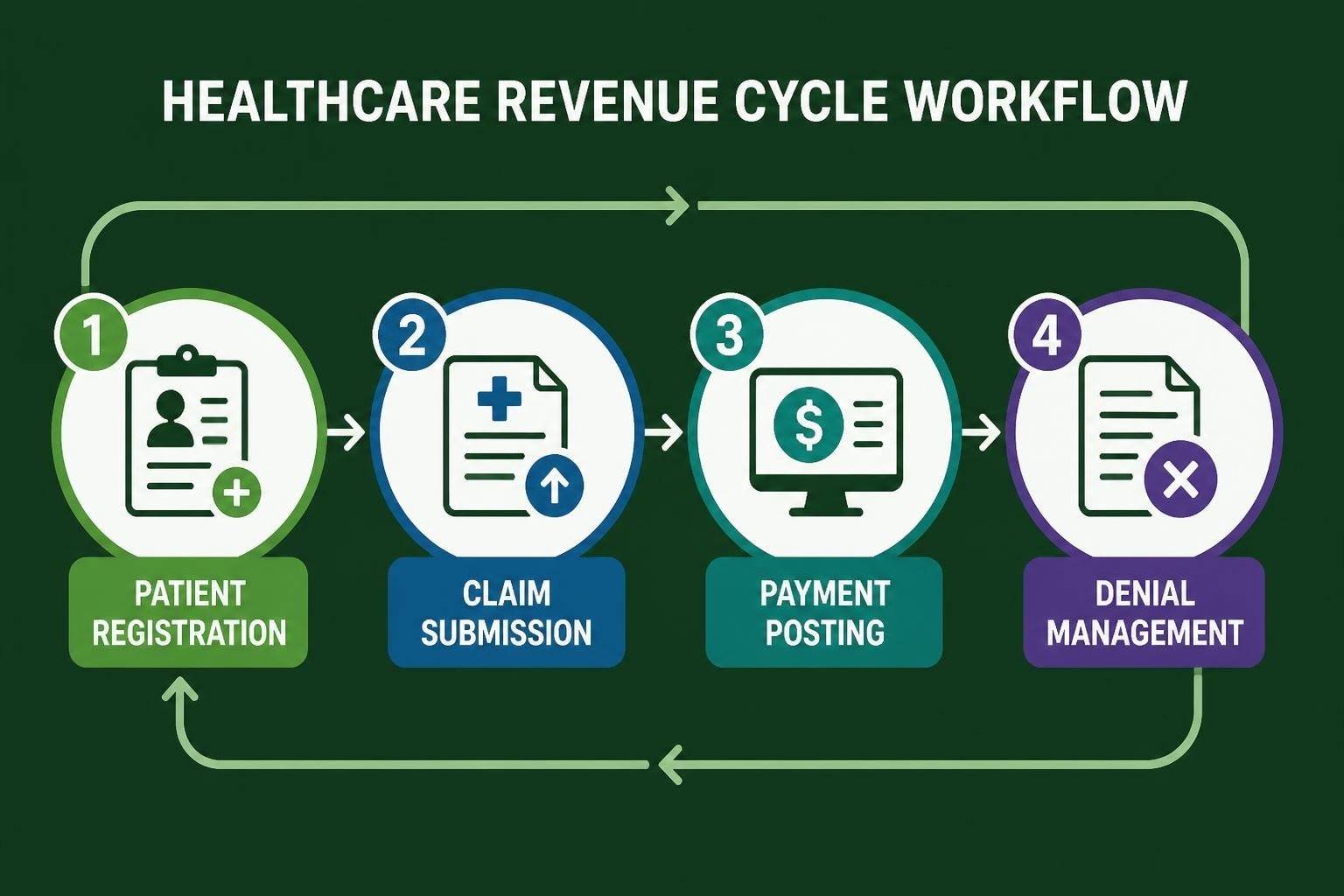
Managing your billing operations effectively remains one of the most critical aspects of maintaining financial health in healthcare practice. Whether you operate a small clinic or a multi-specialty facility, the complexity of medical billing demands careful attention to detail, comprehensive knowledge of coding standards, and systematic processes that minimize errors while maximizing reimbursements. Understanding how to optimize your billing systems not only improves cash flow but also reduces administrative burden, allowing healthcare providers to focus on patient care rather than financial complications.
Understanding the Foundation of Your Billing Process
Your billing infrastructure serves as the financial backbone of your practice. Every interaction with a patient generates documentation that must translate into accurate claims submission, appropriate coding, and timely collection. The revenue cycle encompasses multiple touchpoints, from initial patient registration through final payment reconciliation.
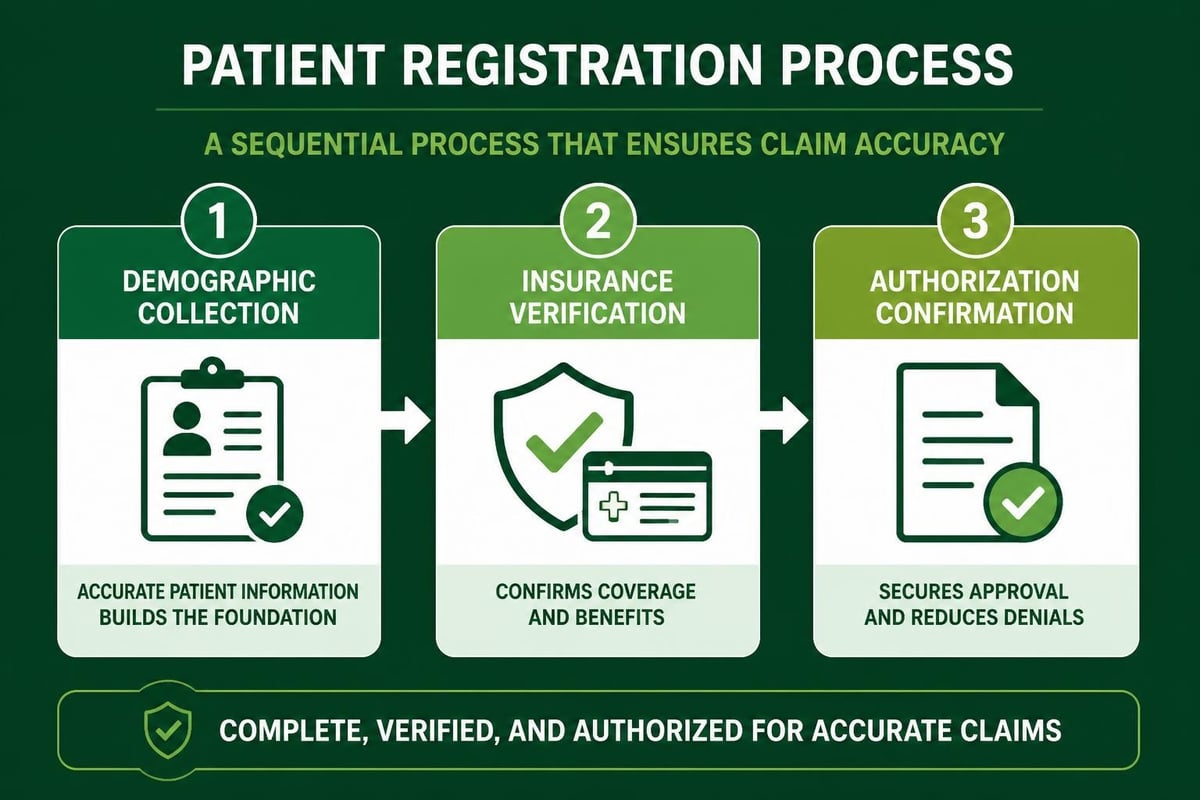
Establishing strong foundational practices starts with patient demographic verification. When your billing team captures complete and accurate information during registration, you prevent downstream complications that lead to claim denials. This includes verifying insurance coverage, collecting co-payments, and documenting medical necessity for services rendered.
Essential Components of Effective Billing Operations
Several key elements work together to create a comprehensive billing system:
- Patient information accuracy ensuring demographic and insurance details match payer requirements
- Eligibility verification confirming coverage before services are rendered
- Charge capture documenting all billable services without omission or duplication
- Coding precision applying appropriate CPT, ICD-10, and modifier codes
- Claims scrubbing identifying and correcting errors before submission
- Payment posting accurately recording all payments and adjustments
- Denial management systematically addressing rejected or denied claims
The American Academy of Family Physicians emphasizes accurate coding practices to support appropriate payment and reduce audit exposure. Your billing accuracy directly impacts revenue potential and compliance posture.
Optimizing Patient Registration and Eligibility Verification
Your billing success begins at the front desk. Patient registration represents the first opportunity to capture information that determines whether claims process smoothly or face rejection. Training front office staff to collect complete demographic information, verify insurance eligibility, and document authorization requirements prevents costly errors.
Implementing eligibility verification services before appointments ensures that you understand coverage parameters, co-payment obligations, and any pre-authorization requirements. This proactive approach reduces claim denials and improves patient satisfaction by setting clear financial expectations.
| Registration Element | Impact on Billing | Best Practice |
|---|---|---|
| Patient Demographics | Prevents claim rejection due to name/DOB mismatches | Verify against photo ID and insurance card |
| Insurance Information | Ensures claims route to correct payer | Confirm primary and secondary coverage |
| Authorization Status | Avoids denials for services requiring prior approval | Check requirements 48-72 hours before service |
| Financial Responsibility | Improves collections and patient transparency | Provide cost estimates and collect co-pays |
Consider implementing automated eligibility checking that integrates with your practice management system. This technology reduces manual verification time while improving accuracy across your billing operations.
Mastering Charge Capture and Documentation
Charge capture encompasses the process of translating clinical services into billable charges. Your billing performance suffers when services go unbilled or when documentation fails to support the level of service coded. Healthcare providers must understand that clinical documentation drives coding decisions, which in turn determines reimbursement levels.
Step-by-Step Charge Capture Process
Step 1: Complete clinical documentation immediately following patient encounters, including all procedures, diagnoses, and medical decision-making elements.
Step 2: Review documentation against coding guidelines to select appropriate CPT and ICD-10 codes that accurately reflect services provided.
Step 3: Apply modifiers when necessary to clarify circumstances that affect reimbursement, such as bilateral procedures or distinct services.
Step 4: Cross-reference charges against fee schedules to ensure pricing accuracy and compliance with contracted rates.
Step 5: Submit charges to billing system within 24-48 hours of service delivery to maintain timely claim submission schedules.
Understanding different types of medical coding helps prevent common errors that trigger denials. Your billing team should maintain current knowledge of coding updates, payer-specific requirements, and compliance guidelines.
Implementing Claims Scrubbing and Submission Strategies
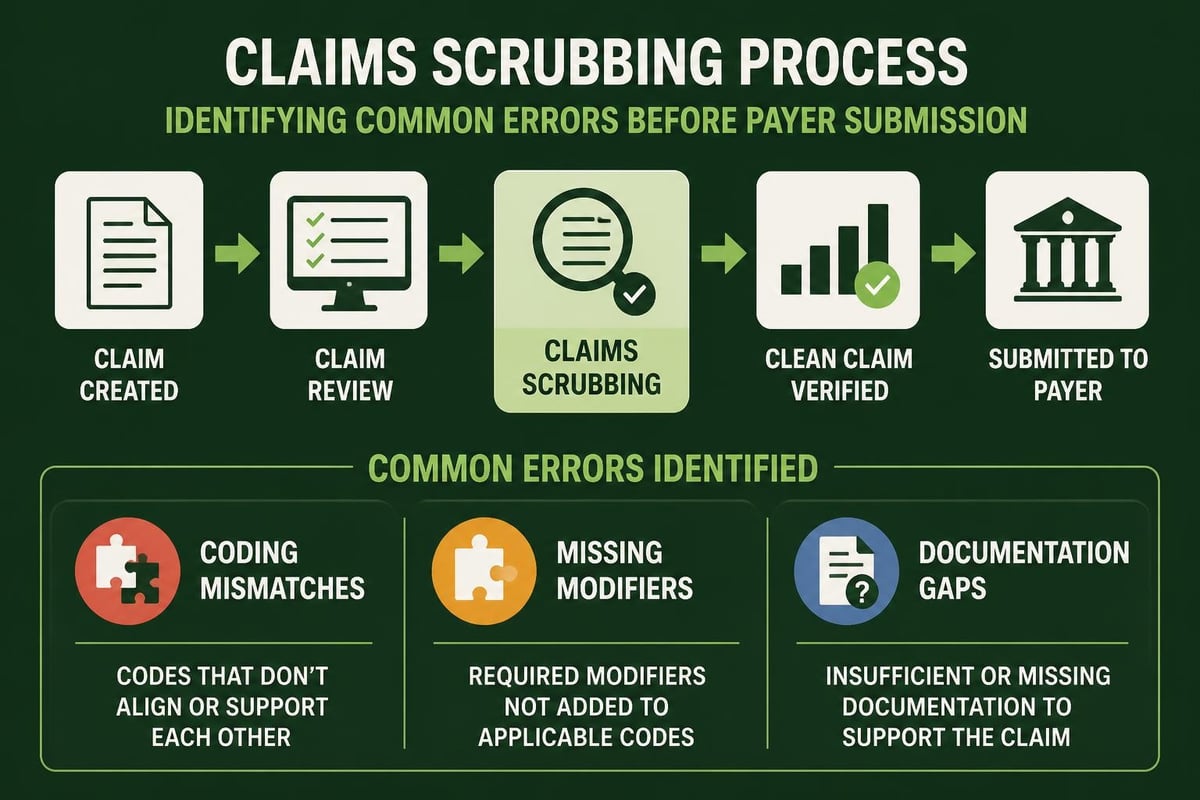
Your billing efficiency improves dramatically when you catch errors before claims reach payers. Claims scrubbing involves reviewing submissions for common mistakes, missing information, and coding inconsistencies that lead to automatic rejections. According to Weave’s medical billing best practices, timely claim submissions combined with accuracy checks significantly reduce days in accounts receivable.
Automated scrubbing software identifies issues such as:
- Missing or invalid diagnosis codes
- Procedure codes without supporting diagnoses
- Duplicate claims for the same service
- Incorrect patient or provider information
- Non-covered services based on payer contracts
Beyond automated checking, manual review by experienced billing specialists catches nuanced errors that software might miss. Understanding what CPT codes mean for insurance claims enables your billing team to evaluate claim appropriateness before submission.
Managing Denials and Appeals Effectively
Even with meticulous preparation, your billing operations will encounter claim denials. The difference between financially healthy practices and struggling ones often comes down to how systematically they address denials. Denial management in medical billing directly impacts cash flow and overall revenue performance.
Effective denial management requires tracking denial reasons, identifying patterns, and implementing corrective actions. Common denial categories include:
- Technical denials resulting from missing information, incorrect patient demographics, or eligibility issues
- Clinical denials stemming from medical necessity questions, insufficient documentation, or coding errors
- Timely filing denials occurring when claims miss payer-specific submission deadlines
- Authorization denials happening when required pre-approvals were not obtained
Your billing team should categorize every denial, determine root causes, and develop prevention strategies. For example, if authorization denials represent a significant percentage of your denials, strengthening front-end verification processes addresses the problem at its source.
Building a Denial Management Protocol
Create standardized workflows for denial resolution that specify timeframes and responsible parties. The RCM Workshop’s checklist for medical billing best practices emphasizes systematic approaches to denial management as essential for higher collections.
| Denial Type | Response Timeline | Primary Action | Prevention Strategy |
|---|---|---|---|
| Technical | 48 hours | Correct and resubmit | Enhanced front-end verification |
| Medical Necessity | 5-7 days | Submit additional documentation | Improve clinical documentation quality |
| Coding Error | 24-48 hours | Review and correct codes | Ongoing coder education |
| Timely Filing | Immediate | File appeal with documentation | Strengthen submission schedules |
Track denial rates, appeal success rates, and time to resolution. These metrics help you measure improvement over time and identify areas requiring additional attention.
Establishing Payment Posting and Reconciliation Standards
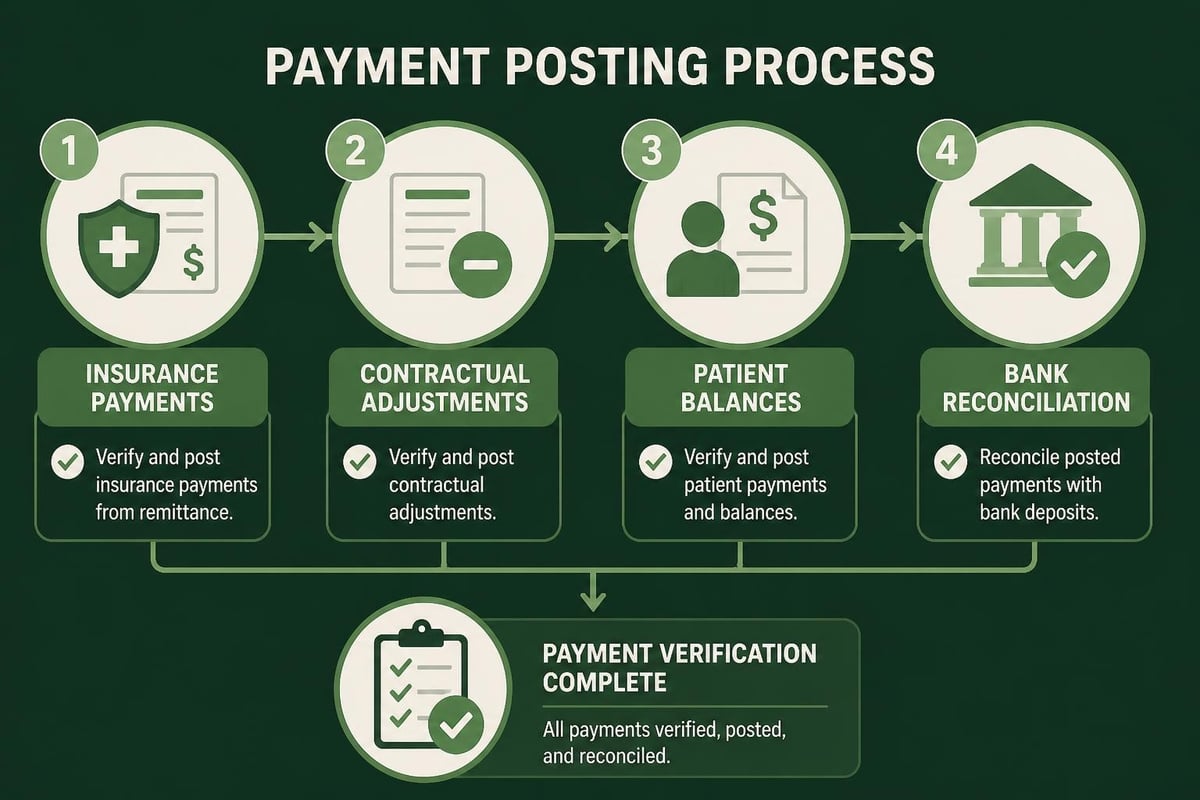
Your billing cycle doesn’t end when payers send remittance. Accurate payment posting ensures that your accounts receivable reflects current status, patient balances calculate correctly, and financial reports provide reliable data for business decisions. Understanding what adjustments on medical bills mean helps explain variances between charges and collections.
Payment posting involves recording all transactions including:
- Insurance payments matching to specific claims
- Contractual adjustments reflecting negotiated rate differences
- Patient payments applied to correct accounts and services
- Write-offs for uncollectible balances or charity care
- Refunds for overpayments or duplicate processing
Daily payment posting prevents accounts receivable from becoming outdated and helps identify underpayments requiring follow-up. Your billing team should reconcile bank deposits against posted payments to ensure nothing falls through the cracks.
Maintaining Compliance and Audit Readiness
Your billing practices must align with regulatory requirements including HIPAA privacy rules, anti-fraud provisions, and payer-specific policies. Regular internal audits identify potential compliance risks before external auditors discover them. According to Synergy HCLS’s audit best practices, systematic audits help identify documentation gaps, coding errors, and payer issues that could trigger penalties.
Compliance extends beyond coding accuracy to encompass proper credentialing, appropriate use of modifiers, and adherence to medical necessity standards. Your billing operations should include:
- Quarterly coding audits sampling claims across all providers and service types
- Annual compliance training for all revenue cycle staff
- Documentation of billing policies and procedures
- Monitoring of regulatory changes affecting billing practices
- Incident response protocols for identifying and reporting potential violations
Understanding common errors with modifier usage prevents inappropriate code combinations that raise red flags during audits. Proactive compliance efforts protect your practice from financial penalties and reputational damage.
Leveraging Technology to Enhance Your Billing Performance
Modern billing operations benefit from technological solutions that automate repetitive tasks, reduce errors, and provide actionable analytics. While practice management systems handle basic billing functions, specialized tools address specific challenges across the revenue cycle.
Electronic remittance advice (ERA) processing eliminates manual posting of explanation of benefits documents. Understanding what ERA means in medical billing highlights efficiency gains from automated payment posting. Similarly, electronic claims submission reduces processing time and provides immediate feedback on submission acceptance.
Analytics platforms transform billing data into insights about practice performance. Key performance indicators worth monitoring include:
- Clean claim rate (first-pass acceptance without edits)
- Days in accounts receivable (average time from service to payment)
- Collection rate (percentage of expected revenue actually collected)
- Denial rate by payer, provider, and service type
- Net collection rate after contractual adjustments
The Fox Group’s primer on medical billing best practices emphasizes that effective accounts receivable management requires both systematic processes and appropriate technology support.
Training and Developing Your Billing Team
Your billing outcomes depend heavily on the knowledge and skills of your revenue cycle staff. Understanding what you need to do medical billing and coding successfully helps you set appropriate expectations for team capabilities and training requirements.
Invest in ongoing education covering:
- Annual coding updates and new billing regulations
- Payer-specific requirements and common denial reasons
- Software system updates and new features
- Customer service skills for patient financial interactions
- Compliance requirements and ethical billing practices
Cross-training staff across multiple revenue cycle functions creates operational flexibility and improves understanding of how various processes interconnect. A registration specialist who understands coding implications makes better decisions about documentation requirements during patient intake.
Monitoring Performance Metrics and Continuous Improvement
Your billing operations require regular performance assessment to identify improvement opportunities. Establishing benchmarks and tracking progress helps maintain accountability while celebrating successes. Revnexa’s focus on improving billing accuracy through strengthened clinical documentation demonstrates how targeted improvements address root causes rather than symptoms.
Create a dashboard tracking critical metrics updated monthly:
| Metric | Industry Benchmark | Your Target | Current Performance |
|---|---|---|---|
| Clean Claim Rate | 95%+ | 97% | Track monthly |
| Days in AR | <30 days | 28 days | Monitor weekly |
| Denial Rate | <5% | 3% | Review by payer |
| Collection Rate | 95%+ | 96% | Compare to charges |
Regular performance reviews identify trends requiring attention. For example, increasing days in accounts receivable might indicate slower follow-up on unpaid claims, while rising denial rates could signal coding accuracy issues or changing payer requirements.
Addressing Patient Financial Responsibility
Your billing operations increasingly involve collecting directly from patients as high-deductible health plans shift more costs to consumers. Kiplinger’s strategies for lowering healthcare costs emphasize the importance of patients checking for billing errors and negotiating charges, highlighting the need for clear communication about financial obligations.
Implement patient-friendly billing practices including:
- Providing cost estimates before scheduled services
- Offering payment plans for balances exceeding affordable limits
- Sending clear, itemized statements explaining charges
- Training staff in compassionate collections conversations
- Accepting multiple payment methods including online options
Transparency about costs improves patient satisfaction and increases collection rates. When patients understand their financial responsibility upfront, they can make informed decisions and plan for payment.
Partnering with Payers for Better Outcomes
Your billing success depends partly on maintaining positive relationships with insurance payers. Understanding payer-specific requirements, preferred communication channels, and appeals processes improves claim resolution efficiency. Regular communication with payer representatives helps you stay informed about policy changes, new requirements, and preferred documentation formats.
Consider establishing relationships with payer provider relations teams who can assist with:
- Clarifying coverage policies for specific services
- Resolving claim processing delays or errors
- Understanding denial reasons requiring additional documentation
- Negotiating contract terms and fee schedules
- Accessing provider portals and electronic resources
TempDev’s discussion of integrated systems highlights how technology facilitates better payer communication through automated eligibility checking, electronic claim submission, and ERA processing. These tools reduce phone calls and manual research while improving accuracy.
Optimizing your billing operations requires attention to every touchpoint in the revenue cycle, from patient registration through final payment reconciliation. By implementing systematic processes, leveraging appropriate technology, and maintaining focus on accuracy and compliance, healthcare practices can improve financial performance while reducing administrative burden. Greenhive Billing Solutions specializes in comprehensive revenue cycle management services designed to enhance your billing efficiency, maximize reimbursements, and ensure HIPAA compliance, allowing you to focus on delivering exceptional patient care while we handle the complexities of medical billing and claims processing.

