
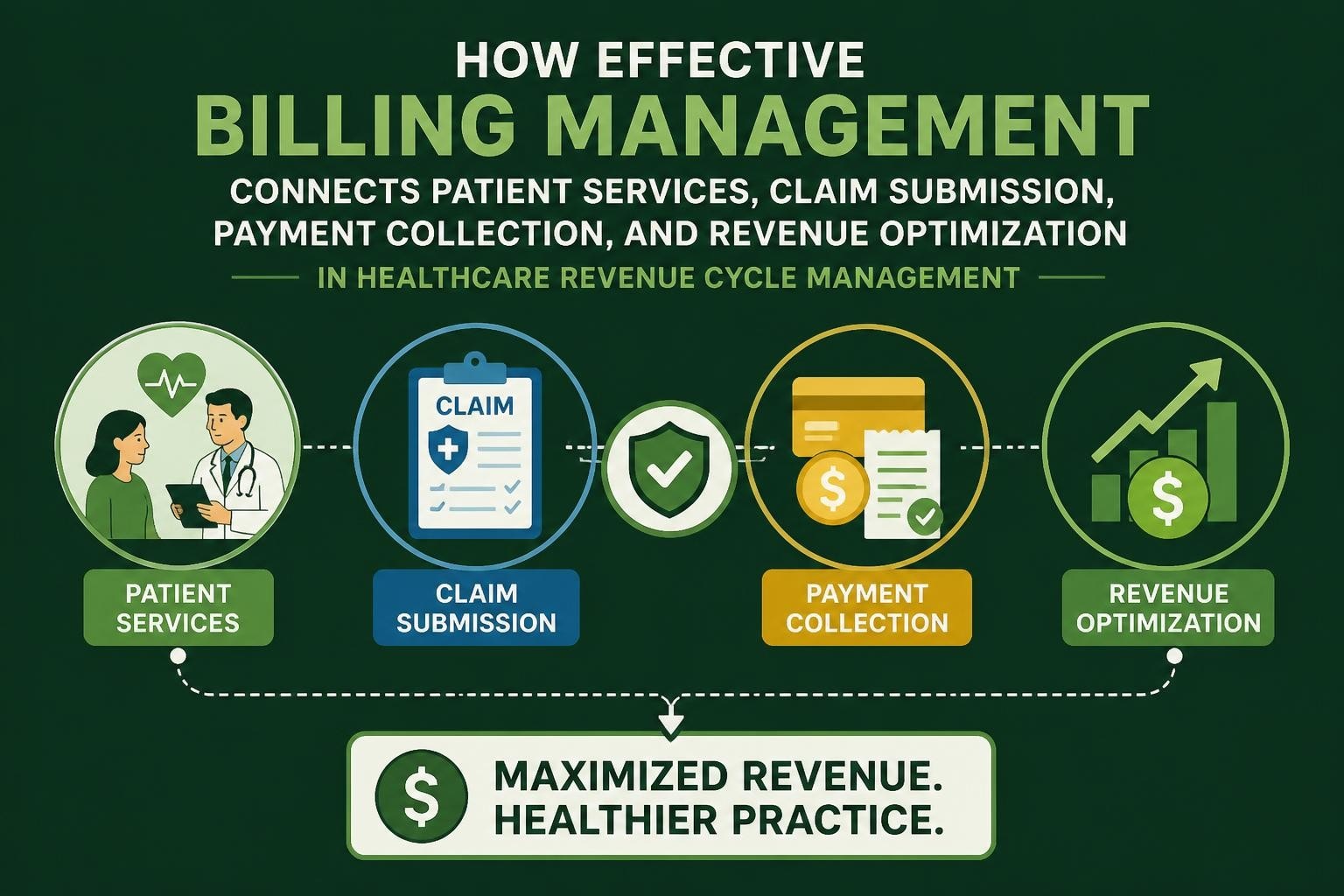
Effective billing management serves as the financial backbone of healthcare organizations, directly impacting cash flow, operational efficiency, and long-term sustainability. For medical practices, hospitals, and healthcare facilities across the United States, establishing robust billing processes isn't merely about collecting payments-it's about creating systematic approaches that minimize errors, accelerate reimbursements, and maintain compliance with evolving regulations. The complexity of healthcare billing, with its intricate coding requirements, insurance verifications, and denial management challenges, demands specialized knowledge and strategic implementation to ensure consistent revenue streams.
Understanding the Core Components of Billing Management
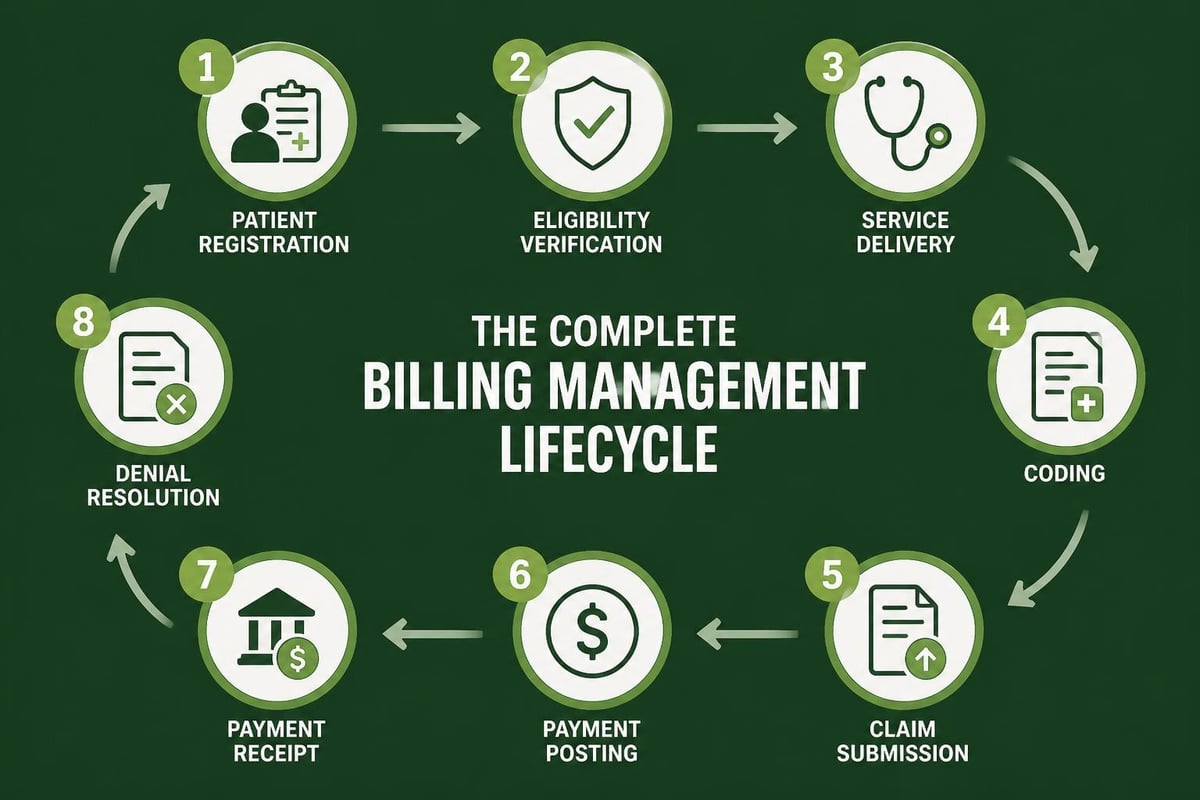
Billing management encompasses the complete lifecycle of financial transactions between healthcare providers and payers. This comprehensive process begins when a patient schedules an appointment and continues through service delivery, claim submission, payment posting, and reconciliation. Each stage requires meticulous attention to detail and adherence to specific protocols.
The foundation of effective billing management rests on several critical elements. Accurate patient data collection ensures claims contain correct demographic information and insurance details. Proper coding translates medical services into standardized codes that payers recognize and reimburse. Timely claim submission prevents delays and maintains steady cash flow. Denial tracking and resolution addresses rejected claims systematically, recovering revenue that might otherwise be lost.
Essential Elements in Healthcare Billing Operations
Healthcare billing operations differ significantly from other industries due to regulatory requirements and payer-specific rules. Understanding these fundamentals of billing management helps practices build processes that withstand audits and maximize reimbursements.
- Insurance eligibility verification before service delivery
- Pre-authorization management for procedures requiring approval
- Accurate charge capture for all services rendered
- Compliant medical coding following current CPT, ICD-10, and HCPCS standards
- Clean claim submission with complete, error-free documentation
- Payment posting and reconciliation procedures
- Accounts receivable follow-up to collect outstanding balances
These components work together as an integrated system. When one element fails, the entire revenue cycle suffers. For instance, inadequate eligibility verification services at the front end can result in claim denials weeks later, creating unnecessary administrative burden and delayed payments.
Implementing Best Practices for Revenue Optimization
Healthcare organizations that excel in billing management follow specific practices that streamline operations and enhance financial outcomes. These strategies address common pain points while positioning practices for sustainable growth.
Pre-Submission Claim Scrubbing
Claim accuracy determines first-pass resolution rates and overall collection percentages. Pre-submission claim scrubbing strategies identify errors before claims reach payers, significantly reducing denial rates.
Automated scrubbing tools check for missing information, coding inconsistencies, and payer-specific requirements. However, technology alone isn't sufficient. Experienced billing professionals must review flagged claims, apply clinical knowledge, and make informed corrections. This combination of automation and expertise creates a robust quality control mechanism.
| Scrubbing Check Type | Common Issues Identified | Impact on Reimbursement |
|---|---|---|
| Demographic Verification | Incorrect patient names, addresses, dates of birth | Claim rejection before processing |
| Insurance Information | Invalid policy numbers, expired coverage dates | Immediate denial upon submission |
| Coding Accuracy | Unbundling, mismatched diagnoses and procedures | Downcoding or partial payment |
| Medical Necessity | Missing or insufficient documentation | Denial requiring appeal |
| Modifier Usage | Incorrect or missing modifiers | Reduced payment or rejection |
Regular auditing of submission patterns helps identify recurring issues. When practices notice specific error types appearing frequently, they can implement targeted training and process improvements to address root causes rather than symptoms.
Denial Management and Appeals Processing
Even with meticulous preparation, some claim denials are inevitable. The difference between financially healthy practices and struggling ones often lies in how systematically they address denials. Effective denial management services transform rejected claims into recovered revenue.
Categorizing denials by reason code reveals patterns that inform process improvements. Technical denials resulting from missing information differ fundamentally from clinical denials questioning medical necessity. Each category requires distinct resolution approaches.
Timely appeals are critical-most payers impose strict deadlines for reconsideration. Establishing workflows that automatically flag denied claims for review ensures nothing falls through administrative cracks. Documentation supporting appeals must be comprehensive, clearly demonstrating why the service was medically necessary and appropriately coded.
Root cause analysis prevents recurring denials. When multiple claims are denied for similar reasons, billing management teams should investigate whether the issue stems from coding practices, documentation deficiencies, or authorization procedures. Addressing systemic problems yields better long-term results than repeatedly appealing individual claims.
Leveraging Technology in Modern Billing Operations
The evolution of billing management tools and strategies has transformed how healthcare organizations handle financial operations. While technology cannot replace skilled professionals, it dramatically enhances efficiency and accuracy when properly implemented.
Automation and Integration
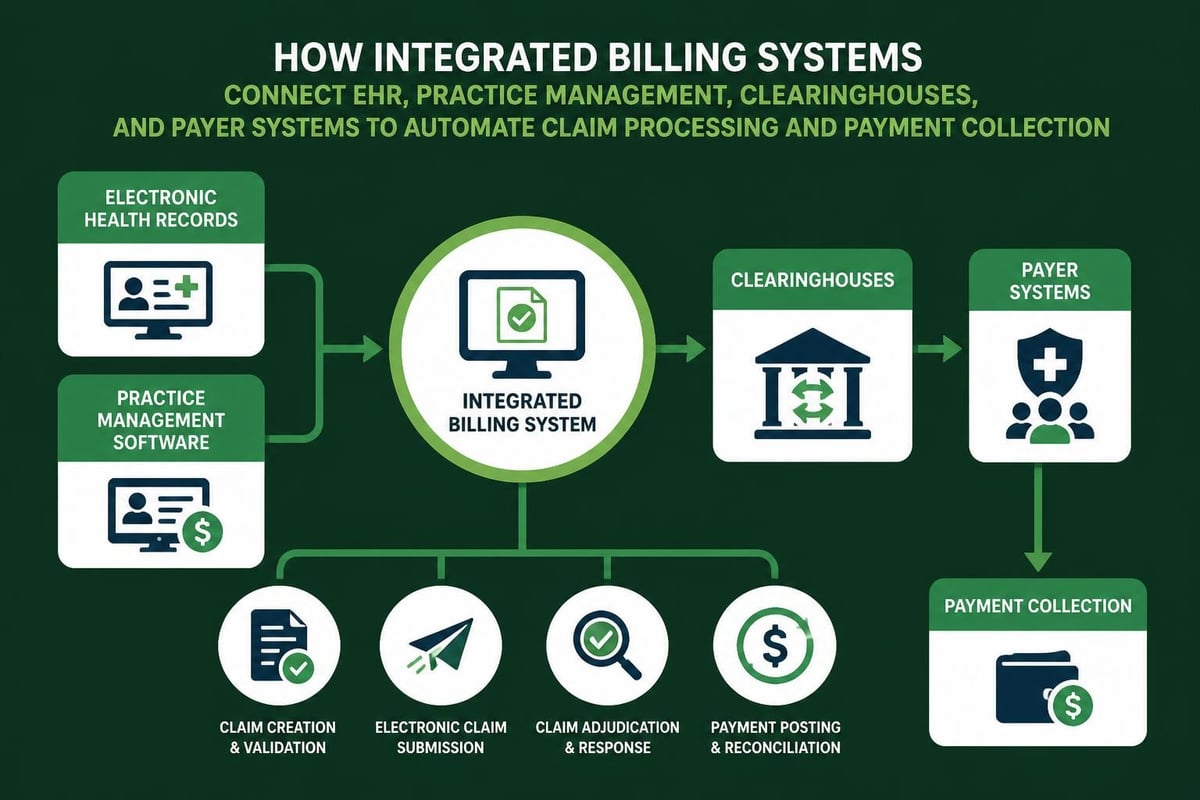
Automated billing systems reduce manual data entry, minimize human error, and accelerate processing times. Integration between practice management systems, electronic health records, and billing platforms creates seamless information flow.
Automated charge capture ensures all services are billed. When clinical systems communicate with billing software, procedures documented in the patient chart automatically generate corresponding charges. This eliminates the risk of unbilled services that represent lost revenue.
Electronic claim submission expedites processing and provides real-time status updates. Payers typically process electronic claims faster than paper submissions, improving cash flow. Electronic remittance advice simplifies payment posting and reconciliation.
Automated payment posting matches payments to outstanding claims, updates account balances, and identifies discrepancies requiring investigation. This automation frees billing staff to focus on complex issues like denial resolution and patient inquiries.
Following automated billing best practices ensures technology serves organizational goals rather than creating new complications. Proper system configuration, regular maintenance, and ongoing training are essential for realizing automation benefits.
Compliance and Regulatory Considerations
Healthcare billing operates within a complex regulatory environment. HIPAA privacy and security rules, Anti-Kickback Statute provisions, Stark Law limitations, and payer-specific policies all govern how billing management must function.
HIPAA Compliance in Billing Processes
Protected health information (PHI) flows throughout billing operations, from patient registration through payment collection. Every touchpoint where PHI is accessed, transmitted, or stored must comply with HIPAA requirements.
Access controls limit who can view patient information based on job responsibilities. Billing staff need access to demographic and clinical data necessary for claim preparation but shouldn't access unrelated patient records. Role-based permissions enforce these boundaries.
Encryption protects electronic PHI during transmission and storage. Claims submitted electronically, patient statements sent via email, and data backed up to cloud systems all require encryption to prevent unauthorized access.
Business associate agreements formalize compliance responsibilities when working with third-party vendors. Clearinghouses, software providers, and outsourced billing services must sign agreements acknowledging their HIPAA obligations and implementing appropriate safeguards.
Training and policies ensure staff understand compliance requirements and follow established procedures. Regular education on privacy practices, security protocols, and breach response reduces compliance risks.
Coding Accuracy and Documentation Standards
Proper coding is both a compliance requirement and a revenue optimization strategy. Upcoding (using codes representing more extensive services than provided) and unbundling (separately billing components of bundled services) constitute fraud. Conversely, undercoding leaves money on the table.
The RCM process depends on accurate translation of clinical services into standardized codes. Certified coders with specialty-specific knowledge ensure services are represented correctly, supporting appropriate reimbursement while maintaining compliance.
Performance Monitoring and Continuous Improvement
Measuring billing management effectiveness requires tracking specific key performance indicators that reflect both operational efficiency and financial health. Organizations that regularly monitor these metrics identify problems early and adjust strategies proactively.
Critical Metrics for Billing Performance
| Metric | Target Range | What It Measures | Improvement Actions |
|---|---|---|---|
| Days in A/R | 30-40 days | How quickly claims are paid | Accelerate submission, enhance follow-up |
| First-Pass Resolution Rate | 90-95% | Clean claim percentage | Strengthen pre-submission scrubbing |
| Denial Rate | Below 5% | Claims rejected by payers | Address root causes systematically |
| Collection Rate | 95-99% | Percentage of expected revenue collected | Improve verification and follow-up |
| Cost to Collect | 2-4% of collections | Billing operation efficiency | Optimize workflows, leverage automation |
Days in accounts receivable indicates overall cycle efficiency. When this metric rises, revenue is tied up in unpaid claims, affecting cash flow and operational capacity. Analyzing A/R by age bucket (0-30, 31-60, 61-90, 90+ days) reveals where delays occur.
Net collection rate measures what percentage of allowable charges are actually collected. This metric accounts for contractual adjustments and provides a realistic picture of revenue realization. Low collection rates may indicate inadequate follow-up on patient balances or missed filing deadlines.
Denial rates broken down by payer, service type, and reason code guide targeted improvements. When certain payers consistently deny specific procedure codes, practices can investigate whether issues stem from documentation requirements, coding nuances, or authorization processes.
Staff Training and Development
Billing management effectiveness depends heavily on staff expertise and engagement. The healthcare billing landscape changes constantly with new codes, updated payer policies, and evolving regulations.
Ongoing education keeps billing teams current with industry changes. Regular training sessions on coding updates, payer policy modifications, and compliance requirements prevent knowledge gaps that lead to errors.
Cross-training creates operational resilience and deepens understanding. When staff members learn multiple billing functions, they appreciate how their work affects downstream processes and can provide coverage during absences or peak periods.
Performance feedback helps individuals understand their contribution to organizational success. Sharing metrics on claim accuracy, denial resolution success, and collection results motivates staff and highlights areas for individual improvement.
Specialized Billing Considerations by Practice Type
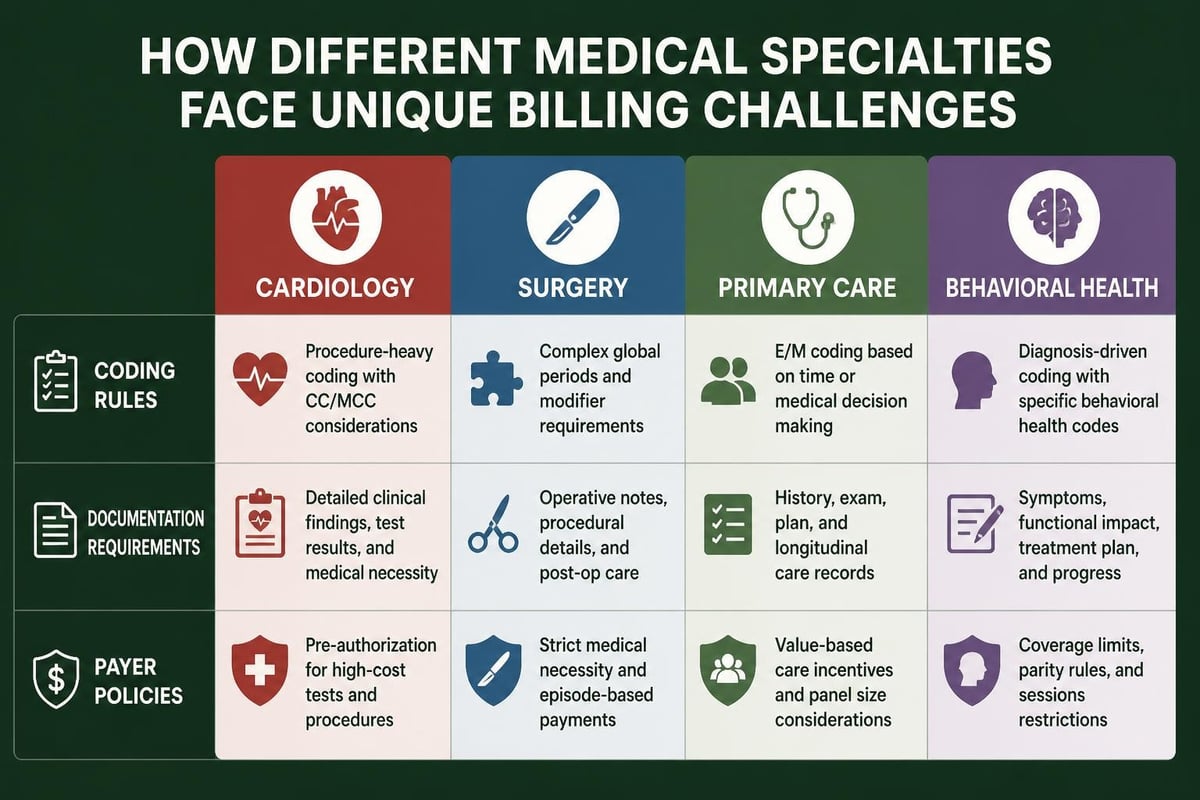
Different medical specialties face unique billing challenges requiring specialized knowledge and approaches. Understanding these variations ensures billing management practices align with specialty-specific requirements.
Specialty-Specific Coding and Documentation
Cardiology practices handle complex procedures with specific bundling rules and modifier requirements. Cardiology medical billing demands expertise in distinguishing diagnostic from interventional procedures and understanding when to apply modifiers for multiple procedures.
Surgical specialties deal with global period rules affecting how post-operative care is billed. Knowing when related services are included in the surgical fee versus when they're separately billable prevents both compliance issues and lost revenue.
Primary care practices face high patient volumes with relatively lower reimbursement per encounter. Efficiency in charge capture, coding accuracy for evaluation and management services, and patient payment collection become particularly important for maintaining profitability.
Outsourcing Versus In-House Billing Management
Healthcare organizations face strategic decisions about whether to maintain internal billing operations or partner with specialized service providers. Each approach offers distinct advantages depending on organizational size, resources, and priorities.
Evaluating Your Billing Management Approach
In-house billing provides direct control over processes and staff. Organizations retain all knowledge within their team and can immediately address issues without external coordination. However, this approach requires significant investment in technology, ongoing training, and competitive salaries to attract and retain qualified billing professionals.
Outsourced billing management leverages specialized expertise and established processes. Service providers bring experience across multiple practices, payer relationships, and proven methodologies. They absorb technology costs, handle staff management, and scale resources based on client needs. For many practices, particularly smaller organizations, this model offers superior results at lower total cost.
Hybrid models combine internal and external resources strategically. Some organizations maintain front-end functions like scheduling and registration in-house while outsourcing complex tasks like coding, claim submission, and denial management. This approach preserves patient-facing control while accessing specialized expertise for technical billing functions.
When evaluating options, consider these factors:
- Current billing performance metrics and improvement opportunities
- Staff expertise and turnover challenges
- Technology investment requirements and upgrade cycles
- Practice growth plans and scalability needs
- Leadership time spent managing billing operations
- Total cost including staff, technology, training, and overhead
Organizations seeking comprehensive support often find that partnering with experienced providers like those offering medical billing services delivers better outcomes than struggling to maintain expertise across all billing functions internally.
Regional and State-Specific Billing Considerations
Healthcare billing requirements vary by state due to different insurance regulations, Medicaid programs, and commercial payer landscapes. Practices operating in multiple states or serving diverse patient populations must navigate these variations carefully.
Multi-State Billing Complexity
State Medicaid programs each establish unique billing rules, covered services, and reimbursement methodologies. A procedure covered by Medicaid in one state might not be covered in another, or may require different authorization processes. Billing teams must understand jurisdiction-specific requirements to avoid denials.
Commercial payer contracts also vary regionally. The same insurance carrier may have different fee schedules, authorization requirements, and claims submission procedures in different markets. Organizations providing medical billing services in California face different payer landscapes than those serving patients in Texas or Arizona.
Worker's compensation billing follows state-specific rules that differ substantially from standard health insurance billing. Fee schedules, documentation requirements, and authorization processes vary significantly across states. Practices treating work-related injuries must maintain expertise in applicable state regulations.
Patient Payment Collection Strategies
As high-deductible health plans become more prevalent, patient responsibility represents an increasing portion of practice revenue. Effective billing management now requires sophisticated approaches to patient collections that balance financial performance with patient satisfaction.
Transparent Communication About Financial Responsibility
Patients appreciate knowing their financial obligations before receiving services. Prior authorization services that include cost estimation help patients make informed decisions and set realistic payment expectations.
Clear, itemized statements that explain charges in plain language reduce confusion and disputes. When patients understand what they received and why charges are appropriate, they're more likely to pay promptly. Statements should clearly separate amounts billed to insurance from patient responsibility.
Multiple payment options accommodate different patient preferences and financial situations. Accepting credit cards, ACH transfers, and online payments through secure portals makes paying easier. Offering payment plans for larger balances helps patients meet obligations without financial hardship.
Point-of-service collection for known patient responsibilities improves collection rates dramatically. Collecting copayments, deductibles, and coinsurance at the time of service avoids the administrative cost of billing patients afterward and reduces bad debt.
Reporting and Analytics for Decision Making
Data-driven decision making separates high-performing billing operations from those that struggle with persistent problems. Comprehensive reporting and analytics transform raw billing data into actionable insights that guide strategic improvements.
Actionable Billing Intelligence
Payer performance analysis reveals which insurance companies pay promptly and which consistently delay or deny claims. This intelligence informs contract negotiations, credentialing decisions, and resource allocation for follow-up activities.
Provider productivity reports show which clinicians generate the most revenue, have the cleanest documentation, and encounter the fewest billing issues. This information supports performance discussions, compensation planning, and targeted education.
Service line profitability analysis identifies which procedures and specialties contribute most to the bottom line. Understanding true profitability accounting for all billing and collection costs helps practices make informed decisions about service offerings and marketing investments.
Trend analysis spots emerging patterns before they become serious problems. Gradual increases in denial rates, lengthening days in A/R, or declining collection percentages signal issues requiring investigation and corrective action.
Regular executive reporting should include financial metrics, operational efficiency indicators, and qualitative insights about challenges and opportunities. Leadership needs clear visibility into billing performance to make informed strategic decisions about practice growth, staffing, and process improvements.
Integration With Broader Revenue Cycle Management
Billing management doesn't exist in isolation-it's an integral component of comprehensive revenue cycle management that spans from initial patient contact through final payment collection. Understanding these connections enables more effective optimization.
Coordinating Front-End and Back-End Functions
Front-end revenue cycle activities directly impact billing outcomes. Accurate patient registration, thorough insurance verification, and proper authorization management prevent downstream billing problems. When registration staff collect complete, accurate information initially, billing teams don't waste time correcting errors or pursuing missing data.
Clinical documentation quality determines coding accuracy and claim defensibility. Providers who document thoroughly, link diagnoses appropriately to procedures, and note medical necessity clearly enable billers to submit clean claims that withstand payer scrutiny. Regular feedback loops between billing and clinical teams improve documentation over time.
Payment posting accuracy affects financial reporting and collection follow-up. When payments are posted correctly to patient accounts, aging reports accurately reflect outstanding balances requiring attention. Errors in payment posting create false impressions of account status and misdirect collection efforts.
Organizations that view billing management as part of an integrated revenue cycle rather than an isolated back-office function achieve superior financial results. This holistic perspective encourages collaboration across departments, aligns incentives, and creates accountability for end-to-end performance.
Successful billing management in healthcare requires specialized expertise, systematic processes, and continuous adaptation to changing regulations and payer requirements. The strategies outlined above-from pre-submission claim scrubbing and denial management to performance monitoring and staff development-form the foundation of financially healthy operations. For healthcare organizations seeking to optimize their revenue cycle without the burden of maintaining complex billing operations internally, Greenhive Billing Solutions offers comprehensive services designed specifically for medical practices. Our experienced team handles every aspect of the billing process while ensuring HIPAA compliance, maximizing reimbursements, and providing transparent communication that keeps you informed about your practice's financial performance.

