
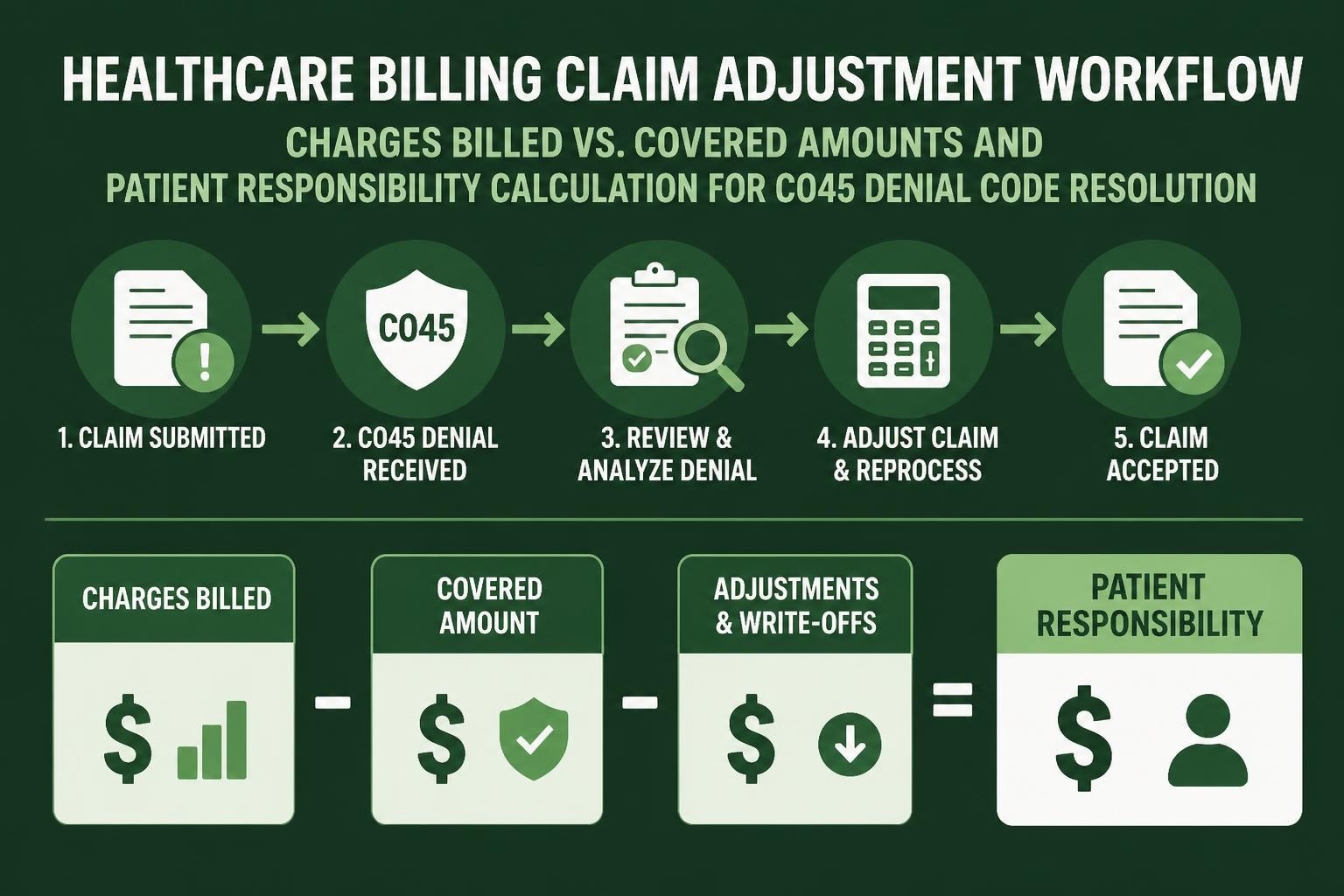
Healthcare providers face numerous challenges when managing their revenue cycle, and denial codes can significantly impact cash flow and operational efficiency. Among the various adjustment codes that appear on explanation of benefits documents, the co45 denial code stands out as one of the most frequently encountered issues in medical billing. Understanding this code and implementing effective resolution strategies is essential for maintaining healthy revenue streams and minimizing administrative burden.
Understanding the CO45 Denial Code
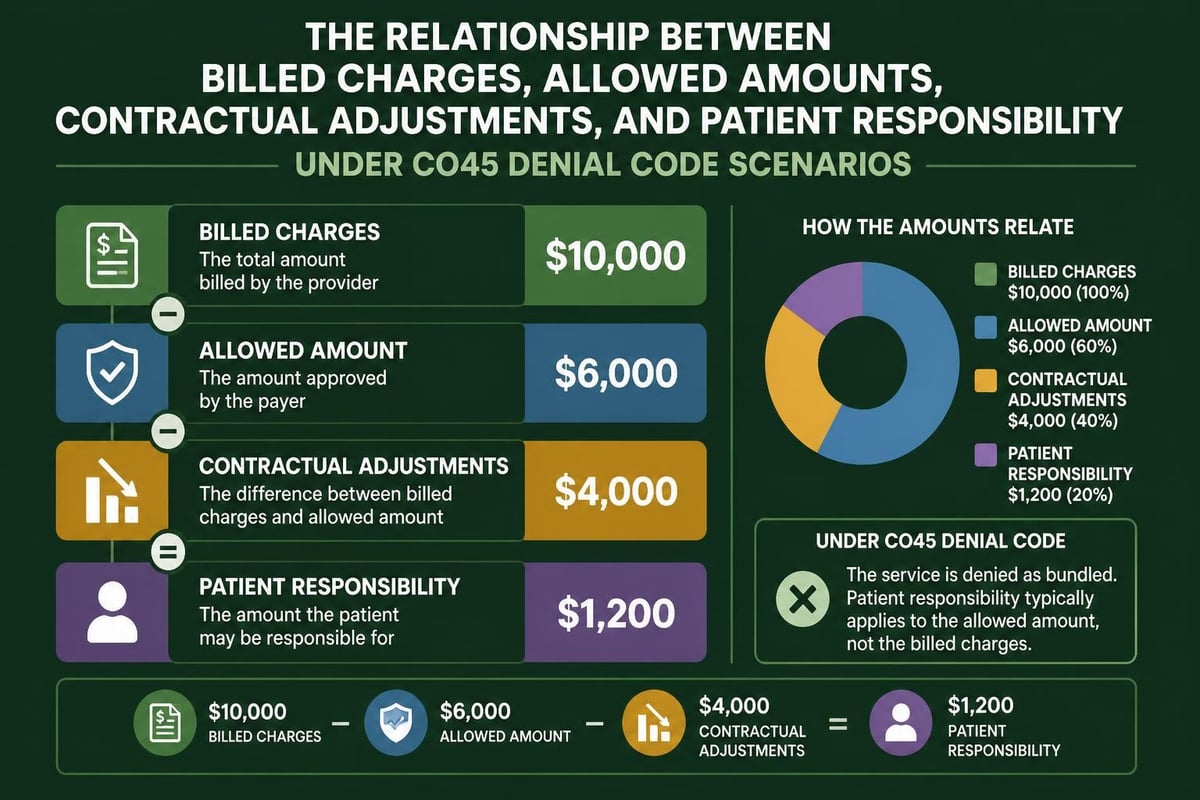
The co45 denial code indicates that charges exceed the fee schedule, maximum allowable amount, or contracted rate with the insurance payer. This Contractual Obligation (CO) adjustment means the provider cannot bill the patient for the difference between what was charged and what the insurance company considers allowable.
When this denial code appears on remittance advice, it signals a discrepancy between your submitted charge and the payer’s predetermined reimbursement limits. The adjustment is considered a contractual write-off, which means your practice must absorb the difference as part of your agreement with the insurance company.
Key Characteristics of CO45
The co45 denial code has several distinct features that differentiate it from other adjustment codes:
- Classified as a contractual obligation adjustment
- Provider responsibility, not patient responsibility
- Based on pre-negotiated fee schedules or maximum allowable amounts
- Cannot be appealed in most cases
- Requires internal billing process review
Common Causes of CO45 Denials
Multiple factors can trigger this adjustment code, and identifying the root cause is critical for prevention. Understanding why these denials occur helps billing teams implement targeted solutions.
Outdated Fee Schedules
Many practices experience CO45 adjustments because their medical billing services haven’t updated charge master rates to align with current payer contracts. When your billing system contains outdated fee schedules, every claim submission becomes a potential adjustment scenario.
Incorrect Contract Rate Application
Billing staff may inadvertently apply incorrect contracted rates when entering charges. This commonly occurs when:
- Multiple contracts exist with the same payer for different service locations
- Contract updates haven’t been loaded into the practice management system
- Manual charge entry processes lack adequate quality control
- Staff members aren’t properly trained on current contract terms
Coding and Charge Entry Errors
Sometimes the co45 denial code appears due to simple human error during the charge capture process. Entering incorrect procedure codes, quantity errors, or mismatched modifier usage can all result in charges that exceed allowable amounts.
| Cause Category | Impact Level | Prevention Difficulty |
|---|---|---|
| Outdated fee schedules | High | Low |
| Contract rate errors | Medium | Medium |
| Coding mistakes | Medium | Low |
| System configuration | High | High |
| Lack of verification | Medium | Low |
Resolution Strategies for CO45 Adjustments
Addressing co45 denial code issues requires both immediate corrective action and long-term preventive measures. Implementing a comprehensive approach ensures sustainable revenue cycle performance.
Step-by-Step Resolution Process
1. Verify the Adjustment
Review the remittance advice carefully to confirm the allowed amount matches your contract. Pull the specific contract language and compare line items to ensure the payer applied the correct rates.
2. Update Your Fee Schedule
If the adjustment is legitimate, update your charge master to prevent future occurrences. This proactive step reduces administrative work and accelerates payment cycles for future claims.
3. Review Contract Terms
Examine your payer contracts to understand rate structures, eligibility verification requirements, and any special billing rules that might affect reimbursement.
4. Adjust Internal Processes
Modify your charge entry workflows to incorporate contract rate verification before claim submission. Many medical billing software platforms offer real-time scrubbing capabilities that flag potential CO45 scenarios.
5. Document and Train
Create documentation for staff explaining why the adjustment occurred and what changes were implemented. Regular training sessions help prevent recurring issues.
Prevention Techniques That Work
Preventing CO45 adjustments before they occur delivers better results than constant remediation. Forward-thinking practices implement systematic approaches that catch discrepancies early.
Contract Management Systems
Maintaining a centralized contract management database ensures billing staff can quickly reference current rates. This database should include:
- All active payer contracts with effective dates
- Fee schedules organized by service location and provider
- Special billing instructions or requirements
- Contact information for payer representatives
- Update notification protocols
Automated Charge Verification
Modern revenue cycle management technology can automatically compare entered charges against contracted rates before claim submission. This denial management approach catches potential CO45 triggers during the charge entry phase rather than after adjudication.
Regular Contract Audits
Quarterly audits of your top payers help identify discrepancies between your billing system and actual contract terms. According to comprehensive denial code resources, proactive contract monitoring reduces CO45 adjustments by up to 60%.
Impact on Revenue Cycle Performance
The co45 denial code affects more than just individual claim reimbursement. Understanding its broader implications helps practices prioritize resolution efforts appropriately.
Financial Considerations
While CO45 adjustments represent contractual write-offs rather than true denials, they still impact your bottom line. Excessive adjustments indicate you’re consistently billing above contracted rates, which creates several problems:
- Inflated accounts receivable that don’t reflect actual collectible amounts
- Misleading revenue projections and financial forecasts
- Increased administrative costs from processing unnecessary adjustments
- Patient confusion when explanation of benefits shows large adjustments
Operational Efficiency
High volumes of CO45 adjustments consume valuable staff time. Each adjustment requires review, verification, and system updates. This administrative burden diverts resources from more productive activities like prior authorization services or patient engagement.
Technology Solutions for CO45 Management
Leveraging appropriate technology streamlines CO45 prevention and resolution. Modern revenue cycle management platforms offer sophisticated tools designed specifically for contract compliance and charge accuracy.
Implementing intelligent scrubbing engines that validate charges against contracted rates before submission dramatically reduces adjustment volumes. These systems flag potential CO45 scenarios and prompt staff to verify or modify charges accordingly. Many practices that struggle with understanding medical billing coding complexities find automated validation particularly valuable.
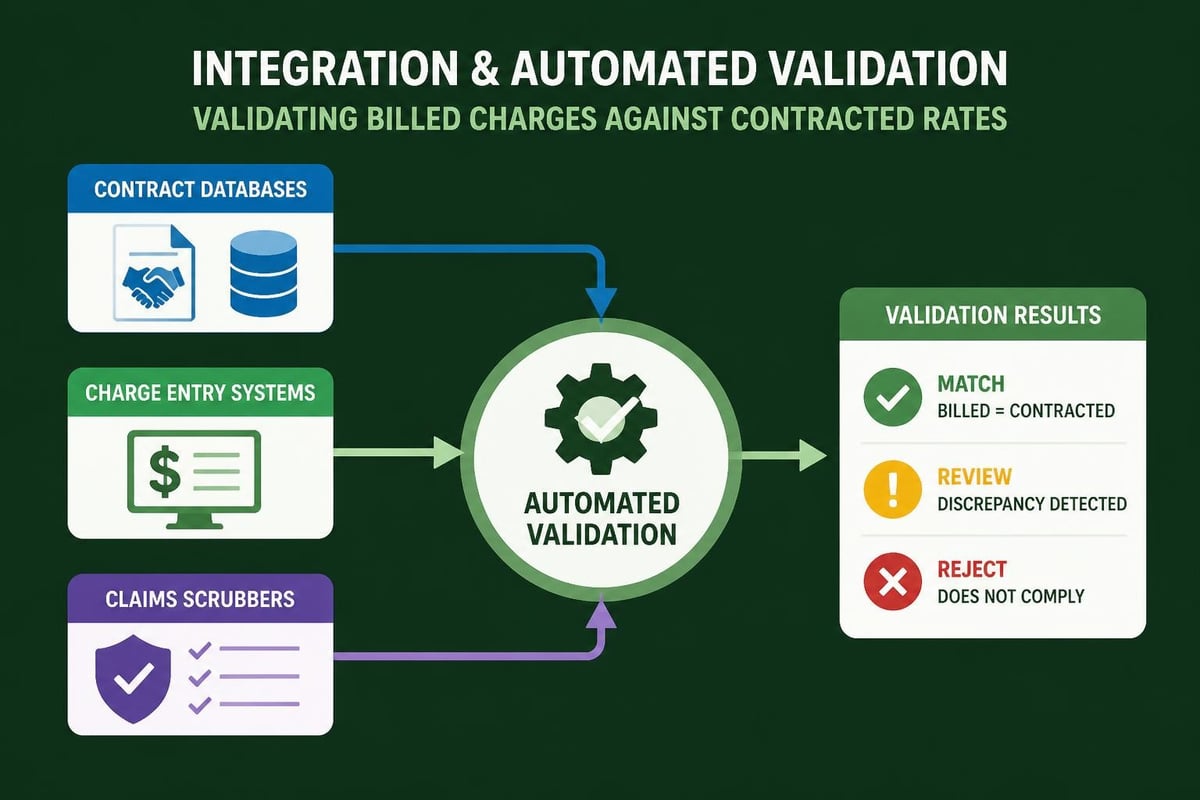
Real-time eligibility verification systems also help prevent CO45 issues by confirming coverage details and benefit limitations before service delivery. When combined with robust contract management databases, these tools create a comprehensive prevention framework.
| Technology Solution | Primary Benefit | Implementation Complexity |
|---|---|---|
| Automated charge scrubbing | Pre-submission error detection | Medium |
| Contract rate databases | Centralized reference system | Low |
| Real-time eligibility verification | Coverage confirmation | Medium |
| Analytics dashboards | Trend identification | High |
| Integrated PM systems | Seamless workflow | High |
Best Practices for Long-Term Success
Sustainable CO45 management requires commitment to continuous improvement. Leading practices implement these strategies to maintain low adjustment rates over time.
Regular staff education ensures team members understand the importance of accurate charge entry and contract compliance. Training should cover not just how to enter charges, but why accuracy matters and how errors affect the organization.
Monthly reporting on CO45 adjustment trends helps identify patterns before they become significant problems. Track adjustments by payer, provider, service location, and procedure code to pinpoint specific areas needing attention. Effective healthcare revenue cycle analytics transform raw data into actionable insights.
Collaborative relationships with payer representatives facilitate quick resolution when questions arise about contract interpretation or allowable amounts. Maintaining open communication channels with insurance companies helps clarify ambiguous contract language and prevents future disputes.
Provider Responsibilities Under CO45
When the co45 denial code appears, understanding your obligations protects both your practice and your patients. As explained in detailed CO45 billing resources, providers must write off the difference between billed charges and allowed amounts.
You cannot balance bill patients for CO45 adjustments unless specific circumstances apply:
- The patient has no active coverage for the date of service
- Services were provided outside the network without proper authorization
- The claim was denied entirely for coverage reasons (different from CO45)
Attempting to collect CO45 adjustment amounts from patients violates most payer contracts and may subject your practice to compliance penalties. Proper payment posting services ensure adjustments are correctly applied as contractual write-offs rather than patient balances.
Effectively managing the co45 denial code requires systematic processes, appropriate technology, and knowledgeable staff working together to maintain billing accuracy and contract compliance. By implementing prevention strategies and maintaining current fee schedules, healthcare providers can minimize adjustment volumes and optimize revenue cycle performance. Greenhive Billing Solutions specializes in comprehensive denial management and revenue cycle optimization, helping healthcare providers reduce adjustment volumes, streamline billing operations, and maximize legitimate reimbursements while maintaining full compliance with payer contracts and industry regulations.

