
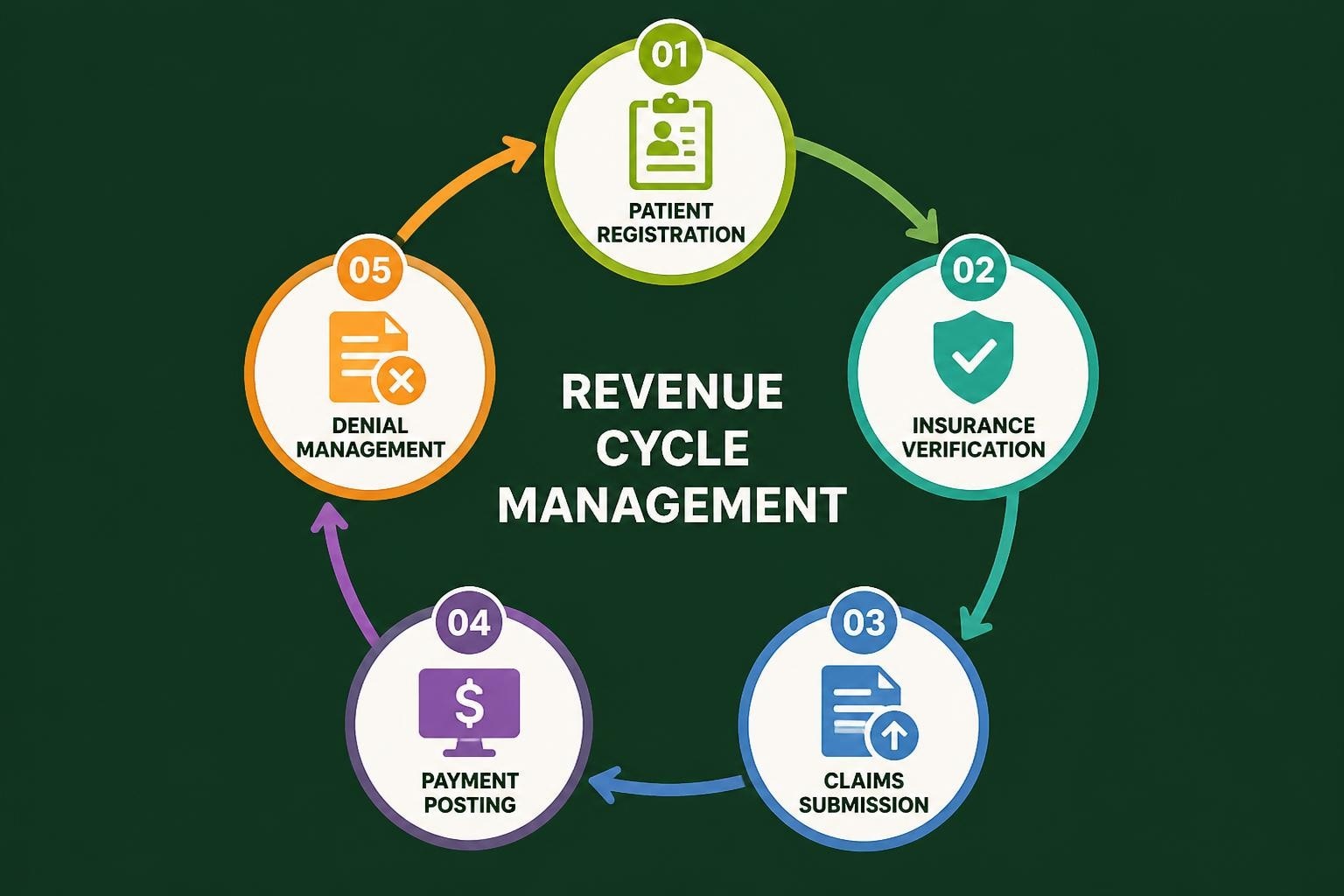
The financial health of healthcare practices depends on managing the rev cycle effectively. This comprehensive process encompasses every step from patient registration to final payment collection, creating a continuous loop that directly impacts your practice’s profitability. Understanding and optimizing each component of the revenue cycle can transform your practice’s financial performance while reducing administrative burdens. Healthcare providers who master this process experience fewer claim denials, faster reimbursements, and improved cash flow stability.
Understanding the Rev Cycle Framework
The rev cycle represents the complete financial journey of a patient encounter, starting the moment an appointment is scheduled and continuing until all payments are received and reconciled. According to the Healthcare Financial Management Association’s comprehensive guide, this process integrates clinical and administrative functions to capture, manage, and collect patient service revenue.
Core Components of Revenue Cycle Operations
Every successful rev cycle implementation requires attention to distinct operational phases. The front-end processes establish the foundation for successful claims, while back-end activities ensure complete revenue capture.
Front-End Revenue Cycle Activities:
- Patient registration and demographic data collection
- Insurance eligibility verification and benefit confirmation
- Prior authorization acquisition for covered services
- Upfront payment collection and financial counseling
- Accurate charge capture at point of service
Back-End Revenue Cycle Activities:
- Claims preparation and electronic submission
- Payment posting and account reconciliation
- Denial management and appeals processing
- Patient billing and payment plan administration
- Accounts receivable follow-up and collections
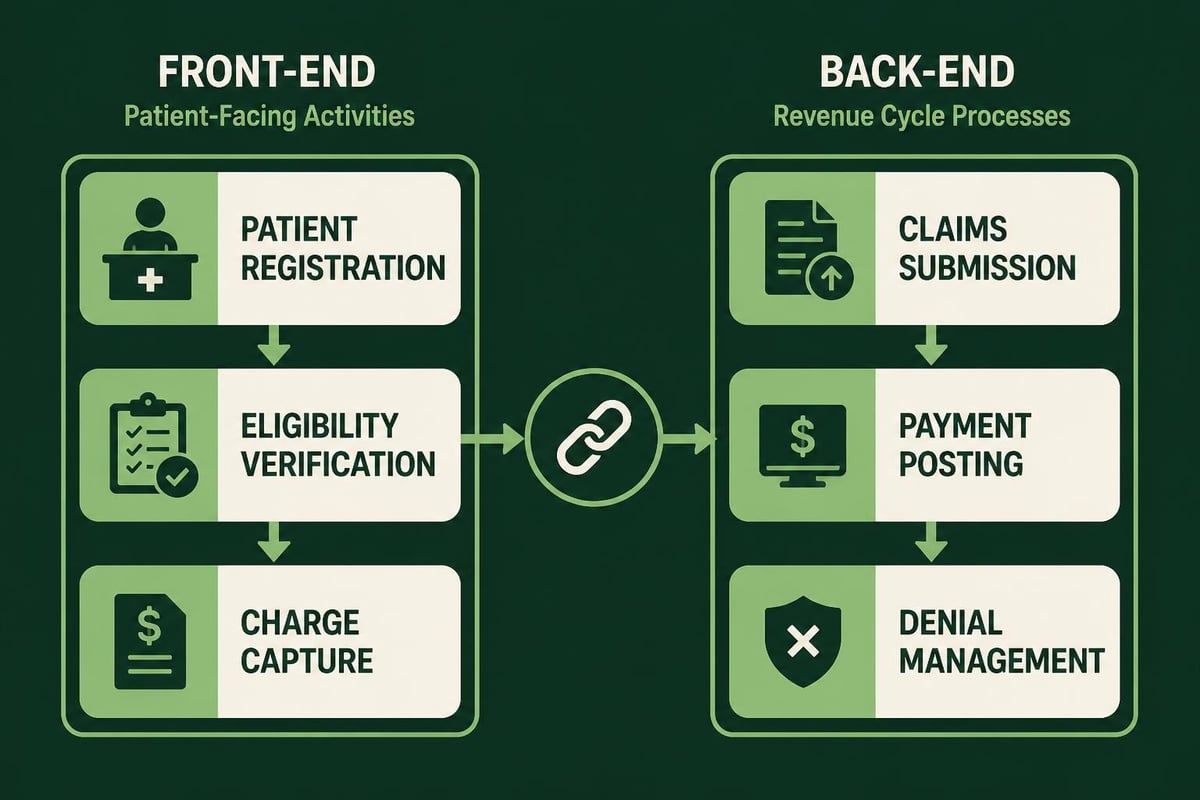
The integration between these phases determines overall revenue cycle efficiency. TechTarget’s breakdown of back-end revenue cycle practices emphasizes that optimizing post-encounter processes is critical for maintaining financial integrity.
Critical Success Factors in Rev Cycle Management
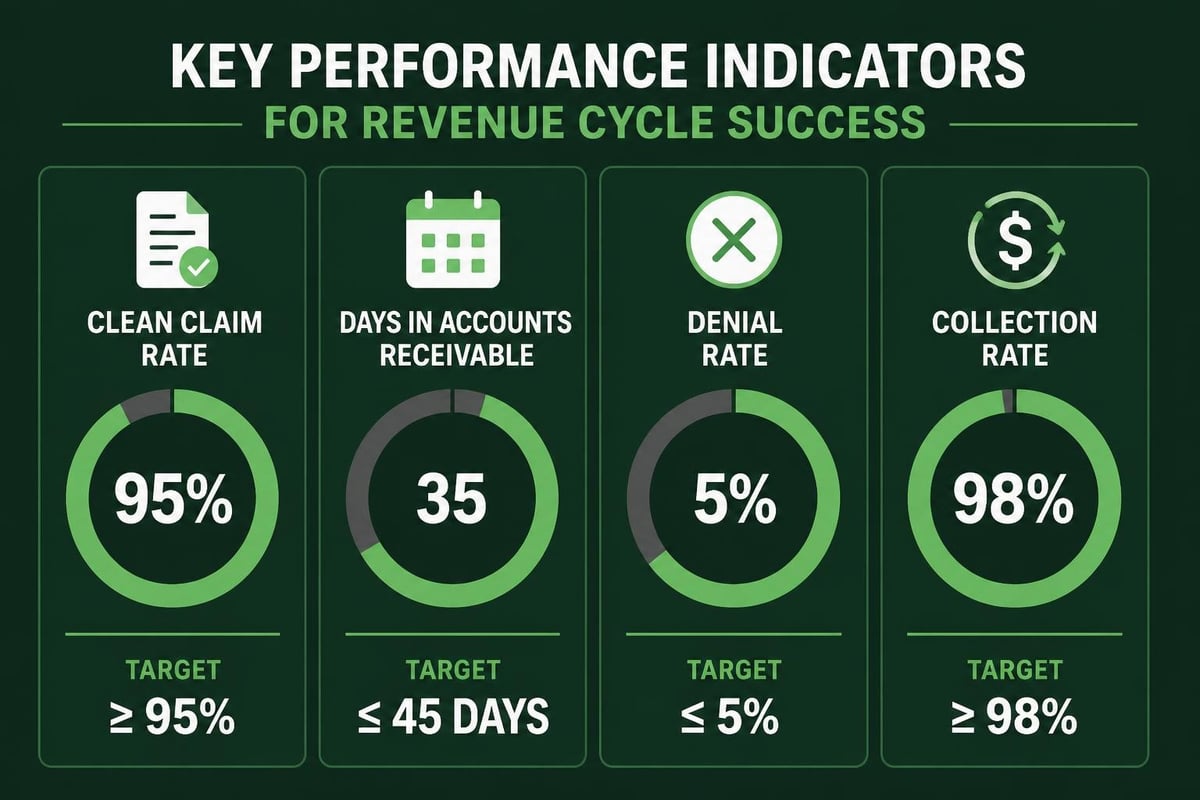
Healthcare organizations face increasing pressure to maximize revenue while controlling costs. Several key performance indicators determine whether your rev cycle operates at optimal efficiency.
| Performance Metric | Target Benchmark | Impact on Revenue |
|---|---|---|
| Clean Claim Rate | 95% or higher | Reduces rework and accelerates payment |
| Days in A/R | Under 30 days | Improves cash flow velocity |
| Denial Rate | Below 5% | Minimizes revenue leakage |
| Collection Rate | Above 95% | Ensures maximum reimbursement |
Technology Integration and Automation
Modern rev cycle management requires sophisticated technology platforms that streamline workflows and reduce manual errors. Selecting the right medical billing software enables practices to automate routine tasks, track claims in real-time, and identify bottlenecks before they impact revenue.
Automation Benefits:
- Reduced data entry errors and claim rejections
- Faster claims processing and submission cycles
- Improved eligibility verification accuracy
- Enhanced reporting and analytics capabilities
- Streamlined denial tracking and resolution
Professional revenue cycle management services leverage these technologies while providing expert oversight that many practices cannot maintain in-house. Understanding healthcare revenue cycle analytics allows providers to make data-driven decisions about resource allocation and process improvements.
Optimizing Your Rev Cycle Performance
Implementing best practices across the rev cycle creates measurable improvements in financial outcomes. Sage’s discussion of revenue cycle management highlights that standardizing workflows and investing in team training deliver significant returns.
Step-by-Step Process Improvement
Step 1: Conduct Comprehensive Assessment
Begin by analyzing current performance metrics across all rev cycle phases. Identify specific areas where claims are delayed, denied, or underpaid.
Step 2: Standardize Documentation Protocols
Establish consistent procedures for capturing patient information, verifying insurance, and documenting services rendered. Proper medical coding services ensure claims accurately reflect the care provided.
Step 3: Implement Verification Procedures
Insurance eligibility verification must occur before services are rendered to prevent coverage surprises and claim denials.
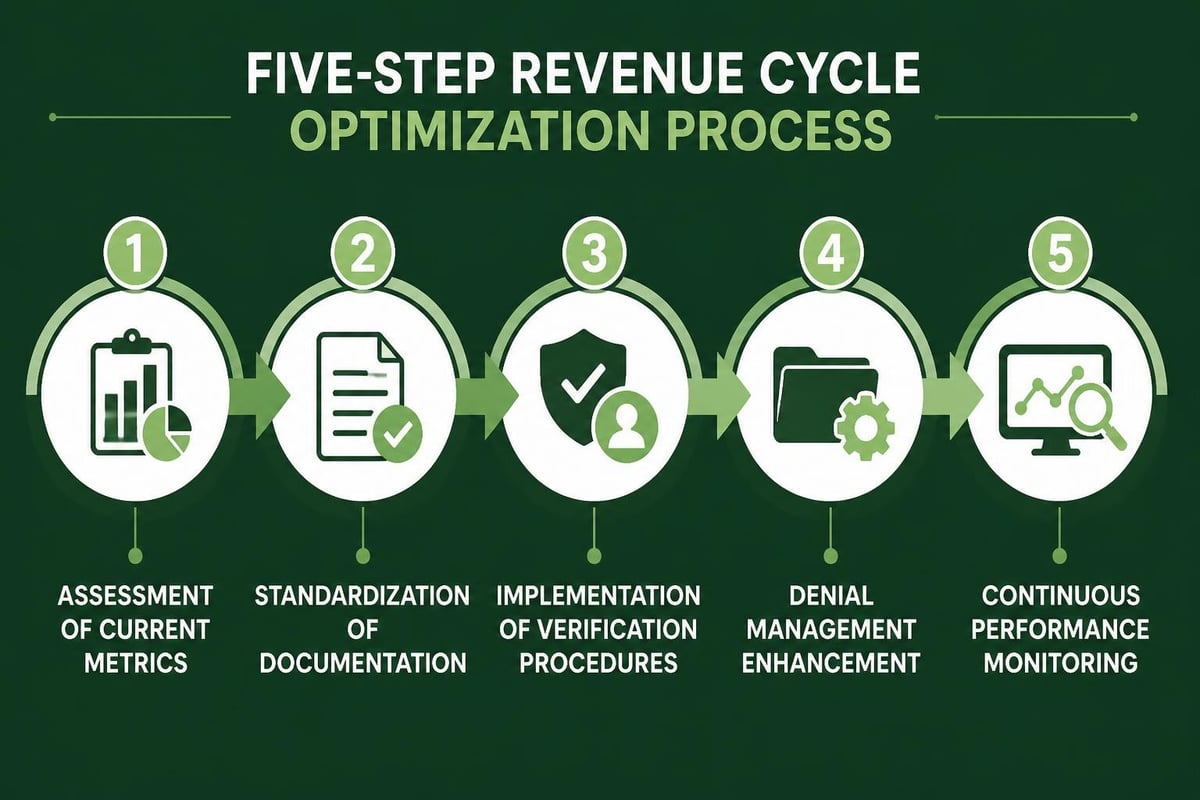
Step 4: Enhance Denial Management
Develop systematic approaches for identifying denial patterns and implementing preventive measures. Effective denial management services can recover significant revenue while reducing future rejections.
Step 5: Monitor and Adjust Continuously
Revenue cycle optimization requires ongoing attention to performance trends and emerging challenges. Regular reviews ensure processes remain effective as payer requirements and regulations evolve.
Common Rev Cycle Challenges and Solutions
Healthcare providers encounter numerous obstacles that disrupt revenue flow and increase administrative costs. Recognizing these challenges enables proactive intervention before they escalate into significant financial problems.
Addressing Payer Complexity
The landscape of insurance payers continues growing more complex, with each carrier maintaining unique requirements for claims submission, documentation, and appeals. TechTarget’s explanation of healthcare RCM basics notes that tracking patient care episodes while navigating payer variations demands specialized expertise.
| Common Challenge | Business Impact | Recommended Solution |
|---|---|---|
| Incomplete patient information | Claim delays and denials | Enhanced registration protocols |
| Prior authorization delays | Revenue cycle disruption | Dedicated authorization specialists |
| Coding errors | Underpayment or rejection | Professional coding review |
| Slow payment posting | Cash flow uncertainty | Automated posting systems |
Regulatory Compliance Requirements
Maintaining HIPAA compliance while optimizing rev cycle processes requires careful attention to data security and patient privacy. Every touchpoint in the revenue cycle must protect sensitive information while enabling efficient processing.
Professional service providers specializing in comprehensive medical billing services maintain current knowledge of regulatory requirements and payer policies, reducing compliance risks for healthcare practices.
Measuring Rev Cycle Success
Quantifiable metrics provide objective evidence of revenue cycle performance and highlight opportunities for improvement. Healthcare practices should establish baseline measurements and track progress over time.
Essential Performance Indicators:
- Net collection rate: Percentage of collectible revenue actually received
- First-pass resolution rate: Claims paid without requiring rework
- Average reimbursement time: Days from service to payment receipt
- Cost to collect: Administrative expenses per dollar collected
- Patient satisfaction scores: Quality of billing communication and processes
CompuGroup Medical’s seven best practices emphasize that consistent monitoring of these metrics enables practices to identify trends and implement timely corrections.
Value-Based Care Considerations
The transition toward value-based reimbursement models adds complexity to traditional rev cycle management. Providers must track quality metrics, patient outcomes, and cost efficiency alongside standard billing activities. This evolution requires sophisticated data analytics and reporting capabilities that integrate clinical and financial information.
Mastering the rev cycle transforms financial performance for healthcare practices, enabling sustainable growth and operational stability. By implementing standardized processes, leveraging technology, and maintaining focus on key performance metrics, providers can minimize revenue leakage while reducing administrative burdens. Greenhive Billing Solutions partners with healthcare practices across the United States to optimize every phase of revenue cycle management, from initial patient contact through final payment reconciliation. Our team of experienced professionals delivers comprehensive solutions including medical billing, claims processing, and denial management, all designed to maximize your reimbursements while ensuring HIPAA compliance and transparent communication throughout the process.

