
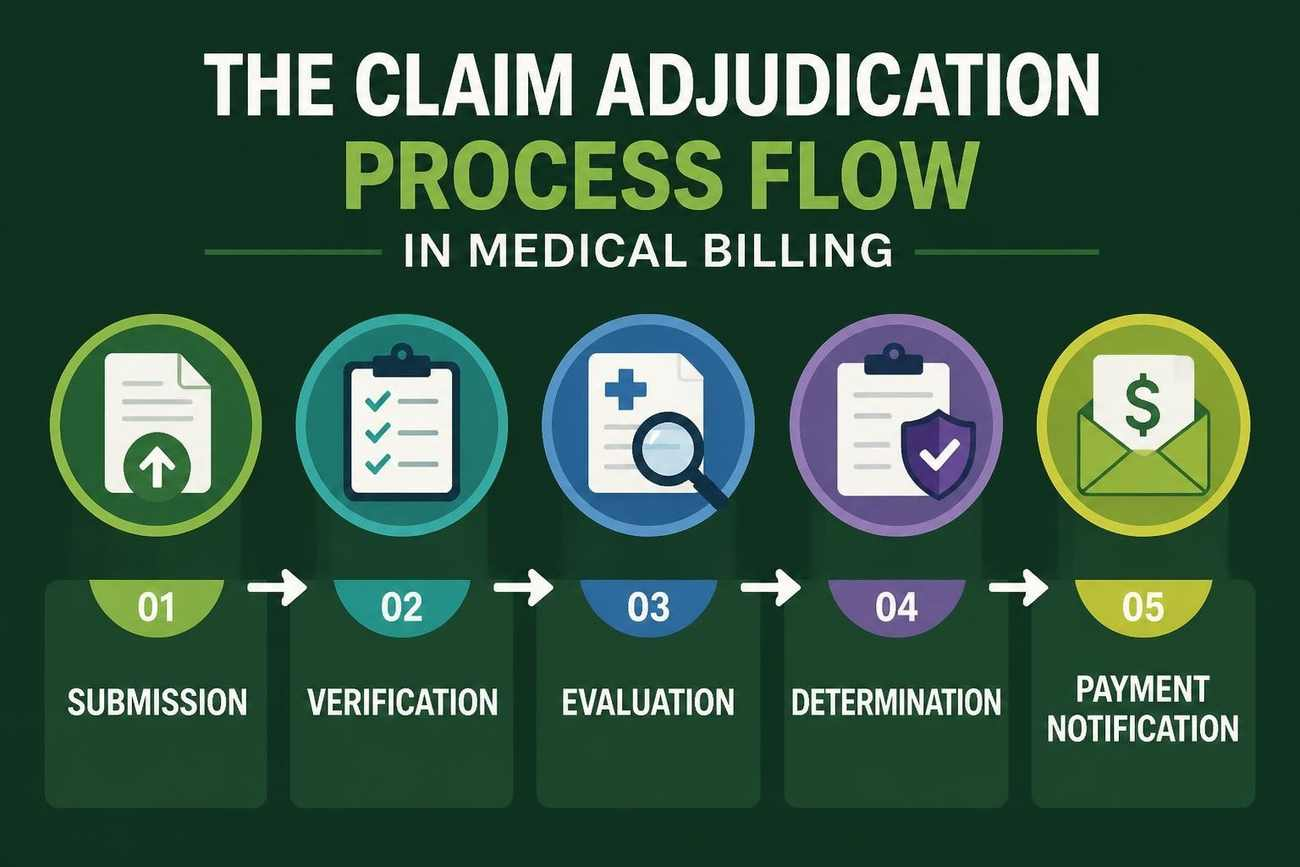
Understanding what is claim adjudication in medical billing is essential for healthcare providers seeking to optimize their revenue cycle management. This critical process determines whether insurance payers approve, deny, or partially pay submitted medical claims. Every claim that leaves a healthcare facility enters this evaluation stage, where payers scrutinize documentation, verify coverage, and assess medical necessity before issuing payment decisions. For practices working to maintain healthy cash flow and minimize revenue disruption, mastering the nuances of claim adjudication becomes a fundamental component of financial sustainability.
The Foundation of Medical Claims Adjudication
What is claim adjudication in medical billing at its core? The process represents the methodical review insurance companies conduct to determine claim validity and appropriate payment amounts. When providers submit claims, payers employ both automated systems and human reviewers to evaluate each submission against policy terms, coverage limitations, and medical necessity criteria.
The claims adjudication process typically follows a structured workflow designed to ensure consistency and compliance. Payers examine submitted claims for completeness, accuracy, and adherence to coding guidelines before making payment determinations.
Key Components Evaluated During Adjudication
Insurance companies assess multiple elements when processing claims:
- Patient eligibility verification confirming active coverage at the time of service
- Benefit plan analysis determining what services the policy covers
- Medical necessity review evaluating whether treatments align with diagnoses
- Coding accuracy assessment verifying proper CPT, ICD-10, and HCPCS code usage
- Provider credentialing status confirming network participation and authorization
This comprehensive evaluation protects both payers and patients from fraudulent or inappropriate charges while ensuring providers receive legitimate reimbursement for services rendered.
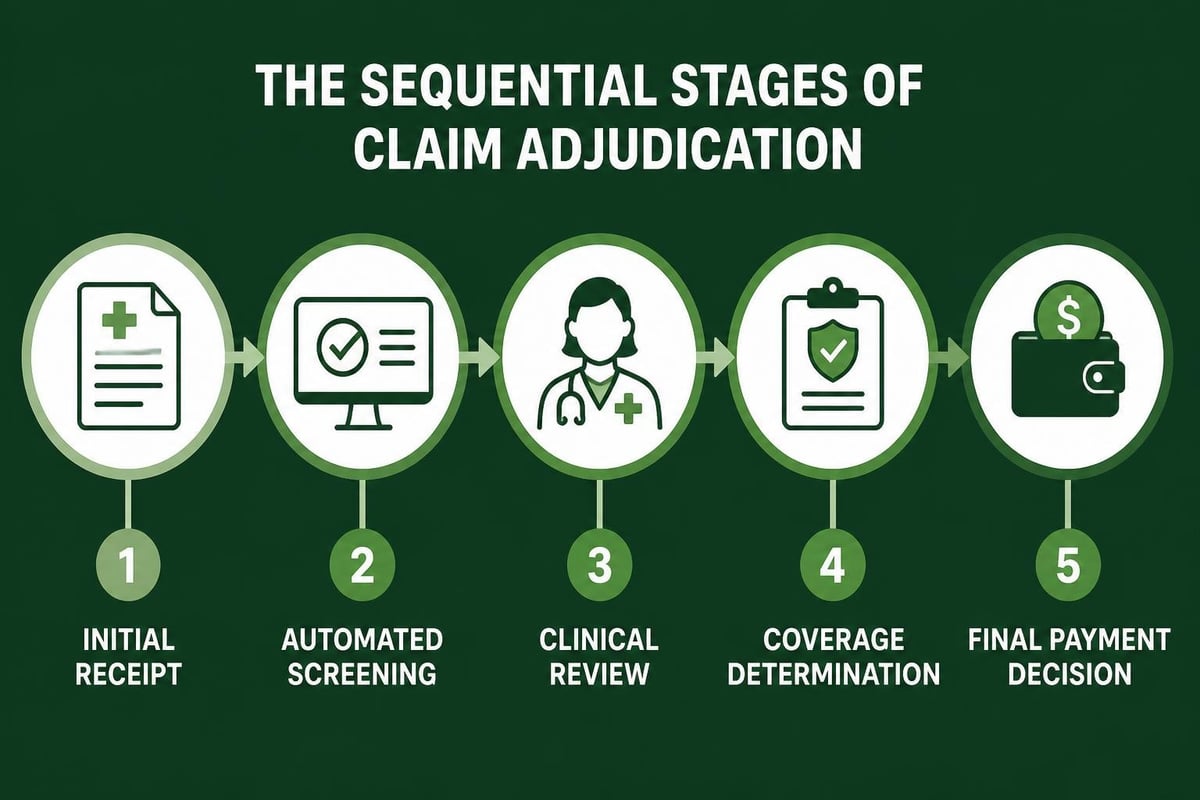
How the Claim Adjudication Process Works
Understanding the step-by-step progression helps providers anticipate potential issues and prepare documentation accordingly. The adjudication timeline varies by payer and claim complexity, but the fundamental process remains consistent across most insurance companies.
Step 1: Initial Claim Receipt and Registration
Payers receive claims electronically through clearinghouses or directly via their submission portals. The system assigns a unique tracking number and timestamps the submission, establishing the official receipt date that triggers adjudication timelines.
Step 2: Automated Screening and Validation
Advanced software systems perform initial screenings, checking for obvious errors such as invalid codes, missing information, or duplicate submissions. This automated review identifies issues that would prevent further processing, often rejecting claims within hours for immediate correction.
Step 3: Medical Necessity and Coverage Review
Claims passing initial screening undergo detailed evaluation against policy guidelines. Reviewers assess whether services align with covered benefits and meet medical necessity standards. Complex cases may require clinical expertise, extending adjudication timeframes.
Step 4: Pricing and Payment Calculation
Once approved, systems calculate payment amounts based on contracted rates, deductibles, copayments, and coinsurance requirements. The Electronic Remittance Advice process communicates these calculations to providers through standardized formats.
Step 5: Decision Communication and Payment
Payers issue Explanation of Benefits (EOB) documents to patients and remittance advice to providers, detailing payment decisions. Approved amounts transfer to provider accounts, while denied or adjusted claims require additional action.
Common Adjudication Outcomes and What They Mean
Claim adjudication produces three primary outcomes, each with distinct implications for revenue cycle management:
| Outcome | Meaning | Next Steps |
|---|---|---|
| Approved/Paid | Claim met all requirements; payment issued | Post payment, reconcile against expected amount |
| Denied | Claim rejected; no payment issued | Review denial reason, correct issues, resubmit or appeal |
| Partially Paid | Some services approved; others reduced or denied | Analyze adjustment codes, address discrepancies |
Understanding these outcomes helps practices implement effective denial management strategies that protect revenue and minimize write-offs.
Denial Categories and Root Causes
Denials typically fall into two categories: technical denials resulting from administrative errors and clinical denials based on medical necessity determinations. Technical issues like incorrect patient information or missing authorization represent preventable errors, while clinical denials require stronger documentation and sometimes peer-to-peer reviews.
The importance of submitting clean claims cannot be overstated, as these complete, accurate submissions pass through adjudication smoothly, accelerating reimbursement and reducing administrative burden.
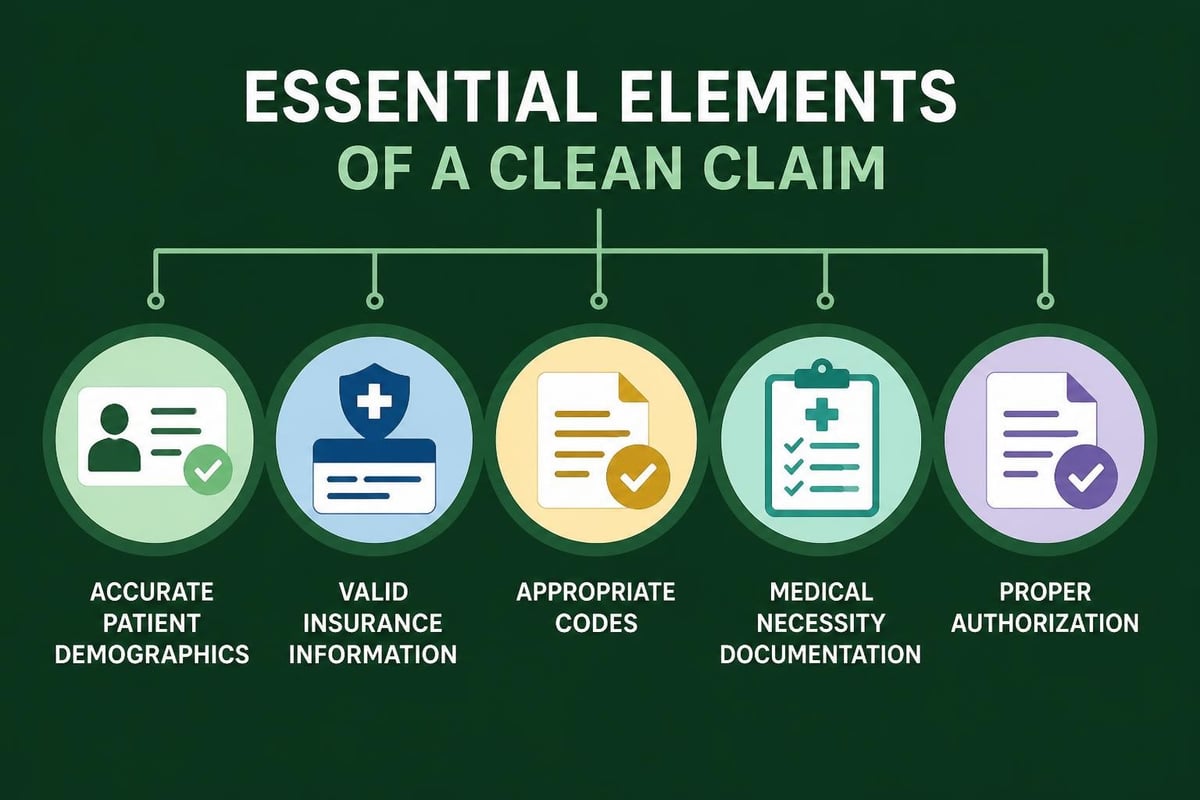
Factors That Influence Adjudication Speed and Success
Multiple variables affect how quickly and successfully claims move through adjudication. Providers who understand these factors can proactively address potential obstacles.
Documentation quality stands as the most critical factor. Comprehensive medical records supporting coded services demonstrate medical necessity and justify payment. Insufficient documentation invites scrutiny and increases denial risk.
Coding accuracy directly impacts adjudication outcomes. Proper CPT code selection and appropriate modifier usage ensure payers understand exactly what services were performed and why.
Prior authorization compliance affects surgical and specialty services particularly. Claims for services requiring pre-approval but lacking proper authorization face automatic denial during adjudication.
Timely filing represents another crucial element. Most payers enforce strict submission deadlines, automatically denying claims received beyond specified timeframes regardless of validity.
The Role of Technology in Modern Adjudication
Automation has transformed what is claim adjudication in medical billing, introducing efficiency while creating new challenges. Payers employ sophisticated algorithms that process thousands of claims daily, identifying patterns and flagging anomalies for human review.
These systems apply complex coding rules and bundling logic, sometimes producing unexpected denials or payment reductions. Understanding how automated adjudication works helps providers anticipate common system-generated denials.
Electronic Data Interchange (EDI) standards facilitate seamless communication between provider systems and payer adjudication platforms. Real-time eligibility verification and ERA processing accelerate claim resolution and payment posting.
The medical billing process increasingly relies on these technological interfaces, making integration capabilities essential for efficient revenue cycle operations.
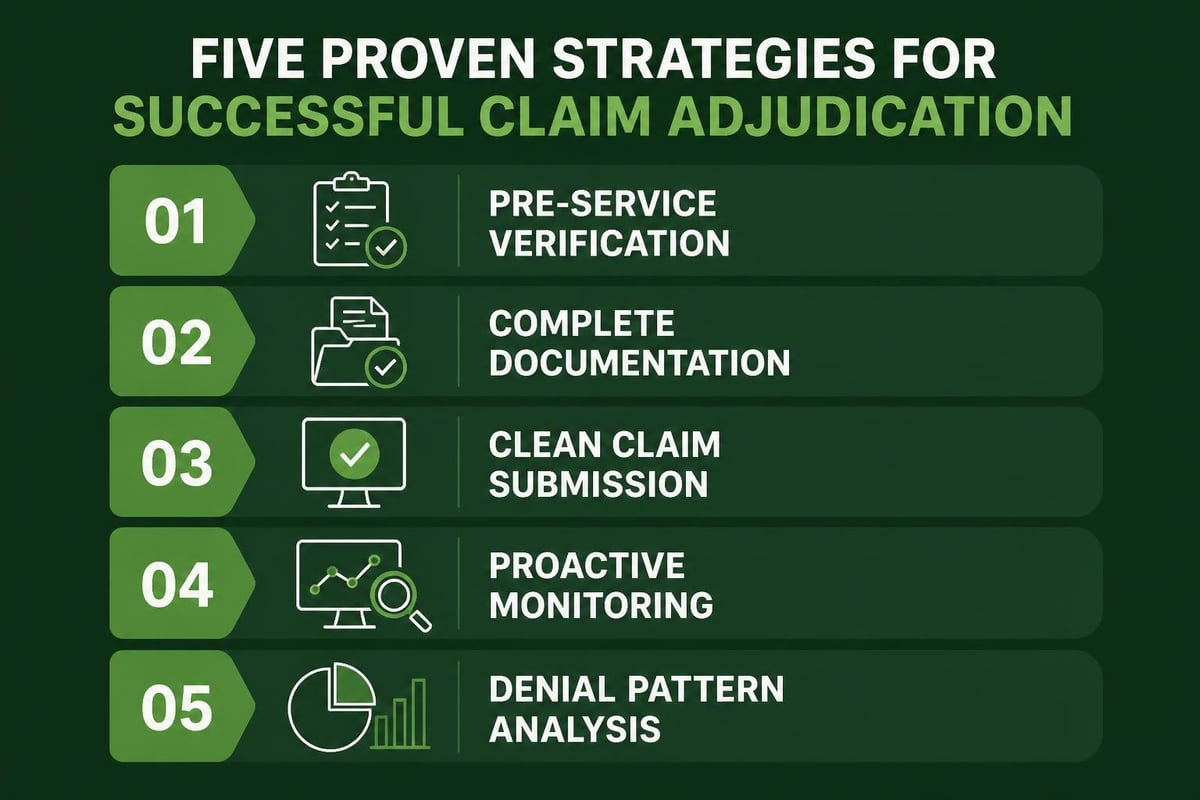
Best Practices for Navigating Claim Adjudication
Successful adjudication management requires proactive strategies that address common challenges:
- Verify eligibility before services to confirm active coverage and identify potential benefit limitations
- Document thoroughly ensuring medical records justify all billed services with clear clinical rationale
- Submit clean claims using validation tools to catch errors before submission
- Monitor claim status actively tracking submissions through adjudication to identify delays
- Analyze denial patterns identifying recurring issues that require process improvements
Implementing these practices reduces claim rejections and accelerates payment cycles. Understanding medical billing and coding fundamentals empowers staff to prevent common adjudication obstacles.
Managing Partially Adjudicated Claims
The concept of partially adjudicated claims represents an important consideration, particularly in value-based care arrangements. These claims provide early visibility into patient encounters before final payment determination, enabling timely care coordination and intervention.
For providers participating in accountable care organizations and similar programs, accessing partially adjudicated data supports population health management efforts. This information reveals recent patient encounters across the care continuum, facilitating comprehensive care planning.
Understanding adjudication codes and remittance advice details helps practices interpret payment decisions accurately. The CMS adjudication code system provides standardized values that explain how payers assess claims under coverage terms.
Impact on Revenue Cycle Performance
What is claim adjudication in medical billing from a financial perspective? It represents the critical juncture where documented services convert to actual revenue. Adjudication efficiency directly impacts key performance indicators including days in accounts receivable, collection rates, and cash flow stability.
Delayed adjudication extends payment cycles, straining working capital and creating cash flow challenges. Practices must balance aggressive follow-up with payer relationship management, ensuring claims receive appropriate attention without damaging important partnerships.
Understanding how denial management improves cash flow becomes essential when adjudication produces unfavorable outcomes. Effective appeals processes and root cause analysis transform denials into learning opportunities that strengthen future submissions.
Federal and state regulations establish adjudication timelines and clean claim standards. Medicaid claims processing rules vary by jurisdiction but generally require payers to adjudicate clean claims within 30 days, with payment following shortly after approval.
Commercial payers face similar requirements under state prompt payment laws, though specific timeframes and enforcement mechanisms differ. Understanding these legal protections helps practices identify when payers exceed acceptable adjudication periods and when formal complaints may be warranted.
Compliance with HIPAA transaction standards ensures claims meet technical requirements for electronic processing. Non-compliant submissions face immediate rejection before adjudication begins, highlighting the importance of proper formatting and data element inclusion.
Mastering claim adjudication fundamentals enables healthcare providers to optimize reimbursement and maintain financial stability. By understanding how payers evaluate submissions, implementing quality controls, and addressing denial patterns systematically, practices protect revenue while minimizing administrative burden. Greenhive Billing Solutions delivers comprehensive revenue cycle management services that navigate the complexities of claim adjudication for healthcare providers nationwide. Our experienced team handles every aspect of the billing process, from submission through payment posting and denial resolution, ensuring maximum reimbursement while you focus on patient care.

