
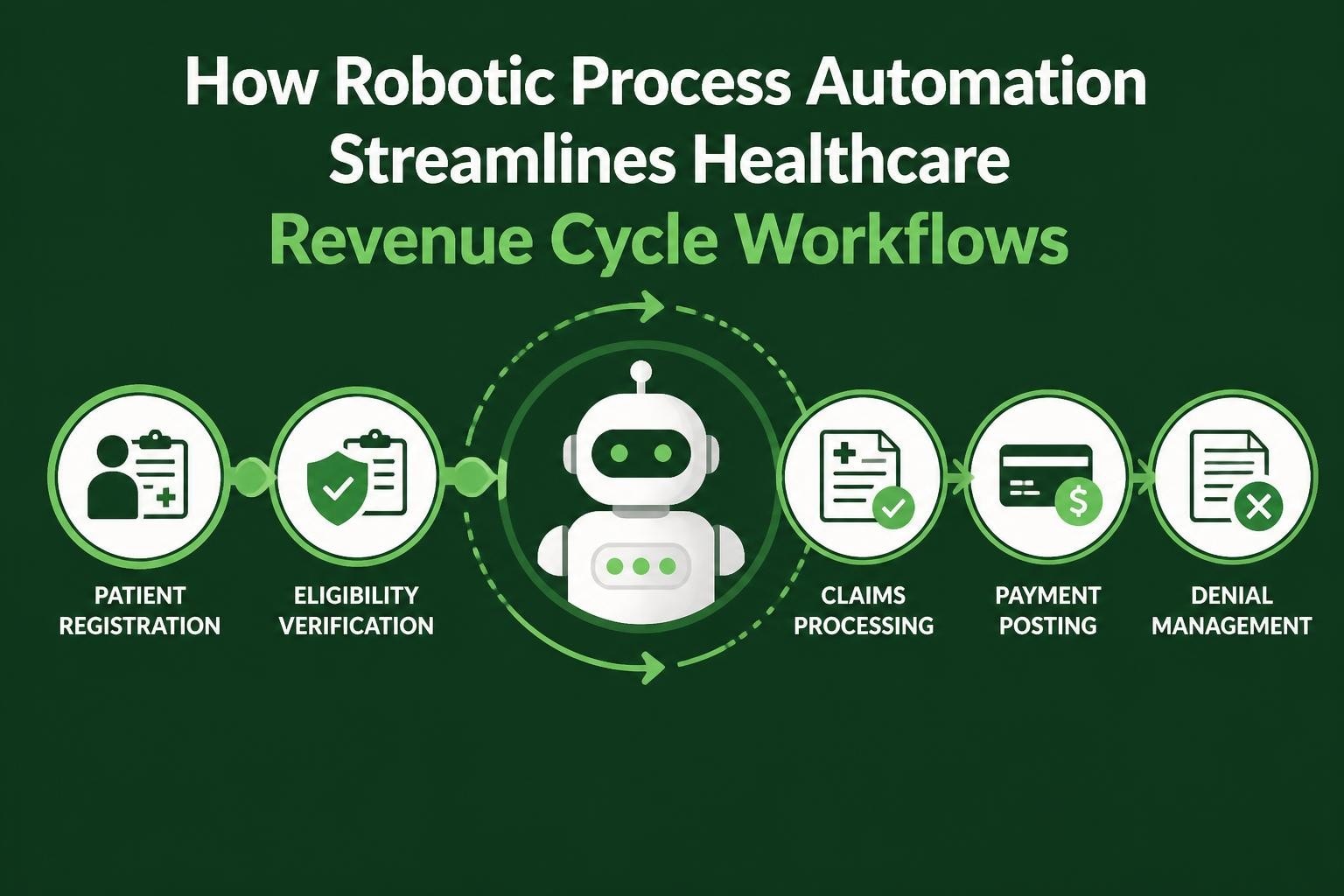
Healthcare providers face mounting administrative burdens that consume valuable resources and divert attention from patient care. The challenge of managing complex billing processes, insurance verifications, and claims submissions has reached critical levels, with administrative costs accounting for nearly one-third of total healthcare expenditures. Robotic process automation in healthcare offers a transformative solution, enabling organizations to automate repetitive tasks while maintaining accuracy and compliance. For revenue cycle management teams, this technology represents a significant opportunity to enhance operational efficiency and improve financial outcomes.
Understanding RPA's Role in Revenue Cycle Management
Robotic process automation in healthcare functions as software-based technology that mimics human actions to complete rule-based, repetitive tasks. Unlike artificial intelligence, RPA follows predetermined workflows without requiring decision-making capabilities. This distinction makes it particularly valuable for revenue cycle operations where consistency and accuracy are paramount.
The technology operates across multiple systems simultaneously, extracting data from one application and entering it into another without manual intervention. Healthcare automation through RPA enables billing teams to process thousands of transactions with minimal errors, significantly reducing the time required for administrative workflows.
Key Applications in Billing Operations
Revenue cycle teams can leverage RPA across numerous functions:
- Insurance eligibility verification before appointments
- Claims submission to multiple payers simultaneously
- Payment posting from electronic remittance advice
- Denial tracking and pattern identification
- Prior authorization request processing
Each application reduces manual workload while improving data accuracy. The technology excels at tasks requiring consistent execution according to established protocols.
Transforming Claims Processing Efficiency
Claims processing represents one of the most time-intensive aspects of revenue cycle management. Traditional manual processing requires staff to verify patient information, confirm insurance coverage, assign appropriate codes, and submit claims through payer portals. This multi-step process creates opportunities for errors and delays.
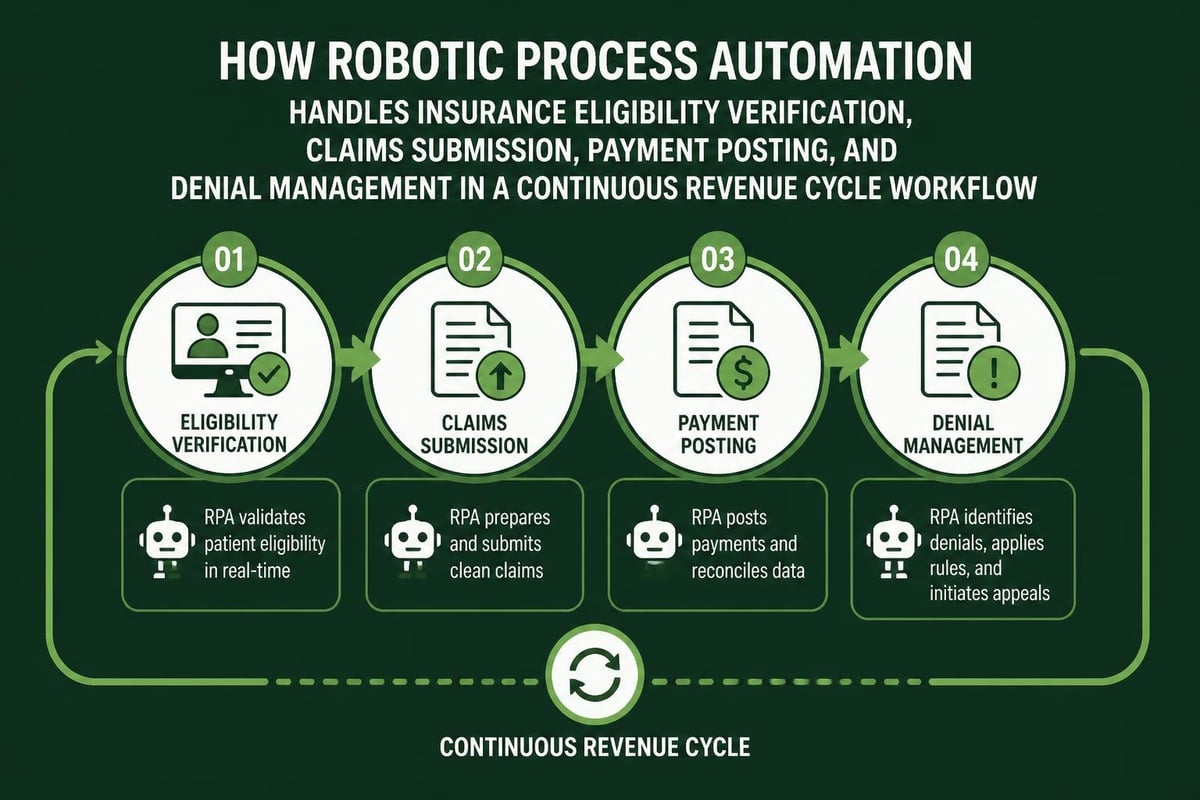
Robotic process automation in healthcare addresses these challenges by standardizing claims workflows. Bots can extract relevant information from electronic health records, cross-reference it with payer requirements, and submit clean claims automatically. Understanding clean claims in medical billing becomes more achievable when RPA ensures consistent data quality before submission.
| Traditional Process | RPA-Enabled Process |
|---|---|
| Manual data entry across systems | Automated data extraction and entry |
| 3-5 days average processing time | Same-day claim submission |
| 15-20% error rate | Less than 2% error rate |
| Limited scalability | Processes scale instantly |
The efficiency gains extend beyond speed. By reducing errors, organizations experience fewer claim rejections and faster reimbursements. How denial management improves cash flow becomes even more effective when paired with RPA's ability to identify and correct issues before submission.
Enhancing Denial Management Workflows
Denial management consumes significant resources in most healthcare organizations. Staff must review denied claims, identify root causes, correct errors, and resubmit for payment. This reactive approach often results in delayed revenue and increased administrative costs.
Robotic process automation in healthcare applications enables proactive denial prevention through pattern recognition and automated corrections. Bots can analyze denial trends, flag common coding errors, and alert teams to systemic issues requiring attention.
Automated Denial Response Process
Step 1: RPA identifies denied claims from electronic remittance advice within hours of receipt.
Step 2: The system categorizes denials by reason code and payer-specific requirements.
Step 3: Bots automatically correct simple errors such as missing modifiers or transposed digits.
Step 4: Complex denials route to appropriate specialists with complete documentation attached.
Step 5: Corrected claims undergo automated quality checks before resubmission.
This structured approach reduces the average denial resolution time from weeks to days. Teams can focus on addressing complex denials requiring clinical judgment rather than administrative corrections.
Streamlining Patient Registration and Verification
Accurate patient registration forms the foundation of successful revenue cycle management. Errors during registration cascade through subsequent processes, leading to claim denials and delayed payments. Manual registration processes struggle to maintain consistency across high patient volumes.
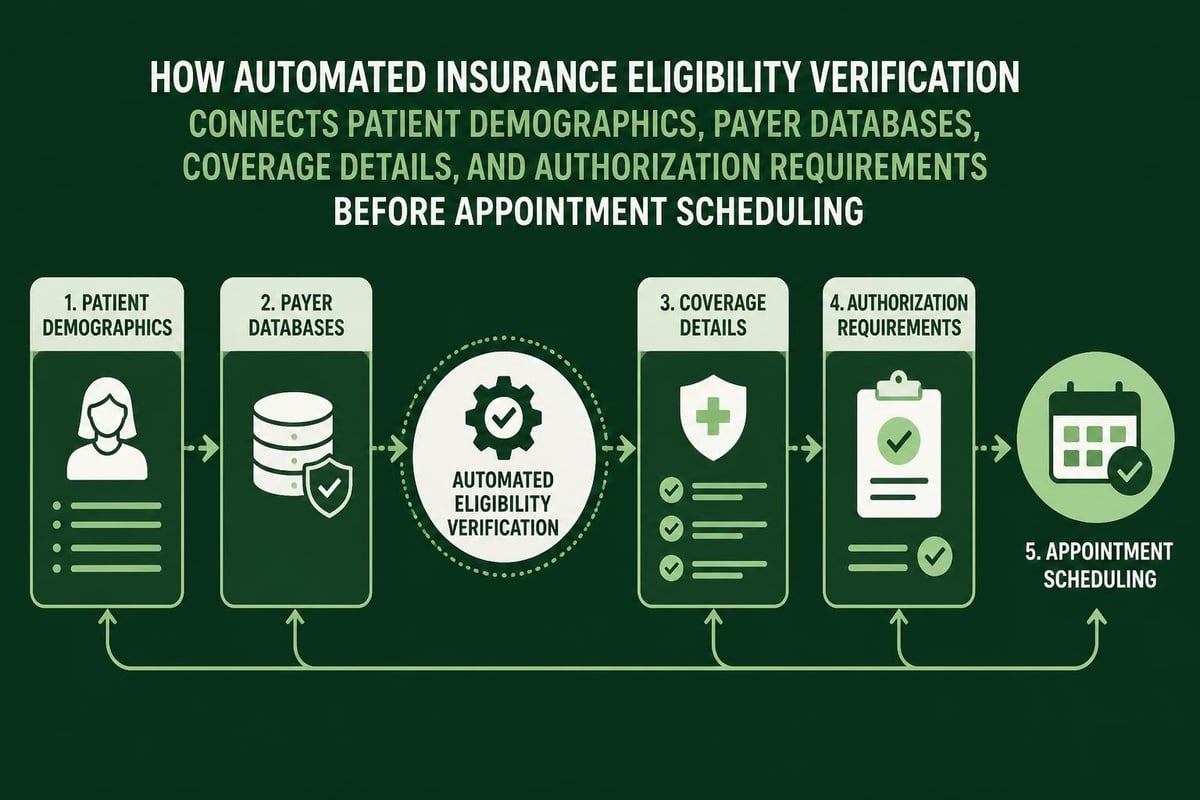
Robotic process automation in healthcare transforms registration by validating information in real-time. Bots verify insurance eligibility, confirm demographic details against payer databases, and identify potential issues before appointments occur. This proactive verification prevents downstream billing problems.
Benefits include:
- Real-time eligibility confirmation reducing claim rejections
- Automated collection of required authorization numbers
- Verification of coverage limits and copayment amounts
- Identification of coordination of benefits requirements
The technology also supports staff by pre-populating forms with previously verified information, reducing data entry time and improving patient experience. Understanding different types of medical coding becomes more critical as RPA ensures coding assignments match verified coverage parameters.
Implementation Considerations for RCM Teams
Successfully deploying robotic process automation in healthcare requires careful planning and execution. Organizations must identify appropriate processes, assess technical requirements, and prepare teams for workflow changes. Implementation strategies for RPA in healthcare emphasize starting with well-defined, high-volume processes.
Selecting Automation Candidates
The most successful RPA implementations target processes that are:
- Rule-based with clear decision criteria
- High-volume to maximize return on investment
- Standardized across the organization
- Digital with structured data inputs
Revenue cycle process optimization identifies payment posting, eligibility verification, and claim status checks as ideal starting points. These processes meet all criteria for successful automation while delivering immediate value.
| Process | Automation Potential | Expected ROI Timeline |
|---|---|---|
| Insurance verification | High | 3-6 months |
| Payment posting | High | 3-6 months |
| Claim status checks | High | 6-9 months |
| Prior authorizations | Medium | 9-12 months |
| Denial appeals | Medium | 12-18 months |
Security and Compliance Requirements
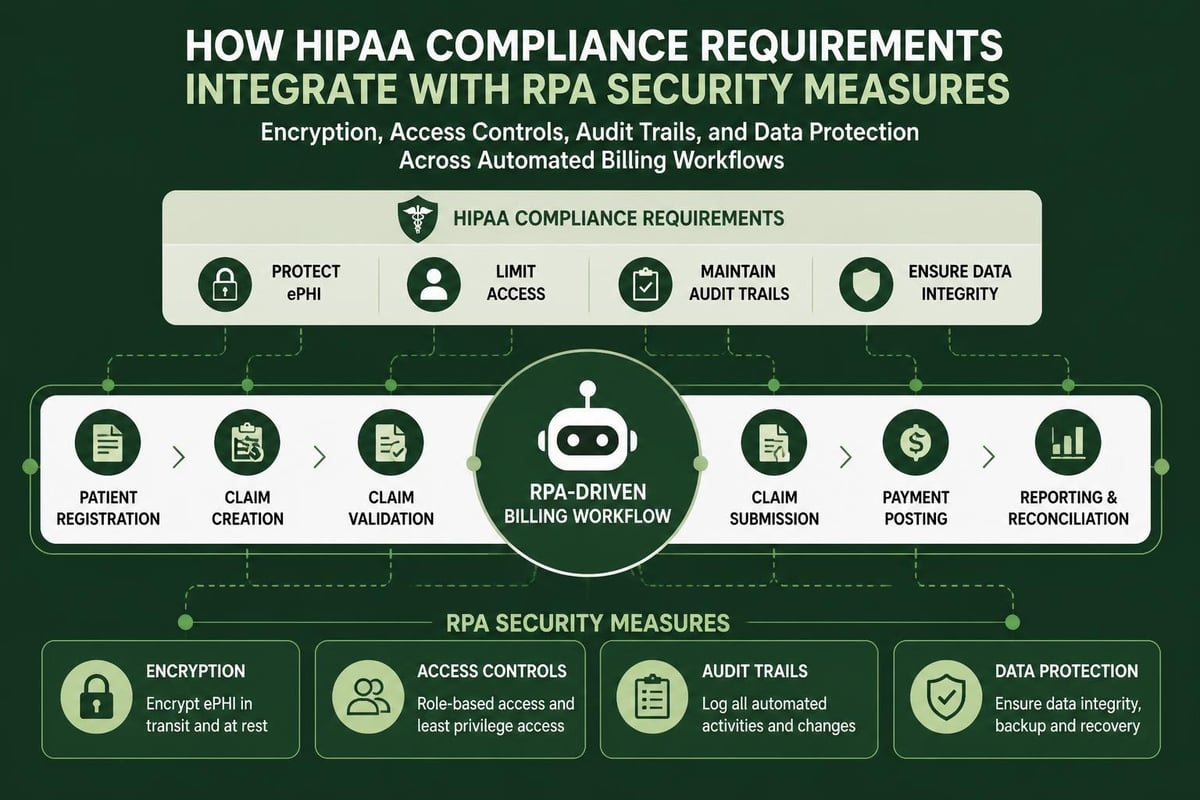
Healthcare organizations must maintain strict security protocols when implementing automation technologies. Robotic process automation in healthcare operates with sensitive patient information, requiring robust safeguards and compliance measures. HIPAA regulations mandate specific protections for electronic protected health information.
RPA solutions should incorporate encryption for data in transit and at rest, role-based access controls, and comprehensive audit trails. Every bot action must generate logs showing who initiated the process, what data was accessed, and when changes occurred. These records support compliance audits and security investigations.
Organizations should also establish governance frameworks defining bot permissions, update protocols, and exception handling procedures. Regular security assessments identify vulnerabilities before they become problems.
Measuring Success and Optimizing Performance
Implementing robotic process automation in healthcare requires ongoing monitoring and refinement. Organizations should establish key performance indicators before deployment to measure success accurately. Metrics should track both efficiency gains and quality improvements.
Critical metrics include:
- Claims submission time reduction
- First-pass claim acceptance rates
- Denial rate decreases by category
- Staff time reallocated to complex tasks
- Days in accounts receivable trends
Teams should review these metrics monthly, identifying opportunities for process improvements. Successful RPA programs evolve continuously, expanding automation as teams gain experience and confidence. Understanding medical billing charges becomes more transparent when automated systems provide consistent reporting and analysis.
Robotic process automation in healthcare delivers measurable improvements in revenue cycle efficiency, accuracy, and financial performance. By automating repetitive tasks, organizations free valuable staff resources for complex problem-solving and patient-focused activities. Greenhive Billing Solutions combines advanced automation technologies with experienced professionals to optimize your revenue cycle operations. Our comprehensive services leverage industry-leading platforms to deliver maximum reimbursements while maintaining HIPAA compliance and transparent communication throughout the billing process.

