
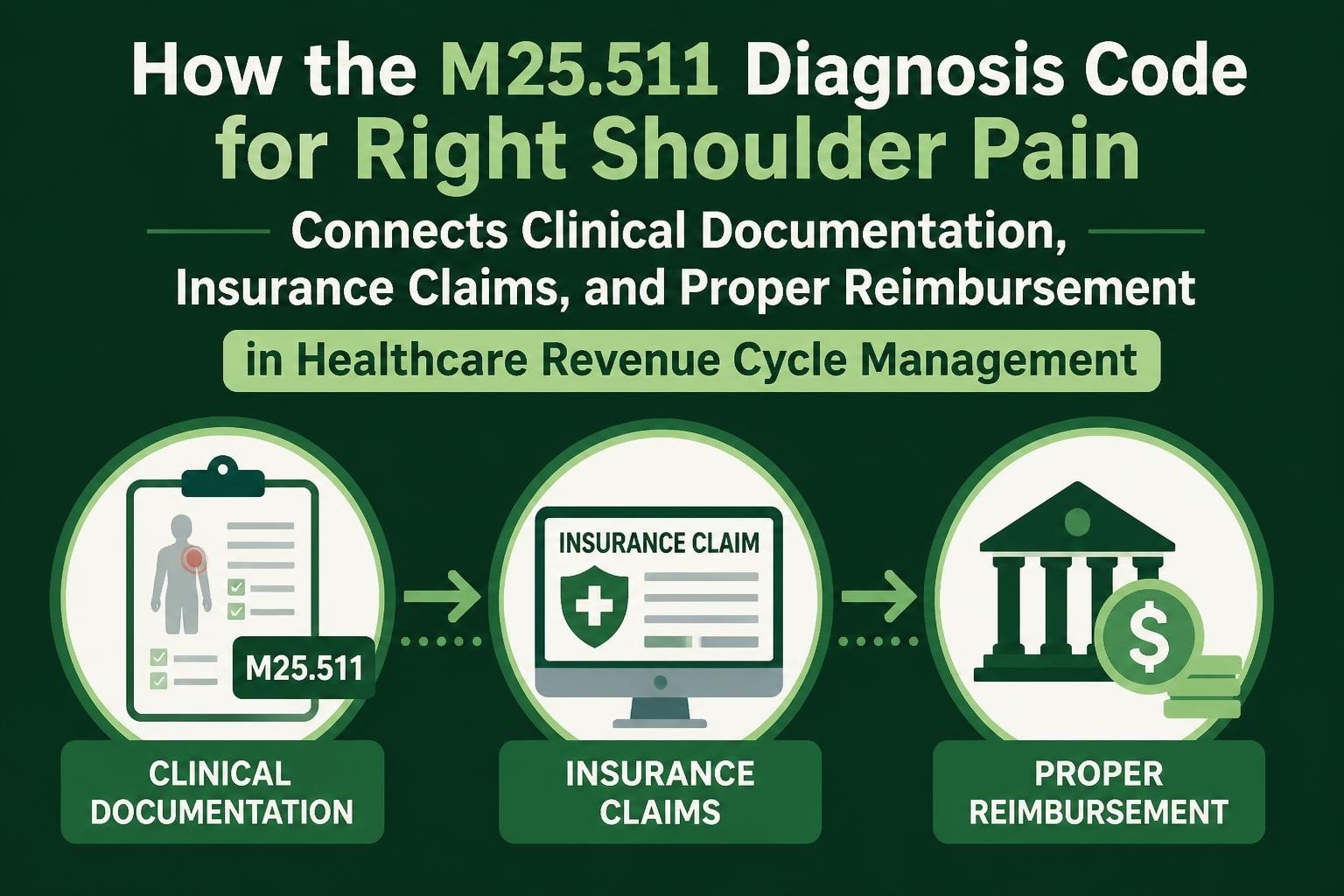
Medical billing accuracy depends heavily on selecting the correct diagnosis codes for patient encounters. The m25511 diagnosis code represents a specific condition that healthcare providers frequently encounter, yet coding errors can lead to claim denials and revenue loss. Understanding this code’s proper application ensures accurate documentation, supports medical necessity, and facilitates timely reimbursement for services rendered.
Understanding the M25.511 Diagnosis Code
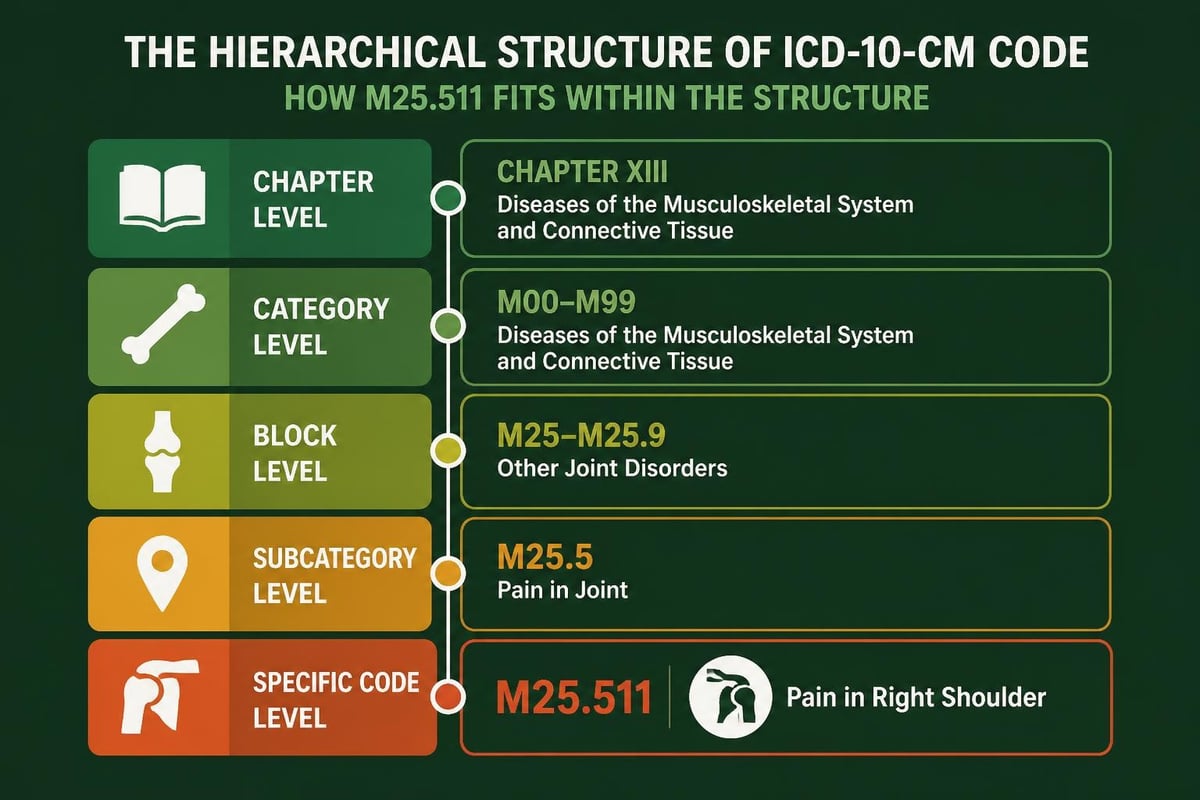
The m25511 diagnosis code specifically identifies pain in the right shoulder within the ICD-10-CM classification system. This code falls under the broader category of joint disorders and represents a billable diagnosis that insurance payers recognize for reimbursement purposes. Healthcare providers must document this condition accurately to support the medical services they deliver.
Unlike more specific shoulder diagnoses such as rotator cuff tears or impingement syndrome, M25.511 addresses general shoulder pain without identifying a particular underlying pathology. This distinction matters significantly when determining appropriate code selection during the billing process.
Code Specificity and Clinical Documentation
Proper use of the m25511 diagnosis code requires thorough clinical documentation that supports the diagnosis. The medical record must clearly indicate:
- Patient complaints of right shoulder pain
- Physical examination findings specific to the right shoulder
- Laterality confirmation (right versus left)
- Absence of more specific diagnoses that would require different codes
- Severity and duration of symptoms when applicable
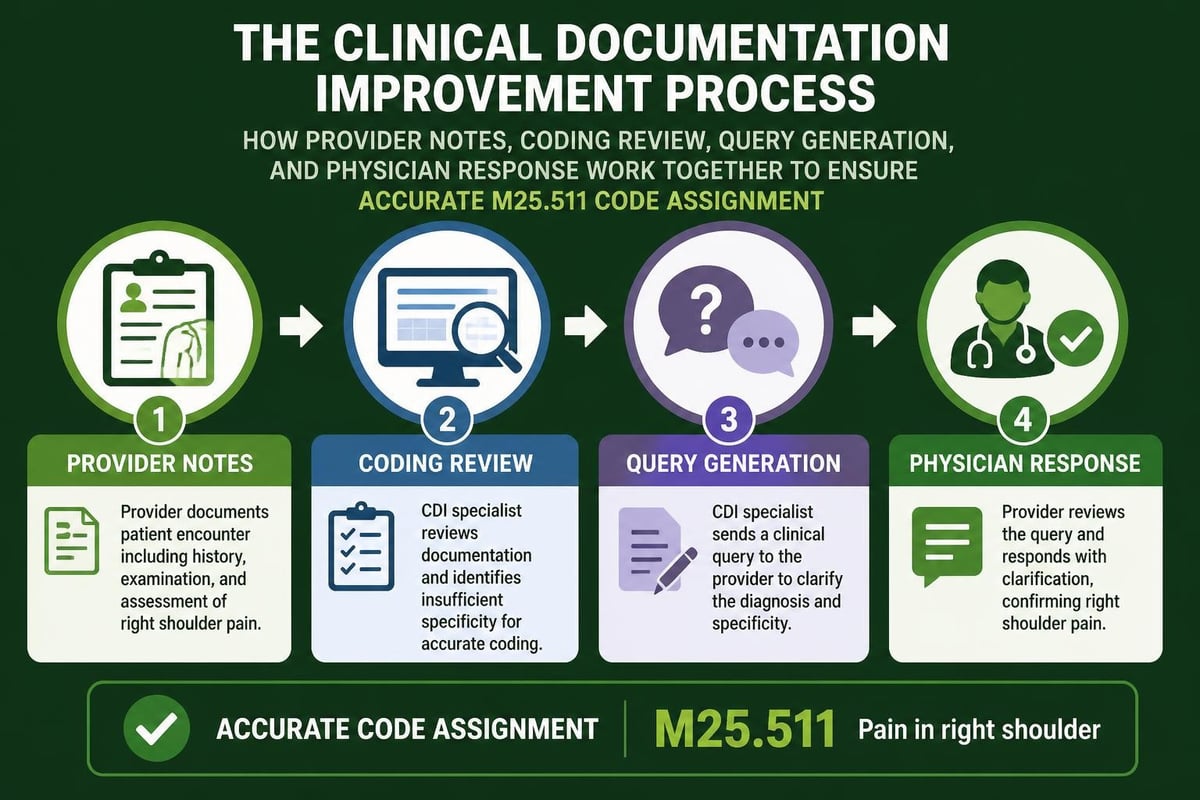
Medical coders rely entirely on physician documentation to assign codes accurately. Insufficient detail in clinical notes often leads to coding queries, claim delays, or inappropriate code selection that may trigger audits.
When to Use M25.511 Versus Other Shoulder Codes
Healthcare providers must distinguish between M25.511 and other shoulder-related diagnosis codes to ensure billing accuracy. Understanding the differences between M25.511 and other specific shoulder conditions prevents coding errors that could result in claim denials.
| Diagnosis Code | Description | When to Use |
|---|---|---|
| M25.511 | Pain in right shoulder | Unspecified shoulder pain without definitive diagnosis |
| M75.100 | Unspecified rotator cuff tear | Confirmed rotator cuff pathology |
| M75.41 | Impingement syndrome of right shoulder | Specific impingement diagnosis established |
| M19.011 | Primary osteoarthritis of right shoulder | Documented degenerative joint disease |
The selection process requires clinical judgment combined with comprehensive documentation. When diagnostic workup reveals a specific underlying condition, providers should use the more precise code rather than the general pain designation.
Common Documentation Challenges
Revenue cycle management professionals frequently encounter documentation gaps that complicate proper code assignment. These challenges include:
- Vague terminology: Phrases like “shoulder discomfort” without specifying laterality
- Incomplete examination findings: Missing details about range of motion or specific tender points
- Conflicting information: History suggests right shoulder but examination notes left shoulder
- Lack of specificity: No distinction between acute and chronic presentations
- Missing follow-up documentation: Initial visits coded as unspecified pain without subsequent clarification
Addressing these documentation issues requires collaboration between medical coding services teams and clinical providers. Regular feedback loops help physicians understand documentation requirements that support accurate coding.
Billing and Reimbursement Considerations
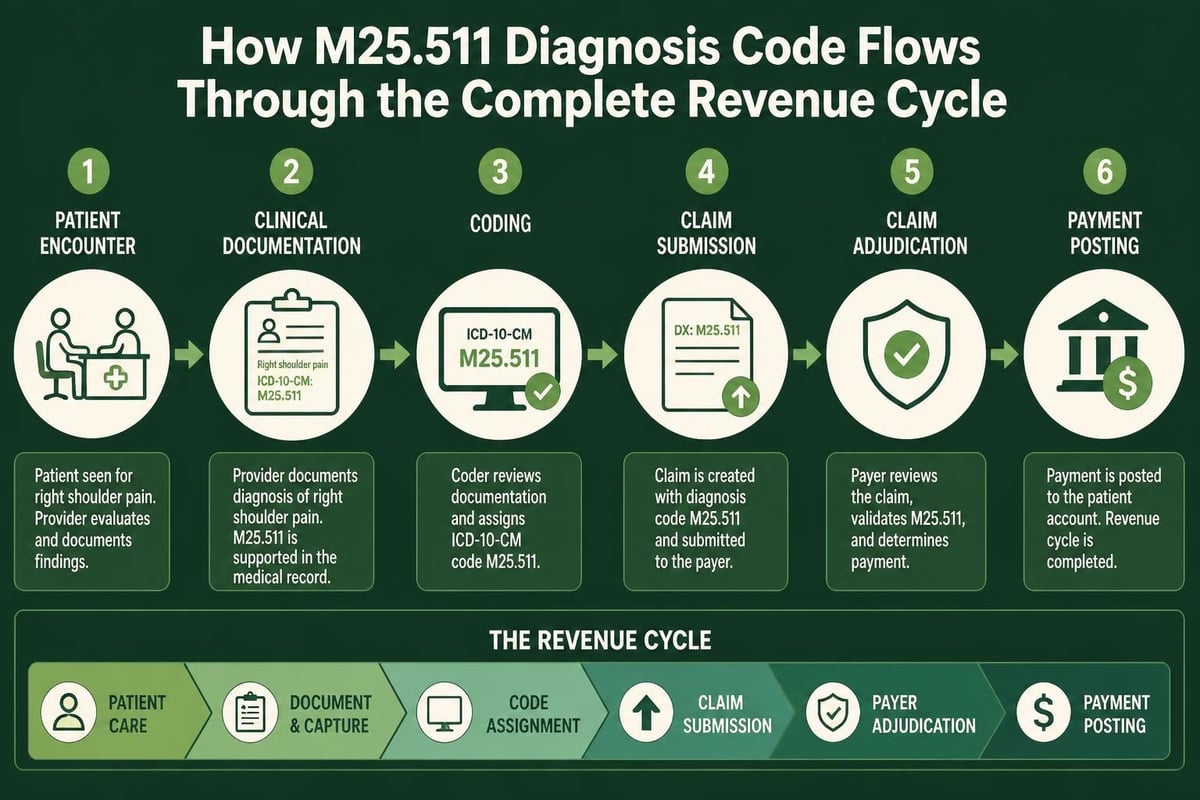
The m25511 diagnosis code serves multiple purposes in the revenue cycle beyond simple claim submission. Insurance companies evaluate this code to determine medical necessity for associated procedures, imaging studies, and therapeutic interventions. Proper pairing of diagnosis and procedure codes directly impacts reimbursement outcomes.
Supporting Medical Necessity
Every service billed must demonstrate medical necessity through appropriate diagnosis code selection. For shoulder-related services, M25.511 can support various procedures including:
- Physical therapy evaluations and treatments
- Diagnostic imaging such as X-rays or MRI studies
- Injection procedures for pain management
- Orthopedic consultations and examinations
However, some insurance policies may require more specific diagnoses for certain high-cost interventions. Prior authorization services often encounter situations where payers request additional diagnostic workup before approving advanced imaging or surgical consultations based solely on an unspecified pain code.
Understanding these payer requirements helps practices avoid unnecessary denials and ensures patients receive timely care. Clinical information and coding guidelines for M25.511 provide essential context for matching services to diagnosis codes appropriately.
Best Practices for Accurate M25.511 Coding
Healthcare organizations can implement systematic approaches to ensure proper use of the m25511 diagnosis code throughout their billing operations. These strategies reduce errors, minimize denials, and optimize revenue capture.
Step-by-Step Coding Verification Process
Step 1: Review the complete medical record, including chief complaint, history of present illness, and physical examination findings to confirm right shoulder pain documentation.
Step 2: Verify that no more specific diagnosis appears in the clinical notes that would warrant a different ICD-10 code selection.
Step 3: Confirm laterality is explicitly documented as “right” rather than assumed or inferred from context.
Step 4: Check that the diagnosis code aligns with all procedure codes on the claim to demonstrate appropriate medical necessity.
Step 5: Review payer-specific policies for any additional documentation requirements or code preferences related to shoulder pain diagnoses.
This systematic approach prevents common coding errors that lead to claim rejections. Denial management in medical billing becomes significantly easier when initial coding accuracy receives appropriate attention.
Quality Assurance Measures
Regular auditing of shoulder pain cases helps identify patterns in coding accuracy and documentation quality. Quality assurance programs should examine:
- Consistency between diagnosis codes and supporting documentation
- Appropriate code specificity based on available clinical information
- Correlation between diagnosis codes and billed services
- Compliance with current coding guidelines and updates
Medical coding audit services provide objective assessment of coding practices and identify opportunities for improvement. These audits often reveal educational needs among clinical staff regarding documentation standards.
Insurance and Claims Processing Impact
The m25511 diagnosis code affects various aspects of insurance claims processing beyond initial code assignment. Understanding these implications helps practices manage their revenue cycle more effectively and anticipate potential payment issues.
Insurance companies analyze diagnosis codes to determine coverage eligibility, calculate reimbursement amounts, and identify cases requiring additional review. Claims containing M25.511 typically process smoothly when accompanied by appropriate supporting documentation and matched with suitable procedure codes.
Some payers maintain specific policies regarding unspecified pain codes, particularly for high-cost services or procedures requiring prior authorization. Eligibility verification services should include checking patient-specific coverage details related to musculoskeletal conditions and pain management services.
Common Denial Reasons and Resolution Strategies
Claims using the m25511 diagnosis code may face denials for several predictable reasons that revenue cycle teams should anticipate. Medical necessity denials occur when payers question whether documented symptoms justify the services provided. Resolving these denials requires submitting additional clinical documentation that demonstrates the severity and impact of right shoulder pain on the patient’s condition.
Specificity denials happen when insurance companies require more detailed diagnoses for certain services. The usage of ICD code M25.511 in healthcare records must balance accuracy with specificity requirements that vary across different payer contracts.
| Denial Type | Typical Reason | Resolution Strategy |
|---|---|---|
| Medical Necessity | Services not justified by unspecified pain | Submit detailed clinical notes, treatment rationale |
| Lack of Specificity | Payer requires definitive diagnosis | Request physician clarification, update with specific code |
| Incorrect Laterality | Documentation conflicts with coded side | Verify clinical notes, correct and resubmit claim |
| Bundling Issues | Diagnosis doesn’t support separate billing | Review procedure code relationships, adjust as needed |
Effective denial management services track these patterns and implement preventive measures to reduce future denials related to shoulder pain coding.
Accurate application of the m25511 diagnosis code requires attention to clinical documentation, coding guidelines, and payer requirements throughout the revenue cycle. Understanding when to use this code versus more specific alternatives directly impacts reimbursement success and claim processing efficiency. Greenhive Billing Solutions helps healthcare providers navigate these complexities through comprehensive revenue cycle management services that optimize coding accuracy, reduce denials, and maximize reimbursements while maintaining full compliance with industry standards.

