
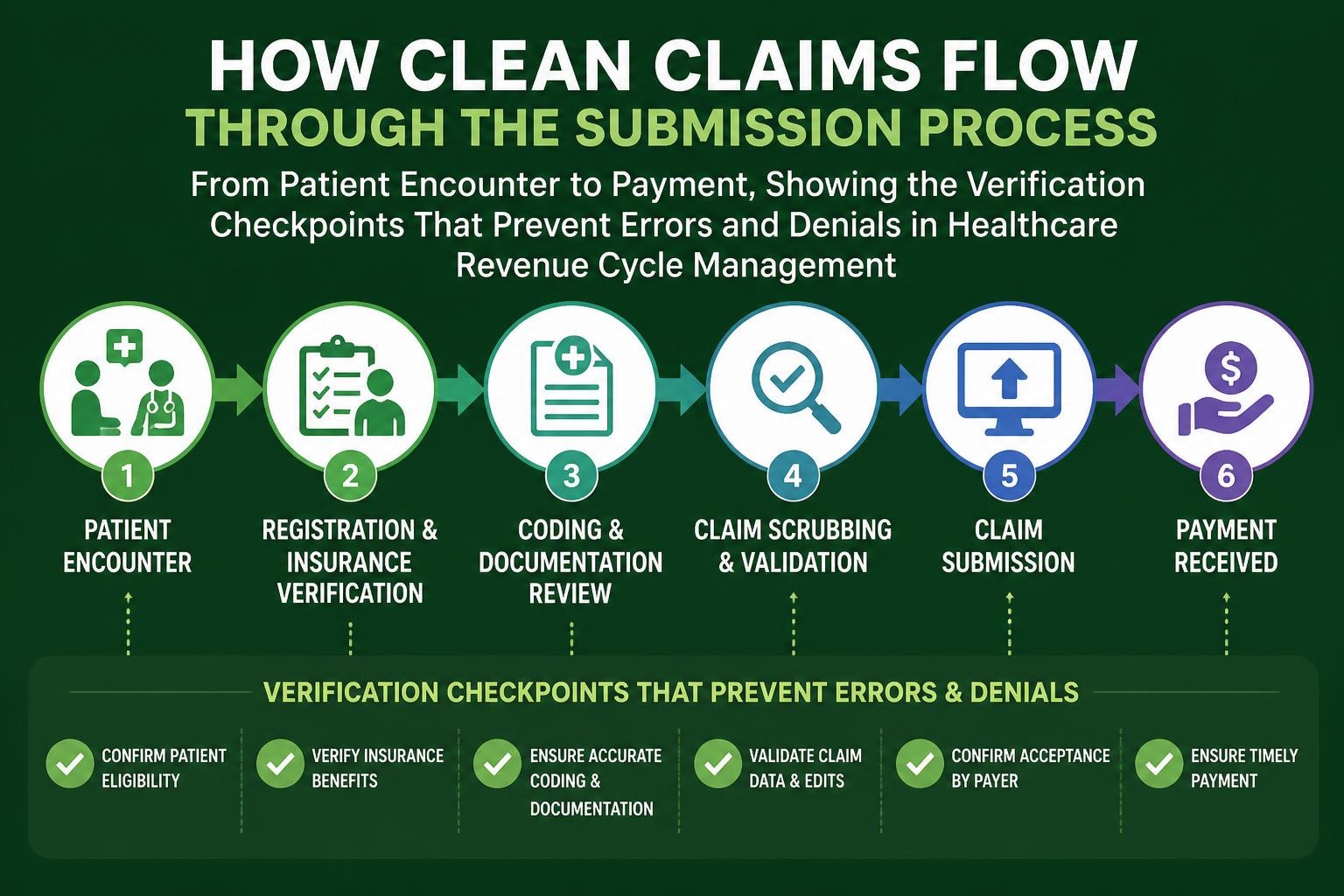
Revenue cycle performance hinges on one critical metric that separates financially healthy practices from those struggling with cash flow issues: the quality of claim submissions. Every healthcare organization processes thousands of claims annually, yet many fail to recognize that the foundation of timely reimbursement begins with accuracy at the point of submission. Understanding what defines error-free submissions and implementing systematic approaches to achieve them represents a fundamental shift in how practices approach their financial operations.
Understanding the Foundation of Error-Free Claim Submissions
A clean claim represents a submission that contains all necessary information, uses correct coding, and requires no additional documentation or clarification from the payer before processing. These submissions pass through automated clearinghouse edits, meet payer-specific requirements, and contain accurate patient demographics matched precisely to insurance records.
The distinction between clean and unclean submissions directly impacts revenue velocity. When claims contain errors, missing information, or coding inconsistencies, they trigger denials or requests for additional information that can delay payment by 30 to 90 days or more.
Core Components That Define Submission Quality
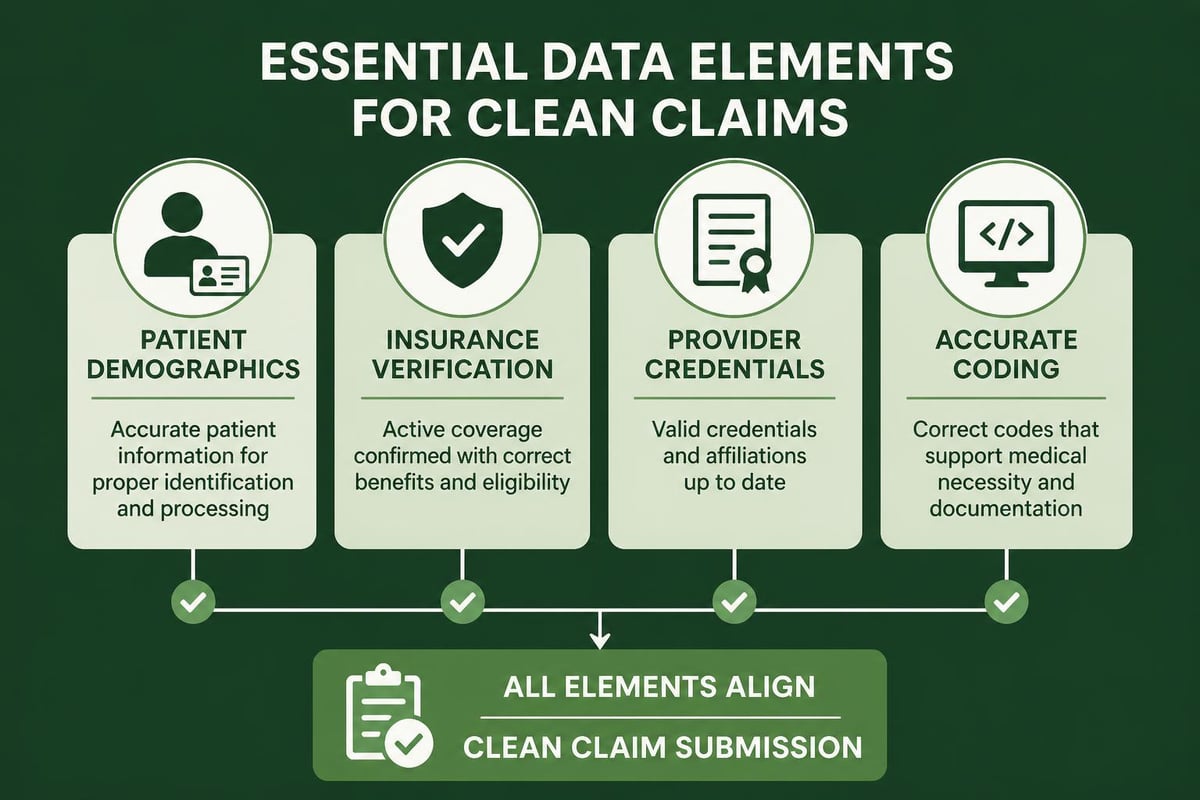
Every error-free claim must include specific data elements that payers require for adjudication. Patient information forms the foundation, including full legal name exactly as it appears on the insurance card, date of birth, gender, and complete address. Insurance details require policy numbers, group numbers, and subscriber information verified against current eligibility records.
Provider information demands equal precision. National Provider Identifier (NPI) numbers, taxonomy codes, and facility information must align with payer contracts and credentialing databases. The critical role of clean claims extends to ensuring that rendering providers, billing providers, and facility identifiers all correspond to the service location and contractual relationships.
Service documentation requires accurate procedure codes (CPT/HCPCS), diagnosis codes (ICD-10), modifiers, units of service, and dates of service. Each element must support medical necessity and align with payer coverage policies. Our medical claim submission services focus extensively on these verification points before transmission.
Financial Impact of Submission Accuracy
Organizations that maintain high clean claim rates experience measurably better financial outcomes than those accepting error rates as inevitable. The difference manifests in multiple areas of practice operations, from cash flow predictability to administrative overhead.
| Metric | High Clean Claim Rate (95%+) | Low Clean Claim Rate (<80%) |
|---|---|---|
| Days in A/R | 25-30 days | 45-60+ days |
| Collection Rate | 96-98% | 85-92% |
| Denial Rate | 5-8% | 15-25% |
| Staff Time per Claim | 8-12 minutes | 20-35 minutes |
| Rework Costs | Minimal | 15-20% of revenue |
Achieving excellence in submission quality reduces the need for extensive denial management services by preventing rejections before they occur. While denial management remains necessary for payer errors and coverage issues, the volume decreases substantially when front-end processes emphasize accuracy.
Revenue Acceleration Through First-Pass Success
Payers typically process clean claims within 14 to 30 days, depending on their payment cycles and contract terms. This timeline assumes the submission requires no intervention, clarification, or correction. When claims fail initial edits, the clock resets after resubmission, potentially extending payment timelines by 60 to 90 days.
The benefits of clean claim submissions include not only faster payment but also reduced write-offs from timely filing denials. Many payers enforce strict filing deadlines ranging from 90 to 365 days from the date of service. Claims requiring multiple resubmissions risk missing these deadlines entirely.
Administrative costs decrease proportionally with submission accuracy. Staff spend less time on phone calls with payers, appeals preparation, and claim reprocessing. These efficiency gains allow billing teams to focus on higher-value activities like proactive denial prevention and revenue optimization.
Essential Verification Processes Before Submission
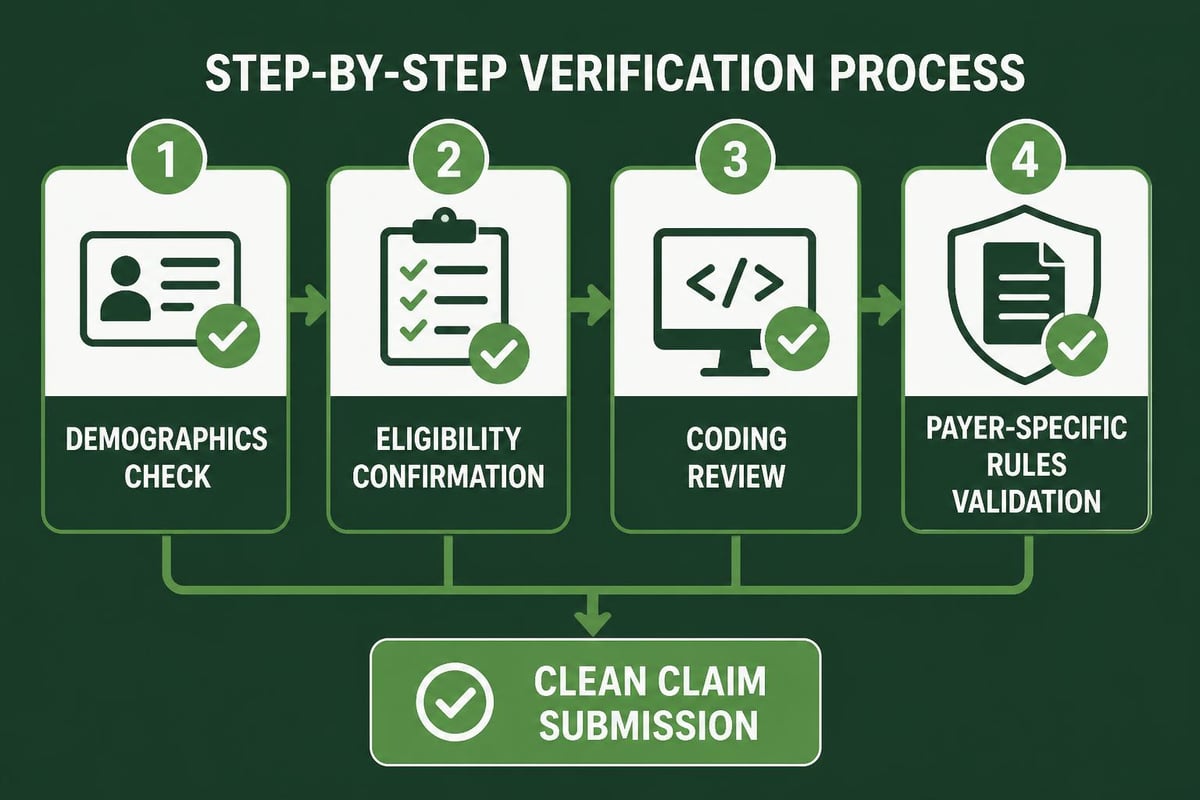
Preventing errors requires systematic verification at multiple stages of the revenue cycle. Successful organizations implement checkpoints that catch issues before claims leave their systems, rather than discovering problems through payer rejections.
Patient Demographics and Insurance Verification
Accuracy begins at registration. Front desk staff must collect complete information and verify it against government-issued identification. Insurance card information should be copied or scanned, and real-time eligibility verification services confirm active coverage before service delivery.
Common demographic errors include:
- Misspelled patient names
- Transposed digits in policy numbers
- Incorrect date of birth entries
- Missing or invalid subscriber information
- Outdated insurance information from previous visits
Implementing electronic eligibility verification reduces these errors by pulling data directly from payer systems. This automation eliminates manual transcription mistakes and provides current benefit information including copayments, deductibles, and coverage limitations.
Coding Accuracy and Documentation Alignment
Medical coding represents the technical translation of clinical services into standardized codes. Accurate medical coding requires deep knowledge of coding guidelines, payer policies, and documentation requirements.
- Review provider documentation for completeness and specificity supporting the level of service billed
- Verify diagnosis codes justify medical necessity for all procedures performed
- Apply appropriate modifiers when procedures require additional information about how or where services were rendered
- Check code combinations against payer edits including National Correct Coding Initiative (NCCI) guidelines
- Validate units of service against time-based coding rules or quantity limitations
The relationship between documentation and coding determines whether claims meet the definition of clean claims accepted by payers. Incomplete documentation, even when coding is technically correct, can trigger requests for medical records that delay adjudication.
Technology Solutions That Improve Submission Quality
Modern revenue cycle management relies heavily on technology platforms that automate verification, flag potential errors, and ensure compliance with constantly changing payer requirements. These systems represent force multipliers that allow billing teams to process higher volumes while maintaining accuracy.
Clearinghouse Edits and Pre-Submission Scrubbing
Claims clearinghouses serve as intermediaries between providers and payers, performing automated edits that identify errors before transmission. These systems check claims against thousands of rules covering formatting requirements, coding logic, and payer-specific guidelines.
Advanced clearinghouses provide real-time feedback during claim creation, alerting users to potential issues as they enter data. This immediate correction prevents errors from progressing through the workflow, reducing rework and accelerating submission timelines.
Pre-submission scrubbing goes beyond basic clearinghouse edits by incorporating:
- Payer-specific coding policies and coverage rules
- Historical denial patterns for similar claims
- Contract-based fee schedule validation
- Duplicate claim detection across all payers
- Authorization requirement verification
Organizations using comprehensive scrubbing technology consistently achieve higher first-pass acceptance rates than those relying solely on basic clearinghouse validation.
Practice Management and Billing System Capabilities
Integrated practice management systems support clean claim generation through built-in validation rules, eligibility integration, and workflow automation. The RCM process benefits from systems that connect scheduling, clinical documentation, coding, and billing in a unified platform.
Key system features supporting submission quality include:
- Real-time eligibility checking integrated with patient scheduling
- Automated charge capture from clinical documentation
- Built-in coding assistance and compliance checking
- Payer contract management and fee schedule updates
- Denial tracking and root cause analysis
- Performance dashboards highlighting error patterns
While Greenhive Billing Solutions does not provide software products, our team brings extensive experience working with these platforms to optimize their configuration and ensure clients maximize the technology they already own.
Common Errors That Compromise Claim Quality
Despite technological advances and process improvements, certain error patterns persist across healthcare organizations. Recognizing these common mistakes allows practices to implement targeted prevention strategies.
Patient Information and Insurance Verification Failures
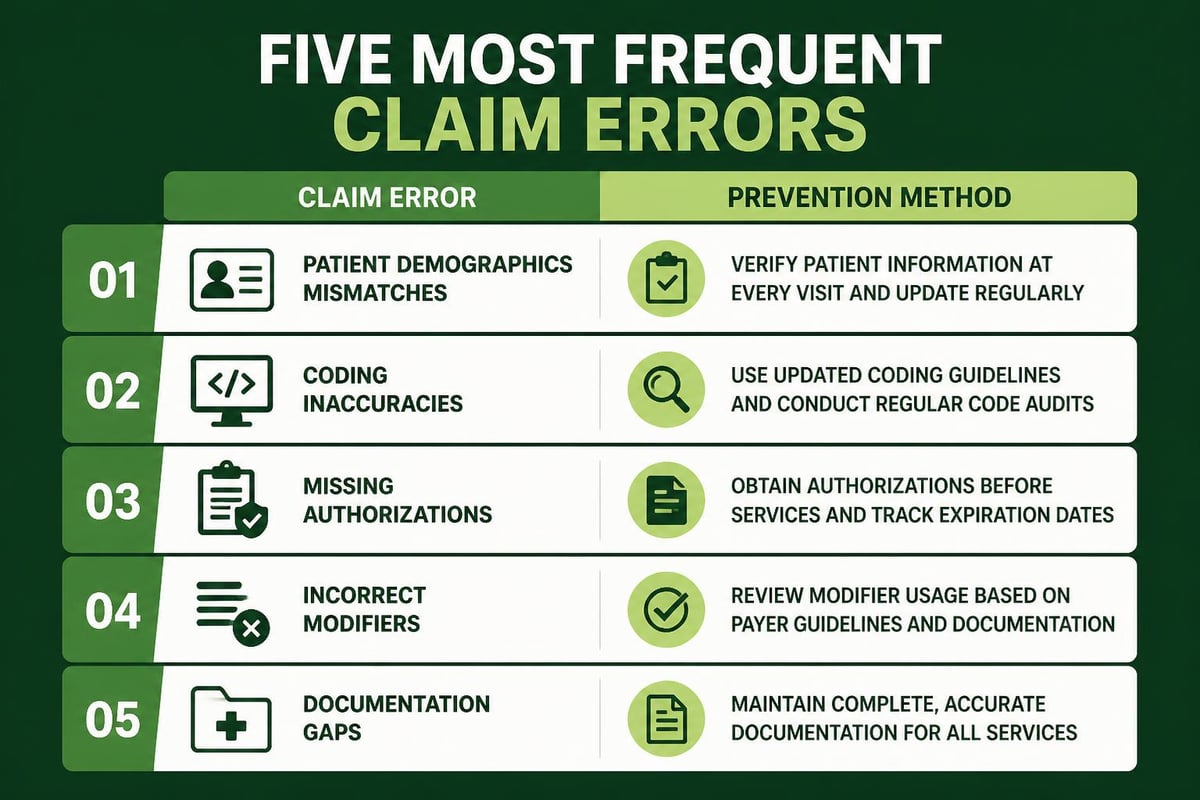
Registration errors account for a significant percentage of initial claim rejections. Patients may provide outdated insurance cards, fail to disclose secondary coverage, or have name changes not reflected in payer systems. These mismatches trigger immediate rejections that could have been prevented through verification.
The importance of maintaining clean claims extends to coordinating benefits when multiple payers cover the same patient. Incorrect coordination of benefits sequencing results in denials from primary or secondary payers requiring extensive correction efforts.
| Error Type | Common Causes | Prevention Strategy |
|---|---|---|
| Name Mismatch | Marriage, divorce, legal name changes | Verify against ID and insurance card |
| Invalid Policy Number | Transcription errors, outdated cards | Electronic eligibility verification |
| Terminated Coverage | Patient no longer employed, policy lapsed | Real-time verification at check-in |
| Wrong Subscriber | Dependent listed as subscriber | Confirm relationship and subscriber details |
| Missing Authorization | Service requires prior approval | Check requirements during scheduling |
Coding and Documentation Issues
Medical necessity denials arise when documentation fails to support the level of service billed or when diagnosis codes don’t justify the procedures performed. Understanding different types of medical coding helps prevent these mismatches.
Modifier errors represent another frequent problem area. Applying incorrect modifiers or omitting required ones triggers automated denials or incorrect payment amounts. For example, common errors with modifier 59 occur when providers attempt to bypass NCCI edits without proper justification.
Unbundling services that should be reported together, or incorrectly bundling distinct procedures, results in payment adjustments or denials. Understanding payer-specific bundling rules prevents these issues while ensuring appropriate reimbursement for all services rendered.
Building Organizational Processes That Support Quality
Technology and training provide necessary tools, but sustainable clean claim performance requires organizational commitment to quality-focused processes. Successful practices embed verification and accuracy checks throughout their workflows rather than treating claim submission as an isolated back-office function.
Front-End Revenue Cycle Optimization
Quality claim submission begins long before claims reach the billing department. Patient access staff play a crucial role in collecting accurate information, verifying coverage, and identifying potential payment issues before services occur.
Implementing standardized registration protocols ensures consistency across all patient touchpoints. Scripts and checklists help staff collect complete information while educating patients about their financial responsibilities. Real-time eligibility checks at scheduling and check-in prevent coverage surprises that delay payment.
Prior authorization management represents another critical front-end function. Tracking authorization requirements, obtaining approvals before service delivery, and documenting authorization numbers prevents denials that would otherwise result from administrative oversights.
Quality Assurance and Continuous Improvement
Regular claim audits identify error patterns and training opportunities before they impact revenue. Reviewing samples of submitted and denied claims reveals systemic issues requiring process changes rather than individual corrections.
Performance metrics guide improvement efforts by quantifying progress and highlighting areas needing attention. Key indicators include:
- Clean claim rate: Percentage of claims accepted on first submission
- First-pass resolution rate: Claims paid without any follow-up required
- Days to payment: Average time from service to cash receipt
- Denial rate by reason: Categorized denials showing root causes
- Rework rate: Claims requiring resubmission or appeals
Establishing these metrics provides baseline measurements against which improvements can be tracked. Organizations serious about revenue cycle excellence monitor these indicators monthly and investigate significant variations from established benchmarks.
Staff Training and Development
Billing regulations, coding guidelines, and payer policies change constantly. Maintaining clean claim performance requires ongoing education ensuring staff stay current with industry developments. Regular training sessions covering coding updates, payer policy changes, and new regulatory requirements prevent knowledge gaps that lead to errors.
Cross-training team members across multiple revenue cycle functions builds flexibility and deeper understanding of how different processes interact. When eligibility verification staff understand coding requirements, and coders appreciate front-end data collection challenges, coordination improves and error rates decline.
Payer-Specific Requirements and Contract Compliance
While industry standards provide general guidelines, each payer maintains unique requirements that submissions must satisfy. Understanding and accommodating these variations separates adequate performance from excellence in clean claim achievement.
Commercial Payer Variations
Private insurance companies implement proprietary edits, coverage policies, and billing requirements beyond standard industry practices. Some require specific modifier combinations, others have unique documentation requirements, and many maintain coverage policies that differ from Medicare guidelines.
Maintaining current knowledge of these requirements demands systematic approaches to policy tracking and updating. Many organizations subscribe to payer policy databases, participate in payer provider forums, and assign staff to monitor bulletins and updates from major payers in their markets.
Contract terms also influence what constitutes acceptable submissions. Fee schedules, carve-outs, bundling requirements, and billing restrictions vary by contract. Ensuring claims comply with these specific terms prevents payment adjustments and contractual disputes.
Government Payer Compliance
Medicare and Medicaid programs enforce strict regulatory requirements backed by significant penalties for non-compliance. Claims submitted to these programs must satisfy not only technical accuracy requirements but also compliance with fraud and abuse regulations.
National Coverage Determinations (NCDs) and Local Coverage Determinations (LCDs) specify when services are considered medically necessary and covered. Billing for services outside these coverage parameters, even with accurate coding, results in denials or potentially more serious compliance issues.
State Medicaid programs add another layer of complexity with regulations varying significantly across jurisdictions. Providers serving patients in multiple states must understand and comply with each state’s unique requirements, fee schedules, and coverage policies.
Measuring and Optimizing Clean Claim Performance
Achieving excellence in submission quality requires measurement systems that provide visibility into performance and identify improvement opportunities. Organizations that consistently maintain high clean claim rates implement robust analytics and accountability structures.
Establishing Baseline Metrics
Before implementing improvements, organizations need clear understanding of current performance. Calculating baseline clean claim rates involves tracking total claims submitted against those accepted without correction or additional information requests.
Different measurement methodologies provide varying perspectives on performance:
- Submission-based rate: Claims accepted at clearinghouse versus total submitted
- Adjudication-based rate: Claims paid on first submission versus total adjudicated
- Dollar-weighted rate: Clean claim percentage based on dollar value rather than claim count
Each approach offers insights, but dollar-weighted measurements often provide the most meaningful view of financial impact since large-dollar claims disproportionately affect revenue when delayed.
Identifying Root Causes Through Data Analysis
Understanding why claims fail clean submission standards guides targeted improvement efforts. Categorizing rejections and denials by reason reveals whether problems stem from registration errors, coding issues, eligibility problems, or other sources.
Analyzing errors by staff member, provider, payer, or service type identifies patterns requiring specific interventions. If one provider generates disproportionate denials, documentation improvement may be needed. If a specific payer shows unusual rejection rates, contract terms or special requirements may need review.
Advanced analytics correlate multiple variables to uncover non-obvious relationships. Perhaps claims for certain procedure codes combined with specific diagnosis codes trigger denials at higher rates, suggesting coding logic issues or payer policy complications requiring attention.
The Role of Outsourced Revenue Cycle Management
Many healthcare organizations partner with specialized revenue cycle management firms to achieve clean claim excellence without expanding internal infrastructure. These partnerships provide access to expertise, technology, and economies of scale that individual practices struggle to develop independently.
Benefits of Specialized RCM Services
Professional billing organizations bring deep knowledge of payer requirements, coding guidelines, and best practices developed across diverse client bases. This expertise translates into higher clean claim rates through:
- Experienced staff trained specifically in revenue cycle functions
- Investment in advanced technology platforms and clearinghouse partnerships
- Systematic quality assurance processes and ongoing performance monitoring
- Rapid adaptation to regulatory changes and payer policy updates
- Scalable resources adjusting to volume fluctuations
Outsourced services also provide financial predictability through performance-based pricing models aligning vendor success with client outcomes. When RCM partners receive payment based on collections or clean claim performance, their incentives directly support practice financial health.
Selecting the Right Revenue Cycle Partner
Not all RCM providers deliver equivalent results. Evaluating potential partners requires examining their track record, capabilities, and cultural fit with your organization. Key selection criteria include:
- Demonstrated clean claim performance with verifiable metrics from current clients
- Specialization in your practice type understanding unique coding and billing requirements
- Technology infrastructure supporting efficient workflows and real-time reporting
- Compliance programs ensuring HIPAA adherence and regulatory compliance
- Communication systems providing transparency and responsive support
Organizations considering top medical billing companies should request performance guarantees, client references, and detailed implementation plans before making commitments.
Future Trends Affecting Claim Submission Quality
The healthcare payment landscape continues evolving, introducing new challenges and opportunities for maintaining clean claim excellence. Staying ahead of these trends positions organizations for sustained success.
Artificial Intelligence and Automation
Machine learning algorithms increasingly support claim preparation by identifying potential errors before submission, suggesting optimal coding based on documentation, and predicting denial likelihood for specific claim characteristics. These technologies augment human expertise, allowing staff to focus on complex situations while automation handles routine validations.
Natural language processing analyzes clinical documentation to recommend appropriate codes and flag inconsistencies between provider notes and billing selections. While human oversight remains essential, these tools reduce coding errors and improve documentation quality.
Value-Based Payment Models
As healthcare shifts from fee-for-service toward value-based arrangements, the definition of clean claims may expand beyond technical accuracy to include quality metrics, outcome measures, and episode-based groupings. Preparing for these changes requires understanding emerging payment models and adapting processes accordingly.
Bundled payments and episode-of-care arrangements demand coordination across multiple providers and settings. Clean claim submission in these models requires not only individual claim accuracy but also proper relationship identification and payment attribution across the care continuum.
Enhanced Payer Expectations
Payers continue raising standards for submission quality, implementing more sophisticated edits and requiring increasingly detailed supporting documentation. Providers must evolve their processes to meet these expectations while maintaining efficiency and controlling costs.
Automated prior authorization systems, real-time claims adjudication, and expanded electronic attachment requirements represent trends accelerating across the industry. Organizations investing in capabilities supporting these initiatives position themselves advantageously as requirements expand.
Achieving consistent clean claim performance requires systematic processes, appropriate technology, knowledgeable staff, and continuous improvement commitment. Healthcare organizations that prioritize submission accuracy experience faster payments, reduced administrative costs, and improved financial stability compared to those accepting errors as inevitable. For practices seeking to optimize their revenue cycle without expanding internal infrastructure, partnering with experienced specialists provides access to the expertise and resources necessary for sustained excellence. Greenhive Billing Solutions delivers comprehensive revenue cycle management services specifically designed to maximize clean claim rates, accelerate reimbursements, and strengthen financial performance for healthcare providers nationwide.

