
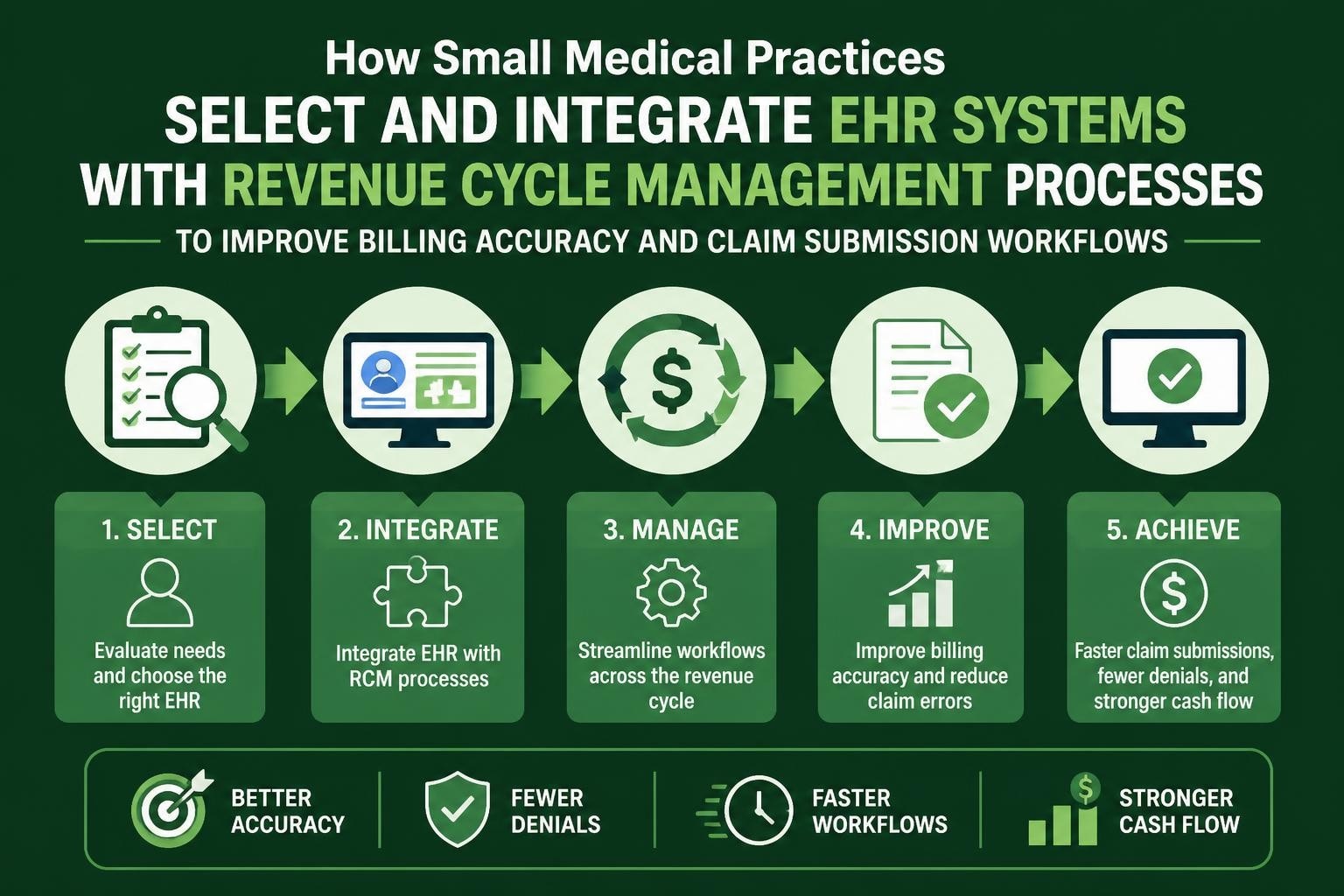
Selecting the right electronic health record system represents one of the most critical technology decisions a small medical practice will make. A small practice EHR serves as the digital backbone for clinical documentation, patient care coordination, and financial operations. For practices with limited staff and resources, choosing a system that integrates seamlessly with revenue cycle management processes becomes essential for maintaining profitability while delivering quality patient care. The right EHR implementation can transform billing efficiency, reduce claim denials, and streamline administrative workflows.
Understanding Small Practice EHR Requirements
Small medical practices face unique challenges when evaluating EHR systems. Unlike large healthcare organizations with dedicated IT departments, smaller practices need solutions that are intuitive, affordable, and require minimal technical expertise to maintain.
Core Functionality Considerations
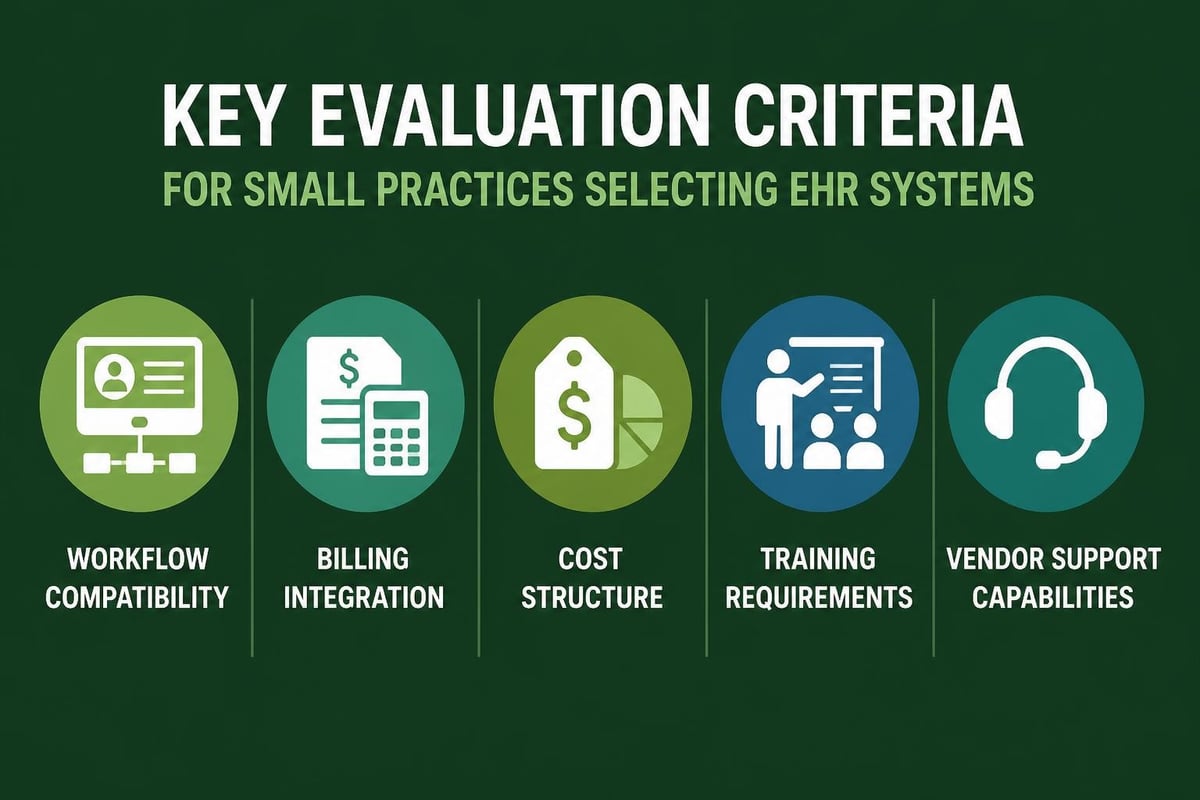
When evaluating a small practice EHR, healthcare providers should prioritize several essential features:
- Clinical documentation tools that match specialty-specific workflows
- Integrated billing capabilities that support accurate charge capture
- Patient portal functionality for appointment scheduling and communication
- E-prescribing capabilities with formulary checks and prior authorization support
- Customizable templates that reduce documentation time
- Mobile access for providers who work across multiple locations
The selection process for EHR systems requires practices to assess how each platform aligns with their specific clinical needs and administrative requirements.
Financial and Operational Impact
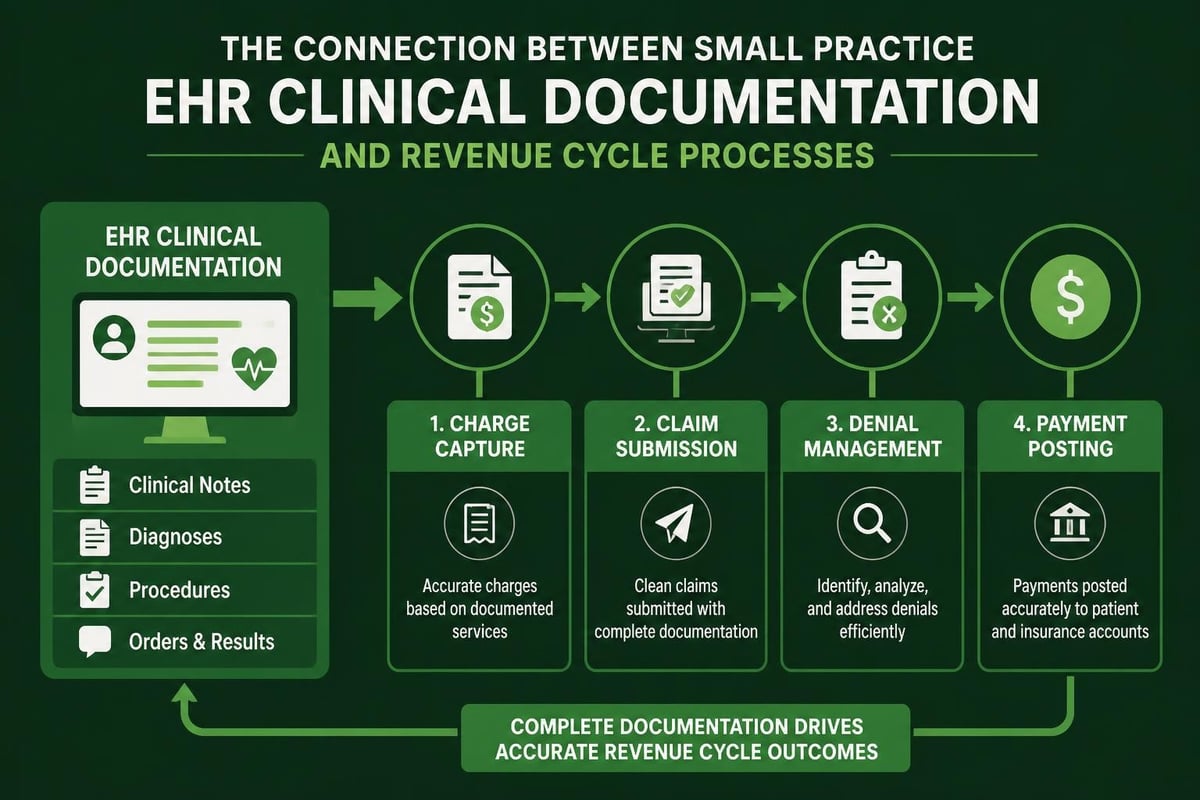
Beyond clinical documentation, a small practice EHR directly influences revenue cycle performance. Systems that integrate with medical billing services enable faster claim submission, improved coding accuracy, and reduced administrative burden.
| EHR Feature | Revenue Cycle Benefit | Implementation Priority |
|---|---|---|
| Automated charge capture | Reduces missed billing opportunities | High |
| Real-time eligibility verification | Decreases claim denials | High |
| Integrated clearinghouse | Accelerates claim submission | Medium |
| Denial tracking | Improves appeals success rate | Medium |
| Patient payment processing | Enhances collection rates | Low |
Implementation Strategies for Success
Implementing a small practice EHR requires careful planning to minimize disruption to patient care and cash flow. Best practices for successful EHR implementation emphasize the importance of phased rollouts and comprehensive staff training.
Step-by-Step Implementation Process
Step 1: Workflow Analysis and Planning
Begin by documenting current clinical and administrative workflows. Identify bottlenecks in patient flow, documentation processes, and billing procedures. This analysis helps practices configure their small practice EHR to support existing workflows rather than forcing staff to adapt to rigid system requirements.
Step 2: Data Migration Strategy
Develop a comprehensive plan for transferring patient records, templates, and historical billing data. Work with the EHR vendor to establish migration timelines, validate data accuracy, and create backup protocols. Practices should maintain access to legacy systems during the transition period.
Step 3: Staff Training and Support
Schedule role-specific training sessions for clinical staff, front desk personnel, and billing specialists. Training should cover clinical documentation, appointment scheduling, and charge capture processes. Understanding common EHR implementation mistakes helps practices avoid workflow disruptions.
Step 4: Go-Live and Optimization
Launch the system with dedicated support resources available. Monitor key performance indicators including patient wait times, documentation completion rates, and claim submission accuracy. Adjust workflows based on user feedback during the first 90 days.
Integration with Revenue Cycle Management
The relationship between a small practice EHR and revenue cycle performance cannot be overstated. Practices that leverage integrated systems experience fewer claim denials, faster reimbursements, and improved cash flow predictability.
Billing Process Optimization
Modern EHR systems should support seamless integration with eligibility verification services to confirm insurance coverage before patient appointments. This proactive approach reduces claim rejections and prevents revenue leakage.
Key integration points include:
- Real-time insurance verification during scheduling
- Automated charge capture based on documented procedures
- Electronic claim submission directly from the EHR
- Integrated denial tracking and appeals management
- Patient statement generation and payment processing
Coding Accuracy and Compliance
A properly configured small practice EHR includes coding assistance tools that help providers select appropriate CPT and ICD-10 codes. These features reduce coding errors that lead to claim denials and compliance risks. Practices benefit from working with medical coding services that understand specialty-specific documentation requirements.
Specialty-Specific Considerations
Different medical specialties have unique EHR requirements. A small cardiology practice needs different templates and workflows than a primary care clinic or gastroenterology practice.
Specialty Workflow Challenges
Specialty-specific EHR challenges include managing complex procedure documentation, integrating diagnostic equipment, and maintaining compliance with specialty-specific quality metrics. Practices should evaluate whether vendors offer specialty-focused modules and templates.
For specialized practices, integration with denial management services becomes particularly important. Specialty procedures often face higher denial rates due to medical necessity requirements and prior authorization complexities.
Template Customization and Clinical Efficiency
Customizable documentation templates reduce the time providers spend on administrative tasks. Templates should capture all required elements for proper coding while supporting natural clinical workflows. Practices that invest time in template optimization during implementation see long-term efficiency gains.
Vendor Selection and Support
Choosing the right EHR vendor involves more than comparing features and pricing. Long-term success depends on vendor stability, customer support quality, and commitment to ongoing product development.
Evaluation Criteria
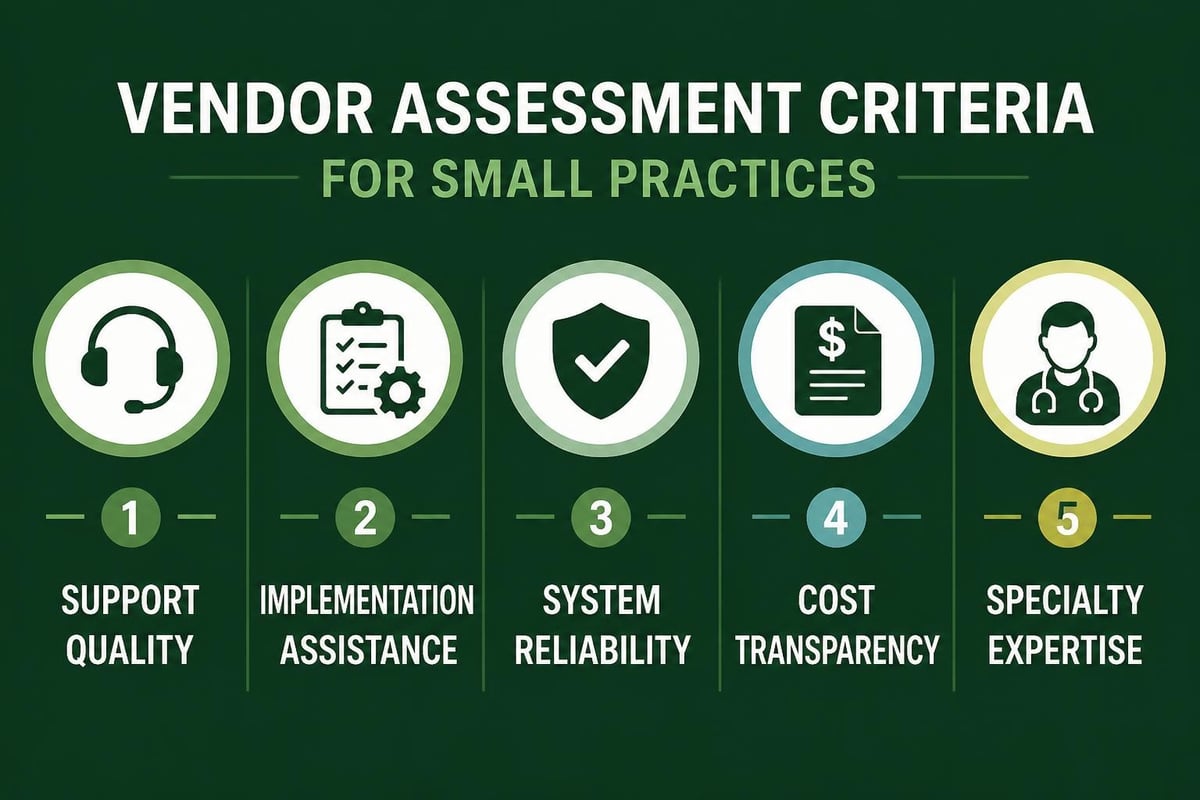
Small practices should assess vendors based on multiple factors:
- Implementation support services including data migration assistance
- Training resources such as on-site training, webinars, and documentation
- Technical support availability with reasonable response times
- System uptime guarantees and disaster recovery capabilities
- Upgrade frequency and user community engagement
- Interoperability standards compliance for data exchange
The comprehensive guide to EHR selection and implementation provides additional frameworks for vendor evaluation.
Cost Management and ROI
Understanding the total cost of ownership for a small practice EHR extends beyond initial licensing fees. Practices must account for implementation costs, ongoing subscription fees, training expenses, and productivity losses during transition periods.
Budget Considerations
| Cost Category | Typical Range | Planning Notes |
|---|---|---|
| Software licensing | $200-$700 per provider/month | Varies by specialty and features |
| Implementation services | $3,000-$15,000 one-time | Includes data migration and training |
| Hardware upgrades | $1,000-$5,000 | Depends on existing infrastructure |
| Interface fees | $500-$2,000 annually | For lab, imaging, billing integrations |
| Ongoing support | Included to $300/month | Review service level agreements |
Practices should calculate expected return on investment based on improved billing efficiency, reduced denial rates, and decreased administrative overhead. Integration with healthcare revenue cycle analytics helps practices measure EHR impact on financial performance.
System Migration and Switching
Practices already using an EHR system may need to switch vendors due to changing needs, vendor issues, or cost concerns. The EHR switch checklist for small practices outlines critical steps for minimizing disruption during transitions.
Migration Planning Essentials
When switching EHR systems, practices should maintain parallel operations for at least two weeks to ensure data integrity and workflow continuity. Historical patient data must remain accessible for clinical and legal purposes. Work with both the outgoing and incoming vendors to establish clear migration timelines and responsibilities.
Claims in process during the transition require special attention. Coordinate with your medical claim submission services team to ensure no claims are lost during the system changeover and that all pending reimbursements are properly tracked.
Selecting and implementing the right small practice EHR directly impacts clinical efficiency and financial performance. The system should enhance provider productivity while supporting accurate billing and revenue cycle optimization. Greenhive Billing Solutions partners with small practices to ensure their EHR systems integrate seamlessly with comprehensive revenue cycle management services, including medical billing, claims processing, and denial management, helping practices maximize reimbursements while maintaining HIPAA compliance and operational efficiency.

