
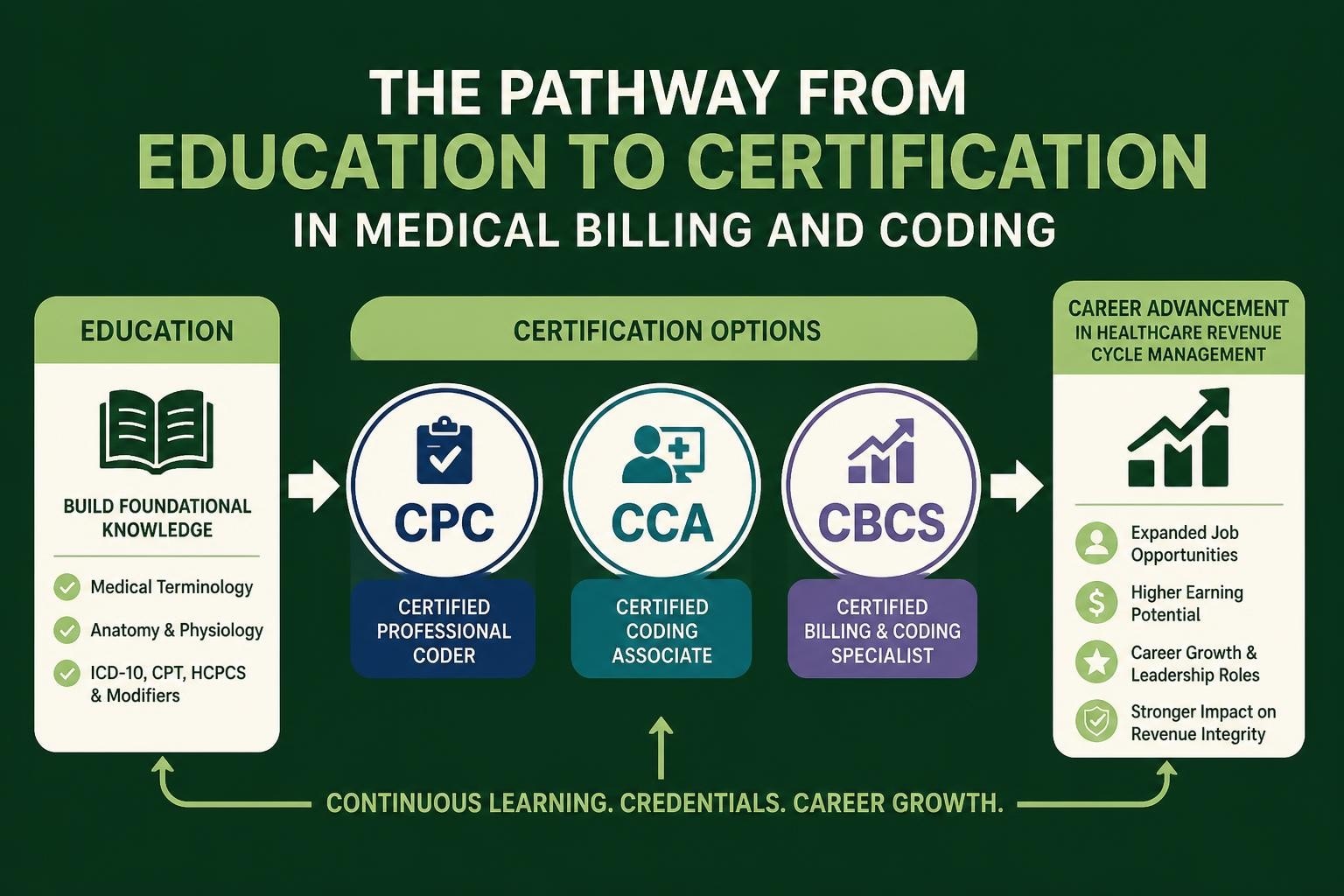
Healthcare providers increasingly recognize that certified billing and coding professionals deliver superior accuracy and compliance in revenue cycle operations. The medical billing and coding certification requirements have evolved significantly, establishing clear standards for professionals who manage claim submissions, code assignments, and reimbursement processes. Understanding these requirements helps healthcare organizations identify qualified candidates and empowers existing staff to advance their expertise in this critical field.
Understanding Core Credential Types
The healthcare industry offers several recognized certifications, each addressing specific aspects of revenue cycle management. Different types of medical coding reflect the specializations available within the field, and certifications align with these various career paths.
Certified Professional Coder (CPC)
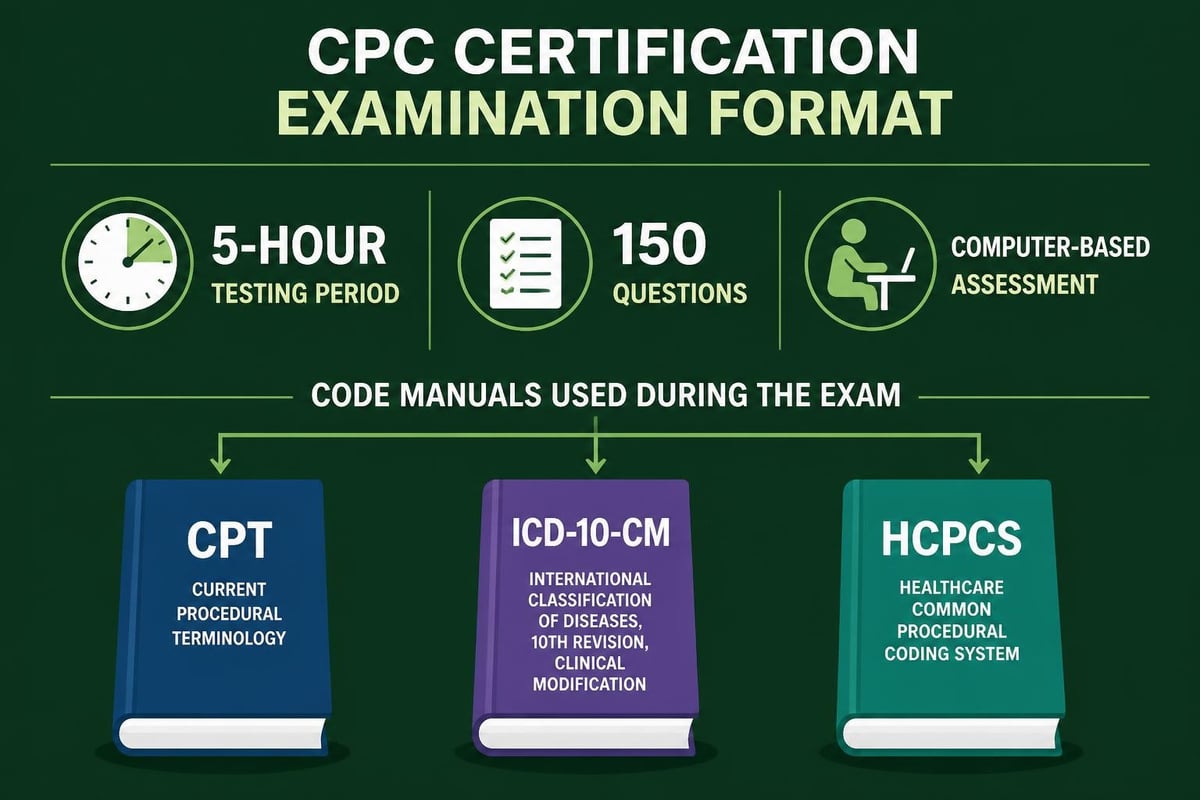
The American Academy of Professional Coders (AAPC) administers the CPC credential, which represents one of the most recognized certifications in the industry. According to CPC101.com’s overview of medical billing and coding certifications, candidates must demonstrate proficiency in CPT, HCPCS Level II, and ICD-10-CM code sets. The examination covers medical terminology, anatomy, compliance guidelines, and coding for various medical specialties.
CPC examination requirements include:
- 150 multiple-choice questions
- 5 hours and 40 minutes to complete
- Minimum score of 70% to pass
- Open-book format allowing code manuals
Certified Coding Associate (CCA)
The American Health Information Management Association (AHIMA) offers the CCA credential designed for entry-level coding professionals. This comprehensive guide to CCA certification explains that this credential requires less experience than advanced certifications but maintains rigorous standards for knowledge assessment.
The CCA examination tests competency across:
- Medical terminology and anatomy
- Pathophysiology fundamentals
- Pharmacology basics
- Reimbursement methodologies
- Health information documentation
- Regulatory and compliance requirements
Certified Billing and Coding Specialist (CBCS)
The National Healthcareer Association (NHA) provides the CBCS certification, focusing on both billing and coding functions. O*NET Online’s detailed information about CBCS certification highlights that this credential emphasizes the complete revenue cycle, making it particularly valuable for practices handling both coding assignments and claim submissions.
Educational Prerequisites and Pathways
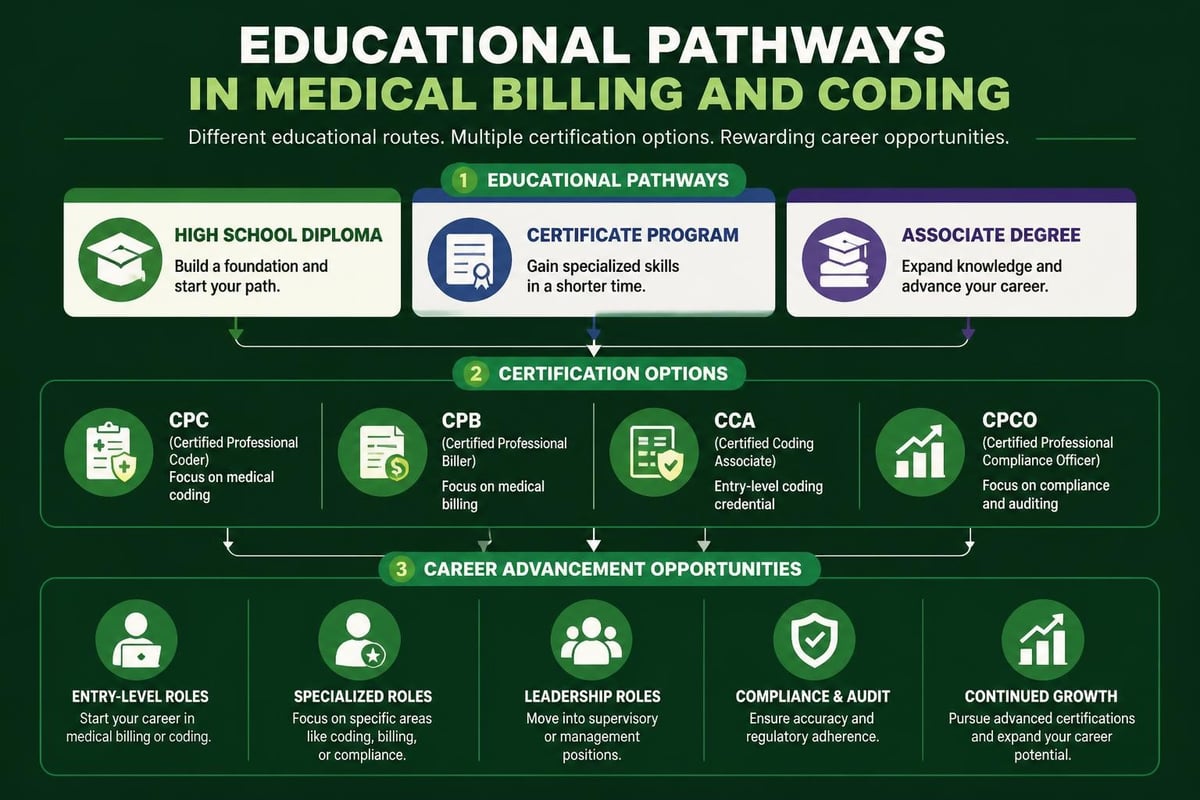
Medical billing and coding certification requirements typically include formal education, though the specific levels vary by credential. Business News Daily’s analysis of educational requirements demonstrates that most certification bodies accept various educational backgrounds.
| Credential | Minimum Education | Preferred Background | Experience Requirement |
|---|---|---|---|
| CPC | High school diploma | Associate degree or coding coursework | 2 years or apprentice option |
| CCA | High school diploma | Certificate program or associate degree | None for exam eligibility |
| CBCS | High school diploma | Medical billing/coding program | None for exam eligibility |
Most professionals complete certificate programs ranging from six months to one year, or associate degree programs spanning two years. These programs cover essential competencies including medical terminology, anatomy and physiology, diagnostic and procedural coding, and healthcare regulations.
Examination Preparation Strategies
Success on certification examinations requires comprehensive preparation beyond classroom education. HealthJob.org’s guide on obtaining certification emphasizes that strategic study approaches significantly improve pass rates.
Step-by-Step Preparation Process
1. Complete Formal Education
Enroll in an accredited program covering medical terminology, anatomy, coding systems, and billing practices. Many programs align curriculum specifically with certification examination content.
2. Gain Practical Experience
Apply coding principles through internships, externships, or entry-level positions. Hands-on experience reinforces theoretical knowledge and builds speed with code manual navigation.
3. Utilize Practice Examinations
Access practice tests from certification organizations to familiarize yourself with question formats, time constraints, and content distribution. These assessments identify knowledge gaps requiring additional study.
4. Join Professional Organizations
Membership in organizations like AAPC or AHIMA provides study resources, networking opportunities, and continuing education credits valuable for certification maintenance.
5. Schedule Strategic Study Sessions
Allocate focused study time across all examination domains rather than concentrating on familiar topics. Create a study schedule spanning several weeks before the examination date.
Certification Maintenance and Continuing Education
Medical billing and coding certification requirements extend beyond initial examination passage. All major credentials require ongoing education to maintain active status and ensure professionals remain current with industry changes.
Annual continuing education units (CEUs) requirements:
- CPC: 36 CEUs every two years
- CCA: 20 CEUs every two years
- CBCS: One recertification every two years
AMBCI’s analysis of certification requirements notes that continuing education keeps professionals informed about coding updates, regulatory changes, and emerging healthcare technologies. Revenue cycle management services like medical coding audit services benefit when team members maintain current certifications.
Specialty Certifications for Advanced Professionals
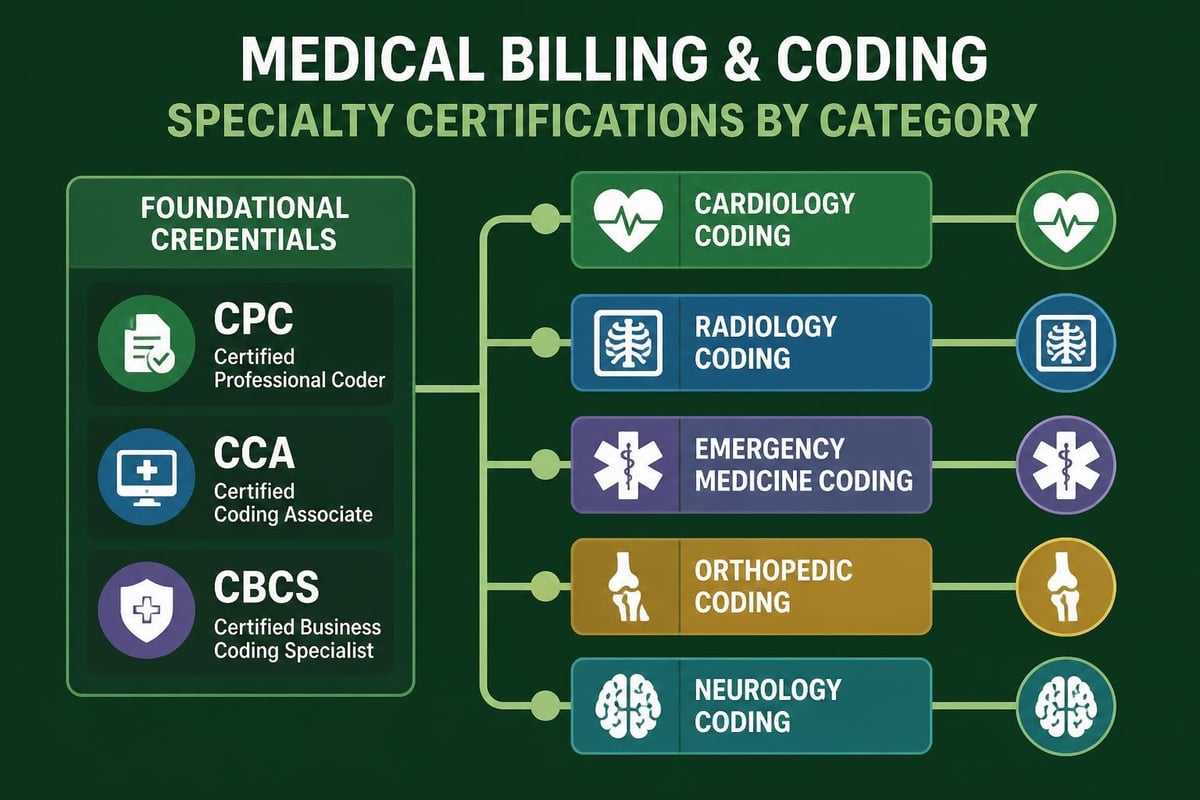
Beyond foundational credentials, healthcare revenue cycle professionals can pursue specialized certifications addressing specific medical disciplines or advanced functions. These credentials demonstrate expertise in particular areas such as cardiology, radiology, or denial management in medical billing.
Advanced Certification Options
| Specialty | Credential | Focus Area |
|---|---|---|
| Risk Adjustment | CRC | HCC coding and documentation |
| Outpatient Facilities | COC | Ambulatory surgical centers and hospitals |
| Professional Medical Auditing | CPMA | Compliance and audit procedures |
| Physician Practice Management | CPPM | Practice operations and finances |
Specialty certifications typically require candidates to hold foundational credentials and demonstrate specific experience levels. HealthJob.org’s comprehensive certification overview explains that advanced credentials command higher salaries and expanded career opportunities.
Career Impact of Certification
Certified professionals consistently demonstrate superior performance in accuracy, productivity, and compliance compared to non-certified counterparts. Healthcare organizations increasingly prioritize certified candidates when hiring for revenue cycle positions, recognizing that proper credentials translate to fewer claim denials and optimized reimbursement.
Certification validates competency in critical areas including:
- Accurate code assignment following official guidelines
- Understanding of payer-specific requirements and policies
- Compliance with HIPAA regulations and documentation standards
- Proficiency with coding software and electronic health records
- Knowledge of medical claim submission services procedures
Organizations partnering with experienced medical billing services benefit from teams staffed by certified professionals who maintain current knowledge and apply best practices consistently. Understanding what you need to do medical billing and coding successfully starts with recognizing certification as a foundational requirement.
The medical billing and coding certification requirements establish professional standards that protect both healthcare providers and patients. Whether pursuing initial certification or maintaining credentials through continuing education, these requirements ensure revenue cycle professionals possess the knowledge and skills necessary for accurate, compliant claim processing that maximizes legitimate reimbursement.
Meeting medical billing and coding certification requirements represents a significant investment in professional development that pays dividends through improved accuracy, compliance, and career advancement. Healthcare practices seeking to optimize their revenue cycle operations benefit from partnering with experienced teams who maintain current certifications and apply industry best practices consistently. Greenhive Billing Solutions employs certified professionals who deliver comprehensive revenue cycle management services, ensuring your practice achieves maximum reimbursements while maintaining full compliance with evolving healthcare regulations.

