
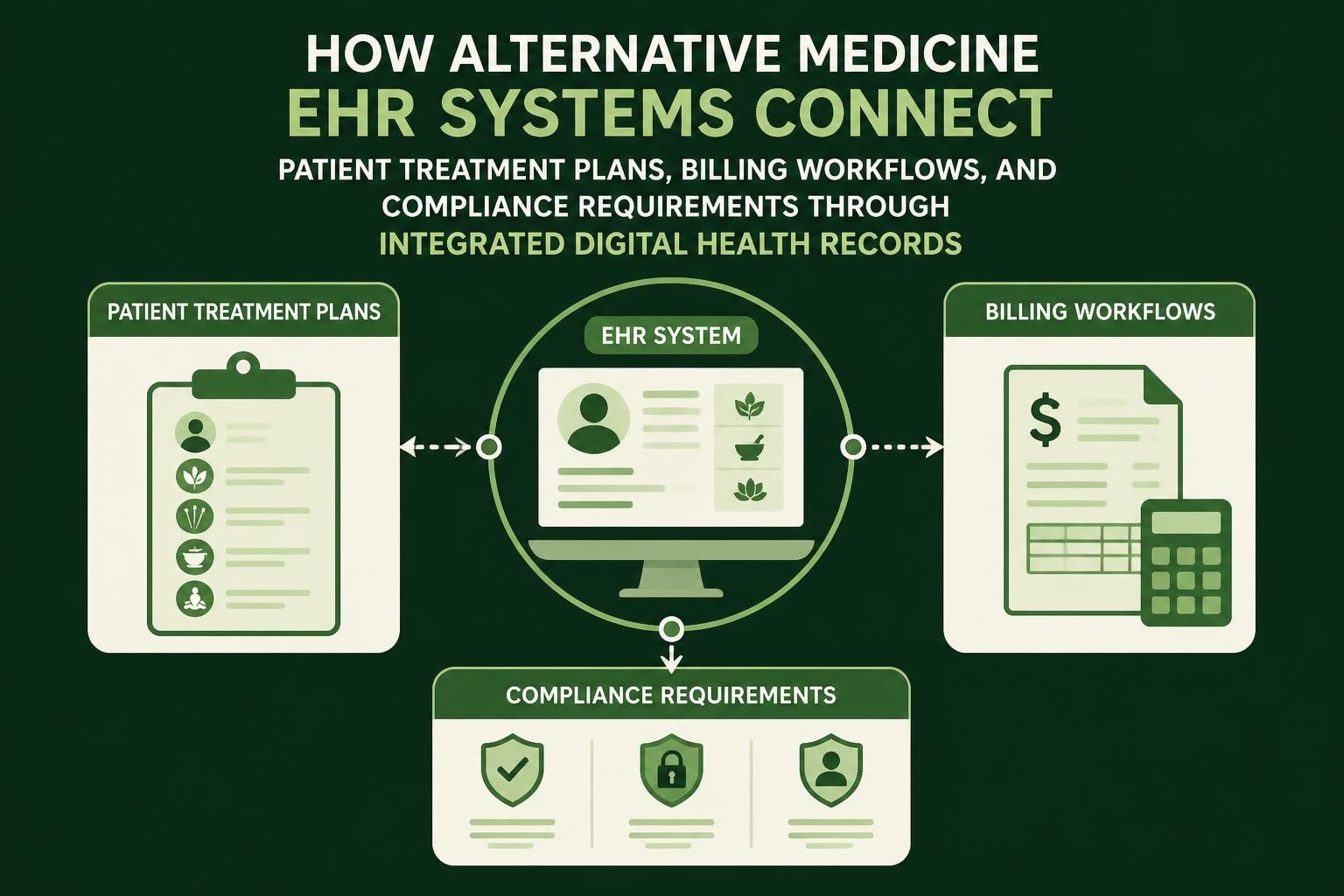
Alternative medicine practices face unique challenges when selecting and implementing electronic health record systems. Unlike conventional medical facilities, holistic and integrative healthcare providers require specialized documentation capabilities that capture the nuances of acupuncture treatments, herbal medicine protocols, chiropractic adjustments, and other complementary therapies. The right alternative medicine EHR becomes a critical tool for managing both clinical workflows and revenue cycle operations, particularly when integrated with comprehensive billing services that understand the complexities of this specialty.
Understanding Alternative Medicine EHR Requirements
Alternative medicine practitioners need EHR systems that extend far beyond basic patient demographics and vital signs. These specialized platforms must accommodate treatment modalities that traditional medical records were never designed to capture.
Essential Documentation Features
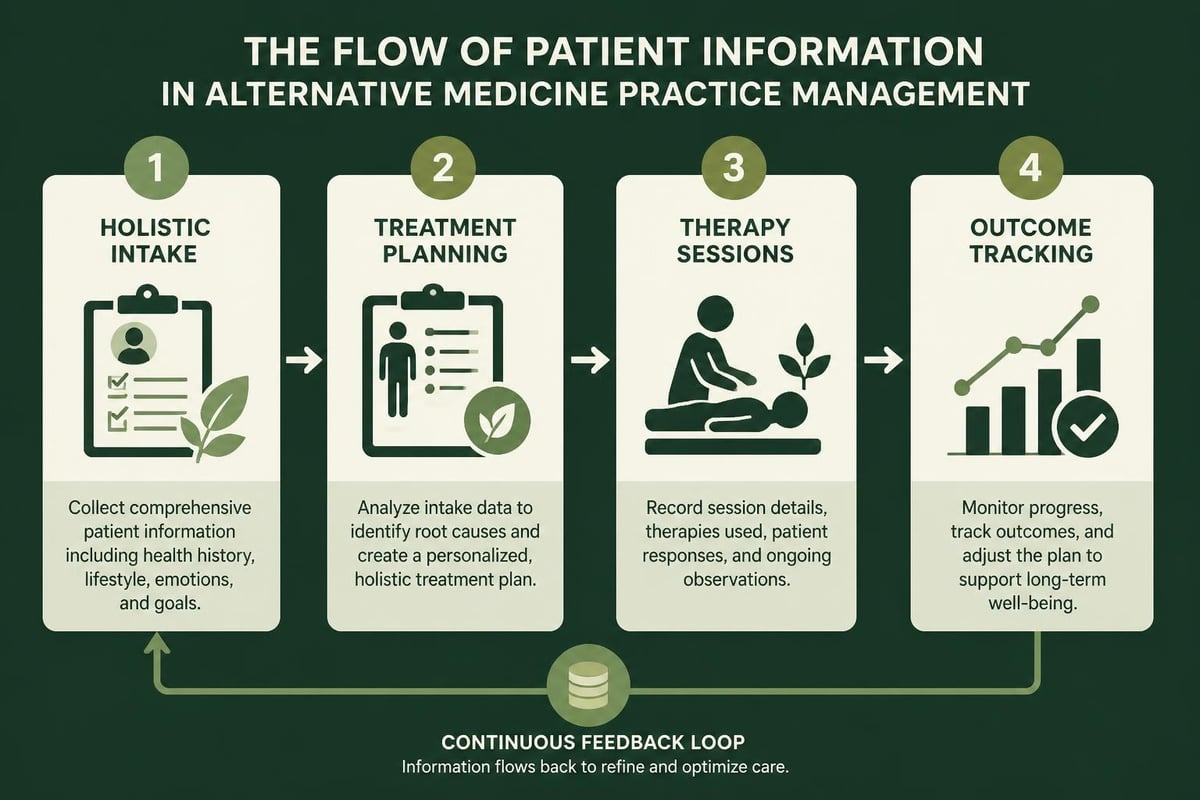
A robust alternative medicine EHR should include customizable templates for various therapy types. Practitioners need fields for documenting meridian points in acupuncture, specific adjustments in chiropractic care, botanical formulations in herbal medicine, and energy work in Reiki sessions. Specialized EMR features tailored for alternative medicine enable providers to create comprehensive treatment records that reflect their unique methodologies.
Key documentation capabilities include:
- Treatment-specific intake forms for each modality
- Progress tracking tools for holistic wellness metrics
- Supplement and herbal remedy databases
- Integration with imaging for thermography or Kirlian photography
- Customizable assessment scales for pain, energy, and wellness
The challenge extends beyond clinical documentation. Research shows that complementary and integrative health therapies require standardized documentation practices within electronic health records to improve both patient care and research outcomes.
Billing Integration for Alternative Medicine Practices
Revenue cycle management represents a significant challenge for alternative medicine providers. Many treatments fall outside conventional insurance coverage, requiring sophisticated systems to manage both insurance billing and cash-pay services.
Insurance and Claims Processing
An effective alternative medicine EHR must connect seamlessly with billing systems that understand the specific CPT and HCPCS codes used in complementary medicine. Certain acupuncture procedures now receive Medicare coverage, while chiropractic care has established billing protocols. However, practitioners must navigate the complexities of what is covered versus what requires patient self-pay.
The integration between clinical documentation and medical billing services becomes critical when practices need to verify insurance eligibility, submit claims correctly, and manage denials specific to alternative therapies. Working with specialized revenue cycle management partners who understand these nuances ensures maximum reimbursement.
| Billing Challenge | Traditional EHR | Alternative Medicine EHR |
|---|---|---|
| Custom Service Codes | Limited support | Extensive libraries |
| Cash Pay Integration | Basic functionality | Robust payment plans |
| Supplement Sales | Not supported | Inventory tracking |
| Package Pricing | Manual workarounds | Automated bundling |
Revenue Optimization Strategies
Alternative medicine practices often combine multiple revenue streams: insurance-covered services, self-pay treatments, supplement sales, and wellness packages. The right EHR system tracks each revenue source while maintaining compliance with healthcare regulations.
Understanding denial management in medical billing becomes particularly important when claims for alternative therapies face rejection. Systematic tracking of denial patterns helps practices refine their documentation and coding strategies.
Compliance and Patient Privacy Considerations
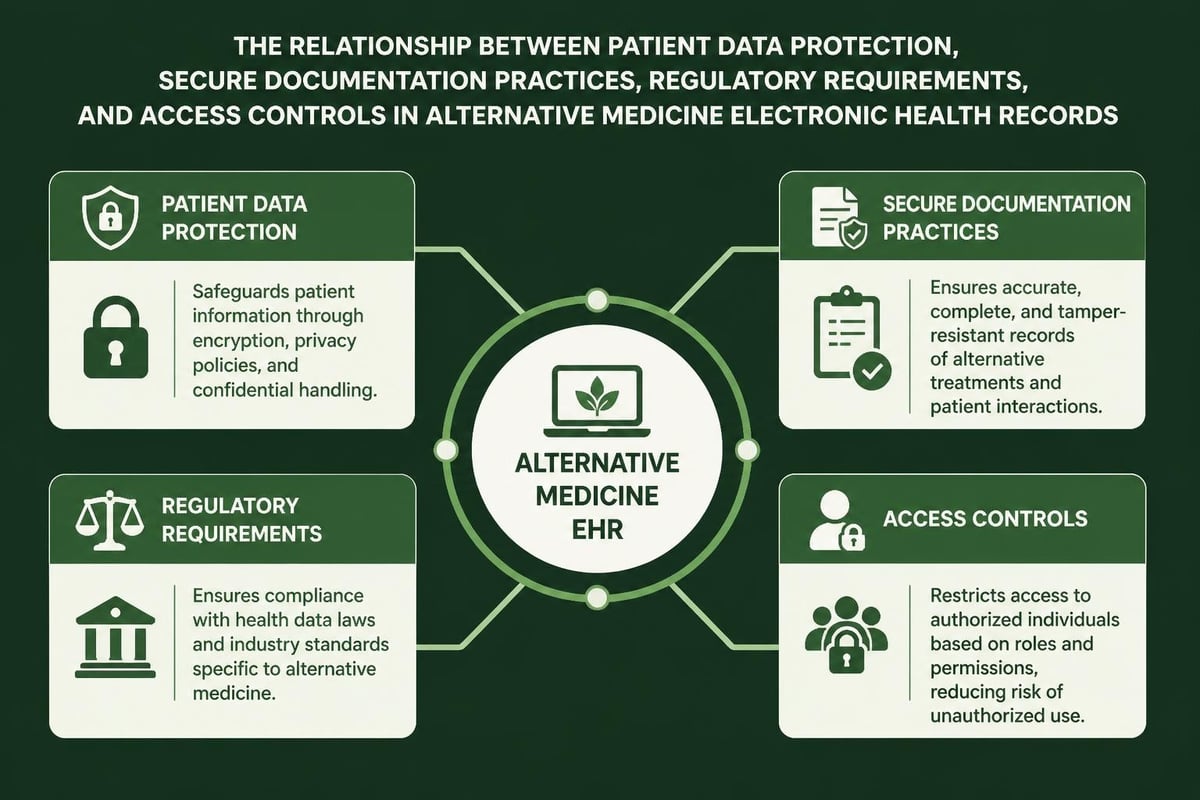
HIPAA compliance remains non-negotiable regardless of treatment modality. Alternative medicine EHR systems must provide the same security standards as conventional medical records while accommodating the unique documentation needs of holistic practices.
Regulatory Requirements
- Encryption and Data Security: All patient information must be encrypted both in transit and at rest, with role-based access controls limiting who can view sensitive treatment records.
- Audit Trails: Complete logging of all system access, modifications, and data transfers ensures accountability and supports compliance audits.
- Patient Portal Functionality: Secure portals allow patients to access their treatment history, lab results, and educational resources while maintaining privacy standards.
- Consent Management: Special attention to consent forms for alternative therapies, especially when treatments fall outside mainstream medical practice.
The electronic personal health records discussion of CAM usage highlights the importance of patient-provider communication regarding complementary and alternative medicine within integrated healthcare systems.
Selecting the Right Alternative Medicine EHR Platform
Choosing an appropriate system requires careful evaluation of features, costs, and implementation support. Not all platforms offer the customization necessary for alternative medicine practices.
Evaluation Criteria
Clinical Functionality:
- Customizable templates for all offered therapies
- Integration with diagnostic equipment
- Prescription management for supplements and botanicals
- Treatment plan builders with holistic goal tracking
Business Operations:
- Patient scheduling with room and equipment management
- Inventory control for supplements and supplies
- Financial reporting specific to alternative medicine revenue streams
- Marketing tools for wellness programs
When evaluating options, practitioners should consult resources like comprehensive EHR software reviews that compare platforms across different healthcare specialties and practice sizes.
Working with eligibility verification services becomes essential when practices need to confirm coverage for the subset of alternative therapies that insurance companies reimburse.
Implementation and Staff Training
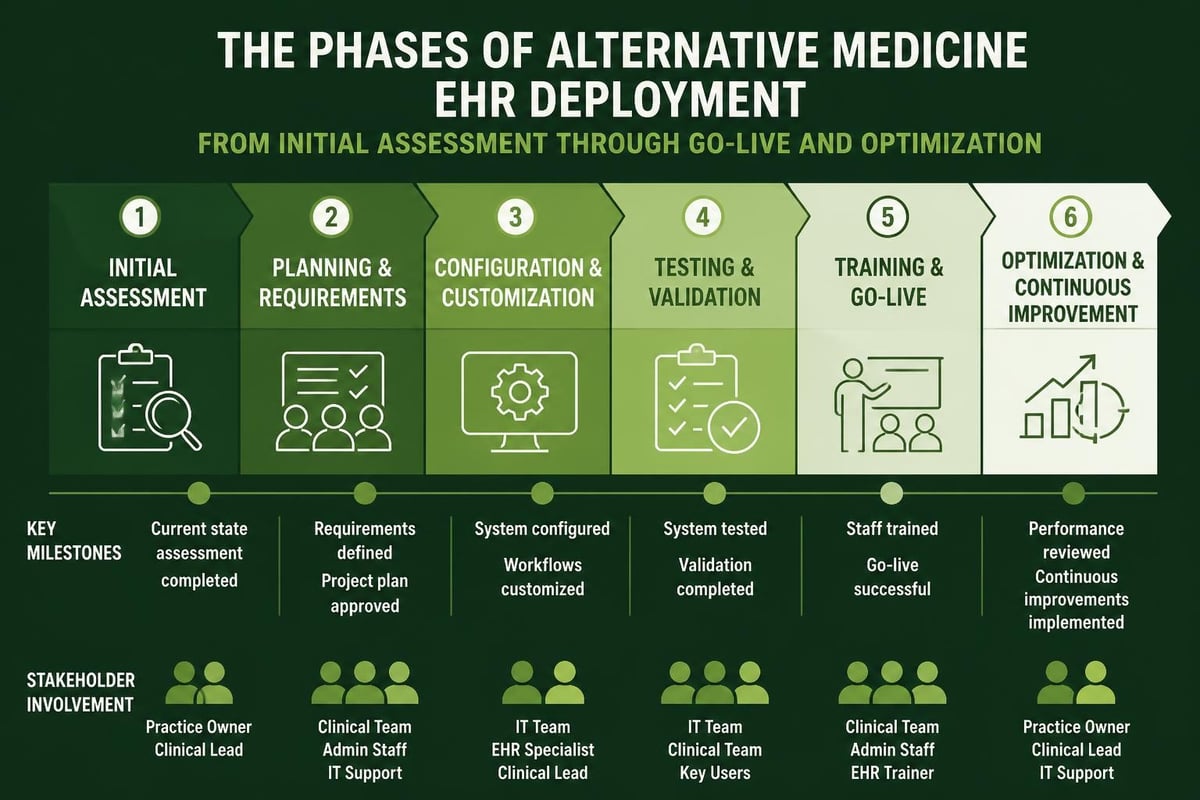
Successful alternative medicine EHR deployment requires more than software installation. Practices must plan for workflow changes, staff training, and ongoing optimization.
Step-by-Step Implementation Process
- Workflow Analysis: Map current clinical and administrative processes to identify how the EHR will integrate with existing operations.
- Data Migration: Transfer historical patient records, treatment protocols, and financial information to the new system with validation checks.
- Customization: Configure templates, forms, and reports to match specific practice needs across all offered modalities.
- Staff Training: Provide role-specific training for clinicians, administrative staff, and billing personnel with emphasis on documentation quality.
- Testing Period: Run parallel systems during initial weeks to catch errors and refine workflows before full transition.
- Optimization: Continuously refine templates, reports, and processes based on staff feedback and operational data.
The connection between proper documentation and successful medical claim submission services cannot be overstated. Clean claims depend on accurate, complete clinical records that justify the services billed.
Advanced Features for Growing Practices
As alternative medicine practices expand, their EHR needs evolve beyond basic documentation and billing. Advanced capabilities support multiple locations, provider collaboration, and patient engagement initiatives.
Telehealth integration has become increasingly important, allowing practitioners to conduct virtual consultations for nutritional counseling, wellness coaching, and follow-up appointments. The alternative medicine EHR should support video conferencing with integrated note-taking and prescription capabilities.
Analytics and reporting tools help practices identify trends in patient outcomes, treatment effectiveness, and revenue performance. Understanding healthcare revenue cycle analytics enables data-driven decisions about service offerings and operational efficiency.
| Advanced Feature | Practice Benefit | Implementation Consideration |
|---|---|---|
| Multi-location support | Centralized management | Network infrastructure requirements |
| Patient engagement apps | Improved compliance | Training and adoption strategies |
| Outcome tracking dashboards | Evidence-based refinement | Data collection protocols |
| API integrations | Connected ecosystem | Technical expertise needed |
Practices should also consider platforms that support medical coding services integration, ensuring that clinical documentation translates accurately into billable codes regardless of treatment complexity.
Alternative medicine practices require EHR systems that balance specialized clinical documentation with robust revenue cycle functionality while maintaining strict compliance standards. The right technology platform supports holistic treatment approaches while streamlining billing operations for maximum reimbursement. Greenhive Billing Solutions provides comprehensive revenue cycle management services specifically designed for healthcare providers, including those in alternative medicine specialties, offering expertise in claims processing, denial management, and eligibility verification to help practices optimize their financial performance while focusing on patient care.

