
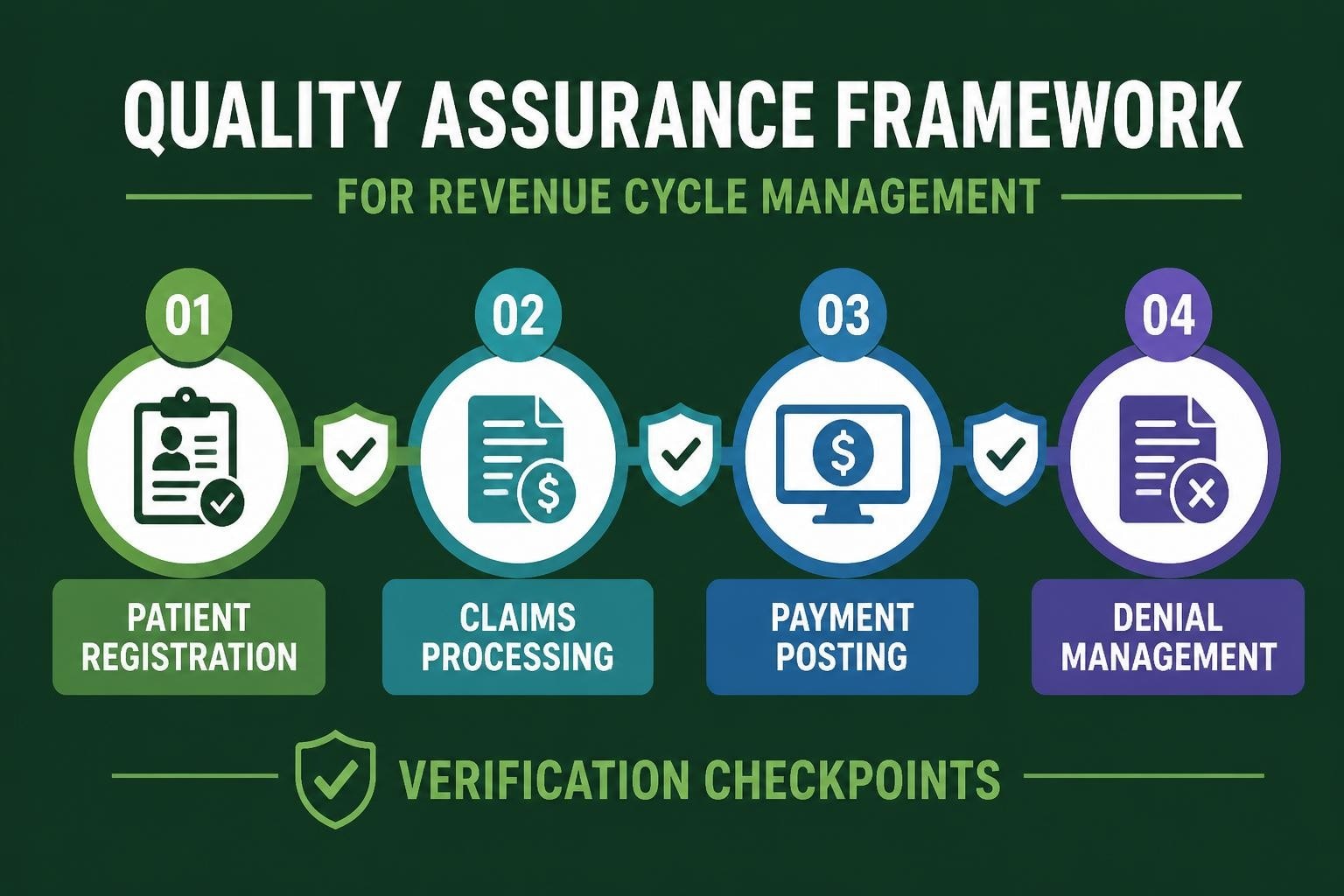
Healthcare organizations face mounting pressure to maintain financial stability while delivering exceptional patient care. The concept of assurance rcm has emerged as a critical framework for ensuring accuracy, compliance, and optimization throughout the revenue cycle. This systematic approach combines quality control measures, verification protocols, and performance monitoring to safeguard financial outcomes and minimize revenue leakage. By implementing robust assurance mechanisms, healthcare providers can identify vulnerabilities, prevent costly errors, and maintain regulatory compliance while maximizing reimbursements.
Understanding Assurance RCM in Healthcare Operations
Assurance rcm represents a comprehensive methodology for validating the accuracy and effectiveness of revenue cycle processes from patient registration through final payment. Unlike basic quality checks, this approach creates multiple verification layers throughout the billing lifecycle.
Core Components of Revenue Cycle Assurance
The foundation of effective assurance rcm rests on several interconnected elements that work together to protect revenue integrity. These components ensure that every transaction, claim, and payment follows established guidelines and meets industry standards.
Critical assurance elements include:
- Pre-submission claim auditing and validation
- Real-time eligibility verification processes
- Systematic coding accuracy reviews
- Payment posting reconciliation protocols
- Denial trend analysis and prevention strategies
- Compliance monitoring across all regulatory requirements
Each component serves a specific purpose within the broader assurance framework. When properly integrated, these elements create a defensive barrier against revenue loss while identifying opportunities for process improvement.
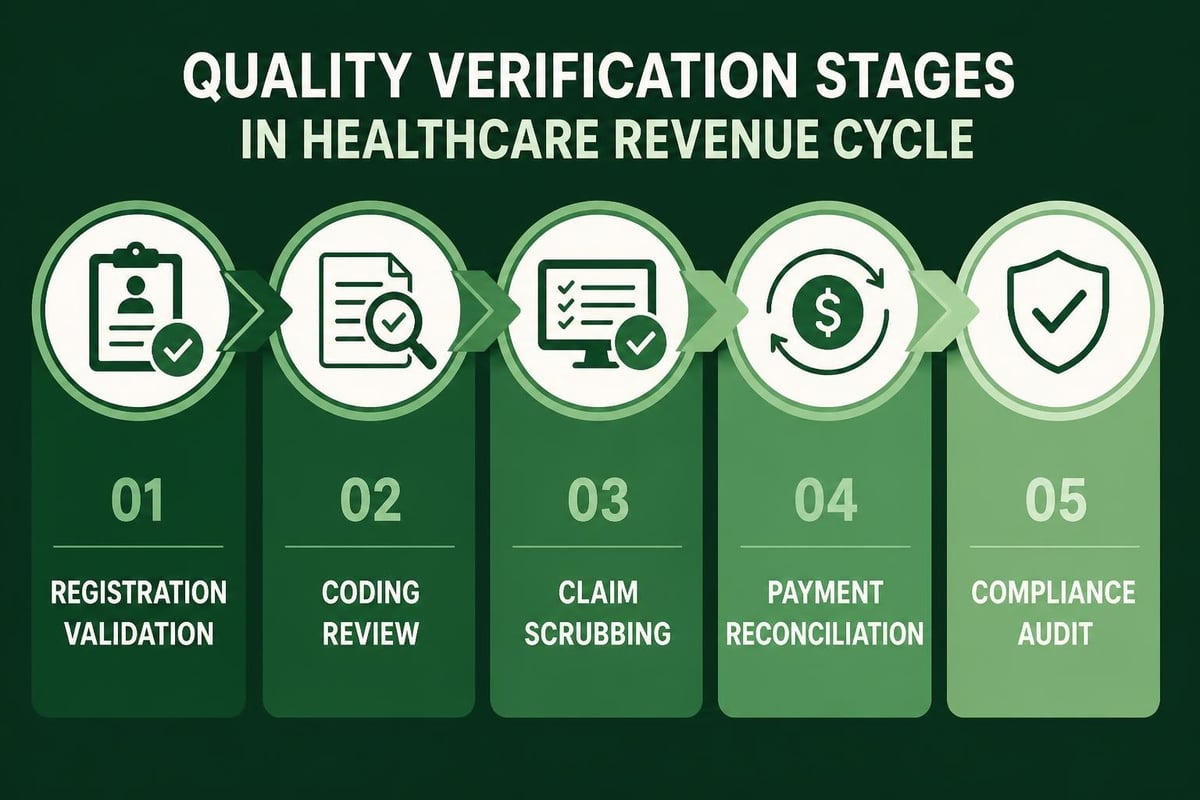
The Healthcare Financial Management Association emphasizes that systematic quality assurance significantly reduces claim denials and accelerates payment cycles. Organizations implementing comprehensive assurance programs report measurable improvements in first-pass claim acceptance rates.
Implementing Quality Controls Throughout the RCM Process
Quality assurance in revenue cycle management requires strategic placement of control points at critical junctures. Healthcare providers must establish verification protocols that catch errors before they impact cash flow or create compliance risks.
Registration and Eligibility Verification Assurance
Patient access represents the first opportunity to ensure data accuracy and prevent downstream problems. Front-end assurance rcm practices focus on validating demographic information, insurance coverage, and benefit details before services are rendered.
| Verification Point | Assurance Activity | Impact on Revenue |
|---|---|---|
| Patient Demographics | Real-time data validation against insurance records | Reduces claim rejections by 35-40% |
| Insurance Eligibility | Automated benefit verification | Prevents write-offs from non-covered services |
| Prior Authorization | Compliance tracking and documentation | Ensures payment for high-cost procedures |
| Financial Responsibility | Patient liability estimation | Improves upfront collections by 25-30% |
Organizations that invest in eligibility verification services experience fewer claim denials related to coverage issues. This proactive approach reduces administrative burden and accelerates payment timelines.
Coding Accuracy and Compliance Verification
Medical coding accuracy directly impacts reimbursement levels and compliance standing. Assurance rcm protocols must include regular audits of coding practices to ensure proper documentation supports code selection and meets payer requirements.
Effective coding assurance includes:
- Pre-bill coding reviews that validate code selection against documentation
- Random sampling audits across different service lines and providers
- Compliance checks against current CPT, ICD-10, and HCPCS guidelines
- Modifier usage verification to prevent inappropriate combinations
- Documentation improvement feedback to providers and clinical staff
The Centers for Medicare & Medicaid Services maintains detailed coding and billing requirements that serve as benchmarks for quality assurance programs. Regular review of these standards ensures ongoing compliance.
Claim Submission and Payment Posting Assurance
Once claims are coded, additional verification layers protect against submission errors and payment discrepancies. These quality controls ensure claims are clean before transmission and payments are accurately applied to patient accounts.
Pre-Submission Claim Scrubbing
Automated claim scrubbing identifies common errors before submission, but human oversight remains essential for complex cases. Assurance rcm practices combine technology with expert review to maximize clean claim rates.
Clean claims reduce processing time, minimize denials, and improve cash flow predictability. Organizations should establish benchmarks for first-pass acceptance rates and continuously monitor performance against these targets.
Advanced medical claim submission services incorporate multiple validation checkpoints that catch errors traditional systems miss. This layered approach significantly reduces rework and accelerates revenue realization.
Payment Reconciliation and Variance Analysis
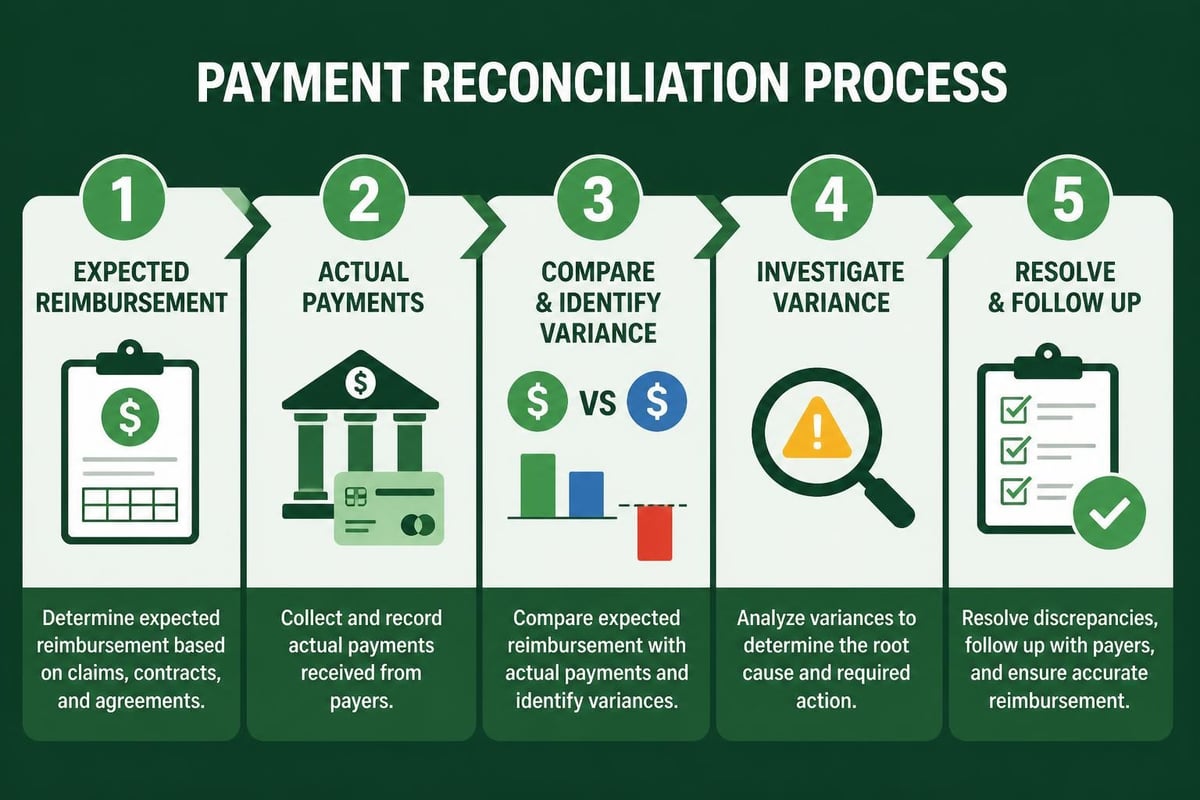
Payment posting accuracy directly affects account balances, patient statements, and financial reporting. Assurance protocols must verify that payments match expected reimbursement rates and identify unexplained variances.
Payment assurance activities:
- Contractual rate verification against payer agreements
- Coordination of benefits validation for secondary claims
- Adjustment code review for appropriateness
- Underpayment identification through comparative analysis
- Patient responsibility calculation accuracy checks
Organizations implementing comprehensive payment posting services with built-in quality controls experience fewer billing disputes and improved patient satisfaction scores.
Denial Management Within the Assurance Framework
Denial prevention and resolution represent critical components of any assurance rcm strategy. Systematic analysis of denial patterns reveals process weaknesses and creates opportunities for preventive action.
Root Cause Analysis and Prevention Strategies
Every denial contains valuable information about potential process improvements. Quality assurance programs must include structured denial analysis that categorizes issues, identifies trends, and implements corrective actions.
| Denial Category | Common Causes | Preventive Assurance Measures |
|---|---|---|
| Registration Errors | Incorrect patient information | Enhanced front-end verification protocols |
| Eligibility Issues | Coverage lapses or changes | Real-time benefit checks at service time |
| Coding Problems | Documentation insufficiency | Provider education and concurrent reviews |
| Timely Filing | Claim submission delays | Automated tracking and escalation systems |
| Medical Necessity | Missing or inadequate justification | Pre-service authorization verification |
Research published in the National Library of Medicine demonstrates that organizations with structured denial management programs recover 15-20% more revenue than those without formal processes. This financial impact justifies investment in comprehensive assurance mechanisms.
Effective denial management services combine technology platforms with experienced analysts who understand payer-specific requirements and appeal procedures.
Appeals Process Quality Assurance
When denials occur, the appeals process requires its own assurance protocols. Success rates depend on proper documentation, timely submission, and persuasive justification that addresses specific denial reasons.
Appeals assurance checklist:
- Documentation completeness verification before submission
- Deadline tracking to ensure timely filing
- Payer-specific requirement compliance
- Clinical rationale validation by qualified reviewers
- Follow-up protocols for pending appeals
Organizations that track appeal success rates by denial reason and payer identify which arguments prove most effective. This intelligence informs future appeal strategies and prevention efforts.
Technology Integration for Enhanced Assurance
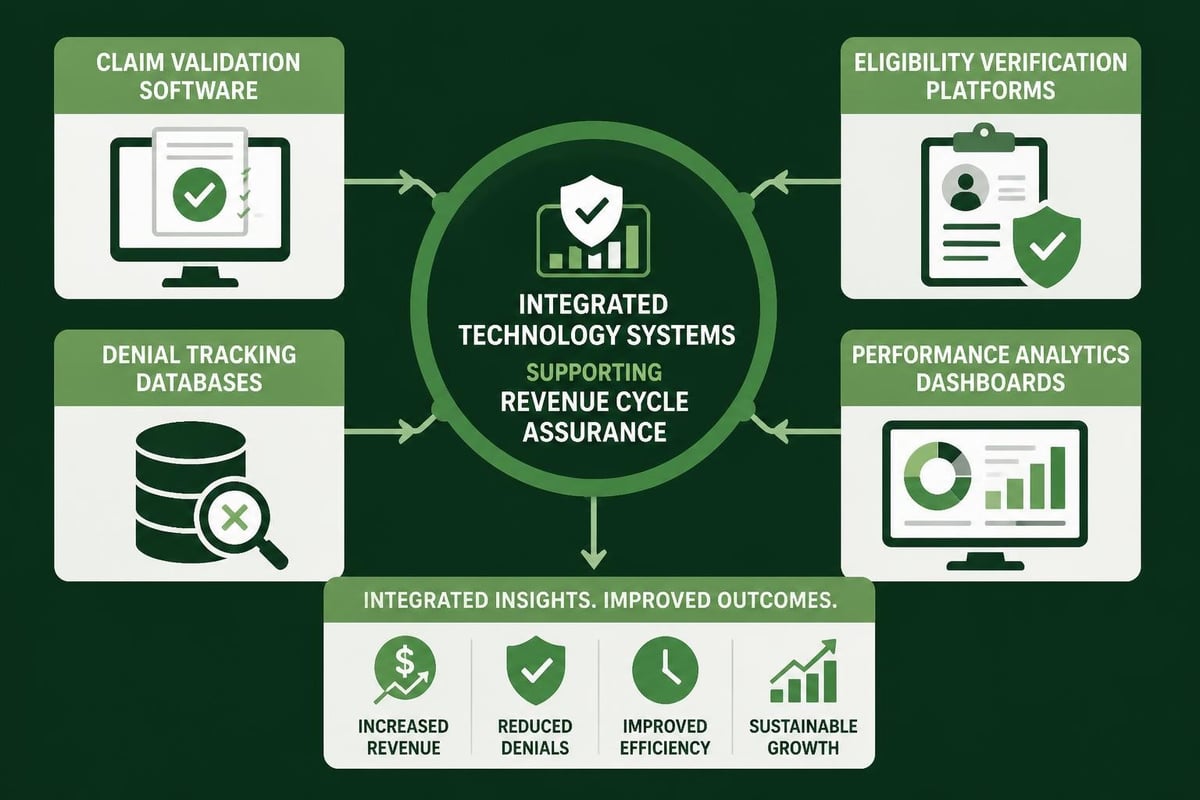
Modern revenue cycle assurance depends heavily on technology platforms that automate verification, flag anomalies, and generate actionable intelligence. However, technology alone cannot ensure quality without proper configuration and human oversight.
Automated Verification Systems
Advanced practice management and billing systems incorporate built-in validation rules that prevent common errors. Assurance rcm strategies leverage these capabilities while recognizing their limitations.
Technology-enabled assurance includes:
- Real-time eligibility verification interfaces
- Automated claim scrubbing engines
- Contract modeling and underpayment detection
- Predictive analytics for denial risk assessment
- Dashboard reporting for performance monitoring
Organizations must balance automation with human judgment, particularly for complex cases requiring clinical context or payer relationship knowledge. The most effective assurance programs combine technological efficiency with expert analysis.
Understanding the full rcm process helps organizations identify where technology adds value and where human intervention remains essential.
Performance Metrics and Continuous Improvement
Quality assurance programs require measurable objectives and regular performance assessment. Key performance indicators provide visibility into process effectiveness and highlight areas needing attention.
| Metric Category | Specific KPIs | Target Benchmarks |
|---|---|---|
| Clean Claim Rate | First-pass acceptance percentage | 95% or higher |
| Denial Rate | Claims denied as percentage of submissions | Below 5% |
| Days in AR | Average time from service to payment | Under 30 days |
| Collection Rate | Net collections as percentage of charges | 95-98% for commercial payers |
| Bad Debt Write-offs | Uncollectible balances as percentage of revenue | Less than 2% |
Regular review of these metrics against industry benchmarks reveals performance gaps and validates improvement initiatives. Organizations should establish monthly reporting cadences that include trend analysis and action planning.
Compliance Assurance in Revenue Cycle Management
Regulatory compliance represents a non-negotiable aspect of healthcare revenue cycle operations. Assurance rcm frameworks must incorporate systematic compliance verification to prevent violations that trigger audits, penalties, or exclusion from payer programs.
HIPAA Privacy and Security Safeguards
Patient information protection remains paramount throughout revenue cycle operations. Quality assurance protocols must verify that all staff members handling protected health information follow established privacy and security procedures.
HIPAA compliance assurance activities:
- Regular access audits verifying appropriate information viewing
- Encryption verification for all electronic transmissions
- Business associate agreement compliance monitoring
- Breach response protocol testing and validation
- Staff training completion tracking and documentation
Organizations must demonstrate ongoing compliance through documented audits and corrective action plans. These records become critical during external reviews or investigations.
Billing Compliance and Fraud Prevention
Beyond privacy requirements, healthcare organizations face strict regulations governing billing accuracy and fraud prevention. Assurance programs must include controls that prevent inadvertent violations and detect potential abuse.
Coding audits serve dual purposes: ensuring accurate reimbursement and demonstrating good faith compliance efforts. Regular sampling across service lines, providers, and payer types creates defensible audit trails.
Internal compliance programs should mirror external audit methodologies, identifying issues before regulators or payers discover them. This proactive approach minimizes financial risk and protects organizational reputation.
Staff Training and Competency Verification
Human expertise forms the backbone of effective revenue cycle assurance. Even the most sophisticated systems cannot compensate for inadequately trained staff or outdated knowledge.
Ongoing Education and Certification Programs
Healthcare billing regulations, coding guidelines, and payer requirements change frequently. Assurance rcm strategies must include continuous staff education that keeps pace with evolving standards.
Training program components:
- Quarterly updates on coding and billing regulation changes
- Payer-specific requirement education for major contracts
- Technology system training for new features and workflows
- Compliance refresher courses covering fraud prevention
- Customer service skills development for patient interactions
Organizations should track training completion rates and assess knowledge retention through competency testing. This documentation proves valuable during audits and supports quality improvement initiatives.
Partnering with experienced providers who offer comprehensive medical billing services ensures access to staff with current certifications and specialized expertise across multiple specialties.
Quality Assurance Team Structure
Dedicated quality assurance personnel provide independent oversight of revenue cycle operations. These team members must possess deep knowledge of billing practices, coding standards, and regulatory requirements.
Effective QA teams include members with diverse backgrounds: certified coders, experienced billers, compliance specialists, and data analysts. This multidisciplinary approach ensures comprehensive evaluation across all assurance dimensions.
Vendor and Partner Assurance Protocols
Many healthcare organizations rely on external partners for revenue cycle functions. These relationships require their own assurance mechanisms to ensure service quality and performance accountability.
Service Level Agreement Monitoring
Clear expectations established through detailed service level agreements provide the foundation for vendor assurance. These agreements should specify measurable performance standards with consequences for non-compliance.
Critical SLA components include:
- Turnaround time requirements for claims processing and submission
- Accuracy standards for coding and data entry functions
- Response time guarantees for issue resolution and support
- Reporting obligations providing visibility into operations
- Security and compliance commitments protecting patient information
Regular vendor performance reviews comparing actual results against SLA commitments identify problems early and facilitate corrective action discussions.
Audit Rights and Transparency Requirements
Contracts with revenue cycle partners should include provisions allowing periodic audits of their processes and controls. These audits verify that vendors maintain quality standards and comply with all relevant regulations.
Transparency in reporting and operations builds trust and enables collaborative problem-solving. Organizations should establish regular communication cadences with vendors, reviewing metrics, discussing challenges, and planning improvements.
Financial Impact of Comprehensive Assurance Programs
Investment in revenue cycle assurance generates measurable returns through reduced denials, accelerated collections, and improved compliance positioning. Organizations must quantify these benefits to justify resource allocation.
Revenue Protection and Enhancement
Comprehensive assurance rcm programs prevent revenue leakage at multiple points throughout the billing cycle. The cumulative effect of these prevention measures significantly exceeds program costs.
Quantifiable financial benefits:
- Reduced claim denials saving 2-4% of gross revenue annually
- Improved coding accuracy increasing reimbursement by 1-3%
- Faster payment cycles improving cash flow and reducing borrowing costs
- Decreased bad debt through better front-end collections
- Lower compliance risk reducing potential penalties and legal costs
Organizations should establish baseline metrics before implementing new assurance measures, then track improvements to calculate return on investment. This data supports ongoing program funding and expansion.
Cost Avoidance Through Compliance
Regulatory violations and audit findings create substantial financial exposure beyond direct penalties. Reputational damage, exclusion from payer programs, and increased scrutiny impose long-term costs that comprehensive assurance programs help avoid.
Proactive compliance auditing identifies and corrects issues before external reviewers discover them. Self-disclosure of identified problems often results in reduced penalties compared to findings during formal audits.
Implementing robust assurance protocols throughout revenue cycle operations protects financial performance while ensuring regulatory compliance and operational excellence. These quality control mechanisms require ongoing investment but deliver substantial returns through reduced denials, improved collections, and minimized compliance risk. Greenhive Billing Solutions provides comprehensive revenue cycle management services with built-in quality assurance across all processes, from eligibility verification through denial management, helping healthcare providers maximize reimbursements while maintaining compliance and operational efficiency.

