
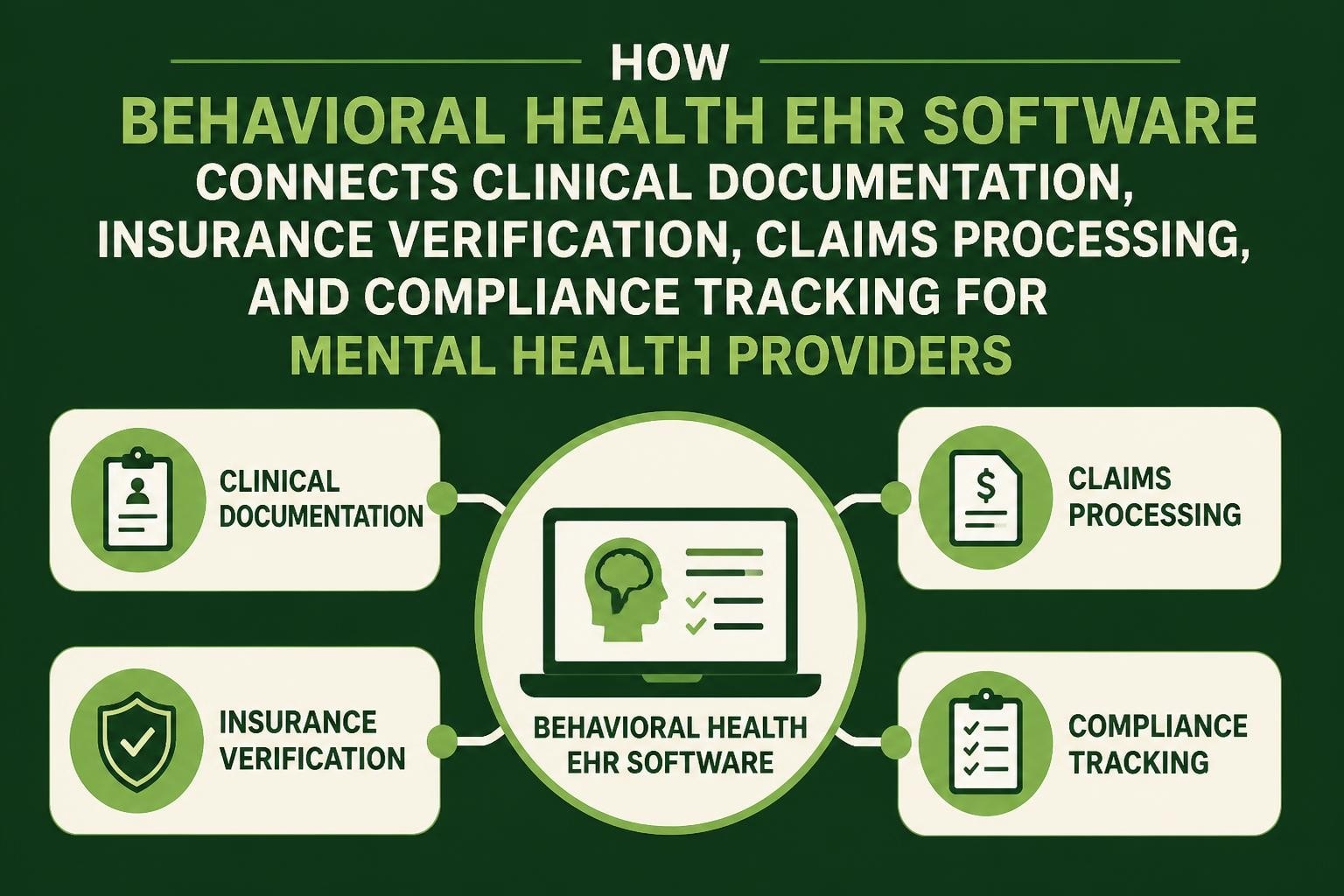
Behavioral health providers face unique documentation and billing challenges that require specialized technology solutions. From managing complex treatment plans to navigating stringent privacy requirements, mental health and substance use disorder facilities need systems designed specifically for their workflows. Behavioral health EHR software has evolved to address these distinct needs, offering features that support clinical excellence while ensuring proper reimbursement and regulatory compliance.
Understanding Behavioral Health EHR Software Requirements
Mental health and substance abuse treatment facilities operate under different regulatory frameworks than general medical practices. These specialized requirements make selecting the right behavioral health EHR software essential for both clinical and financial success.
Privacy regulations like 42 CFR Part 2 impose stricter standards on substance use disorder records than standard HIPAA requirements. This means your EHR must support granular consent management and separate authorization protocols. Additionally, behavioral health EHR adoption trends show that many facilities still struggle with interoperability, making it critical to choose systems that support robust data exchange capabilities.
Key Features That Drive Clinical Efficiency
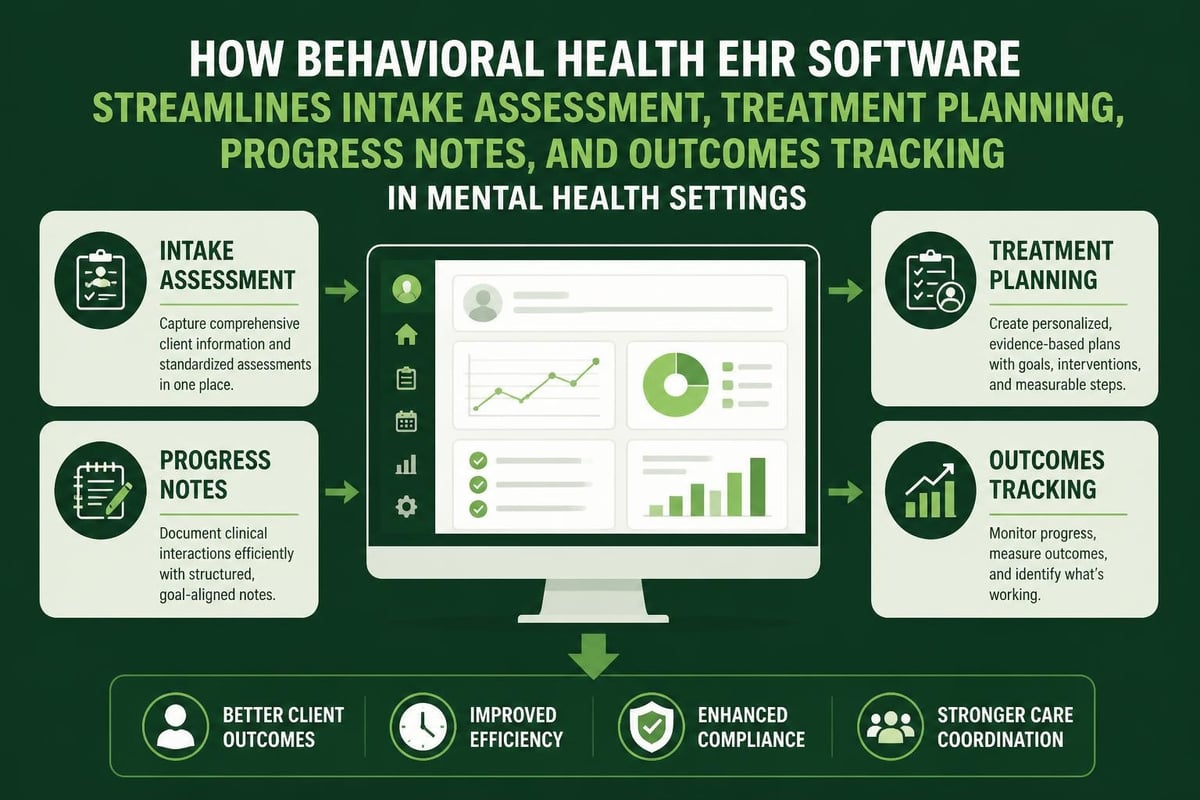
Effective behavioral health EHR software must balance comprehensive documentation with user-friendly workflows. Clinicians need to capture detailed session notes, treatment plans, and progress assessments without sacrificing valuable patient interaction time.
Essential features include:
- Treatment plan templates tailored to behavioral health modalities
- Outcome measurement tools for evidence-based practice
- Medication management with psychiatric medication databases
- Crisis documentation and safety planning modules
- Group therapy scheduling and documentation capabilities
Revenue Cycle Impact of Specialized EHR Systems
The financial performance of behavioral health practices depends heavily on accurate documentation and efficient billing processes. Behavioral health EHR software directly impacts revenue cycle outcomes through improved coding accuracy and streamlined claims submission.
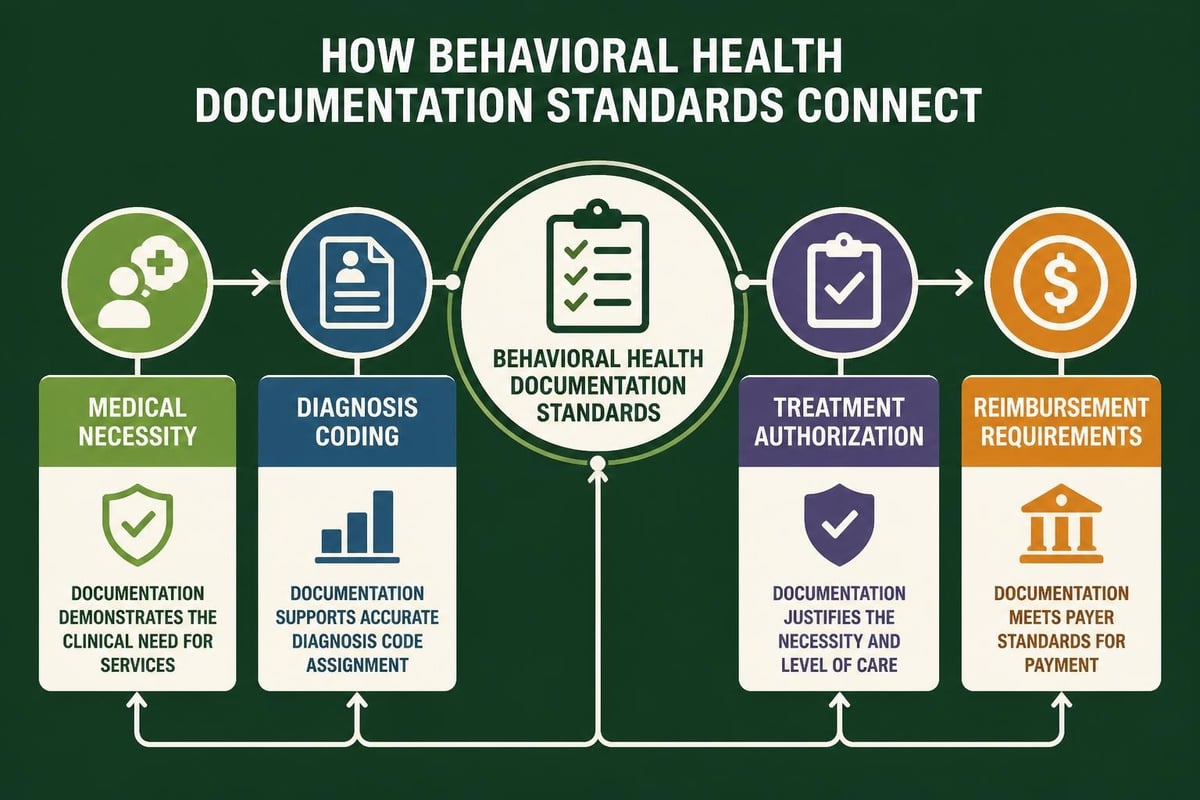
Mental health billing requires precise documentation to justify medical necessity and support proper diagnosis coding. The integration between clinical documentation and billing functions reduces errors that lead to claim denials. When your EHR captures required elements during the clinical encounter, denial management becomes more proactive rather than reactive.
| Revenue Cycle Benefit | Impact on Financial Performance |
|---|---|
| Automated coding suggestions | Reduces undercoding and missed revenue |
| Real-time eligibility verification | Decreases claim rejections |
| Documentation compliance alerts | Minimizes audit risk |
| Insurance authorization tracking | Prevents payment delays |
Integration with Billing Operations
Seamless data flow between clinical and financial systems eliminates duplicate data entry and reduces administrative burden. When selecting behavioral health EHR software, evaluate how well it integrates with your billing workflows.
Healthcare revenue cycle analytics become more powerful when clinical data automatically populates billing records. This integration supports more accurate charge capture and enables real-time revenue tracking. For practices working with medical billing services, EHR systems that export clean claims data accelerate the entire revenue cycle.
The Centers for Medicare & Medicaid Services Behavioral Health MITA framework emphasizes the importance of interoperability for state behavioral health agencies, highlighting how system integration affects reimbursement processes.
Implementation Considerations for Behavioral Health Practices
Selecting and deploying behavioral health EHR software requires careful planning to ensure successful adoption and maximize return on investment. The implementation process affects both clinical operations and financial performance.
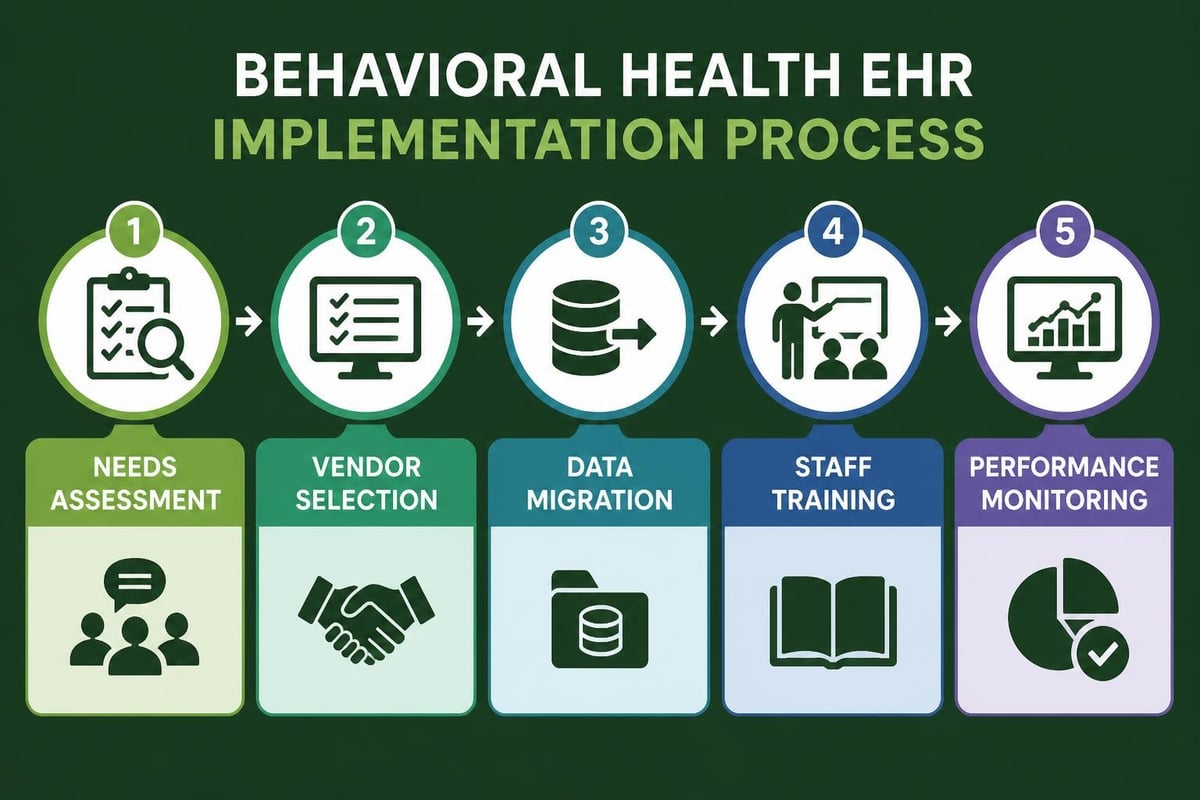
Step-by-Step Implementation Approach
Step 1: Assess your practice’s specific needs, including specialty services, payer mix, and existing technology infrastructure.
Step 2: Evaluate vendors based on behavioral health specialization, not just general EHR capabilities. Review EHR certification requirements to ensure compliance.
Step 3: Plan data migration carefully, particularly for historical patient records and active treatment plans.
Step 4: Train staff on both clinical documentation and billing workflows to ensure proper system utilization.
Step 5: Monitor key performance indicators during the first 90 days to identify and address adoption barriers quickly.
Different types of EHR systems serve varying practice sizes and specialties. Cloud-based solutions offer flexibility and lower upfront costs, while on-premise systems provide greater control over data security. Understanding these options helps align technology choices with operational priorities.
Compliance and Documentation Standards
Regulatory compliance drives many decisions about behavioral health EHR software functionality. Systems must support documentation standards that satisfy multiple oversight bodies while remaining clinically useful.
The American Nursing Informatics Association’s best practices emphasize structured data collection that supports both patient care and regulatory requirements. This includes standardized assessment tools, treatment plan components, and progress note formats.
Beyond basic documentation, modern behavioral health EHR software should facilitate:
- Audit trail capabilities that track all record access and modifications
- Consent management supporting multiple authorization levels
- Quality measure reporting for value-based care programs
- State reporting automation for treatment episode data
Measuring Documentation Quality
Quality documentation directly impacts claim acceptance rates and audit outcomes. The connection between clinical notes and billing accuracy makes EHR selection a critical financial decision, not just a clinical one.
Poor documentation leads to claim denials that consume staff time and delay revenue. Behavioral health EHR software with built-in compliance checks helps prevent these issues before claims submission.
| Documentation Element | Financial Impact |
|---|---|
| Medical necessity justification | Supports authorization approval |
| Time-based service duration | Ensures accurate CPT code selection |
| Progress toward goals | Validates ongoing treatment |
| Diagnosis severity indicators | Affects reimbursement levels |
Vendor Selection and System Evaluation
The market for behavioral health EHR software includes both specialty vendors and general healthcare IT companies offering behavioral health modules. Understanding the differences helps practices make informed purchasing decisions.
Reviews of top EHR software provide comparative analysis of features, pricing, and user satisfaction. However, behavioral health practices should prioritize vendors with proven experience in mental health and substance use disorder treatment settings.
When evaluating systems, consider total cost of ownership beyond initial licensing fees. Implementation costs, ongoing support, training requirements, and interface fees all affect long-term financial viability. Research on data exchange among behavioral health facilities reveals that interoperability challenges can significantly increase operational costs.
Practices utilizing medical coding services should ensure their chosen EHR exports data in formats that support efficient external coding workflows. Similarly, those working with eligibility verification services need systems that integrate seamlessly with payer verification processes.
The integration of behavioral and social determinants of health data, as explored in recent research on AI and EHR systems, represents an emerging capability that may influence future vendor selection criteria for forward-thinking practices.
Selecting the right behavioral health EHR software significantly impacts both clinical outcomes and financial performance. The integration between documentation quality, coding accuracy, and revenue cycle efficiency makes this decision critical for practice sustainability. Greenhive Billing Solutions helps behavioral health providers maximize reimbursement through expert revenue cycle management services that work seamlessly with your existing EHR systems, ensuring accurate claims processing, efficient denial management, and optimized financial performance.

