
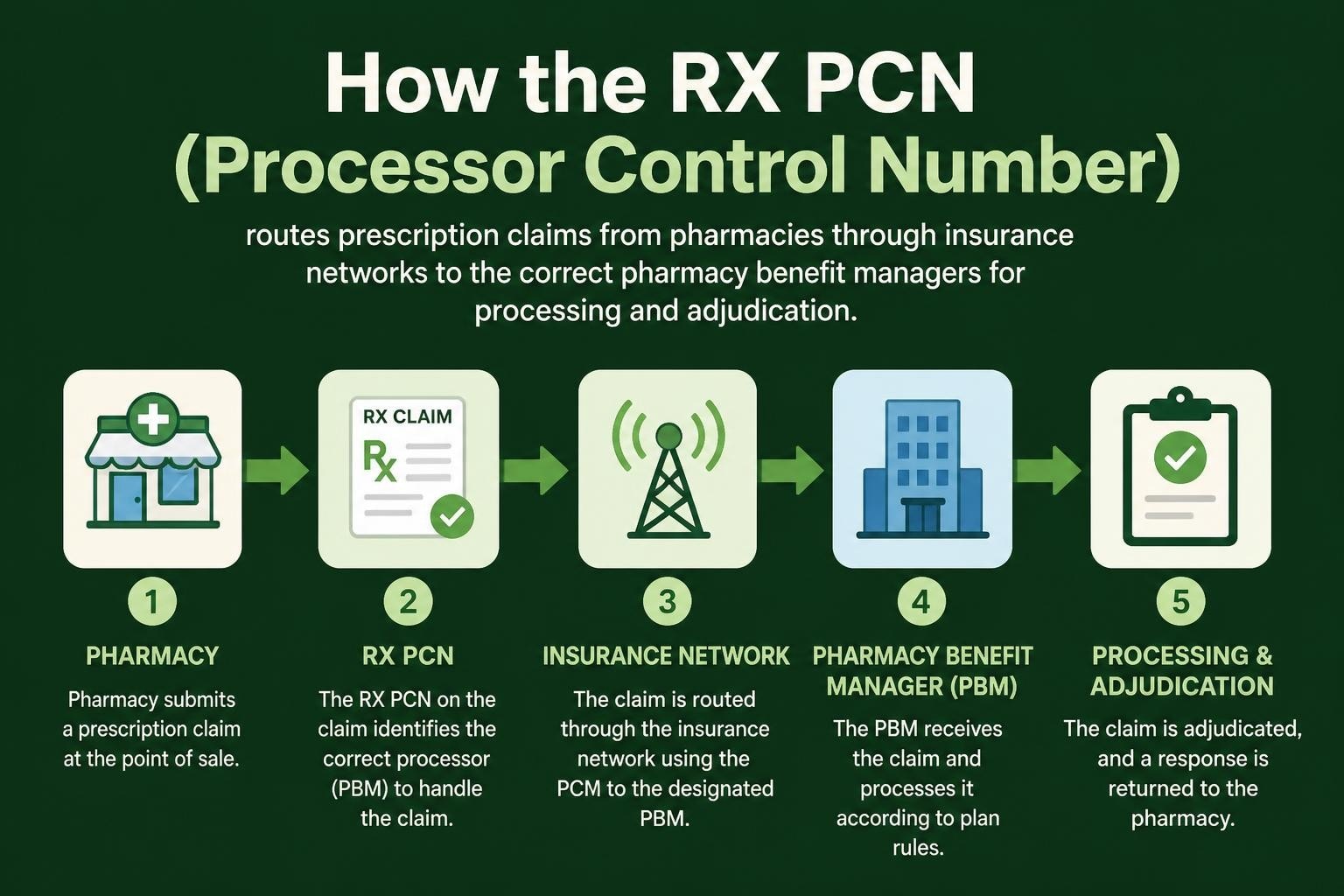
Understanding insurance card identifiers is essential for healthcare providers managing claims and ensuring proper reimbursement. Among these identifiers, the rx pcn meaning often creates confusion despite its critical role in pharmacy benefits processing. The RX PCN, or Processor Control Number, serves as a routing mechanism that directs prescription claims to the appropriate pharmacy benefit manager for adjudication. For revenue cycle management professionals, grasping this identifier’s function can prevent claim delays and optimize billing workflows.
What RX PCN Actually Means on Insurance Cards
The rx pcn meaning refers to the Processor Control Number, a unique identifier printed on health insurance cards that specifies which pharmacy benefit processing system should handle a patient’s prescription claims. This number works in conjunction with other identifiers like the RX BIN number to ensure claims reach the correct destination within the complex pharmacy benefits network.
Key characteristics of RX PCN include:
- Typically consists of alphanumeric characters
- Appears alongside other pharmacy identifiers on insurance cards
- Varies by insurance carrier and plan type
- Routes claims to specific processors within a PBM network
The RX PCN on insurance cards functions as a secondary routing number that narrows down which specific processing system within a pharmacy benefit manager’s infrastructure should handle the claim. Without this number or with an incorrect entry, pharmacies may face claim rejections that delay patient care and create administrative burdens.
How RX PCN Differs From Other Insurance Identifiers
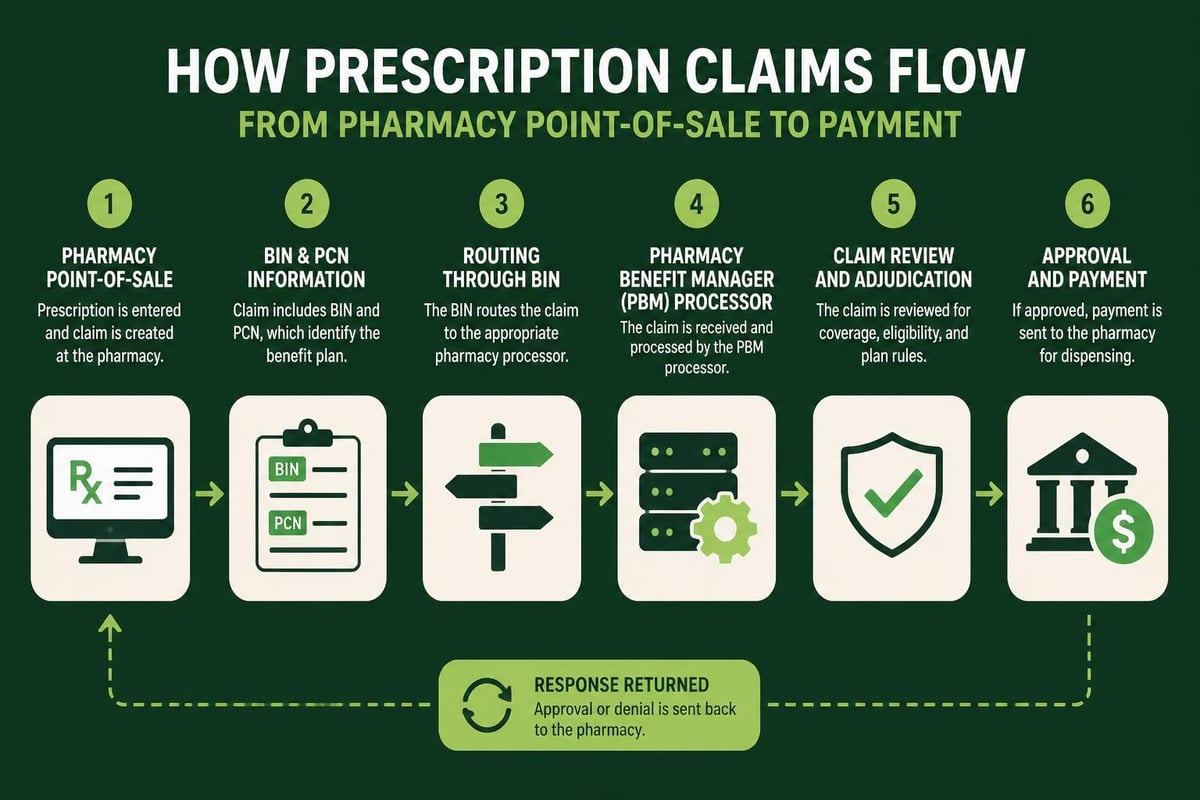
Understanding the rx pcn meaning requires distinguishing it from related identifiers that appear on insurance cards. Each number serves a distinct purpose in the claims processing ecosystem.
| Identifier | Purpose | Format | Example Usage |
|---|---|---|---|
| RX BIN | Bank Identification Number for initial routing | 6 digits | Directs to specific PBM |
| RX PCN | Processor Control Number for secondary routing | Alphanumeric | Routes to specific processor within PBM |
| Group ID | Identifies employer or plan group | Alphanumeric | Determines benefit structure |
| Member ID | Identifies individual patient | Alphanumeric | Links to patient records |
The multiple identifiers on insurance cards work together hierarchically. The BIN number initially routes the claim to the correct pharmacy benefit manager, while the PCN further specifies which processing platform or network within that PBM should handle the transaction. This two-tier routing system enables complex pharmacy networks to manage millions of claims efficiently.
Location and Format Variations
Insurance carriers display the RX PCN in different locations on cards. Some place it prominently on the front near other pharmacy information, while others include it on the back with member services contact details. The format itself may range from simple three-character codes to longer alphanumeric strings depending on the processor’s requirements.
Why RX PCN Matters for Revenue Cycle Management
For healthcare providers offering in-house pharmacy services or managing prescription-related billing, understanding the rx pcn meaning directly impacts revenue capture. Incorrect PCN entries represent a common cause of claim rejections that delay payment and increase administrative costs.
Revenue cycle implications include:
- Claim rejection rates: Missing or incorrect PCN numbers lead to immediate rejections at the pharmacy switch level
- Rework expenses: Staff must research correct information and resubmit claims
- Payment delays: Each rejection-resubmission cycle extends the revenue cycle timeline
- Patient satisfaction: Claim issues at point of service create negative patient experiences
Healthcare organizations implementing denial management strategies should include verification protocols for pharmacy identifiers. Training staff to recognize when PCN information appears incorrect or missing prevents downstream complications.
Common Issues With RX PCN Processing
Several recurring problems emerge when healthcare providers handle prescription billing without properly understanding the rx pcn meaning and its application.
Outdated Card Information
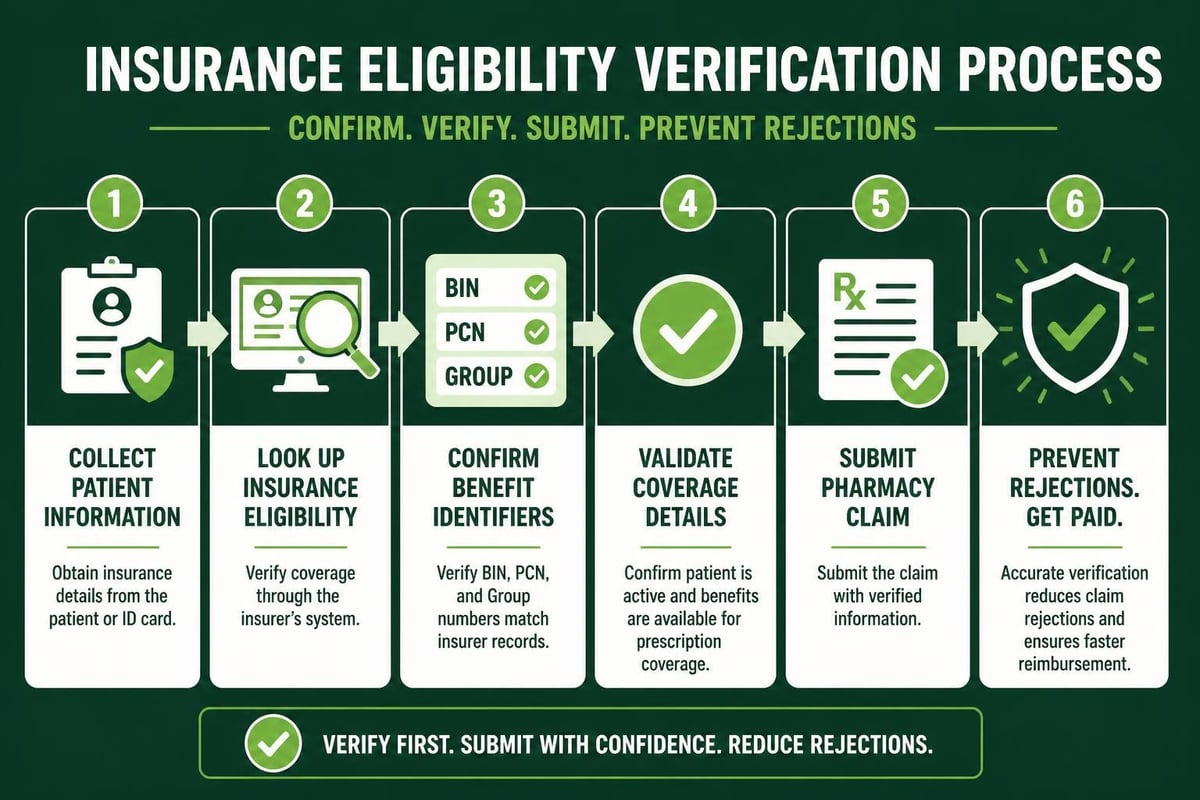
Patients often carry outdated insurance cards with superseded PCN numbers. When insurance carriers change pharmacy benefit managers or renegotiate contracts, PCN numbers may change without obvious notification to members. Verification systems must check current eligibility rather than relying solely on presented cards.
Manual Entry Errors
Alphanumeric PCN codes create opportunities for transcription mistakes. The letter “O” versus the number “0” or similar character confusion generates rejected claims. Insurance eligibility verification processes should incorporate validation checks that flag potentially misread characters.
Multiple Plan Coverage
Patients with dual coverage through Medicare and supplemental plans may have different PCN numbers for different benefit tiers. Staff must understand which identifier applies to specific prescription types or coverage scenarios.
Best Practices for Healthcare Providers
Implementing systematic approaches to pharmacy identifier management strengthens revenue cycle performance and reduces claim complications related to PCN issues.
Recommended protocols include:
- Electronic verification: Use real-time eligibility systems that pull current PCN data directly from payers rather than manual card entry
- Staff training: Educate billing personnel on the importance of PCN numbers and common error patterns
- Documentation standards: Maintain clear records of verified PCN information separate from scanned card images
- Quality audits: Regularly review rejected pharmacy claims to identify PCN-related patterns
Organizations utilizing comprehensive revenue cycle management services benefit from specialized expertise in pharmacy benefit navigation. Professional billing teams maintain current knowledge of PCN requirements across multiple carriers and stay informed about network changes that affect routing numbers.
Integration With Modern Billing Systems
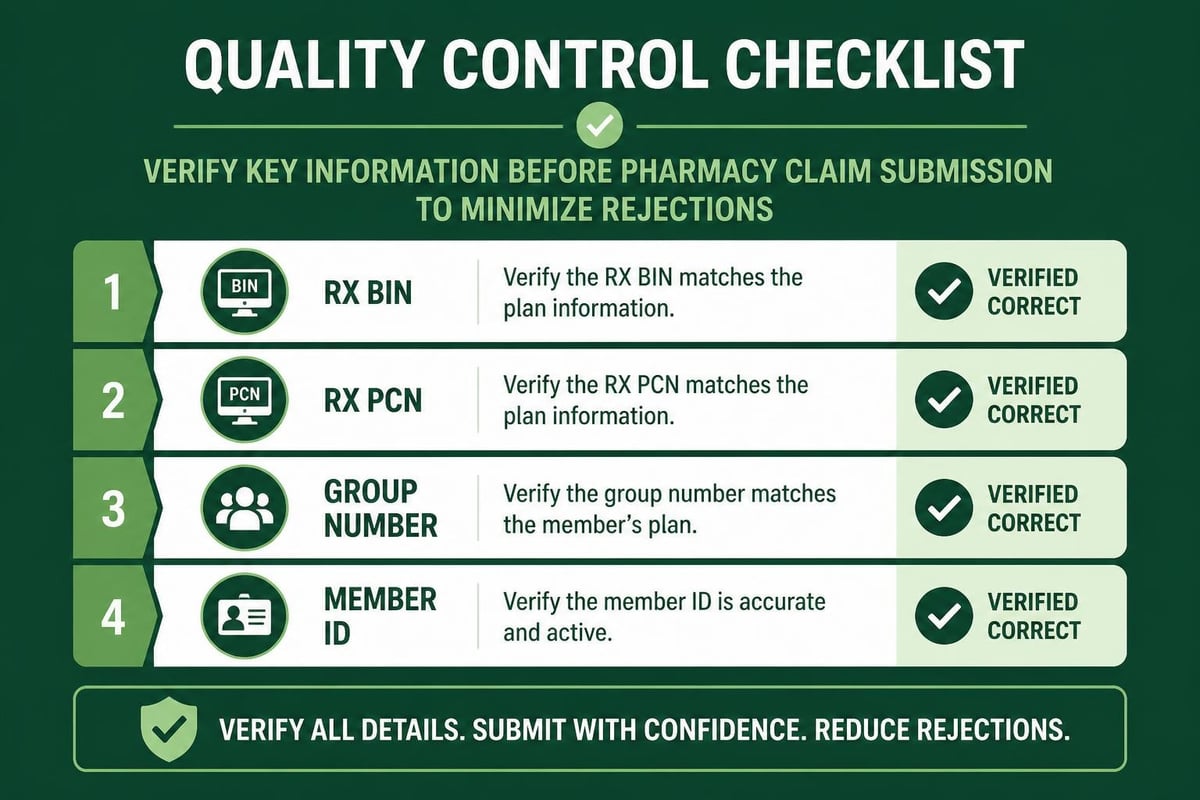
Contemporary medical billing software increasingly incorporates validation logic for pharmacy identifiers including PCN numbers. These systems cross-reference entered values against carrier databases and flag potential discrepancies before claim submission.
Automated eligibility verification interfaces retrieve current PCN information during patient registration, reducing dependency on physical card accuracy. However, providers should understand that not all verification systems capture pharmacy-specific identifiers with equal reliability. Testing integration points ensures your platform retrieves complete prescription benefit data.
For practices evaluating technology solutions, confirming robust pharmacy identifier handling should rank alongside standard medical billing features. The distinction between general medical claims processing and pharmacy claims routing requires specialized functionality that not all platforms provide equally well.
Patient Communication Considerations
While understanding the rx pcn meaning primarily serves operational purposes, patient-facing staff should communicate clearly when card information issues arise. Patients rarely understand these technical identifiers, so explaining delays or coverage questions in accessible terms maintains trust.
When prescription benefit questions require resolution, directing patients to their carrier’s pharmacy member services line often proves more efficient than attempting complex troubleshooting at the provider level. Staff should maintain current contact information for major pharmacy benefit managers to facilitate quick patient assistance.
Documentation of patient communications regarding PCN issues also protects practices if disputes arise about coverage or billing delays. Clear notes showing attempted verification and patient notification demonstrate due diligence in revenue cycle management.
Mastering pharmacy identifier systems like the RX PCN strengthens claim accuracy and accelerates reimbursement timelines for healthcare providers managing prescription-related billing. These technical details significantly impact overall revenue cycle performance when handled systematically. Greenhive Billing Solutions provides comprehensive revenue cycle management services that include expert handling of pharmacy claims, insurance verification, and denial management. Our experienced team navigates complex insurance requirements including pharmacy benefit identifiers to maximize your reimbursements while reducing administrative burden. Contact Greenhive Billing Solutions today to discover how our tailored solutions can optimize your practice’s financial performance.

