
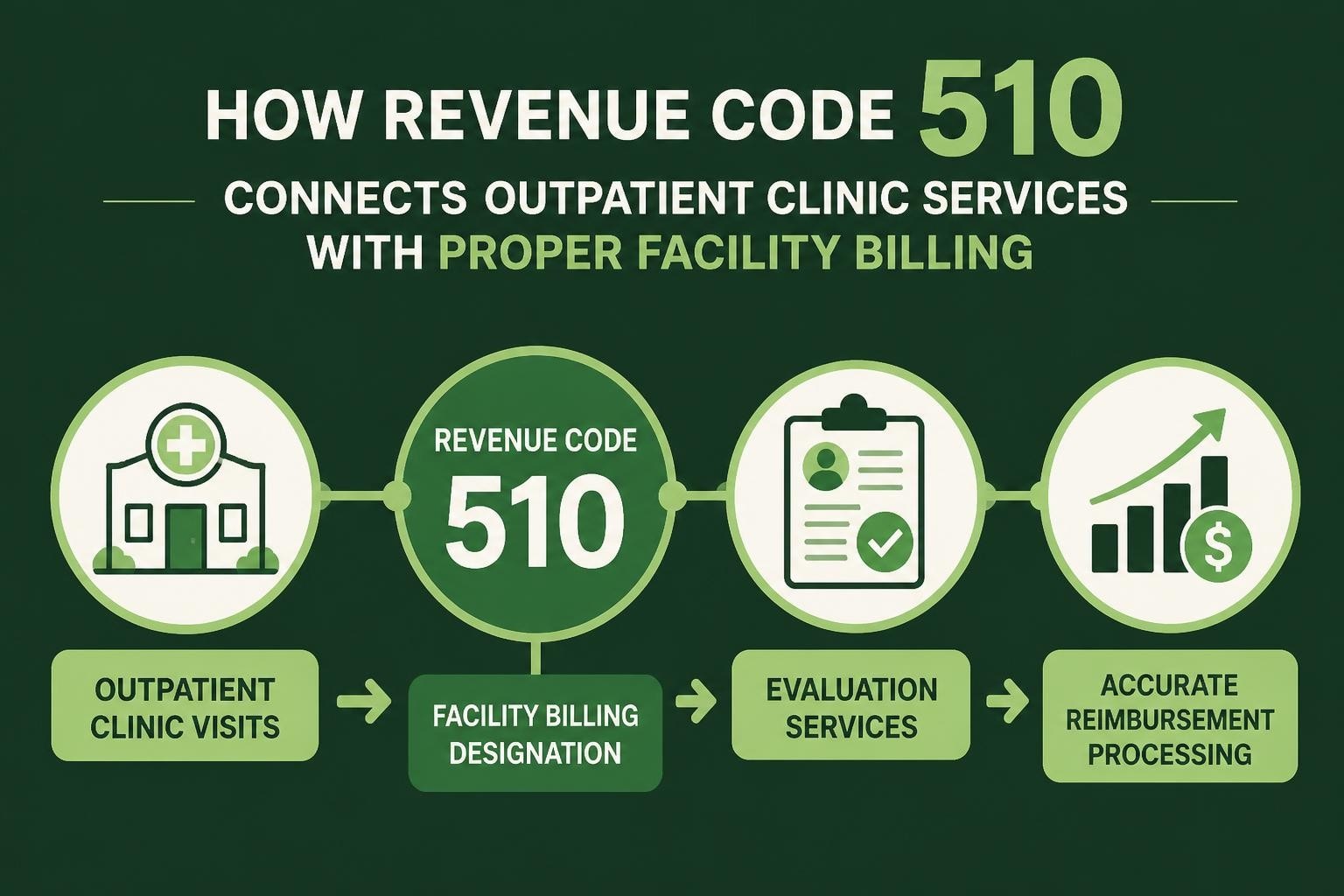
Healthcare billing requires precision at every level, and understanding specific revenue codes is essential for ensuring accurate reimbursement. Among the various codes used in facility billing, revenue code 510 plays a critical role in outpatient clinic settings. This code represents general clinic services and serves as the foundation for billing evaluation and management services delivered in provider-based facilities. Proper application of this code directly impacts claim acceptance rates, reimbursement timing, and overall financial performance for healthcare organizations.
Understanding Revenue Code 510 in Healthcare Billing
Revenue code 510 is designated specifically for general classification of clinic services provided in an outpatient setting. This code appears on UB-04 claim forms, which hospitals and facility-based clinics use to bill payers for services rendered. Unlike CPT codes that describe specific procedures, revenue codes identify the type of accommodation or ancillary service provided during a patient encounter.
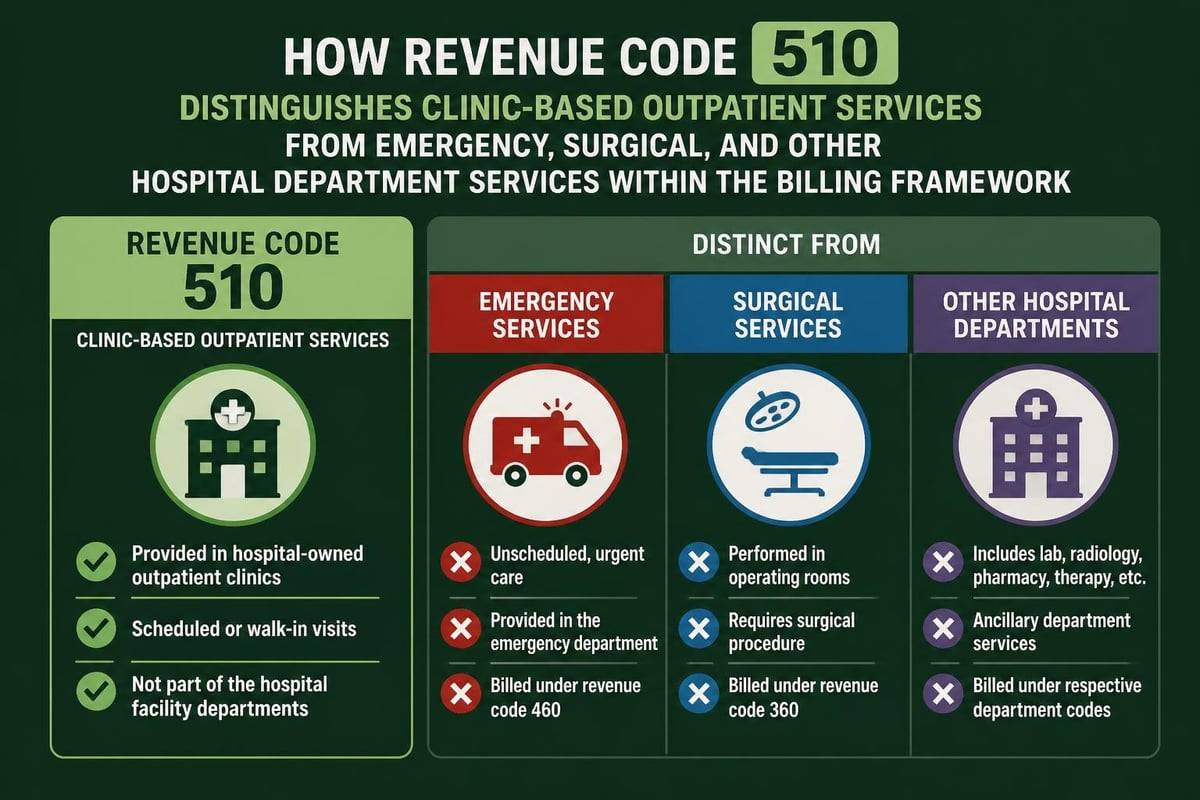
The primary function of revenue code 510 is to indicate that services were delivered in a clinic environment rather than in an emergency department, operating room, or other hospital departments. This distinction matters significantly because payers process facility charges differently based on the location where care was provided.
The Structure and Purpose of Revenue Codes
Revenue codes consist of four digits and fall into categories that describe different types of services or accommodations. The 510-519 series specifically covers clinic services, with 510 serving as the general classification. According to comprehensive billing guidelines, these codes help payers understand where services occurred and what type of facility resources were utilized.
Key characteristics of revenue code 510 include:
- Identifies general clinic services in outpatient settings
- Appears on institutional claims (UB-04 forms)
- Must be paired with appropriate CPT or HCPCS codes
- Indicates facility-level charges separate from professional fees
- Supports proper reimbursement for provider-based clinics
The distinction between facility and professional charges is crucial. When a healthcare organization operates a provider-based clinic, it can bill both a facility fee (using revenue code 510) and a professional fee (using a CMS-1500 form with CPT codes). This dual billing structure reflects the resources the facility invests in maintaining the clinic space, equipment, and support staff.
When to Use Revenue Code 510
Proper application of revenue code 510 requires understanding the specific scenarios where this code applies. The code is appropriate for outpatient clinic visits where evaluation and management services occur in a facility-based setting. These services typically involve patient consultations, examinations, and treatment planning that don’t require emergency intervention or surgical procedures.
Provider-based clinics represent the primary setting for revenue code 510 usage. These facilities operate as part of a hospital or health system but provide ambulatory care services. The outpatient clinic billing framework requires revenue code 510 to distinguish these services from those provided in other departments.
Clinical Settings Appropriate for Revenue Code 510
Different types of clinic services fall under this revenue code classification. Understanding these variations helps billing professionals apply the code correctly across diverse patient encounters.
| Service Type | Application | Common Procedures |
|---|---|---|
| General Medical Clinic | Routine evaluations and follow-ups | Preventive care, chronic disease management |
| Specialty Clinic | Specialized consultations | Cardiology, endocrinology, rheumatology visits |
| Urgent Care Clinic | Non-emergency acute care | Minor injuries, acute illnesses |
| Behavioral Health Clinic | Mental health services | Therapy sessions, psychiatric consultations |
The connection between revenue code 510 and specific CPT codes follows established patterns. For instance, evaluation and management codes like 99211-99215 frequently pair with revenue code 510 for established patient visits. New patient visits coded as 99201-99205 also commonly appear alongside this revenue code. Healthcare organizations can reference detailed coding combinations to ensure proper pairing.
Common Billing Mistakes with Revenue Code 510
Despite its straightforward classification, revenue code 510 presents several opportunities for billing errors that can lead to claim denials or payment delays. Recognizing these pitfalls helps billing teams implement preventive measures and improve clean claim rates.
One frequent mistake involves using revenue code 510 for services that don’t qualify as clinic-based care. Emergency department visits, for example, require different revenue codes (typically in the 450 series). Similarly, surgical procedures performed in operating rooms need codes from the 360 series, not clinic codes.
Five common errors with revenue code 510:
- Applying the code to emergency department services when patients receive care in the ED rather than a clinic setting
- Failing to include required CPT codes that describe the specific services provided during the clinic visit
- Using incorrect charge amounts that don’t reflect actual facility costs or established fee schedules
- Billing without proper documentation showing the service occurred in a qualifying outpatient clinic environment
- Mixing facility and professional components on the same claim form instead of separating them appropriately
The relationship between revenue cycle management processes and accurate coding cannot be overstated. When billing teams misapply revenue code 510, it creates downstream effects throughout the entire revenue cycle, from claim submission through payment posting and reconciliation.
Documentation Requirements for Revenue Code 510
Proper documentation supports every claim submitted with revenue code 510. Payers increasingly scrutinize facility claims to ensure services were truly provided in outpatient clinic settings rather than other areas of the hospital. Clinical documentation must clearly indicate the location where services occurred, the nature of the evaluation or treatment, and the time spent with the patient.
Medical records should include specific details about the clinic environment, whether the visit was scheduled or walk-in, and what facility resources were utilized during the encounter. This documentation becomes particularly important when payers audit claims or request medical records to verify billing accuracy.
Integration with Revenue Cycle Management Systems
Modern revenue cycle management relies on sophisticated systems that automate much of the coding and billing process. However, these systems require accurate configuration to handle revenue code 510 correctly. Healthcare organizations must establish charge description masters (CDMs) that properly link revenue codes with appropriate CPT codes and pricing structures.
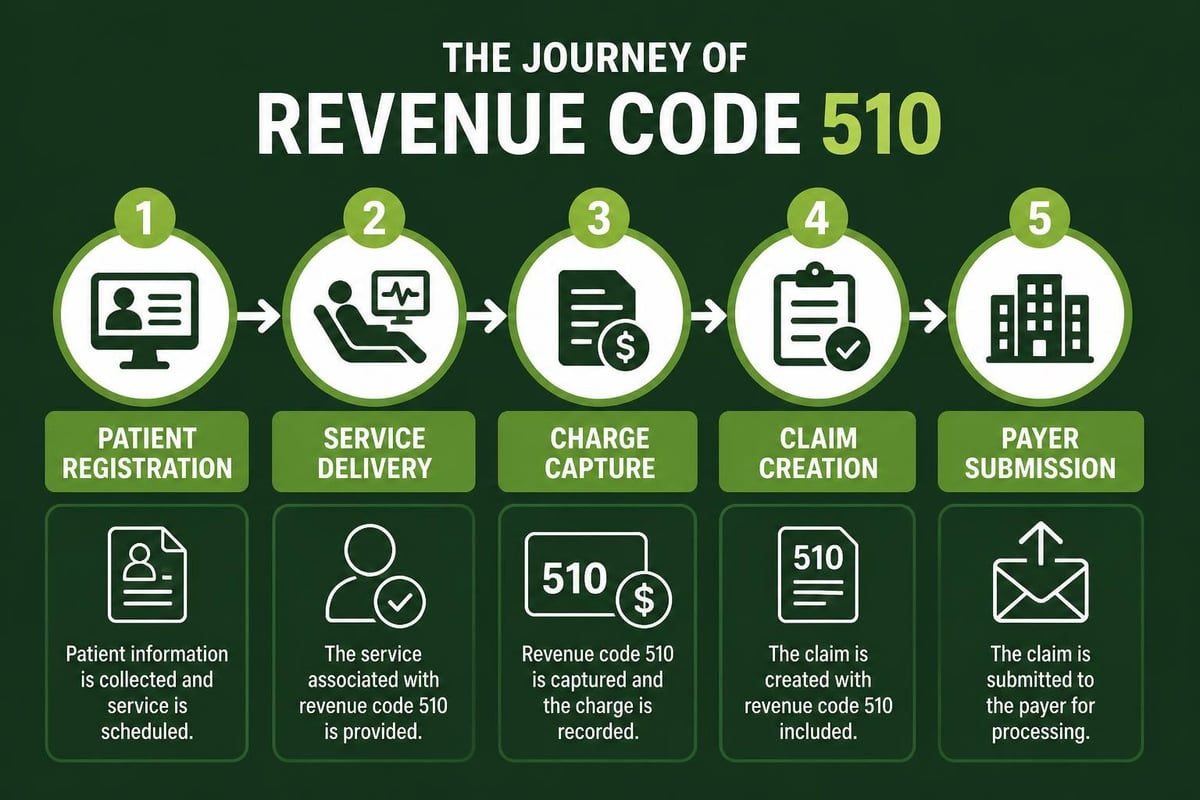
The charge capture process represents a critical point where revenue code 510 enters the billing workflow. When patients receive services in outpatient clinics, registration staff and clinical personnel must document the encounter location accurately. This information flows into the billing system, triggering the appropriate revenue code assignment.
System Configuration Best Practices
Billing systems should include validation rules that prevent incompatible code combinations. For example, the system might flag attempts to bill revenue code 510 with CPT codes typically associated with inpatient procedures or emergency services. These edits catch errors before claims reach payers, reducing denials and rework.
System requirements for accurate revenue code 510 processing:
- Automated revenue code assignment based on clinic department
- Validation rules preventing invalid CPT/revenue code combinations
- Fee schedule maintenance linking charges to specific service locations
- Edit checks ensuring required fields are complete before claim generation
- Reporting capabilities tracking revenue code 510 usage patterns
Healthcare organizations working with professional billing services benefit from teams experienced in configuring and maintaining these complex systems. Proper system setup ensures that revenue code 510 appears on claims only when appropriate and that all supporting information meets payer requirements.
Revenue Code 510 and Payer Policies
Different payers maintain varying policies regarding revenue code 510 and facility billing for outpatient clinic services. Medicare has specific rules about when facility fees can be charged alongside professional services, particularly in provider-based departments. Understanding these nuances helps billing teams submit claims that align with each payer’s expectations.
Commercial insurance carriers may have different criteria for accepting facility charges with revenue code 510. Some payers require specific modifiers or place of service codes that correspond with the revenue code. Others maintain lists of approved service locations or require prior authorization for facility-level billing in certain clinic settings.
State Medicaid programs establish their own guidelines for revenue code usage. The Rhode Island Medicaid program, for instance, provides detailed descriptions of acceptable revenue codes and their applications. Billing professionals must stay current with these state-specific requirements to avoid claim rejections.
| Payer Type | Key Considerations | Common Requirements |
|---|---|---|
| Medicare | Provider-based designation rules | Attestation forms, specific billing formats |
| Commercial | Contract-specific facility fee allowances | Modifier requirements, authorization protocols |
| Medicaid | State-specific revenue code policies | Enrollment verification, service limitations |
| Workers’ Compensation | Fee schedule adherence | Injury-related documentation, pre-authorization |
Managing Payer-Specific Requirements
Healthcare organizations often struggle with the complexity of maintaining different billing protocols for various payers. Creating payer-specific edit rules within billing systems helps ensure that revenue code 510 claims meet each carrier’s unique requirements before submission.
Regular monitoring of claim denial patterns related to revenue code 510 provides valuable insights into payer policy changes or systematic billing issues. When denials spike for specific payers or service types, denial management teams can investigate root causes and implement corrective actions.
Revenue Code 510 Compliance and Auditing
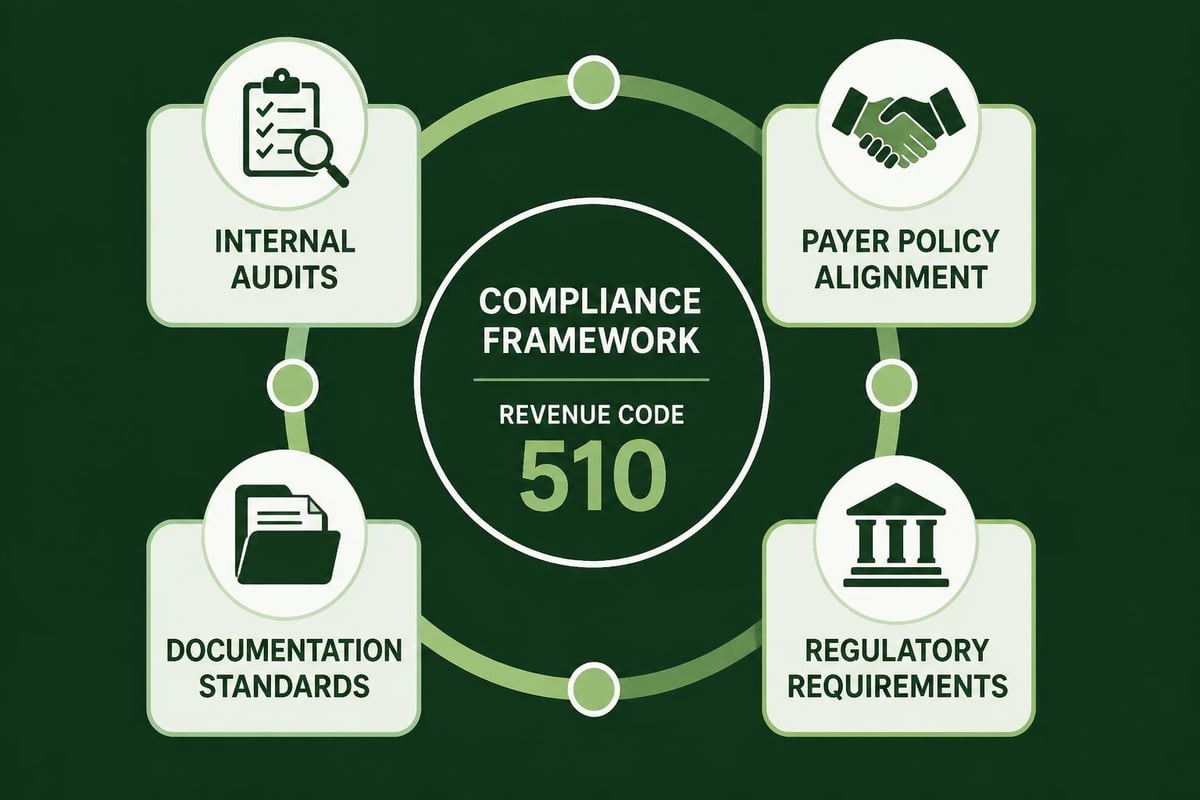
Compliance considerations surrounding revenue code 510 extend beyond basic coding accuracy. Federal regulations govern when healthcare facilities can bill facility fees for outpatient services, and misuse of revenue codes can trigger audit flags or compliance investigations. Organizations must implement controls ensuring that revenue code 510 appears only on claims representing legitimate facility-based services.
Internal auditing programs should regularly review a sample of claims containing revenue code 510 to verify proper application. These audits assess whether documentation supports facility-level billing, whether paired CPT codes are appropriate, and whether charges align with established fee schedules.
Key compliance checkpoints for revenue code 510:
- Verification that services occurred in designated outpatient clinic areas
- Confirmation that provider-based designation requirements are met
- Review of charge amounts against approved fee schedules
- Assessment of documentation quality supporting facility billing
- Validation that claims include all required data elements
The consequences of improper revenue code 510 usage can be significant. Payers may recoup payments if audits reveal that facility fees were billed inappropriately. In extreme cases, patterns of incorrect billing might trigger fraud investigations or exclusion from payer networks.
Training and Education for Billing Teams
Maintaining billing accuracy with revenue code 510 requires ongoing education for coding and billing staff. As payer policies evolve and regulatory guidance changes, teams must stay informed about current requirements. Structured training programs help staff understand when revenue code 510 applies, what documentation is needed, and how to identify potential billing errors before claim submission.
New billing personnel need comprehensive orientation covering revenue code fundamentals and facility-specific protocols. This training should include hands-on practice with actual patient encounters, allowing staff to apply revenue code 510 in realistic scenarios under supervision.
Building a Knowledge Base
Healthcare organizations benefit from maintaining detailed reference materials specific to revenue code 510 usage. These resources might include internal coding guidelines, payer policy summaries, and decision trees helping staff determine appropriate code selection. Quick reference guides placed at billing workstations provide just-in-time support when questions arise.
Regular team meetings create opportunities to discuss challenging cases, share updates about payer policy changes, and review audit findings related to revenue code 510. This collaborative approach builds collective knowledge and helps identify systematic issues requiring process improvements.
Professional development opportunities through industry associations, online resources for coding and billing, and certification programs enhance team capabilities. Investing in staff education pays dividends through improved claim accuracy and reduced rework.
Technology Solutions Supporting Revenue Code 510 Accuracy
Advanced technology platforms offer features specifically designed to improve revenue code accuracy and streamline the billing process. Computer-assisted coding tools can suggest appropriate revenue codes based on clinical documentation and service location information. These systems learn from historical billing patterns and payer feedback to improve their recommendations over time.
Claim scrubbing software provides another layer of protection against revenue code 510 errors. Before claims reach payers, scrubbing tools apply comprehensive edit rules checking for invalid code combinations, missing data elements, and potential compliance issues. This proactive approach prevents denials and reduces the time between service delivery and payment.
Integration between electronic health records (EHR) and billing systems creates seamless information flow supporting accurate revenue code assignment. When clinicians document services in the EHR, location and service type information automatically transfers to the billing system, triggering appropriate revenue code selection without manual intervention.
Technology capabilities enhancing revenue code 510 accuracy:
- Automated code suggestion based on service location and documentation
- Real-time claim edits preventing common revenue code errors
- EHR integration eliminating manual data entry and transcription errors
- Analytics identifying patterns in denials or payment delays
- Workflow automation routing claims for review when potential issues are detected
Healthcare organizations can leverage skilled billing professionals who work with these advanced systems to maximize their effectiveness. Combining technology capabilities with human expertise creates a robust approach to revenue code 510 management.
Best Practices for Revenue Code 510 Management
Implementing structured processes around revenue code 510 helps healthcare organizations maintain billing accuracy and optimize reimbursement. These best practices encompass everything from initial service documentation through final payment posting and reconciliation.
Establishing clear policies about when revenue code 510 should be used provides consistency across the organization. These policies should specify which clinic types qualify for facility billing, what documentation is required, and how charges should be calculated. When everyone follows the same protocols, billing becomes more predictable and reliable.
Regular communication between clinical and billing departments ensures that both teams understand their roles in accurate revenue code assignment. Clinicians need to document service locations precisely, while billing staff must interpret that documentation correctly and apply appropriate codes.
Quality Monitoring and Continuous Improvement
Ongoing monitoring of key performance indicators related to revenue code 510 helps organizations track their success and identify improvement opportunities. Metrics might include clean claim rates for claims containing revenue code 510, denial rates by payer and denial reason, days in accounts receivable for facility claims, and accuracy rates from internal audits.
When performance falls short of targets, root cause analysis helps pinpoint specific issues requiring attention. Perhaps certain clinic types generate higher denial rates, suggesting need for payer education or policy clarification. Maybe specific billing staff make more errors, indicating training needs.
Corrective action plans address identified issues systematically. These plans might include additional staff training, system configuration changes, updated documentation templates, or enhanced communication protocols between departments. Tracking the effectiveness of corrective actions ensures that improvements stick.
Step-by-step quality improvement process:
- Establish baseline metrics measuring current performance with revenue code 510 billing
- Set specific improvement targets based on industry benchmarks and organizational goals
- Identify root causes of denials, errors, or delays through data analysis and stakeholder feedback
- Implement targeted interventions addressing specific issues discovered during analysis
- Monitor results continuously to verify improvements and identify new opportunities
Healthcare organizations partnering with experienced revenue cycle management providers gain access to industry best practices and proven methodologies for managing revenue code 510 and other billing complexities.
Revenue Code 510 in Multi-Specialty Environments
Organizations operating multiple specialty clinics face additional complexity in managing revenue code 510 appropriately. Each specialty may have unique service patterns, typical CPT code combinations, and payer requirements affecting how facility charges should be billed.
Cardiology clinics might frequently bill revenue code 510 alongside diagnostic testing codes and complex evaluation services. Orthopedic clinics could pair the revenue code with injection procedures and joint aspiration codes. Behavioral health settings use different CPT code sets entirely, requiring distinct validation rules and charge structures.
Creating specialty-specific billing protocols helps staff apply revenue code 510 correctly across this diverse environment. These protocols document which services each specialty typically provides, what revenue codes are appropriate, and what documentation standards apply. Billing staff can reference these guides when processing claims from unfamiliar specialties.
Coordinating Across Multiple Locations
Healthcare systems with clinics at different geographic locations must ensure consistent revenue code 510 application across all sites. Centralized billing departments need clear communication channels with each clinic location to understand local service patterns and address location-specific issues.
Standardized charge description masters across all locations promote consistency, while allowing flexibility for site-specific services or payer contracts. Regular audits sampling claims from different locations verify that revenue code 510 usage remains consistent regardless of where services were provided.
Accurate application of revenue code 510 forms the foundation for successful outpatient clinic billing, directly impacting claim acceptance rates and reimbursement timelines. By understanding when this code applies, avoiding common mistakes, and implementing robust quality controls, healthcare organizations can optimize their facility billing processes and improve financial performance. Greenhive Billing Solutions brings extensive expertise in revenue cycle management, helping healthcare providers navigate complex billing requirements including proper revenue code usage. Our team of skilled professionals works within your existing systems to improve accuracy, reduce denials, and maximize reimbursements. Contact Greenhive Billing Solutions today to learn how our comprehensive services can strengthen your revenue cycle operations.

