
Healthcare organizations face mounting pressure to maintain financial viability while delivering exceptional patient care. The complexity of medical billing, insurance verification, claims processing, and reimbursement has created an urgent need for comprehensive healthcare revenue cycle management solutions. These solutions streamline financial operations, reduce administrative burdens, and ensure practices receive maximum reimbursements for services rendered. For healthcare providers navigating today's challenging reimbursement landscape, understanding and implementing effective revenue cycle management strategies has become essential for long-term sustainability and growth.
Understanding Healthcare Revenue Cycle Management Solutions
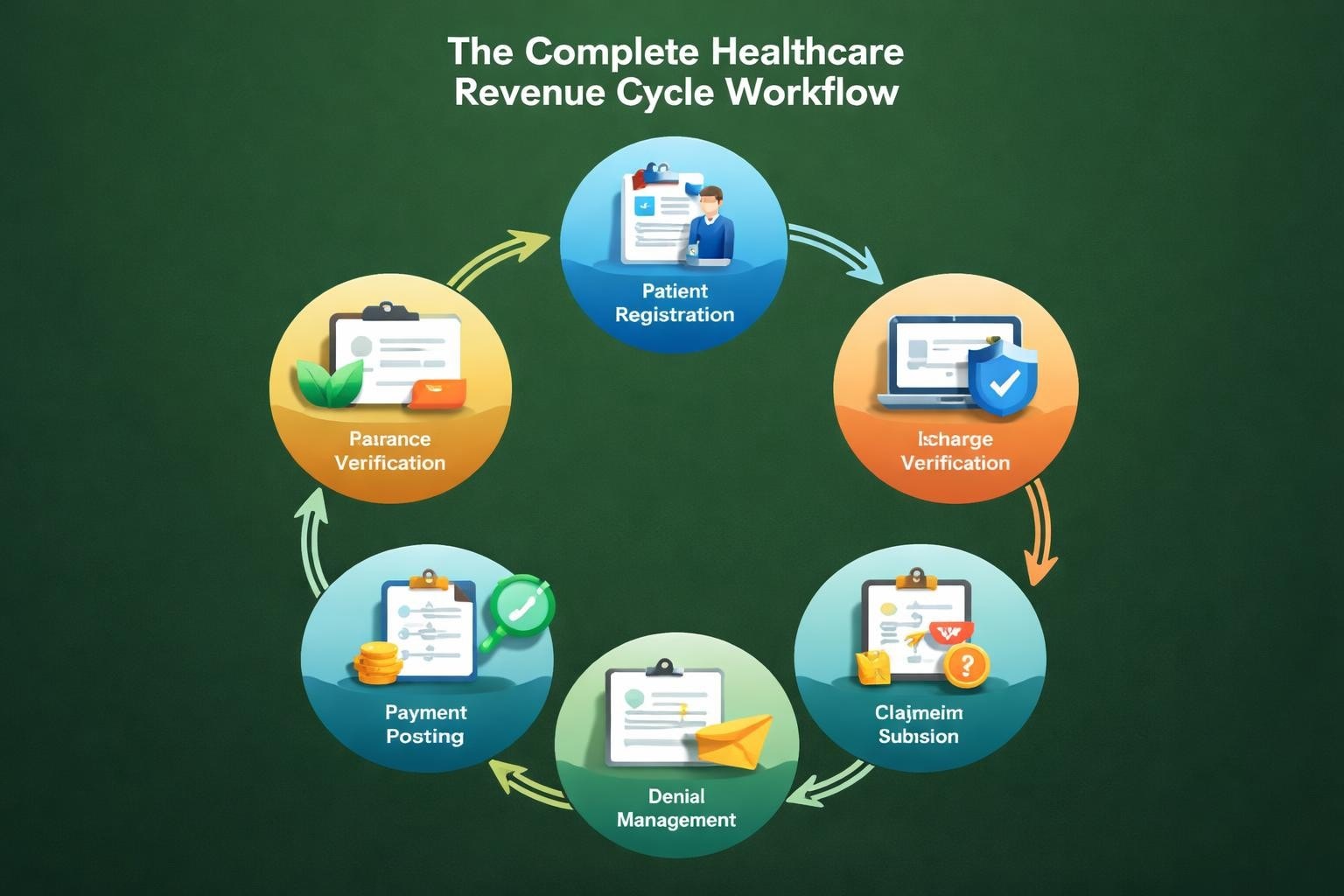
Healthcare revenue cycle management solutions encompass the entire financial process from patient registration through final payment collection. These comprehensive approaches integrate technology, skilled professionals, and proven methodologies to optimize every touchpoint in the billing lifecycle.
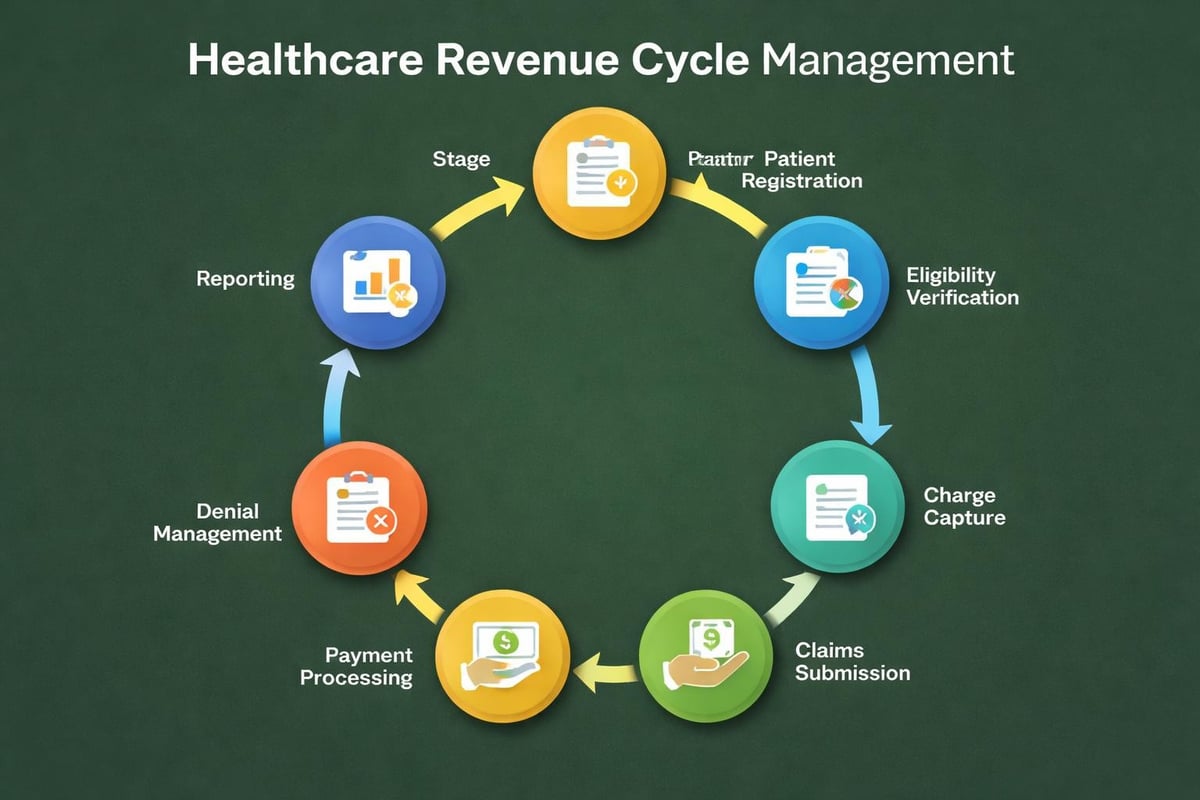
The revenue cycle begins when a patient schedules an appointment and extends through eligibility verification, charge capture, claim submission, payment posting, and accounts receivable follow-up. Each phase presents unique challenges that require specialized expertise and attention to detail.
Key components of effective healthcare revenue cycle management solutions include:
- Patient demographic and insurance verification
- Prior authorization management
- Accurate charge capture and coding
- Clean claim submission
- Denial prevention and management
- Payment posting and reconciliation
- Patient billing and collections
- Comprehensive reporting and analytics
Organizations implementing robust revenue cycle management solutions typically experience significant improvements in days in accounts receivable, claim acceptance rates, and overall revenue capture. These solutions address the financial complexities that healthcare providers face while allowing clinical staff to focus on patient care.
Common Challenges Addressed by Modern Solutions
Healthcare providers encounter numerous obstacles that impede financial performance and operational efficiency. Understanding these challenges helps organizations identify where healthcare revenue cycle management solutions deliver the greatest value.
Claim Denials and Rejections
Claim denials represent one of the most significant financial drains for medical practices. Industry data indicates that initial denial rates range from 5% to 25%, with many denials stemming from preventable errors. Common denial triggers include incorrect patient information, missing documentation, coding errors, and authorization failures.
Advanced solutions incorporate denial management strategies that identify patterns, implement preventive measures, and establish systematic appeal processes. These approaches reduce denial rates while accelerating payment timelines.
Coding Accuracy and Compliance
Medical coding complexity continues to intensify with regular updates to CPT, ICD-10, and HCPCS code sets. Inaccurate coding leads to claim denials, compliance risks, and lost revenue. Healthcare revenue cycle management solutions address this challenge through:
| Challenge Area | Solution Approach | Expected Outcome |
|---|---|---|
| Code Updates | Continuous staff training and certification | Maintained compliance |
| Documentation Gaps | Provider education and query processes | Improved code specificity |
| Modifier Usage | Systematic review protocols | Reduced denials |
| Audit Risk | Regular internal audits | Minimized compliance exposure |
Professional revenue cycle teams stay current with coding changes and ensure documentation supports billed services, protecting practices from audit risks and maximizing legitimate reimbursement.
Insurance Verification Inefficiencies
Incomplete or inaccurate insurance verification creates downstream problems throughout the revenue cycle. When eligibility issues surface after service delivery, practices face increased bad debt and patient dissatisfaction. Effective healthcare revenue cycle management solutions implement systematic verification protocols that confirm coverage, identify patient responsibility, and secure necessary authorizations before appointments.
Technology Integration in Revenue Cycle Management
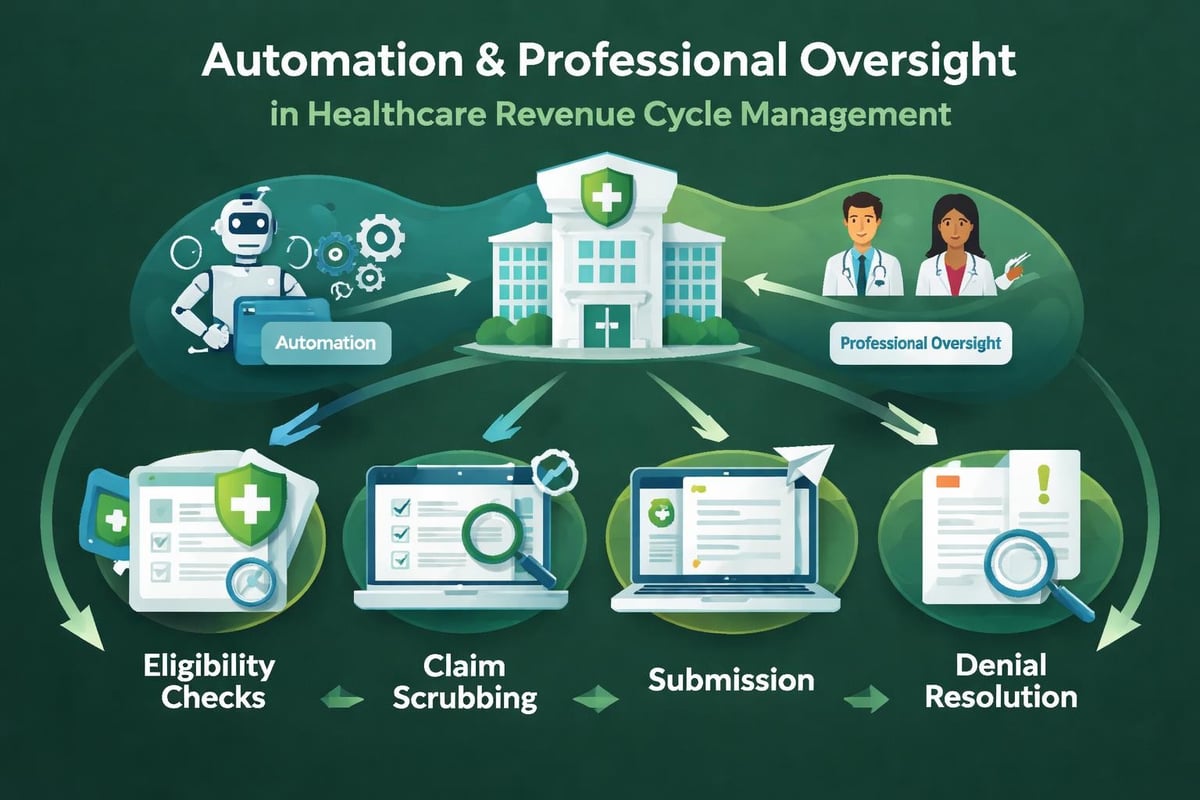
While technology platforms form the foundation of modern revenue cycle operations, successful implementation requires experienced professionals who understand both the software capabilities and the nuances of medical billing. Healthcare revenue cycle management solutions leverage industry-standard tools to enhance accuracy, efficiency, and visibility across all financial processes.
Electronic Health Records and Practice Management Systems
Integration between clinical documentation and billing systems creates seamless workflows that reduce data entry errors and accelerate charge capture. Professional revenue cycle teams work within client-owned systems, adapting to existing infrastructure while identifying optimization opportunities.
These integrations enable real-time eligibility verification, automated charge capture from clinical documentation, and streamlined claim submission processes. When properly configured and managed, integrated systems significantly reduce the time between service delivery and payment receipt.
Automation and Artificial Intelligence
Emerging technologies transform traditional revenue cycle processes through intelligent automation. Machine learning algorithms analyze historical claim data to predict denial likelihood, enabling proactive intervention. Recent research on deep learning applications in claims processing demonstrates significant potential for reducing denials through predictive analytics.
Automation delivers value across multiple functions:
- Eligibility verification: Automated batch checking reduces manual work
- Claim scrubbing: Rules-based engines identify errors before submission
- Payment posting: Electronic remittance advice streamlines reconciliation
- Denial management: Automated tracking ensures timely appeals
- Reporting: Scheduled analytics provide actionable insights
Healthcare providers benefit from these technologies when paired with skilled professionals who interpret results, handle exceptions, and maintain quality oversight.
Data Analytics and Performance Monitoring
Comprehensive reporting capabilities enable healthcare organizations to monitor key performance indicators and identify improvement opportunities. Healthcare revenue cycle management solutions provide visibility into metrics such as:
- Days in accounts receivable
- Clean claim rate
- Denial rate by payer and reason
- Net collection rate
- Cost to collect
- Patient responsibility collections
Regular analysis of these metrics reveals trends, highlights problem areas, and validates the effectiveness of process improvements. Understanding revenue cycle analytics empowers data-driven decision-making that enhances financial performance.
Best Practices for Optimal Revenue Cycle Performance
Implementing healthcare revenue cycle management solutions requires more than technology adoption. Organizations achieve the best results by following proven methodologies and maintaining focus on continuous improvement.
Front-End Process Excellence
Revenue cycle success begins with accurate patient information capture and thorough insurance verification. Front-end excellence prevents downstream problems and establishes clear financial expectations with patients.
Critical front-end practices include:
- Collecting complete demographic and insurance information
- Verifying active coverage and benefits
- Identifying patient financial responsibility
- Securing prior authorizations when required
- Communicating cost estimates transparently
Organizations that invest in front-end accuracy experience fewer claim denials, faster payment cycles, and improved patient satisfaction. Best practices in revenue cycle management emphasize the importance of these foundational activities.
Mid-Cycle Accuracy and Efficiency
The mid-cycle encompasses charge capture, coding, and claim submission. This phase demands meticulous attention to detail and thorough knowledge of payer requirements.
Professional revenue cycle teams ensure charges are captured completely and accurately, codes reflect documented services appropriately, and claims contain all required information before submission. Establishing systematic quality review processes catches errors before they reach payers, maintaining high clean claim rates.
Understanding clean claim requirements and implementing review protocols significantly reduces rejection rates and accelerates reimbursement timelines.
Back-End Collections and Denial Management
Even with optimal front-end and mid-cycle processes, some claims require follow-up, and patient balances need collection. Effective healthcare revenue cycle management solutions include systematic approaches to accounts receivable management.
| Back-End Activity | Key Actions | Success Metrics |
|---|---|---|
| Denial Management | Root cause analysis, timely appeals, process corrections | Overturn rate, prevention rate |
| Payer Follow-up | Systematic aging review, effective communication | Days in A/R, collection rate |
| Patient Collections | Clear statements, payment plans, compassionate contact | Patient pay collection rate |
| Reconciliation | Daily payment posting, variance investigation | Posting accuracy, reconciliation frequency |
Back-end efficiency requires persistence, organization, and expertise in payer policies and appeal processes. Professional teams dedicated to these functions typically achieve substantially better results than practices managing these activities internally with divided attention.
Selecting the Right Approach for Your Practice
Healthcare organizations have multiple options when implementing revenue cycle management solutions. The optimal choice depends on practice size, specialty, existing resources, and strategic priorities.
In-House Versus Outsourced Solutions
Some practices maintain internal billing departments, while others partner with specialized revenue cycle management service providers. Each approach offers distinct advantages and challenges.
In-house billing considerations:
- Direct control over processes and staff
- Immediate access to billing personnel
- Investment in software, training, and infrastructure
- Challenges with staff turnover and expertise gaps
- Limited scalability during growth periods
Outsourced revenue cycle management benefits:
- Access to specialized expertise across all RCM functions
- Reduced overhead and infrastructure costs
- Scalability to accommodate practice growth
- Proven processes and quality controls
- Advanced technology without capital investment
Many healthcare providers find that partnering with experienced RCM service providers delivers superior financial results while freeing internal resources for clinical and operational priorities.
Specialty-Specific Considerations
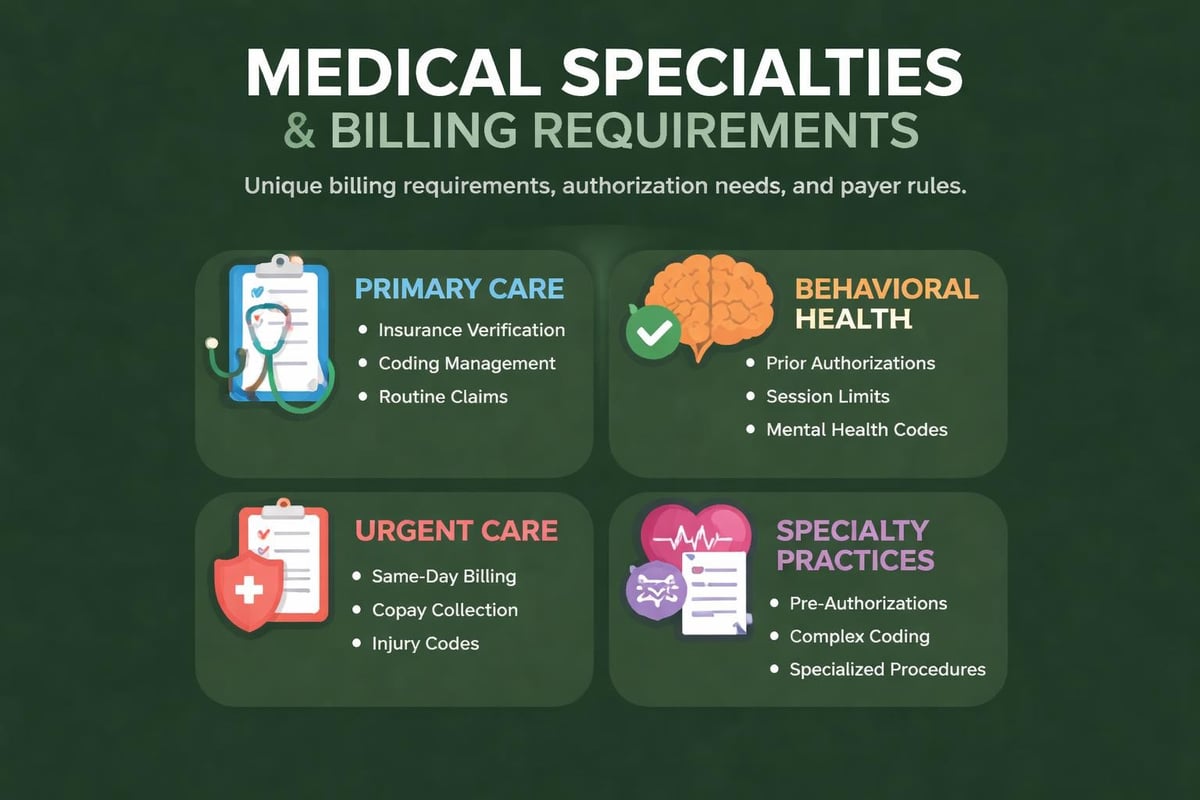
Different medical specialties face unique revenue cycle challenges requiring tailored approaches. Behavioral health practices deal with complex authorization requirements and specialized payer rules. Urgent care facilities manage high patient volumes with diverse payer mixes and often require point-of-service collection capabilities.
Healthcare revenue cycle management solutions should accommodate specialty-specific requirements such as:
- Unique coding and documentation standards
- Specialized payer contracts and fee schedules
- Industry-specific compliance requirements
- Service-specific authorization protocols
Providers benefit from working with revenue cycle teams that understand their specialty's particular challenges and payer relationships. For example, behavioral health billing requires expertise in mental health parity laws, session-based billing, and specialized authorization processes.
Measuring Success and Return on Investment
Implementing healthcare revenue cycle management solutions represents a significant commitment of resources and attention. Organizations must establish clear metrics to evaluate performance and validate return on investment.
Key Performance Indicators
Successful revenue cycle operations track multiple metrics that collectively provide comprehensive visibility into financial health and operational efficiency.
Essential KPIs include:
- Net collection rate: Measures percentage of collectible revenue actually collected
- Days in accounts receivable: Indicates average time to receive payment
- Clean claim rate: Tracks claims accepted on first submission
- Denial rate: Monitors percentage of claims denied by payers
- Cost to collect: Calculates expenses relative to revenue collected
- Patient responsibility collection rate: Measures success collecting patient portions
Regular monitoring of these indicators reveals trends, validates improvement initiatives, and identifies areas requiring additional focus. Organizations should establish baseline measurements before implementing new solutions to accurately assess impact.
Financial Impact Assessment
Beyond operational metrics, healthcare providers must evaluate the financial impact of revenue cycle improvements. Comprehensive assessment considers both revenue enhancement and cost reduction benefits.
Revenue enhancement typically results from:
- Increased clean claim rates reducing payment delays
- Improved denial management recovering previously lost revenue
- Better charge capture ensuring complete billing
- Enhanced coding accuracy maximizing legitimate reimbursement
Cost reduction commonly occurs through:
- Decreased internal staffing requirements
- Reduced software and infrastructure expenses
- Lower denial write-off amounts
- Minimized compliance risk and audit exposure
Understanding healthcare revenue cycle challenges and how solutions address them helps organizations set realistic expectations and measure meaningful improvements.
Compliance and Risk Management Considerations
Healthcare revenue cycle management solutions must maintain strict compliance with regulatory requirements while protecting sensitive patient information. Professional revenue cycle partners prioritize HIPAA compliance, coding accuracy, and documentation integrity throughout all processes.
HIPAA and Data Security
Protected health information flows through every phase of the revenue cycle, creating significant privacy and security obligations. Effective healthcare revenue cycle management solutions implement comprehensive safeguards including:
- Encrypted data transmission and storage
- Access controls limiting information exposure
- Regular security audits and risk assessments
- Staff training on privacy requirements
- Business associate agreements documenting responsibilities
Healthcare providers should verify that revenue cycle partners maintain robust compliance programs and carry appropriate liability insurance to protect against potential breaches.
Audit Preparedness and Documentation
Government and commercial payer audits present ongoing risks for healthcare organizations. Proper documentation supporting billed services provides essential protection during audit proceedings.
Professional revenue cycle teams help practices maintain audit-ready documentation through systematic review processes, provider education, and comprehensive record retention. Understanding medical coding fundamentals ensures claims accurately reflect documented services and comply with coding guidelines.
Future Trends Shaping Revenue Cycle Management
The healthcare revenue cycle management landscape continues evolving in response to regulatory changes, technological advancement, and shifting payer models. Forward-thinking organizations monitor emerging trends and adapt their approaches accordingly.
Value-Based Care Impact
The ongoing transition from fee-for-service to value-based reimbursement models creates new revenue cycle requirements. Healthcare providers must track quality metrics, manage population health data, and understand alternative payment methodologies.
Healthcare revenue cycle management solutions increasingly incorporate capabilities supporting value-based arrangements such as:
- Quality measure tracking and reporting
- Risk adjustment factor documentation
- Bundled payment reconciliation
- Shared savings program management
Providers participating in accountable care organizations, bundled payment initiatives, or capitated arrangements need revenue cycle partners who understand these complex payment models.
Artificial Intelligence Advancement
Machine learning and artificial intelligence continue transforming revenue cycle operations through enhanced predictive capabilities and intelligent automation. These technologies improve accuracy, reduce manual work, and enable proactive problem resolution.
Organizations implementing AI-enhanced healthcare revenue cycle management solutions report improvements in denial prevention, coding accuracy, and payment prediction. As these technologies mature, they will become increasingly integral to competitive revenue cycle operations.
Patient Financial Experience
Growing patient financial responsibility shifts collection focus from payers to individuals. Healthcare revenue cycle management solutions must address this trend through:
- Transparent cost estimation before service delivery
- Convenient payment options including online portals
- Flexible payment plans for large balances
- Compassionate collection approaches
- Clear, understandable statements
Organizations that prioritize positive patient financial experiences maintain stronger relationships while improving collection rates on patient responsibility balances.
Implementation Strategies for Maximum Impact
Successfully deploying healthcare revenue cycle management solutions requires thoughtful planning, clear communication, and realistic timelines. Organizations achieve optimal results by following structured implementation methodologies.
Assessment and Planning Phase
Effective implementation begins with comprehensive assessment of current state operations. This evaluation identifies strengths to preserve, weaknesses requiring attention, and opportunities for improvement.
Critical assessment activities include:
- Current performance metric baseline establishment
- Process documentation and gap analysis
- Technology infrastructure review
- Staff capability assessment
- Payer contract and fee schedule compilation
This information guides solution design, establishes realistic expectations, and provides benchmarks for measuring improvement.
Transition and Integration Process
Moving to new healthcare revenue cycle management solutions demands careful coordination to minimize disruption and maintain cash flow during transition periods.
Successful transitions follow these steps:
- System configuration: Set up technology platforms with practice-specific parameters
- Data migration: Transfer historical information ensuring continuity
- Staff training: Educate team members on new processes and systems
- Parallel processing: Run old and new systems simultaneously initially
- Monitoring and adjustment: Track performance and refine processes
- Full transition: Complete migration after validation period
Professional revenue cycle partners manage these transitions systematically, maintaining financial performance while implementing improvements.
Ongoing Optimization and Performance Management
Healthcare revenue cycle management solutions deliver maximum value through continuous improvement rather than one-time implementation. Regular performance review, process refinement, and technology optimization sustain long-term success.
Establishing regular review cycles with revenue cycle partners ensures accountability, maintains focus on strategic priorities, and enables rapid response to emerging challenges. Organizations should expect transparent reporting, proactive communication, and collaborative problem-solving from their revenue cycle teams.
Optimizing your revenue cycle requires expertise, technology, and dedicated focus across every phase from patient registration through final payment. Whether you're struggling with claim denials, seeking to reduce days in accounts receivable, or simply wanting to free your staff to focus on patient care, partnering with experienced professionals delivers measurable financial improvements. Greenhive Billing Solutions provides comprehensive revenue cycle management services tailored to your practice's unique needs, combining industry-leading tools with skilled professionals committed to maximizing your reimbursements while maintaining full HIPAA compliance and transparent communication throughout our partnership.

