

Healthcare providers face mounting pressure to maintain financial stability while delivering quality patient care. The complexity of medical billing, insurance requirements, and regulatory compliance demands specialized expertise that many practices struggle to manage internally. Healthcare revenue cycle management services address these challenges by providing comprehensive solutions that optimize every stage of the financial workflow, from patient registration through final payment collection. These services enable medical practices, clinics, and healthcare organizations to focus on clinical excellence while ensuring maximum reimbursements and sustainable revenue streams.
Understanding the Full Scope of Revenue Cycle Management
Revenue cycle management encompasses all administrative and clinical functions that contribute to capturing, managing, and collecting patient service revenue. The Healthcare Financial Management Association (HFMA) defines this process as the financial journey from initial patient contact through final payment reconciliation.
The cycle begins before patients even arrive for appointments and continues long after services are rendered. Each component requires meticulous attention to detail and specialized knowledge of coding standards, payer requirements, and regulatory guidelines.
Key Stages in the Revenue Cycle
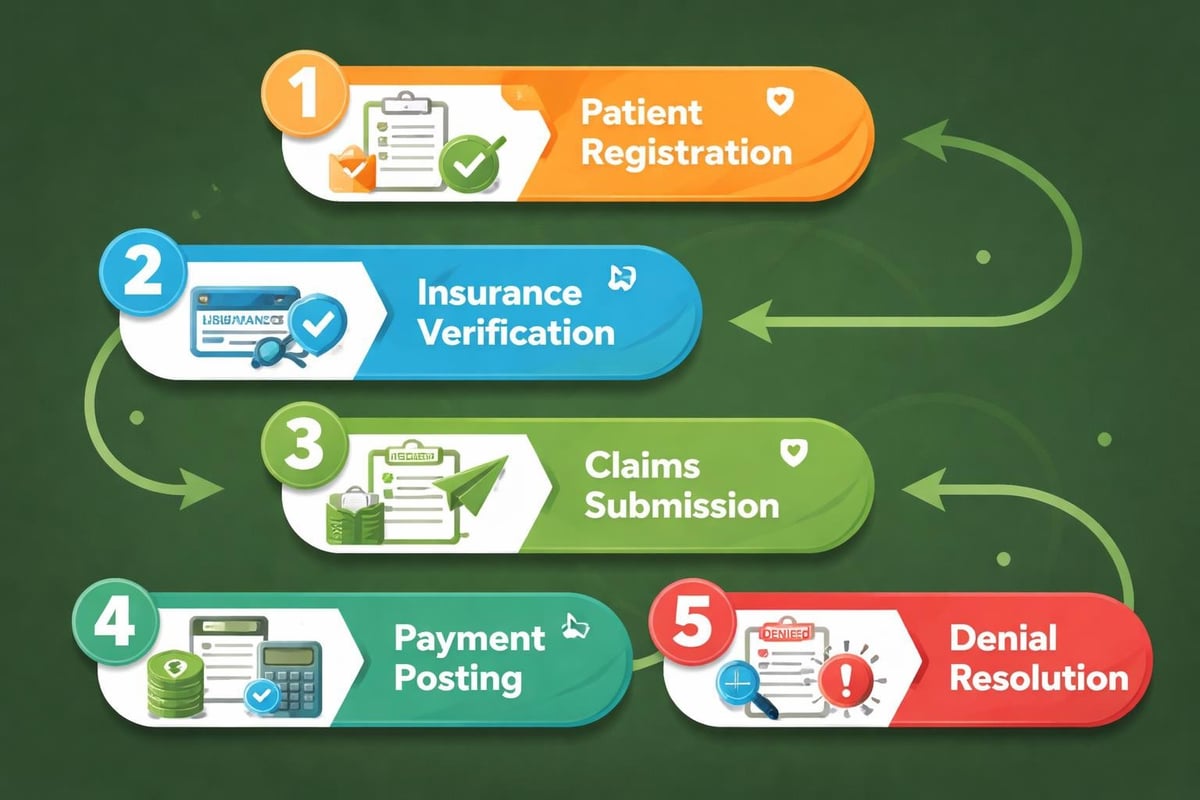
Healthcare revenue cycle management services address distinct phases that together create a comprehensive financial ecosystem:
- Pre-service activities include patient registration, insurance eligibility verification, and prior authorization requests
- Service delivery involves accurate documentation, charge capture, and clinical coding
- Claims management encompasses submission, tracking, and follow-up on pending claims
- Payment processing includes posting payments, reconciling accounts, and managing patient balances
- Denial management focuses on identifying rejection patterns, filing appeals, and preventing future denials
Each stage presents unique challenges requiring specialized skills and technology platforms. Many healthcare organizations partner with professional service providers to ensure expertise across all phases while maintaining compliance with evolving regulations.
Benefits of Professional Revenue Cycle Management Services
Medical practices that leverage healthcare revenue cycle management services typically experience measurable improvements in financial performance and operational efficiency. These benefits extend beyond simple cost reduction to encompass strategic advantages that support long-term sustainability.
Financial Performance Improvements
Professional revenue cycle services deliver tangible financial benefits through systematic optimization:
- Reduced claim denial rates through expert coding and thorough documentation review
- Faster payment cycles with streamlined submission processes and proactive follow-up
- Increased collection rates by addressing patient balances and insurance underpayments
- Lower administrative costs compared to maintaining in-house billing departments
- Enhanced cash flow predictability through consistent processes and reporting
Organizations that implement comprehensive denial management in medical billing strategies report denial rate reductions of 20-30% within the first year. This directly impacts bottom-line profitability while reducing staff frustration and administrative burden.
Operational Efficiency Gains
Beyond financial metrics, healthcare revenue cycle management services create operational advantages:
| Operational Area | Traditional Approach | Professional Service Model |
|---|---|---|
| Staff Training | Ongoing internal education required | Expert teams stay current automatically |
| Technology Updates | Capital investment and implementation | Access to latest platforms included |
| Regulatory Compliance | Internal monitoring and risk | Professional compliance oversight |
| Scalability | Hiring and training delays | Immediate capacity adjustments |
Professional service providers maintain dedicated teams with specialized expertise in areas like medical coding revenue cycle management that would be impractical for individual practices to replicate internally. This specialization translates to better outcomes across all performance metrics.
Critical Components of Effective Revenue Cycle Services
Healthcare revenue cycle management services comprise multiple interconnected functions that must work seamlessly together. Understanding these components helps organizations evaluate service providers and establish realistic performance expectations.
Insurance Verification and Eligibility
Verifying insurance coverage before service delivery prevents claim denials and reduces patient confusion about financial responsibility. Professional services conduct real-time eligibility checks, identify coverage limitations, and flag potential authorization requirements.
This front-end work establishes the foundation for successful claims submission. When practices verify medical insurance accurately, they reduce surprises for both patients and billing teams while improving first-pass claim acceptance rates.
Medical Coding and Charge Capture
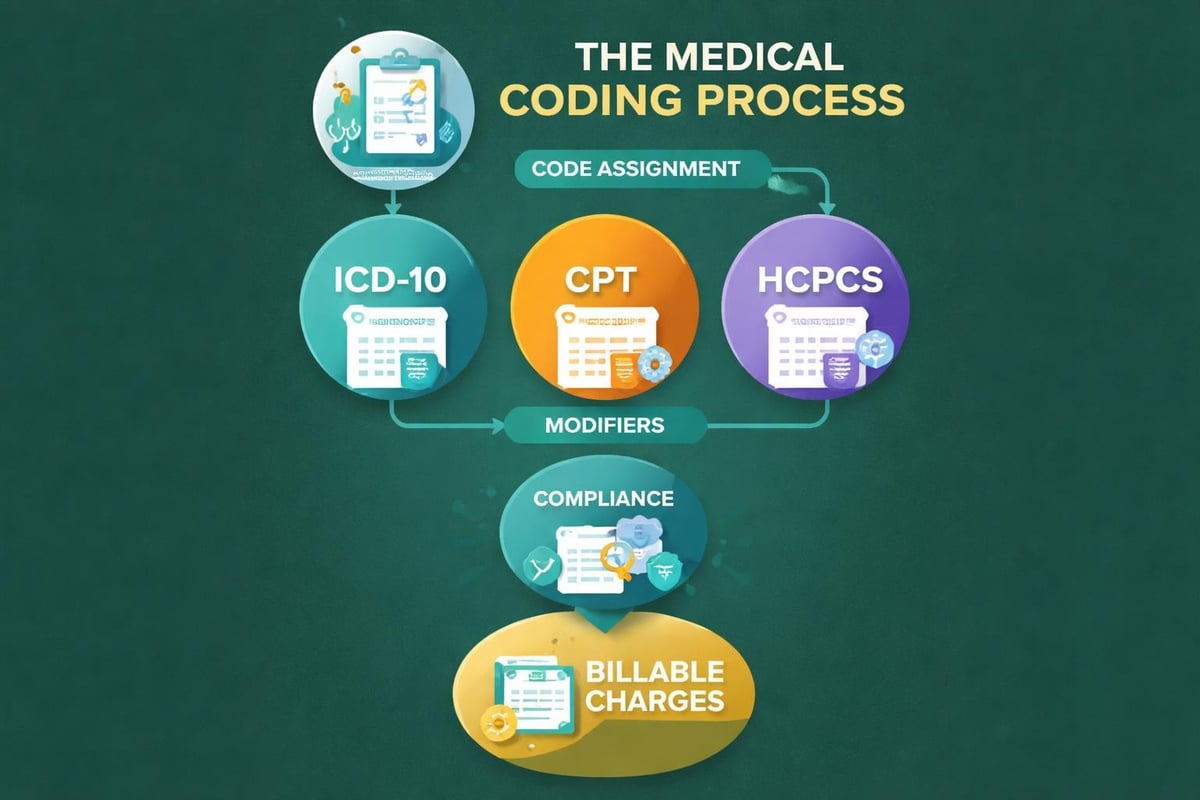
Accurate coding transforms clinical documentation into billable charges using standardized code sets. This process requires detailed knowledge of ICD-10, CPT, and HCPCS coding systems, along with understanding of how the chargemaster functions within hospital and clinic billing systems.
Professional coders review documentation daily to ensure:
- All billable services are captured without omissions
- Code selections match clinical documentation precisely
- Modifiers are applied correctly to prevent inappropriate denials
- Coding complies with payer-specific requirements and guidelines
- Documentation supports medical necessity for all billed services
The complexity of modern medical coding makes charge entry in medical billing a specialized skill that directly impacts revenue capture. Missing charges represent lost revenue that can never be recovered once filing deadlines pass.
Claims Submission and Management
Once coding is complete, healthcare revenue cycle management services manage the submission process through electronic clearinghouses or direct payer connections. This includes scrubbing claims for errors before submission, tracking claim status, and identifying issues requiring resolution.
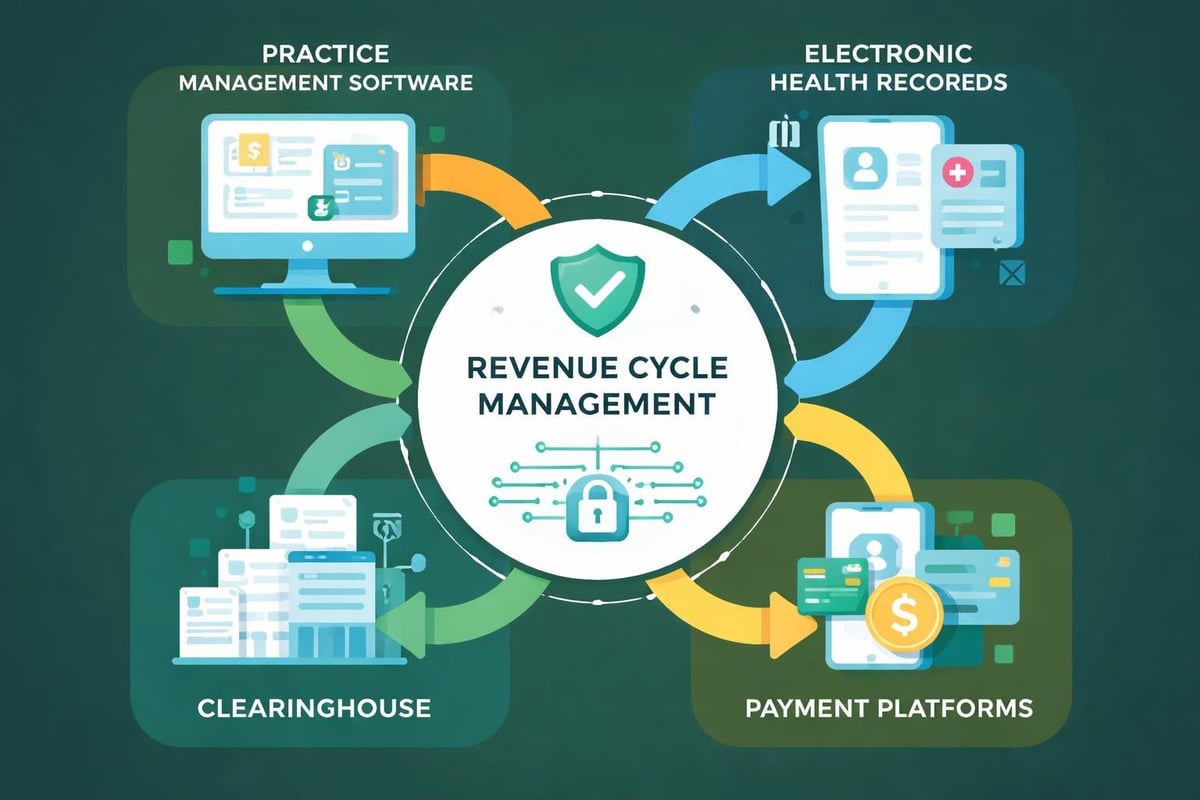
Modern service providers utilize sophisticated technology platforms that integrate with practice management systems and electronic health records. These connections enable automated workflows while maintaining the human oversight necessary for complex cases.
Establishing clean claims in medical billing should be the standard goal, as clean claims process faster and generate revenue more quickly than those requiring additional information or corrections.
Advanced Denial Management Strategies
Claim denials represent one of the most significant revenue leakage points for healthcare providers. Professional revenue cycle services implement systematic denial management programs that both resolve current rejections and prevent future occurrences.
Denial Analysis and Pattern Recognition
Effective denial management begins with comprehensive analysis to identify root causes:
- Coding errors including incorrect code selections or missing modifiers
- Registration mistakes such as incorrect insurance information or missing authorizations
- Timing issues involving late submissions or untimely filing
- Medical necessity denials requiring additional documentation or appeals
- Credentialing problems when services are rendered by non-participating providers
Professional teams track denial reasons, payer-specific patterns, and provider-level trends to implement targeted improvements. According to recent research on AI-driven RCM managed services, organizations using advanced analytics reduce preventable denials by 35-50% within 18 months.
Appeals and Resubmission Processes
When denials occur, timely and thorough appeals maximize recovery potential. Healthcare revenue cycle management services maintain dedicated appeals specialists who understand payer requirements and develop compelling cases for overturning inappropriate denials.
The appeals process requires:
- Rapid identification of denial reasons through electronic remittance advice review
- Determination of appeal worthiness based on claim value and success probability
- Documentation gathering to support medical necessity and proper coding
- Appeal letter preparation addressing specific denial reasons with supporting evidence
- Submission tracking to ensure timely filing and follow-up on pending appeals
Professional services maintain databases of successful appeal strategies and payer-specific requirements, improving win rates compared to practices handling appeals internally.
Technology Integration and Data Security
Healthcare revenue cycle management services operate within highly regulated environments requiring robust technology infrastructure and stringent security protocols. HIPAA compliance and data protection are non-negotiable requirements that professional providers build into every system and process.
Platform Adaptability and Integration
Professional service providers work with client-owned systems rather than forcing technology changes. This approach minimizes disruption while enabling practices to leverage their existing investments in practice management software and electronic health records.
Service teams train on various platforms including:
| Platform Type | Common Systems | Integration Approach |
|---|---|---|
| Practice Management | AdvancedMD, Kareo, athenahealth | Direct access or secure VPN |
| Electronic Health Records | Epic, Cerner, NextGen | Read-only documentation access |
| Clearinghouses | Change Healthcare, Availity | Claim submission and status tracking |
| Payment Posting | Automated ERA processing | Electronic remittance advice integration |
Understanding what is ERA in medical billing becomes crucial as services increasingly rely on electronic data exchange to accelerate payment posting and reconciliation.
Security and Compliance Standards
Professional healthcare revenue cycle management services implement comprehensive security measures protecting patient information and financial data. These protections include encrypted data transmission, role-based access controls, regular security audits, and staff training on privacy regulations.
Service agreements specify security requirements, breach notification procedures, and liability provisions. Organizations should verify that potential partners maintain appropriate cyber insurance coverage and undergo regular independent security assessments.
Specialized Revenue Cycle Services by Practice Type
Different healthcare specialties face unique billing challenges requiring tailored approaches. Healthcare revenue cycle management services adapt their methodologies to address specialty-specific requirements and optimize outcomes for various practice types.
Primary Care and Family Medicine
Primary care practices manage high patient volumes with relatively lower per-visit charges, making efficiency critical to profitability. Revenue cycle services for these practices focus on rapid claim turnover, preventive care billing optimization, and chronic care management revenue capture.
Annual wellness visits and preventive services require precise coding to ensure proper reimbursement. Professional services ensure practices maximize value-based care incentives while maintaining compliance with quality reporting requirements.
Urgent Care and Walk-In Clinics
Urgent care revenue cycle management presents unique challenges including after-hours service coding, high volumes of self-pay patients, and coordination with primary care providers. Services must handle workers’ compensation claims, motor vehicle accident billing, and occupational health services alongside standard insurance claims.
The fast-paced environment requires streamlined registration processes and real-time eligibility verification to minimize claim denials while maintaining patient satisfaction.
Specialty Practices and Surgical Centers
Specialty practices often deal with complex procedures requiring pre-authorization, multi-provider billing, and coordination of benefits. Surgical centers face additional challenges with facility fees, implant billing, and modifier usage.
Professional revenue cycle services for specialties maintain deep expertise in specialty-specific coding requirements, including proper use of surgical modifiers and bundling rules. This specialization prevents costly errors that generic billing services might overlook.
Measuring Revenue Cycle Performance
Healthcare revenue cycle management services provide transparency through comprehensive reporting and key performance indicators. Understanding these metrics enables practices to evaluate service quality and identify improvement opportunities.
Essential Performance Metrics
Organizations should track these critical indicators:
- Days in Accounts Receivable (A/R) measuring the average time to collect payment
- Clean claim rate showing the percentage of claims accepted on first submission
- Denial rate tracking rejected claims as a percentage of total submissions
- Collection rate comparing actual collections to expected reimbursements
- Cost to collect measuring service costs as a percentage of collected revenue
Industry benchmarks suggest well-managed practices maintain days in A/R below 40, clean claim rates above 95%, and denial rates under 5%. Professional services should transparently report against these standards and explain variances.
Financial Analytics and Reporting
Beyond basic metrics, comprehensive healthcare revenue cycle analytics provide insights into payer mix, procedure profitability, and provider productivity. These analytics support strategic decision-making about service offerings, contracting negotiations, and resource allocation.
Regular financial reviews should include:
- Aging A/R analysis identifying overdue balances requiring action
- Payer performance comparison showing which insurers pay promptly and completely
- Denial trend analysis highlighting patterns requiring process improvements
- Productivity reporting tracking charges, collections, and adjustments by provider
- Patient balance management monitoring self-pay collections and payment plan compliance
Professional service providers deliver monthly reporting packages with executive summaries highlighting key findings and recommended actions. This transparency builds trust and enables collaborative problem-solving.
Selecting the Right Revenue Cycle Management Partner
Choosing healthcare revenue cycle management services requires careful evaluation of capabilities, experience, and cultural fit. The right partner becomes an extension of your organization, requiring alignment on values, communication styles, and performance expectations.
Evaluation Criteria
Organizations should assess potential partners across multiple dimensions:
| Evaluation Factor | Key Considerations | Questions to Ask |
|---|---|---|
| Industry Experience | Years in business, specialty expertise | How many practices in our specialty do you serve? |
| Technology Capabilities | Platform experience, integration approach | What systems do you support and how do you integrate? |
| Compliance Track Record | HIPAA, audit history, security measures | What security certifications do you maintain? |
| Performance Guarantees | KPI commitments, service level agreements | What performance standards do you guarantee? |
| Pricing Structure | Percentage vs. flat fee, hidden costs | What’s included in your quoted pricing? |
Reference checks with current clients provide invaluable insights into day-to-day working relationships, responsiveness to issues, and actual performance compared to promises.
Transition Planning and Implementation
Successful partnerships begin with structured implementation plans that minimize disruption while establishing clear workflows. Professional services should provide dedicated transition managers who coordinate system access, staff training, and process documentation.
The typical implementation timeline spans 30-60 days and includes:
- System configuration and access provisioning
- Historical data review to understand existing A/R and denial patterns
- Workflow documentation establishing communication protocols and escalation procedures
- Staff training on how to interact with the service team
- Performance baseline establishment for future measurement
During transition, practices should expect increased communication and oversight as both teams adapt to new workflows and identify process refinements.
Future Trends in Revenue Cycle Management
The healthcare revenue cycle landscape continues evolving with technological advances, regulatory changes, and shifting reimbursement models. Healthcare revenue cycle management services must adapt continuously to deliver optimal results for their clients.
Automation and Artificial Intelligence
The integration of AI and automation transforms revenue cycle processes by handling repetitive tasks, identifying patterns humans might miss, and accelerating decision-making. Best practices in healthcare revenue cycle management increasingly incorporate these technologies while maintaining human oversight for complex cases.
Automation targets areas including:
- Eligibility verification with real-time payer connections
- Claims scrubbing using rules engines that identify errors before submission
- Denial prediction applying machine learning to prevent rejections
- Payment posting through automated ERA processing
- Patient communication via chatbots and automated payment reminders
While technology handles routine tasks, experienced professionals remain essential for appeals, complex coding scenarios, and strategic planning.
Value-Based Care and Alternative Payment Models
The ongoing shift from fee-for-service to value-based reimbursement requires revenue cycle services to track quality metrics, manage risk-sharing arrangements, and optimize bundled payment performance. These models demand sophisticated analytics and care coordination capabilities beyond traditional billing services.
Healthcare revenue cycle management services increasingly support practices with:
- Quality reporting for MIPS and other value-based programs
- Shared savings calculation and distribution
- Bundled payment reconciliation and variance analysis
- Population health analytics supporting preventive care initiatives
- Risk adjustment documentation improvement
Organizations entering value-based contracts benefit from partners with demonstrated experience in these emerging payment models and the technology infrastructure to support complex reporting requirements.
Optimizing revenue cycle performance requires specialized expertise, dedicated resources, and ongoing attention to an ever-changing regulatory landscape. Healthcare providers seeking to improve financial outcomes while focusing on patient care find value in partnering with experienced service providers who deliver comprehensive solutions across all revenue cycle stages. Greenhive Billing Solutions offers tailored revenue cycle management services designed specifically for healthcare organizations committed to operational excellence and financial sustainability. Our experienced team works within your existing systems to deliver measurable improvements in collections, denial rates, and overall revenue performance.

