
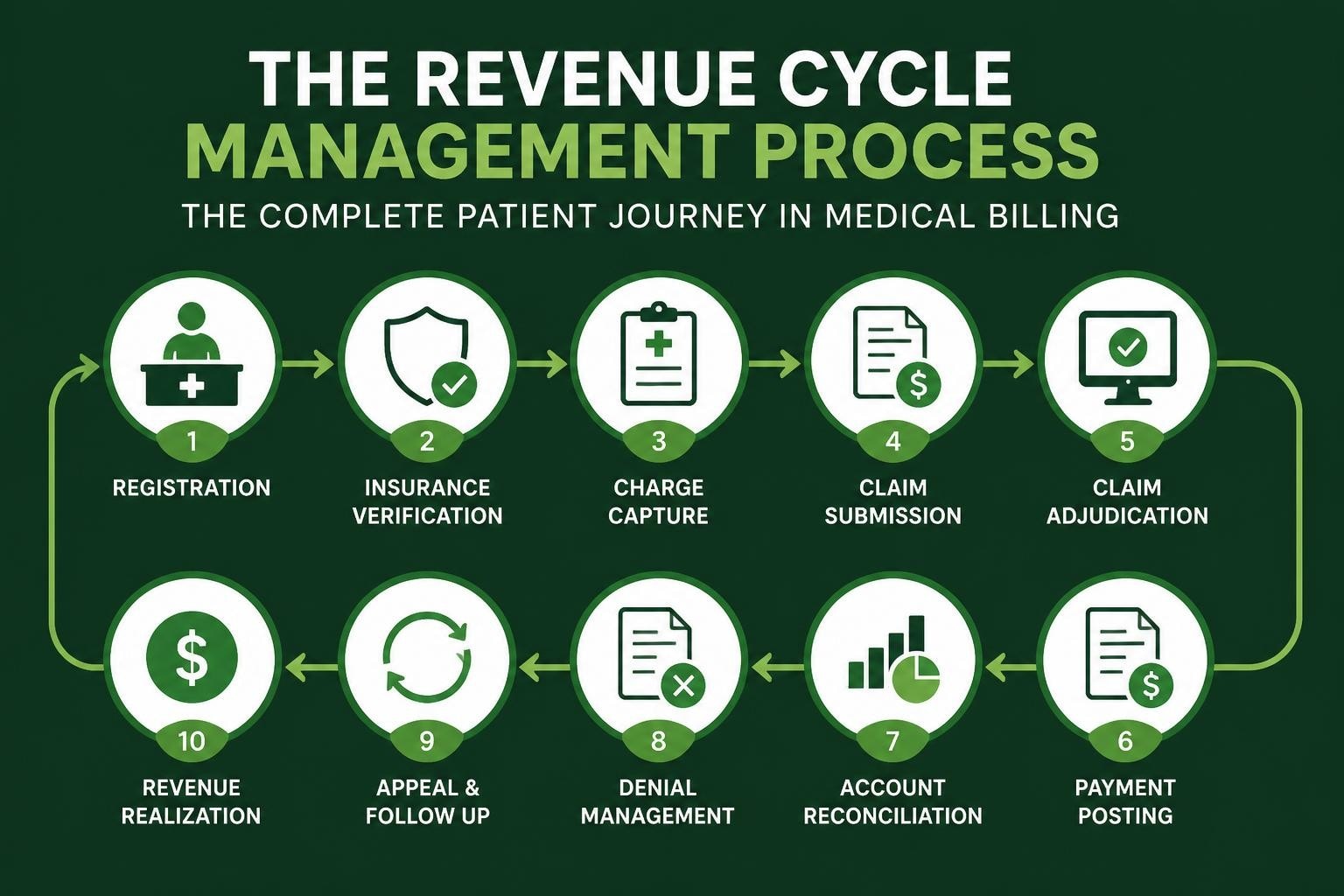
The rcm process in medical billing represents the financial backbone of healthcare organizations, tracking patient revenue from the initial appointment through final payment. This comprehensive framework encompasses every administrative and clinical function that contributes to capturing, managing, and collecting patient service revenue. Understanding each component of this process is essential for healthcare providers seeking to optimize their financial performance while maintaining compliance and delivering quality patient care.
Understanding the Core Components of Revenue Cycle Management
The revenue cycle management framework extends far beyond simple billing activities. It represents an integrated system connecting patient access, clinical services, and financial operations into a cohesive workflow. Each stage plays a critical role in ensuring healthcare organizations receive appropriate reimbursement for services rendered.
Healthcare providers must recognize that the rcm process in medical billing begins long before a patient receives treatment. Front-end operations establish the foundation for successful claims management through accurate data collection and verification. This initial phase determines whether subsequent billing activities proceed smoothly or encounter obstacles.
Patient Registration and Eligibility Verification
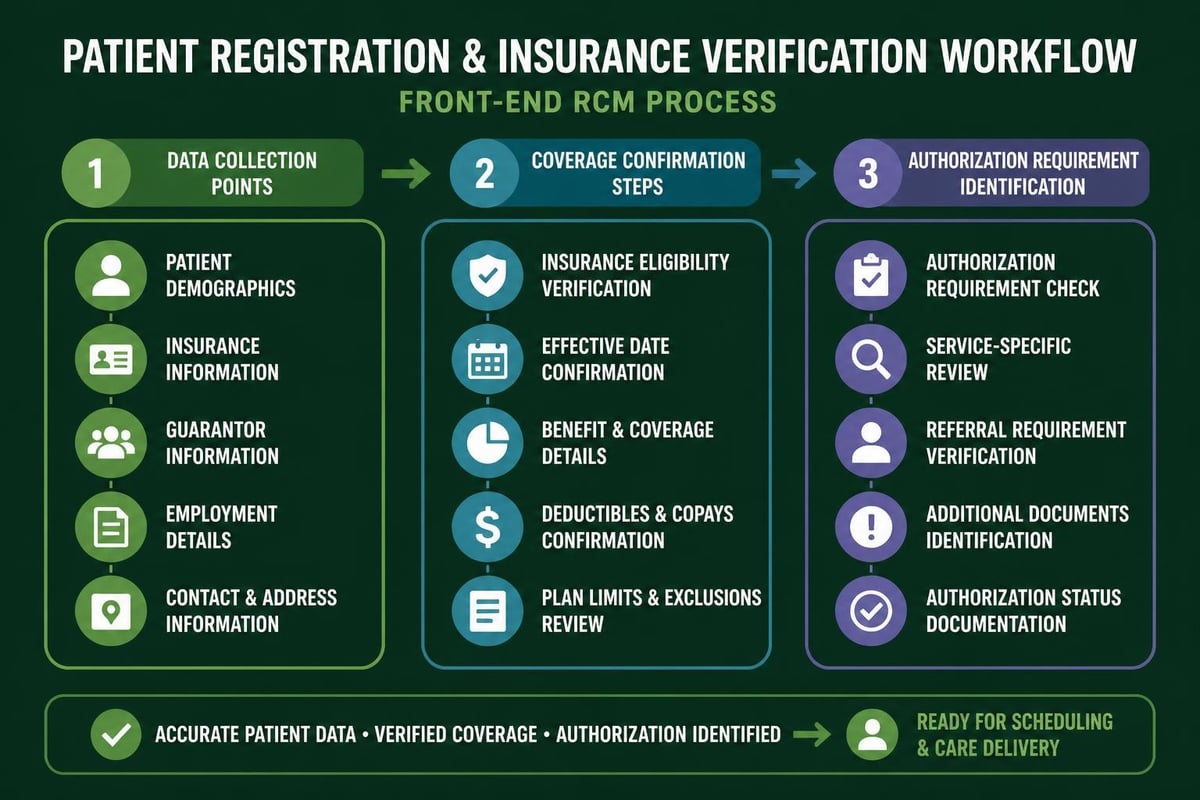
Patient registration initiates the entire revenue cycle, making accuracy at this stage paramount. Staff must collect complete demographic information, insurance details, and authorization requirements during this critical first step.
Insurance eligibility verification serves as a protective measure against claim denials. Healthcare providers who verify coverage before services are rendered significantly reduce the risk of payment delays and rejections. This proactive approach identifies coverage limitations, copayment requirements, and pre-authorization needs.
Key verification elements include:
- Active insurance coverage status
- Benefit limitations and exclusions
- Prior authorization requirements
- Patient responsibility amounts
- Network participation status
Implementing robust eligibility verification services prevents revenue leakage and improves patient satisfaction by establishing clear financial expectations upfront.
The Eight Critical Phases of the RCM Process
The comprehensive RCM process consists of eight distinct phases that work together to ensure financial success. Each phase requires careful attention and precise execution to maintain revenue flow.
| Phase | Primary Activities | Impact on Revenue |
|---|---|---|
| Pre-registration | Appointment scheduling, insurance verification | Reduces eligibility denials |
| Registration | Patient intake, demographic collection | Ensures accurate patient data |
| Charge Capture | Service documentation, code assignment | Maximizes appropriate reimbursement |
| Claim Submission | Claim creation, electronic filing | Accelerates payment timeline |
| Remittance Processing | Payment posting, EOB review | Tracks revenue and adjustments |
| Patient Collections | Statement generation, payment plans | Recovers patient responsibility |
| Denial Management | Appeal preparation, resubmission | Recovers rejected revenue |
| Reporting | Analytics, performance monitoring | Identifies improvement opportunities |
Charge Capture and Medical Coding
Charge capture transforms clinical documentation into billable services. This phase requires meticulous attention to detail as providers document all procedures, supplies, and services delivered during patient encounters.
Medical coding specialists translate clinical documentation into standardized codes using CPT, ICD-10, and HCPCS systems. Accurate coding directly impacts reimbursement levels and compliance with regulatory requirements. Professional medical coding services ensure that providers capture all appropriate revenue while minimizing audit risks.
Claims Submission and Adjudication
The rcm process in medical billing reaches a critical juncture during claim submission. Healthcare organizations must submit clean claims containing complete and accurate information to maximize first-pass acceptance rates.
Electronic claim submission accelerates processing timelines and reduces administrative costs compared to paper submissions. Modern claim submission services leverage technology to validate claims before transmission, catching errors that would otherwise result in denials.
Clean claim characteristics include:
- Accurate patient demographics
- Valid insurance information
- Appropriate procedure and diagnosis codes
- Proper modifier usage
- Complete documentation support
- Timely submission within filing deadlines
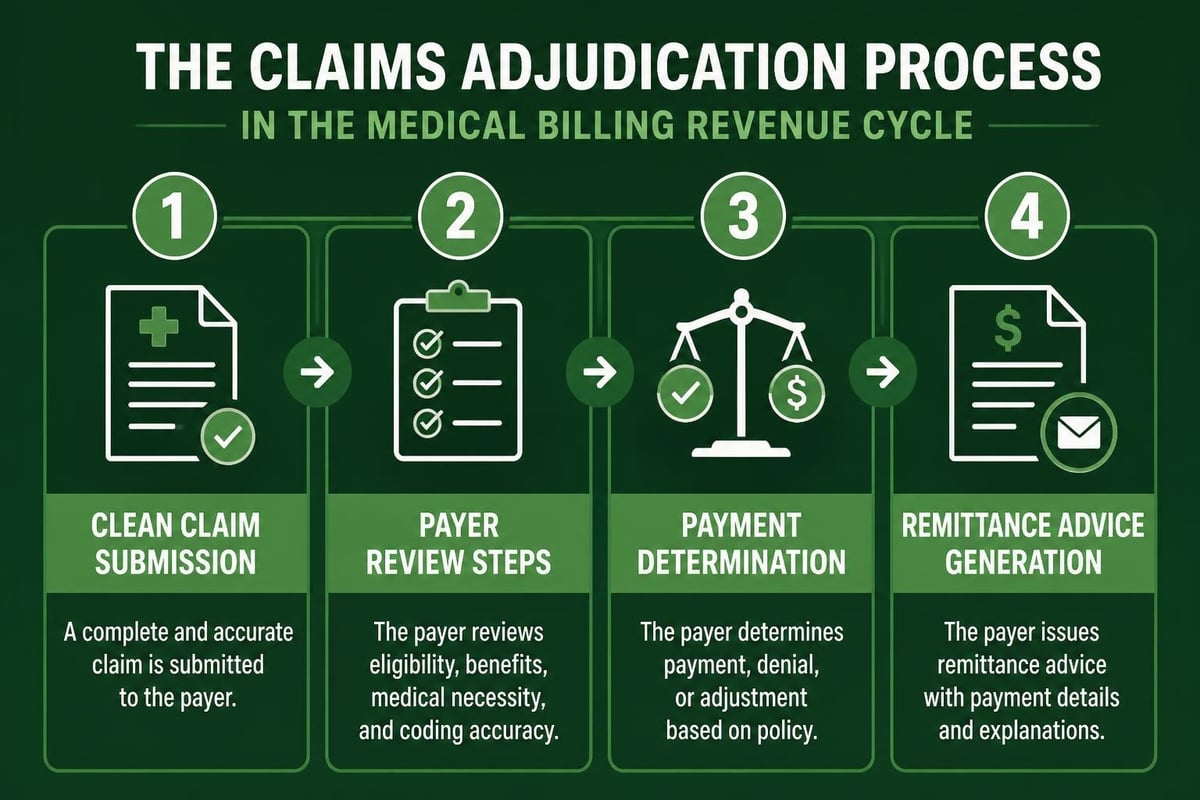
Payers review submitted claims through an adjudication process that determines coverage, payment amounts, and patient responsibility. This process evaluates medical necessity, benefit coverage, and contractual obligations.
Payment Posting and Denial Management
After payers adjudicate claims, healthcare organizations receive remittance advice detailing payment decisions. Payment posting services apply these payments to patient accounts while identifying adjustments and outstanding balances.
Addressing Claim Denials Strategically
The rcm process in medical billing must include robust mechanisms for addressing denied claims. Denial management in medical billing represents a significant opportunity to recover lost revenue and prevent future rejections.
| Denial Category | Common Causes | Resolution Strategy |
|---|---|---|
| Technical | Missing information, invalid codes | Correct and resubmit quickly |
| Clinical | Medical necessity, lack of authorization | Provide additional documentation |
| Eligibility | Coverage termination, benefit limits | Verify current coverage status |
| Timely Filing | Missed submission deadlines | Implement tracking systems |
Healthcare organizations should analyze denial patterns to identify systemic issues requiring process improvements. This proactive approach reduces future denial rates and strengthens overall revenue performance.
Optimizing Patient Collections and Financial Counseling
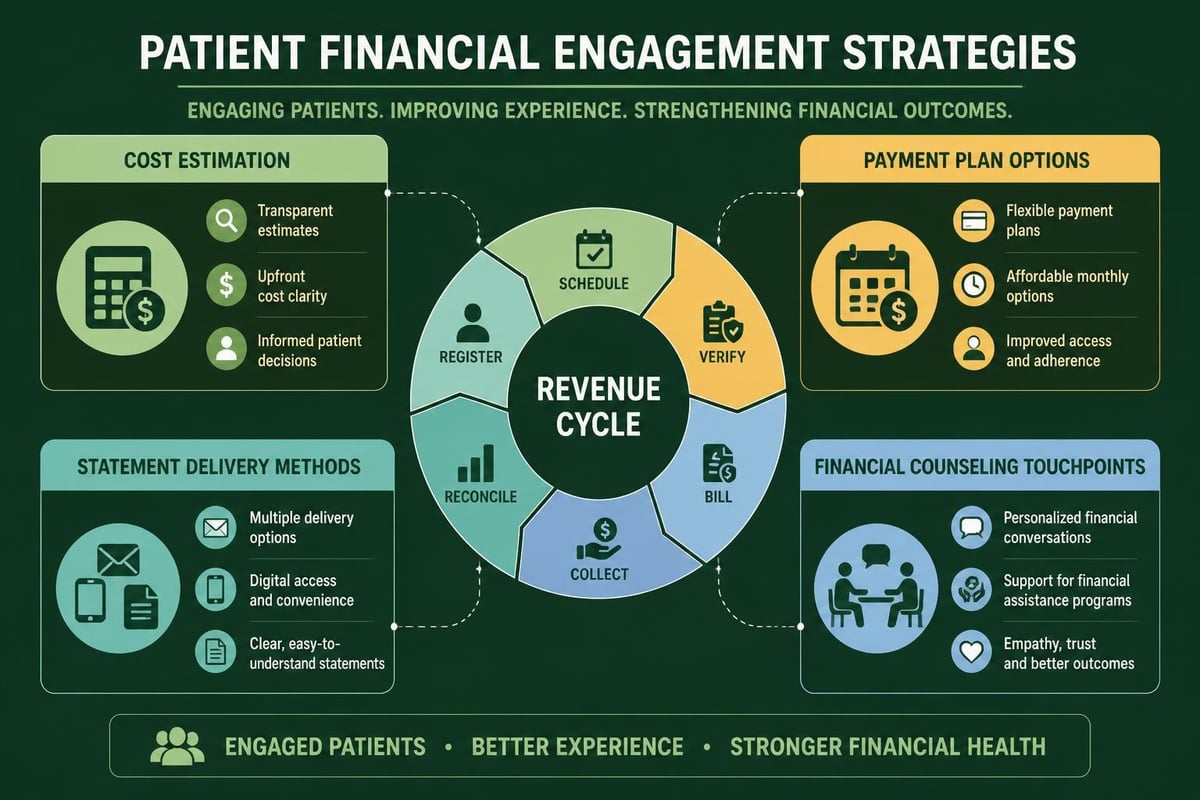
Patient financial responsibility has increased significantly as high-deductible health plans become more prevalent. The rcm process in medical billing must adapt to this reality by implementing effective patient collection strategies.
Effective patient collection practices include:
- Transparent cost estimates before services
- Multiple payment options and plans
- Regular statement cycles
- Respectful collection communications
- Financial assistance program information
Financial counseling helps patients understand their obligations while exploring available assistance options. This approach improves collection rates while maintaining positive patient relationships essential for long-term practice success.
Performance Monitoring and Continuous Improvement
Successful management of the rcm process in medical billing requires ongoing performance measurement and analysis. Healthcare Financial Management Association resources provide benchmarks and best practices for evaluating revenue cycle effectiveness.
Key performance indicators track efficiency across all revenue cycle stages:
- Days in accounts receivable
- Clean claim rate
- First-pass resolution rate
- Denial rate by category
- Collection rate percentages
- Cost to collect ratios
Regular reporting reveals trends requiring attention and validates improvement initiatives. Analytics and reporting services transform raw data into actionable insights that drive strategic decisions.
Technology Integration and Automation
Modern revenue cycle management leverages technology to improve accuracy and efficiency. While software platforms facilitate many rcm process in medical billing activities, successful implementation requires skilled professionals who understand both technology and healthcare finance.
Automation reduces manual tasks in areas such as eligibility verification, claim scrubbing, and payment posting. However, human expertise remains essential for complex coding decisions, denial appeals, and patient communications. The optimal approach combines technological capabilities with experienced revenue cycle professionals who adapt to client systems and workflows.
Specialized RCM services delivered by knowledgeable teams provide healthcare organizations with the expertise needed to navigate increasingly complex billing requirements without investing in extensive internal infrastructure.
Mastering the rcm process in medical billing requires attention to detail across multiple interconnected stages, from patient registration through final payment collection. Healthcare providers who optimize each phase position themselves for sustained financial success while maintaining compliance and patient satisfaction. Greenhive Billing Solutions delivers comprehensive revenue cycle management services that streamline operations, reduce denials, and maximize reimbursements for healthcare practices nationwide. Our experienced team works seamlessly with your existing systems to enhance efficiency and improve your practice’s financial performance.

