
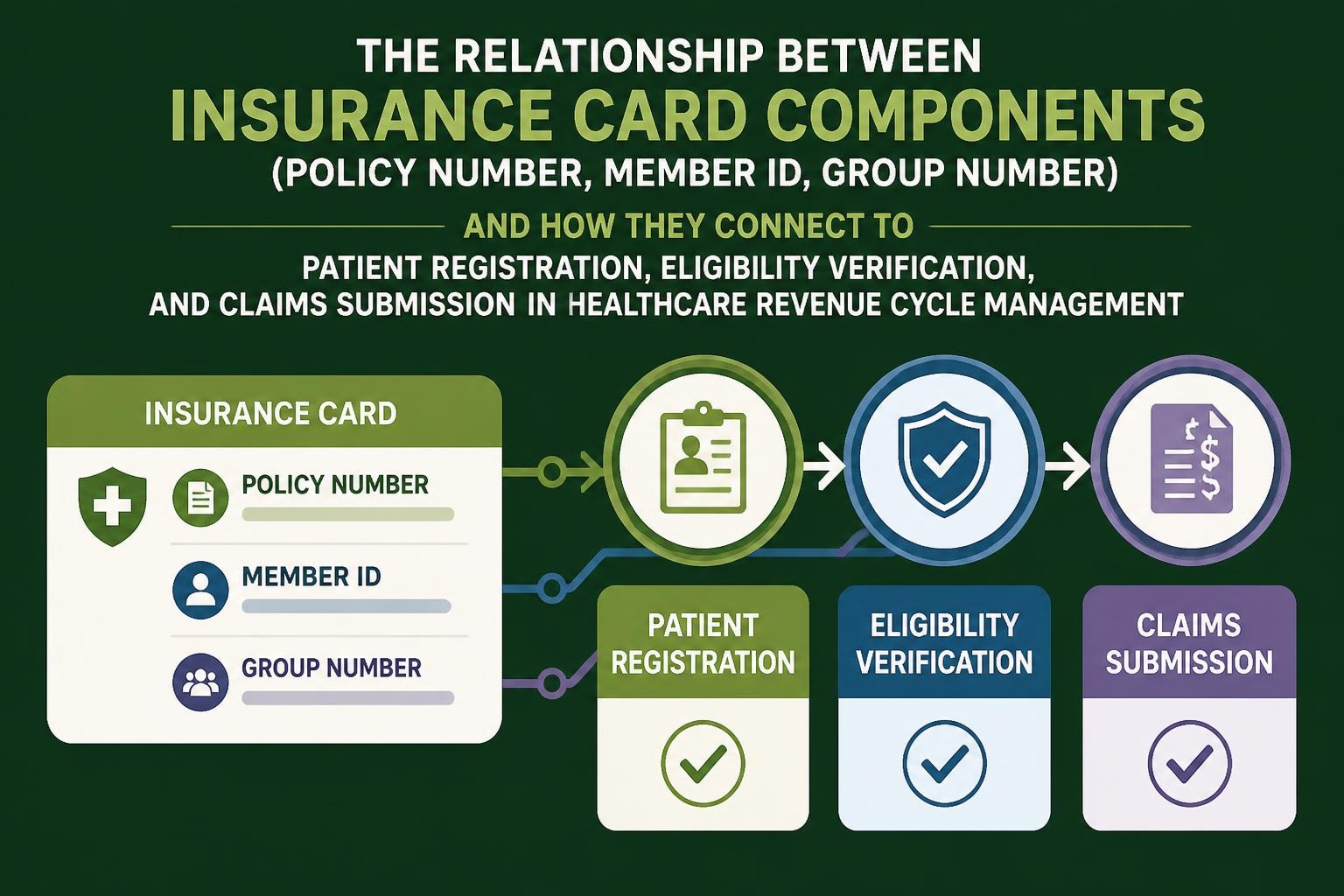
Accurate insurance information serves as the foundation for successful healthcare billing operations. Among the various identifiers present on insurance cards, understanding where to find and how to properly document the policy number on insurance card documents directly impacts claim acceptance rates, reimbursement timelines, and overall revenue cycle performance. For healthcare providers and billing specialists, mastering this seemingly simple element prevents costly errors that ripple throughout the entire billing process.
Understanding the Policy Number and Its Critical Role
The policy number on insurance card documents represents a unique identifier assigned by insurance carriers to distinguish specific coverage agreements. This alphanumeric code connects patients to their benefits, coverage limitations, and claim history within the insurer’s system.
Healthcare providers rely on accurate policy numbers for several essential functions:
- Verifying patient eligibility and active coverage status
- Submitting clean claims that process without delays
- Tracking claim status and payment posting
- Resolving billing disputes and resubmissions
- Coordinating benefits between multiple insurance carriers
Different insurance carriers use varying terminology for this identifier. Some label it explicitly as “Policy Number,” while others use “Member ID,” “Subscriber ID,” or “Certificate Number.” This inconsistency creates confusion during patient registration and data entry processes. Understanding the differences between policy numbers, member IDs, and group numbers helps billing staff collect the correct information from the start.
Common Locations on Insurance Cards
Insurance cards follow general formatting patterns, though each carrier maintains unique design preferences. The policy number on insurance card layouts typically appears in the upper portion of the card, either centered or aligned to the left side.
| Card Section | Typical Labels | Common Formats |
|---|---|---|
| Upper Left/Center | Policy #, Member ID, ID Number | Alphanumeric 8-12 characters |
| Below Cardholder Name | Subscriber ID, Certificate # | Letter prefix + numbers |
| Near Group Number | Individual ID, Policy Number | Numbers only or mixed format |
Most carriers position the policy number prominently as the primary identifier. Look for bold or larger font treatment, as insurers emphasize this number’s importance for provider claims submission.
Distinguishing Policy Numbers from Related Identifiers
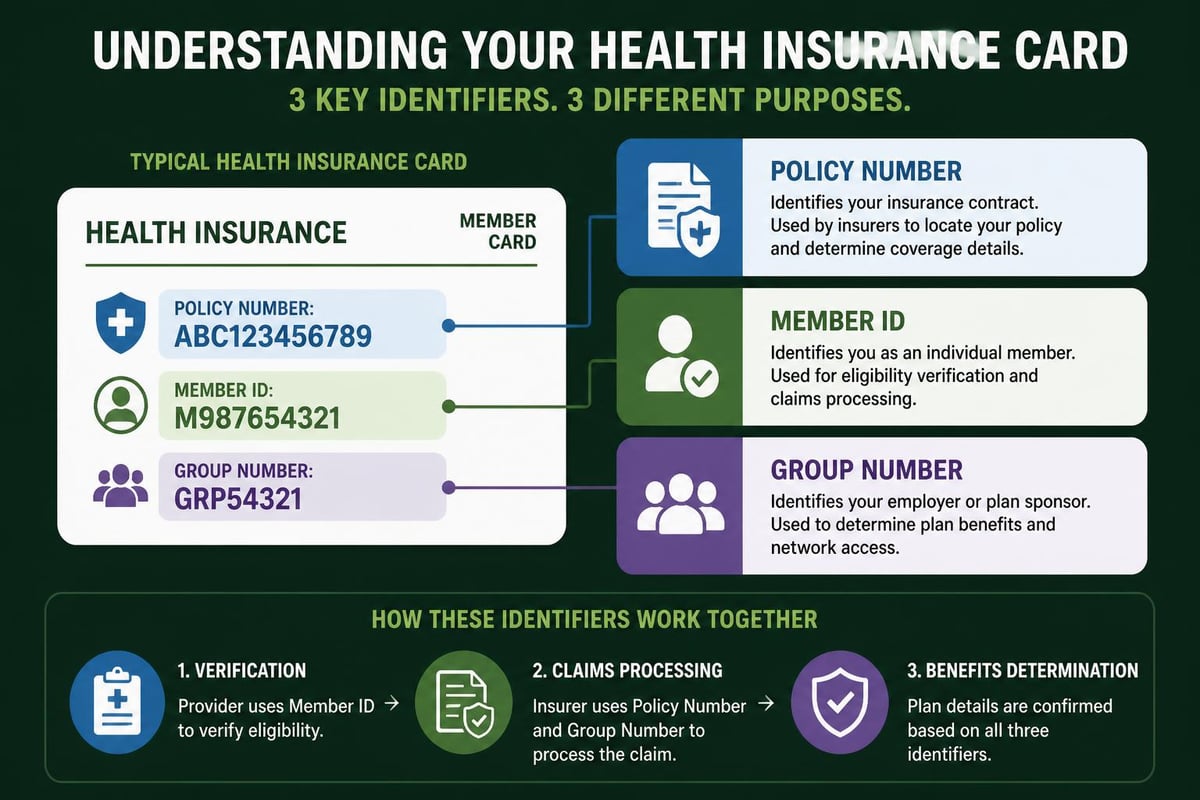
Healthcare billing requires precision when recording insurance information. The policy number on insurance card documents differs from group numbers, which identify the employer or organization sponsoring the coverage. Confusing these two elements leads to claim rejections and delayed payments.
Group Numbers Versus Policy Numbers
Group numbers represent the employer or plan sponsor, appearing on all cards issued under that organization’s contract. Multiple employees share the same group number while maintaining unique policy numbers.
Policy numbers identify individual coverage agreements, remaining unique to each subscriber and their dependents. Even family members covered under the same plan carry the same policy number but may have different member IDs or suffix codes.
For practices offering health insurance management services, training staff to distinguish these identifiers prevents registration errors that cascade into claim denials. Front desk personnel must verify both numbers during check-in procedures.
Prefix and Suffix Codes
Many insurers append additional codes to basic policy numbers. Prefixes often indicate plan types, coverage tiers, or network designations. Suffixes typically identify individual family members covered under a primary subscriber’s policy.
Example format structures:
- ABC123456-01 (suffix indicates dependent position)
- H-987654321 (prefix designates plan category)
- 45678901A (letter suffix for member differentiation)
Recording the complete policy number on insurance card information, including all prefixes and suffixes, ensures accurate claim routing. Missing or transposed characters trigger system rejections, requiring manual intervention and resubmission efforts.
Step-by-Step Process for Locating Policy Numbers
Establishing standardized procedures for capturing insurance information reduces errors and improves efficiency. Follow these numbered steps to consistently identify the policy number on insurance card documents:
Step 1: Request and Examine Both Sides of the Card
Always review front and back surfaces, as some carriers print policy numbers on the reverse side near provider contact information or claims submission addresses.
Step 2: Identify the Cardholder or Subscriber Section
Locate the name field indicating the primary policyholder. The policy number typically appears immediately above, below, or adjacent to this information.
Step 3: Look for Standard Label Variations
Scan for common terminology including Policy #, Member ID, Subscriber ID, ID Number, or Certificate Number. Understanding where to find your health insurance policy number across different carrier formats streamlines the verification process.
Step 4: Verify Against Group Numbers
Confirm you’ve identified the policy number rather than the group number by checking length, format, and label. Group numbers often appear shorter and may include specific employer identifiers.
Step 5: Record the Complete Number with Precision
Document the entire alphanumeric string, maintaining exact character order, case sensitivity, and any special characters or separators.
Step 6: Cross-Reference with Additional Documentation
When possible, verify the policy number against insurance verification responses, previous claim submissions, or patient-provided documentation.
Common Challenges and Solutions
Healthcare practices encounter recurring obstacles when working with the policy number on insurance card information. Recognizing these challenges and implementing preventive strategies protects revenue cycle performance.
Faded or Damaged Cards
Physical card degradation makes numbers illegible. Establish protocols requiring staff to request replacement cards or contact insurers directly for verification when cards appear unreadable.
Recommended actions:
- Maintain digital card image archives for reference
- Use insurance carrier portals for real-time eligibility checks
- Document verification methods in patient records
- Train staff on proper card handling during photocopying
Temporary or Digital Insurance Cards
Patients increasingly present digital cards via smartphone apps or printouts. These formats may display abbreviated information or require additional navigation to reveal complete policy numbers. Locating insurance policy numbers across cards, apps, and other sources requires familiarity with multiple presentation formats.
Multiple Coverage Scenarios
Patients maintaining several insurance policies create complexity during registration. Primary, secondary, and tertiary coverage each requires accurate policy number documentation for proper coordination of benefits.
| Coverage Level | Documentation Priority | Common Issues |
|---|---|---|
| Primary | Highest – Required for initial claims | Wrong card presented first |
| Secondary | Medium – Needed for balance billing | Policy number omitted |
| Tertiary | Lower – Rarely utilized | Outdated information |
Implementing structured intake forms that capture multiple policy numbers with clear primary designation prevents coordination failures.
Integration with Revenue Cycle Management Systems
Modern healthcare practices leverage technology platforms to manage insurance information efficiently. The policy number on insurance card documentation flows through multiple system touchpoints, requiring consistent formatting and validation.
Electronic Health Record Integration
Practice management systems store policy numbers as searchable fields linked to patient demographics and billing accounts. Data entry accuracy at registration determines downstream claim success rates.
System considerations include:
- Field length accommodations for varying policy number formats
- Validation rules preventing incomplete entries
- Duplicate detection algorithms identifying existing records
- Audit trails documenting policy number changes
Practices utilizing comprehensive revenue cycle management services benefit from professional expertise in system configuration and data quality maintenance.
Eligibility Verification Automation
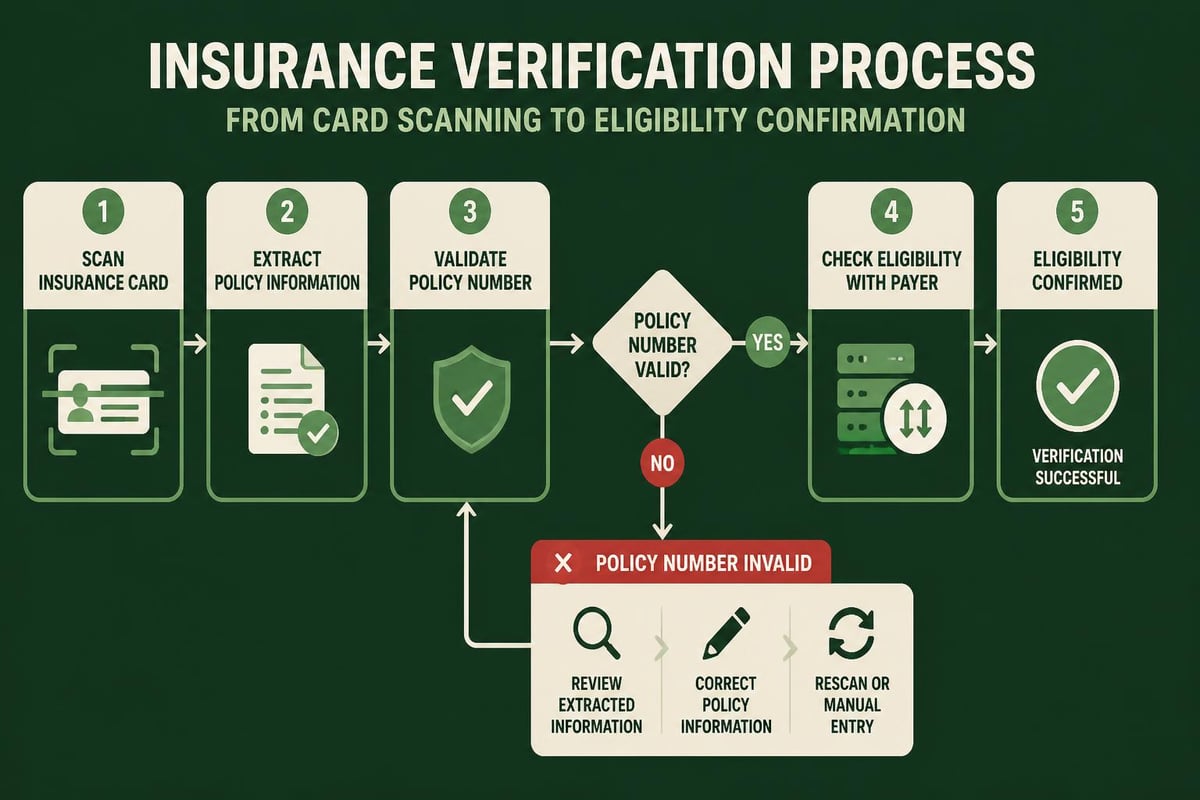
Real-time eligibility verification tools query insurance carrier databases using policy numbers to confirm active coverage. Automated systems reduce manual verification workload while improving accuracy before service delivery.
Configure verification systems to flag mismatches between card information and carrier responses, prompting staff intervention before claim submission. This proactive approach prevents denials stemming from policy number errors.
Best Practices for Healthcare Staff Training
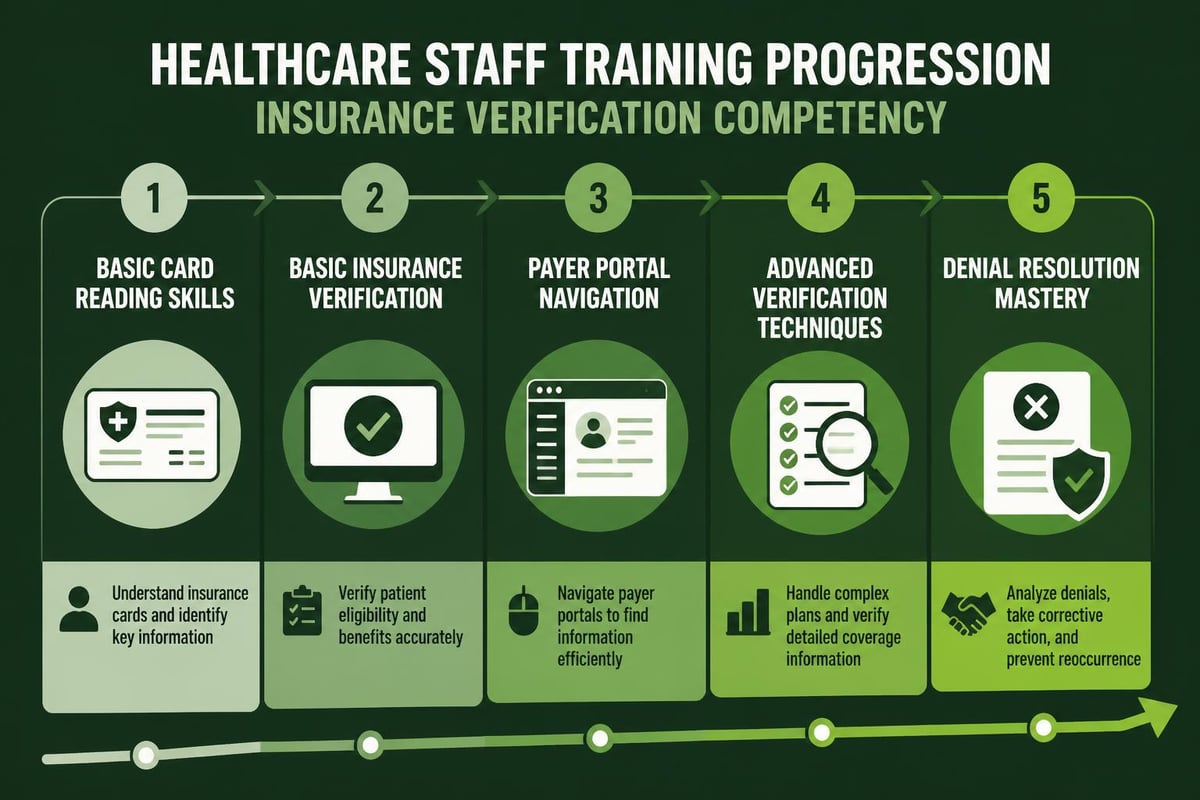
Consistent performance across registration, billing, and administrative teams requires comprehensive training focused on insurance card interpretation. Developing competency with the policy number on insurance card identification supports clean claim generation.
Registration Staff Competencies
Front office personnel serve as the first defense against billing errors. Training programs should emphasize visual identification skills, attention to detail, and verification procedures.
Training modules should cover:
- Insurance card anatomy and common layouts
- Label terminology variations by major carriers
- Distinguishing policy numbers from other identifiers
- Proper photocopying techniques preserving legibility
- Verbal confirmation methods with patients
- Digital card navigation procedures
Regular competency assessments ensure staff maintain proficiency as card designs evolve and new insurance products enter the market.
Billing Department Procedures
Billing specialists encounter policy number issues during claim review, denial management, and payment posting activities. These professionals need advanced knowledge of how policy numbers interact with payer systems and claim adjudication processes.
Establish quality control checkpoints where experienced billing staff review high-risk accounts before electronic submission. This second-level verification catches errors that automated systems might miss, particularly for denial management in medical billing scenarios.
Policy Number Changes and Updates
Insurance coverage undergoes frequent modifications due to employment changes, plan renewals, and carrier transitions. Healthcare providers must maintain current policy number information to avoid claim disruptions.
Annual Renewal Cycles
Most employer-sponsored insurance renews annually, often resulting in new policy numbers even when coverage continues with the same carrier. Implement systematic processes requesting updated cards during appointment scheduling for services occurring in January through March.
Update protocols should include:
- Proactive outreach to established patients before renewal periods
- Flag systems alerting staff when last insurance verification exceeds 90 days
- Secondary verification for patients presenting cards with previous year dates
- Documented attempts to obtain current information
Mid-Year Coverage Changes
Job transitions, life events, and special enrollment periods generate insurance changes outside standard renewal timeframes. Train reception staff to routinely ask patients about recent insurance changes, even for established relationships.
Documentation Requirements for Compliance
Healthcare practices operate under strict regulatory frameworks requiring proper insurance information handling. The policy number on insurance card documentation must meet HIPAA privacy standards while remaining accessible for billing operations.
Record Retention Standards
Maintain copies of insurance cards, verification results, and policy number documentation according to federal and state requirements. Digital imaging systems provide efficient storage while ensuring quick retrieval during audits or disputes.
Compliance considerations include:
- Secure storage preventing unauthorized access
- Retention periods meeting regulatory minimums
- Purge procedures for expired documentation
- Audit trail capabilities tracking information access
Verification Documentation
Document every insurance verification attempt, whether successful or unsuccessful. Note the policy number verified, verification method, date, time, staff member responsible, and results obtained. This creates defensible records protecting practices during payment disputes or audits.
Technology Solutions Supporting Accuracy
Healthcare technology continues evolving to reduce manual data entry and improve information accuracy. Several solutions specifically address challenges with capturing the policy number on insurance card data.
Card Scanning Technology
Optical character recognition (OCR) systems automatically extract policy numbers and other identifiers from scanned insurance cards. These tools reduce transcription errors while accelerating registration workflows.
Implementation best practices:
- Select systems offering carrier-specific recognition templates
- Maintain manual review processes catching OCR errors
- Train staff on proper card positioning for optimal scanning
- Integrate scanning workflow with practice management systems
Payer Portal Integration
Direct connections between practice systems and insurance carrier portals enable real-time policy number validation during registration. These integrations provide immediate feedback when entered numbers don’t match carrier records.
Practices working with experienced revenue cycle management providers gain access to advanced payer connectivity and eligibility verification technology without substantial capital investment.
Impact on Claim Success Rates
The relationship between accurate policy number documentation and clean claim rates demonstrates measurable financial significance. Industry benchmarks show that claim acceptance rates improve by 15-20% when registration processes emphasize insurance information accuracy.
| Registration Accuracy Level | First-Pass Claim Acceptance | Average Days to Payment | Denial Rate |
|---|---|---|---|
| High (>95% accurate) | 92-96% | 14-18 days | 4-8% |
| Medium (85-95% accurate) | 78-85% | 21-28 days | 12-18% |
| Low (<85% accurate) | 62-75% | 35-45 days | 22-30% |
These metrics underscore why investing in staff training, verification technology, and quality control processes focused on the policy number on insurance card accuracy yields substantial returns through improved cash flow and reduced rework.
Coordination with Insurance Carriers
Establishing direct communication channels with major insurance carriers supports problem resolution when policy number questions arise. Maintain updated contact directories including provider relations representatives, claims departments, and eligibility verification phone numbers.
Carrier-Specific Resources
Major insurance companies offer provider portals, reference guides, and training materials explaining their card formats and policy number structures. Bookmark these resources for quick staff reference when encountering unfamiliar card designs.
Useful carrier resources typically include:
- Card interpretation guides with labeled examples
- Provider manuals explaining identifier systems
- Online verification tools accepting various search parameters
- Training webinars covering billing requirements
Preventing Revenue Loss Through Accurate Documentation
Financial impact extends beyond initial claim acceptance. Incorrect policy numbers create cascading problems affecting accounts receivable aging, write-off rates, and patient satisfaction.
Denial Prevention Strategies
Claims denied due to policy number errors require identification, correction, and resubmission. This process consumes staff time, delays payment, and increases costs per claim processed. Understanding how denial management in medical billing improves cash flow highlights the value of prevention over correction.
Implement front-end quality controls catching errors before claim generation. Automated validation rules, manual review protocols, and staff accountability measures combine to minimize preventable denials.
Patient Experience Considerations
Billing errors stemming from policy number mistakes create patient confusion and dissatisfaction. Patients receive incorrect bills, face potential collections activity, and spend time resolving issues that proper initial documentation would prevent.
Protecting patient experience requires transparent communication about insurance verification processes and prompt error correction when problems occur. Train staff to explain insurance information collection purposes and verify details collaboratively with patients during registration.
Mastering the location and proper documentation of the policy number on insurance card information represents a fundamental competency for healthcare revenue cycle success. When practices combine trained staff, efficient verification processes, and quality control measures, they protect revenue while delivering superior patient service. Greenhive Billing Solutions provides comprehensive revenue cycle management expertise that ensures accurate insurance verification, clean claims submission, and maximum reimbursement for healthcare providers nationwide. Our experienced team handles the complexities of insurance documentation while your staff focuses on patient care.

