
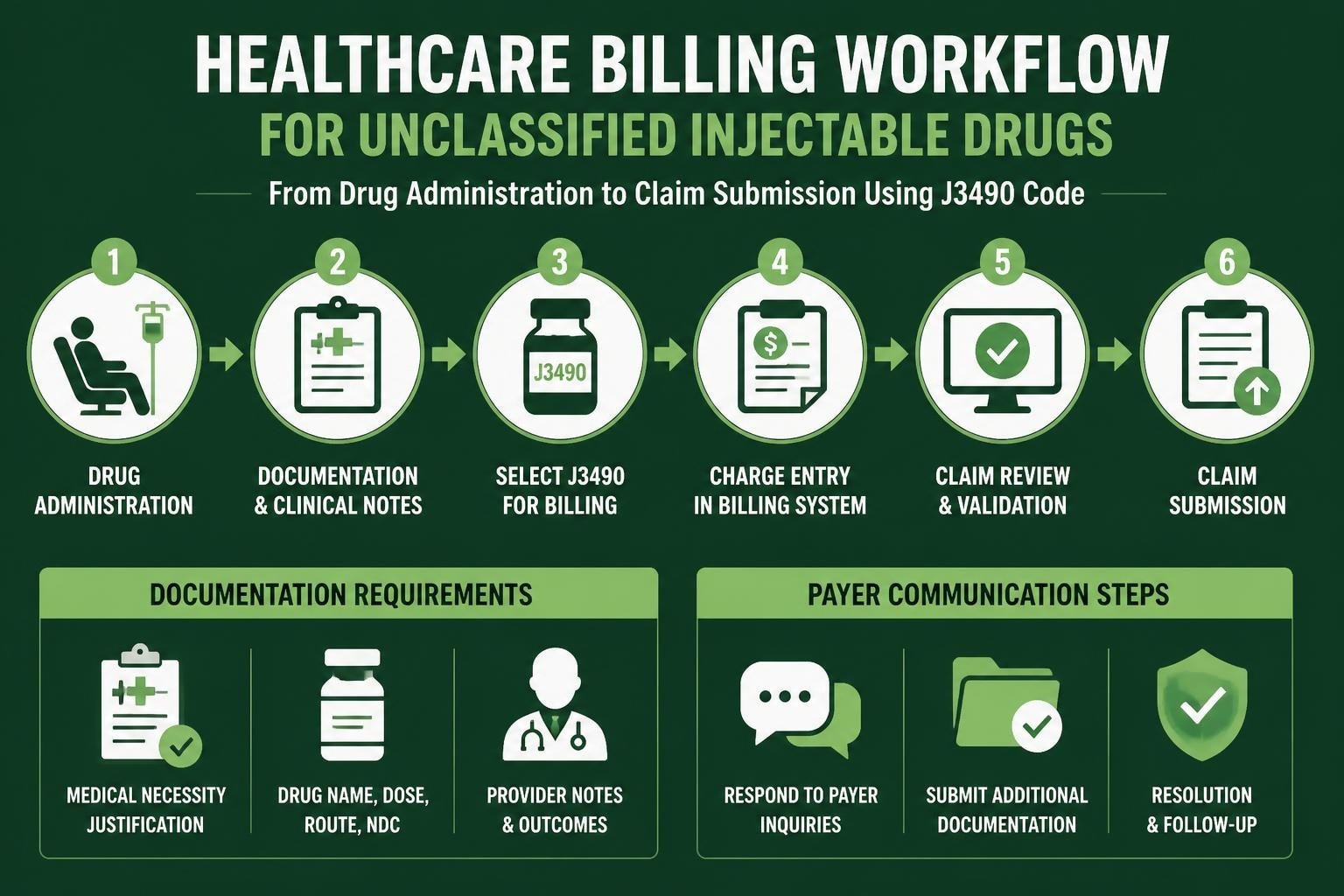
The j3490 cpt code represents one of the most challenging yet essential billing codes in healthcare revenue cycle management. This unclassified drug code serves as a temporary solution when billing for injectable medications that lack specific HCPCS codes, requiring meticulous documentation and careful compliance practices. Healthcare providers and billing professionals must understand the nuances of this code to ensure proper reimbursement while avoiding claim denials.
Understanding the J3490 CPT Code Classification
The j3490 cpt code falls under the HCPCS Level II classification system and specifically covers unclassified drugs administered through injection. This code acts as a placeholder when no other specific code exists for a particular medication, often applying to newly approved drugs, compounded medications, or specialized treatments awaiting permanent code assignments.
Healthcare billing teams encounter this code most frequently when dealing with cutting-edge therapies or medications recently approved by the FDA. The temporary nature of j3490 makes it essential for medical billing services to stay current with coding updates and payer-specific requirements.
When to Appropriately Apply J3490
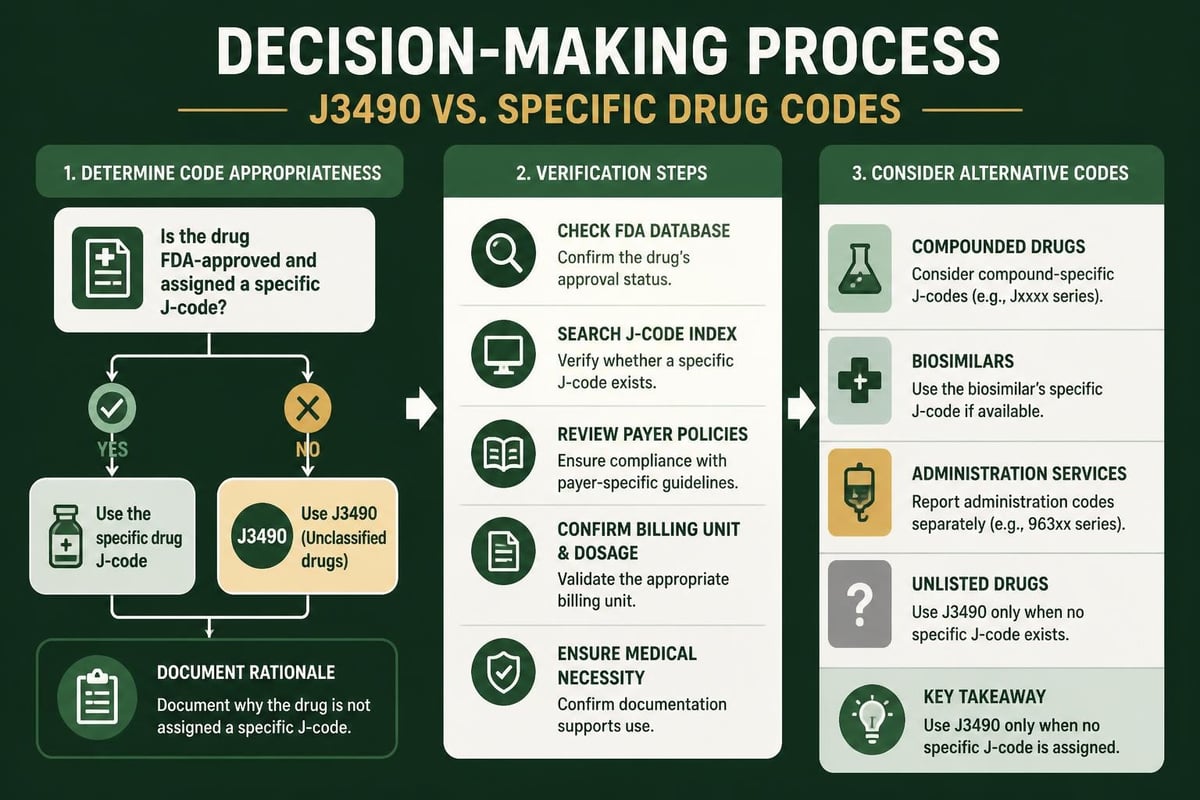
Using the j3490 cpt code requires careful judgment and thorough knowledge of available alternatives. This code should only be applied when:
- No specific HCPCS code exists for the drug being administered
- The medication has been recently approved and awaits permanent code assignment
- Compounded injectable medications require billing
- Payers have explicitly instructed use of this unclassified code
Important consideration: Always verify that no specific code exists before defaulting to J3490, as improper use can trigger automatic claim denials and audit flags.
Documentation Requirements for Successful Claims
Proper documentation separates successful j3490 claims from denials. Understanding HCPCS code J3490 documentation requirements becomes critical for revenue cycle performance.
Essential Documentation Components
| Documentation Element | Required Information | Purpose |
|---|---|---|
| Drug Name | Generic and brand names | Identifies specific medication |
| NDC Number | National Drug Code | Verifies drug authenticity |
| Dosage | Exact amount administered | Supports medical necessity |
| Administration Method | Route and technique | Justifies injection billing |
| Medical Necessity | Clinical rationale | Demonstrates appropriate use |
Beyond these core elements, claims must include the actual acquisition cost of the medication, batch numbers when applicable, and detailed physician notes explaining why this specific treatment was medically necessary. The comprehensive guide to J3490 usage emphasizes that insufficient documentation remains the primary cause of claim rejections.
Common Scenarios and Real-World Applications
The j3490 cpt code appears across various medical specialties and treatment contexts. Understanding these scenarios helps billing professionals anticipate documentation needs and payer requirements.
Oncology practices frequently use this code for newly approved cancer therapies during the gap between FDA approval and permanent code assignment. For example, billing guidelines for specific medications like lanreotide demonstrate how state Medicaid programs address j3490 applications.
Similarly, rare disease treatments often require j3490 billing, as illustrated by vutrisiran injection guidelines from various state programs.
Specialty-Specific Applications
- Pain Management: Compounded injectable pain medications
- Rheumatology: Specialty biologics pending code assignment
- Neurology: Novel neurological treatment formulations
- Dermatology: Custom injectable compounds for specific conditions
Managing these diverse applications requires robust denial management services that can quickly address payer questions and provide supporting documentation.
Medicare and Commercial Payer Guidelines
Reimbursement policies for the j3490 cpt code vary significantly between payers. Medicare reimbursement guidelines for J3490 establish baseline requirements that many commercial payers adopt with modifications.
Medicare typically reimburses J3490 claims at 95% of the Average Wholesale Price (AWP), though this can vary based on the specific drug and administration setting. Commercial payers may use different methodologies, including percentage of AWP, wholesale acquisition cost (WAC), or negotiated fee schedules.
Key compliance considerations include:
- Submitting claims with complete NDC information
- Providing invoice documentation showing actual acquisition cost
- Including modifier codes when appropriate
- Attaching medical necessity documentation proactively
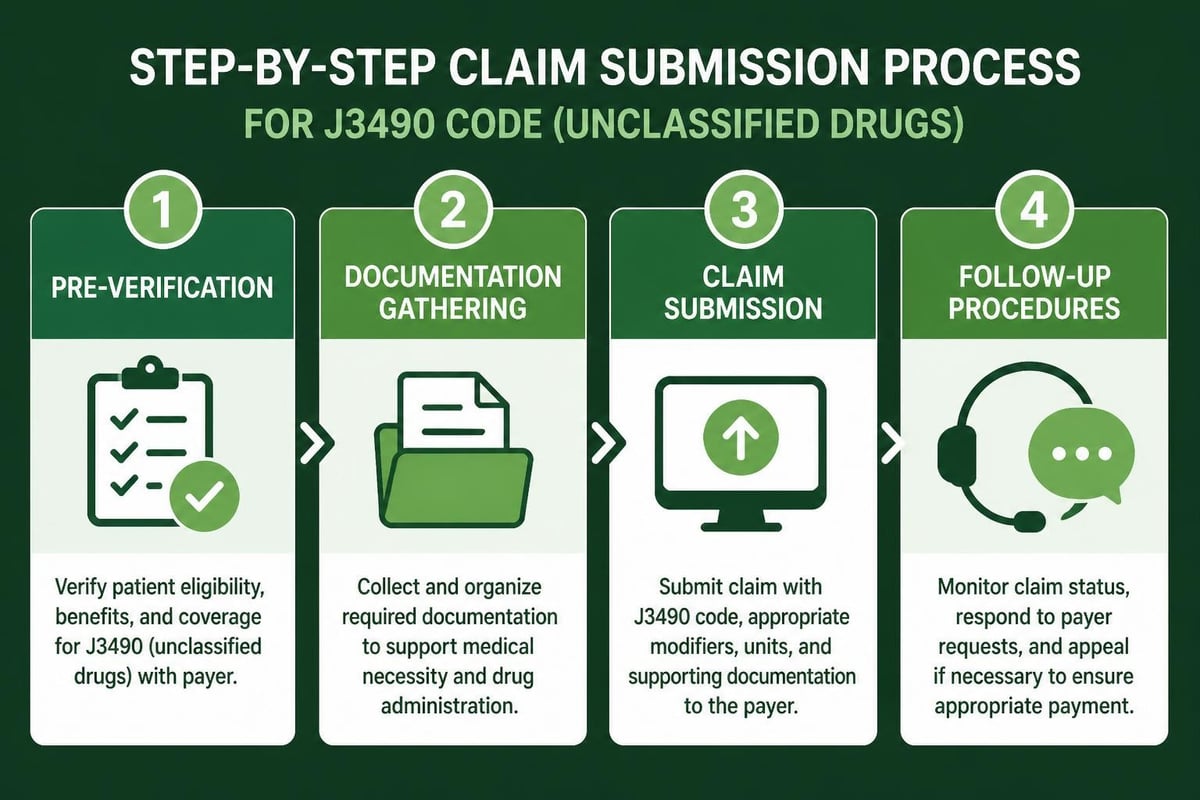
Effective eligibility verification services help identify payer-specific requirements before drug administration, reducing subsequent claim issues.
Preventing Common Billing Errors
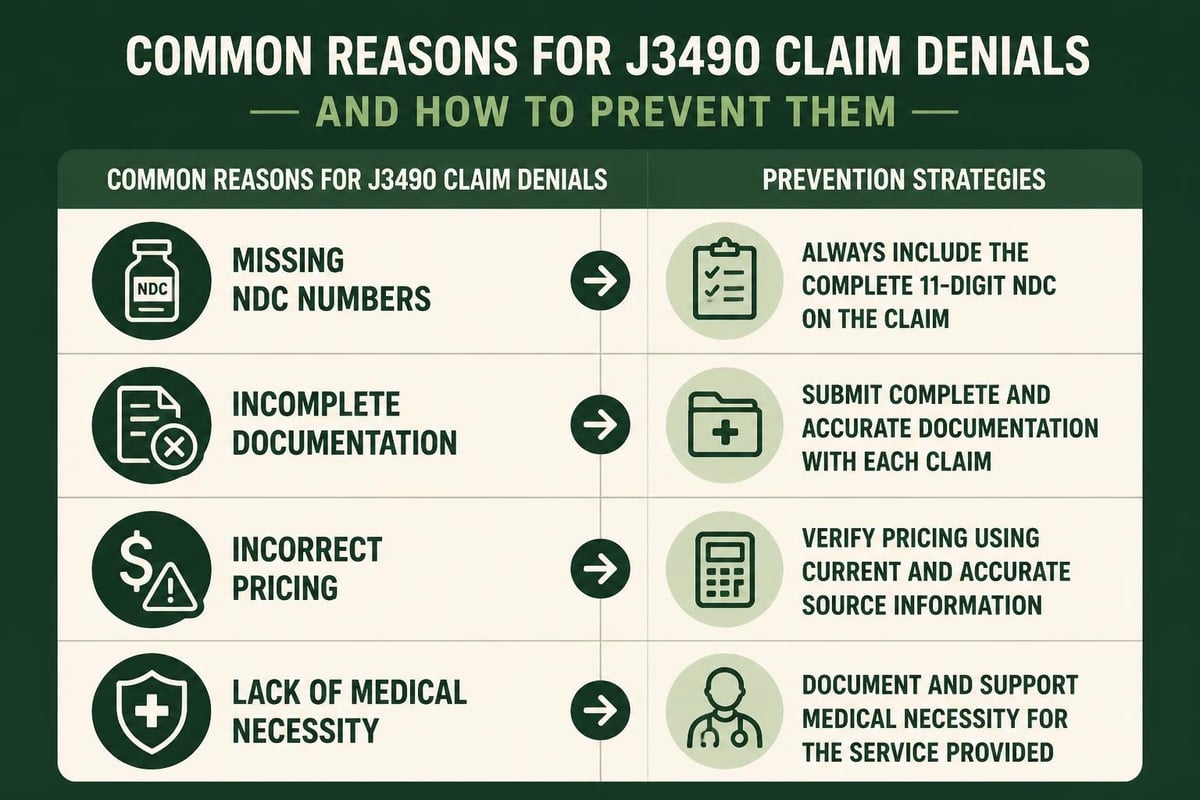
Even experienced billing professionals encounter challenges with j3490 coding. Recognizing and preventing these errors protects revenue and reduces administrative burden.
Five Critical Error Prevention Steps
- Verify No Specific Code Exists: Search current HCPCS and CPT databases before using J3490
- Confirm Payer Requirements: Contact payers regarding their specific J3490 documentation needs
- Document Acquisition Cost: Maintain detailed invoices and pricing records
- Include Complete NDC Data: Ensure all 11 digits are accurately reported
- Attach Supporting Documentation: Proactively include medical necessity justification
The guidance provided in CPT code J3490 usage articles reinforces these preventive measures while highlighting additional nuances specific to different practice settings.
Transition Planning When Permanent Codes Become Available
Medications billed under j3490 eventually receive specific HCPCS codes. This transition requires careful monitoring and prompt system updates.
Best practices for code transitions include:
- Subscribing to quarterly HCPCS updates from CMS
- Maintaining a tracking system for drugs currently billed as J3490
- Training staff on new code implementation timelines
- Updating billing software and charge masters promptly
- Reviewing and adjusting fee schedules for newly coded drugs
Healthcare practices utilizing healthcare revenue cycle analytics can identify patterns in j3490 usage and proactively prepare for transitions, minimizing revenue disruption during code changes.
Mastering the j3490 cpt code requires ongoing education, meticulous documentation practices, and strong payer communication. Healthcare providers need billing partners who understand these complexities and can navigate the challenging landscape of unclassified drug billing. Greenhive Billing Solutions delivers comprehensive revenue cycle management services that include expert handling of complex codes like J3490, ensuring your practice maximizes reimbursement while maintaining full compliance with evolving payer requirements.

