
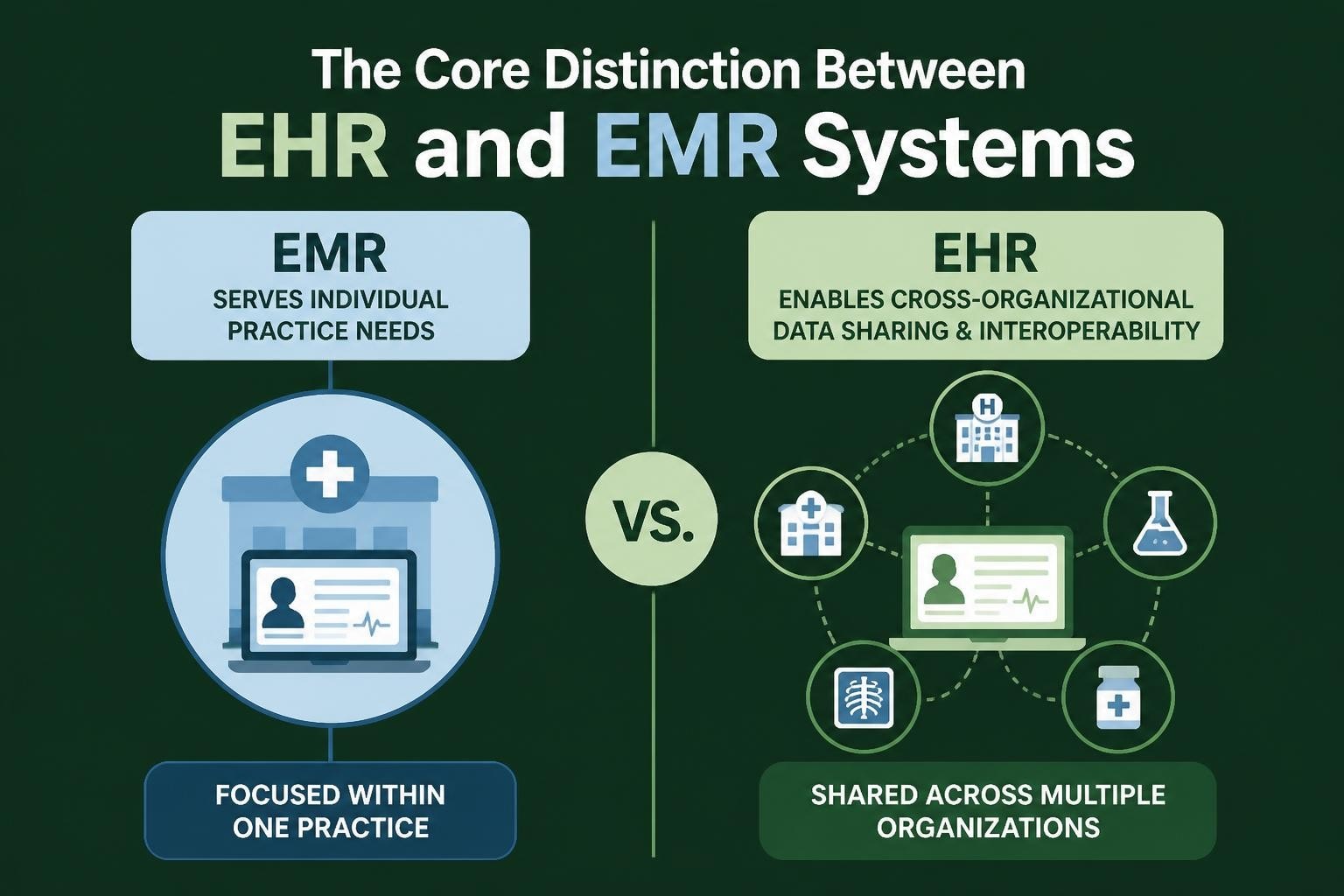
Healthcare providers frequently encounter the terms EHR and EMR when evaluating digital record-keeping solutions, yet many professionals use these acronyms interchangeably without recognizing their distinct functionalities. Understanding the difference between EHR and EMR is essential for making informed technology decisions that impact clinical workflows, patient care coordination, and revenue cycle efficiency. While both systems digitize patient information, they serve different purposes and offer varying levels of data accessibility that directly affect how healthcare organizations manage billing, claims processing, and reimbursement cycles.
What EMR Systems Actually Do
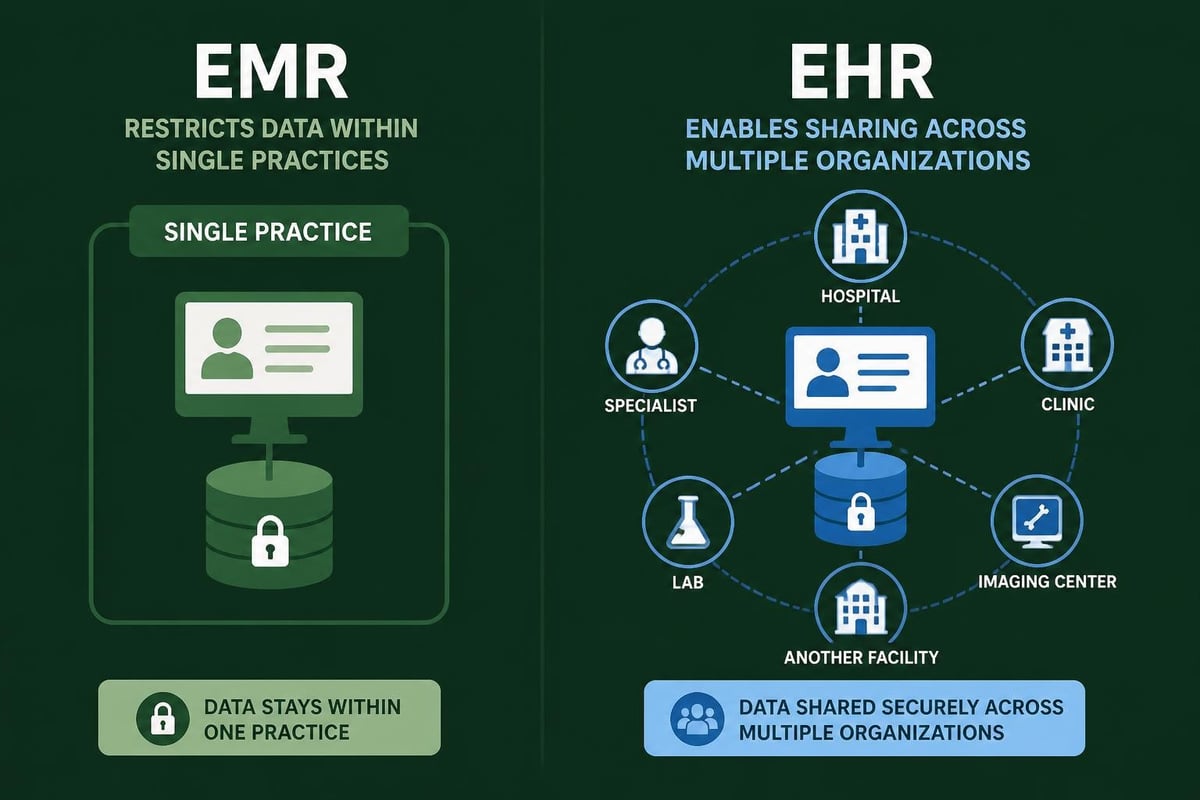
Electronic Medical Records (EMR) function as digital versions of paper charts within a single practice or healthcare organization. These systems store patient demographics, medical histories, diagnoses, medications, immunization dates, allergies, and lab results in a computerized format accessible to authorized providers within that specific practice.
The primary advantage of EMR systems lies in their ability to streamline documentation within one clinical setting. Physicians can quickly access patient information, track treatment progress over time, and identify when preventive screenings or vaccinations are due. EMR systems have evolved significantly from their initial conception as digital filing cabinets to more sophisticated tools that support clinical decision-making.
EMR Limitations in Modern Healthcare
Despite their benefits, EMR systems typically cannot share information easily with external organizations. When patients transfer to different providers or specialists outside the practice network, their medical records often cannot move with them electronically. This limitation creates inefficiencies that impact revenue cycle operations, including:
- Delayed prior authorization processes requiring manual record retrieval
- Duplicate testing due to inaccessible historical results
- Increased claim denials from incomplete patient histories
- Administrative burden on staff coordinating information transfers
These operational challenges directly affect the financial performance metrics that denial management services address regularly.
How EHR Systems Expand Capabilities
Electronic Health Records (EHR) represent a more comprehensive approach to patient data management. Understanding the distinction between EHR and EMR reveals that EHR systems are designed from the ground up to facilitate information sharing across different healthcare settings, creating a complete view of patient care journeys.
EHR platforms connect hospitals, primary care offices, specialists, laboratories, pharmacies, and imaging centers through standardized data formats and interoperability protocols. This connectivity enables authorized providers throughout a patient’s care network to access relevant health information regardless of where treatment originally occurred.
Interoperability Impact on Revenue Cycle
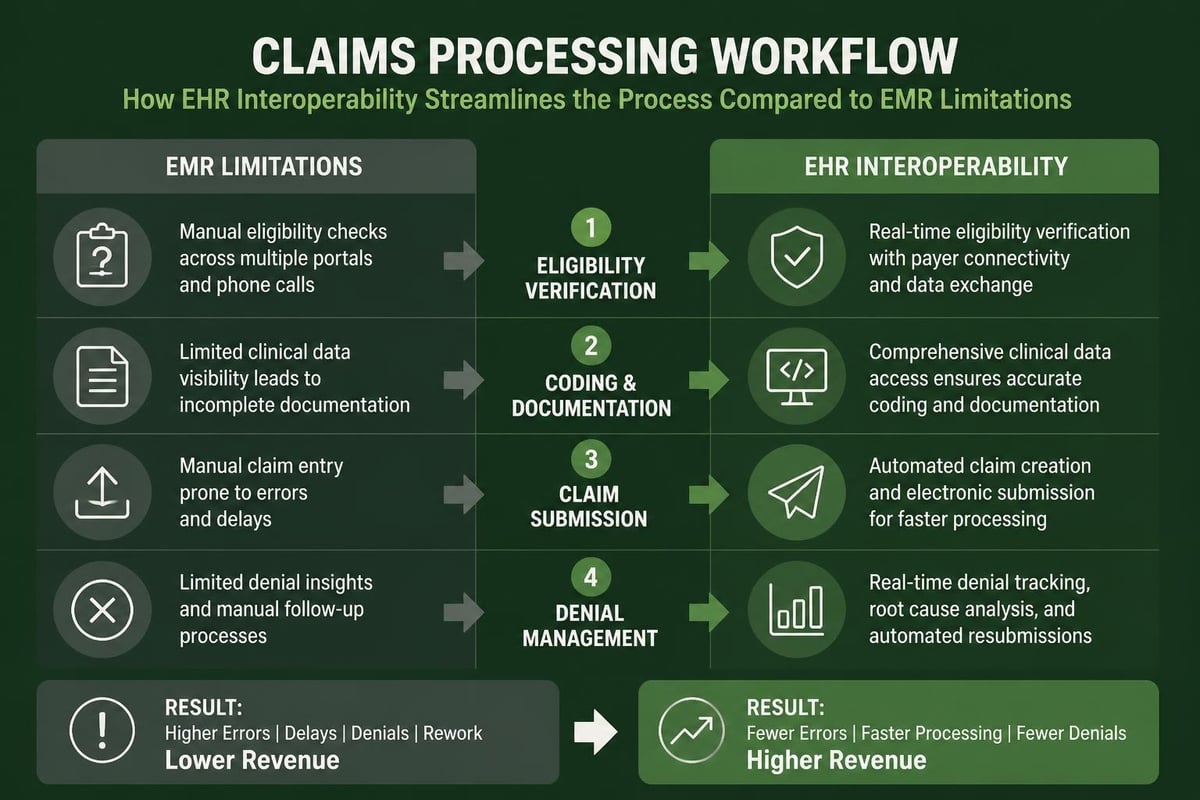
The interoperability features inherent in EHR systems create substantial advantages for revenue cycle management operations. When eligibility verification services can access comprehensive patient histories across provider networks, verification accuracy improves significantly.
Key revenue cycle benefits include:
- Faster Prior Authorization: Complete patient histories expedite approval processes
- Reduced Claim Rejections: Comprehensive documentation supports medical necessity
- Improved Coding Accuracy: Detailed clinical information enables precise code selection
- Enhanced Care Coordination: Shared records reduce redundant procedures and associated billing disputes
| Feature | EMR | EHR |
|---|---|---|
| Data Sharing | Limited to single practice | Across multiple organizations |
| Interoperability | Minimal external connectivity | Standards-based information exchange |
| Patient Access | Restricted portals | Comprehensive health records |
| Revenue Cycle Impact | Practice-level efficiency | Network-wide optimization |
| Implementation Complexity | Moderate | Higher due to integration requirements |
Technical Differences Affecting Operations
The difference between EHR and EMR extends beyond conceptual distinctions into practical technical implementations that affect daily operations. EMR systems typically operate as standalone databases with limited application programming interfaces (APIs) for external connections. These systems focus primarily on clinical documentation and practice management within controlled environments.
EHR platforms incorporate robust integration capabilities supporting Health Level Seven (HL7) standards, Fast Healthcare Interoperability Resources (FHIR) protocols, and Direct messaging specifications. These technical frameworks enable seamless data exchange that supports population health initiatives, quality reporting programs, and value-based care models.
Implications for Billing Operations
Healthcare practices utilizing EHR systems with strong interoperability can leverage connected data to improve billing accuracy and accelerate reimbursement cycles. When medical claim submission services access comprehensive clinical documentation through EHR systems, claim completeness improves substantially.
The technical architecture differences also affect how revenue cycle management teams access information needed for appeals and denials. EHR systems that maintain detailed audit trails and comprehensive documentation support more effective dispute resolution processes.
Making the Right Choice for Your Practice
Selecting between EMR and EHR systems requires careful evaluation of practice size, patient population characteristics, referral patterns, and financial objectives. Solo practitioners or small independent practices with minimal external coordination may find EMR systems sufficient for immediate needs.
Multi-specialty groups, practices participating in accountable care organizations (ACOs), or providers treating complex patient populations benefit significantly from EHR capabilities. The functionality differences directly impact operational efficiency and financial performance in these settings.
Evaluation criteria should include:
- Patient referral volume to external specialists
- Participation in quality reporting programs
- Value-based payment model involvement
- Growth plans and potential network affiliations
- Current challenges with information access and coordination
Healthcare organizations must also consider how their record system choice affects partnerships with revenue cycle management providers who rely on timely, accurate data access for optimal performance.
Federal Requirements and Meaningful Use
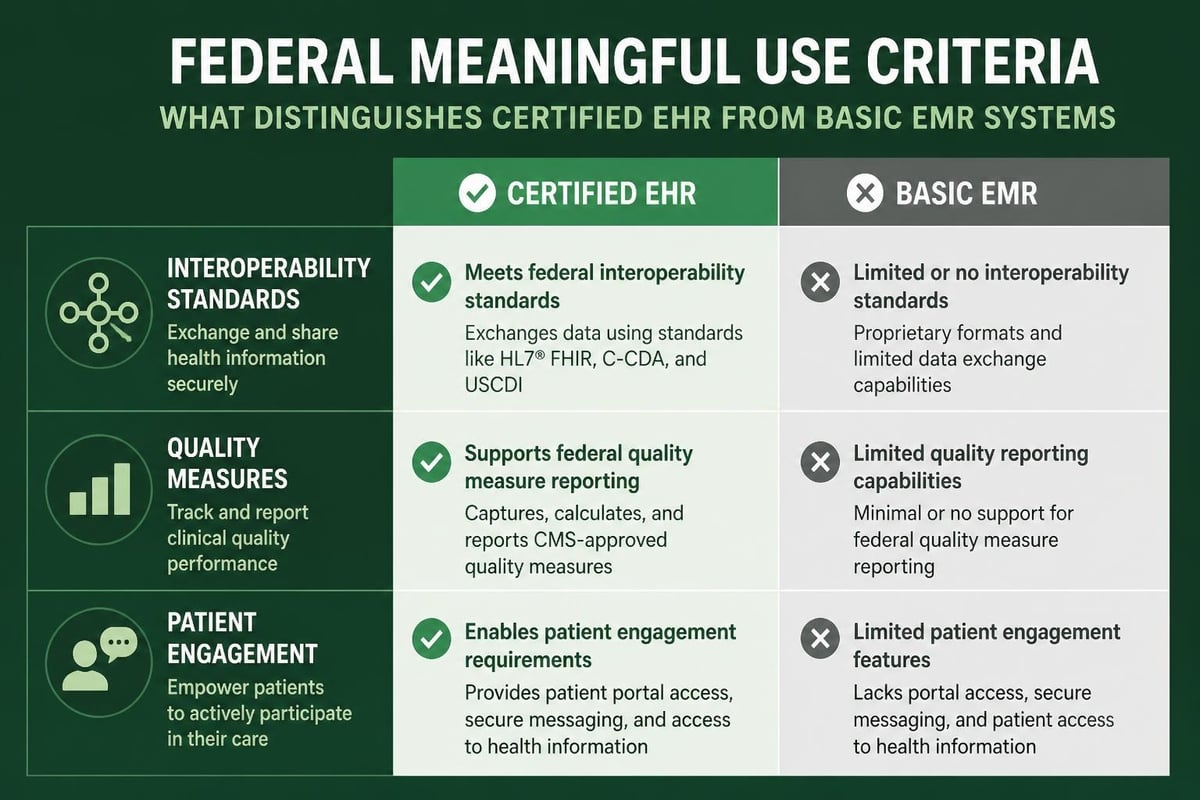
Government programs have historically distinguished between EMR and EHR systems through certification requirements and incentive programs. The Medicare and Medicaid EHR Incentive Programs, later renamed Promoting Interoperability Programs, specifically required certified EHR technology (CEHRT) demonstrating interoperability capabilities.
These regulatory frameworks pushed healthcare organizations toward EHR adoption by tying financial incentives and later penalties to meaningful use of interoperable systems. Understanding these distinctions helps practices navigate compliance requirements affecting reimbursement rates and quality bonuses.
The difference between EHR and EMR matters significantly in regulatory contexts because certification standards for EHR systems include specific interoperability benchmarks that basic EMR platforms may not meet. This regulatory landscape continues evolving with information blocking rules and patient access requirements under the 21st Century Cures Act.
Integration With Revenue Cycle Management
Modern revenue cycle optimization depends heavily on data accessibility and accuracy that system architecture directly influences. The difference between EHR and EMR becomes particularly relevant when healthcare practices partner with specialized billing services requiring comprehensive patient information for claims processing.
Organizations providing healthcare revenue cycle analytics leverage data from clinical systems to identify denial patterns, optimize coding practices, and improve collection rates. EHR systems with robust reporting capabilities and data export functions facilitate this analytical work more effectively than isolated EMR platforms.
The integration capabilities of EHR systems also support automated eligibility verification, real-time claim scrubbing, and proactive denial prevention-functions that significantly impact cash flow and reduce administrative burden on clinical staff.
Recognizing the difference between EHR and EMR empowers healthcare providers to make technology investments aligned with operational needs and growth objectives. Whether your practice currently uses EMR or EHR technology, optimizing revenue cycle performance requires specialized expertise in billing, coding, and claims management. Greenhive Billing Solutions delivers comprehensive revenue cycle management services that work seamlessly with your existing systems, providing experienced professionals who maximize reimbursements while ensuring HIPAA compliance and transparent communication throughout every step of the billing process.

