
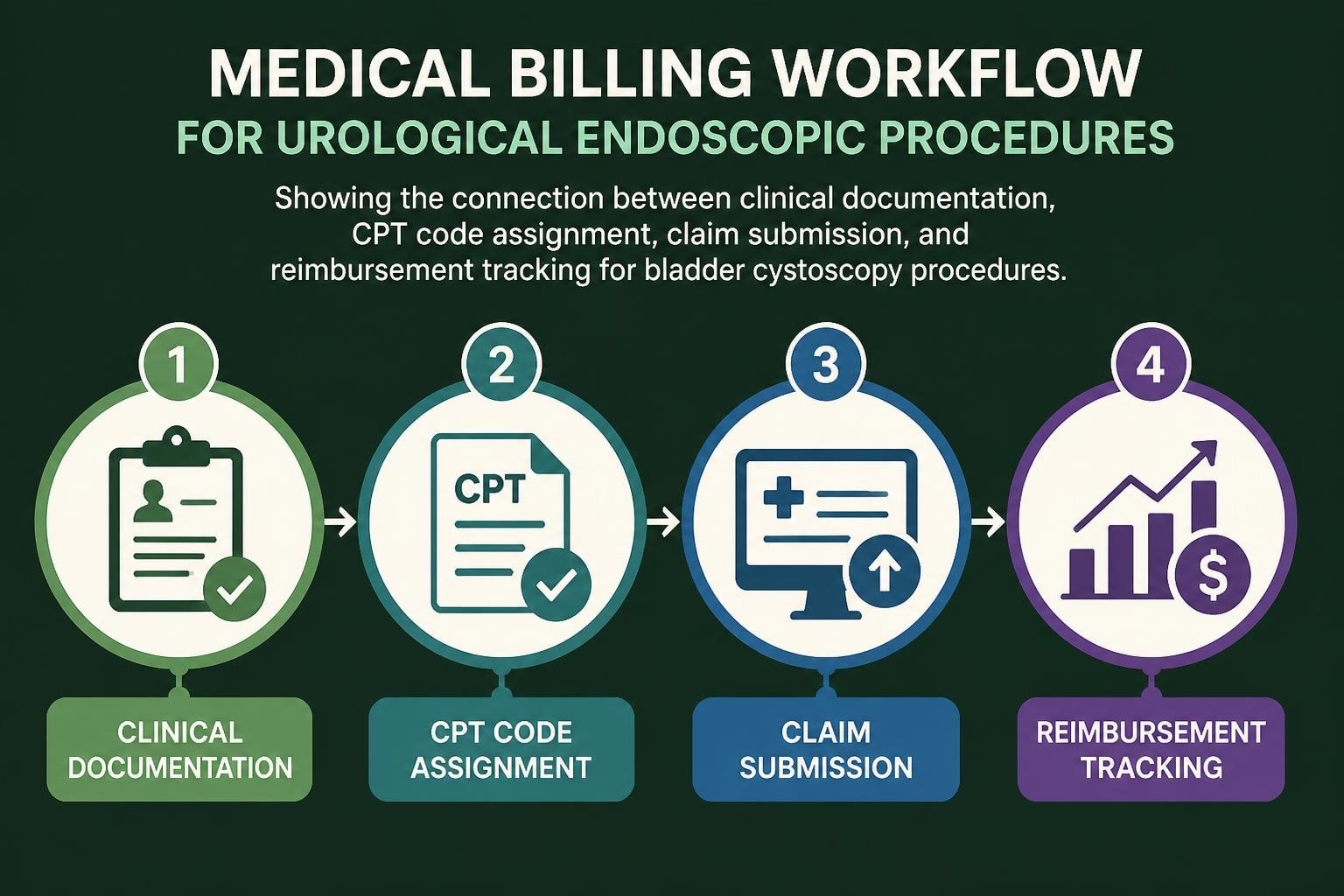
Understanding proper code assignment for urological procedures remains essential for optimizing revenue cycle performance in healthcare practices. CPT 52000 represents one of the most commonly performed endoscopic procedures on the bladder, yet billing errors continue to impact reimbursement rates across urology practices nationwide. Healthcare providers must grasp both the clinical application and documentation requirements to ensure accurate claims submission and minimize denials.
What CPT 52000 Represents in Medical Billing
CPT 52000 describes cystourethroscopy, commonly known as cystoscopy, which involves the examination of the bladder and urethra using an endoscope. According to the official CPT code description, this procedure specifically covers diagnostic examination without any additional operative intervention. The code falls under the broader category of endoscopic procedures performed on the bladder, where accurate coding depends heavily on the scope of the examination and any concurrent procedures performed.
The distinction between diagnostic and operative cystoscopy determines proper code selection. When physicians perform only visualization and examination of the bladder without biopsy, stone removal, or other interventions, cpt 52000 serves as the appropriate code assignment.
Clinical Scenarios Requiring CPT 52000
Healthcare providers use this procedure across multiple diagnostic situations:
- Investigation of hematuria (blood in urine) when imaging studies prove inconclusive
- Evaluation of recurrent urinary tract infections requiring direct visualization
- Assessment of bladder capacity and wall integrity in patients with voiding dysfunction
- Surveillance examinations for patients with history of bladder conditions
- Diagnostic workup for unexplained lower urinary tract symptoms
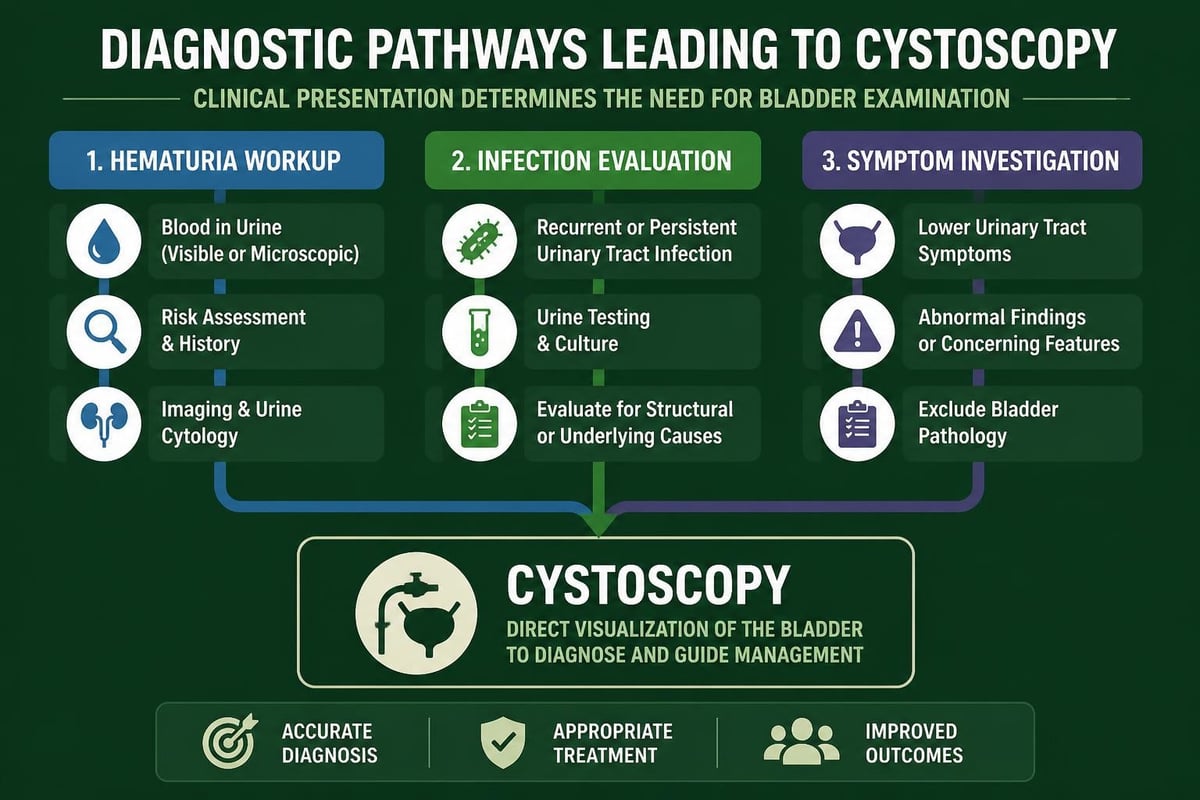
Understanding the purpose of CPT 52000 helps billing teams recognize when this code applies versus when more complex endoscopic codes become necessary. Proper code selection begins with clear communication between clinical and billing staff.
Documentation Requirements for Successful Reimbursement
Comprehensive documentation forms the foundation of clean claims submission. Payers scrutinize cystoscopy claims carefully, making detailed operative reports essential for reimbursement.
Essential Documentation Elements
| Documentation Component | Required Details |
|---|---|
| Medical Necessity | Clear indication for the procedure with supporting clinical findings |
| Procedural Description | Detailed narrative of examination findings and scope of visualization |
| Anatomical Structures | Documentation of all structures examined (urethra, bladder, ureteral orifices) |
| Clinical Findings | Specific observations including normal and abnormal findings |
| Physician Signature | Timely attestation by the performing physician |
The comprehensive billing guide for CPT 52000 emphasizes that vague or incomplete operative notes frequently trigger claim denials. Revenue cycle teams must establish protocols ensuring documentation meets payer requirements before claim submission.
Practices should implement pre-submission audits focusing on these documentation elements. When clinical teams understand billing implications, documentation quality improves significantly, reducing the need for denial management services intervention.
Reimbursement Rates and Financial Considerations
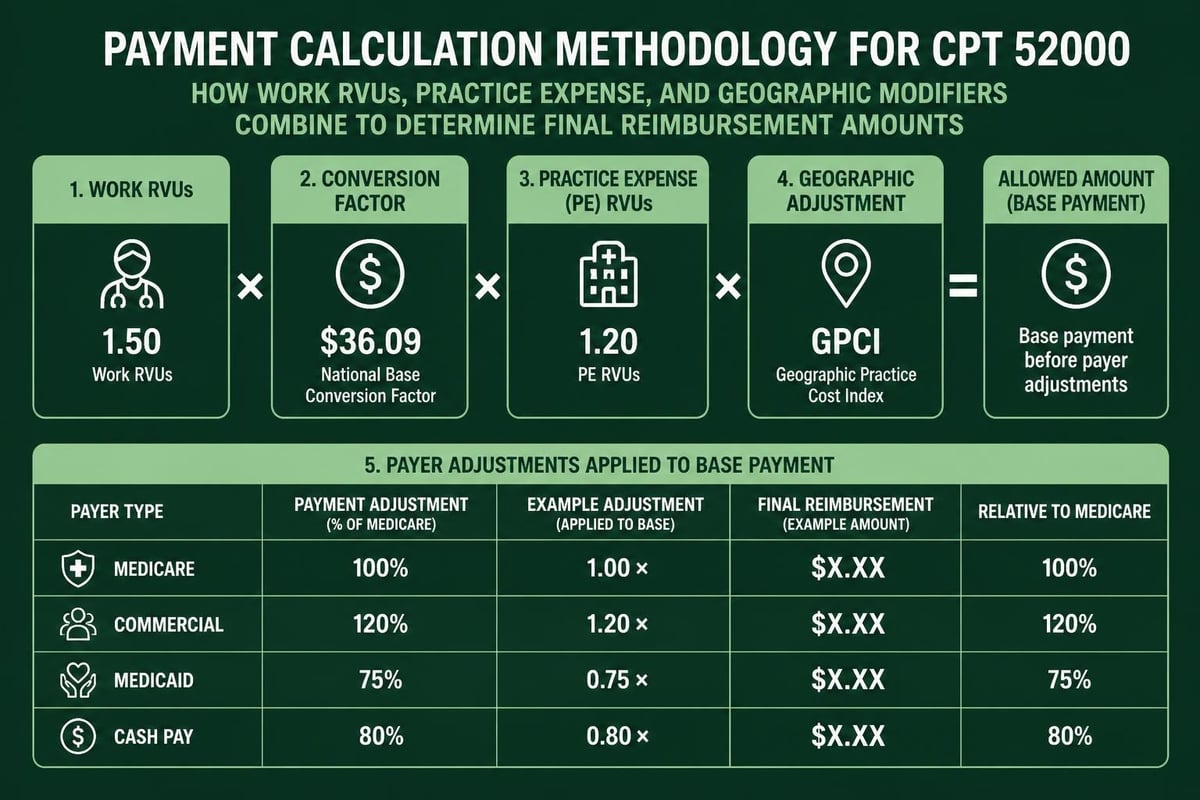
Understanding payment structures helps practices forecast revenue accurately and identify opportunities for financial optimization. CPT 52000 carries specific relative value units that determine Medicare and commercial payer reimbursement.
The Medicare reimbursement rates for CPT 52000 vary by geographic location and facility versus non-facility settings. Practices should consult current fee schedules to calculate expected payments accurately.
Reimbursement Variables Affecting Payment
Facility status significantly impacts payment amounts. Non-facility settings typically receive higher reimbursement because they bear equipment and overhead costs. Geographic adjustments modify base rates according to local practice expense variations. Payer contracts establish allowed amounts that may differ from Medicare rates, requiring practices to track multiple fee schedules.
Commercial payers often negotiate rates as percentages of Medicare allowables. Understanding these relationships enables practices to benchmark their contracts against industry standards. Healthcare revenue cycle analytics tools help identify underpayments and contract optimization opportunities.
Common Coding Mistakes and How to Avoid Them
Revenue leakage from coding errors affects practice profitability significantly. Understanding frequent mistakes enables proactive prevention strategies.
The proper use guidelines for CPT 52000 highlight several common misapplications. Billing teams frequently confuse this code with related procedures requiring different code assignments.
Frequent Billing Errors
- Unbundling procedures: Separately billing services included in the primary procedure code
- Modifier misuse: Applying inappropriate modifiers or omitting required ones
- Laterality confusion: Incorrectly documenting or coding bilateral versus unilateral procedures
- Upcoding temptation: Selecting more complex codes without supporting documentation
- Global period violations: Billing related services during post-operative periods
Comparing CPT codes 52000 and 52001 reveals subtle but critical differences that impact proper code selection. When irrigation or minor procedures accompany visualization, code selection changes accordingly.
Implementing systematic quality checks through medical coding audit services identifies patterns requiring corrective action. Regular audits reduce compliance risk while improving first-pass claim acceptance rates.
Modifier Application and Special Circumstances
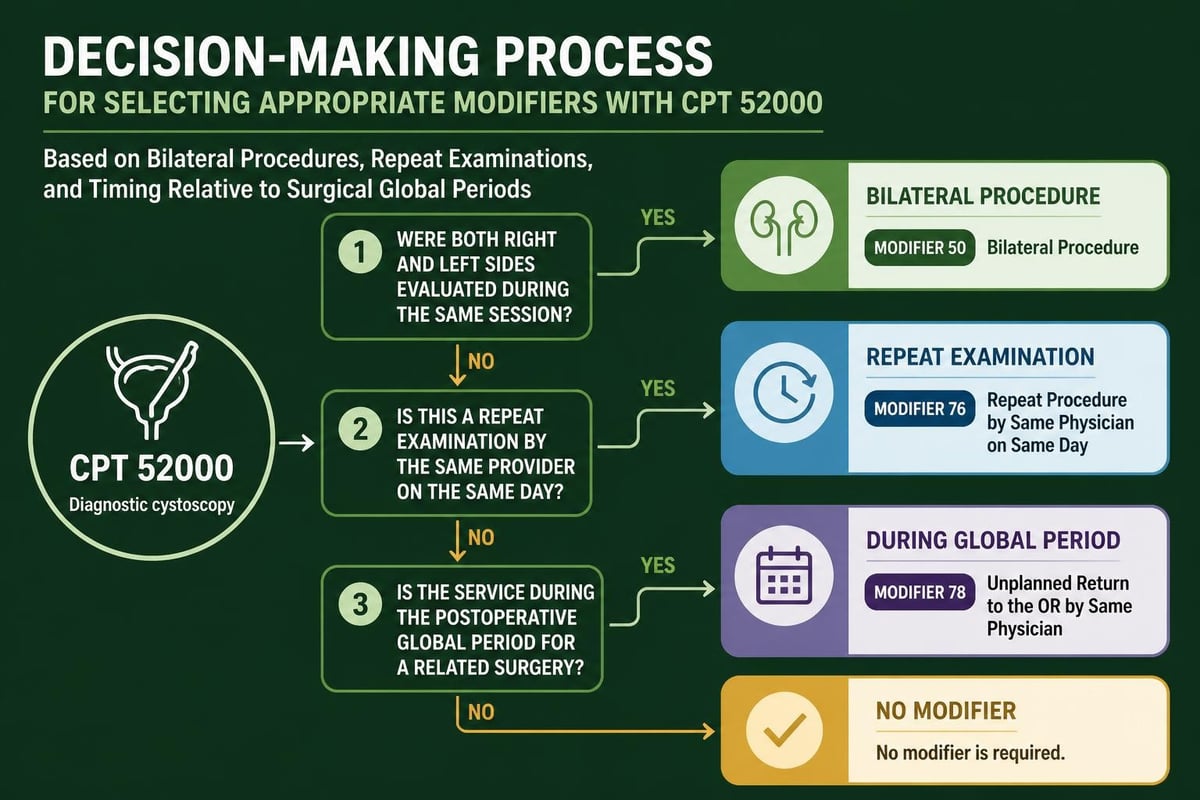
Modifiers communicate additional information about services rendered, affecting both reimbursement amounts and claim adjudication. Proper modifier use prevents denials while ensuring appropriate payment.
Critical Modifiers for CPT 52000
| Modifier | Application | Impact on Payment |
|---|---|---|
| 50 | Bilateral procedure when performed on both sides | Typically 150% of unilateral rate |
| 76 | Repeat procedure by same physician | May require additional documentation |
| 77 | Repeat procedure by different physician | Supports medical necessity for repeat service |
| 78 | Return to operating room for related procedure | Reduced payment during global period |
| 79 | Unrelated procedure during postoperative period | Full payment when properly documented |
The guide to modifiers and billing guidelines provides detailed scenarios requiring modifier application. Revenue cycle teams must understand when modifiers become necessary versus when they create billing complications.
Practices benefit from developing standardized protocols for modifier application. Clear guidelines reduce coding variance while ensuring consistent, compliant billing practices across all providers.
Payer-Specific Guidelines and Prior Authorization
Different payers maintain varying requirements for cystoscopy procedures. Understanding payer-specific policies prevents unnecessary denials and authorization delays.
Some commercial payers require prior authorization for diagnostic cystoscopy, particularly when performed in outpatient or office settings. Prior authorization services ensure compliance with these requirements before scheduling procedures.
Medicare typically does not require prior authorization for cpt 52000, though medical necessity documentation remains essential. Medicaid programs vary by state, with some requiring authorization while others accept claims without pre-approval.
Prior Authorization Best Practices
Establishing relationships with payer representatives streamlines the authorization process. Maintaining current payer policy manuals ensures billing teams access accurate requirements. Tracking authorization approval rates identifies problematic payers requiring additional attention.
The work relative value units for CPT 52000 help justify medical necessity during authorization reviews. Understanding the clinical complexity and physician work involved supports authorization requests.
Quality Measures and Compliance Considerations
Regulatory compliance extends beyond correct code assignment. Practices must maintain documentation standards that satisfy both payer audits and regulatory reviews.
HIPAA compliance requirements apply throughout the revenue cycle, from scheduling through payment posting. Medical claim submission services must incorporate security protocols protecting patient information at every stage.
Quality metrics increasingly influence reimbursement through value-based payment models. Tracking outcomes for patients undergoing cystoscopy helps practices demonstrate quality performance. Documentation should support both clinical quality reporting and appropriate code assignment.
National Correct Coding Initiative edits govern code combinations, preventing inappropriate bundling or unbundling. Regular review of NCCI updates ensures ongoing compliance with current billing rules. Understanding the range of related endoscopic procedure codes provides context for proper code selection across similar procedures.
Accurate billing for CPT 52000 requires coordinated efforts between clinical documentation and revenue cycle operations, ensuring proper reimbursement while maintaining compliance standards. Greenhive Billing Solutions provides comprehensive revenue cycle management services specifically designed for healthcare providers performing urological procedures, offering expert coding, claims processing, and denial management that maximizes reimbursements while reducing administrative burden. Our experienced team ensures your practice captures appropriate revenue for every procedure through transparent communication and HIPAA-compliant processes tailored to your specific operational needs.

