
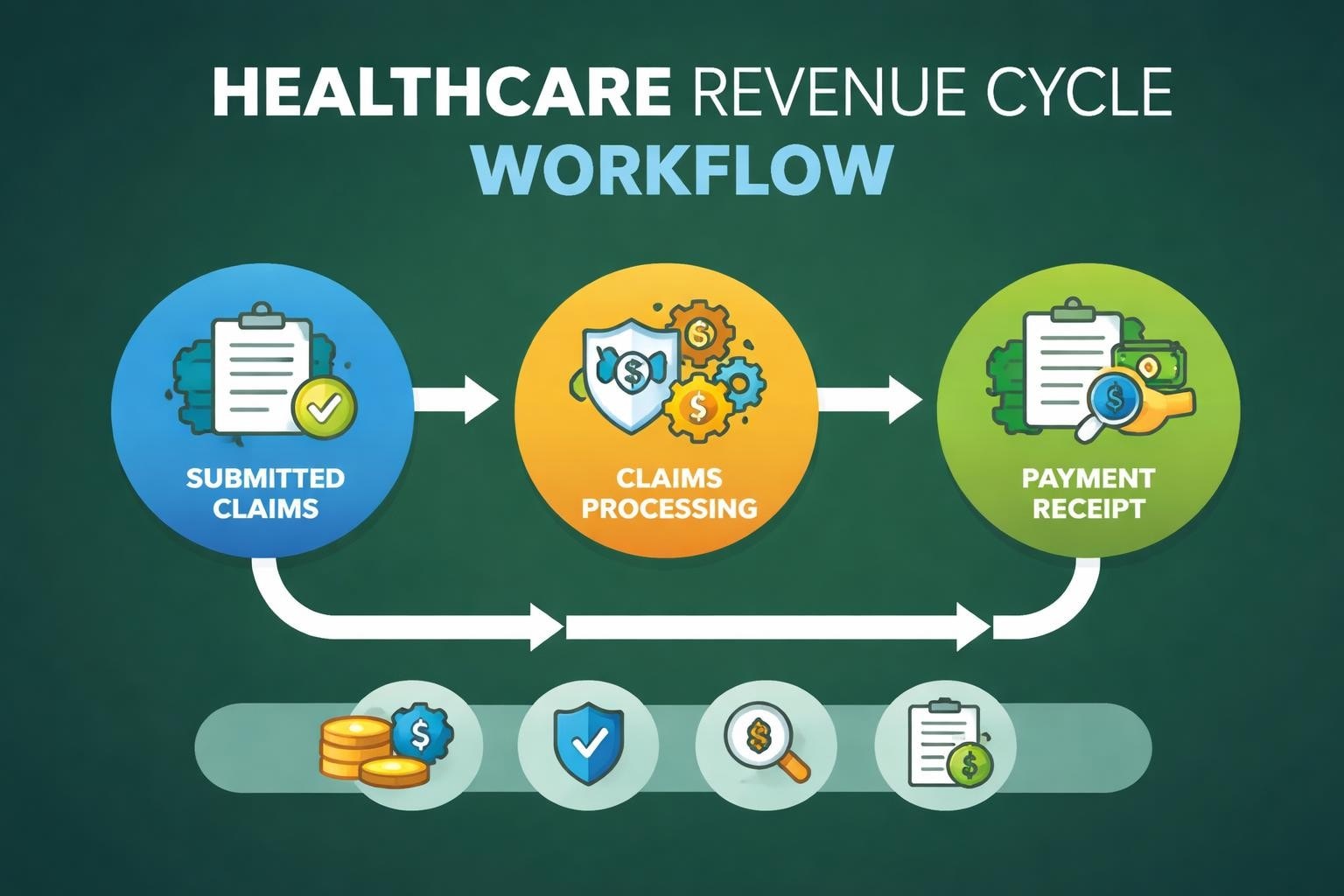
Healthcare providers face mounting pressure to maintain healthy cash flow while delivering quality patient care. One critical metric that directly impacts financial performance is the time it takes for claims to move from submission to payment. Understanding and optimizing the claims to pay cycle represents a fundamental component of effective revenue cycle management, enabling practices to predict cash flow, identify bottlenecks, and implement strategic improvements that accelerate reimbursements.
Understanding the Claims to Pay Timeline
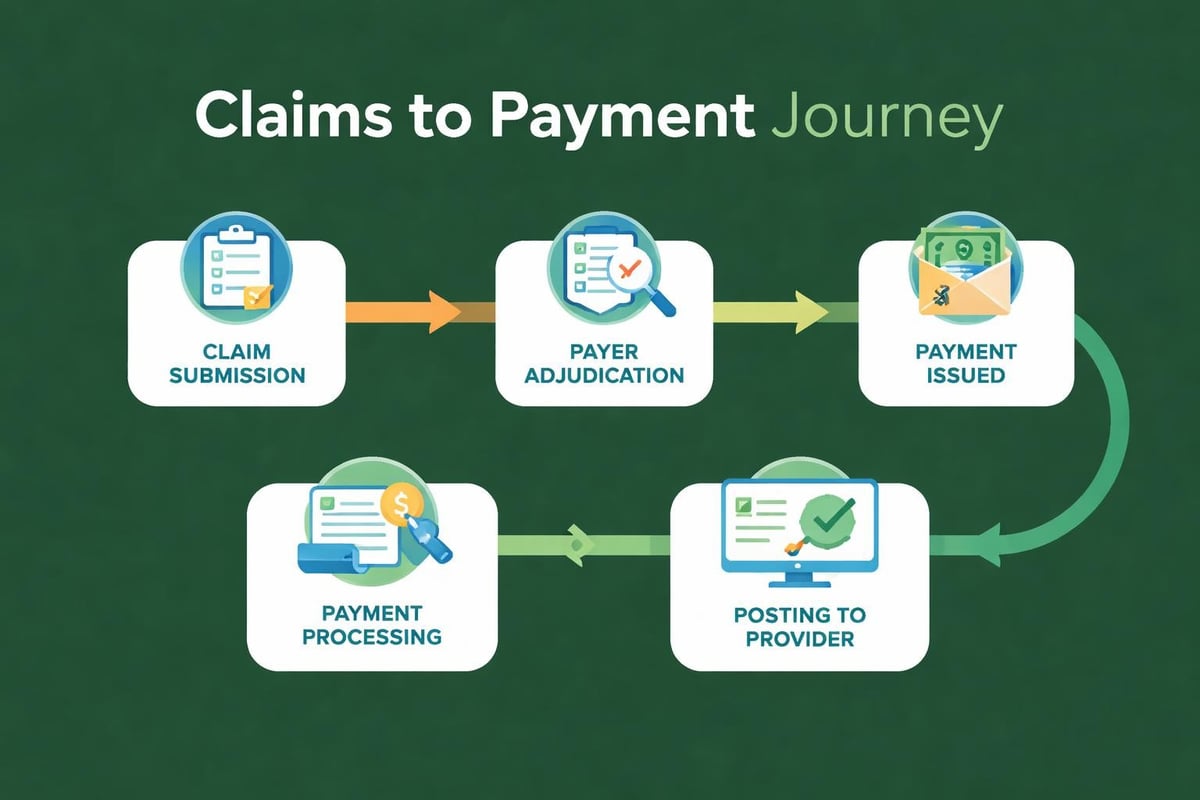
The claims to pay metric measures the duration between when a healthcare provider submits a claim to a payer and when payment is received and posted to the practice's accounts. This timeline encompasses multiple stages, each presenting potential delays that can significantly impact a practice's financial health.
The typical claims to pay process includes several distinct phases. Initial claim submission occurs after patient services are rendered and coded. Payer receipt and adjudication follow, during which insurance companies verify coverage, review medical necessity, and determine payment amounts. Finally, payment processing and posting complete the cycle when funds reach the provider's account.
Most healthcare organizations track claims to pay in days, with industry benchmarks varying by payer type and specialty. Commercial insurance claims typically process within 14 to 30 days, while Medicare and Medicaid claims may follow different timelines based on regional processing centers and claim complexity.
Why Claims to Pay Metrics Matter
Financial predictability depends heavily on consistent, timely payments. When claims to pay timelines extend beyond normal ranges, practices experience cash flow disruptions that can affect payroll, supply purchases, and operational investments. Healthcare revenue cycle management requires careful monitoring of these metrics to maintain fiscal stability.
Key impacts of extended claims to pay periods include:
- Increased borrowing costs to cover operational expenses
- Delayed ability to invest in practice improvements or expansion
- Higher administrative costs from follow-up activities
- Reduced staff morale when financial uncertainty affects the organization
- Potential service disruptions if vendor payments are delayed
Organizations that optimize their claims to pay performance often discover competitive advantages beyond improved cash flow. Better metrics indicate efficient processes, skilled staff, and strong payer relationships-all factors that contribute to sustainable practice growth.
Factors That Influence Claims to Pay Performance
Multiple variables affect how quickly claims move through the payment cycle. Understanding these factors enables practices to implement targeted improvements that reduce delays and accelerate reimbursements.
Claim Accuracy and Completeness
Clean claims submit the first time without errors or missing information. These claims process significantly faster than those requiring corrections or additional documentation. Accuracy begins with proper patient insurance verification before services are rendered, ensuring eligibility and coverage details are current.
Common accuracy issues that extend claims to pay timelines include incorrect patient demographics, invalid insurance identification numbers, missing or incorrect procedure codes, and lack of required authorizations. Each error triggers a rejection or denial, restarting the entire claims to pay cycle and adding weeks to the payment timeline.
| Error Type | Average Delay Added | Prevention Strategy |
|---|---|---|
| Demographic errors | 14-21 days | Real-time eligibility verification |
| Coding errors | 21-30 days | Regular coder training and audits |
| Missing authorization | 30-45 days | Pre-service authorization workflows |
| Duplicate claims | 14-28 days | Claim scrubbing before submission |
Payer-Specific Processing Times
Different insurance companies maintain varying claims to pay standards. Understanding these patterns allows practices to set realistic expectations and identify outliers that require intervention. Commercial payers often process claims faster than government programs, though individual payer performance varies significantly.
Practices should track claims to pay metrics separately for each major payer. This segmentation reveals which relationships require attention and which payers consistently meet payment obligations promptly. When specific payers demonstrate consistently slow claims to pay performance, practices can escalate concerns through payer representative channels or adjust their payer mix strategies accordingly.
Strategies to Accelerate Claims to Pay Timelines
Reducing the time from claim submission to payment requires systematic approaches addressing each phase of the revenue cycle. Healthcare organizations that implement comprehensive improvement strategies typically see measurable results within 60 to 90 days.
Step 1: Implement Front-End Verification Processes
Prevention always outperforms correction when managing claims to pay performance. Robust front-end processes catch issues before claims are generated, ensuring submissions are clean and complete from the start.
Eligibility verification should occur at scheduling and again at check-in. Insurance coverage changes frequently, and real-time verification confirms active coverage, identifies authorization requirements, and verifies patient responsibility amounts. These steps prevent common rejections that extend claims to pay cycles unnecessarily.
Step 2: Enhance Coding Accuracy and Documentation
Proper medical coding directly impacts how quickly payers process claims. Codes must accurately reflect services rendered while meeting payer-specific documentation requirements. Regular training keeps coding staff current on different types of medical coding standards and guideline updates.
Documentation should support every code submitted. When payers request medical records during adjudication, complete and organized documentation facilitates faster reviews and approvals. Practices that maintain electronic health records with integrated coding tools often see improved claims to pay metrics compared to those using disparate systems.

Step 3: Optimize Claim Submission Timing and Frequency
Daily claim submission reduces overall claims to pay timelines compared to weekly or monthly batching. Electronic claim submission through clearinghouses provides immediate feedback on formatting errors and facilitates faster payer receipt.
Submission best practices include:
- Submitting claims within 24 to 48 hours of service delivery
- Using electronic submission for all payers that accept it
- Leveraging clearinghouse claim scrubbing to catch errors before payer submission
- Monitoring submission reports for transmission failures
- Maintaining backup submission methods for system outages
Step 4: Monitor and Manage Aging Claims Proactively
Claims to pay performance deteriorates when submitted claims age without follow-up. Systematic monitoring identifies claims requiring intervention before they exceed payer timely filing limits or become significantly aged.
Most practices categorize aging by buckets: 0-30 days, 31-60 days, 61-90 days, and over 90 days. Claims in the 31-60 day range warrant initial follow-up contact with payers to verify receipt and processing status. Those exceeding 60 days require more aggressive intervention to prevent payment delays or denials.
Denial management in medical billing becomes particularly important when claims to pay timelines extend due to payer rejections. Understanding denial reasons and implementing corrective actions prevents recurring issues that systematically slow payment cycles.
Step 5: Leverage Technology and Automation
Modern revenue cycle management increasingly relies on technology to improve claims to pay performance. Automated eligibility verification, claim scrubbing, and denial tracking reduce manual tasks while improving accuracy and speed.
Electronic remittance advice (ERA) processing accelerates payment posting and reconciliation. When payments arrive electronically rather than through paper checks and explanation of benefits, posting occurs faster and with fewer errors. Understanding what is ERA in medical billing helps practices evaluate whether they're maximizing available automation opportunities.
Measuring and Benchmarking Claims to Pay Performance
Effective management requires measurement. Practices should establish baseline claims to pay metrics and track performance over time to identify trends, measure improvement initiatives, and recognize emerging issues before they impact cash flow.
Essential Claims to Pay Metrics
Beyond the overall claims to pay average, several related metrics provide deeper insight into revenue cycle health. Days in accounts receivable measures the average time revenue remains outstanding across all claims. A lower number indicates faster overall collection, though it doesn't specifically isolate the claims to pay component.
Clean claim rate measures the percentage of claims accepted on first submission without errors. This metric directly correlates with claims to pay performance since clean claims process significantly faster than those requiring corrections. Industry benchmarks suggest clean claim rates above 95% indicate mature billing operations, while rates below 90% signal systematic accuracy issues requiring attention.
Collection rate tracks the percentage of expected reimbursement actually collected. While not exclusively a claims to pay metric, slow payment cycles often reduce collection rates as aged claims become harder to recover. Healthcare revenue cycle analytics help organizations connect these various metrics to understand comprehensive financial performance.
| Metric | Industry Benchmark | Calculation Method |
|---|---|---|
| Average Days to Payment | 30-45 days | Date received minus date submitted |
| Clean Claim Rate | 95%+ | Clean claims divided by total claims |
| Denial Rate | <5% | Denied claims divided by total claims |
| Collection Rate | 95%+ | Collected amount divided by expected reimbursement |
Payer Performance Comparison
Segmenting claims to pay metrics by payer reveals performance variations that aggregate data masks. Some payers consistently pay within contracted timeframes while others regularly exceed them. This intelligence informs contract negotiations, payer mix decisions, and escalation strategies when performance falls below acceptable standards.
Monthly payer scorecards track each insurance company's claims to pay average, clean claim acceptance rate, and denial patterns. When payers deviate from established patterns, practices can investigate whether systemic issues, policy changes, or temporary processing delays explain the variation.
Addressing Common Claims to Pay Challenges
Despite best efforts, most practices encounter obstacles that extend payment timelines. Recognizing these challenges and implementing appropriate responses prevents temporary setbacks from becoming permanent revenue cycle weaknesses.
Managing Prior Authorization Delays
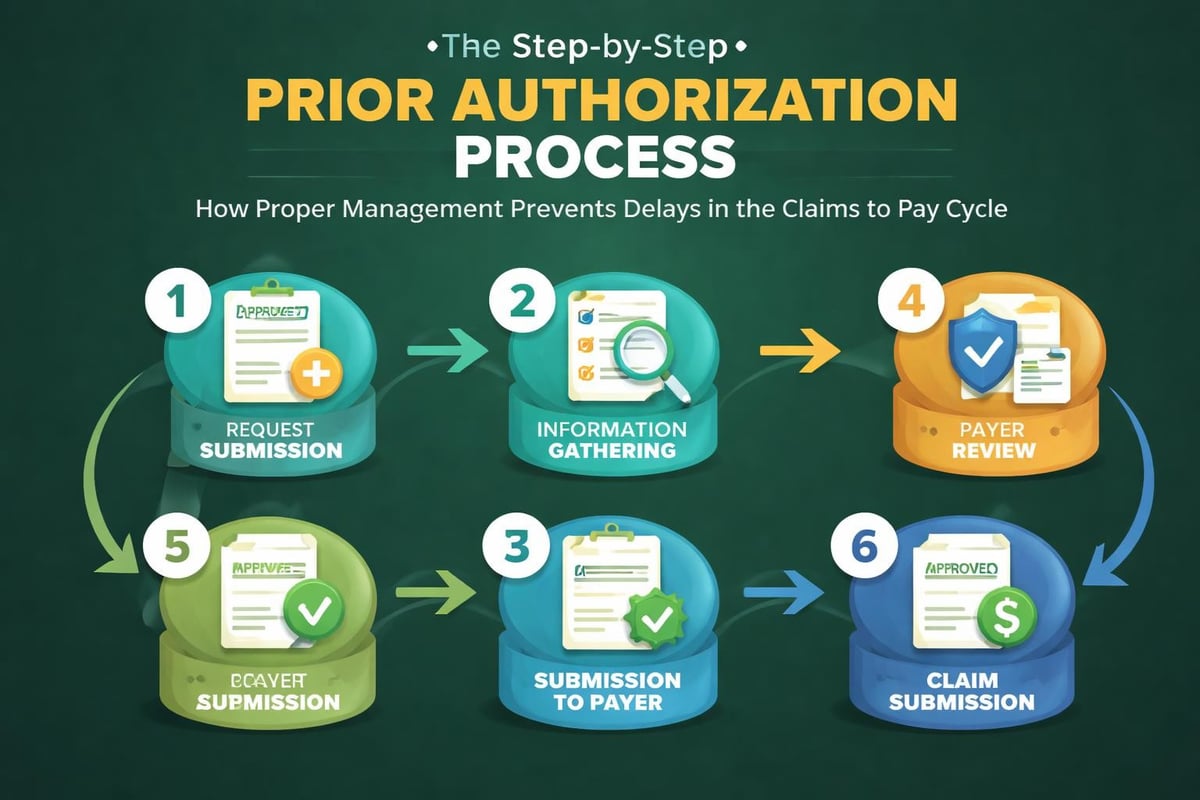
Services requiring prior authorization introduce additional steps into the claims to pay cycle. Authorization requests must be submitted, reviewed, and approved before services can be rendered and claimed. Delays in authorization directly delay the entire revenue cycle.
Effective prior authorization management includes:
- Identifying authorization requirements during scheduling
- Submitting authorization requests immediately upon scheduling
- Following up on pending authorizations before scheduled service dates
- Documenting all authorization communications
- Training staff on payer-specific authorization processes
When authorizations are delayed or denied, practices must decide whether to reschedule services, appeal denials, or proceed with patient understanding of financial responsibility. Each option affects both patient satisfaction and claims to pay timelines.
Handling Complex Claims and Medical Necessity Reviews
High-cost procedures, experimental treatments, and services with documented overutilization often trigger additional payer review. These claims to pay cycles extend beyond normal timelines as payers conduct medical necessity reviews, request additional documentation, or require peer-to-peer discussions between payer medical directors and treating physicians.
Practices can expedite complex claim processing by proactively submitting comprehensive documentation, anticipating common payer questions, and maintaining detailed clinical notes that demonstrate medical necessity. Understanding common challenges in healthcare revenue cycle management helps organizations prepare for these situations.
Resolving Payment Posting Errors
Even after payers remit payment, posting errors can obscure true claims to pay performance. Payments applied to incorrect accounts, misallocated between patient responsibility and insurance payment, or posted with incorrect adjustment codes all create reconciliation challenges that complicate financial reporting.
Systematic payment posting procedures reduce these errors. Staff should verify that payment amounts match expected reimbursement, allocate payments to correct patient accounts and service dates, and apply standardized adjustment codes that accurately reflect payment variances. When discrepancies arise, timely investigation determines whether payer underpayment, contractual adjustment misunderstanding, or posting error caused the variance.
The Role of Professional Revenue Cycle Management
Many healthcare organizations partner with specialized revenue cycle management providers to optimize their claims to pay performance. These partnerships bring expertise, technology, and dedicated resources that many practices cannot maintain internally.
Professional revenue cycle management teams focus exclusively on billing, coding, and collections processes. This specialization often translates to superior claims to pay metrics compared to in-house billing departments that compete for attention with clinical priorities. Experienced billing professionals recognize payer-specific requirements, anticipate common denial reasons, and implement best practices across diverse client portfolios.
Benefits of outsourced revenue cycle management include:
- Access to experienced billing and coding specialists
- Reduced overhead from staffing, training, and technology investments
- Scalability to handle volume fluctuations without hiring delays
- Advanced technology platforms without capital expenditure
- Performance guarantees and transparent reporting
Organizations evaluating whether to manage revenue cycle functions internally or partner with specialized providers should analyze current claims to pay performance, staff expertise, technology capabilities, and strategic priorities. The revenue cycle management process encompasses numerous functions beyond claims processing, and comprehensive evaluation considers the full scope of activities required for optimal financial performance.
Future Trends Affecting Claims to Pay
The healthcare payment landscape continues evolving, introducing new variables that will affect claims to pay performance in coming years. Value-based payment models, artificial intelligence in claims processing, and regulatory changes all present both opportunities and challenges for revenue cycle optimization.
Value-Based Payment Integration
As healthcare moves toward quality-based reimbursement models, traditional fee-for-service claims to pay metrics may coexist with alternative payment structures. Bundled payments, shared savings arrangements, and capitation introduce different payment timelines and reconciliation requirements that existing claims to pay tracking may not adequately capture.
Practices participating in multiple payment models require sophisticated analytics to understand true revenue cycle performance across different reimbursement structures. The traditional claims to pay metric remains relevant for fee-for-service components while additional metrics track value-based payment reconciliations and settlements.
Artificial Intelligence and Automation
Emerging technologies promise to accelerate claims to pay cycles through intelligent automation. AI-powered coding assistants reduce human coding time while improving accuracy. Predictive analytics identify claims likely to experience payment delays, enabling preemptive intervention. Robotic process automation handles repetitive tasks like eligibility verification and claim status checking with greater speed and consistency than manual processes.
These technologies will likely compress claims to pay timelines as adoption increases across the industry. Payers implementing automated adjudication can process straightforward claims in hours rather than days. Providers leveraging AI for claim preparation submit cleaner claims requiring less rework. The combined effect should be measurably faster payment cycles for organizations that successfully implement these innovations.
Regulatory and Policy Changes
Payment timelines are increasingly subject to regulatory oversight. Some states have enacted prompt payment laws requiring insurers to process clean claims within specific timeframes. Federal regulations governing Medicare and Medicaid payment processing continue evolving. Understanding and leveraging these requirements helps practices hold payers accountable when claims to pay performance falls below mandated standards.
Policy changes also affect what constitutes a clean claim, authorization requirements, and documentation standards. Staying current with these changes prevents compliance issues that could trigger payment delays or denials. Regular monitoring of payer bulletins, participation in professional associations, and engagement with specialized revenue cycle management providers help practices maintain compliance while optimizing claims to pay performance.
Optimizing your claims to pay cycle requires expertise, technology, and relentless attention to detail across every revenue cycle phase. Healthcare providers seeking to improve payment timelines, reduce denial rates, and strengthen financial performance can benefit from partnering with specialists who focus exclusively on these challenges. Greenhive Billing Solutions delivers comprehensive revenue cycle management services including insurance verification, claims processing, and denial management, all designed to accelerate reimbursements and improve your practice's bottom line. Contact our team to learn how we can help optimize your claims to pay performance and enhance your financial operations.

