
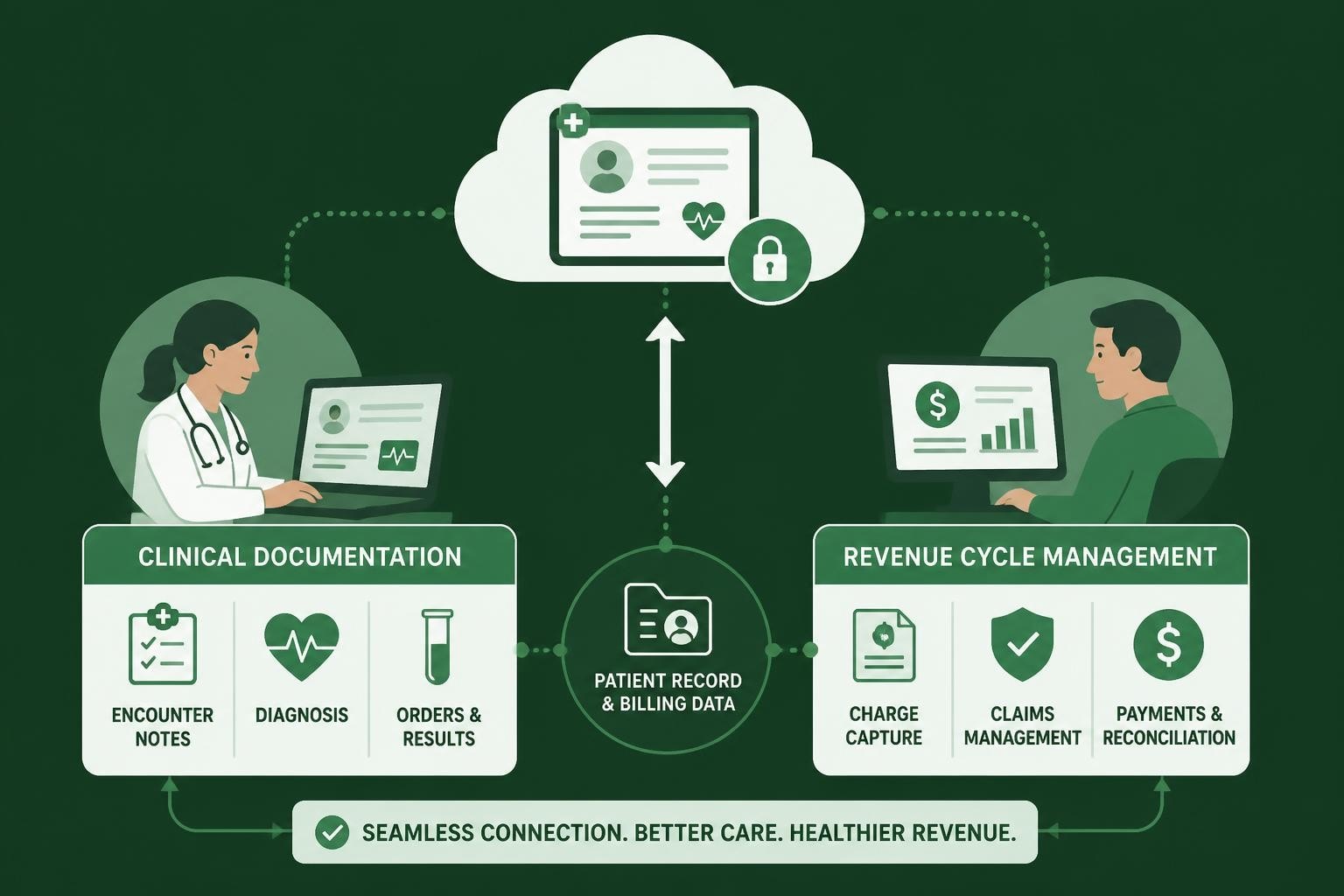
Healthcare providers face increasing pressure to modernize their technology infrastructure while maintaining efficient revenue cycle operations. Cloud based EHR systems represent a fundamental shift in how medical practices manage patient information, clinical documentation, and billing workflows. These solutions offer compelling advantages over traditional on-premises systems, particularly for practices seeking to optimize financial performance while reducing IT overhead.
Understanding Cloud Based EHR Systems
Cloud based EHR systems operate on remote servers maintained by third-party vendors, delivering electronic health record functionality through internet connectivity. Unlike legacy systems requiring extensive on-site hardware and dedicated IT staff, these platforms provide instant access to patient data from any authorized device.
The distinction between cloud and on-premises solutions extends beyond mere location. Understanding cloud-based EHR platforms reveals fundamental differences in deployment, maintenance, and scalability that directly impact revenue cycle management efficiency.
Key Architectural Components
Modern cloud based EHR systems consist of several interconnected elements:
- Application layer: User interface for clinical and administrative functions
- Data storage: Encrypted patient records hosted on secure remote servers
- Integration capabilities: APIs connecting to billing systems, labs, and payers
- Security infrastructure: Multi-layered protection ensuring HIPAA compliance
- Backup systems: Automated redundancy preventing data loss
These components work together to support both clinical workflows and financial operations, making them essential for practices focused on maximizing reimbursements.
Financial Advantages for Healthcare Providers
The economic benefits of cloud based EHR systems directly impact practice profitability. Subscription-based pricing eliminates substantial upfront capital expenditures, converting technology costs into predictable monthly expenses.
| Cost Category | On-Premises Systems | Cloud Based Systems |
|---|---|---|
| Initial Investment | $50,000 – $200,000 | $0 – $5,000 |
| Monthly Per Provider | $200 – $400 | $300 – $600 |
| IT Staff Required | 1-3 full-time | Minimal to none |
| Upgrade Costs | $10,000 – $50,000 | Included in subscription |
| Hardware Replacement | Every 3-5 years | Not applicable |
Reduced infrastructure expenses free capital for revenue cycle improvements, allowing practices to invest in denial management services and other financial optimization strategies.
Operational Cost Reductions
Beyond initial savings, cloud based EHR systems minimize ongoing operational expenses. Practices eliminate server maintenance, hardware upgrades, and dedicated IT personnel. Vendors handle software updates, security patches, and system backups automatically.
This operational efficiency translates to faster medical claim submission services, as staff spend less time troubleshooting technology issues and more time processing claims accurately.
Enhanced Accessibility and Revenue Cycle Performance
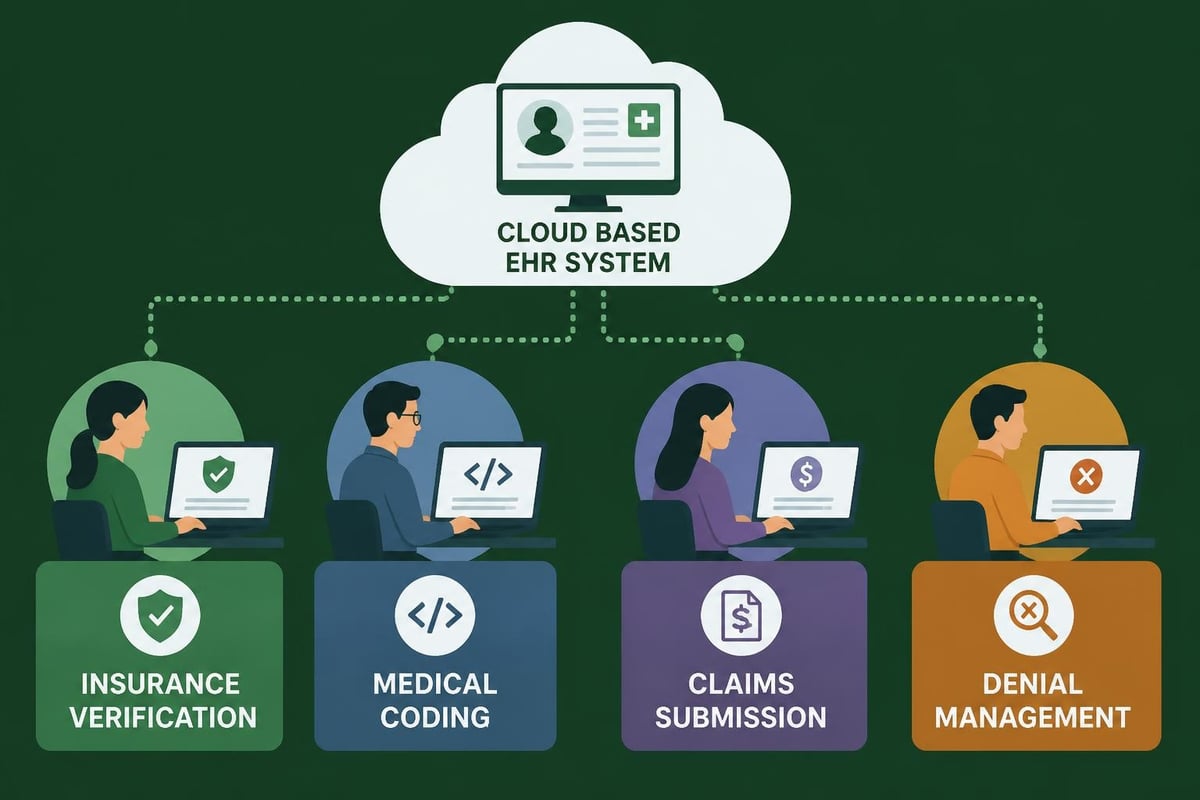
Remote accessibility represents a critical advantage for modern revenue cycle operations. Billing specialists can verify insurance eligibility, review clinical documentation, and submit claims from any location with internet connectivity.
Oracle’s comprehensive guide to cloud-based EHRs emphasizes how this flexibility supports distributed teams and multi-location practices. Revenue cycle management professionals can access the same real-time data regardless of physical location.
Supporting Distributed Workflows
- Insurance verification teams access patient demographics and coverage details remotely
- Medical coders review encounter documentation without on-site system access
- Billing specialists submit claims and track reimbursements from centralized platforms
- Practice managers monitor revenue cycle analytics across multiple locations simultaneously
This distributed capability proves particularly valuable for practices partnering with external revenue cycle management providers who require secure system access.
Scalability and Practice Growth
Cloud based EHR systems accommodate practice expansion without infrastructure overhauls. Adding providers, locations, or specialties requires minimal technical configuration.
Automatic scaling ensures system performance remains consistent during volume fluctuations. Whether processing 100 or 10,000 monthly claims, cloud platforms adjust resources dynamically. This elasticity supports practices experiencing seasonal variations or rapid growth.
The Nextech analysis of cloud-based versus on-premises systems demonstrates how scalability directly benefits revenue cycle operations, enabling practices to handle increasing claim volumes without proportional cost increases.
Security and Compliance Considerations
HIPAA compliance represents a non-negotiable requirement for healthcare technology. Cloud based EHR systems offer enterprise-grade security measures that most practices cannot replicate internally.
Essential Security Features
- End-to-end encryption protecting data in transit and at rest
- Multi-factor authentication preventing unauthorized access
- Automated audit logs tracking every system interaction
- Disaster recovery protocols ensuring business continuity
- Regular security assessments identifying vulnerabilities proactively
Implementing proper cloud-based EHR security measures requires vendor partnership and internal vigilance. Practices must verify that providers maintain appropriate safeguards and undergo regular compliance audits.
The potential security concerns with cloud-based EHRs necessitate careful vendor selection and ongoing monitoring, particularly for practices handling sensitive financial data through payment posting services.
Integration with Revenue Cycle Management Systems
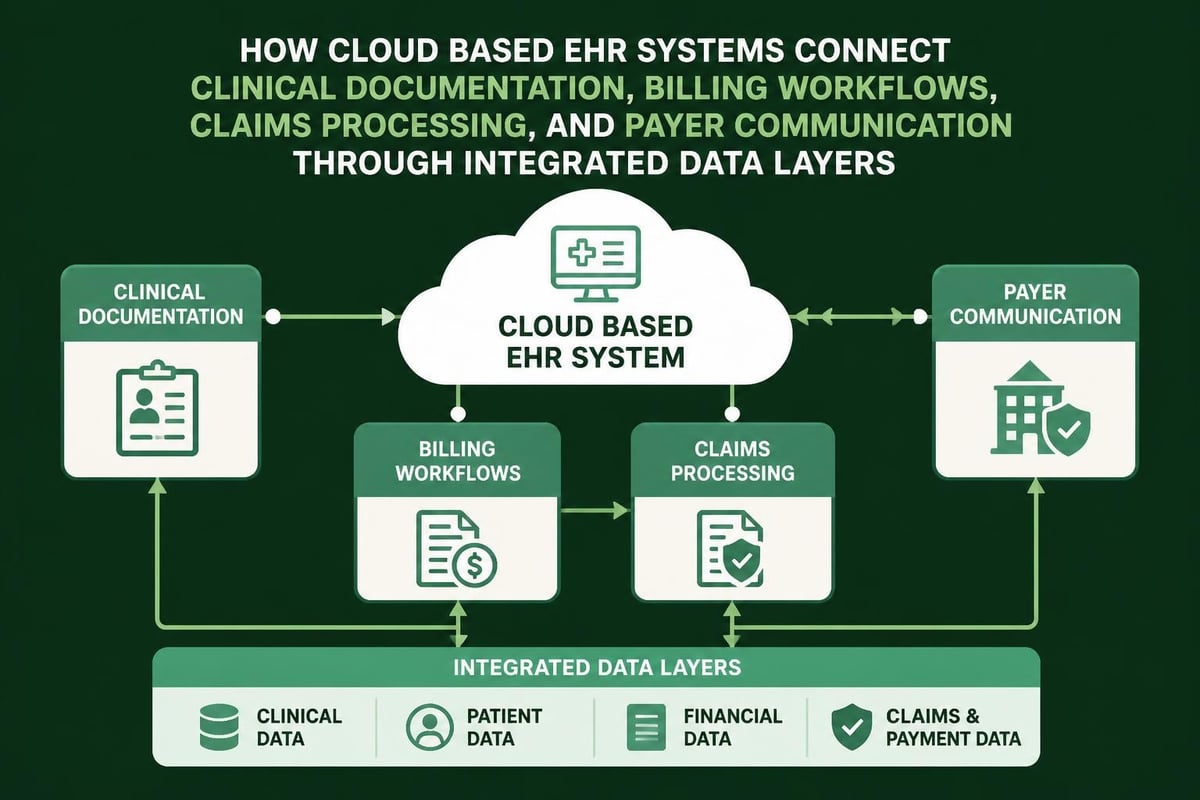
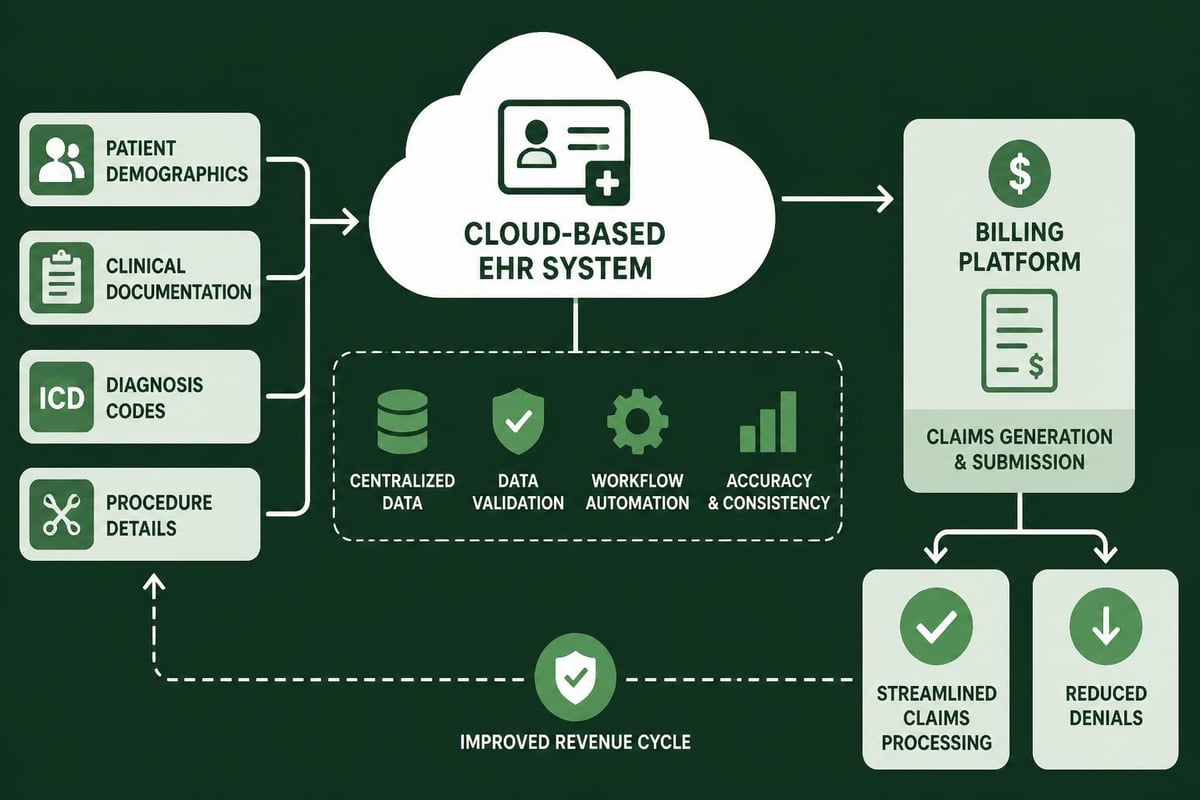
Effective cloud based EHR systems integrate seamlessly with billing platforms, clearinghouses, and payer portals. This interoperability eliminates duplicate data entry and reduces claim submission errors.
| Integration Point | Revenue Cycle Benefit | Impact on Reimbursement |
|---|---|---|
| Demographics Sync | Reduced eligibility denials | 12-18% fewer rejections |
| Diagnosis Capture | Accurate coding | 8-15% fewer underpayments |
| Procedure Documentation | Complete charge capture | 5-10% revenue increase |
| Authorization Tracking | Reduced service denials | 15-22% fewer authorization issues |
Healthcare providers examining interoperability benefits discover that proper integration accelerates revenue cycles and improves cash flow predictability.
Implementation and Transition Strategies
Migrating to cloud based EHR systems requires methodical planning to minimize revenue cycle disruption. Successful transitions follow structured approaches addressing data migration, staff training, and workflow optimization.
Implementation Timeline
- Assessment phase (2-4 weeks): Evaluate current workflows and identify integration requirements
- Vendor selection (3-6 weeks): Compare solutions based on functionality and cost
- Data migration (4-8 weeks): Transfer historical records and validate accuracy
- Staff training (2-4 weeks): Educate users on new workflows and features
- Parallel operations (2-4 weeks): Run both systems simultaneously to ensure continuity
- Full transition (1-2 weeks): Complete cutover and decommission legacy systems
The challenges in migrating legacy systems to the cloud underscore the importance of experienced guidance during transitions, particularly for practices simultaneously optimizing medical billing services.
Vendor Selection Criteria
Choosing appropriate cloud based EHR systems requires evaluating multiple factors beyond basic functionality. Practices must consider specialization support, vendor stability, and total cost of ownership.
Specialty-specific templates prove essential for accurate documentation and coding. Practices offering gastroenterology medical billing services or nephrology medical billing services require systems accommodating unique procedure codes and documentation requirements.
Comprehensive buyer’s guides for cloud EHR systems emphasize evaluating vendor responsiveness, update frequency, and customer support quality alongside technical specifications.
Performance Monitoring and Optimization
Post-implementation success depends on continuous monitoring and refinement. Practices should track key performance indicators measuring both clinical efficiency and revenue cycle outcomes.
Essential metrics include claim submission speed, first-pass resolution rates, denial percentages, and days in accounts receivable. Cloud based EHR systems generate healthcare revenue cycle analytics revealing optimization opportunities.
Regular workflow assessments identify bottlenecks and training gaps. Practices should conduct quarterly reviews comparing actual performance against baseline metrics established during implementation.
Cloud based EHR systems deliver measurable benefits for healthcare providers prioritizing financial performance alongside clinical excellence. The combination of reduced costs, enhanced accessibility, and improved integration capabilities makes these platforms essential for modern revenue cycle management. Greenhive Billing Solutions helps healthcare providers maximize the financial benefits of their technology investments through comprehensive revenue cycle management services, including insurance verification, claims processing, and denial management designed to improve cash flow and ensure optimal reimbursements.

