

Healthcare professionals navigate a complex landscape where stereotypes of medical specialties shape everything from career decisions to interdepartmental collaboration. These preconceived notions about different medical fields affect not only individual physicians but also the operational efficiency of healthcare facilities, including critical functions like revenue cycle management. Understanding these stereotypes helps billing professionals, administrators, and healthcare providers improve communication, streamline processes, and ultimately enhance financial performance across practices.
How Medical Specialty Stereotypes Shape Healthcare Perceptions
The stereotypes of medical specialties have deep roots in medical culture, often perpetuated through training environments, media portrayals, and professional hierarchies. Surgeons are frequently characterized as confident and decisive, while psychiatrists might be viewed as contemplative and analytical. Family medicine practitioners often face stereotypes suggesting they chose their specialty because they couldn’t commit to a more specialized field, despite the breadth of knowledge their role requires.
Research on medical specialty stereotypes reveals that these perceptions begin forming during medical school and residency. Students develop opinions about various specialties based on limited exposure, anecdotal stories from peers, and observations of practicing physicians. These early impressions can significantly influence career trajectories and professional relationships.
The Impact on Administrative Operations
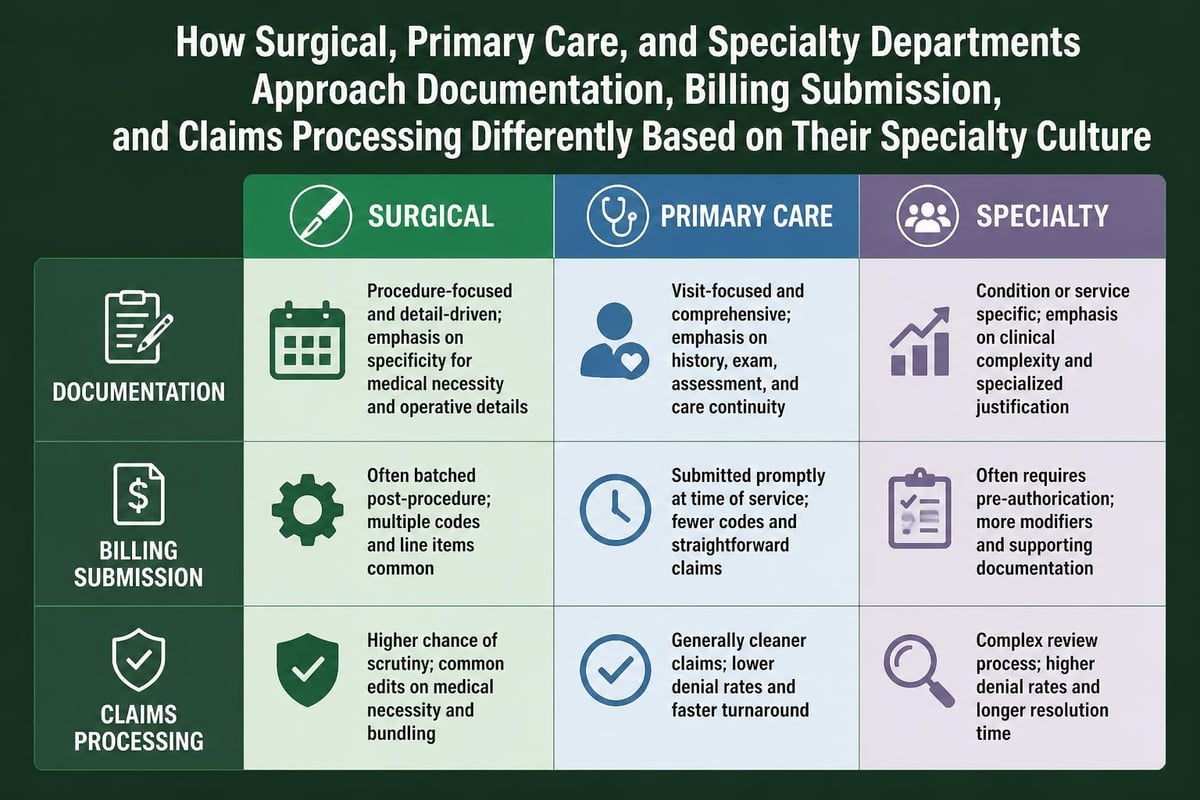
For revenue cycle management professionals, understanding these stereotypes becomes practically important. Different specialties have distinct billing patterns, documentation styles, and claim submission behaviors. When billing and coding specialists recognize how specialty cultures influence documentation practices, they can better anticipate challenges and develop targeted training programs.
Key operational considerations include:
- Documentation thoroughness varies by specialty culture
- Communication preferences differ between procedural and cognitive specialties
- Revenue expectations align with specialty stereotypes about compensation
- Denial patterns often correlate with specialty-specific billing complexities
Common Specialty Stereotypes and Their Business Implications
The most prevalent stereotypes of medical specialties extend beyond personality traits into operational realities that affect healthcare business operations. Emergency medicine physicians might be stereotyped as adrenaline-seeking individuals who thrive in chaos, while dermatologists face perceptions of having more controllable schedules. These stereotypes, whether accurate or not, influence staffing decisions, resource allocation, and billing workflows.
| Specialty | Common Stereotype | RCM Impact |
|---|---|---|
| Surgery | High-earning, procedurally focused | Complex coding requirements, higher claim values |
| Family Medicine | Generalist, relationship-focused | High patient volume, preventive care coding challenges |
| Emergency Medicine | Fast-paced, crisis-oriented | Time-sensitive documentation, facility fee complexity |
| Psychiatry | Analytical, patient-focused | Session-based billing, insurance authorization requirements |
Studies examining professional stereotypes demonstrate that these perceptions affect how different specialties interact with administrative staff. Billing teams working with surgical practices encounter different challenges than those supporting primary care providers, partly due to the cultural norms within each specialty.
Breaking Down Barriers Between Specialties and Administration
The American Medical Association has addressed how stereotypes can block career paths that truly fit individual physicians. Similarly, in healthcare administration and revenue cycle management, stereotypes can create unnecessary barriers between clinical and business operations.
Effective denial management requires understanding that different specialties approach documentation differently. Rather than viewing these differences as obstacles, forward-thinking RCM teams recognize them as opportunities to develop specialty-specific protocols.
Practical Strategies for Revenue Cycle Teams
- Develop specialty-specific training materials that acknowledge different documentation cultures while maintaining billing compliance
- Create targeted communication approaches based on specialty workflow patterns rather than one-size-fits-all messaging
- Implement specialty-focused quality metrics that recognize the unique challenges each department faces
- Build collaborative relationships that respect clinical expertise while educating providers about billing requirements
Revenue cycle management professionals who understand specialty cultures can better explain why certain coding practices matter for specific procedures or patient encounters.

The Role of Stereotypes in Multi-Specialty Practice Management
Healthcare organizations managing multiple specialties face unique challenges related to the stereotypes of medical specialties. Orthopedic surgeons and pediatricians within the same health system operate under vastly different professional cultures, affecting everything from scheduling preferences to revenue expectations.
For billing operations serving diverse specialty groups, recognizing these cultural differences proves essential. A practice offering comprehensive services needs revenue cycle processes flexible enough to accommodate specialty-specific needs while maintaining consistent standards.
Multi-specialty billing considerations:
- Varying levels of administrative engagement across departments
- Different tolerance levels for billing-related interruptions
- Specialty-specific payer mix and reimbursement patterns
- Diverse documentation systems and electronic health record usage
Research examining international perspectives on medical stereotypes shows these patterns exist globally, suggesting they reflect genuine cultural differences within medical specialties rather than regional anomalies.
Technology and Changing Specialty Perceptions
Modern healthcare increasingly relies on technology for both clinical care and administrative functions. Interestingly, stereotypes influence how different specialties adopt and utilize these tools. Tech-forward specialties like radiology embrace digital solutions readily, while others may resist changes to established workflows.
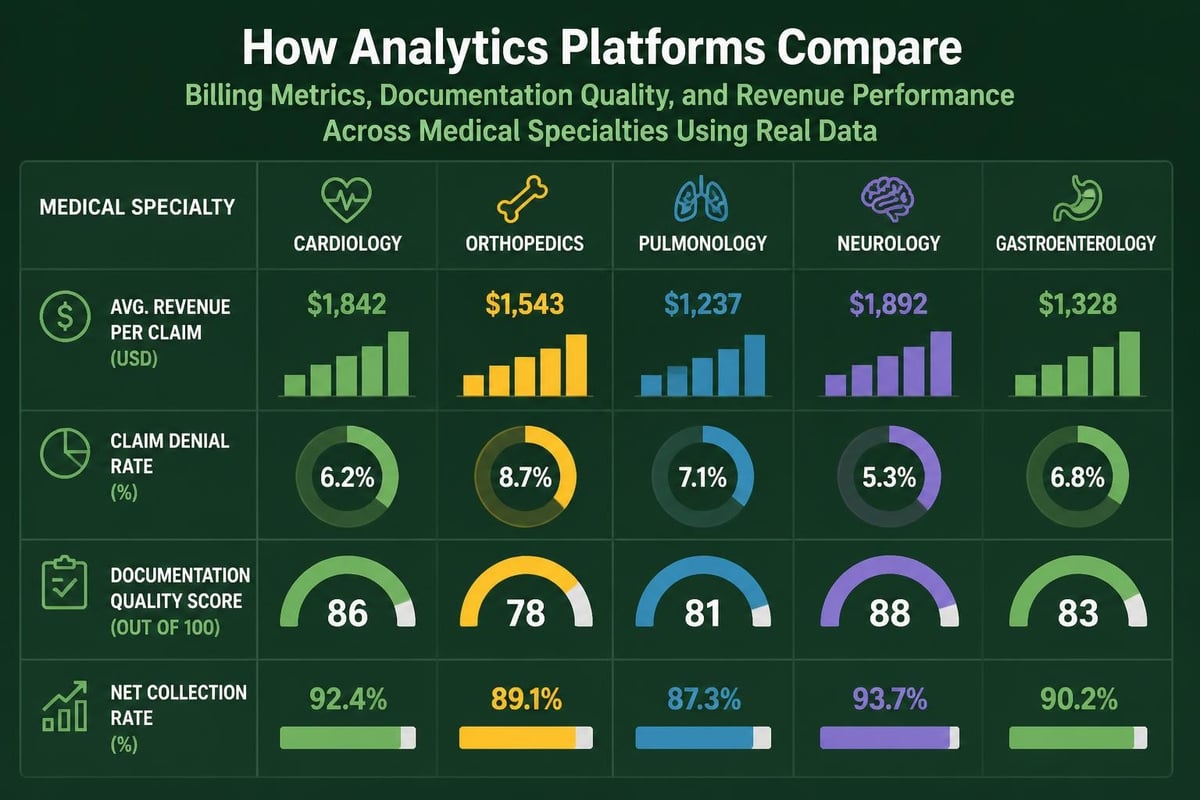
Healthcare revenue cycle analytics platforms now provide specialty-specific benchmarking, allowing practices to compare their performance against peers within the same field. This data-driven approach helps challenge outdated stereotypes by revealing actual performance patterns rather than relying on assumptions.
Recent research even explores how artificial intelligence perpetuates medical stereotypes, highlighting the importance of examining biases in automated systems used for billing, scheduling, and patient management.
Moving Beyond Stereotypes Toward Operational Excellence
Progressive healthcare organizations recognize that while the stereotypes of medical specialties contain kernels of truth about different professional cultures, they shouldn’t dictate operational strategies. Look for Zebras discusses debunking these stereotypes, encouraging a more nuanced understanding of what makes each specialty unique.
For billing teams, this means developing expertise in specialty-specific requirements while avoiding assumptions that limit collaboration. A cardiologist who doesn’t fit the stereotype of being procedure-focused still needs appropriate support for diagnostic services and consultative care billing.
The most successful physician revenue cycle management strategies balance standardization with customization. Core processes maintain consistency and compliance, while specialty-specific adaptations address unique documentation patterns, payer requirements, and clinical workflows. This approach acknowledges real differences between specialties without allowing stereotypes to create artificial barriers or inefficiencies in the revenue cycle.
Understanding how stereotypes of medical specialties influence healthcare operations enables more effective revenue cycle management strategies that respect clinical diversity while maintaining billing excellence. Healthcare providers seeking to optimize their financial performance across multiple specialties benefit from partners who recognize these nuances and develop tailored solutions. Greenhive Billing Solutions specializes in comprehensive revenue cycle management that adapts to your specific specialty mix, combining industry expertise with flexible processes that improve collections while respecting your clinical workflow. Contact our team to discover how specialty-focused billing strategies can enhance your practice’s financial performance.

