
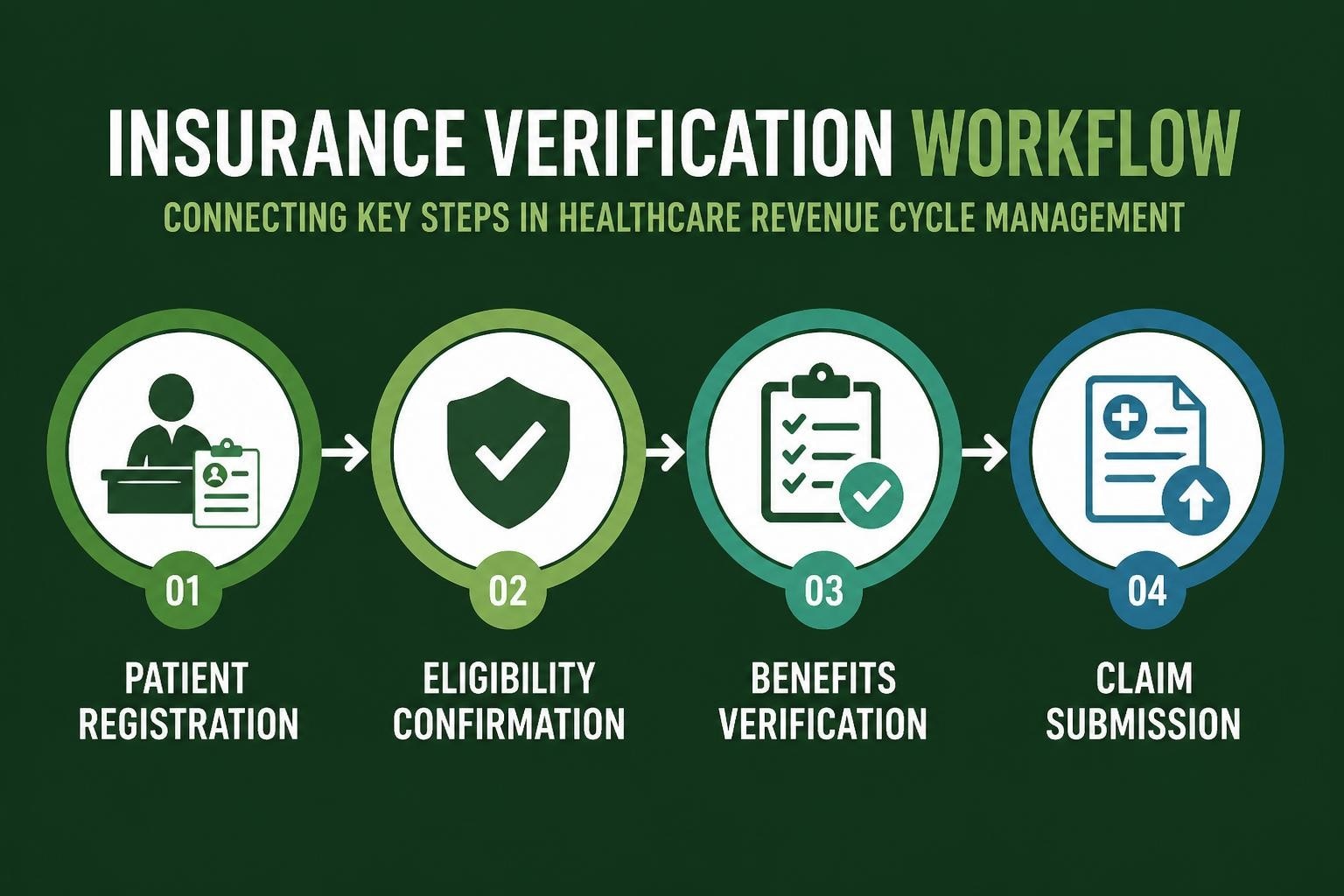
Effective insurance verification serves as the foundation of a healthy revenue cycle for healthcare practices. When performed accurately and consistently, this critical front-end process prevents claim denials, reduces payment delays, and ensures practices receive appropriate reimbursement for services rendered. However, many healthcare organizations struggle with verification challenges that lead to revenue leakage, administrative burden, and patient dissatisfaction. Understanding the fundamentals and implementing robust verification practices can transform your practice’s financial performance.
Understanding the Insurance Verification Process
Insurance verification involves confirming a patient’s coverage status, benefits, and eligibility before delivering healthcare services. This process validates that the insurance policy is active, identifies covered services, determines patient responsibility, and verifies authorization requirements.
The insurance verification process plays a vital role in preventing claim denials and ensuring timely payments. Healthcare practices that prioritize thorough verification reduce administrative rework, minimize billing surprises for patients, and maintain steady cash flow.
Key Components of Effective Verification
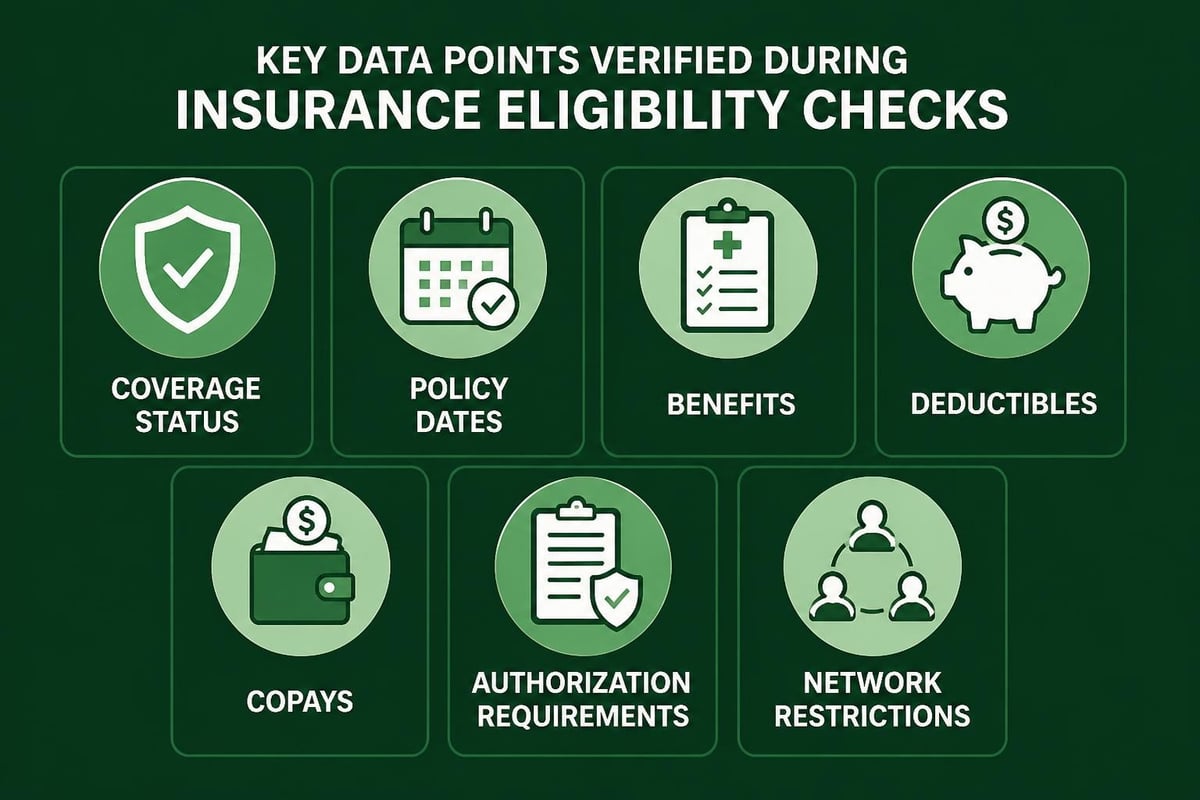
A comprehensive verification process examines multiple data points to ensure accurate information capture. These components work together to create a complete picture of patient coverage and financial responsibility.
Essential verification elements include:
- Active coverage status and policy effective dates
- Primary and secondary insurance information
- Covered services and exclusions
- Deductible amounts and remaining balances
- Copayment and coinsurance requirements
- Prior authorization needs for specific procedures
- Out-of-network penalties and restrictions
- Referral requirements and specialist limitations
When combined with professional eligibility verification services, practices can systematically validate each element to reduce errors and improve first-pass claim acceptance rates.
Common Verification Challenges and Solutions
Healthcare practices face numerous obstacles when conducting insurance verification. Common verification issues include inactive coverage, incorrect patient demographics, and outdated insurance information that compromise claim success rates.
| Challenge | Impact | Solution |
|---|---|---|
| Inactive policies | Claim denials, unpaid services | Real-time eligibility checks at every visit |
| Incorrect demographics | Payment delays, claim rejections | Double verification of patient information |
| Missing authorization | Service denials, revenue loss | Automated authorization tracking systems |
| Out-of-network services | Reduced reimbursement | Network status confirmation before scheduling |
Technology Integration for Verification Efficiency
Modern verification processes benefit significantly from technology integration. Insurance verification software in 2026 addresses many traditional challenges through automation and real-time data access.
Technology streamlines verification by connecting directly with payer systems, reducing manual data entry errors and accelerating the verification timeline. Automated systems can verify eligibility in seconds rather than minutes or hours required for phone-based verification.
Technology advantages include:
- Real-time eligibility verification through clearinghouse connections
- Automated benefit discovery and documentation
- Electronic prior authorization submission and tracking
- Integration with practice management systems
- Batch verification for scheduled appointments
These technological capabilities reduce staff workload while improving verification accuracy. Practices leveraging advanced revenue cycle analytics can identify verification bottlenecks and measure improvement over time.
Implementing Verification Best Practices
Successful verification requires standardized workflows, staff training, and consistent execution. Best practices for verifying insurance eligibility emphasize systematic approaches that minimize errors and maximize efficiency.
Step-by-Step Verification Protocol
Establishing a structured verification protocol ensures consistency across all patient encounters. Each step builds upon the previous one to create comprehensive verification documentation.
Step 1: Collect complete insurance information at scheduling, including policy number, group number, and subscriber details.
Step 2: Verify active coverage status through electronic systems or payer phone lines within 48 hours of scheduled appointment.
Step 3: Document specific benefits applicable to scheduled services, including coverage percentages and patient financial responsibility.
Step 4: Identify and initiate required prior authorizations immediately after verification.
Step 5: Communicate financial responsibility to patients before service delivery, providing cost estimates when possible.
Step 6: Reconfirm eligibility on the day of service to catch any last-minute changes in coverage status.
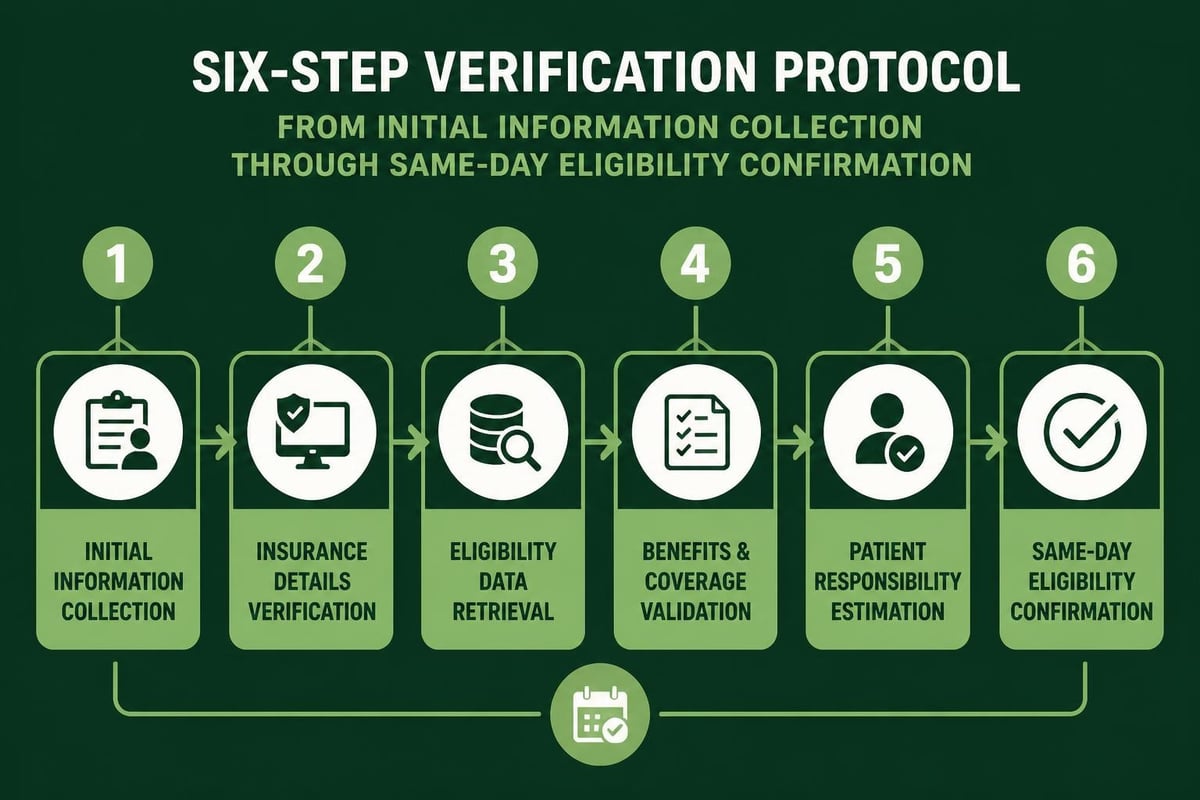
This systematic approach reduces the common eligibility verification mistakes that lead to claim denials and payment delays.
Artificial Intelligence in Verification Processes
Artificial intelligence is transforming insurance verification by addressing long-standing challenges in data standardization and processing efficiency. AI solutions for verification challenges demonstrate significant improvements in accuracy and speed.
AI systems excel at handling non-standardized data from multiple payers, learning patterns in benefits structures, and predicting authorization requirements. These capabilities address fundamental challenges that manual verification processes struggle to overcome.
AI Applications and Benefits
Machine learning algorithms can process thousands of payer-specific rules, identify coverage patterns, and flag potential issues before claim submission. AI addressing non-standardized data issues represents a significant advancement in verification efficiency.
AI-powered verification capabilities:
- Natural language processing for benefits documentation
- Predictive analytics for authorization requirements
- Automated exception identification and flagging
- Pattern recognition across payer-specific rules
- Continuous learning from verification outcomes
Organizations that complement their verification processes with robust denial management services can quickly address any issues that slip through initial verification.
Staff Training and Performance Monitoring
Even with advanced technology, human expertise remains essential for effective verification. Staff members must understand payer requirements, recognize verification red flags, and communicate effectively with patients about financial responsibility.
Training Components for Verification Excellence
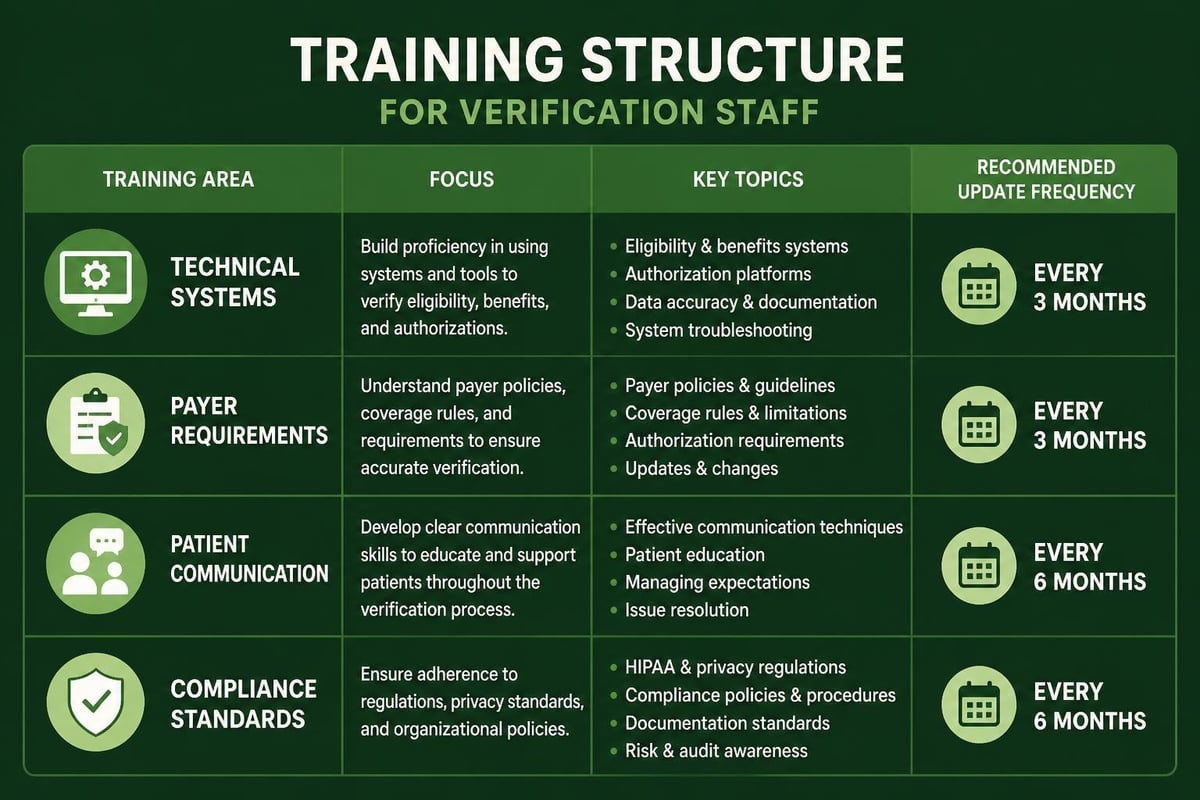
Comprehensive training programs cover technical skills, payer knowledge, and communication strategies. Regular updates keep staff informed about changing payer policies and coverage requirements.
| Training Area | Focus Topics | Frequency |
|---|---|---|
| Technical skills | System navigation, data entry accuracy | Initial + quarterly refreshers |
| Payer knowledge | Plan types, coverage rules, authorization needs | Monthly updates |
| Communication | Patient financial conversations, documentation | Bi-annual workshops |
| Compliance | HIPAA requirements, privacy protocols | Annual certification |
Performance monitoring tracks verification accuracy, completion rates, and time-to-completion metrics. These measurements identify improvement opportunities and recognize high-performing team members.
Organizations seeking to optimize their entire revenue cycle often benefit from comprehensive medical billing services that integrate verification with downstream processes.
Documentation and Compliance Requirements
Proper documentation of verification activities protects practices from audits and disputes while creating an audit trail for billing justification. HIPAA-compliant documentation practices ensure patient privacy while maintaining necessary records.
Verification documentation should include the date and time of verification, the representative contacted, confirmation numbers, specific benefits confirmed, and any limitations or exclusions identified. This detailed documentation supports claims processing and provides evidence of due diligence.
Healthcare practices must balance thorough verification with patient privacy requirements, ensuring all verification activities comply with federal and state regulations. Maintaining HIPAA compliance throughout the revenue cycle protects both patients and practices from regulatory violations.
Insurance verification represents a critical touchpoint in the revenue cycle that directly impacts claim acceptance rates, payment timelines, and practice profitability. By implementing structured verification protocols, leveraging appropriate technology, training staff effectively, and maintaining thorough documentation, healthcare practices can significantly reduce denials and improve financial performance. Greenhive Billing Solutions provides comprehensive eligibility verification and revenue cycle management services that streamline verification processes while ensuring compliance and maximizing reimbursements. Partner with Greenhive Billing Solutions to transform your verification workflows and strengthen your practice’s financial foundation.

