
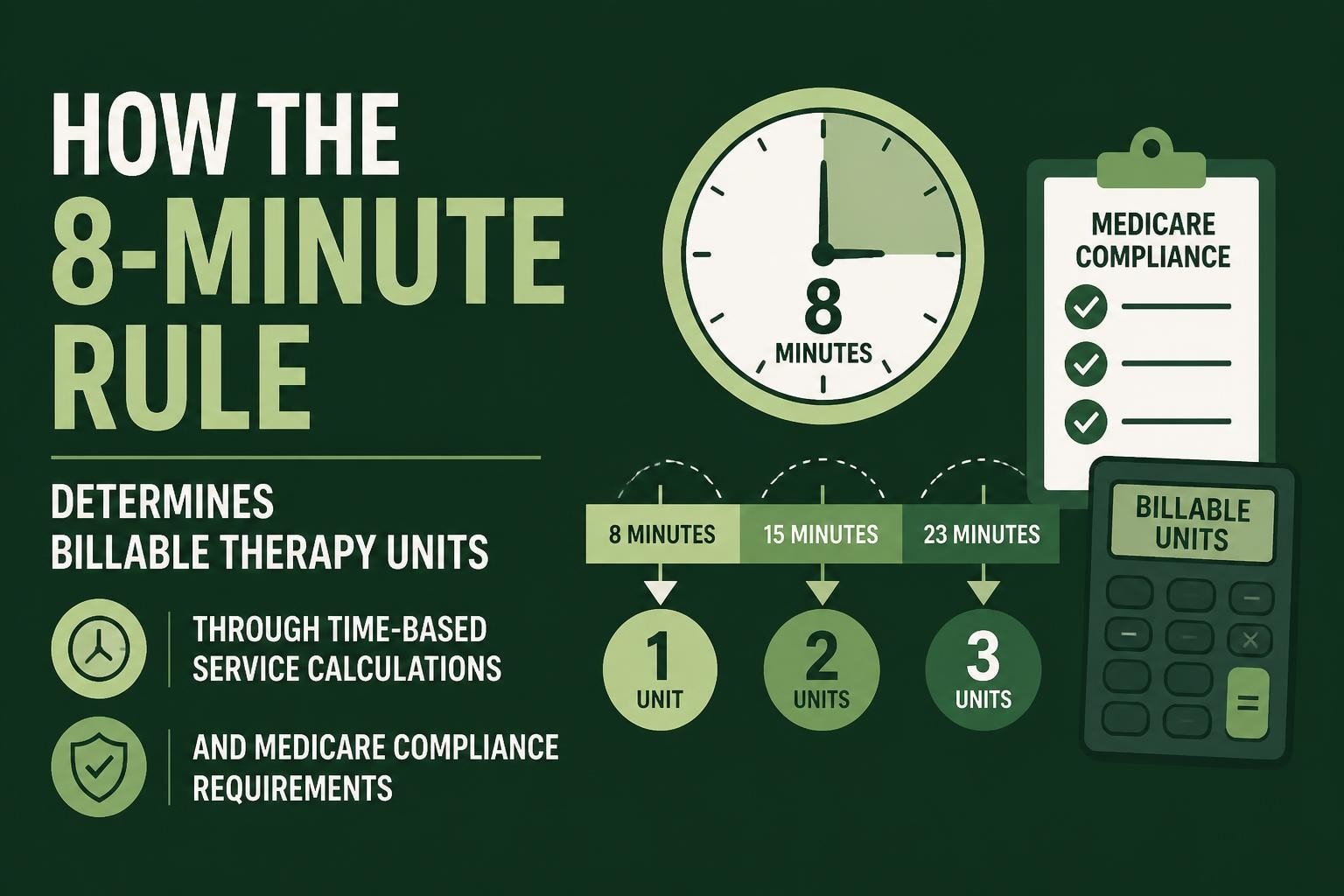
Understanding proper billing methodologies is essential for healthcare providers offering therapy services. The rule of 8 therapy represents a critical billing standard that determines how providers calculate billable units for time-based therapy services. This Medicare guideline affects physical therapy, occupational therapy, and speech-language pathology practices across the country. Healthcare organizations must master these requirements to ensure compliant billing practices and secure appropriate reimbursements for services rendered.
Understanding the Rule of 8 Therapy Framework
The rule of 8 therapy establishes clear parameters for calculating billable units when providers deliver time-based therapy services. Under this framework, practitioners must provide at least eight minutes of direct therapy to bill for one unit of service. This threshold ensures that Medicare and other payers reimburse only for substantial therapeutic interventions rather than brief interactions.
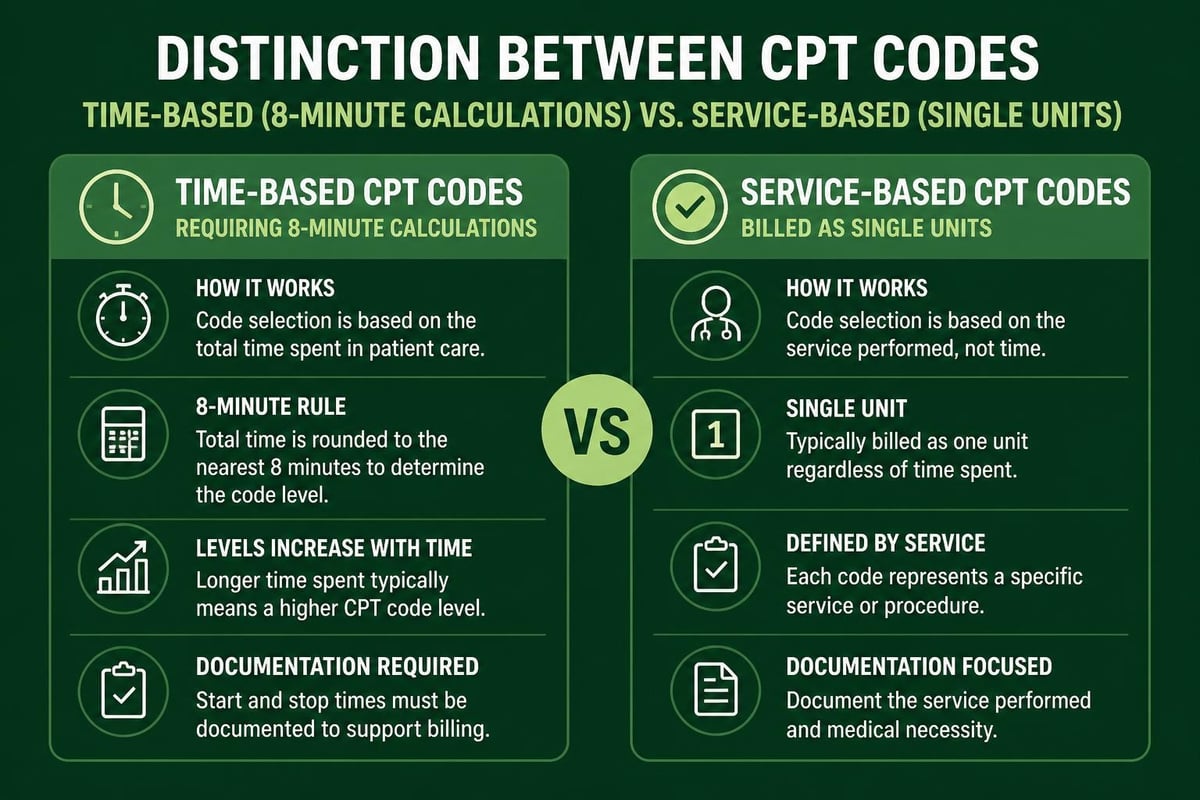
Medicare developed this standard to create consistency across therapy disciplines and prevent billing irregularities. The 8-Minute Rule for therapy billing applies specifically to time-based CPT codes, distinguishing them from service-based codes that providers bill as single units regardless of time spent.
Time-Based Versus Service-Based Codes
Healthcare providers must recognize which CPT codes fall under rule of 8 therapy requirements. Time-based codes include therapeutic exercises, manual therapy, neuromuscular reeducation, and gait training. These services require specific duration tracking to determine billable units.
Time-based codes requiring 8-minute calculations:
- Therapeutic exercises (97110)
- Manual therapy techniques (97140)
- Neuromuscular reeducation (97112)
- Gait training (97116)
Service-based codes operate differently. Providers bill these as single units regardless of service duration. Hot or cold pack application, electrical stimulation unattended, and certain evaluation codes fall into this category.
Calculating Billable Units Under the Rule of 8 Therapy
Accurate calculation determines whether providers receive appropriate reimbursement or face claim denials. The rule of 8 therapy uses specific time thresholds to establish how many units practitioners can bill for therapy services delivered during a single session.
| Total Minutes | Billable Units |
|---|---|
| 8-22 minutes | 1 unit |
| 23-37 minutes | 2 units |
| 38-52 minutes | 3 units |
| 53-67 minutes | 4 units |
| 68-82 minutes | 5 units |
Understanding how to calculate billable units for therapy prevents revenue loss from underbilling and compliance issues from overbilling. The calculation process requires adding total time spent on all time-based services, then applying the appropriate unit count based on cumulative minutes.
Step-by-Step Calculation Process
Step 1: Track time spent on each time-based service during the patient session. Document start and stop times for accurate recordkeeping.
Step 2: Add together all minutes from time-based services. Exclude any time spent on service-based codes, as these bill separately.
Step 3: Compare total time-based minutes to the standard chart. Identify how many units the total time supports.
Step 4: Distribute billable units across the different time-based services provided. Assign units to services with the most time first.
Step 5: Document the specific time allocation in patient records. This charge entry in medical billing creates an audit trail supporting the claim.
Common Billing Errors and Prevention Strategies
Revenue cycle management professionals regularly encounter specific mistakes when providers apply the rule of 8 therapy. These errors trigger claim denials, payment delays, and potential compliance violations.
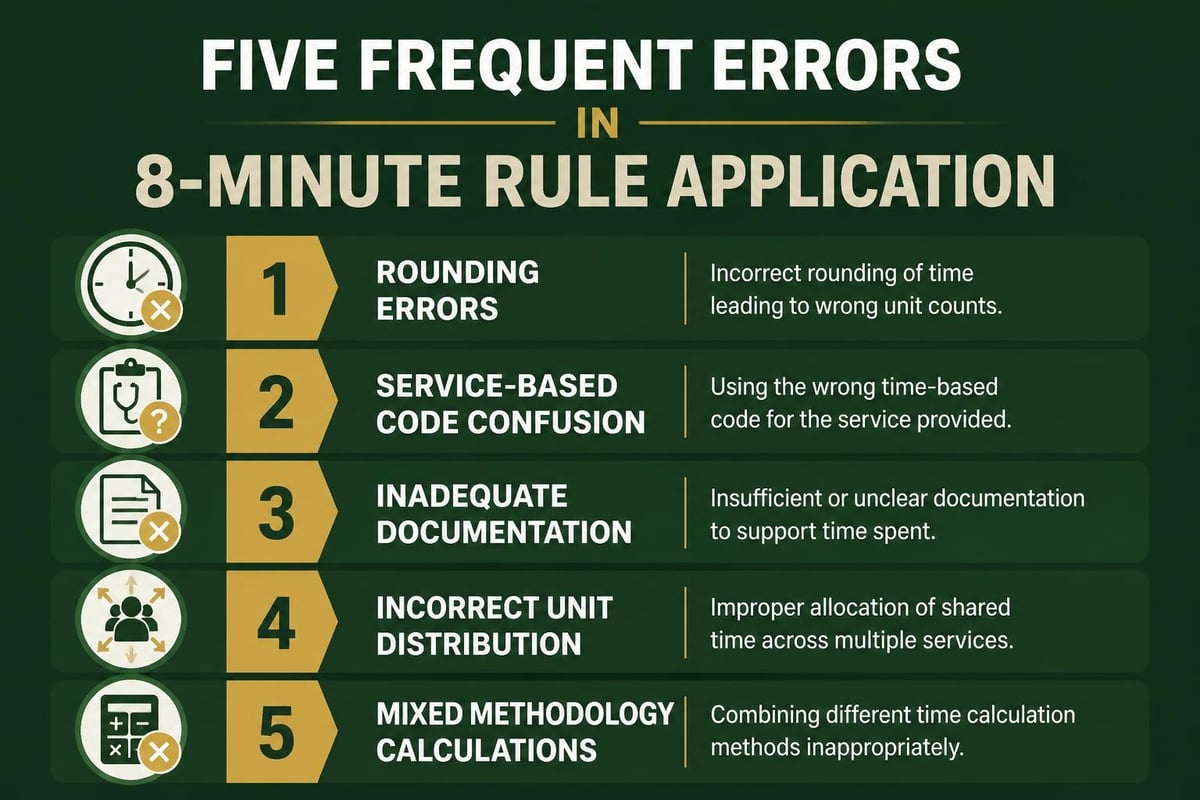
Rounding minutes incorrectly represents a frequent problem. Providers cannot round up to the next threshold. A 21-minute session yields one billable unit, not two, regardless of how close the time comes to 23 minutes.
Confusing service-based and time-based codes creates billing inconsistencies. When providers apply the rule of 8 therapy to service-based codes or bill time-based codes as single units, claims face rejection. The Medicare 8-Minute Rule FAQ clarifies which codes require time-based calculations.
Inadequate documentation undermines otherwise compliant claims. Payers require clear records showing service duration, specific interventions provided, and therapeutic goals addressed. Strong documentation practices support denial management in medical billing efforts when claims face scrutiny.
Documentation Best Practices
Comprehensive documentation protects providers during audits and appeals. Each therapy session record should include service start time, end time, specific techniques used, patient response, and progress toward treatment goals.
Electronic health record systems can automate some tracking, but therapists remain responsible for accuracy. Many practices implement standardized templates ensuring consistent documentation across all providers. These templates prompt therapists to record all elements required for compliant billing under the rule of 8 therapy.
Application Across Different Therapy Disciplines
Physical therapy, occupational therapy, and speech-language pathology all follow the rule of 8 therapy for Medicare billing. However, each discipline has unique considerations when applying these standards.
Physical therapists frequently combine multiple time-based interventions during single sessions. A patient might receive therapeutic exercises, manual therapy, and gait training within one appointment. The physical therapy 8-minute rule requires careful time tracking across these concurrent or sequential services.
Occupational therapists often address activities of daily living through extended treatment sessions. These longer appointments may generate four, five, or more billable units when practitioners properly document time allocation.
Speech-language pathologists must distinguish between direct therapy time and consultation or caregiver training. Only direct therapeutic intervention counts toward time-based unit calculations under standard applications of the rule of 8 therapy.
| Discipline | Common Time-Based Codes | Typical Session Duration |
|---|---|---|
| Physical Therapy | 97110, 97140, 97530 | 45-60 minutes |
| Occupational Therapy | 97110, 97112, 97535 | 45-75 minutes |
| Speech-Language Pathology | 92507, 92526, 97129 | 30-60 minutes |
Maximizing Compliant Reimbursement
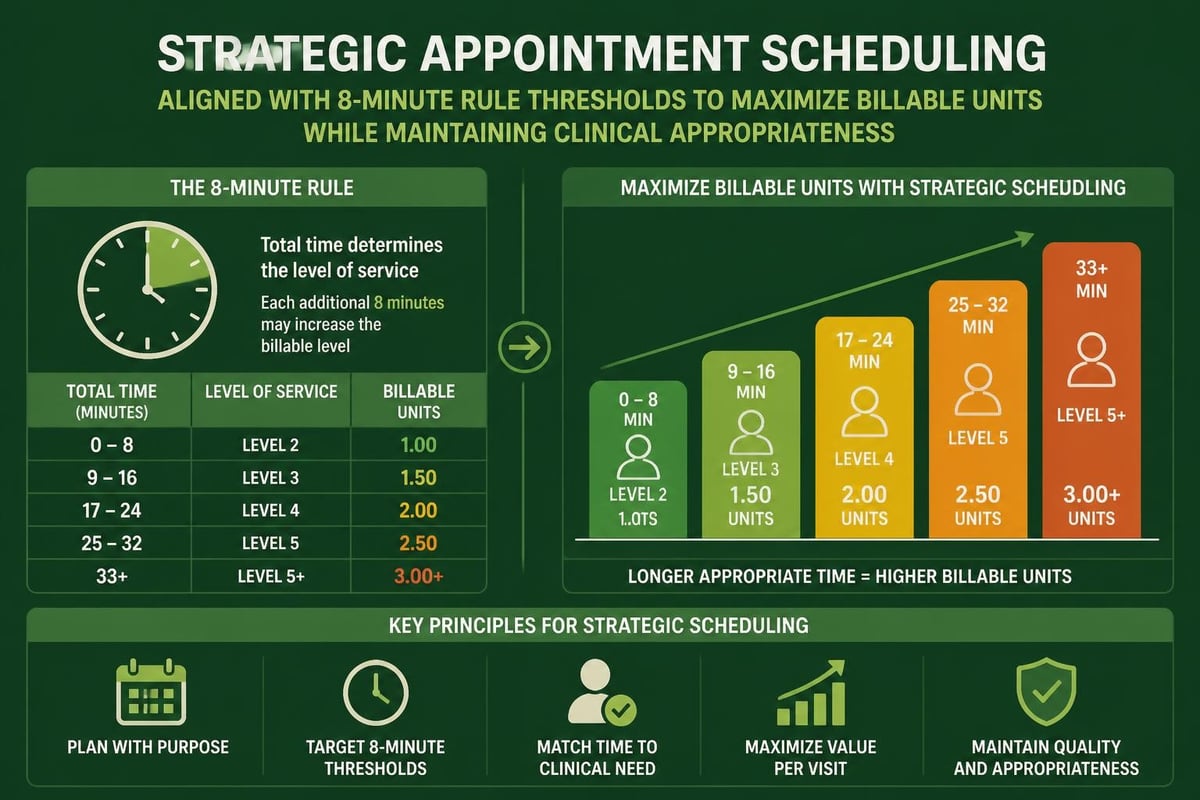
Healthcare providers can optimize revenue while maintaining compliance through strategic session planning and accurate documentation. Understanding how the rule of 8 therapy affects reimbursement helps practices make informed scheduling decisions.
Scheduling appointments in time blocks aligned with unit thresholds reduces the risk of providing unreimbursed services. A 22-minute session and a 23-minute session both deliver substantial therapeutic value, but only the latter generates two billable units.
Combining complementary services within single appointments improves efficiency. When appropriate for patient care, addressing multiple therapeutic goals during one session maximizes both clinical outcomes and billing opportunities. This approach requires clear documentation showing medical necessity for each intervention, which supports what is a CPT code for insurance claims verification.
Five points to ensure correct billing:
- Use standardized time-tracking methods across all providers in the practice
- Train staff regularly on rule of 8 therapy requirements and updates
- Implement documentation templates that capture all required elements
- Review claims before submission to catch calculation errors
- Monitor denial patterns to identify systemic billing issues requiring correction
Regular audits of billing practices identify areas for improvement. Practices should review a sample of therapy claims monthly, verifying that time documentation supports billed units and that calculations follow proper methodology. This internal quality control reduces external audit risk and strengthens revenue cycle medical billing performance.
Understanding payer-specific variations also matters. While Medicare established the rule of 8 therapy, some commercial payers use different calculation methods. Verifying each payer’s requirements prevents claim denials based on methodology mismatches. Resources like everything you need to know about the 8-minute rule provide comprehensive coverage of these variations.
Mastering the rule of 8 therapy ensures healthcare providers receive appropriate reimbursement while maintaining compliance with Medicare and commercial payer requirements. Accurate time tracking, proper documentation, and strategic session planning create a foundation for financial success in therapy-based practices. Greenhive Billing Solutions helps healthcare providers navigate complex billing requirements including the 8-minute rule, offering comprehensive revenue cycle management services that improve compliance, reduce denials, and maximize reimbursements through expert claims processing and denial management tailored to your practice needs.

