
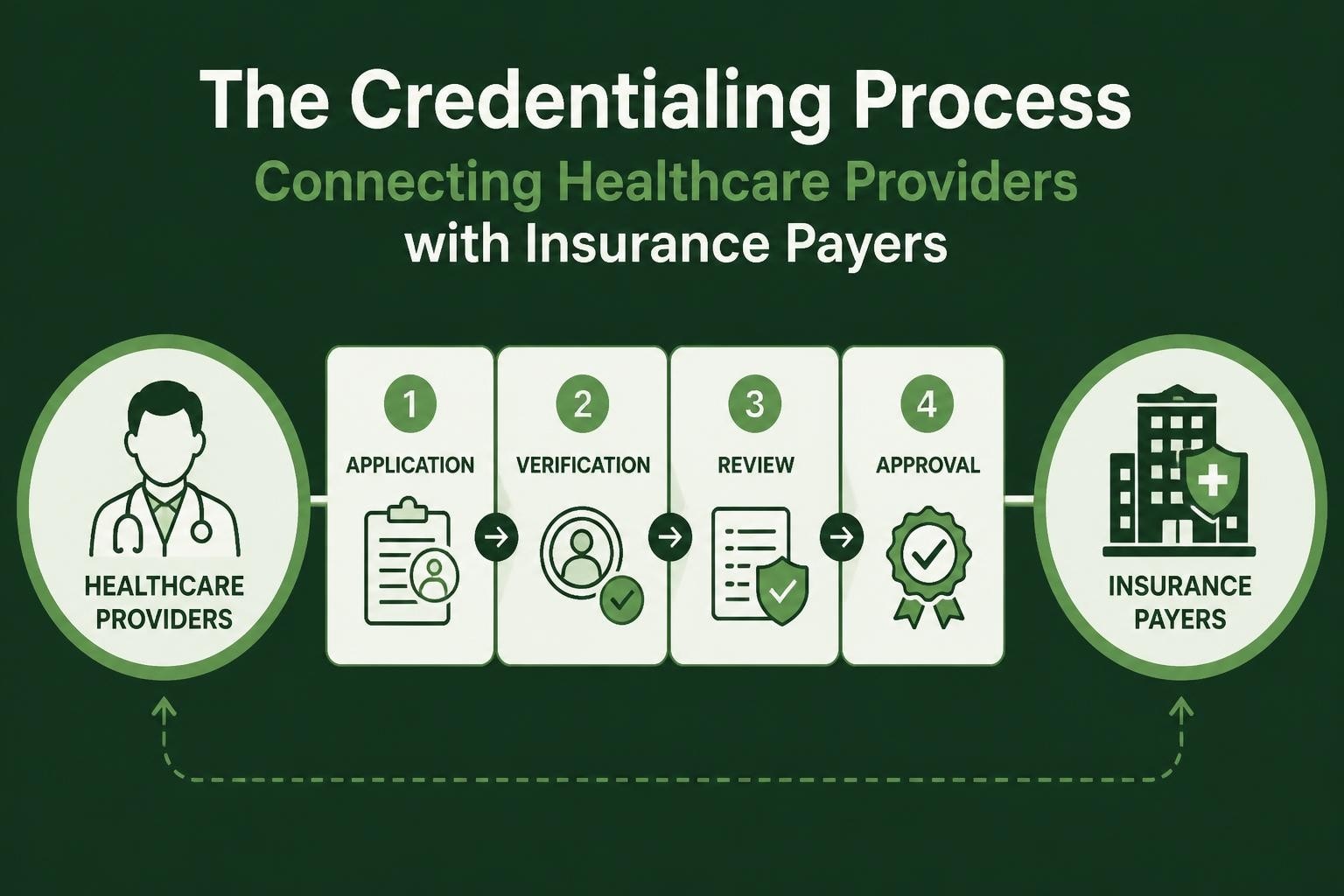
Healthcare providers face numerous operational challenges, but few impact revenue as directly as credentialing in medical billing. This verification process establishes your practice’s legitimacy with insurance companies and determines whether you can receive reimbursement for services rendered. Without proper credentialing, even the most skilled practitioners cannot bill insurance companies, forcing patients to pay out-of-pocket or seek care elsewhere. Understanding this critical process helps practices avoid revenue disruptions and maintain smooth operations.
What Credentialing in Medical Billing Actually Means
Credentialing in medical billing serves as the verification process that insurance companies use to confirm a healthcare provider’s qualifications, licenses, and professional background. Payers need assurance that providers meet their network standards before authorizing reimbursements.
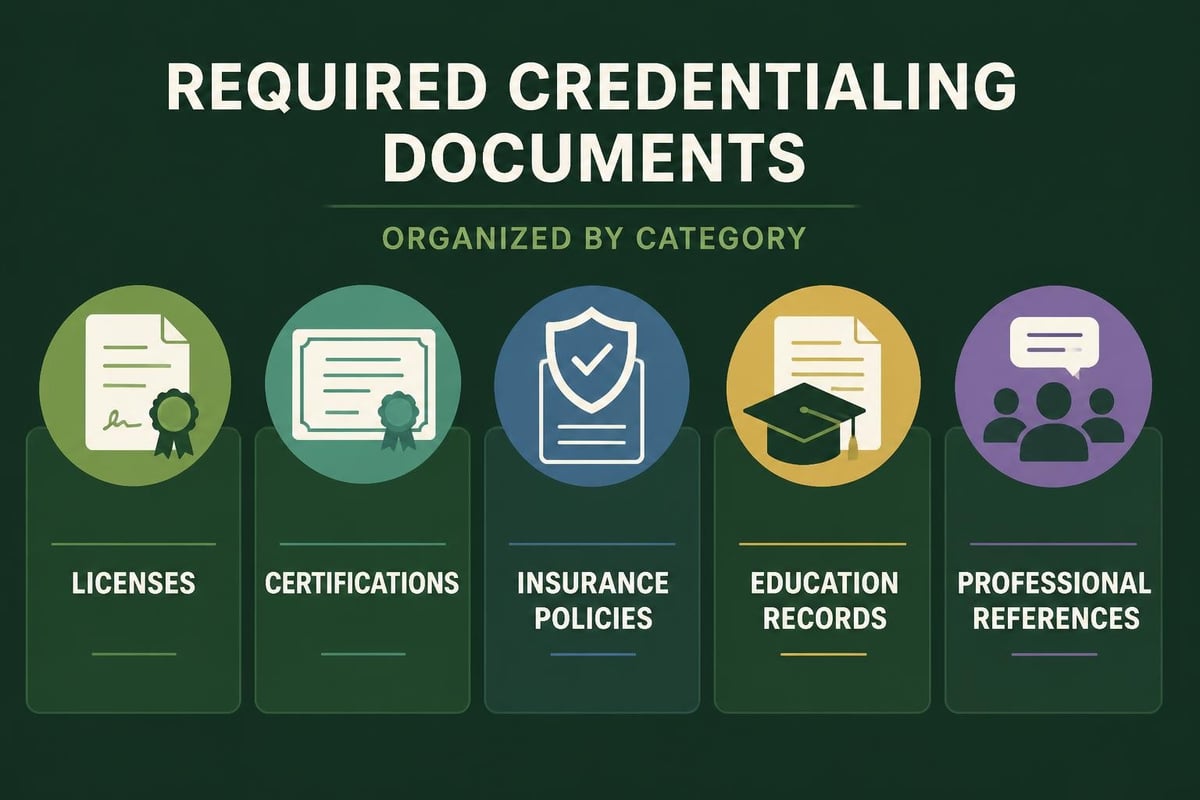
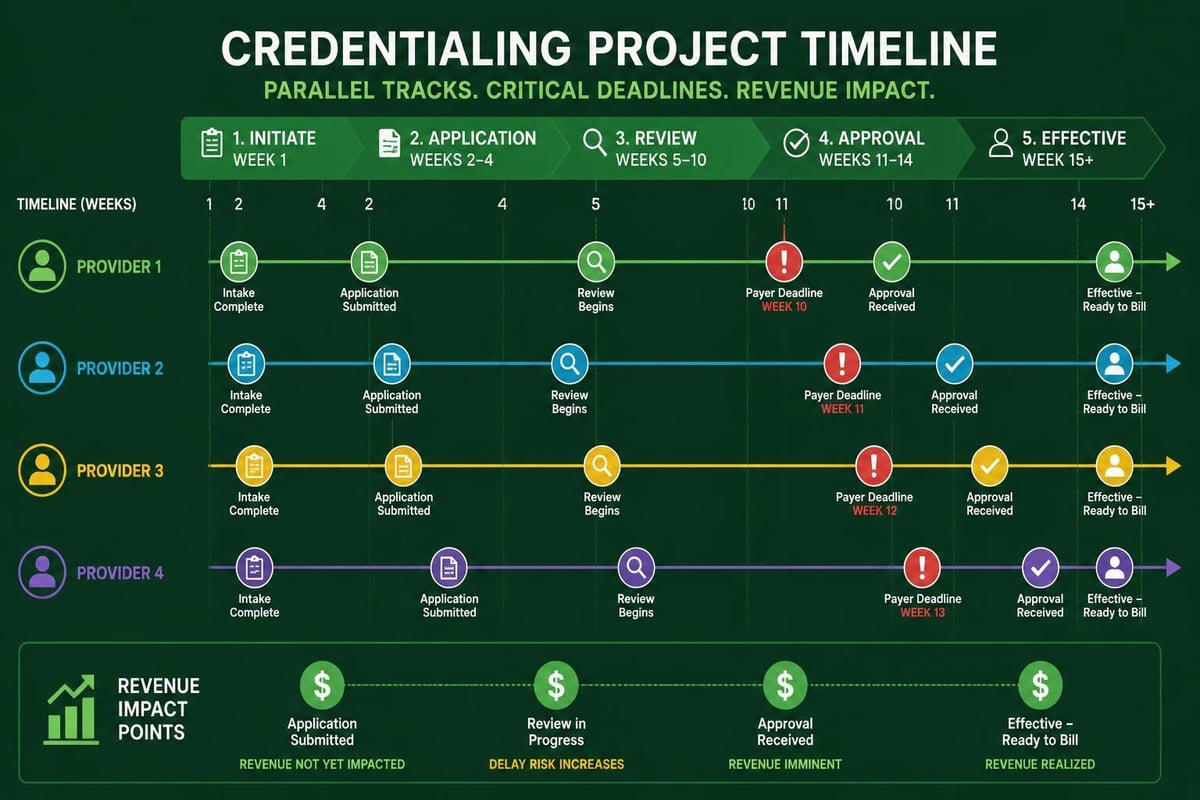
The process examines multiple aspects of a provider’s professional profile. Insurance companies verify medical licenses, board certifications, malpractice insurance, work history, and education credentials. The medical credentialing process typically takes 90 to 120 days but can extend longer if documentation is incomplete.
Key components verified during credentialing include:
- Medical school graduation and residency completion
- State medical licenses and DEA registration
- Board certifications in relevant specialties
- Malpractice insurance coverage and claims history
- Work history and hospital privileges
- Medicare and Medicaid enrollment status
Healthcare organizations must understand that credentialing isn’t optional. Without approved status, revenue cycle management operations face immediate barriers, as claims will be rejected regardless of coding accuracy or documentation quality.
Types of Credentialing Healthcare Providers Encounter
Different situations require specific credentialing approaches. Initial credentialing occurs when providers join a practice or seek participation with new insurance networks. Types of medical credentialing vary based on provider status and organizational needs.
Re-credentialing happens every two to three years as payers verify that providers maintain their qualifications and licenses. This periodic review ensures continuing education completion and confirms no disciplinary actions have occurred.
Organizational Credentialing Requirements
Hospitals and large healthcare systems conduct their own credentialing processes separate from insurance payers. This institutional credentialing grants privileges to practice within specific facilities and use particular resources.
| Credentialing Type | Frequency | Primary Purpose | Timeline |
|---|---|---|---|
| Initial | Once per payer | Network enrollment | 90-120 days |
| Re-credentialing | Every 2-3 years | Status verification | 60-90 days |
| Institutional | Varies by facility | Facility privileges | 60-180 days |
| Medicare/Medicaid | Initial + updates | Federal program participation | 90+ days |
Locum tenens credentialing allows temporary providers to practice at facilities for short-term assignments. This accelerated process still requires thorough verification but operates on compressed timelines.
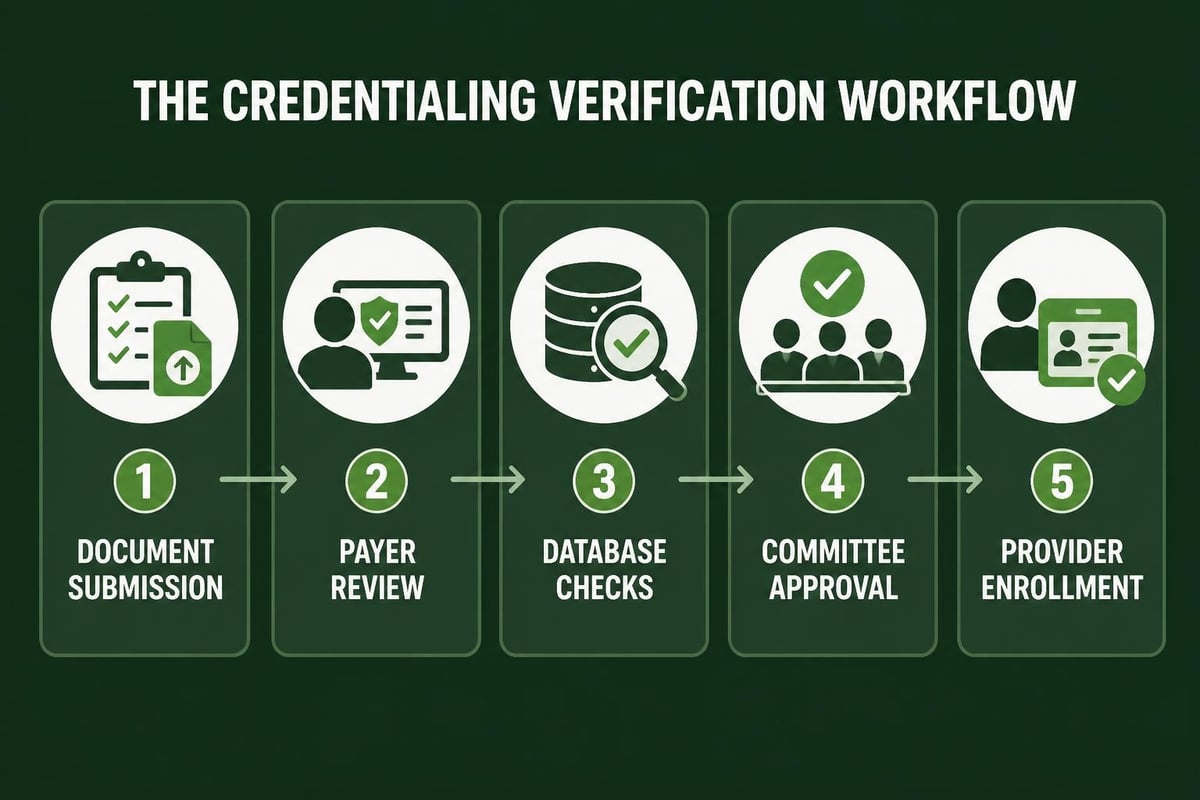
The Step-by-Step Credentialing Process
Understanding each phase helps practices avoid common delays. The credentialing journey follows a structured path from application to approval.
Step 1: CAQH Profile Creation
Most providers start by establishing a Council for Affordable Quality Healthcare (CAQH) profile. Medical insurance credentialing requirements emphasize maintaining current CAQH information, as payers pull data directly from this centralized database.
Step 2: Application Submission
Complete applications for each insurance payer require extensive documentation. Missing signatures, expired certificates, or incomplete work histories trigger requests for additional information, extending processing times significantly.
Step 3: Primary Source Verification
Payers contact medical schools, licensing boards, and previous employers to confirm submitted information. This verification cannot be expedited, as third-party organizations respond on their own schedules.
Step 4: Committee Review
Insurance company credentialing committees meet periodically to review applications. Missing a committee meeting can add weeks to approval timelines.
Step 5: Enrollment and Contracting
After approval, providers receive network participation agreements detailing reimbursement rates, billing requirements, and contractual obligations. Understanding revenue cycle billing becomes essential at this stage to ensure proper claim submission.
Common Challenges and How to Overcome Them
Credentialing in medical billing presents recurring obstacles that disrupt practice operations. Awareness of these challenges enables proactive solutions.
Incomplete applications represent the most frequent problem. Providers often underestimate the detail required, submitting forms with missing attestations or unsigned pages. Creating comprehensive checklists for each payer prevents these errors.
Typical documentation mistakes include:
- Expired malpractice insurance certificates
- Outdated state license renewals
- Missing National Provider Identifier (NPI) information
- Incomplete work history with employment gaps unexplained
- Unsigned attestation forms
Expiring credentials during the application process creates complications. If a state license expires while credentialing is pending, the entire process restarts. Common credentialing mistakes often stem from poor deadline tracking.
Managing Multiple Payer Requirements
Each insurance company maintains unique requirements and forms. What satisfies one payer may not meet another’s standards. Maintaining organized files specific to each payer reduces confusion and speeds resubmissions when updates are necessary.
Providers should designate staff members specifically responsible for credentialing tasks. This focused approach ensures consistent follow-up and reduces the risk of missed deadlines. Professional denial management in medical billing often traces back to credentialing issues that went unnoticed.
Impact on Practice Revenue and Cash Flow
Revenue disruption represents the most significant consequence of credentialing delays. New providers cannot bill insurance companies until credentialing completes, forcing practices to either turn away patients or accept out-of-pocket payments at reduced rates.
Even established providers face revenue gaps during re-credentialing if their status lapses. Claims submitted during credential gaps are denied, requiring expensive reprocessing efforts or write-offs.
| Revenue Impact Scenario | Financial Consequence | Mitigation Strategy |
|---|---|---|
| New provider delay | $50,000-$200,000 lost revenue per provider | Start credentialing 120+ days before hire date |
| Expired credentials | Claim denials, potential write-offs | Track expiration dates 90 days in advance |
| Incomplete applications | Extended processing, delayed start dates | Use comprehensive checklists and verification |
| Missing re-credentialing | Network termination, claim rejections | Calendar reminders 180 days before expiration |
Smart practices begin credentialing new providers immediately upon contract signing, even before official start dates. This forward planning minimizes revenue interruptions and allows new team members to see patients immediately.
Healthcare revenue cycle analytics can track credentialing-related denials and identify patterns that indicate systematic problems requiring attention.
Credentialing Maintenance and Ongoing Responsibilities
Credentialing in medical billing doesn’t end with initial approval. Providers must maintain current information across all payer databases throughout their careers.
Address changes, name changes, and new certifications require updates to credentialing files. Failure to report these modifications can result in claim denials or network termination.
CAQH profiles require attestation every 120 days, even if no information changes. This regular attestation confirms data accuracy and prevents profile deactivation. Many practices set quarterly reminders to ensure timely attestation.
Ongoing credentialing tasks include:
- Quarterly CAQH attestation
- License renewal notification to all payers
- Malpractice insurance updates upon policy renewal
- Board certification renewals
- Practice location additions or changes
- Tax identification number updates
Understanding what billing and coding specialists do helps practices appreciate how credentialing supports the entire revenue cycle. Properly credentialed providers enable clean claim submission, while credential problems create denial patterns that drain resources.
Professional revenue cycle management teams monitor credential expiration dates, submit renewal applications proactively, and maintain organized documentation systems that simplify audits and verification requests. This systematic approach to physician RCM operations protects revenue while reducing administrative burden on clinical staff.
Credentialing in medical billing protects your practice’s ability to serve patients and collect appropriate reimbursement. Proper credential management requires attention to detail, proactive timeline tracking, and systematic documentation practices. Greenhive Billing Solutions specializes in comprehensive credentialing support as part of complete revenue cycle management services, helping healthcare providers navigate payer requirements, maintain current credentials, and prevent revenue disruptions. Our experienced team handles the entire credentialing process, from initial applications through ongoing maintenance, allowing you to focus on patient care while we ensure your practice maintains uninterrupted billing capabilities.

