
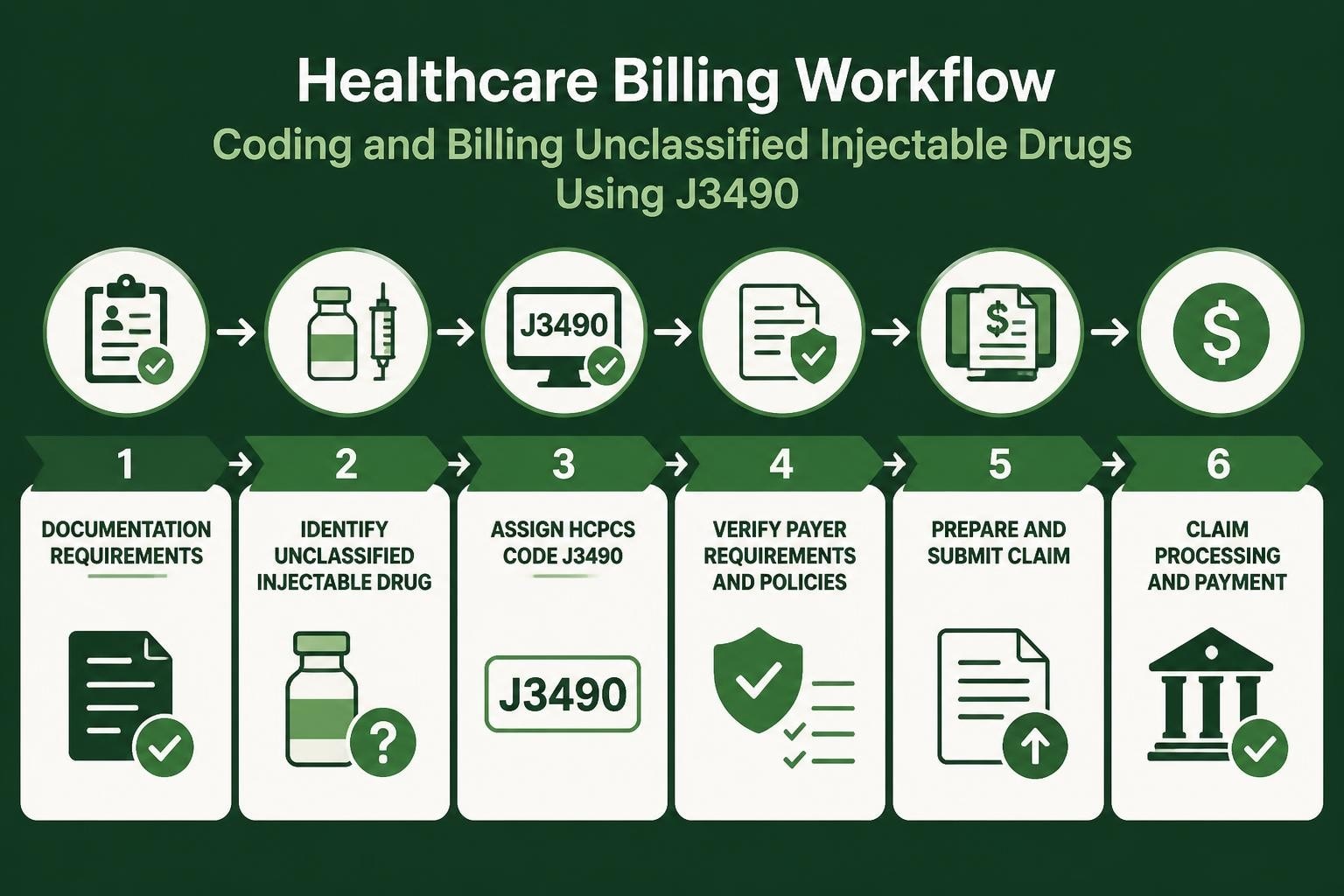
Healthcare providers frequently encounter situations where standard CPT codes don’t capture the specific medications administered to patients. The j3490 cpt code description addresses this challenge by serving as a temporary placeholder for unclassified drugs, particularly injectables that lack dedicated billing codes. Understanding how to properly use this code is essential for maximizing reimbursements and minimizing claim denials.
Understanding the J3490 CPT Code Description
The j3490 cpt code description refers to an unclassified drug or biological administered through various routes including injection, inhalation, or other means. According to the American Academy of Professional Coders, this HCPCS Level II code functions as a catch-all designation when no specific code exists for a particular medication.
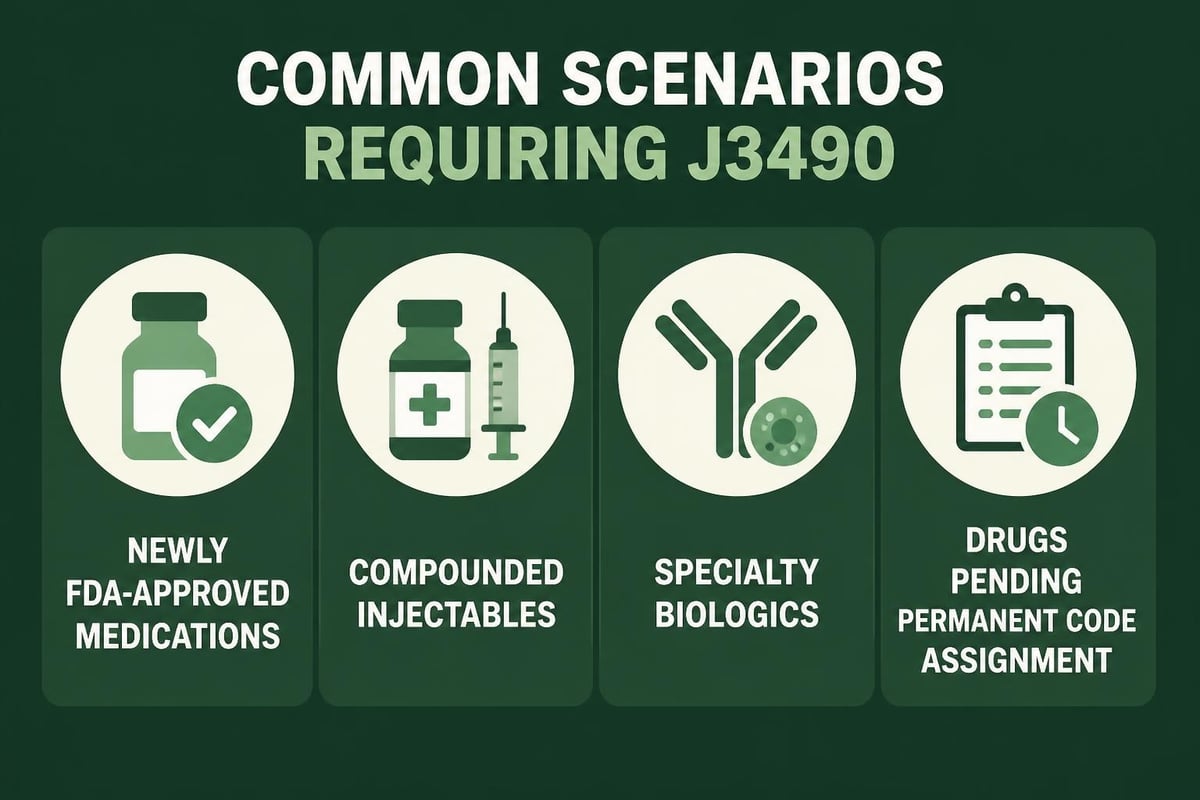
This code typically applies to newly approved drugs awaiting permanent code assignments, compounded medications, or specialty pharmaceuticals not yet integrated into standard coding systems. Healthcare providers must exercise particular care when billing J3490 because payers scrutinize these claims more carefully than standard drug codes.
When Healthcare Providers Should Use J3490
The appropriate application of this code requires careful consideration of several factors:
- New market entries: FDA-approved drugs released within the current quarter often lack dedicated codes
- Compounded medications: Custom-mixed pharmaceuticals prepared for specific patient needs
- Specialty biologics: Complex biological products without established billing pathways
- Transitional periods: Medications awaiting permanent code assignment from CMS
Revenue cycle management teams must verify payer-specific guidelines before submitting claims. Some payers provide detailed billing guidelines for specific medications that fall under J3490, including coverage criteria and prior authorization requirements.
Documentation Requirements for J3490 Billing
Comprehensive documentation separates successful claims from denials when using the j3490 cpt code description. Providers must maintain detailed records that justify both medical necessity and the specific drug administered.
Essential Documentation Components
Medical records should include:
- Complete drug name including manufacturer and brand designation
- National Drug Code (NDC) number for the specific medication
- Dosage amount and concentration administered
- Route of administration with anatomical location
- Medical necessity justification linking to diagnosis codes
- Prescribing physician information and authorization
| Documentation Element | Required Detail Level | Common Deficiency |
|---|---|---|
| Drug Identification | Full generic/brand name + NDC | Incomplete product details |
| Dosage Information | Exact units administered | Vague quantity descriptions |
| Medical Necessity | Diagnosis-linked rationale | Missing clinical justification |
| Administration Route | Specific injection site | Generic “injection” notation |
Billing professionals should recognize that proper documentation directly impacts reimbursement rates and claim processing speed. Understanding what billing and coding specialists need to do helps practices implement better documentation workflows.
Reimbursement Strategies and Common Challenges
Maximizing reimbursement for J3490 claims requires proactive strategies addressing the unique complexities this code presents. Unlike standard CPT codes with established fee schedules, J3490 reimbursement varies significantly across payers.
Steps to Ensure Proper Reimbursement
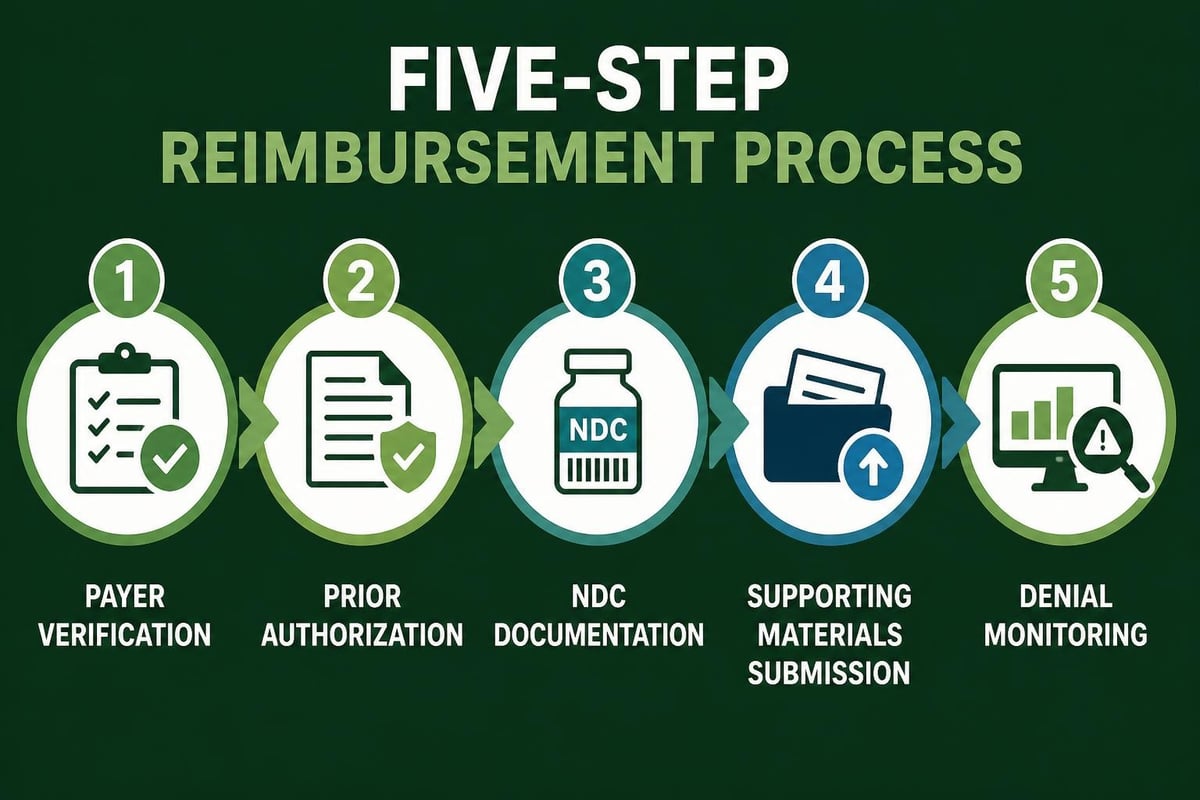
Step 1: Verify payer coverage policies for the specific drug before administration. Many insurers maintain formularies excluding certain medications or requiring step therapy protocols.
Step 2: Obtain prior authorization when required. Most payers mandate pre-approval for J3490 claims due to their unclassified nature and potential high costs.
Step 3: Submit claims with complete NDC information. The 11-digit NDC code must appear on the claim form in the designated field, not just in written notes.
Step 4: Include supporting documentation with initial submission. Attaching prescribing information, medical necessity letters, and drug specifications reduces back-and-forth delays.
Step 5: Monitor and appeal denials promptly. Understanding how denial management improves cash flow enables faster resolution of payment issues.
Payer-Specific Considerations and Guidelines
Different insurance carriers apply varying standards when processing J3490 claims. Commercial payers, Medicare, and Medicaid each maintain distinct policies regarding acceptable drugs, pricing methodologies, and documentation thresholds.
Medicare typically reimburses J3490 claims at 95% of the Average Wholesale Price (AWP) for the specific drug administered. However, this percentage fluctuates based on drug classification and whether administration occurs in outpatient versus office settings.
Medicaid programs publish state-specific guidelines for particular medications, including coverage limitations and reimbursement rates that differ from federal Medicare standards.
Comparative Payer Requirements
| Payer Type | Authorization Needs | Documentation Level | Pricing Method |
|---|---|---|---|
| Medicare | Varies by drug | Comprehensive | 95% AWP standard |
| Medicaid | State-dependent | Extensive | Fee schedule basis |
| Commercial | Frequently required | Moderate to high | Contract-negotiated |
| Medicare Advantage | Plan-specific | Comprehensive | Varies by contract |
Effective revenue cycle management requires teams to maintain current payer policy databases and implement verification protocols before service delivery.
Best Practices for J3490 Code Implementation
Healthcare organizations should establish standardized protocols governing J3490 usage to minimize claim rejections and ensure compliance. These protocols begin with staff education and extend through every phase of the revenue cycle.
Training clinical and billing staff on the j3490 cpt code description prevents common errors. Many denials stem from incomplete drug information or failure to recognize when alternative specific codes exist for the administered medication.
Practice optimization strategies include:
- Maintaining updated lists of drugs requiring J3490 versus those with dedicated codes
- Implementing pre-administration insurance verification for all unclassified drugs
- Creating standardized documentation templates capturing all required elements
- Establishing regular audits of J3490 claims to identify patterns and improvement opportunities
- Coordinating between clinical and billing departments for seamless information flow
Organizations can reference comprehensive billing guides that outline industry best practices and compliance requirements. Knowledge of different types of medical coding helps staff understand how J3490 fits within the broader coding framework.
Managing Specialty Medications Under J3490
Certain high-cost specialty medications frequently appear under the j3490 cpt code description during transitional periods. These drugs present unique billing challenges due to their expense, complex administration requirements, and strict payer coverage criteria.
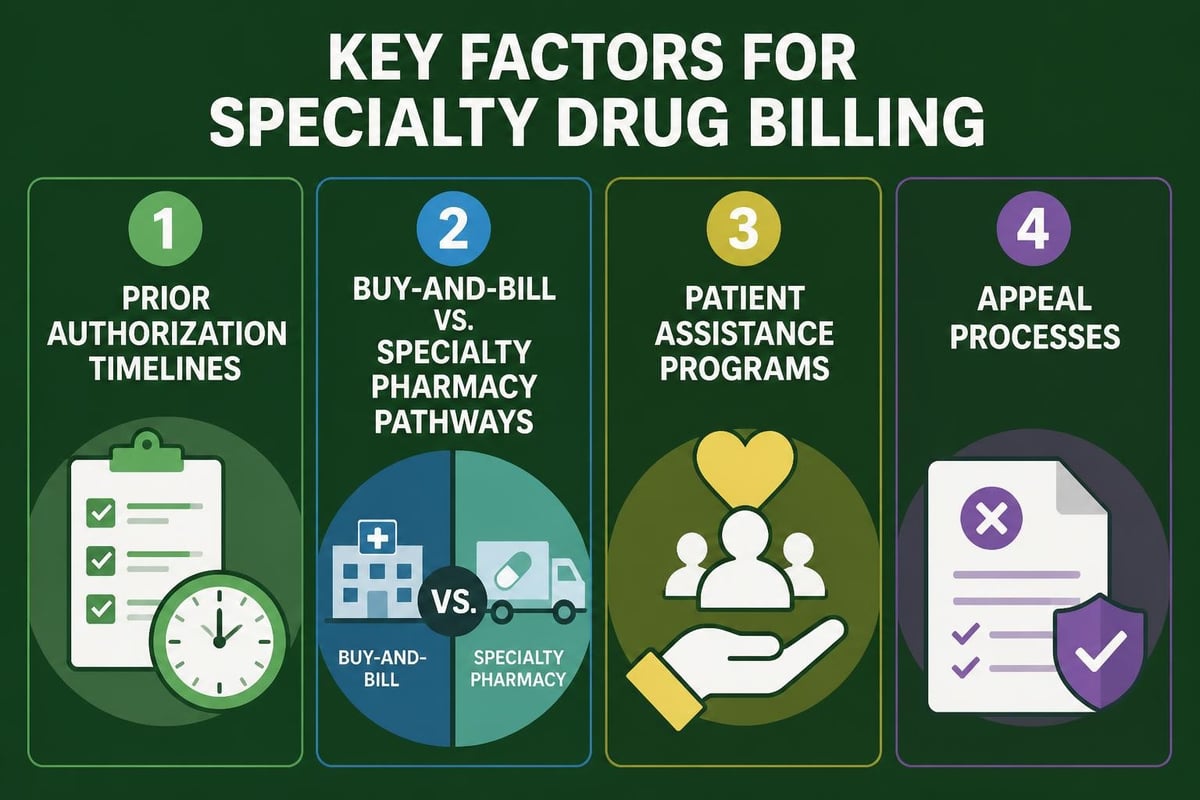
Biologics and biosimilars entering the market often utilize J3490 until CMS assigns permanent codes. For instance, trilaciclib injections initially billed under this code before receiving dedicated classification.
Providers should track FDA approval dates and CMS quarterly code updates to transition from J3490 to specific codes promptly. Continuing to use J3490 after a dedicated code becomes available constitutes improper billing and may trigger payer audits.
Buy-and-Bill Considerations
The buy-and-bill model, where providers purchase and administer medications directly, requires careful financial management with J3490 drugs. Uncertain reimbursement timelines and amounts create cash flow challenges.
Practices should verify expected reimbursement amounts before purchasing expensive unclassified drugs. Some organizations negotiate advance payment agreements or require patient deposits for high-cost J3490 medications.
Understanding healthcare revenue cycle analytics helps practices monitor J3490 claim performance and identify problematic payers or medications requiring process adjustments.
Proper management of the j3490 cpt code description requires attention to documentation, payer policies, and compliance standards that evolve continuously. Healthcare providers benefit from implementing systematic verification and billing protocols that address this code’s unique complexities. Greenhive Billing Solutions delivers specialized revenue cycle management services that help practices navigate challenging billing scenarios, optimize claim submissions, and maximize reimbursements while maintaining full compliance with payer requirements and industry regulations.

