
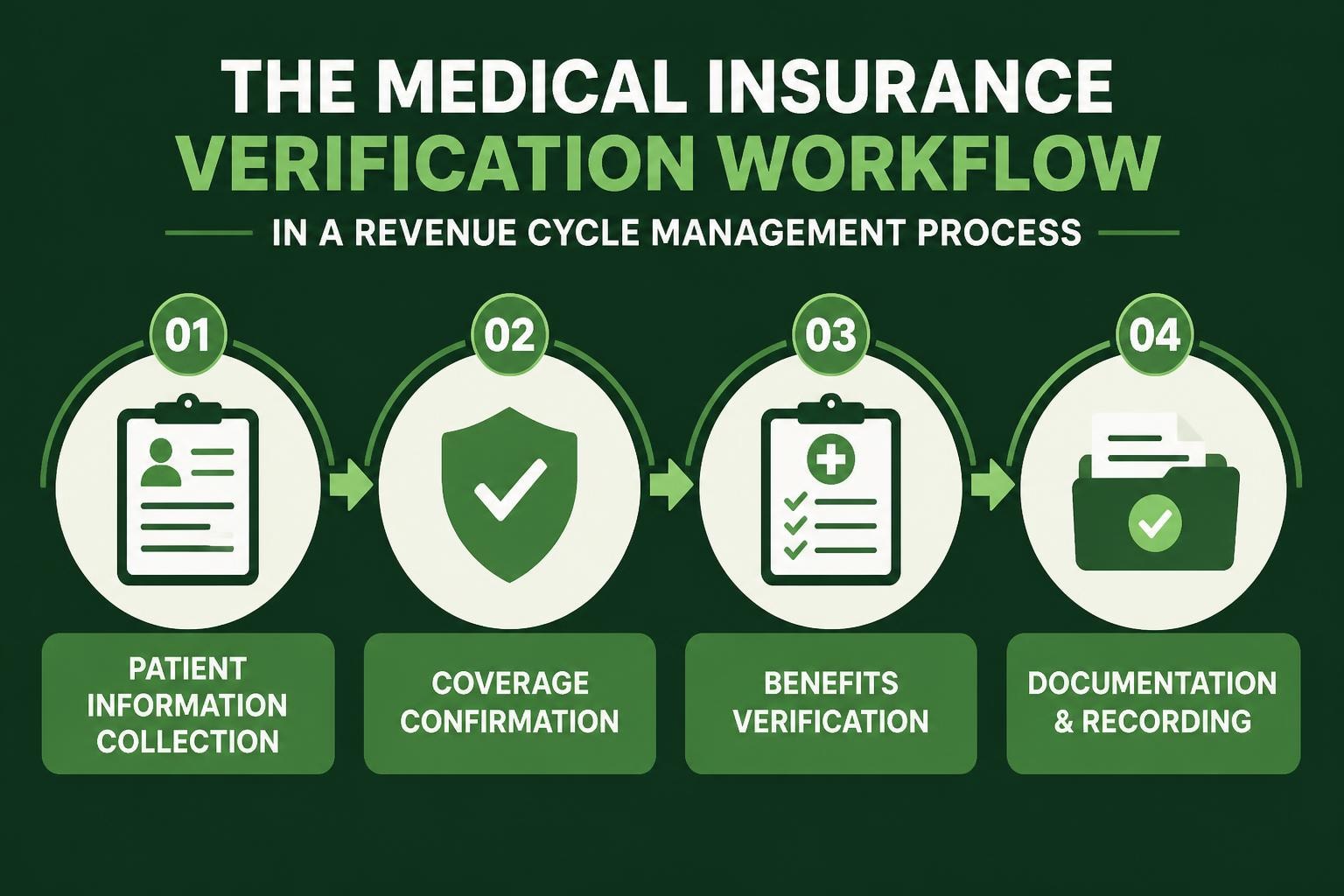
Medical practices across the United States face mounting pressure to maintain healthy cash flow while delivering exceptional patient care. At the heart of this balance lies a critical yet often underestimated process that can make or break a practice’s financial health. When executed properly, medical insurance verification serves as the foundation for clean claims, faster reimbursements, and reduced administrative burden. This comprehensive process involves confirming patient coverage, understanding benefit details, and identifying potential payment issues before services are rendered. For healthcare providers seeking to optimize their revenue cycle, mastering this verification process represents one of the most impactful investments they can make.
Understanding the Medical Insurance Verification Process
The verification process begins the moment a patient schedules an appointment and continues through service delivery. This multi-step procedure requires collecting accurate patient information, contacting insurance carriers, and documenting coverage details with precision.
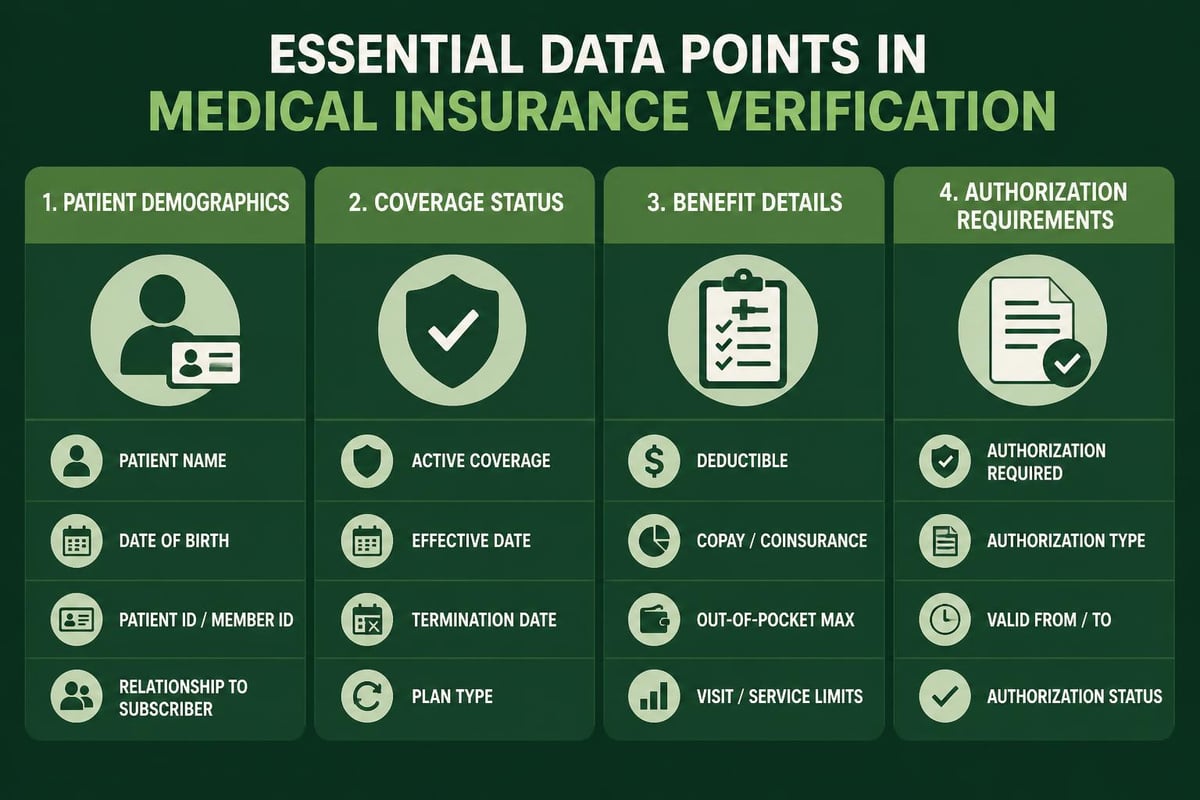
Healthcare providers must verify multiple data points during each verification cycle. Patient demographics including full name, date of birth, and policy numbers form the foundation. Coverage status confirms whether the policy remains active on the date of service. Benefit details outline deductibles, copayments, coinsurance percentages, and out-of-pocket maximums.
Key Components of Effective Verification
Implementing best practices for verifying insurance eligibility requires attention to several critical elements:
- Primary and secondary coverage identification to determine coordination of benefits
- Service-specific coverage verification for specialized procedures or treatments
- Pre-authorization requirements that must be met before service delivery
- Network status confirmation to ensure the provider participates in the patient’s plan
- Referral requirements when applicable to the patient’s insurance type
The timing of verification significantly impacts its effectiveness. Many practices make the mistake of verifying coverage days or weeks before an appointment, only to discover that coverage has changed or terminated by the service date. Real-time verification on the day of service provides the most accurate information.
Common Challenges in Insurance Verification
Healthcare providers encounter numerous obstacles when performing medical insurance verification. Staff turnover creates knowledge gaps that lead to incomplete verifications. High patient volumes overwhelm administrative teams, forcing rushed verifications that miss critical details.
| Challenge | Impact | Solution |
|---|---|---|
| Outdated Patient Information | Denied claims, payment delays | Collect updated information at every visit |
| Limited Carrier Access Hours | Verification delays, scheduling conflicts | Leverage online portals and automated tools |
| Complex Benefit Structures | Patient surprise bills, collection issues | Document all benefit details thoroughly |
| Multiple Insurance Plans | Coordination of benefits errors | Verify primary and secondary coverage separately |
Insurance carriers frequently update their plans, networks, and coverage requirements without direct notification to providers. This creates a moving target for verification staff who must stay current with hundreds of different plan variations. Quality assurance measures for medical insurance verification services help practices maintain accuracy despite these complexities.
Technology Limitations and Human Error
Manual verification processes introduce significant error potential. Phone wait times consume valuable staff hours while transcription mistakes corrupt critical data. Even experienced staff members occasionally misinterpret coverage details or overlook important exclusions.
Many practices still rely on paper-based documentation systems that make information retrieval slow and error-prone. Digital records improve accessibility but require consistent data entry standards. Without proper training and quality checks, verification documentation often lacks the detail needed for successful claims processing.
Step-by-Step Verification Workflow
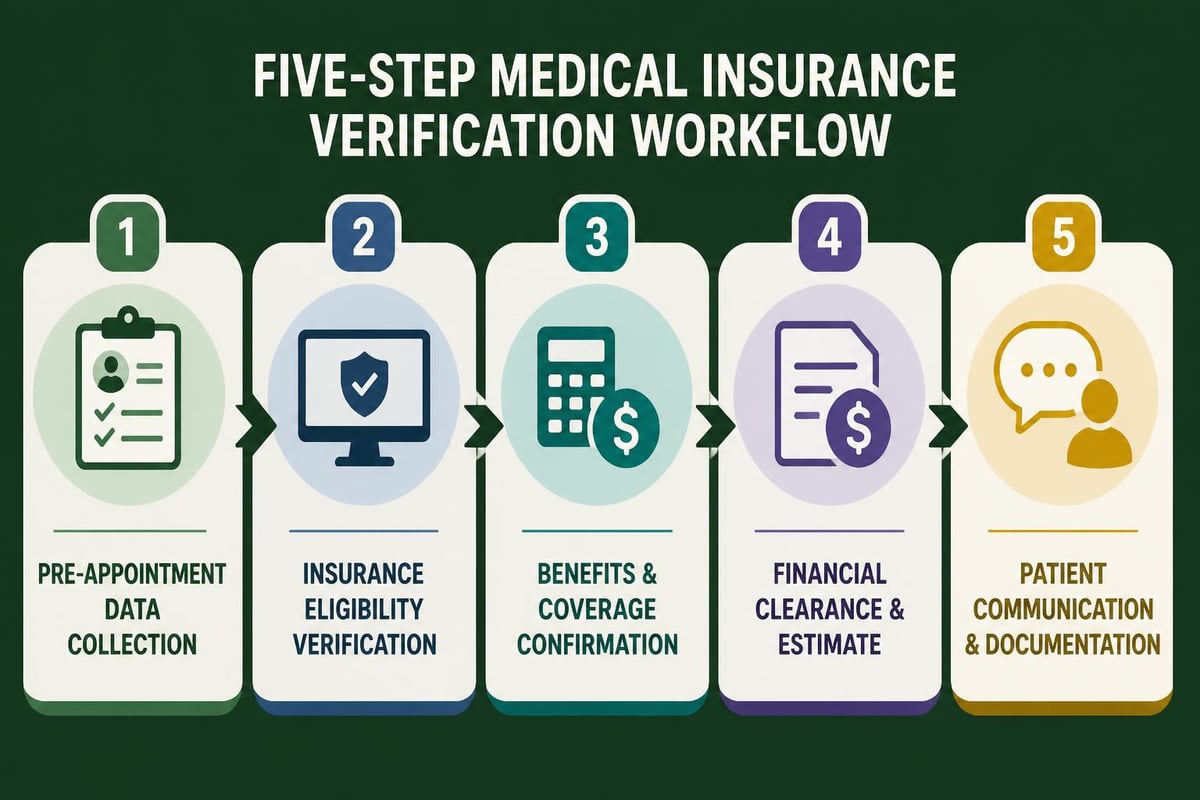
Establishing a standardized workflow ensures consistency and completeness across all verifications. This systematic approach reduces errors and creates accountability at each stage.
1. Pre-Appointment Data Collection
Begin collecting insurance information when patients schedule their appointments. Request insurance card images through patient portals or secure messaging. Confirm that demographic details match exactly between the practice management system and insurance records.
2. Coverage Status Confirmation
Contact the insurance carrier or access their online portal to verify active coverage. Document the effective date and any pending termination dates. Confirm that the patient’s information matches the subscriber’s information on file with the carrier.
3. Benefit Investigation
Identify the specific services planned for the visit and verify coverage for each procedure. Understanding the medical insurance verification process helps staff ask the right questions about deductibles, copayments, and coinsurance amounts.
4. Authorization Requirements Assessment
Determine whether the planned services require prior authorization or referrals. Document authorization numbers and approval dates. Understand the timeframe for authorization validity and any specific conditions attached to the approval.
5. Patient Communication and Documentation
Inform patients of their financial responsibility before service delivery. Provide written estimates when possible. Document all verification details in the patient’s record with timestamps and staff initials.
The Financial Impact of Verification Errors
Incomplete or inaccurate medical insurance verification directly damages practice revenue. Claim denials resulting from eligibility issues require extensive rework and delay payment by weeks or months. Some denied claims never get resolved, resulting in complete revenue loss.
First-pass denial rates increase dramatically when verification processes contain gaps. Practices with weak verification procedures often see denial rates exceeding twenty percent, compared to single-digit rates for practices with robust verification protocols.
Beyond direct revenue loss, verification errors create hidden costs. Staff members spend hours working denied claims that proper upfront verification would have prevented. Patient satisfaction suffers when unexpected bills arrive after service delivery. Collection efforts consume additional resources with lower success rates than upfront collection.
The relationship between medical insurance verification and prior authorization proves particularly crucial for high-cost procedures and specialized services. Missing authorization requirements leads to automatic denials regardless of medical necessity.
Best Practices for Healthcare Providers
Leading practices implement comprehensive verification protocols that balance thoroughness with efficiency. They train staff extensively on insurance fundamentals and maintain up-to-date reference materials for common carriers.
Training and Quality Assurance
Invest in ongoing education for verification staff covering insurance terminology, plan types, and common pitfall scenarios. Conduct regular audits of verification documentation to identify gaps and opportunities for improvement. Implementing effective eligibility verification workflows requires commitment from practice leadership and consistent reinforcement of standards.
Create verification checklists that prompt staff to collect all necessary information. Standardize documentation templates to ensure consistency across different team members. Establish peer review processes where experienced staff members mentor newer team members.
Leveraging Technology Solutions
Modern verification tools automate routine tasks and provide real-time eligibility information. Integration with practice management systems eliminates duplicate data entry and reduces transcription errors. Automated insurance verification enables practices to verify eligibility for multiple patients simultaneously.
Real-time eligibility systems connect directly with insurance carrier databases, providing instant verification results. These systems flag coverage issues immediately, allowing staff to address problems before appointments. Automated reminders ensure verification occurs at appropriate intervals.
Preventing Common Verification Mistakes
Preventing costly insurance eligibility mistakes requires awareness of frequent errors and implementation of preventive measures. Understanding these pitfalls helps practices strengthen their verification procedures.
Many practices verify only basic eligibility without investigating service-specific coverage. A patient may have active coverage generally but lack benefits for the specific procedure planned. Always verify coverage for the exact services to be rendered.
Another common mistake involves assuming coverage remains unchanged for established patients. Insurance plans change frequently through employment transitions, plan modifications, and carrier network updates. Verify coverage before every visit regardless of patient history.
Documentation Standards
Incomplete documentation undermines even thorough verification efforts. Record the date and time of verification, the carrier representative’s name or reference number, and specific details about coverage and benefits. Include exact copayment amounts, deductible status, and out-of-pocket maximum information.
Document authorization numbers with approval dates and any service limitations. Note any special requirements or restrictions communicated by the carrier. This detailed documentation protects the practice if disputes arise later.
Integration with Revenue Cycle Management
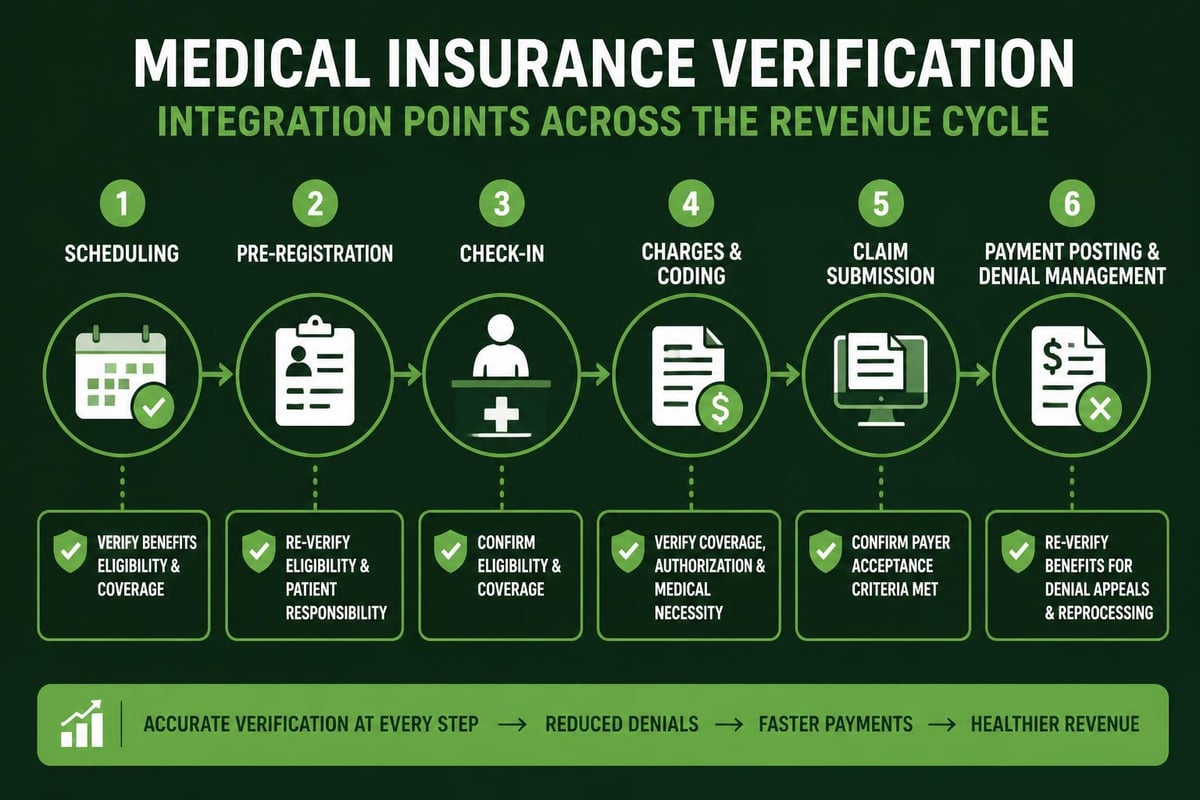
Medical insurance verification functions as the critical first step in comprehensive revenue cycle management. When verification processes align with billing and collections procedures, practices experience improved cash flow and reduced days in accounts receivable.
Verification data flows directly into charge entry and claims submission processes. Accurate benefit information enables precise patient estimate calculations and upfront collections. Clean claims submission rates increase when verification provides complete payer information.
| RCM Stage | Verification Impact | Outcome |
|---|---|---|
| Scheduling | Identifies coverage issues early | Prevents wasted appointment slots |
| Registration | Provides accurate demographic data | Reduces claim rejections |
| Charge Entry | Confirms covered services | Improves coding accuracy |
| Claims Submission | Supplies correct payer information | Increases first-pass acceptance |
| Payment Posting | Validates expected reimbursement | Identifies underpayments quickly |
Denial management in medical billing becomes more efficient when verification eliminates preventable eligibility denials. Staff members can focus on complex denial types requiring clinical documentation or coding review rather than basic eligibility issues.
Coordination with Clinical Workflows
Effective verification requires collaboration between administrative and clinical staff. Providers need access to verification results before seeing patients to discuss treatment options within coverage parameters. When prior authorization requirements surface during verification, clinical staff must provide necessary documentation promptly.
Schedule coordination ensures adequate time for verification completion before appointments. Rush verifications increase error rates and staff stress. Building appropriate buffer time into scheduling workflows accommodates thorough verification procedures.
Specialized Verification Scenarios
Certain patient populations and service types require enhanced verification procedures. Medicare patients with supplemental coverage need coordination of benefits verification across multiple payers. Medicaid eligibility changes frequently, requiring verification closer to the service date.
Workers’ compensation cases involve entirely different verification procedures focusing on claim numbers and authorized treating providers. Auto insurance medical coverage requires accident details and claim adjuster information. Each specialized scenario demands specific knowledge and documentation requirements.
High-Dollar Procedures and Prior Authorization
Complex procedures and expensive treatments require additional verification layers. Confirm not only basic coverage but also any annual or lifetime limits on specific services. Verify that the patient has not exhausted benefits for the planned procedure type.
Prior authorization processes vary significantly across carriers and plan types. Some authorizations require detailed clinical documentation while others need only basic service information. Track authorization expiration dates carefully and obtain extensions when necessary.
Measuring Verification Performance
Practices should establish key performance indicators to monitor verification effectiveness. Track denial rates specifically attributed to eligibility issues separately from other denial categories. Monitor the percentage of claims requiring eligibility-related rework.
Measure staff productivity in terms of verifications completed per hour while maintaining quality standards. Calculate the financial impact of verification improvements by comparing denial rates before and after process enhancements. These metrics demonstrate return on investment for verification resources and technology.
Continuous Improvement Strategies
Regular team meetings focused on verification challenges create opportunities for process refinement. Share examples of particularly complex verification scenarios and discuss effective approaches. Celebrate successes when verification procedures prevent potential denials.
Benchmark performance against industry standards and peer practices. Many professional organizations publish verification best practices and performance data. Identify gaps between current performance and target metrics, then develop action plans to close those gaps.
Staff Training and Development
Comprehensive training programs cover insurance fundamentals including plan types, coverage categories, and common exclusions. Staff members need to understand the difference between HMOs, PPOs, EPOs, and high-deductible health plans. Understanding insurance verification beyond basic intake collection requires depth of knowledge about insurance operations.
Role-playing exercises help staff practice difficult conversations with insurance representatives and patients. Scenario-based training prepares team members for unusual situations and complex coverage arrangements. Cross-training ensures multiple staff members can perform verification functions during absences.
Certification programs validate staff expertise and demonstrate commitment to professional development. Continuing education keeps verification knowledge current as insurance regulations and carrier requirements evolve. Investment in staff development reduces turnover and improves verification quality.
Outsourcing Considerations
Some practices choose to outsource medical insurance verification to specialized service providers. This approach offers access to dedicated verification expertise and technology without internal investment. Outsourced services can provide extended coverage hours and scalability during volume fluctuations.
When evaluating outsourcing options, consider the provider’s HIPAA compliance measures and data security protocols. Assess their experience with your specific payer mix and patient population. Review service level agreements carefully to ensure verification timing meets your scheduling needs.
Internal verification maintains direct control over quality and patient interaction. Staff members familiar with your practice patterns and provider preferences often deliver more nuanced verification results. Many practices adopt hybrid models with internal staff handling routine verifications and outsourced support for overflow or complex cases.
Regulatory Compliance and Privacy
Medical insurance verification involves accessing and documenting protected health information. HIPAA regulations govern how this information can be collected, stored, and shared. Verification staff must complete HIPAA training and understand privacy requirements thoroughly.
Document patient authorization to verify benefits and discuss coverage details. Maintain secure systems for storing verification documentation with appropriate access controls. Regular privacy audits ensure compliance with regulatory requirements and identify potential vulnerabilities.
State regulations may impose additional requirements beyond federal HIPAA standards. Stay informed about regulatory changes that affect verification procedures and documentation requirements. Consult legal counsel when questions arise about compliance obligations.
Mastering medical insurance verification transforms practice financial performance by preventing denials, accelerating reimbursements, and improving patient satisfaction. The processes outlined above require consistent execution, ongoing training, and commitment to continuous improvement. Greenhive Billing Solutions provides comprehensive revenue cycle management services including expert insurance eligibility verification tailored for healthcare providers across the United States, enabling practices to focus on patient care while we handle the complexities of verification, claims processing, and denial management with transparent communication and guaranteed HIPAA compliance.

