
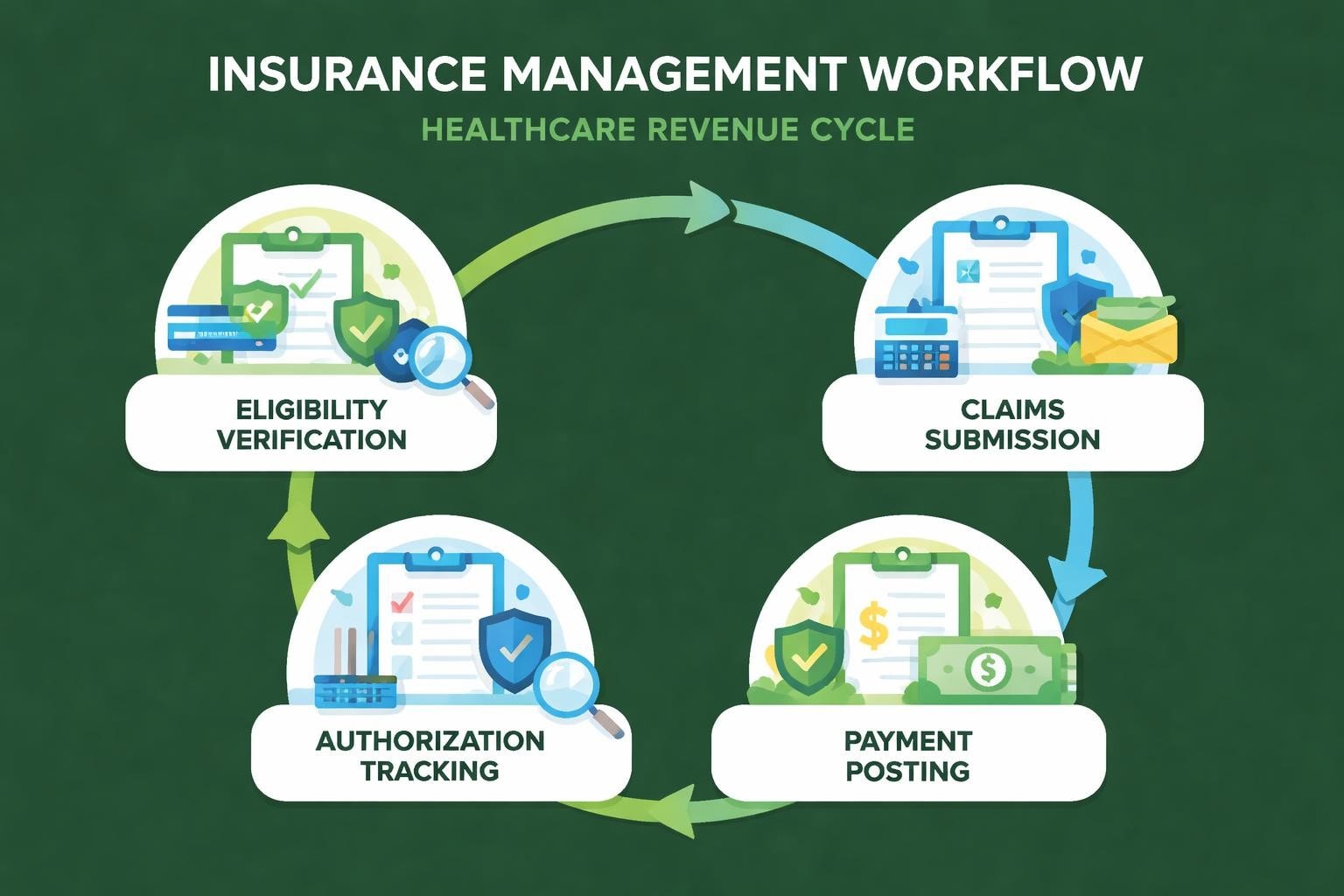
Insurance management represents one of the most critical components of successful revenue cycle operations in healthcare. For medical practices, clinics, and healthcare organizations, the ability to effectively manage insurance-related processes directly impacts cash flow, reimbursement rates, and overall financial stability. From initial eligibility verification to final payment posting, every touchpoint in the insurance management lifecycle requires careful attention, specialized knowledge, and systematic processes. Healthcare providers who master these elements position themselves for sustained financial health while delivering uninterrupted patient care.
The Foundation of Effective Insurance Management
Insurance management encompasses all activities related to verifying coverage, obtaining authorizations, submitting claims, tracking payments, and resolving discrepancies with payers. This multifaceted discipline requires deep understanding of payer contracts, billing regulations, coding requirements, and compliance standards. Healthcare organizations must establish robust processes to handle the complexity inherent in modern insurance interactions.
Core Components That Drive Success
Successful insurance management rests on several interconnected pillars that work together to optimize revenue capture. Each component requires dedicated attention and resources to function properly.
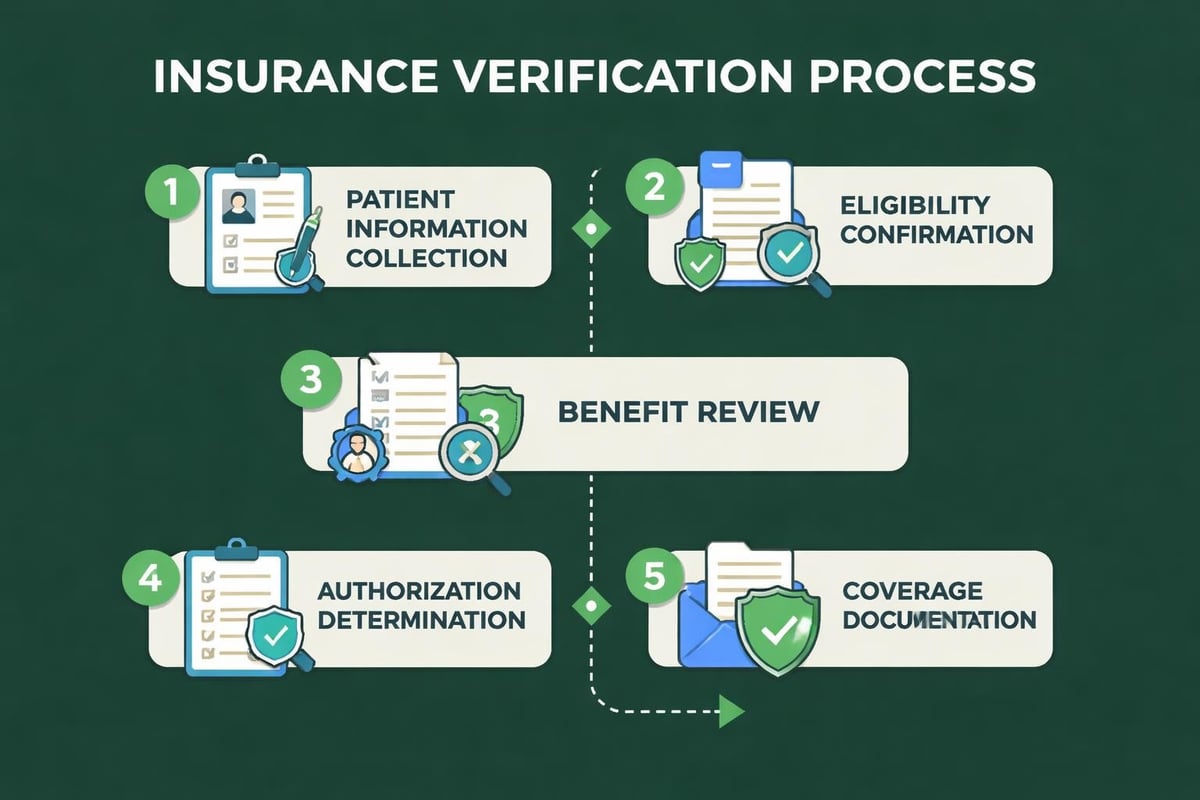
Verification and eligibility checking forms the critical first step in the insurance management process. Before services are rendered, confirming patient coverage, understanding benefit limitations, and identifying patient responsibility prevents downstream denials and payment delays. This proactive approach reduces the likelihood of treating patients who lack coverage or have exhausted their benefits.
Authorization management ensures that services requiring pre-approval receive proper clearance before treatment begins. The National Association of Insurance Commissioners provides guidance on standardized practices that many payers follow. Tracking authorization deadlines, appeal rights, and payer-specific requirements demands organized systems and timely follow-up.
Claims submission accuracy determines how quickly and completely providers receive reimbursement. Clean claims that contain correct patient demographics, accurate coding, and complete documentation move through payer systems without interruption. Organizations that invest in charge entry accuracy and verification processes experience fewer rejections and faster payment cycles.
Strategic Approaches to Insurance Verification
Insurance verification serves as the gatekeeper for revenue cycle success. When performed thoroughly and consistently, verification prevents the majority of preventable denials and patient billing disputes. Healthcare organizations need systematic approaches that balance thoroughness with operational efficiency.
Building a Verification Protocol
Effective verification protocols address multiple data points and potential coverage issues before services are scheduled or rendered. The following table outlines essential verification elements:
| Verification Element | Information Gathered | Impact on Revenue Cycle |
|---|---|---|
| Active Coverage | Policy status, effective dates, termination dates | Prevents treating uninsured patients |
| Benefit Details | Covered services, exclusions, limitations | Identifies non-covered services |
| Patient Responsibility | Deductibles, copays, coinsurance amounts | Enables accurate patient estimates |
| Authorization Requirements | Pre-certification needs, referral requirements | Avoids denial for unauthorized services |
| Network Status | In-network vs. out-of-network participation | Determines reimbursement levels |
Organizations should establish verification timing standards based on service types and payer requirements. Scheduled procedures typically require verification 48-72 hours before the appointment, while emergency services necessitate retroactive verification within specific timeframes. Routine office visits benefit from verification at the time of scheduling or registration.
The verification process must capture and document all gathered information in accessible formats. Creating standardized verification forms or checklists ensures that staff members collect consistent data regardless of who performs the verification. This documentation becomes invaluable when addressing subsequent payment issues or patient questions.
Technology and Verification Efficiency
Modern insurance management leverages technology solutions that automate routine verification tasks while flagging exceptions for manual review. Real-time eligibility systems connect directly with payer databases, providing instant confirmation of coverage status and basic benefit information. These systems significantly reduce staff time while improving accuracy compared to manual phone-based verification.
However, automated systems have limitations. Complex benefit structures, specialty-specific coverage rules, and procedure-specific authorization requirements often require human interpretation and payer contact. Healthcare organizations need balanced approaches that use technology platforms effectively while maintaining staff expertise for complex scenarios.
Claims Management and Submission Excellence
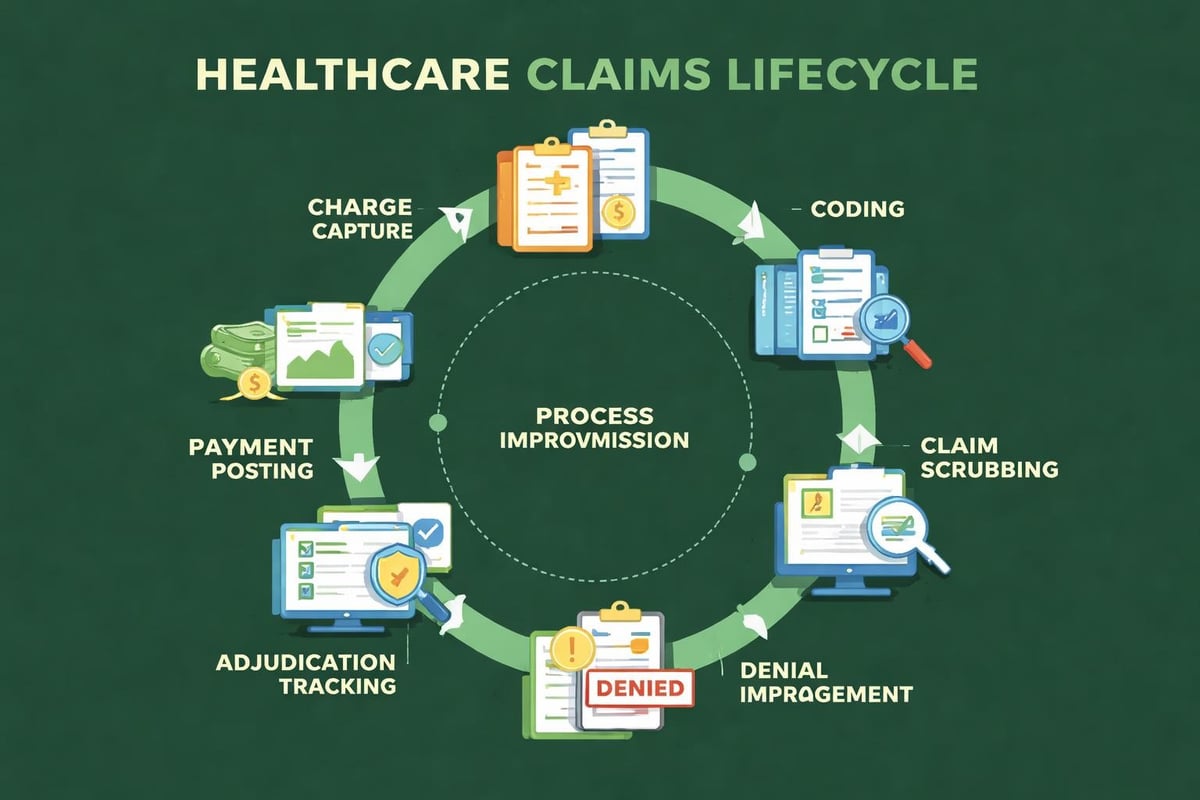
Once services are rendered and documented, insurance management shifts to claims preparation and submission. This phase transforms clinical documentation into standardized billing formats that payers can process. The quality of this translation directly determines reimbursement success.
Ensuring Clean Claim Submission
Clean claims contain all required information in the correct format without errors or omissions. According to industry research from the Insurance Information Institute, clean claim rates correlate strongly with overall revenue cycle performance and days in accounts receivable.
The following elements define clean claim standards:
- Accurate patient demographics including correct spelling, date of birth, policy numbers, and subscriber relationships
- Valid insurance information with current payer addresses, electronic payer IDs, and policy effective dates
- Appropriate coding using current CPT, HCPCS, and ICD-10 codes that match documented services and medical necessity
- Required modifiers applied correctly to indicate special circumstances or multiple procedures
- Complete documentation supporting the level of service billed and medical necessity of treatments
Organizations must implement multi-level review processes before claim submission. Front-end edits catch obvious errors like missing required fields or invalid code combinations. Back-end audits verify coding accuracy, medical necessity documentation, and compliance with payer-specific billing rules.
Understanding what constitutes a clean claim helps organizations establish quality benchmarks and improvement targets. Tracking clean claim rates by payer, provider, and service type identifies specific improvement opportunities.
Authorization Management Protocols
Many insurance plans require prior authorization for specific services, procedures, or medications. Managing this authorization process efficiently prevents service delays while ensuring reimbursement eligibility. Authorization management requires understanding payer-specific requirements, maintaining organized tracking systems, and following up proactively.
Payer-Specific Authorization Requirements
Different insurance companies maintain varying authorization requirements based on plan types, service categories, and patient demographics. High-deductible health plans may have different authorization thresholds than HMO plans with the same carrier. Medicare Advantage plans often have more extensive authorization requirements than traditional Medicare.
Healthcare organizations should maintain current authorization requirement matrices that outline:
- Which services require authorization by payer and plan type
- Authorization request timelines and submission methods
- Required documentation and clinical justification elements
- Appeal processes for authorization denials
- Retroactive authorization policies for emergency services
Regular communication with payer representatives keeps authorization protocols current as policies change. Many payers update authorization lists quarterly or annually, adding new procedures or removing previously required authorizations based on utilization patterns and clinical guidelines.
Tracking and Follow-Up Systems
Effective authorization management depends on organized tracking from initial request through final determination. Systems must capture authorization numbers, approval dates, approved units or visits, and expiration dates. This information flows to scheduling, registration, and billing departments to ensure proper claim submission.
Authorization status categories require different handling approaches:
- Approved authorizations move forward with service scheduling and include authorization numbers on subsequent claims
- Pending authorizations need regular follow-up on status and potential need for additional information
- Denied authorizations trigger appeal processes or alternative treatment discussions with providers and patients
- Expired authorizations require renewal requests before additional services can be rendered or billed
The Risk and Insurance Management Society offers frameworks for systematic risk management that apply well to authorization tracking and compliance monitoring.
Denial Management and Prevention
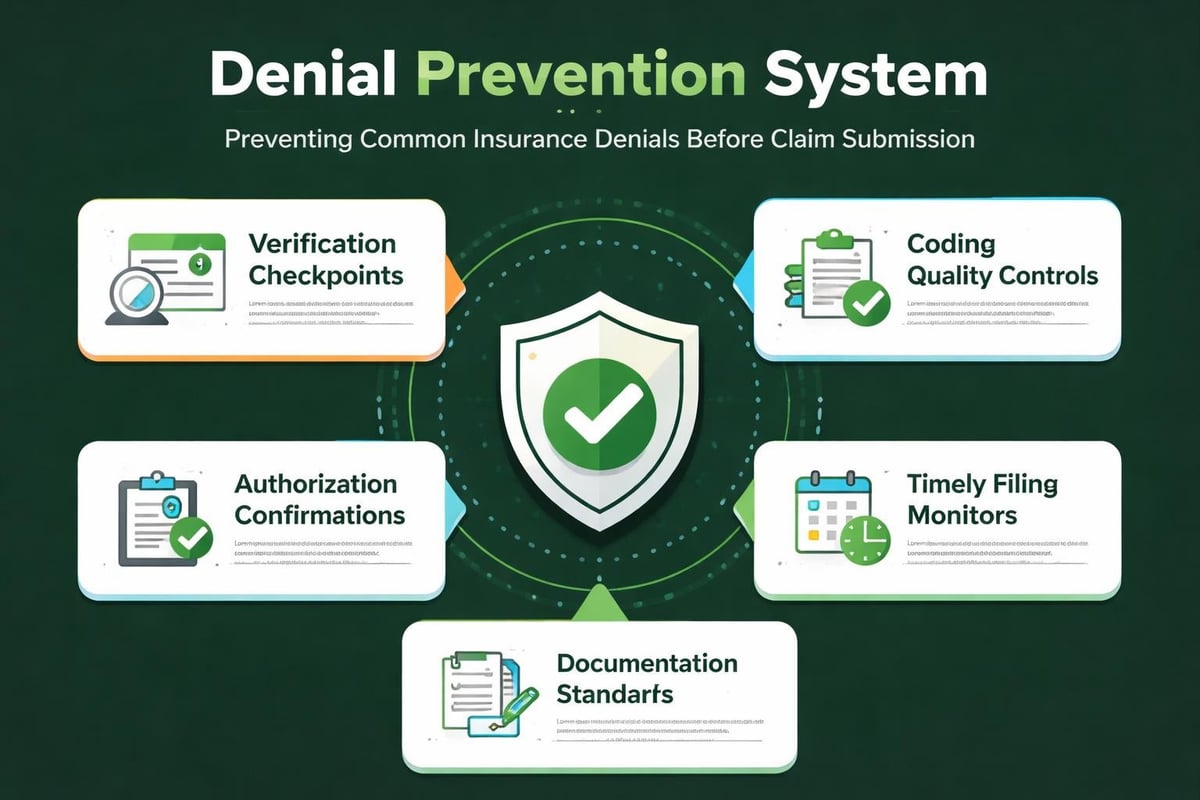
Even with excellent front-end insurance management, some claims face denials or payment reductions. Effective denial management involves both correcting denied claims and analyzing denial patterns to prevent future occurrences. This dual approach transforms denied claims from revenue losses into improvement opportunities.
Common Denial Categories and Resolution Strategies
Insurance-related denials fall into several predictable categories, each requiring specific resolution approaches. Understanding these patterns enables targeted prevention strategies.
| Denial Category | Common Causes | Resolution Approach | Prevention Strategy |
|---|---|---|---|
| Eligibility Issues | Coverage termination, incorrect subscriber information | Verify current coverage, obtain correct information, resubmit | Strengthen front-end verification processes |
| Authorization Denials | Missing authorization, expired authorization, unauthorized provider | Obtain retroactive authorization when possible, appeal with clinical justification | Implement robust authorization tracking systems |
| Coding Errors | Invalid code combinations, unbundling issues, incorrect modifiers | Correct codes based on documentation, resubmit with explanation | Enhanced coder training, improved coding audits |
| Timely Filing | Claims submitted after payer deadlines | File appeals demonstrating timely filing or requesting exceptions | Accelerate claim submission workflows |
| Medical Necessity | Insufficient documentation, services not covered for diagnosis | Provide additional documentation, request peer review | Improve documentation templates and provider education |
Organizations benefit from establishing dedicated denial management programs that analyze trends, prioritize high-value denials, and implement systematic appeals processes. Regular denial reporting by category, payer, and provider identifies training needs and process gaps.
Building Effective Appeal Processes
Successfully appealing denied claims requires understanding payer-specific appeal procedures, gathering supporting documentation, and presenting compelling clinical and administrative arguments. Each payer maintains different appeal levels, timeframes, and submission requirements.
Effective appeal strategies include:
- First-level appeals addressing simple administrative errors with corrected information and brief explanations
- Second-level appeals providing detailed clinical documentation, medical literature support, and policy interpretation arguments
- Third-level appeals involving peer-to-peer physician discussions or external review processes
- Systematic documentation of all appeal activities, outcomes, and precedent-setting decisions
Understanding how to appeal medical insurance denials systematically improves success rates and recovers revenue that might otherwise be written off.
Contract Management and Payer Negotiations
Insurance management extends beyond operational processes to include strategic contract management and payer negotiations. Understanding contracted rates, payment methodologies, and contract terms directly impacts reimbursement levels and revenue performance.
Analyzing Contract Performance
Healthcare organizations should regularly analyze actual payments against contracted rates to ensure payers honor agreement terms. This analysis identifies underpayments, incorrect fee schedule applications, and contract interpretation disputes that require resolution.
Key contract analysis metrics include:
- Contracted rate compliance percentages by payer and CPT code
- Payment turnaround times compared to contract requirements
- Denial rates by payer compared to industry benchmarks
- Case rate and bundled payment reconciliation accuracy
- Stop-loss and outlier payment calculations for risk-based contracts
Organizations lacking internal expertise to perform comprehensive contract analysis often partner with revenue cycle management specialists who bring analytical capabilities and payer negotiation experience. These partnerships provide objective assessment of contract performance and identify improvement opportunities.
Preparation for Contract Negotiations
Strong contract negotiations rest on data-driven understanding of current performance, market rates, and organizational priorities. Healthcare organizations should approach negotiations with clear objectives, supporting data, and understanding of acceptable terms.
Preparation activities should include analyzing utilization patterns by payer, calculating actual costs for commonly provided services, researching market reimbursement rates, and identifying problematic contract clauses. Resources from the American Risk and Insurance Association provide frameworks for evaluating insurance contract terms and risk allocation.
Compliance and Regulatory Considerations
Insurance management operates within complex regulatory frameworks that govern billing practices, documentation requirements, and payer interactions. Maintaining compliance protects organizations from audits, recoupments, and potential fraud allegations while ensuring ethical business practices.
Key Compliance Areas
Healthcare organizations must address multiple compliance domains within their insurance management operations. HIPAA privacy and security rules govern how patient information is accessed, shared, and protected during insurance transactions. False Claims Act provisions prohibit knowing submission of incorrect claims or retention of overpayments.
Critical compliance elements include:
- Proper authorization for release of medical information to payers
- Accurate coding that reflects documented services without upcoding or unbundling
- Timely identification and return of overpayments
- Appropriate use of modifiers and billing codes
- Documentation supporting billed service levels and medical necessity
Regular compliance auditing identifies potential issues before they become systemic problems. Internal audits should review coding accuracy, documentation completeness, billing practice appropriateness, and adherence to payer-specific billing rules. Organizations should also conduct regular reviews of billing and coding practices to ensure staff maintain current knowledge.
Staff Training and Development
Effective insurance management requires knowledgeable staff who understand payer requirements, billing regulations, and organizational processes. Ongoing training ensures teams remain current with changing policies and develop expertise in complex areas.
Essential Training Topics
Staff members involved in insurance management benefit from training across multiple domains. New employees require comprehensive onboarding covering organizational systems, common payers, and basic insurance concepts. Experienced staff need ongoing education about payer policy changes, new regulations, and advanced problem-solving techniques.
Priority training areas include:
- Payer-specific billing requirements and common denial reasons
- Current coding guidelines and annual code set updates
- Authorization processes and requirements by payer
- Documentation standards supporting medical necessity
- Compliance requirements and fraud prevention
- Customer service skills for patient financial counseling
Organizations should document training through attendance records, competency assessments, and ongoing performance monitoring. Creating specialized roles for complex areas like authorization management or appeals processing allows staff to develop deep expertise while maintaining operational efficiency.
Technology Integration and Workflow Optimization
Modern insurance management increasingly relies on technology platforms that automate routine tasks, provide real-time information access, and enable sophisticated analytics. Healthcare organizations must select appropriate tools and integrate them effectively into workflows.
Technology Categories Supporting Insurance Management
Multiple technology solutions support different aspects of insurance management operations. Practice management systems maintain patient demographics and insurance information. Electronic health records document clinical services and generate billing charges. Clearinghouses scrub claims before submission and provide submission tracking. Revenue cycle analytics platforms identify trends and improvement opportunities.
Effective technology implementation requires understanding how different systems interact and share data. Interface quality between practice management systems, EHR platforms, and billing systems determines how seamlessly information flows through the revenue cycle. Organizations should prioritize systems with strong interoperability and standards-based data exchange.
Revenue cycle management service providers often bring expertise with leading technology platforms, allowing healthcare organizations to leverage sophisticated tools without significant capital investment. Understanding how healthcare revenue cycle analytics transform raw data into actionable insights helps organizations make informed decisions about technology investments and partnerships.
Performance Measurement and Continuous Improvement
Insurance management effectiveness should be measured through specific metrics that track both operational efficiency and financial outcomes. Regular monitoring identifies trends, highlights problem areas, and demonstrates improvement impact.
Key Performance Indicators
Organizations should establish baseline measurements and improvement targets for critical insurance management metrics. The following table outlines essential KPIs and their significance:
| Metric | Definition | Target Range | Impact Area |
|---|---|---|---|
| Clean Claim Rate | Percentage of claims accepted without rejections | 95-98% | Submission efficiency, cash acceleration |
| Days in A/R | Average days from service to payment | 30-40 days | Cash flow, working capital |
| Denial Rate | Percentage of submitted claims denied | 5-10% | Revenue capture, staff productivity |
| First-Pass Resolution | Percentage of denials resolved without multiple appeals | 60-70% | Operational efficiency, revenue recovery |
| Authorization Approval Rate | Percentage of authorization requests approved | 85-95% | Service delivery, revenue protection |
| Contract Compliance | Percentage of payments matching contracted rates | 98-100% | Revenue optimization, contract value |
Regular performance reporting should occur at multiple levels. Daily or weekly operational reports track immediate issues requiring attention. Monthly management reports identify trends and departmental performance. Quarterly strategic reviews assess overall program effectiveness and inform resource allocation decisions.
Patient Communication and Financial Counseling
Insurance management extends to patient-facing activities that explain benefits, estimate costs, and establish payment expectations. Effective patient communication reduces disputes, improves collection rates, and enhances patient satisfaction.
Proactive Financial Counseling
Before services are rendered, patients benefit from clear explanations of their insurance coverage, estimated out-of-pocket costs, and payment options. Financial counseling conversations should cover deductible status, copayment requirements, coinsurance percentages, and services that may not be covered.
Organizations should provide written estimates whenever possible, clearly noting that final costs depend on actual services provided and insurance processing. These estimates should explain how deductibles, copayments, and coinsurance interact to determine patient responsibility.
Effective patient communication strategies include:
- Verification of coverage and benefits before scheduled appointments
- Clear explanation of estimated patient responsibility
- Discussion of payment options including payment plans
- Transparency about services that may not be covered
- Follow-up communication about claim status and patient balances
Training front-desk and financial counseling staff in insurance basics enables them to answer common patient questions confidently while knowing when to escalate complex situations. This patient-centered approach to insurance management improves satisfaction while supporting collections performance.
Effective insurance management requires coordinated processes spanning verification, authorization, claims submission, denial resolution, and compliance monitoring. Healthcare organizations that implement systematic approaches to each component optimize revenue capture while reducing administrative burden. Greenhive Billing Solutions delivers comprehensive revenue cycle management services that handle all aspects of insurance management, from initial eligibility verification through final payment posting and denial resolution. Our experienced team uses industry-leading platforms and proven processes to maximize reimbursements while ensuring compliance and maintaining transparent communication with your practice.

