

Healthcare providers face an increasingly complex landscape of medical billing software names and platforms, each offering unique features for revenue cycle management. Understanding the various systems available helps practices make informed decisions about which tools align with their operational needs. Whether you're working with an established platform or evaluating new options, knowing the landscape of medical billing software names enables better strategic planning and more effective collaboration with revenue cycle management partners who work across multiple systems.
Understanding the Medical Billing Software Landscape
The medical billing software market has expanded significantly over recent years, with dozens of platforms competing for market share across different practice sizes and specialties. These systems range from comprehensive enterprise solutions to specialized tools designed for specific medical fields.
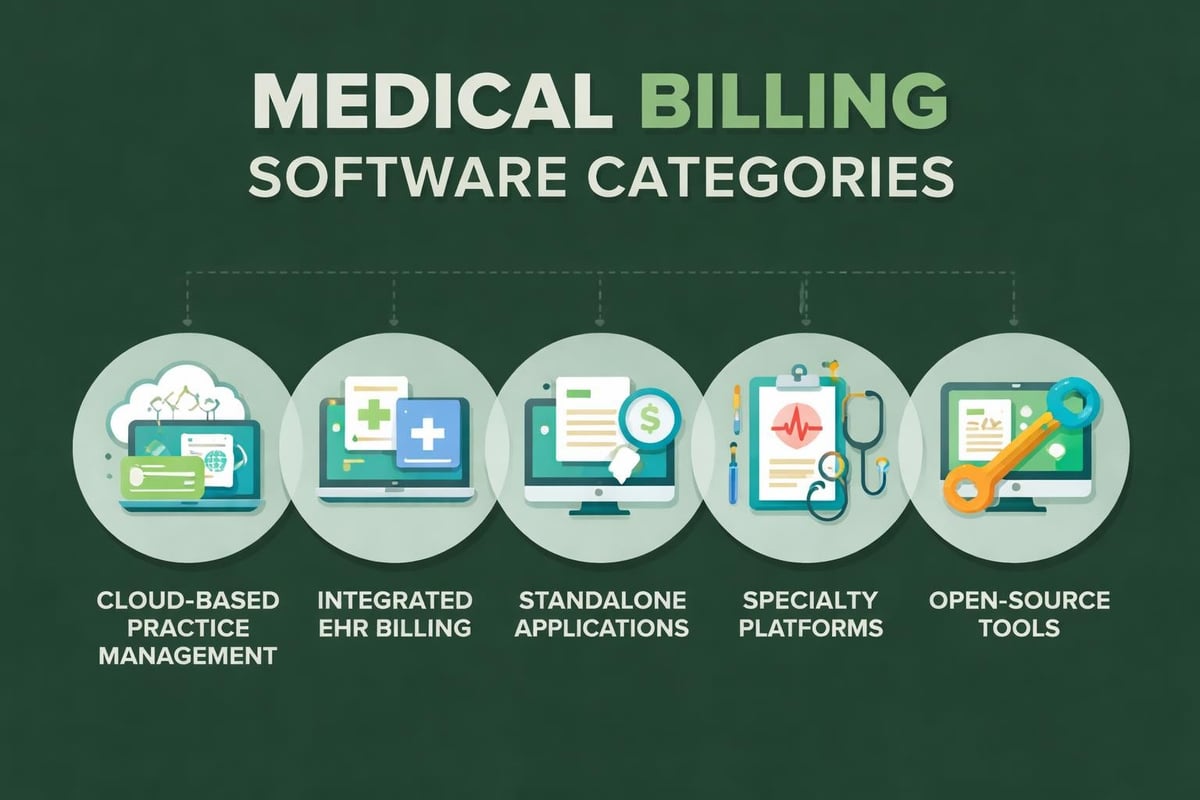
Major categories of medical billing platforms include:
- Cloud-based practice management systems
- Integrated EHR and billing solutions
- Standalone billing applications
- Specialty-specific platforms
- Open-source medical billing tools
Each category serves distinct operational requirements. Cloud-based systems offer accessibility and automatic updates, while integrated platforms streamline workflows by combining clinical documentation with billing functions. Standalone applications provide focused billing capabilities for practices that already have separate electronic health record systems.
The naming conventions used by these platforms often reflect their core functionality or target market. Some medical billing software names emphasize speed, while others highlight integration capabilities or specialty focus. Understanding these naming patterns helps practices quickly identify systems that might match their requirements.
Prominent Medical Billing Software Names in Healthcare
Several platforms have established themselves as industry standards across different practice settings. AdvancedMD provides cloud-based solutions combining practice management, medical billing, and electronic health records for independent medical practices. The platform emphasizes workflow automation and analytics capabilities that help practices identify revenue opportunities.
Kareo has built a strong reputation among small to medium-sized practices, offering user-friendly interfaces and streamlined billing workflows. The platform's name reflects its focus on care delivery, combining clinical and administrative functions in one ecosystem.
athenahealth stands out with its network-enabled approach to medical billing and practice management. The company's cloud-based platform connects providers with payers and patients through shared infrastructure, enabling real-time eligibility verification and claim status tracking.
Electronic Health Record Systems with Billing Components
Many practices use electronic health record systems that incorporate billing functionality as part of comprehensive practice management solutions. DrChrono offers mobile-first EHR and billing capabilities, allowing providers to document encounters and submit claims from tablets and smartphones. This flexibility appeals to practices with providers who split time between multiple locations.
Epic Systems dominates the enterprise market with its comprehensive suite of clinical and administrative tools. While primarily known as an EHR platform, Epic's billing modules handle complex scenarios including multi-specialty practices, hospital systems, and academic medical centers. The system's name suggests its scale and ambition to serve large healthcare organizations.
Cerner, now part of Oracle Health, provides another enterprise-level option combining clinical documentation with revenue cycle management. The platform's billing components integrate deeply with clinical workflows, enabling charge capture at the point of care.
Specialty-Focused Billing Platforms
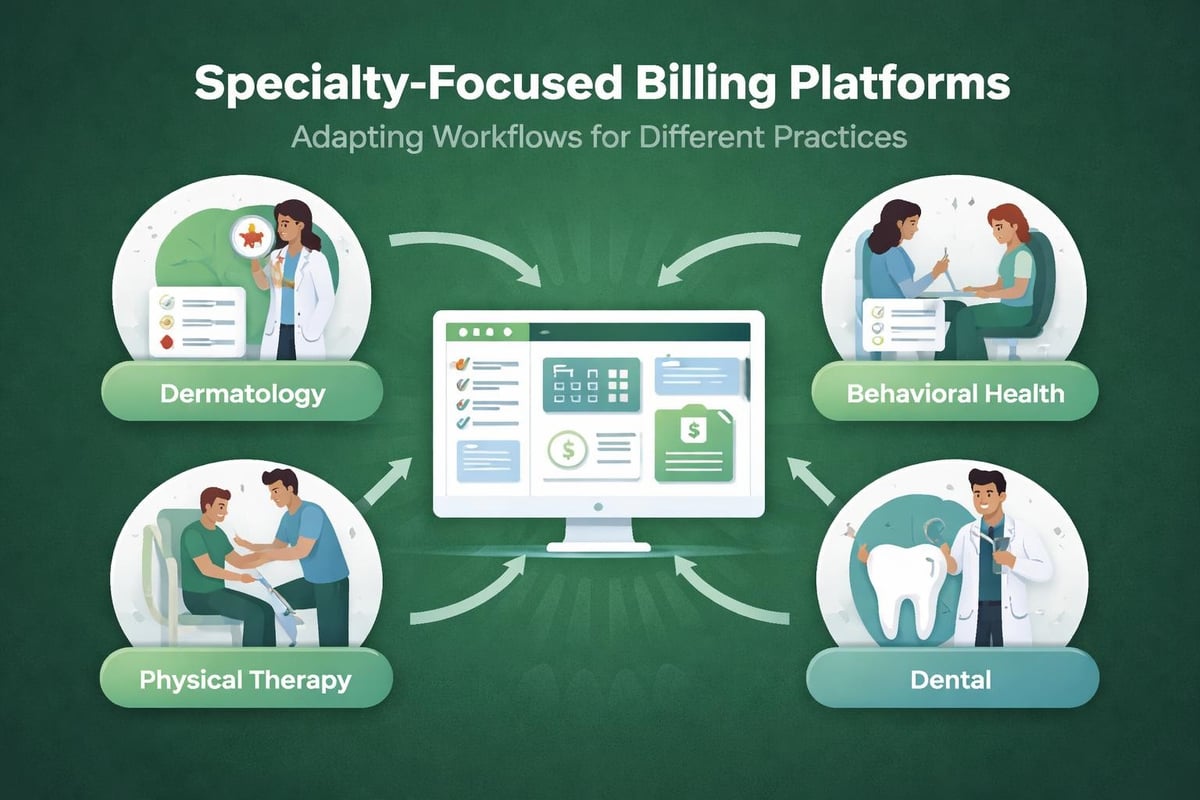
Certain medical billing software names have become synonymous with specific healthcare specialties. These platforms offer customized features addressing the unique billing requirements of different medical fields.
Specialty-specific platforms include:
| Platform | Primary Specialty | Key Differentiation |
|---|---|---|
| ModMed | Dermatology, Ophthalmology, Orthopedics | Specialty-specific templates and workflows |
| TheraBill | Physical Therapy, Occupational Therapy | Therapy-specific billing rules and documentation |
| SimplePractice | Behavioral Health, Mental Health | HIPAA-compliant telehealth integration |
| Dentrix | Dental Practices | Dental-specific procedure codes and insurance processing |
| eClinicalWorks | Multi-specialty (Primary Care focus) | Population health management integration |
These specialty platforms understand the nuances of their target markets. For instance, behavioral health practices require different documentation and billing approaches compared to surgical specialties. Medical billing for behavioral health involves unique considerations around session types, treatment plans, and insurance authorization requirements.
Specialty platforms typically include pre-built templates, procedure code libraries, and reporting tools tailored to their focus area. This specialization can reduce implementation time and training requirements compared to general-purpose systems.
Practice Management Systems with Billing Integration
Practice management platforms represent another category of medical billing software names. These systems prioritize scheduling, patient communication, and administrative workflows while incorporating billing as a core component.
NextGen Healthcare offers scalable solutions for ambulatory practices, combining appointment scheduling, patient engagement tools, and comprehensive billing capabilities. The platform supports practices ranging from single-provider offices to large multi-specialty groups.
CollaborateMD emphasizes real-time claim submission and clearinghouse integration, allowing practices to submit claims and track status updates continuously throughout the day. This approach reduces payment delays and helps practices identify issues before claims reach payers.
eClinicalWorks has gained traction across primary care and multi-specialty practices with its combination of clinical documentation, practice management, and patient portal capabilities. The system's billing module includes automated eligibility verification and claim scrubbing to reduce denials.
Open-Source and Alternative Platforms
Not all medical billing software names belong to commercial vendors. Open-source platforms provide alternatives for practices with technical resources or specific customization requirements.
OpenEMR offers a free, open-source electronic medical record system with integrated billing capabilities. The platform includes patient scheduling, electronic health records, and medical billing functions, all available without licensing fees. Healthcare organizations can customize OpenEMR to meet specific workflow requirements, though implementation typically requires technical expertise.
OSCAR McMaster originated in Canadian academic primary care clinics and has expanded to broader use across Canada. The web-based EMR system includes patient demographics, clinical documentation, and billing functions designed for primary care workflows.
These open-source options appeal to practices seeking maximum flexibility or those operating in resource-constrained environments. However, they require greater technical investment for implementation and ongoing maintenance compared to commercial platforms.
Cloud-Based Versus Server-Based Systems
The distinction between cloud-based and server-based systems represents a fundamental consideration when evaluating medical billing software names. This architectural difference affects accessibility, maintenance requirements, and data security approaches.
Cloud-based systems offer several advantages:
- Automatic software updates without manual intervention
- Access from any internet-connected device
- Lower upfront infrastructure costs
- Built-in disaster recovery and data backup
- Scalability to accommodate practice growth
Server-based systems provide different benefits, including complete control over data storage, potential integration with existing on-premise systems, and independence from internet connectivity for core operations. However, these systems require dedicated IT resources for maintenance, updates, and security management.
Most newer medical billing software names emphasize cloud delivery, reflecting broader industry trends toward software-as-a-service models. This shift has made sophisticated billing capabilities accessible to smaller practices that previously couldn't afford enterprise-level systems.
Understanding how revenue cycle management integrates with different software architectures helps practices evaluate their options effectively. Revenue cycle management service providers like those working with top medical billing companies adapt to various platforms, whether cloud-based or server-based.
Evaluating Medical Billing Software Features
Beyond recognizing medical billing software names, healthcare providers must evaluate the specific capabilities each platform offers. Feature sets vary significantly across different systems, affecting operational efficiency and revenue cycle performance.
Core Billing Functionality
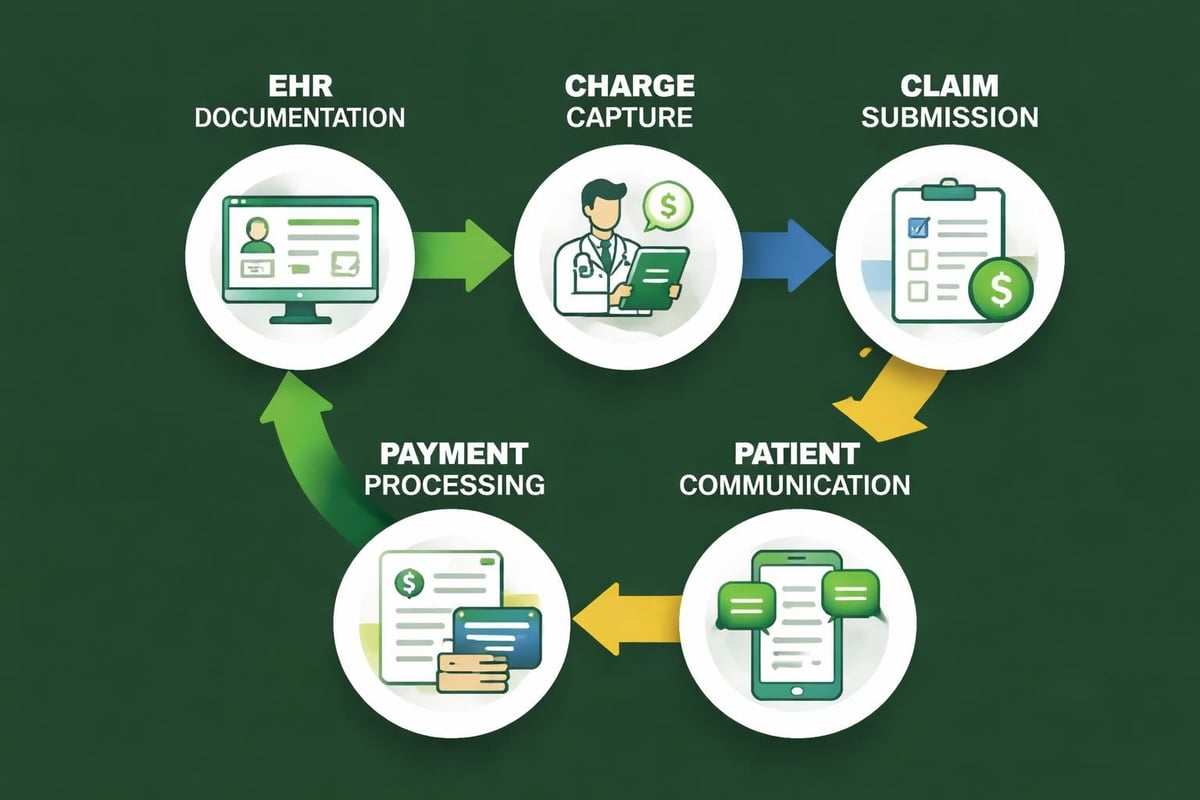
Essential billing features should include charge entry, claim generation, electronic submission, and payment posting. Charge entry in medical billing represents a critical workflow step where services are translated into billable charges. Quality platforms streamline this process through automated code suggestions, favorite charge lists, and integration with clinical documentation.
Claim scrubbing capabilities identify potential errors before submission, reducing denial rates and accelerating payment. Advanced systems apply payer-specific rules to catch issues that might cause rejections or denials.
Key billing features to evaluate:
- Automated eligibility verification – Real-time checks before appointments
- Electronic remittance advice (ERA) processing – Automated payment posting
- Denial management workflows – Systematic tracking and resolution
- Patient statement generation – Customizable billing communications
- Reporting and analytics – Financial performance insights
The ability to verify medical insurance electronically saves staff time and reduces appointment no-shows caused by coverage issues. Systems that automate this verification integrate checking into scheduling workflows, alerting staff to potential coverage problems before patients arrive.
Integration Capabilities
Modern healthcare operations require systems that communicate effectively with other platforms. Medical billing software should integrate with electronic health records, laboratory systems, imaging centers, and patient engagement tools.
| Integration Type | Benefit | Impact on Revenue Cycle |
|---|---|---|
| EHR Integration | Automated charge capture from documentation | Reduces missed charges and improves accuracy |
| Clearinghouse Connection | Faster claim submission and status tracking | Accelerates payment timelines |
| Payment Gateway | Online patient payment processing | Improves collection rates and patient satisfaction |
| Laboratory Interface | Automatic results and billing coordination | Ensures complete billing for ancillary services |
| Patient Portal | Self-service appointment scheduling and bill payment | Reduces administrative burden and enhances collections |
Integration depth varies significantly across medical billing software names. Some platforms offer proprietary integration with their own EHR systems but limited connectivity to third-party applications. Others emphasize open architecture with robust API capabilities enabling custom integrations.
Practices working with revenue cycle management partners should prioritize systems that allow external access for billing teams. Service providers need appropriate system access to perform claim submission, payment posting, and denial management functions effectively.
Navigating Implementation and Training Considerations
Selecting from available medical billing software names represents only the first step. Successful implementation requires careful planning, staff training, and ongoing optimization.
Implementation Timeline and Process
Software implementations typically follow a structured process spanning several months. Initial phases include system configuration, data migration from legacy platforms, and workflow customization. Testing phases verify that charges post correctly, claims generate accurately, and integrations function as expected.
Standard implementation steps:
- Requirements gathering – Document current workflows and desired changes
- System configuration – Set up fee schedules, provider credentials, and payer connections
- Data migration – Transfer patient demographics, insurance information, and outstanding balances
- Staff training – Educate users on new workflows and system navigation
- Parallel processing – Run new and old systems simultaneously to verify accuracy
- Go-live support – Provide intensive assistance during initial production use
- Optimization – Refine workflows based on real-world experience
The complexity of this process varies based on practice size, specialty, and chosen platform. Single-provider practices might complete implementation in weeks, while large multi-specialty groups may require six months or more.
Training and Ongoing Support
Staff proficiency with medical billing platforms directly affects revenue cycle performance. Inadequate training leads to coding errors, claim submission delays, and reduced collection rates. Comprehensive training programs address both technical system navigation and billing best practices.
Quality medical billing software vendors provide multiple training resources including live instruction, recorded tutorials, documentation libraries, and ongoing webinars covering new features and regulatory changes. Support availability varies from business-hours phone assistance to 24/7 emergency support for critical issues.
Practices should evaluate vendor support models when comparing medical billing software names. Some platforms include unlimited support in base pricing, while others charge per incident or offer tiered support packages. Understanding these models helps practices budget accurately for total cost of ownership.
Pricing Models and Cost Considerations
Medical billing software costs vary dramatically based on delivery model, feature set, practice size, and vendor pricing strategy. Understanding these pricing approaches helps practices budget appropriately and compare options effectively.
Common pricing models include:
- Per-provider monthly fees – Fixed costs based on number of physicians
- Percentage of collections – Variable costs tied to practice revenue
- Transaction-based pricing – Fees per claim submitted or payment posted
- Tiered subscription plans – Different feature levels at various price points
- One-time licensing fees – Upfront purchase for server-based systems
Cloud-based platforms typically use subscription models with monthly or annual billing. These recurring costs include software updates, maintenance, and support. Server-based systems involve higher upfront licensing fees plus ongoing costs for maintenance contracts and IT support.
Some medical billing software names appear more affordable based on advertised pricing but include limited features in base packages. Additional modules for patient portals, analytics, or advanced reporting carry supplemental costs. Practices should evaluate total cost including all necessary functionality rather than focusing solely on base pricing.
Working with revenue cycle management service providers offers an alternative to direct software licensing. These partnerships allow practices to benefit from sophisticated billing platforms without direct software costs, as service providers use their own system licenses. This approach provides access to enterprise-level tools regardless of practice size.
Regulatory Compliance and Security Features
Healthcare billing involves sensitive patient information subject to strict regulatory requirements. Medical billing software must support HIPAA compliance through appropriate security controls, audit logging, and data protection measures.
Data Security and HIPAA Compliance
Platforms should implement encryption for data transmission and storage, role-based access controls limiting system access to authorized personnel, and comprehensive audit trails documenting all system activity. These security measures protect patient privacy while enabling practices to demonstrate compliance during regulatory audits.
Cloud-based systems must provide Business Associate Agreements outlining their HIPAA obligations and security responsibilities. Server-based platforms require practices to implement appropriate safeguards including firewall protection, intrusion detection, and regular security updates.
Modern billing platforms should support secure communication channels for sharing patient information with payers, other providers, and patients themselves. Encrypted patient portals enable patients to view statements, make payments, and communicate with practice staff without exposing protected health information.
Adapting to Value-Based Care Models
The healthcare industry's ongoing shift toward value-based payment models affects medical billing software requirements. Traditional fee-for-service billing capabilities remain essential, but platforms must also support quality reporting, risk adjustment, and alternative payment methodologies.
Advanced systems include features addressing these evolving requirements such as quality measure tracking and reporting, risk stratification tools identifying high-risk patients, and alternative payment model support for bundled payments and capitation arrangements. Some platforms integrate population health management capabilities, helping practices identify care gaps and coordinate interventions that improve outcomes while supporting quality-based reimbursement.
Understanding how different medical billing software names address value-based care helps practices prepare for future payment models. Systems with strong analytics capabilities provide visibility into both fee-for-service revenue and quality-based performance, enabling practices to optimize across multiple payment methodologies simultaneously.
Practices working with partners who understand healthcare revenue cycle analytics can leverage billing data more effectively regardless of which platform they use. These insights identify trends, highlight opportunities, and support strategic decision-making around contracting and service line development.
Making the Right Software Selection
Choosing among medical billing software names requires balancing multiple considerations including functionality, cost, implementation complexity, and vendor stability. Practices should approach this decision systematically, evaluating options against clearly defined requirements.
Creating a structured evaluation process helps practices compare platforms objectively. This process typically includes identifying must-have versus nice-to-have features, requesting demonstrations from shortlisted vendors, checking references from similar practices, and reviewing contract terms including pricing escalation clauses and termination conditions.
Vendor stability matters significantly given the long-term nature of medical billing software relationships. Practices should research vendor financial health, market position, and customer retention rates. Platforms from established companies with strong market presence generally offer greater long-term viability than solutions from newer or financially unstable vendors.
The relationship between practices and revenue cycle management service providers can simplify software selection challenges. Experienced RCM partners work across multiple platforms and can advise practices on which systems align best with their operational requirements. These partnerships also provide flexibility, as service providers adapt to practice-chosen systems rather than requiring specific platforms.
Understanding what billing and coding specialists need to work effectively helps practices evaluate software from the perspective of those who will use it daily. Systems should support efficient workflows for coding, charge entry, claim submission, and denial management.
Navigating the landscape of medical billing software names requires understanding how different platforms address revenue cycle management needs across various practice types and specialties. The right system balances functionality, usability, and cost while supporting both current operations and future growth. Rather than managing software selection, implementation, and optimization independently, many practices partner with experienced revenue cycle management providers who work seamlessly across multiple platforms. Greenhive Billing Solutions brings specialized expertise in comprehensive revenue cycle management, working with your existing systems or recommending optimal platforms based on your specific requirements. Our team handles everything from insurance eligibility verification to denial management, allowing your practice to focus on patient care while we maximize your revenue potential.

