
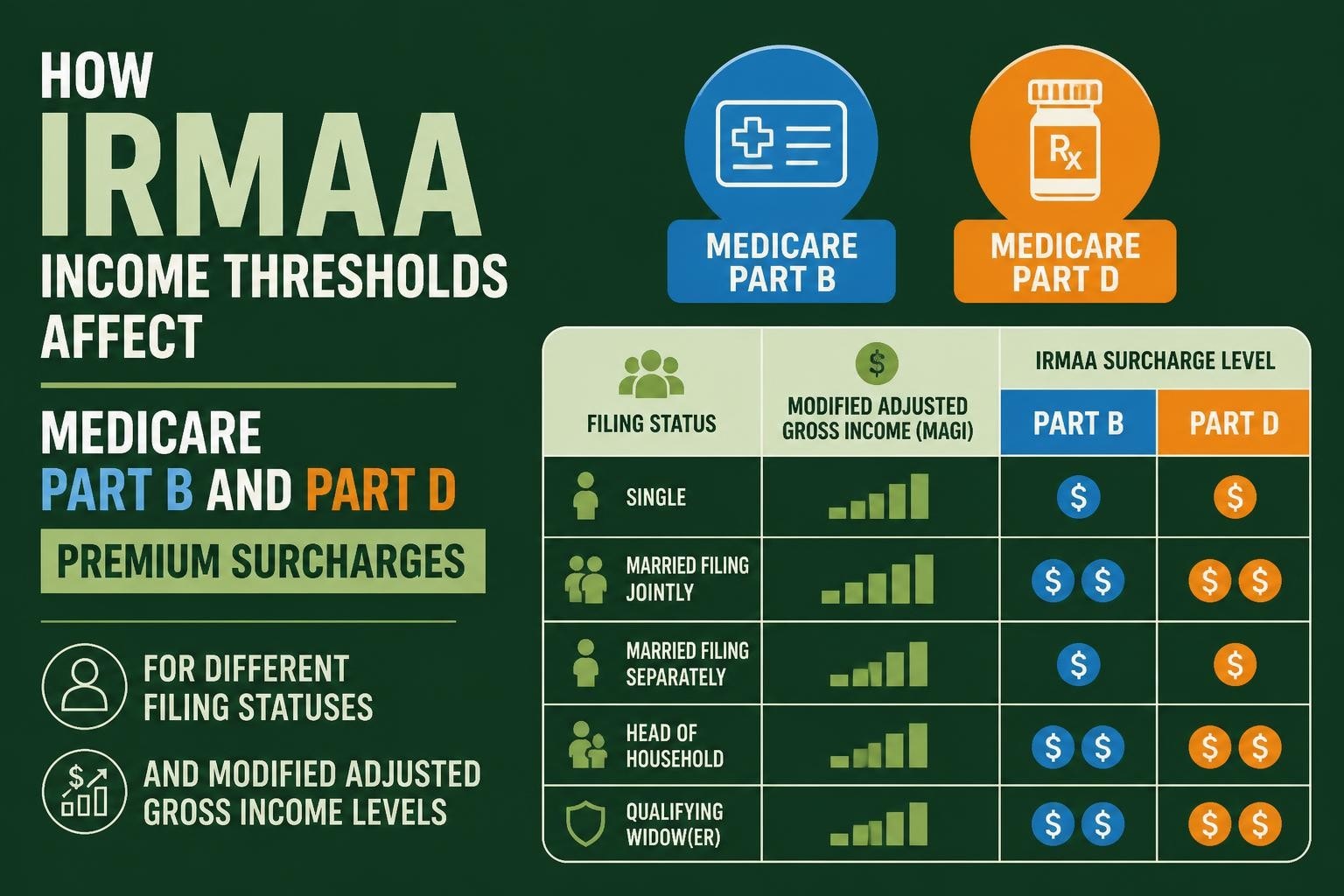
Understanding the Income-Related Monthly Adjustment Amount (IRMAA) is essential for healthcare revenue cycle management professionals who work with Medicare beneficiaries. As IRMAA brackets 2026 take effect, medical practices need to understand how these adjustments impact their patient base, billing strategies, and overall revenue cycles. Higher-income Medicare beneficiaries face additional premium costs based on their modified adjusted gross income (MAGI) from two years prior, creating important considerations for healthcare providers managing patient relationships and financial counseling.
What IRMAA Means for Healthcare Revenue Cycles
The Income-Related Monthly Adjustment Amount represents a surcharge applied to Medicare Part B and Part D premiums for beneficiaries whose income exceeds specific thresholds. Understanding what IRMAA is helps healthcare providers better serve their patient population and anticipate potential payment challenges.
For revenue cycle management teams, IRMAA awareness creates opportunities to provide better financial counseling and maintain strong patient relationships. When patients face unexpected premium increases, they may experience financial stress that affects their ability to pay for services.
Income Thresholds and Surcharge Brackets
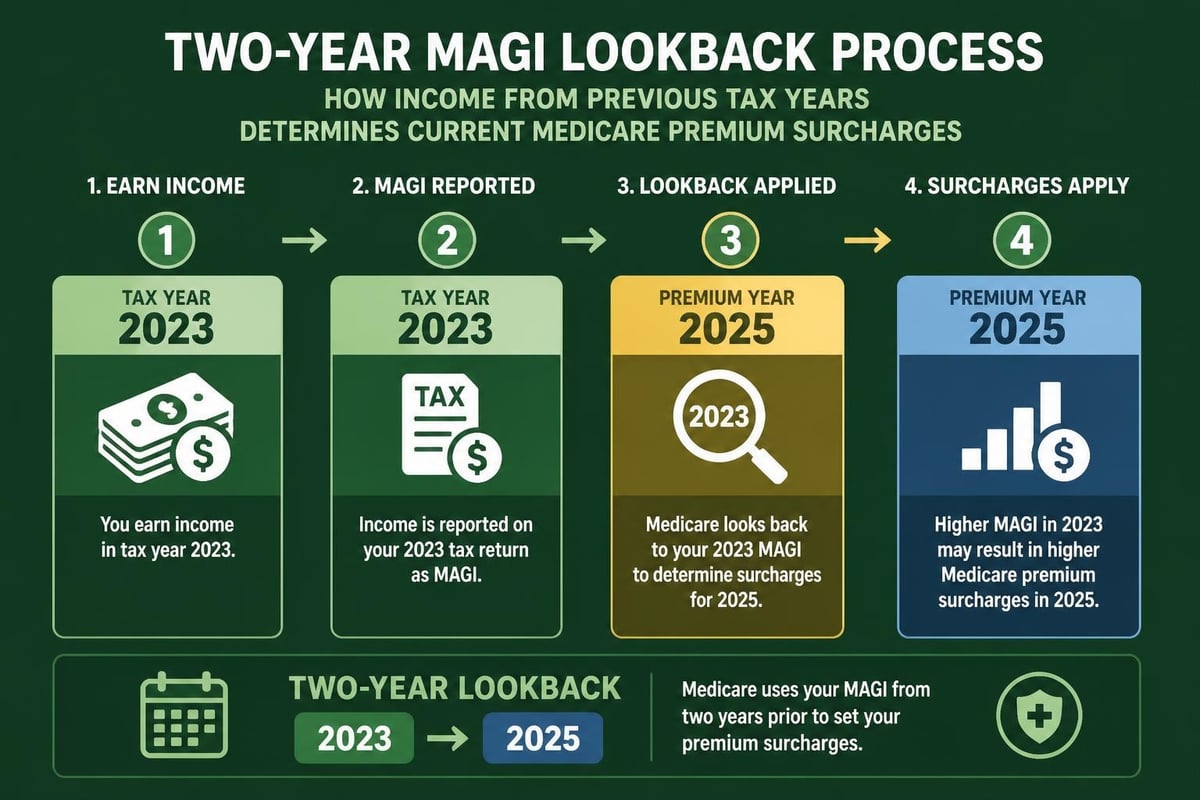
The 2026 IRMAA brackets include five income-related surcharge tiers above the standard-premium threshold. The applicable bracket depends on the beneficiary’s modified adjusted gross income and tax-filing status. These brackets adjust annually based on inflation and cost-of-living changes, making it crucial for healthcare organizations to stay current with Medicare regulations.
| Filing status | 2026 MAGI | Part B monthly IRMAA | Total Part B monthly premium | Part D monthly IRMAA |
|---|---|---|---|---|
| Individual | $109,000 or less | $0.00 | $202.90 | $0.00 |
| Individual | Over $109,000–$137,000 | $81.20 | $284.10 | $14.50 |
| Individual | Over $137,000–$171,000 | $202.90 | $405.80 | $37.50 |
| Individual | Over $171,000–$205,000 | $324.60 | $527.50 | $60.40 |
| Individual | Over $205,000–under $500,000 | $446.30 | $649.20 | $83.30 |
| Individual | $500,000 or more | $487.00 | $689.90 | $91.00 |
| Married filing jointly | $218,000 or less | $0.00 | $202.90 | $0.00 |
| Married filing jointly | Over $218,000–$274,000 | $81.20 | $284.10 | $14.50 |
| Married filing jointly | Over $274,000–$342,000 | $202.90 | $405.80 | $37.50 |
| Married filing jointly | Over $342,000–$410,000 | $324.60 | $527.50 | $60.40 |
| Married filing jointly | Over $410,000–under $750,000 | $446.30 | $649.20 | $83.30 |
| Married filing jointly | $750,000 or more | $487.00 | $689.90 | $91.00 |
Married filing separately: Beneficiaries in this category pay no Part B or Part D IRMAA when MAGI is $109,000 or less. Those with MAGI over $109,000 but under $391,000 pay a $446.30 Part B IRMAA and an $83.30 Part D IRMAA. Those with MAGI of $391,000 or more pay a $487.00 Part B IRMAA and a $91.00 Part D IRMAA.
The table above covers individual and joint filers. Separate thresholds apply to beneficiaries who are married, lived with their spouse during the tax year, and filed separate tax returns.
Impact on Healthcare Provider Operations
Revenue cycle management professionals must understand how IRMAA affects patient behavior and payment patterns. When Medicare beneficiaries receive IRMAA notifications, they often experience confusion about their premium increases, leading to increased inquiries at healthcare facilities.
Patient Communication Strategies
Healthcare providers can strengthen patient relationships by proactively educating beneficiaries about IRMAA. Medical billing services should incorporate IRMAA awareness into patient financial counseling programs.
Consider implementing these communication approaches:
- Provide clear explanations of premium adjustments during registration
- Offer resources about IRMAA appeal processes for qualifying life events
- Train front-desk staff to answer basic IRMAA questions
- Maintain updated reference materials about income thresholds
Financial counseling becomes particularly valuable when patients face unexpected premium increases. Understanding the two-year MAGI lookback process allows healthcare teams to explain why current-year income changes won’t immediately affect Medicare premiums.
Common IRMAA Mistakes Affecting Healthcare Billing
Healthcare providers should be aware of common mistakes that trigger Medicare surcharges to better advise patients and maintain smooth revenue cycles. These errors often result in delayed payments or increased financial hardship for beneficiaries.
Avoiding Revenue Cycle Disruptions
When patients incorrectly report income or fail to update the Social Security Administration about life-changing events, they may face unwarranted IRMAA charges. This creates financial pressure that can affect their ability to pay for healthcare services.
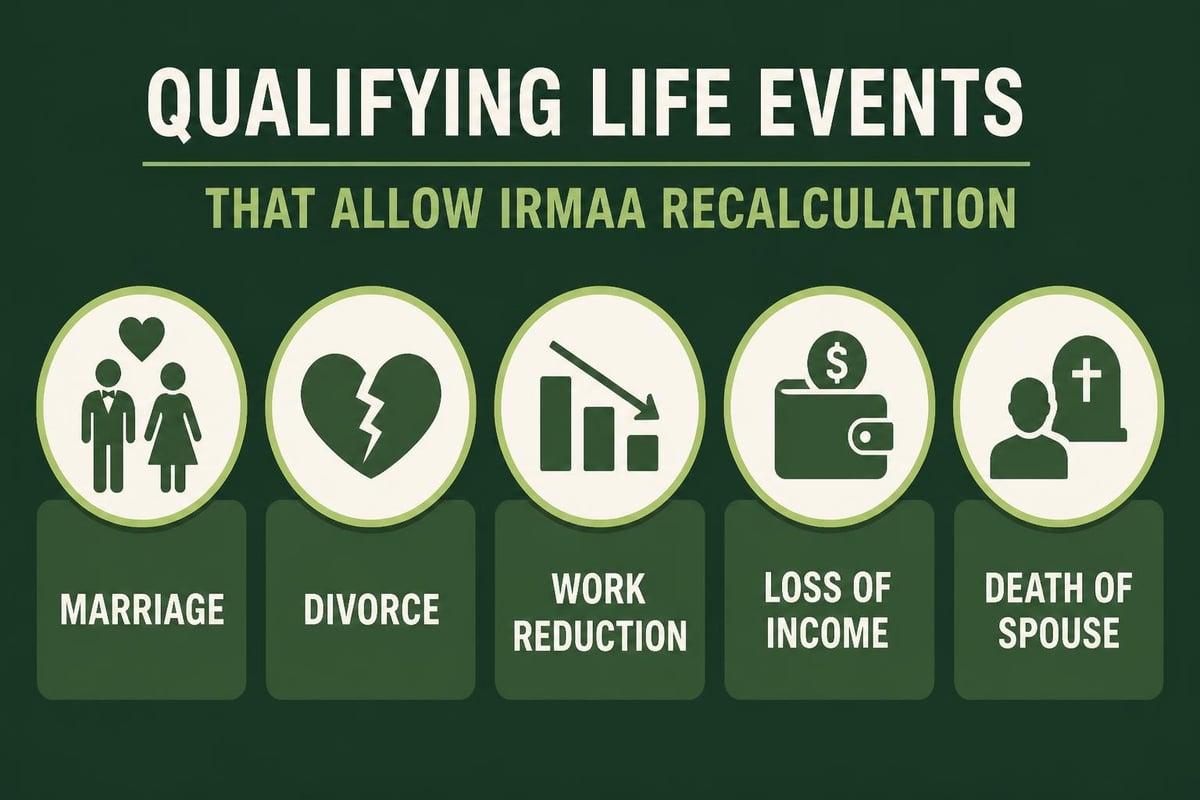
Life-changing events that may warrant IRMAA appeals include:
- Marriage or divorce
- Death of a spouse
- Work stoppage or reduction
- Loss of income-producing property
- Loss of pension income
- Employer settlement payment
IRMAA is a Medicare premium adjustment rather than a provider claim or eligibility requirement. Practices should direct beneficiaries with questions about an IRMAA determination to the Social Security Administration or Medicare. This proactive approach helps identify potential payment issues before services are rendered.
Revenue Cycle Considerations for IRMAA-Affected Patients
Medical practices serving higher-income Medicare beneficiaries need specialized approaches to revenue cycle management. Understanding irmaa brackets 2026 enables better financial planning and patient service strategies.
Billing and Collection Strategies
Patients facing IRMAA surcharges already pay significantly higher Medicare premiums, which may affect their healthcare spending patterns. Revenue cycle teams should consider:
- Flexible payment plan options for services not covered by Medicare
- Clear cost estimates before elective procedures
- Transparent communication about out-of-pocket expenses
- Enhanced financial counseling for high-deductible scenarios
Denial management services become increasingly important when working with IRMAA-affected patients, as claim rejections can compound their financial burden.
| Patient income category | Monthly Medicare premium impact | Practice consideration |
|---|---|---|
| Standard-premium beneficiaries | $202.90 Part B premium; no IRMAA | Explain that normal deductibles, coinsurance and service-related cost sharing still apply |
| Lower IRMAA tiers | Additional Part B IRMAA of $81.20–$202.90; Part D IRMAA of $14.50–$37.50 | Direct beneficiaries with premium questions to Medicare or Social Security |
| Higher IRMAA tiers | Additional Part B IRMAA of $324.60–$487.00; Part D IRMAA of $60.40–$91.00 | Keep premium adjustments separate from provider bills and service-related patient responsibility |
Part D IRMAA is paid in addition to the beneficiary’s plan-specific Part D premium. Because Part D premiums vary by plan, the amounts shown above are IRMAA surcharges—not total Part D premiums.
Integration with Social Security Changes
Changes to Social Security often correlate with IRMAA adjustments, creating a complex financial landscape for Medicare beneficiaries. Healthcare providers should understand these interconnections to better serve their patient populations.
A beneficiary’s 2026 IRMAA determination is generally based on modified adjusted gross income reported on the 2024 federal tax return. Changes in taxable income can affect the applicable bracket. This creates situations where increased benefits result in higher overall healthcare costs.
Supporting Patient Financial Planning
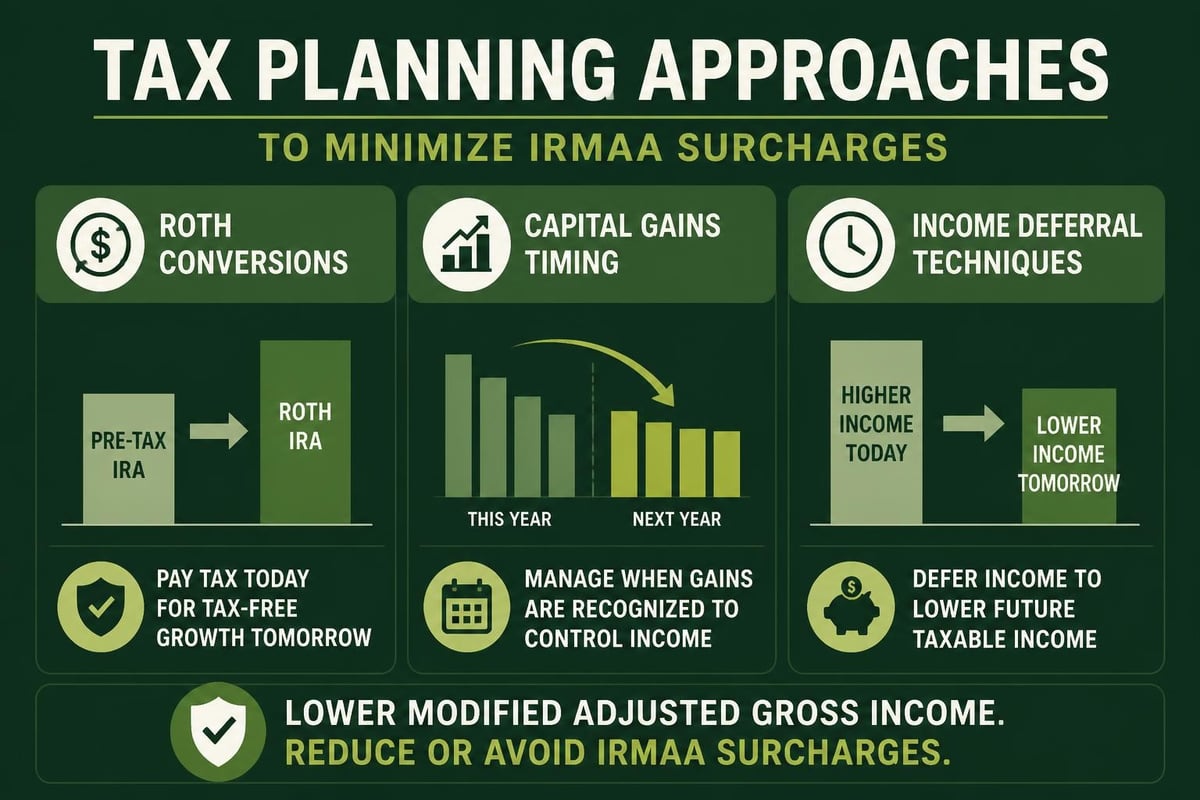
Forward-thinking healthcare organizations can differentiate themselves by offering comprehensive financial guidance. While not providing tax advice, medical billing teams can direct patients toward resources that explain IRMAA bracket management strategies.
Healthcare revenue cycle analytics should track patterns among IRMAA-affected patients to identify trends in payment behavior, service utilization, and overall financial health. This data-driven approach enables practices to optimize their revenue cycle processes for diverse patient populations.
Technology and IRMAA Verification
Modern revenue cycle management relies on efficient systems for verifying patient eligibility and insurance status. Incorporating IRMAA status into these systems creates more accurate financial expectations and reduces surprise billing scenarios.
Because IRMAA is separate from provider billing, practices generally do not need to verify or track a patient’s IRMAA bracket in their revenue cycle system. Staff may instead maintain current Medicare and Social Security resources for patients who ask about premium adjustments.
IRMAA does not change how a provider submits Medicare claims or how Medicare determines payment for covered services. It changes the beneficiary’s Medicare premium obligation.
Professional revenue cycle management teams understand that successful billing operations extend beyond claim submission. They encompass patient education, financial counseling, and proactive communication about costs and coverage.
Understanding irmaa brackets 2026 positions healthcare providers to deliver superior patient service while maintaining healthy revenue cycles. By incorporating IRMAA awareness into registration, billing, and financial counseling processes, medical practices can reduce payment delays and strengthen patient relationships. Greenhive Billing Solutions specializes in comprehensive revenue cycle management that addresses these complex Medicare billing scenarios, helping healthcare providers maximize reimbursements while delivering transparent, patient-centered financial services. Our experienced team works with your existing systems to streamline operations and improve financial performance across all aspects of the revenue cycle.
Source: Centers for Medicare & Medicaid Services, “2026 Medicare Parts A & B Premiums and Deductibles,” published November 14, 2025.

