
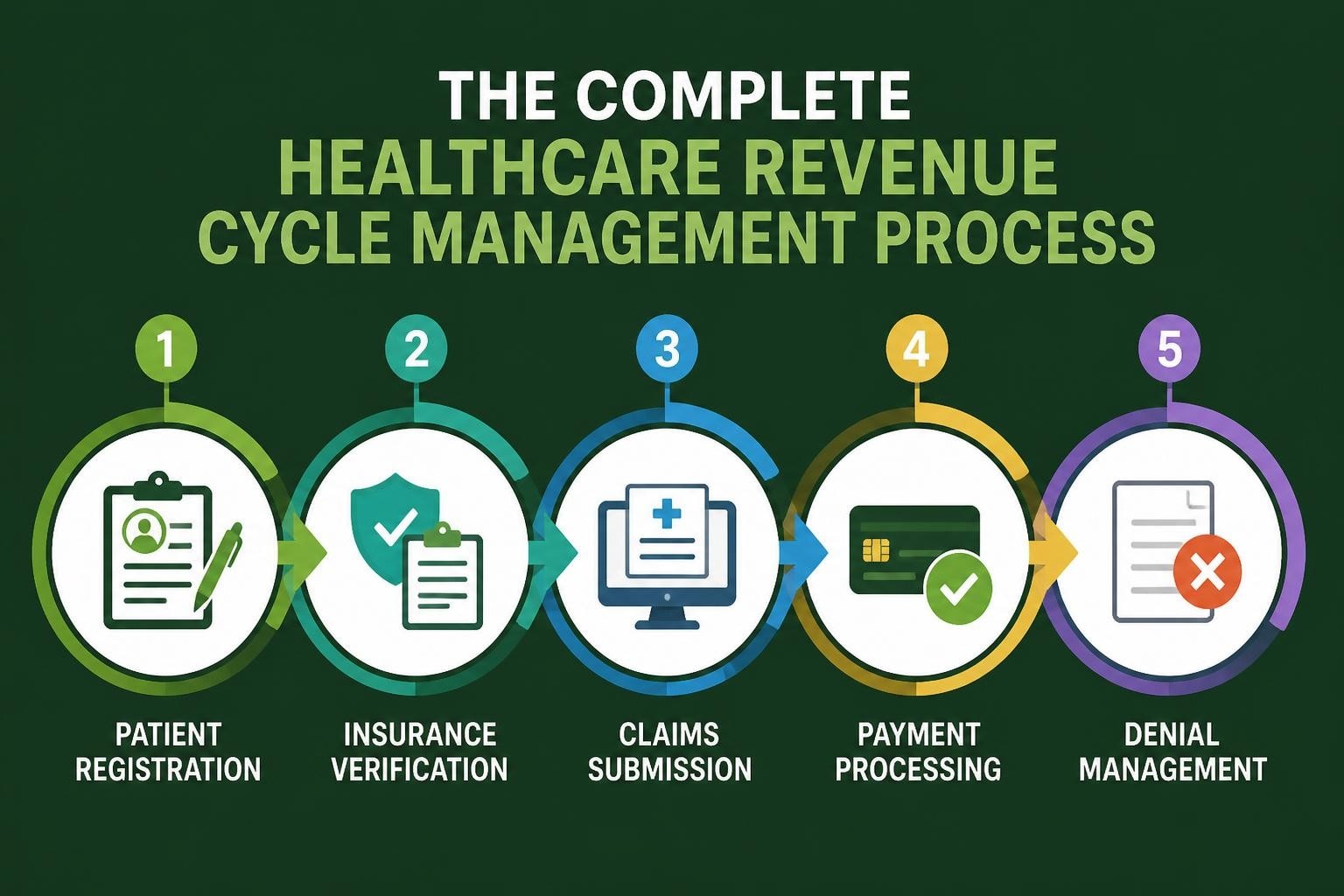
Understanding what does RCM stand for in healthcare is fundamental for any medical practice seeking financial stability and operational efficiency. RCM stands for Revenue Cycle Management, a comprehensive process that tracks patient care episodes from registration and appointment scheduling through final payment collection. This critical business function encompasses all administrative and clinical activities that contribute to capturing, managing, and collecting patient service revenue. For healthcare providers navigating increasingly complex reimbursement landscapes, mastering RCM principles has become essential for sustainable practice management.
Understanding Revenue Cycle Management Fundamentals
Revenue Cycle Management represents the financial backbone of healthcare organizations, integrating clinical documentation with billing and collection processes. Revenue cycle management encompasses every step that generates and secures payment for healthcare services delivered. This process begins the moment a patient schedules an appointment and continues until all balances are reconciled.
The scope of what does RCM stand for in healthcare extends beyond simple billing functions. It includes patient registration, insurance eligibility verification, charge capture, claims submission, payment posting, and accounts receivable follow-up. Each component requires specialized knowledge, attention to detail, and adherence to regulatory requirements.
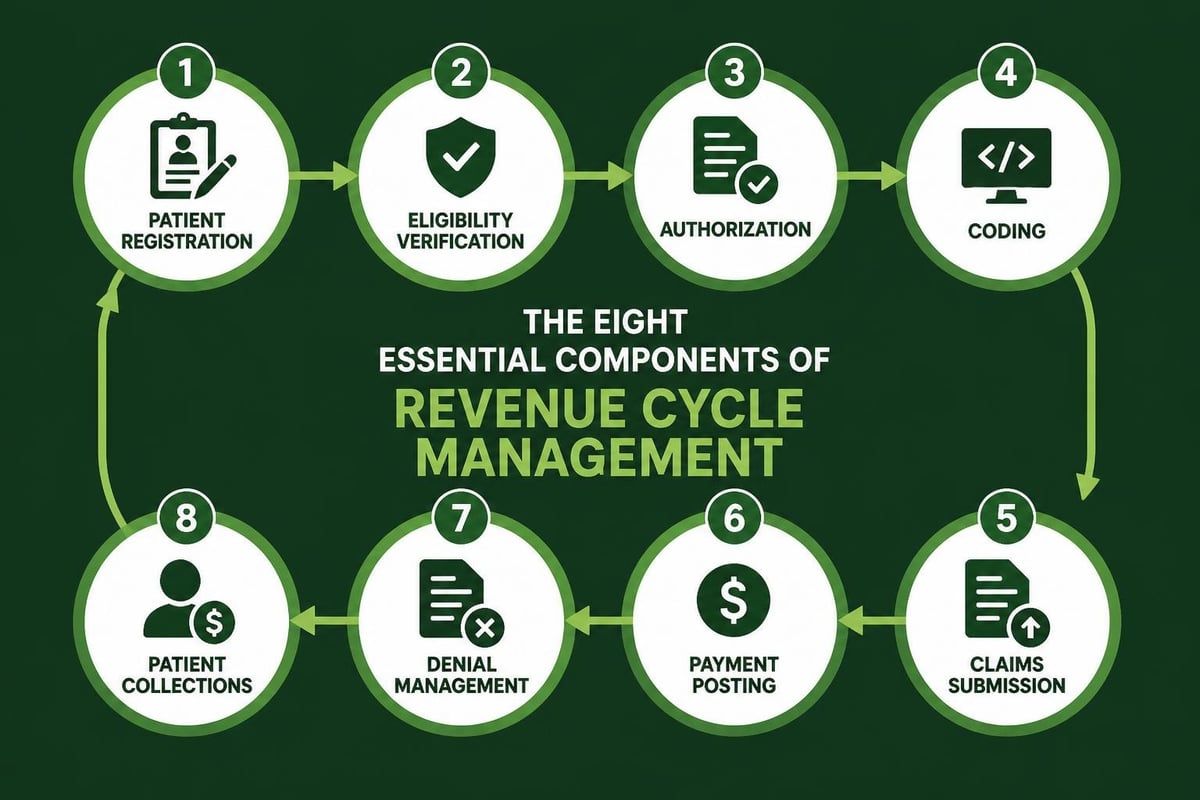
Key RCM components include:
- Patient demographic and insurance information collection
- Insurance eligibility and benefits verification
- Authorization and referral management
- Accurate medical coding and charge entry
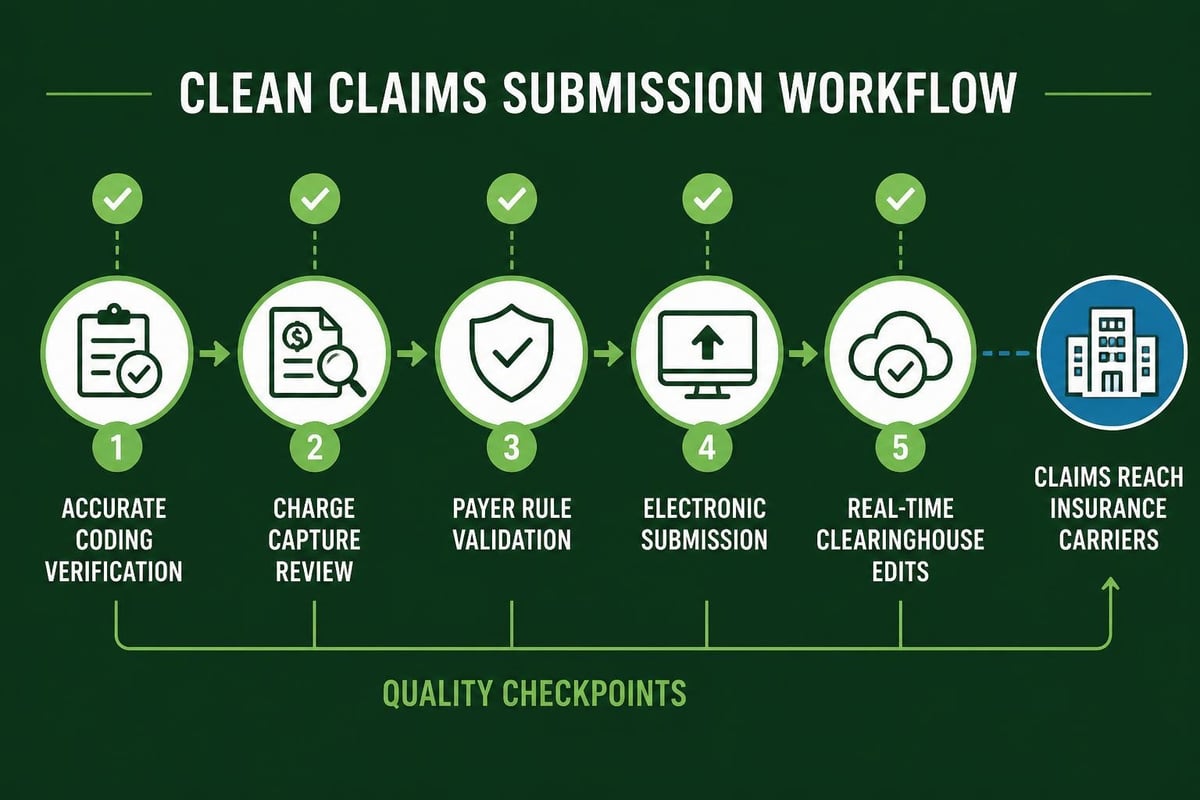
- Clean claims submission and follow-up
- Payment posting and reconciliation
- Denial management and appeals processing
- Patient billing and collection activities
The Financial Impact of Effective RCM
Healthcare organizations implementing robust RCM strategies typically experience significant improvements in financial performance. According to industry research on revenue cycle management, practices with optimized processes collect payments faster, reduce claim denials, and improve overall revenue capture by 15-30%.
Measurable Benefits of Strong RCM
When healthcare providers understand what does RCM stand for in healthcare and implement best practices, they realize tangible operational improvements. Organizations with effective RCM systems report fewer billing errors, shorter payment cycles, and enhanced patient satisfaction through transparent billing communications.
The financial advantages extend beyond immediate cash flow improvements. Proper RCM implementation reduces administrative burden, allowing clinical staff to focus on patient care rather than billing complexities. This efficiency translates into lower overhead costs and improved staff productivity across departments.
| Performance Metric | Before RCM Optimization | After RCM Optimization |
|---|---|---|
| Days in A/R | 60-90 days | 30-45 days |
| First-pass claim acceptance | 75-80% | 90-95% |
| Denial rate | 15-20% | 5-8% |
| Collection rate | 85-90% | 95-98% |
Critical Stages in the Revenue Cycle
Understanding what does RCM stand for in healthcare requires familiarity with each operational stage. The healthcare revenue cycle management process follows a systematic workflow connecting clinical, administrative, and financial functions.
Front-End Revenue Cycle Processes
1. Patient Scheduling and Registration
The revenue cycle begins when patients schedule appointments. Collecting accurate demographic information, insurance details, and contact information establishes the foundation for successful claims processing. Errors at this stage cascade through the entire cycle, causing payment delays and denials.
2. Insurance Verification
Professional eligibility verification services confirm coverage status, benefit levels, copayment requirements, and authorization needs before services are rendered. This proactive approach prevents claim rejections and ensures patients understand their financial responsibilities upfront.
3. Prior Authorization Management
Many procedures and services require advance approval from insurance carriers. Efficient authorization processes prevent claim denials and reduce administrative appeals, protecting revenue from unnecessary delays.
Middle Revenue Cycle Operations
Medical coding represents the translation of clinical documentation into standardized codes used for billing purposes. Different types of medical coding including diagnosis codes (ICD-10), procedure codes (CPT), and modifiers ensure accurate representation of services provided.
Charge capture systems must account for every billable service, supply, and procedure. Missing charges represent lost revenue that cannot be recovered after claim submission deadlines pass.
Back-End Revenue Cycle Activities
Payment Posting and Reconciliation
Payment posting services ensure accurate application of insurance payments and patient payments to account balances. Reconciliation identifies underpayments, overpayments, and discrepancies requiring investigation.
Denial Management
Effective denial management in medical billing involves analyzing rejection patterns, appealing inappropriate denials, and implementing corrective measures to prevent recurrence. Systematic denial management recovers 60-70% of initially denied claims through proper appeals processes.
Patient Billing and Collections
Transparent patient communication regarding financial responsibilities improves collection rates and patient satisfaction. Clear billing statements, multiple payment options, and respectful collection practices maintain positive patient relationships while securing revenue.
Technology’s Role in Modern RCM
Electronic health record systems, practice management software, and specialized billing platforms streamline RCM workflows. Healthcare revenue cycle analytics provide actionable insights into performance trends, identifying bottlenecks and optimization opportunities.
Advanced platforms enable real-time eligibility checks, automated claim scrubbing, electronic remittance processing, and predictive analytics. These technologies reduce manual data entry, minimize errors, and accelerate payment cycles. While understanding what medical billing software options exist helps practices make informed decisions, successful implementation requires experienced professionals who understand both the technology and healthcare finance principles.
| Technology Solution | Primary Function | Impact on RCM |
|---|---|---|
| Practice Management Systems | Scheduling, registration, billing | Centralizes patient financial data |
| Electronic Health Records | Clinical documentation | Supports accurate code assignment |
| Claim Scrubbing Software | Pre-submission validation | Reduces denials by 40-50% |
| Analytics Platforms | Performance reporting | Identifies revenue leakage points |
Key revenue cycle management performance indicators including days in accounts receivable, clean claim rate, denial rate, collection percentage, and net collection ratio displayed as measurable benchmarks for financial health assessment
Professional RCM Service Advantages
Many healthcare practices partner with specialized billing companies to optimize revenue cycle performance. Professional RCM services provide access to experienced billing specialists, certified coders, and compliance experts without the overhead of maintaining internal departments.
When medical billing services for small practices handle RCM functions, providers gain immediate expertise in payer-specific requirements, coding guidelines, and regulatory compliance. This specialized knowledge translates into higher collection rates, fewer denials, and improved cash flow consistency.
Outsourced RCM providers invest in ongoing staff training, advanced technology platforms, and quality assurance processes that many individual practices cannot justify financially. These resources ensure consistent performance across all revenue cycle stages, from medical claim submission through final payment reconciliation.
Understanding what does RCM stand for in healthcare-Revenue Cycle Management-is essential for financial sustainability in modern medical practice. Effective RCM implementation requires specialized expertise, advanced technology, and dedicated attention to every workflow stage from patient registration through final payment collection. Greenhive Billing Solutions delivers comprehensive revenue cycle management services specifically designed for healthcare providers seeking to optimize financial performance while maintaining focus on patient care. Our experienced team handles the complete billing cycle with HIPAA-compliant processes, transparent communication, and proven results that maximize reimbursements and streamline operations for practices nationwide.

