
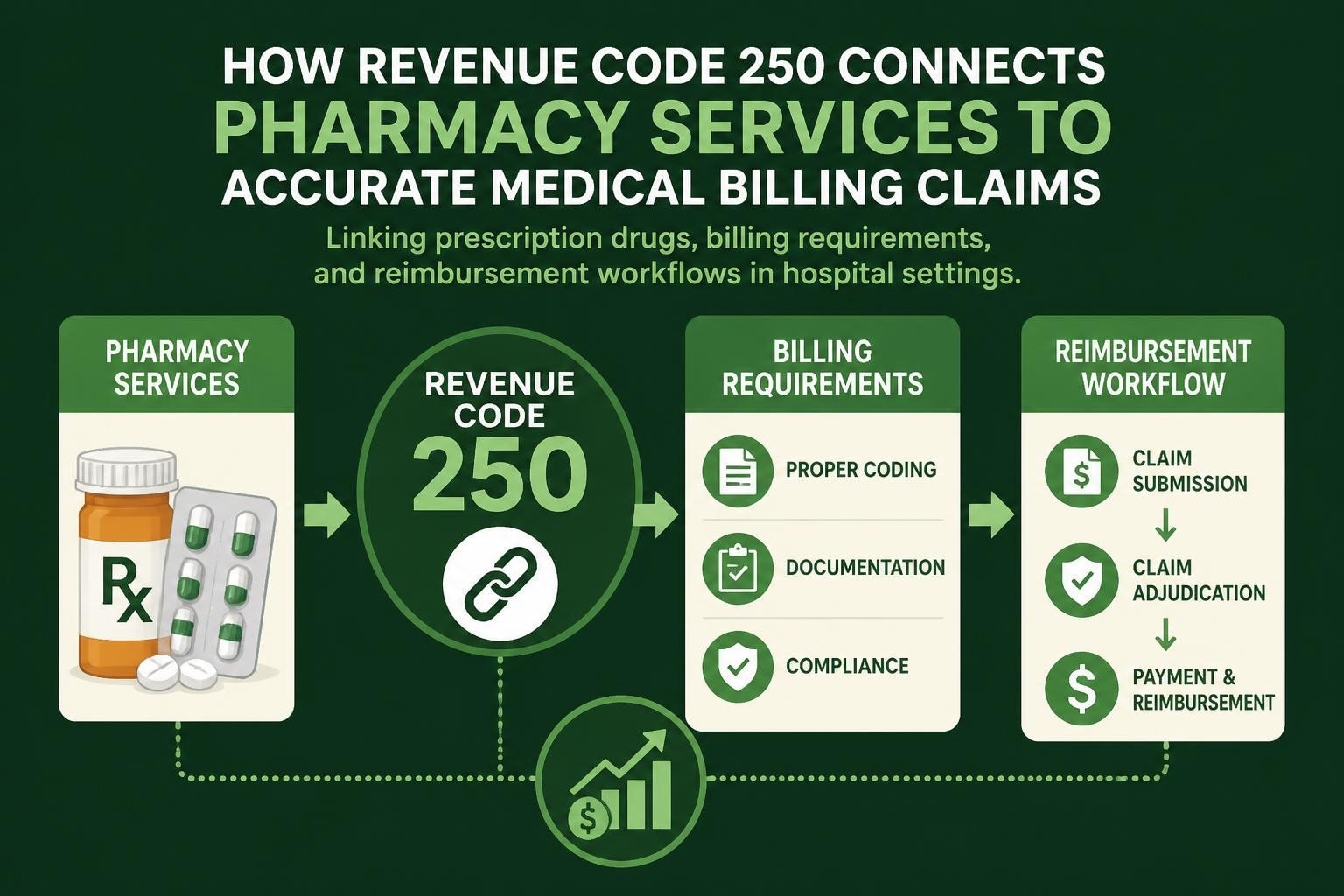
Revenue codes serve as essential classification tools in medical billing, enabling healthcare providers to accurately categorize services and charges on claims. Among these codes, rev code 250 holds particular importance for facilities that dispense prescription drugs. Understanding this code’s proper application ensures compliance, reduces denials, and optimizes reimbursement. For healthcare organizations managing pharmacy services, mastering rev code 250 represents a fundamental component of effective revenue cycle management.
Understanding Rev Code 250 in Healthcare Billing
Rev code 250 specifically designates pharmacy charges in hospital and facility settings. This code appears on UB-04 claim forms to identify prescription drugs dispensed to patients during their care. The classification falls under the broader pharmacy category, which spans several related codes for different pharmaceutical services.
Healthcare facilities use this code when billing for general prescription medications that don’t fit into more specific pharmacy subcategories. According to guidance on revenue codes, these numerical identifiers work alongside procedure codes to create complete billing records. The code itself signals to payers that the charge relates to pharmacy services, establishing the foundation for claim processing.
When to Apply Rev Code 250
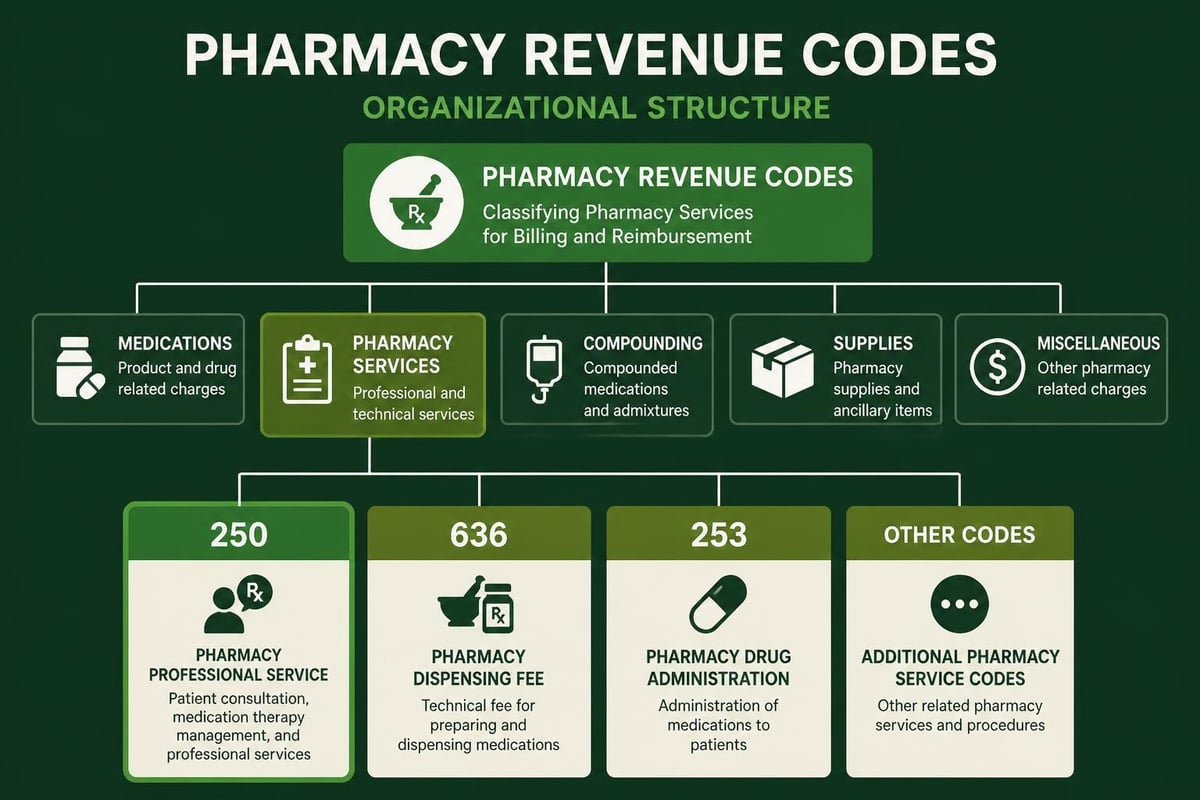
Healthcare billing professionals must distinguish between different pharmacy revenue codes based on the specific service provided. Rev code 250 applies to standard prescription drug charges in facility settings. This differs from other pharmacy codes that designate specialized services like IV solutions, oncology drugs, or experimental medications.
The distinction between revenue code 636 and 250 highlights important nuances in pharmacy billing. While both relate to pharmaceutical services, code 636 specifically identifies pharmacy drugs requiring detailed documentation under certain Medicare requirements. Understanding these differences prevents classification errors that trigger denials.
Billing Requirements and Documentation
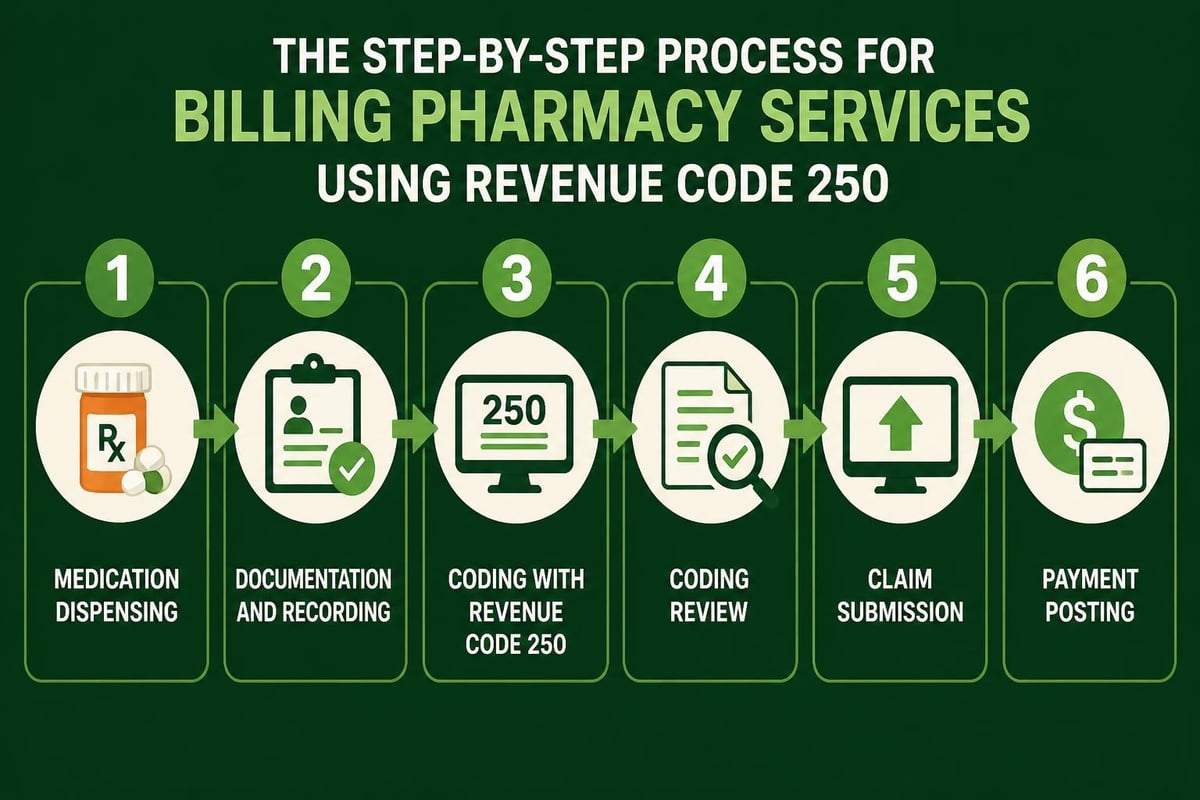
Proper documentation supports every rev code 250 charge submitted on claims. Facilities must maintain detailed records showing the medication name, dosage, quantity, and administration date. These elements create the audit trail necessary for compliance and denial prevention.
Essential documentation components include:
- Complete medication name and strength
- National Drug Code (NDC) when required by payer
- Quantity dispensed with appropriate units
- Date and time of administration
- Ordering provider information
- Medical necessity justification
According to Massachusetts Medicaid guidelines, rev code 250 appears among codes exempt from requiring an additional procedure code under certain circumstances. However, many payers still expect HCPCS codes alongside the revenue code for complete claim processing. Verification of payer-specific requirements prevents unnecessary rejections and delays.
Common Challenges with Rev Code 250
Healthcare organizations frequently encounter specific obstacles when billing with rev code 250. Electronic claim submission presents unique considerations, particularly regarding drug identification repetition. The X12 RFI on revenue code 250 addresses limitations on repeating drug identification information across different transaction set versions.
Denial Patterns and Solutions
Billing professionals report recurring denial patterns associated with pharmacy revenue codes. Discussions among medical billing professionals reveal common issues including missing NDC numbers, incorrect unit measurements, and insufficient medical necessity documentation.
| Denial Reason | Root Cause | Prevention Strategy |
|---|---|---|
| Missing NDC | Incomplete data entry | Implement automated NDC lookup systems |
| Invalid units | Mismatched quantity formats | Standardize unit measurement protocols |
| Medical necessity | Insufficient documentation | Enhance provider documentation training |
| Duplicate charges | System processing errors | Regular claim scrubbing audits |
Effective denial management services address these issues systematically. Organizations benefit from establishing clear workflows that catch errors before claim submission.
Rev Code 250 Versus Related Pharmacy Codes
Healthcare facilities must differentiate between rev code 250 and other pharmacy classifications to ensure accurate billing. The difference between revenue codes 250 and 253 centers on the level of service detail required. Code 253 typically applies to non-prescription or over-the-counter medications, while code 250 designates prescribed pharmaceutical products.
Revenue code selection depends on several factors:
- Drug classification: Prescription versus non-prescription status
- Administration method: Oral, injectable, topical, or other routes
- Service location: Inpatient, outpatient, or emergency department
- Payer requirements: Specific coding guidelines from insurance companies
Organizations leveraging healthcare revenue cycle analytics can identify patterns in code selection accuracy. Data-driven insights reveal where additional training or process improvements yield the greatest impact on clean claim rates.
Integration with Procedure Codes
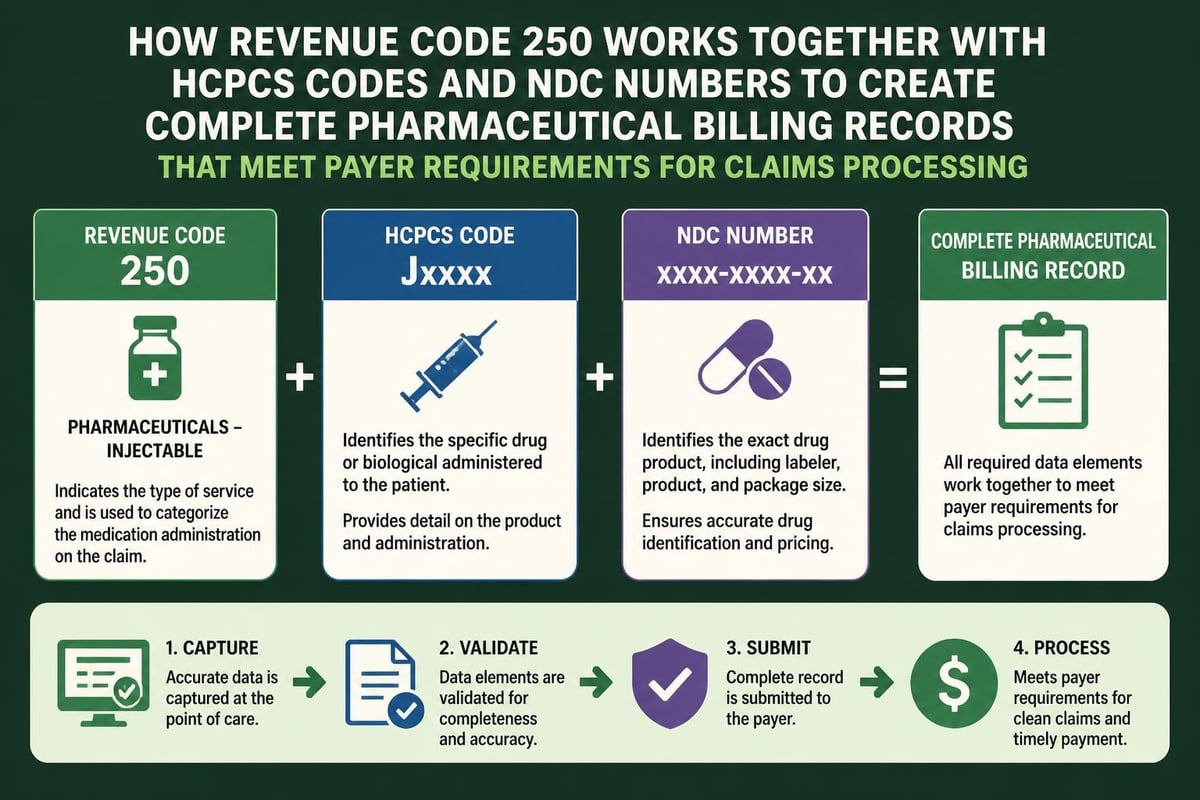
Rev code 250 rarely stands alone on claims. Most payers require corresponding HCPCS or CPT codes that specify the exact medication or service provided. This dual-coding approach creates comprehensive charge descriptions that facilitate accurate adjudication.
The relationship between revenue codes and procedure codes forms the backbone of facility billing. While the revenue code categorizes the general service type, procedure codes identify specific medications through HCPCS J-codes or NDC numbers. Together, these elements paint a complete picture of services rendered.
Understanding what a CPT code for insurance means in healthcare claims helps billing professionals appreciate how these coding systems interact. The combination ensures payers receive sufficient detail to process claims according to contract terms and coverage policies.
Best Practices for Rev Code 250 Implementation
Successful implementation of rev code 250 requires systematic approaches that balance accuracy with efficiency. Healthcare organizations achieve optimal results by establishing clear protocols, investing in staff education, and leveraging technology appropriately.
Implementation steps include:
- Conduct comprehensive staff training on pharmacy revenue code selection criteria and documentation requirements
- Establish charge capture protocols that ensure all dispensed medications generate appropriate billing records
- Implement automated coding tools that suggest appropriate revenue and procedure code combinations
- Create regular audit schedules to review coding accuracy and identify improvement opportunities
- Develop payer-specific guidelines that address unique requirements for major insurance companies
Organizations focusing on medical coding services recognize that pharmacy billing represents just one component of comprehensive revenue cycle management. However, its financial impact justifies dedicated attention and resources.
Regular monitoring of key performance indicators reveals opportunities for enhancement. Clean claim rates, days in accounts receivable, and denial percentages specific to pharmacy charges provide actionable insights. When metrics indicate problems, targeted interventions address root causes rather than symptoms.
Regulatory Compliance Considerations
Healthcare providers must navigate complex regulatory requirements when billing pharmacy services. Rev code 250 usage intersects with numerous compliance obligations, from HIPAA privacy rules to anti-kickback statutes. Organizations must ensure their billing practices meet all applicable standards while maximizing legitimate reimbursement.
Payer contracts often specify particular coding requirements for pharmaceutical services. Some insurers demand detailed documentation beyond standard medical necessity criteria. Others impose quantity limits or require prior authorization for specific medications regardless of medical urgency. Staying current with these evolving requirements prevents compliance violations and payment disruptions.
Professional medical billing services help healthcare organizations maintain compliance while optimizing revenue capture. Specialized expertise in pharmacy billing ensures claims meet technical requirements and reflect current industry standards.
Mastering rev code 250 strengthens pharmacy billing accuracy and supports healthy revenue cycles for healthcare facilities. Proper code selection, thorough documentation, and awareness of payer-specific requirements minimize denials while ensuring compliance. Whether your organization handles pharmacy billing internally or needs expert support, Greenhive Billing Solutions delivers comprehensive revenue cycle management services tailored to healthcare providers across the United States, helping you maximize reimbursements while maintaining operational efficiency.

