
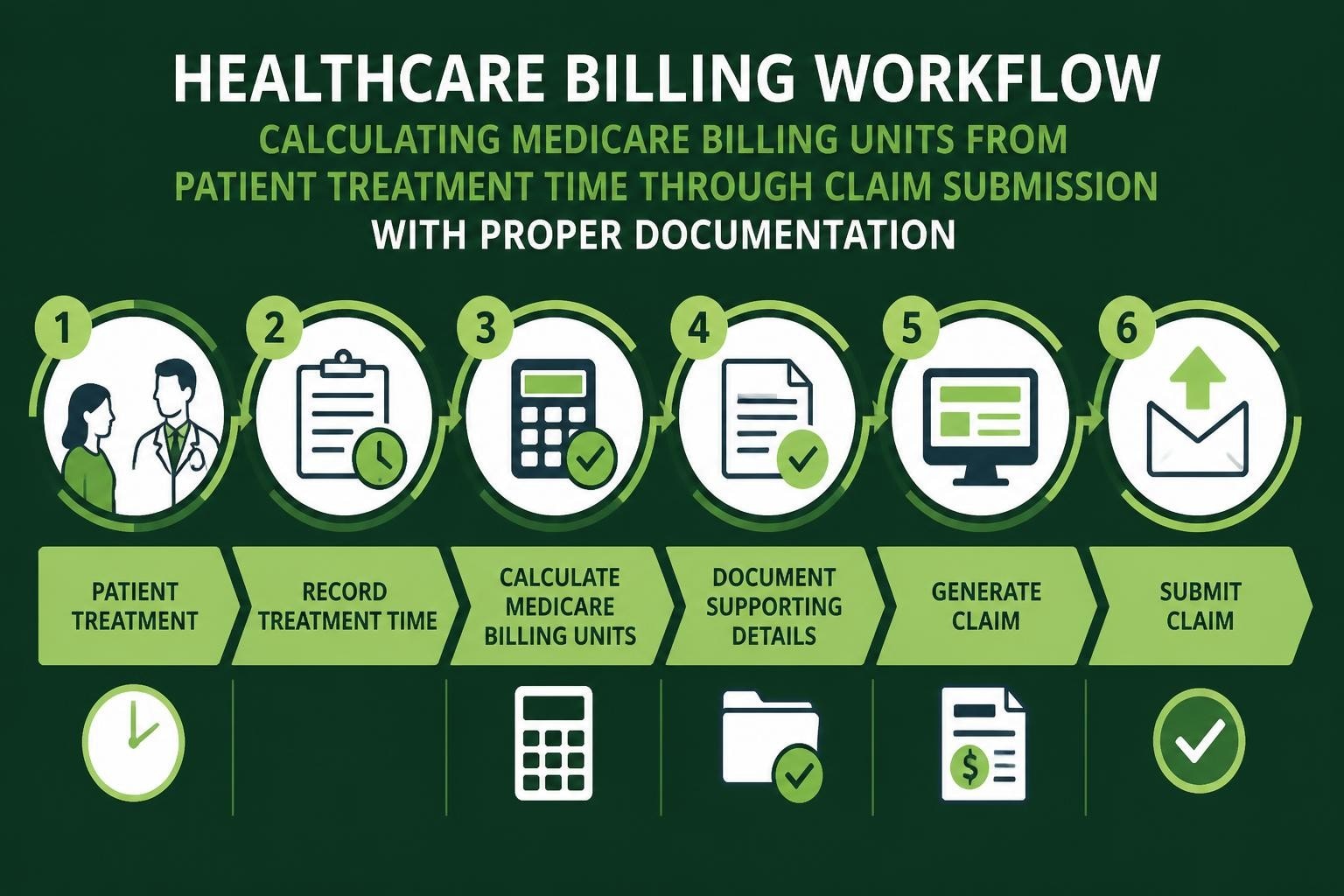
Healthcare providers face numerous challenges when navigating the complexities of medical billing, and understanding medicare billing units ranks among the most critical aspects of ensuring accurate reimbursement. These standardized measurement units determine how much providers receive for services rendered, making precision in calculation essential for maintaining healthy revenue cycles. Whether you’re billing for therapy services, drug administration, or surgical procedures, mastering the nuances of unit calculations protects your practice from compliance issues and revenue loss.
Understanding the Foundation of Medicare Billing Units
Medicare billing units represent standardized measurements that quantify the services healthcare providers deliver to patients. Each service type follows specific counting rules established by the Centers for Medicare & Medicaid Services (CMS) to ensure consistency across claims submissions.
The measurement approach varies significantly based on service category. Time-based services such as physical therapy use minutes as the foundation, while drug administration relies on dosage quantities. Surgical procedures typically count as single units, though certain complex operations may warrant additional units based on documentation.
The Medicare 8-Minute Rule Explained
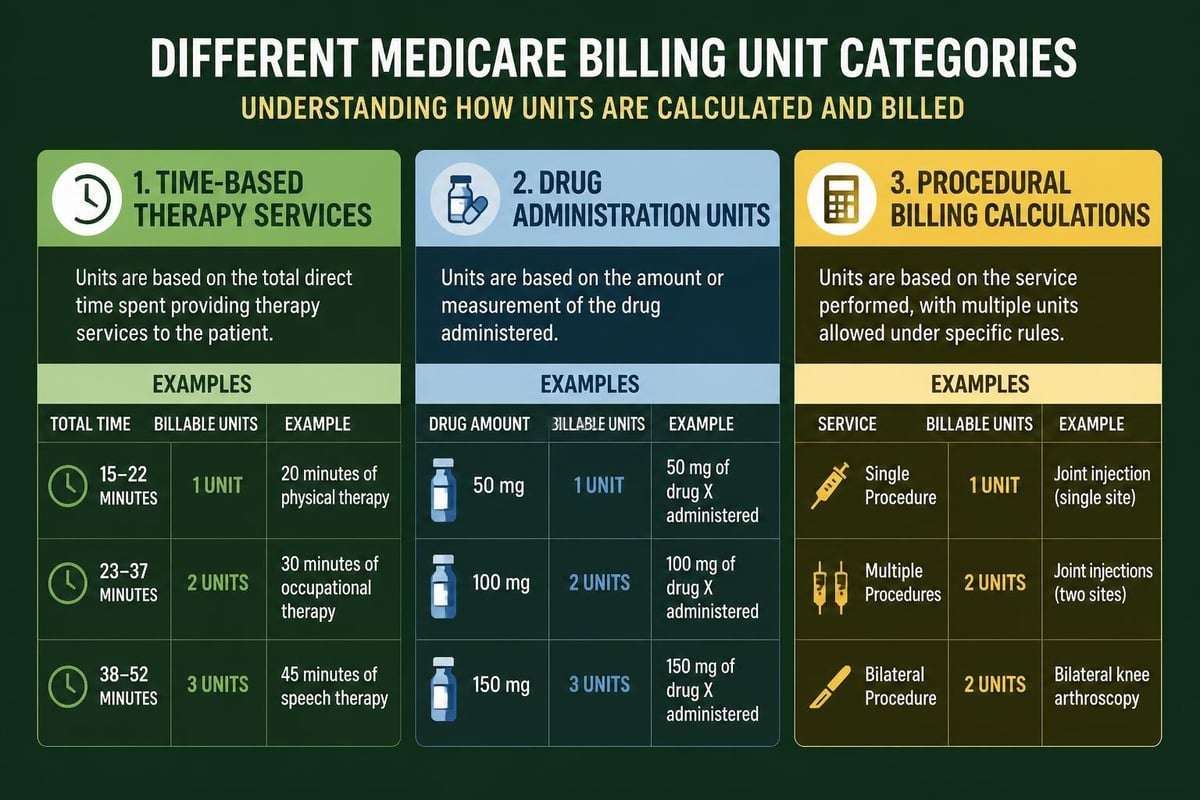
Time-based services follow what’s commonly known as the Medicare 8-minute rule, which establishes precise thresholds for billing units. According to the Medicare 8-minute rule guidelines, providers must deliver at least eight minutes of a timed service to bill one unit.
The calculation follows a specific pattern:
- 8-22 minutes = 1 unit
- 23-37 minutes = 2 units
- 38-52 minutes = 3 units
- 53-67 minutes = 4 units
This pattern continues with each additional 15-minute increment qualifying for another unit. The official CMS regulations provide detailed specifications for various service types to ensure compliant billing practices.
Calculating Units Across Different Service Categories
Different medical specialties require distinct approaches to counting medicare billing units. Understanding these variations prevents costly claim denials and ensures your medical billing services operate at maximum efficiency.
| Service Type | Calculation Method | Example |
|---|---|---|
| Physical Therapy | 8-minute rule | 30 minutes = 2 units |
| Occupational Therapy | 8-minute rule | 45 minutes = 3 units |
| Drug Administration | Dosage-based | 100mg dose = variable units |
| Anesthesia | Time + base units | Procedure specific |
Therapy Services and Timed Codes
First Coast Service Options provides comprehensive guidance on distinguishing between timed and untimed therapy codes. Timed codes require documentation showing the exact minutes spent on each service component, while untimed codes bill as single units regardless of duration.
Timed CPT codes commonly include:
- Therapeutic exercises
- Manual therapy techniques
- Neuromuscular reeducation
- Gait training procedures
Untimed codes typically cover:
- Initial evaluations
- Re-evaluations
- Group therapy sessions
Accurate medical coding services professionals understand that mixing timed and untimed codes on a single claim requires careful attention to prevent bundling errors.
Multiple Units with Identical HCPCS Codes
Certain clinical scenarios require billing multiple units of the same Healthcare Common Procedure Coding System (HCPCS) code on a single date of service. Noridian Medicare provides specific instructions for these situations, emphasizing proper documentation to support the medical necessity of repeated services.
Common scenarios include:
- Bilateral procedures performed on both sides of the body
- Multiple lesion removals during a single session
- Repeat injections at different anatomical sites
- Sequential therapy sessions throughout one day
Documentation Requirements and Compliance Considerations
Proper documentation serves as the cornerstone of defensible medicare billing units claims. Each service must include supporting evidence demonstrating the time spent, specific techniques used, and clinical rationale for the intervention.
Essential Documentation Elements
Your clinical records must contain specific information to support billed units. Missing any of these elements increases denial risk and may trigger denial management services interventions.
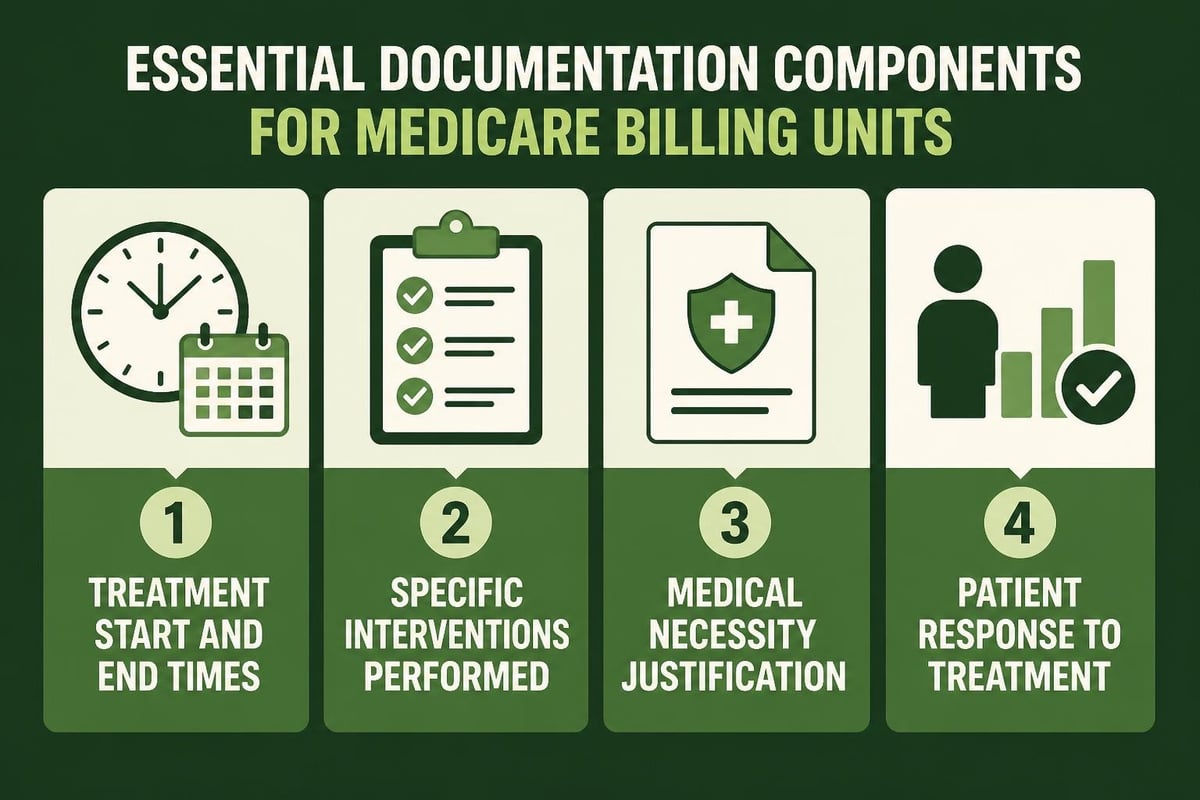
Required documentation includes:
- Treatment start and stop times for each service
- Detailed description of techniques and modalities
- Patient response and progress toward goals
- Medical necessity justification
- Modifier usage when appropriate
The comprehensive guide to medical billing units counting rules emphasizes that vague or incomplete documentation frequently leads to claim rejections, even when services were appropriately delivered.
Common Billing Unit Calculation Errors
Healthcare practices frequently encounter specific pitfalls when calculating medicare billing units. Recognizing these common mistakes helps your team maintain compliance and optimize revenue cycle management performance.
Rounding Mistakes and Time Threshold Errors
Many providers incorrectly round treatment times instead of following the precise 8-minute rule thresholds. A 37-minute session qualifies for only two units, not three, despite being close to the 38-minute threshold for the third unit.
| Minutes Provided | Incorrect Billing | Correct Billing |
|---|---|---|
| 22 minutes | 2 units | 1 unit |
| 37 minutes | 3 units | 2 units |
| 52 minutes | 4 units | 3 units |
Mixed Service Time Allocation
When providers deliver multiple timed services during one session, they must allocate minutes appropriately to each CPT code. The occupational therapy billing units guide explains that total treatment time must equal the sum of individual service times without overlap.
For example, a 60-minute session might include:
- 25 minutes therapeutic exercises (2 units)
- 20 minutes manual therapy (1 unit)
- 15 minutes neuromuscular reeducation (1 unit)
Total: 60 minutes = 4 billable units
Tools and Resources for Accurate Unit Calculation
Professional billing teams leverage various resources to ensure accuracy when determining medicare billing units. Healthcare revenue cycle analytics platforms often integrate calculation tools that automatically apply the appropriate rules based on service type and duration.
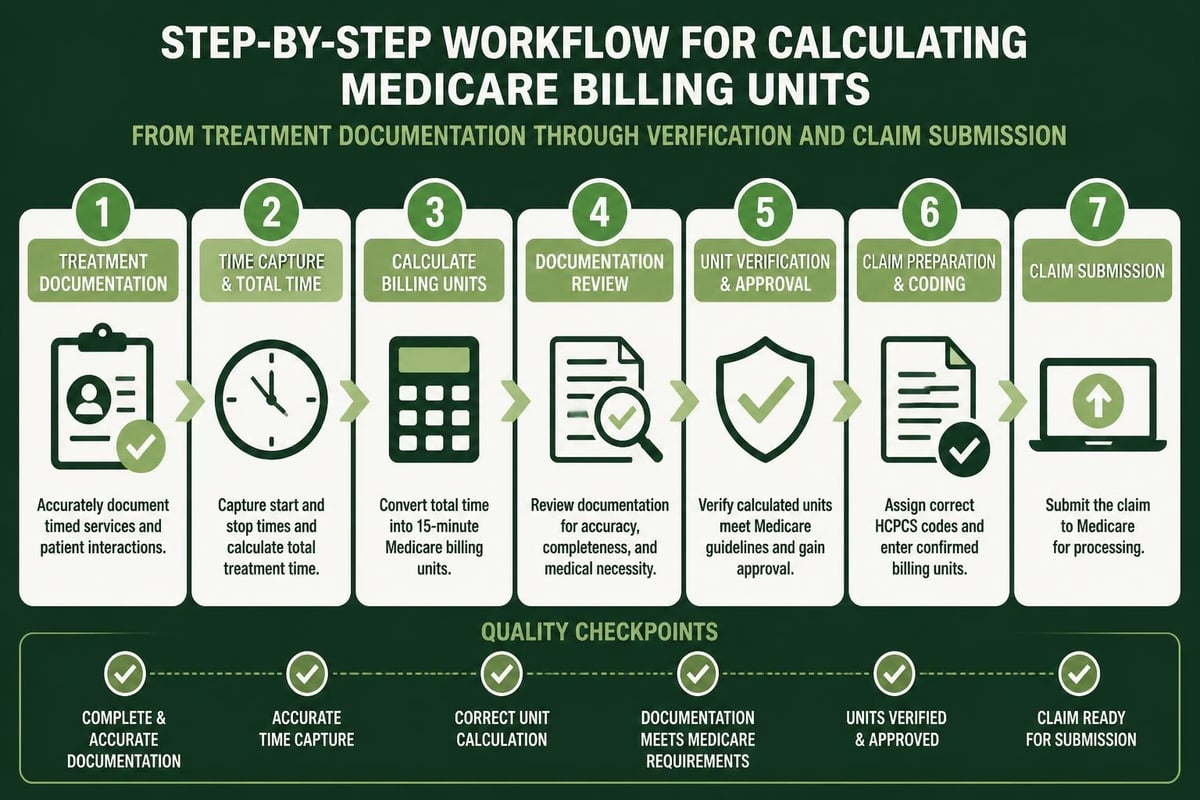
The billing units calculator provides an online tool that helps estimate units from total minutes using various calculation methods. While helpful for quick reference, your medical claim submission services team should verify all calculations against current CMS guidelines before submitting claims.
CMS Form Requirements
The CMS-1450 form requires specific formatting when reporting service units. According to CMS educational resources, providers must enter numeric measures of services rendered by revenue category or HCPCS code in designated fields. Understanding these technical requirements prevents processing delays.
Best Practices for Medicare Billing Units Management
Implementing systematic approaches to unit calculation reduces errors and streamlines your billing workflow. Professional eligibility verification services represent just the first step in a comprehensive billing process.
Five critical practices include:
- Standardize time tracking across all clinicians
- Implement real-time documentation rather than retrospective recording
- Conduct regular internal audits of unit calculations
- Provide ongoing staff education on rule updates
- Utilize technology solutions that flag potential errors
Your practice should establish clear protocols for handling edge cases, such as treatments that span exactly 22 or 37 minutes. Medical coding audit services can identify patterns of miscalculation before they become compliance issues.
Staying Current with Regulatory Changes
Medicare regulations evolve regularly, requiring billing professionals to maintain awareness of updates affecting unit calculations. The detailed guidance on counting therapy units emphasizes that rule interpretations may shift based on coverage determinations and local contractor policies.
Partnering with experienced billing professionals ensures your practice remains compliant while maximizing legitimate reimbursement opportunities. Regular training sessions and policy reviews keep your team aligned with current standards.
Mastering medicare billing units requires attention to detail, comprehensive documentation, and ongoing education about regulatory requirements. By implementing systematic calculation methods and maintaining rigorous quality controls, healthcare providers can minimize denials and optimize revenue capture. Greenhive Billing Solutions specializes in managing these complexities for healthcare providers nationwide, offering expert medical billing services that ensure accurate unit calculations, compliant documentation, and maximum reimbursements. Our experienced team stays current with all Medicare regulations and can help your practice streamline billing operations while you focus on delivering exceptional patient care.

