
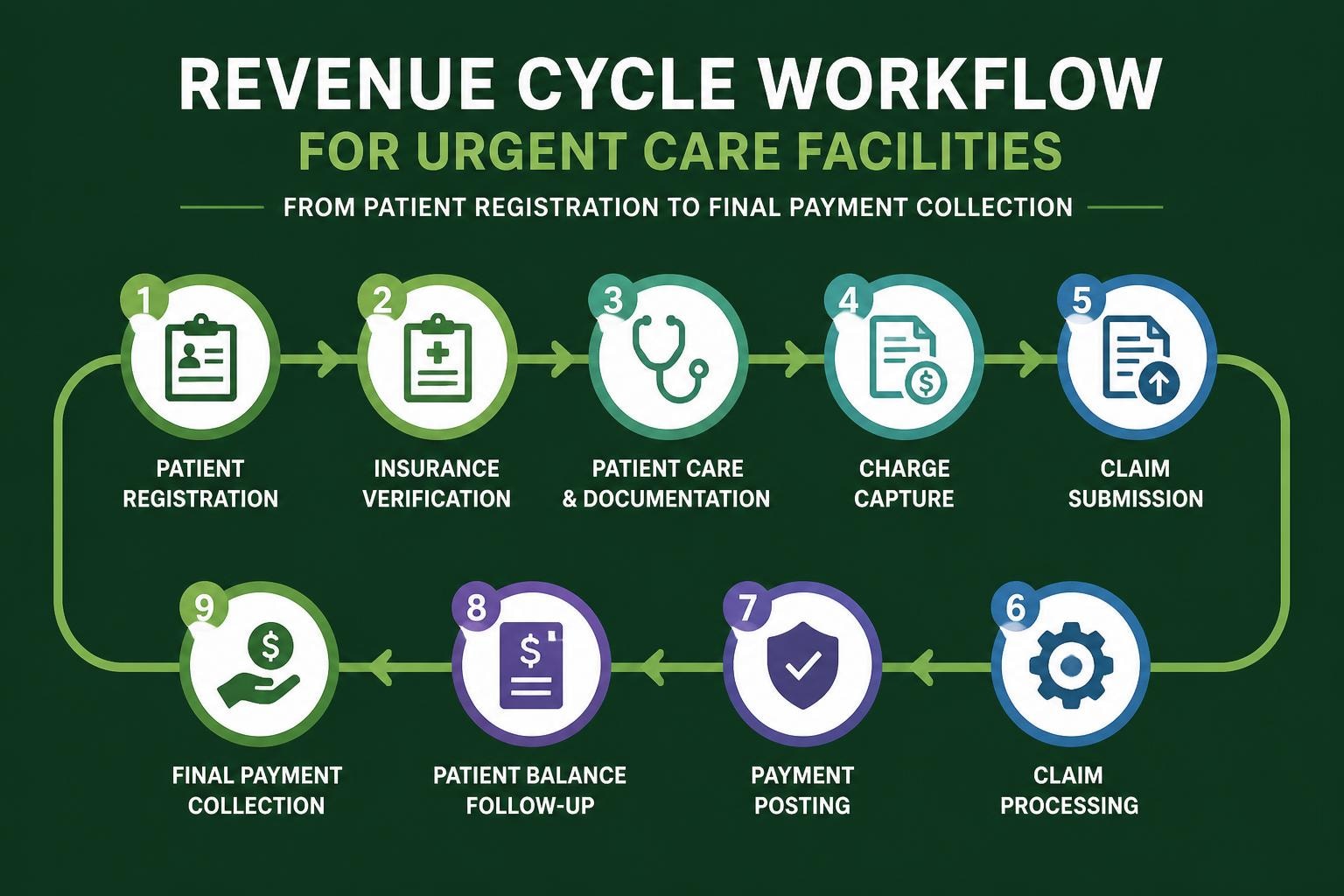
Urgent care facilities operate in a uniquely challenging environment where unpredictable patient volumes, diverse payer contracts, and fast-paced clinical operations intersect with complex billing requirements. Managing the revenue cycle in this setting demands specialized knowledge and streamlined processes that traditional healthcare billing approaches often fail to address. Healthcare providers who implement robust urgent care revenue cycle mgmt strategies position their practices for stronger financial performance, reduced claim denials, and sustainable growth in an increasingly competitive marketplace.
Understanding the Unique Challenges of Urgent Care Revenue Cycle Management
Urgent care centers face distinct operational pressures that directly impact their financial performance. Unlike scheduled appointments in primary care or specialty practices, urgent care patient encounters happen without advance notice, creating significant variability in daily volume and making revenue forecasting particularly challenging.
The diversity of insurance coverage among walk-in patients compounds these difficulties. Staff must verify eligibility and benefits in real-time while managing patient wait times, often resulting in incomplete verification that leads to downstream billing issues. According to revenue cycle management challenges in healthcare, payer complexity and prior authorization delays rank among the most persistent obstacles facing urgent care facilities.
Front-End Process Vulnerabilities
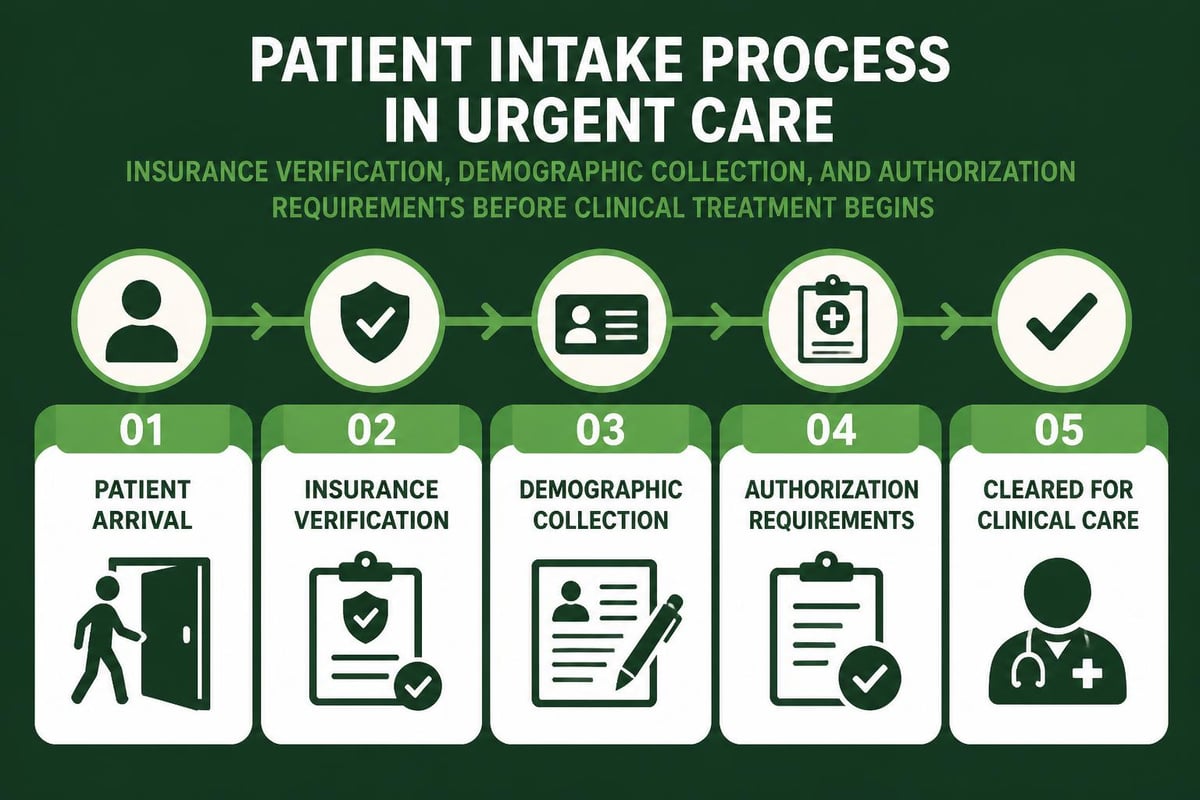
Registration errors represent one of the most significant threats to clean claims in urgent care settings. When front desk staff collect patient information under time pressure, mistakes in demographic data, insurance information, or referral documentation become more frequent.
Common front-end challenges include:
- Incomplete patient demographic information
- Incorrect insurance policy or group numbers
- Missing or invalid referral authorizations
- Inadequate documentation of medical necessity
- Failure to collect appropriate copayments or deductibles
These errors cascade through the revenue cycle, resulting in claim denials, payment delays, and increased administrative burden. The comprehensive guide to urgent care RCM emphasizes that addressing front-end inefficiencies delivers the highest return on investment for revenue cycle improvements.
Key Components of Effective Urgent Care Revenue Cycle Mgmt
Successful urgent care revenue cycle mgmt requires coordination across multiple operational areas, each contributing to the overall financial health of the practice. Understanding how these components interconnect helps healthcare administrators identify improvement opportunities and allocate resources effectively.
Insurance Eligibility Verification
Real-time eligibility verification services form the foundation of effective revenue cycle management. Automated verification systems allow staff to confirm coverage, identify patient responsibility, and detect authorization requirements before services are rendered.
| Verification Element | Impact on Revenue Cycle | Best Practice |
|---|---|---|
| Coverage Status | Prevents treating uninsured patients without advance notification | Verify every patient, every visit |
| Benefits Information | Identifies copay, deductible, and coinsurance amounts | Display financial responsibility upfront |
| Authorization Requirements | Prevents denials for services requiring prior approval | Flag required authorizations in real-time |
| Effective Dates | Avoids claims for services outside coverage periods | Cross-reference visit date with coverage |
Implementing robust verification processes reduces claim denials by 30-40% according to industry benchmarks, significantly accelerating cash flow and reducing administrative rework.
Accurate Medical Coding and Documentation
Urgent care encounters often involve multiple conditions and procedures performed during a single visit, creating complexity in coding and documentation. Professional medical coding services ensure that all billable services are captured accurately while maintaining compliance with payer requirements.
Coders must understand the nuances of evaluation and management (E/M) coding in urgent care settings, including:
Time-based coding for extended visits requiring significant clinical decision-making
Modifier usage to indicate procedures performed on the same day as an E/M service
Diagnosis code specificity to demonstrate medical necessity
Procedure bundling rules to avoid unbundling violations
The transition to ICD-10-CM coding increased specificity requirements, making professional coding expertise even more critical. Investment in experienced coders or outsourced coding services typically generates returns of 3-5 times the cost through improved reimbursement and reduced denials.
Technology Integration in Urgent Care Revenue Cycle Mgmt
Modern urgent care revenue cycle mgmt increasingly relies on technology solutions to automate workflows, reduce errors, and accelerate payment cycles. The integration of artificial intelligence and machine learning into revenue cycle operations represents a significant advancement in addressing long-standing challenges.
According to recent analysis of AI in urgent care revenue cycles, facilities implementing AI-driven RCM strategies report substantial improvements in clean claim rates and days in accounts receivable. These technologies excel at identifying patterns in denial data, predicting claim outcomes, and flagging potential issues before claims submission.
Automation Opportunities
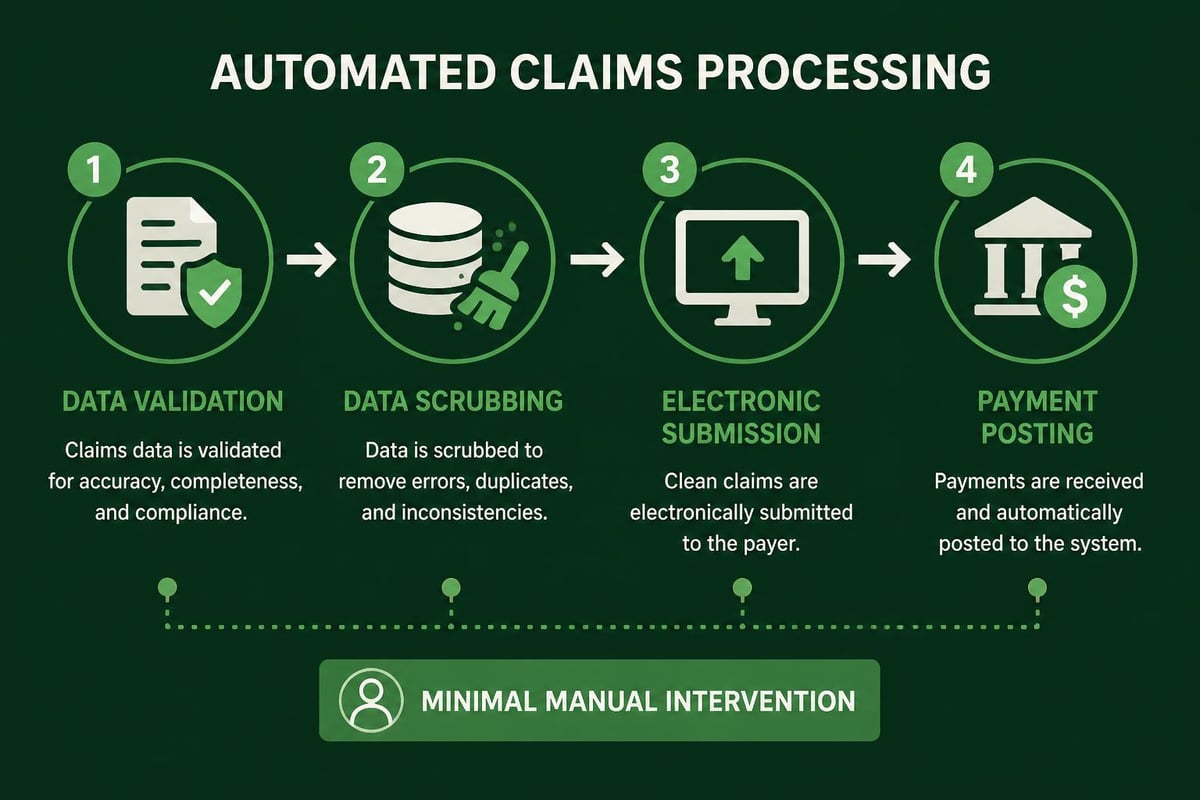
The repetitive nature of many revenue cycle tasks makes them ideal candidates for automation. Strategic deployment of technology solutions frees staff to focus on complex cases requiring human judgment and intervention.
- Automated eligibility checking that runs when patients schedule appointments or check in
- Claim scrubbing software that identifies errors before submission to payers
- Electronic remittance advice (ERA) posting that updates patient accounts automatically
- Patient statement generation based on predefined rules and payment schedules
- Denial tracking dashboards providing real-time visibility into rejection patterns
Practices implementing comprehensive automation strategies typically achieve 20-30% reductions in revenue cycle costs while simultaneously improving collection rates and accelerating payment timelines.
Data Analytics and Performance Monitoring
Effective urgent care revenue cycle mgmt depends on continuous monitoring and analysis of key performance indicators (KPIs). Data-driven decision-making enables practices to identify trends, benchmark against industry standards, and target improvement initiatives where they will generate the greatest impact.
| Key Performance Indicator | Industry Benchmark | Revenue Impact |
|---|---|---|
| Clean Claim Rate | 85-90% | Higher rates reduce rework costs |
| Days in A/R | 30-35 days | Lower values improve cash flow |
| First-Pass Resolution Rate | 75-80% | Reduces appeal and resubmission expenses |
| Collection Rate | 95-98% | Directly impacts bottom-line revenue |
| Denial Rate | 5-10% | Lower rates indicate process effectiveness |
Regular review of these metrics allows practice administrators to detect deteriorating performance before it significantly impacts financial results. The RCM process overview provides additional context on establishing effective monitoring systems.
Addressing High-Impact Denial Scenarios
Claim denials represent one of the most costly aspects of urgent care revenue cycle mgmt, consuming substantial administrative resources while delaying payment and potentially resulting in complete write-offs. Understanding common denial reasons and implementing preventive measures dramatically improves financial performance.
Research examining revenue cycle challenges specific to urgent care identifies high denial rates as a primary obstacle to financial stability. Staffing shortages and training gaps frequently contribute to preventable errors that trigger denials.
Common Denial Categories and Solutions
Registration and Eligibility Denials
These occur when patient demographic information, insurance details, or coverage status contains errors or inconsistencies. Solutions include implementing point-of-service verification technology, training staff on data collection best practices, and conducting regular audits of registration accuracy.
Authorization and Referral Denials
Many payers require prior authorization or referrals for specific urgent care services. Establishing protocols to identify authorization requirements during the eligibility verification process prevents these denials. Staff should document all authorization numbers and maintain copies of approval documentation.
Coding and Documentation Denials
Insufficient documentation to support the level of service billed, incorrect code selections, or missing modifier usage trigger these denials. Regular coding audits, ongoing staff education, and clear documentation guidelines help maintain compliance and reduce errors.
Specialized denial management services provide systematic approaches to analyzing denial patterns, implementing corrective actions, and appealing inappropriate denials to maximize recovered revenue.
Optimizing Patient Financial Engagement
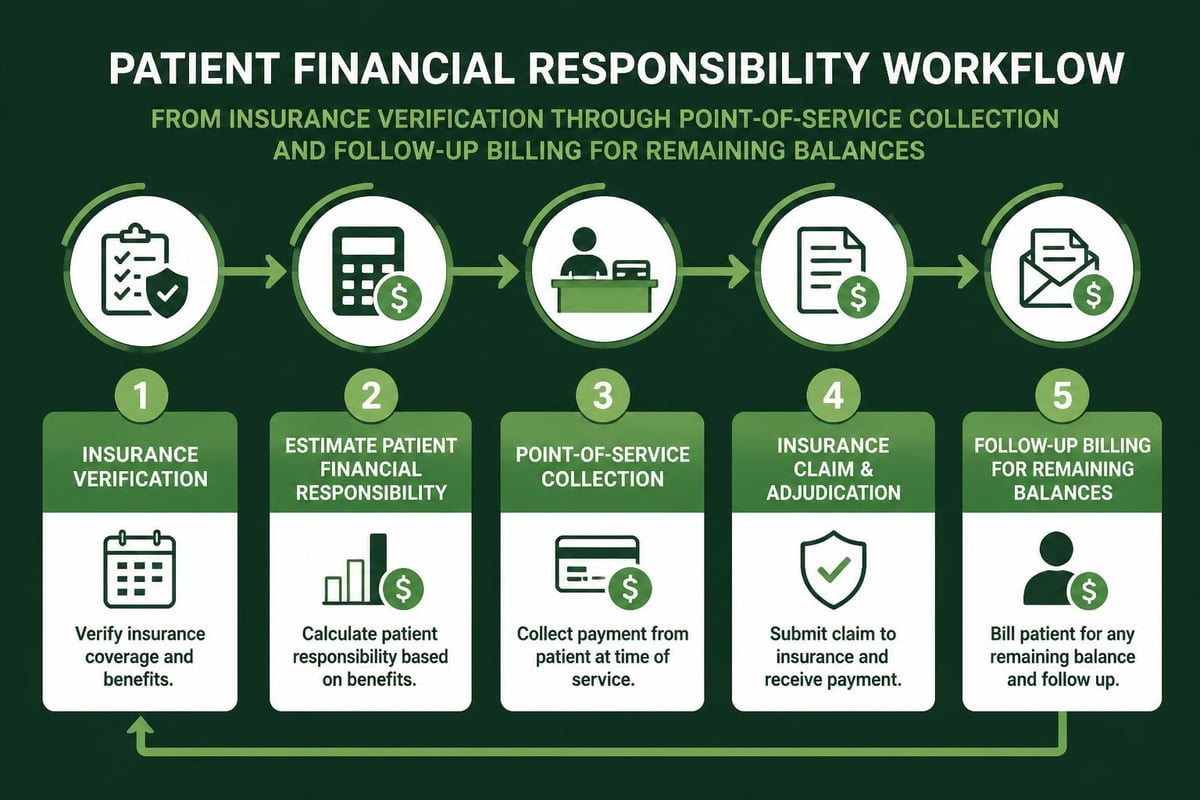
The shift toward high-deductible health plans has dramatically increased patient financial responsibility, making collection of patient-owed balances a critical component of urgent care revenue cycle mgmt. Traditional approaches that relied primarily on post-service billing prove ineffective when patients owe significant portions of their care costs.
Point-of-Service Collections
Collecting patient responsibility at the time of service generates the highest collection rates and lowest administrative costs. Staff trained to discuss financial obligations professionally while maintaining focus on patient care create positive experiences that support both clinical and financial outcomes.
Effective point-of-service collection strategies:
- Display estimated patient responsibility before services are rendered
- Offer multiple payment options including credit cards, payment plans, and financing
- Train staff to have clear, empathetic conversations about costs
- Implement price transparency tools that provide accurate estimates
- Accept partial payments when patients cannot pay full amounts immediately
Practices that collect at least 50% of patient responsibility at the time of service typically achieve overall collection rates 15-20 percentage points higher than those relying primarily on post-service billing.
Patient Communication and Statements
Clear, timely communication about financial obligations improves collection rates while supporting patient satisfaction. Automated statement generation systems send bills at optimal intervals while maintaining consistent messaging across all patient touchpoints.
Digital payment portals that allow patients to view balances, make payments, and set up payment plans on their own schedules demonstrate higher engagement rates than traditional paper statements alone. Mobile-responsive designs ensure accessibility across all devices, meeting patients where they prefer to conduct financial transactions.
Strategic Payer Contract Management
The diversity of payer contracts in urgent care settings creates complexity in revenue cycle management that practices must navigate strategically. Understanding contract terms, negotiating favorable rates, and ensuring accurate reimbursement according to contractual agreements directly impacts profitability.
Contract analysis should evaluate multiple dimensions beyond simple reimbursement rates. Payment timelines, claim submission requirements, appeal processes, and fee schedule updates all influence the total value of payer relationships.
Contract Evaluation Framework
Regular assessment of payer contracts identifies opportunities for renegotiation and informs decisions about which insurance plans to accept. Practices should evaluate:
- Reimbursement adequacy compared to cost of service delivery
- Payment velocity measuring time from claim submission to payment
- Denial rates indicating administrative burden and friction
- Credentialing requirements and their associated costs
- Patient volume from each payer to assess relationship value
Armed with comprehensive contract performance data, practice administrators negotiate from positions of strength, securing terms that support financial sustainability while maintaining access for patients.
Staffing and Training Considerations
Human capital represents both the greatest asset and most significant challenge in urgent care revenue cycle mgmt. Staff turnover, training gaps, and burnout create operational vulnerabilities that undermine even the most sophisticated technology implementations.
Building a high-performing revenue cycle team requires investment in recruitment, onboarding, ongoing education, and retention strategies. Cross-training staff across multiple revenue cycle functions creates operational flexibility while providing career development opportunities that improve retention.
Outsourcing Versus In-House Management
Many urgent care facilities face decisions about whether to manage revenue cycle operations internally or partner with specialized service providers. Each approach offers distinct advantages depending on practice size, complexity, and strategic priorities.
In-house management benefits:
- Direct control over processes and staff
- Immediate access to billing personnel for questions
- Customization of workflows to practice preferences
- Retention of institutional knowledge within the organization
Outsourced services advantages:
- Access to specialized expertise and technology
- Scalability to handle volume fluctuations
- Reduced overhead and fixed costs
- Performance guarantees and service level agreements
Practices evaluating this decision should consider total cost of ownership, including technology investments, staff salaries and benefits, training expenses, and opportunity costs of management attention. Medical billing services designed for small practices often provide cost-effective alternatives to building internal capabilities from scratch.
Compliance and Regulatory Requirements
Urgent care revenue cycle mgmt operates within a complex regulatory environment that demands constant vigilance and adaptation. HIPAA privacy and security requirements, fraud and abuse regulations, and payer-specific policies create compliance obligations that practices must integrate into daily operations.
Regular compliance audits identify potential vulnerabilities before they result in penalties, sanctions, or legal exposure. Documentation reviews, coding audits, and process assessments should occur on defined schedules with clear remediation protocols for identified issues.
HIPAA Compliance in Revenue Cycle Operations
Protected health information (PHI) flows through every stage of the revenue cycle, from patient registration through final payment posting. Robust security controls, staff training, and business associate agreements with vendors protect patient privacy while ensuring operational effectiveness.
Access controls limiting staff to information necessary for their specific job functions reduce exposure risk. Audit logs tracking all access to patient financial information enable detection of unauthorized activity and support investigation of potential breaches.
Encryption of data in transit and at rest provides technical safeguards against unauthorized disclosure. Regular security assessments identify emerging threats and validate the effectiveness of existing controls.
Performance Optimization Through Continuous Improvement
Sustainable excellence in urgent care revenue cycle mgmt requires commitment to ongoing evaluation and refinement of processes, technologies, and personnel capabilities. Organizations that embrace continuous improvement methodologies consistently outperform competitors operating with static approaches.
Establishing baseline performance metrics creates the foundation for measuring improvement initiatives. Regular team meetings focused on revenue cycle performance foster accountability while generating insights from frontline staff who interact with processes daily.
Continuous improvement cycle:
- Measure current performance across key metrics
- Identify improvement opportunities through data analysis and staff input
- Implement targeted interventions addressing root causes
- Monitor results to validate effectiveness
- Standardize successful changes and repeat the cycle
Quality improvement frameworks such as Plan-Do-Study-Act (PDSA) cycles provide structured approaches to testing changes on small scales before full implementation, reducing risk while accelerating learning.
Strategic partnerships with specialized revenue cycle management providers offer access to best practices, industry benchmarking data, and expert guidance that internal teams may lack. Evaluating potential partners based on their experience with urgent care-specific challenges, technology capabilities, and performance track records ensures alignment with practice needs and objectives.
Mastering urgent care revenue cycle mgmt requires coordinated attention to front-end processes, coding accuracy, technology deployment, denial management, and patient engagement strategies that work together to optimize financial performance. The complexity of urgent care operations demands specialized expertise and proven methodologies that many practices struggle to develop and maintain internally. Greenhive Billing Solutions delivers comprehensive revenue cycle management services specifically tailored to healthcare providers’ unique needs, combining experienced professionals with industry-standard technology platforms to improve collection rates, reduce denials, and accelerate reimbursements. Contact our team to discover how our HIPAA-compliant solutions can enhance your practice’s financial stability while allowing you to focus on delivering exceptional patient care.

