
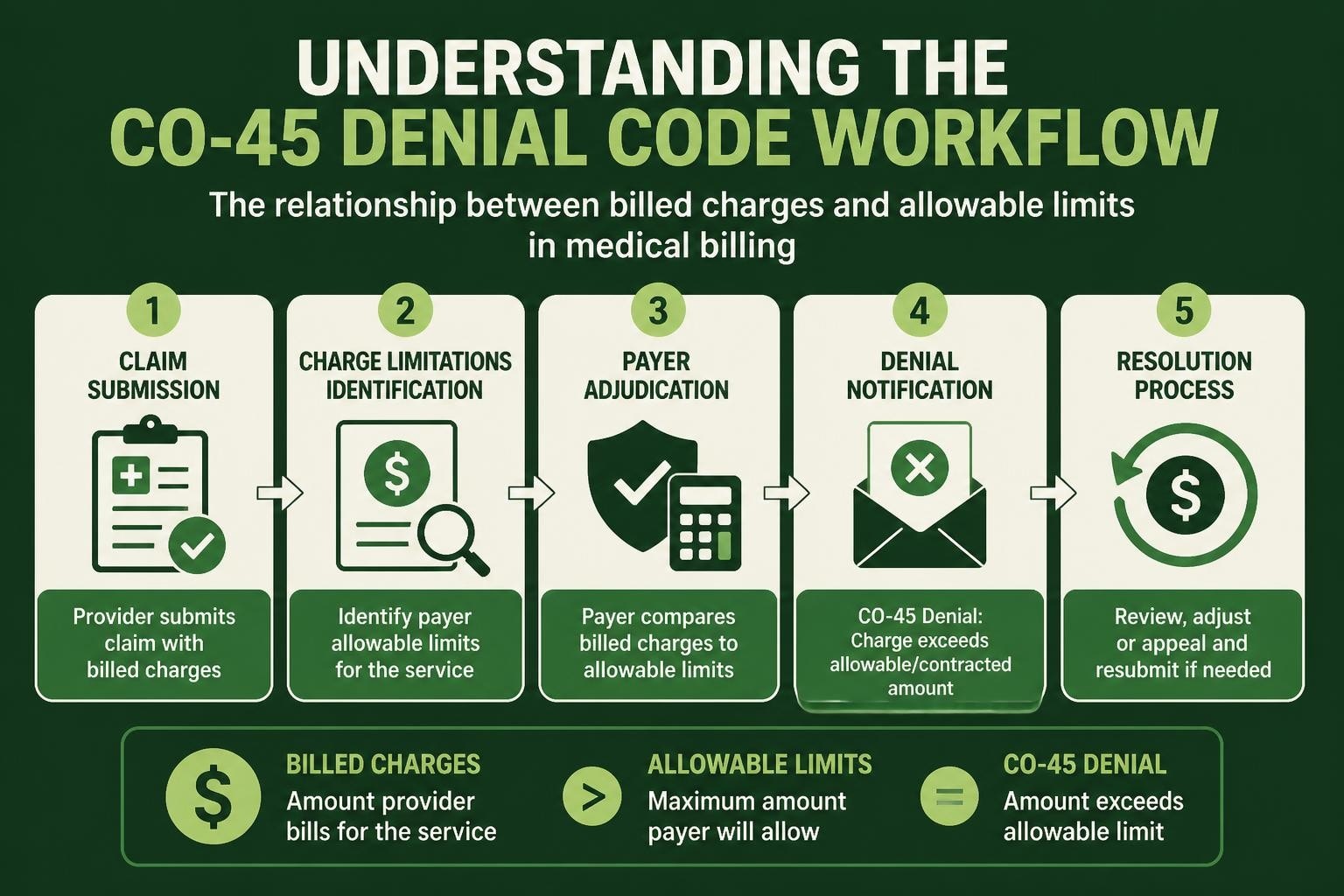
Understanding denial codes is fundamental to maintaining healthy revenue cycles in healthcare organizations. Among the many denial codes that billing professionals encounter, CO-45 stands out as one of the most common yet frequently misunderstood. This denial directly impacts reimbursement when charges exceed contractual fee schedules or payer-determined limits. For healthcare providers working to optimize their financial performance, mastering the co-45 denial code description becomes essential for reducing payment delays and improving cash flow.
What the CO-45 Denial Code Means
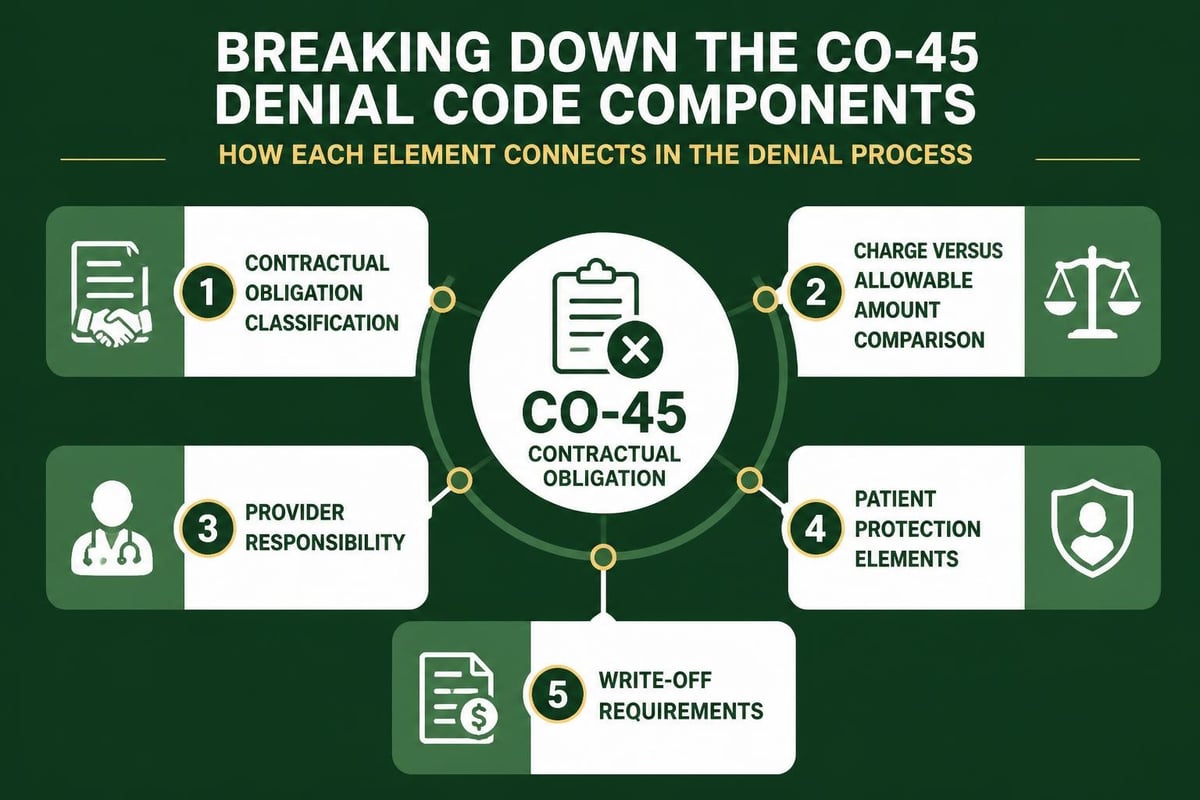
The co-45 denial code description officially states: “Charge exceeds fee schedule/maximum allowable or contracted/legislated fee arrangement.” This denial occurs when a healthcare provider bills an amount that surpasses what the insurance payer has agreed to reimburse for a specific service or procedure. The official CO-45 denial code documentation classifies this as a Contractual Obligation (CO) adjustment, meaning the provider cannot bill the patient for the difference.
When you receive a CO-45 denial, the payer is essentially communicating that your submitted charge violates their predetermined payment structure. The denied amount represents the difference between what you billed and what the payer considers appropriate based on their fee schedule.
Financial Responsibility Under CO-45
Key characteristics of CO-45 denials include:
- The provider absorbs the adjusted amount as a contractual write-off
- Patients bear no financial responsibility for the excess charges
- The denial applies to the portion exceeding the allowable amount, not the entire claim
- Proper revenue cycle billing practices require accurate documentation of these adjustments
Understanding how denial management in medical billing affects overall practice revenue helps contextualize why CO-45 denials matter beyond individual claims.
Common Causes Behind CO-45 Denials
Healthcare providers encounter CO-45 denials for several distinct reasons. Identifying the root cause helps implement targeted solutions that prevent future occurrences.
| Cause | Description | Impact Level |
|---|---|---|
| Outdated Fee Schedules | Using expired or incorrect fee schedules when billing | High |
| Credentialing Issues | Billing under non-contracted provider NPIs | Critical |
| Incorrect CPT Codes | Using codes with different reimbursement rates | Moderate |
| System Configuration Errors | Billing software populated with wrong fee amounts | High |
| Contract Misunderstanding | Lack of clarity about negotiated rates | Moderate |
Many practices struggle with CO-45 denials because they fail to maintain updated payer contracts in their billing systems. According to comprehensive denial code resources, contractual discrepancies account for approximately 60% of CO-45 occurrences.
System-Level Contributing Factors
Beyond individual claim issues, systemic problems often perpetuate CO-45 denials. When medical billing software for small practices isn’t properly configured with current fee schedules, every claim becomes vulnerable to this denial. Similarly, practices without robust processes for tracking contract updates inevitably face increased CO-45 adjustments.
The complexity increases when providers participate in multiple payer networks, each with distinct fee arrangements. Without centralized contract management, billing staff may inadvertently apply incorrect rates across different payers.
Resolution Strategies for CO-45 Denials
Addressing existing CO-45 denials requires a methodical approach that examines both the specific claim and your broader billing practices.
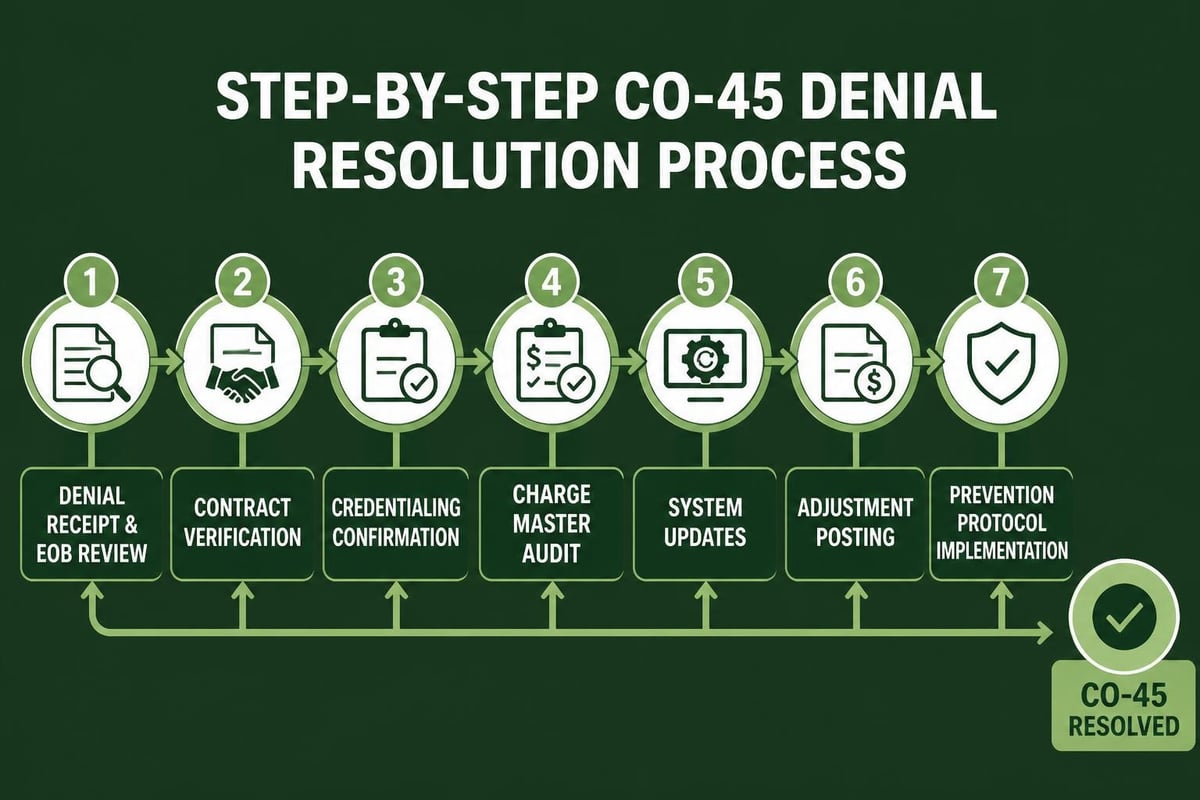
Step 1: Verify the Denial Validity
Review the Explanation of Benefits (EOB) to confirm the payer’s allowable amount matches your contract. Request detailed fee schedules if discrepancies appear between your records and the payer’s applied rates.
Step 2: Confirm Provider Credentialing Status
Check that services were billed under the correct provider NPI and that all credentialing remains current. As explained in detailed CO-45 denial code guides, credentialing lapses frequently trigger these denials.
Step 3: Audit Your Charge Master
Compare your billed amounts against contracted rates for the specific CPT code and payer combination. Update your charge master or billing system to reflect accurate allowable amounts.
Step 4: Document the Adjustment
Record the CO-45 adjustment as a contractual write-off in your accounting system. Ensure your healthcare revenue cycle analytics properly categorize these adjustments for reporting purposes.
Step 5: Implement Preventive Controls
Establish quarterly reviews of payer contracts and fee schedules. Build validation rules into your billing workflow that flag charges exceeding contracted amounts before claim submission.
Prevention Best Practices
Preventing CO-45 denials delivers greater value than resolving them after occurrence. Forward-thinking practices implement multiple layers of protection against these contractual adjustments.
Contract Management Excellence
Maintain a centralized repository of all payer contracts with clear notation of effective dates, fee schedules, and amendment history. Assign specific team members responsibility for monitoring contract renewals and updates. When payers issue fee schedule changes, implement updates across all systems within 48 hours.
Understanding what billing and coding specialists contribute to this process highlights why dedicated personnel improve compliance with contractual obligations.
Technology-Driven Safeguards
Configure your practice management system with payer-specific fee schedules for automated charge validation. Modern billing platforms can flag potential CO-45 denials before claim submission by comparing billed charges against stored allowable amounts.
The top medical billing software solutions offer built-in contract management modules that automatically update fee schedules when payer agreements change. These systems reduce manual errors that lead to excess charge submissions.
Staff Training and Education
Essential training components include:
- Quarterly updates on payer contract changes and their billing implications
- Hands-on practice with fee schedule verification tools
- Case studies analyzing real CO-45 denials from your practice
- Cross-functional collaboration between billing, coding, and credentialing teams
Regular training ensures your team understands not just how to process CO-45 adjustments, but why these denials occur and how to prevent them. Resources like the comprehensive CO-45 guide for healthcare providers provide valuable reference materials for ongoing education.
Monitoring and Reporting CO-45 Trends
Effective denial management requires systematic tracking of CO-45 patterns across your practice. Establish key performance indicators that measure both the frequency and financial impact of these contractual adjustments.
CO-45 denial monitoring framework: denial rate by payer, financial impact trending, root cause distribution, resolution timeframes, prevention effectiveness metrics, and comparative benchmarks showing relationships between different measurement categories
Analytics That Drive Improvement
Create monthly reports showing CO-45 denial rates by payer, provider, and service type. This granular analysis reveals whether denials concentrate in specific areas of your practice. For instance, consistent CO-45 denials for one payer might indicate an outdated contract in your system, while denials across multiple payers for specific CPT codes could signal charge master issues.
According to denial code resolution resources, practices that implement structured monitoring reduce CO-45 denials by an average of 40% within six months. The key lies in translating data into actionable improvements rather than simply documenting denial occurrences.
Benchmarking Against Industry Standards
Compare your CO-45 denial rates against industry benchmarks to assess performance. While some contractual adjustments are inevitable in healthcare billing, excessive rates indicate systemic issues requiring immediate attention. Practices should aim for CO-45 adjustments representing less than 3% of total submitted charges.
Integration with comprehensive revenue cycle management processes ensures CO-45 monitoring aligns with broader financial performance goals. When denial tracking connects to overall revenue metrics, leadership gains clearer visibility into how contractual adjustments impact practice profitability.
Impact on Overall Revenue Cycle Performance
CO-45 denials create ripple effects throughout your revenue cycle beyond the immediate charge adjustments. Each denial requires staff time to review, post adjustments, and potentially update systems. The cumulative administrative burden diverts resources from productive revenue-generating activities.
Understanding the co-45 denial code description within your broader denial management strategy helps prioritize improvement efforts. While CO-45 denials don’t require appeals (since they represent valid contractual adjustments), they signal opportunities for front-end revenue cycle enhancements.
Detailed information about medical billing denial types demonstrates how CO-45 fits into the broader landscape of claim adjudication challenges. Practices excelling at CO-45 prevention typically demonstrate stronger overall revenue cycle performance across multiple metrics.
Mastering the CO-45 denial code description equips healthcare providers with knowledge to minimize unnecessary revenue leakage while maintaining payer contract compliance. By implementing robust contract management, system validations, and ongoing monitoring, practices significantly reduce these contractual adjustments and improve overall financial performance. Greenhive Billing Solutions specializes in comprehensive denial management and revenue cycle optimization, helping healthcare providers navigate complex billing challenges while maximizing reimbursements. Our experienced team works within your existing systems to implement proven strategies that reduce denials, accelerate collections, and enhance your practice’s financial health.

